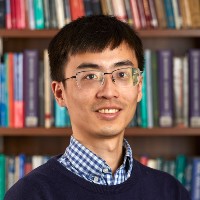
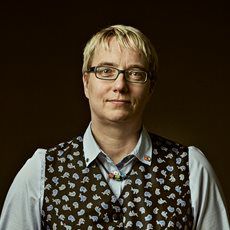
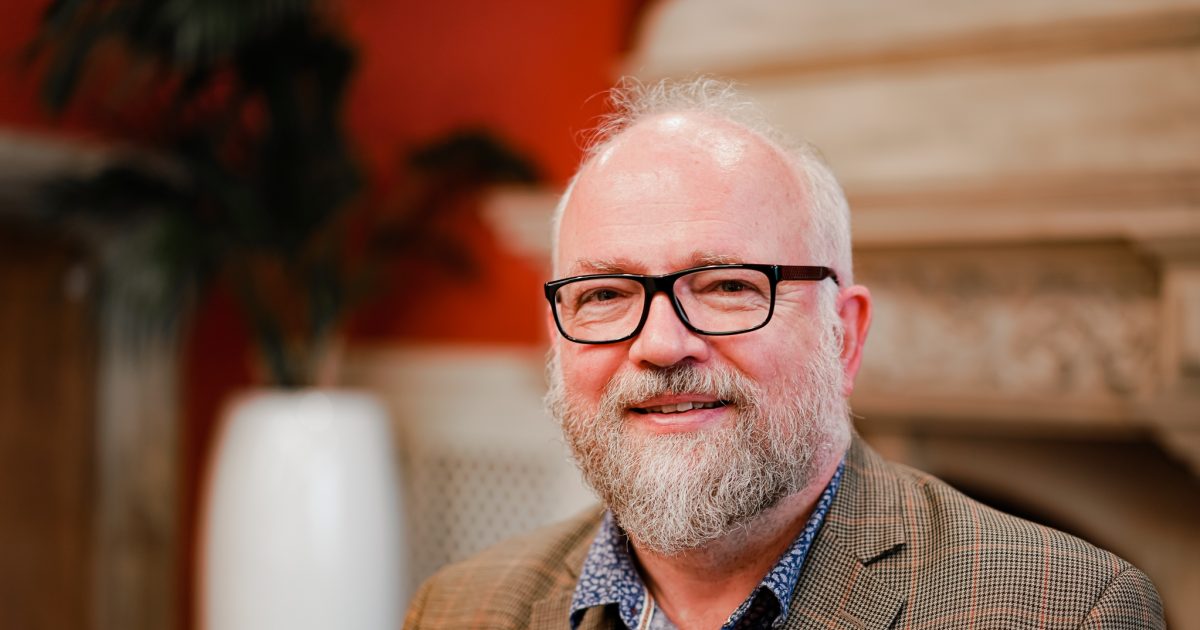
Professor Carlo Harvey is a creative technologist at the School of Digital Arts (SODA), Manchester Metropolitan University. His interdisciplinary research merges games , machine learning , virtual production , and cultural heritage reinterpretation . He leads industry collaborations with entities like Jaguar Land Rover and Epic Games, focusing on AI-driven interactive audio, real-time visualization, and accessibility solutions. Award-winning projects : TIGA, Innovate UK, and Epic Games MegaGrant for Accession Industry partnerships : Automotive sector, cultural institutions His research spans human-computer interaction , multisensory virtual environments , and acoustic-visual cross-modal perception . Recent publications address robotic simulations, motion alignment, and haptic feedback systems. Scientific recognition : TIGA Award, Innovate UK Funding, Epic Games MegaGrant Advocacy : Digital inclusion, creative collaboration, social impact of technology
Dr Jamie Woodcock is a Senior Lecturer in Digital Economy at King's College London, based in the Department of Digital Humanities within the Faculty of Arts & Humanities. He holds a PhD in sociology from Goldsmiths, University of London, and has held academic positions at institutions including the University of Leeds, University of Manchester, LSE, and the Open University. His research focuses on labour processes, platform work, gig economy dynamics, and worker organizing, with a particular emphasis on critical global capitalism and digital culture. Woodcock’s research interests include the games industry, unionization strategies, and resistance to algorithmic management. He is an editorial board member of Notes from Below and Historical Materialism , and contributes to interdisciplinary initiatives such as the Research Centre for Digital Culture and the Critical Global Capitalism Studies Collective at King’s. His work has been widely covered in media and he frequently speaks on digital labour issues. He has authored influential books like The Fight Against Platform Capitalism and The Gig Economy: A Critical Introduction , co-authored Guerrilla Democracy: Mobile Power and Revolution in the 21st Century , and published extensively on topics ranging from delivery platform strikes to gamification critiques. His recent recognition includes a 2025-26 Digital Futures Institute Fellowship.
Prof. Catherine O'Sullivan is a Professor of Particulate Soil Mechanics at Imperial College London's Department of Civil and Environmental Engineering, part of the Faculty of Engineering. She leads the Geotechnics Section and serves as Editor-in-Chief of the ASCE Journal of Geotechnical and Geoenvironmental Engineering. Her research focuses on particulate soil mechanics, employing Discrete Element Modelling (DEM) and micro-CT imaging to study sand behavior, reservoir sandstones, and internal erosion. Notable recognitions include the 2016 Shamsher Prakash Research Award and the 2021 President’s Teaching Innovation Award. Education : PhD in Civil Engineering, University of California, Berkeley (2002) MEngSc in Civil Engineering, University College Cork (Ireland) BEng (Civil Engineering), University College Cork (Ireland) Research Interests : Prof. O'Sullivan's work integrates computational and experimental methods to explore granular material behavior. Key areas include DEM validation, μCT analysis, and pore network modeling. Her group collaborates across disciplines, involving physicists and mechanical engineers alongside civil engineers. Awards & Recognition : 2015 Geotechnique Lecture Student Choice Supervision Award (nominated twice) 2023 Alert Geomechanics Special Lecture Advising & Grants : She supports PhD and postdoctoral researchers through Imperial scholarships and fellowships. Her students often explore particulate soil behavior, with many securing prestigious awards. Labs & Teams : Leads the Geotechnics Section at Imperial, fostering interdisciplinary research in geomechanics and computational modeling.
Professor Paul Fearnhead is a leading academic in Statistics at Lancaster University 's School of Mathematical Sciences . His research focuses on Bayesian and Computational Statistics , with applications in Anomaly Detection , Continuous-time Markov Processes , and Changepoint Analysis . Department: Mathematics and Statistics Academic Rank: Professor Email: p.fearnhead@lancaster.ac.uk His work bridges theoretical statistics and computational efficiency, notably through pruning techniques for change detection and novel Monte Carlo methods. Current projects include AI Hub initiatives, probabilistic AI foundations, and real-time anomaly detection in streaming data. Research outputs span Bayesian Analysis , Time Series Modeling , and Scalable Statistical Algorithms , with applications in fields like astronomy and epidemiology. Recent publications emphasize simulation-based composite likelihoods and efficient distributed changepoint detection. Scientific contributions include leadership roles in the STOR-i Centre for Doctoral Training and Data Science Institute (DSI) projects such as CoSInES and Statscale. He supervises PhD students including Dylan Bahia, Yuntang Fan, and Ziyang Yang.
Tengyao Wang is a Professor in the Department of Statistics at the London School of Economics and Political Science (LSE), serving as the MSc Statistics (Financial Statistics) Programme Director. Prior to LSE, he held positions as a Lecturer at University College London and a Research Fellow at the Cantab Capital Institute for the Mathematics of Information, University of Cambridge. His research focuses on high-dimensional statistics, computational efficiency, and statistical limitations imposed by computational constraints. Education: PhD in Statistics under Prof Richard Samworth at the University of Cambridge, with earlier studies including a Part III Essay in Empirical Process Theory. Research interests include sparse signal detection, change-point analysis, dimension reduction, robust statistics, and applications in medical statistics, financial data analysis, and material discovery. Key contributions include methodologies for handling missing data, high-dimensional change-point detection algorithms, and statistical learning techniques. Publications span theoretical advancements and applied innovations, with recent work emphasizing deep learning with missing data, residual permutation tests, and semi-supervised learning via random projections. His work has been recognized with awards such as the Royal Statistical Society Research Prize (2019) and the Guy Medal in Bronze (2023). He is an Associate Editor of the Journal of the Royal Statistical Society, Series B (JRSS B), and actively contributes to open-source tools like the 'ocd' and 'MissInspect' R packages for changepoint detection and missing data analysis.
Professor Nicole Metje is a Professor of Infrastructure Monitoring at the Department of Civil Engineering, University of Birmingham, and Director of the National Buried Infrastructure Facility. She also serves as Co-director of the Institute of Quantum Technology. Her research focuses on quantum sensing, geotechnical engineering, and infrastructure monitoring, with a particular emphasis on buried infrastructure detection and sustainable urban development. Education: PhD in Civil Engineering (University of Birmingham, 2001); Dipl.-Ing. in Civil Engineering (Hannover University, Germany, 1998). Key roles and affiliations include membership in EPSRC Infrastructure Strategic Advisory Team, Chartered Institution of Civil Engineering Surveyors, and international advisory boards for Hong Kong Polytechnic University. She has authored/co-authored over 50 journal papers and a textbook on tunnel construction. Research areas include quantum sensor applications for buried asset detection, geophysical soil properties, and sensor development for infrastructure monitoring. She leads projects such as UKCRIC National Buried Infrastructure Facility and Quantum Technology Hub in Sensors and Metrology. Awards and fellowships include FICE, FCInstCES, CEng, FHEA, and multiple committee memberships in national/international bodies. Teaching includes MSc courses on underground construction and geotechnical engineering. She supervises doctoral research on quantum sensors, soil-structure interactions, and sustainable infrastructure.
Reiko Heckel is a Professor of Software Engineering at the University of Leicester, serving as Director of Postgraduate Teaching for Computing degrees and Data Analytics Lead at the Leicester Innovation Hub. She previously held academic roles at the Technical Universities of Dresden and Berlin before joining Leicester in 2004. Her research focuses on graph transformation systems, model-based development, stochastic modeling, and formal methods in software engineering. She earned her PhD (Dr.-Ing.) in Computer Science from TU Berlin in 1998. Her research interests span software engineering pedagogy, formal specification techniques, and applications of graph grammars in system modeling. Recent work explores stochastic graph transformations for social networks, transparency engineering in AI systems, and blockchain-based smart contract frameworks. Her contributions bridge theoretical foundations with practical applications in cybersecurity, data integration, and human-centric systems design. Key contributions include advancements in automated test case generation via graph transformations, visual contracts for software reverse engineering, and formal methods for complex system analysis. Her work frequently intersects with industry through collaborations via the Leicester Innovation Hub, emphasizing data analytics and technology transfer. Education: MSc Computer Science, Technical University of Dresden PhD (Dr.-Ing.), Computer Science, TU Berlin (1998) Leadership Roles: Head of Department (2014-2018) Director of Postgraduate Teaching (Ongoing) Research Themes: Model-Based Development Stochastic Systems Analysis Graph Neural Networks Trustworthy AI Her publications reflect a focus on formal methods, with recent trends in applying graph transformation techniques to social network modeling, blockchain smart contracts, and educational pedagogy.
Marcin Jurdzinski is an Associate Professor (Reader) in the Department of Computer Science at the University of Warwick , UK. He has been a faculty member since 2004 and is a core member of the Foundations of Computer Science and Discrete Mathematics and its Applications research groups. University: University of Warwick School: Faculty of Science Department: Department of Computer Science Position: Associate Professor (Reader) Email: Marcin.Jurdzinski@warwick.ac.uk Office: CS2.19 His research lies at the intersection of algorithms, game theory, automata, and logic , with a strong emphasis on formal verification , model checking , and theoretical computer science . He is best known for his foundational work on parity games , including the development of small progress measures and discrete strategy improvement algorithms. The recent publications reveal a consistent focus on computational complexity in games and verification. Key themes include stochastic games, timed automata, bisimilarity, and quantitative analysis . His work often bridges theoretical insights with practical verification challenges, especially in real-time and probabilistic systems. He has supervised several PhD students and hosted postdoctoral researchers such as Laure Daviaud and Alexander Kozachinskiy. He has led EPSRC-funded projects including Solving Parity Games in Theory and Practice and Counter Automata: Verification and Synthesis . PhD Students: Aditya Prakash, Thejaswini K. S., Michail Fasoulakis, John Fearnley, Michal Rutkowski, Ashutosh Trivedi Postdocs: Laure Daviaud, Alexander Kozachinskiy He is actively involved in the academic community, serving on the steering committee of the Highlights of Logic, Games and Automata conference and on program committees for major venues such as CONCUR, ICALP, and LICS. He has also organized workshops including FORMATS and ICALP co-located events.
David De Roure is Professor of e-Research at the University of Oxford and Academic Director of both the Digital Scholarship initiative and the Laboratory for AI Security Research. He is also an Honorary Research Professor at the Royal Northern College of Music (RNCM), where he serves as Technical Director of the Centre for Practice & Research in Science & Music (PRiSM). His work bridges computer science, digital humanities, cybersecurity, and music through his distinctive interdisciplinary approach. De Roure received his PhD in 1990 supervised by David W Barron and Peter Henderson, with research in Lisp and distributed systems. Prior to joining Oxford in 2010, he was Professor of Computer Science at the University of Southampton and Director of the Centre for Pervasive Computing in the Environment. His career spans multiple institutions and research domains, reflecting his commitment to interdisciplinary work. De Roure's research focuses on new methods of digital scholarship, innovation in knowledge infrastructure, cybersecurity, and computational approaches to music. His work uniquely combines humanities (digital musicology), social sciences (social machines and web science), engineering (Internet of Things), and computer science (distributed systems, AI). A key theme is empowering human creativity through technology rather than replacing humans with AI. He emphasizes co-creation between humans and machines, particularly in music composition where he explores how algorithms can generate fragments for human assembly. His recent publications reveal a strong focus on AI security in IoT systems, digital scholarship methods, and the intersection of music with computational approaches. There's a clear trajectory from foundational work in social machines and web science toward current applications in cybersecurity and music-AI co-creation. His publications consistently bridge technical domains with humanistic inquiry, demonstrating his commitment to interdisciplinary scholarship that addresses real-world challenges. Fellow of the British Computer Society (FBCS) Fellow of the Institute of Mathematics and its Applications (FIMA) Fellow of the Royal Society of Arts (FRSA) Chartered IT Professional (CITP) Turing Fellow at The Alan Turing Institute (2018-2024) De Roure has co-founded three major interdisciplinary initiatives: PETRAS National Centre of Excellence for IoT Systems Cybersecurity (the world's largest socio-technical research center focused on IoT security), the Software Sustainability Institute (dedicated to improving research software), and PRiSM at RNCM. He was Director of the Oxford e-Research Centre from 2012-17 and has led numerous research projects including SOCIAM (The Theory and Practice of Social Machines), FAST (Fusing Audio and Semantic Technologies), and Transforming Musicology. The Laboratory for AI Security Research, which he directs, took its first PhD students in 2024. At Oxford, De Roure chairs the Digital Research Cluster at Wolfson College and oversees the Laboratory for AI Security Research. The PRiSM team at RNCM has produced numerous musical works and performances, including six premieres in New York in 2024. He has been involved in designing gesture recognition software used in many performances and has collaborated on public engagement projects including the Science Together project which released a Hip Hop album. His current work includes exploring Chladni Plates for new musical instrument design and developing algorithmically enhanced instruments.
Dr. Jules Rawlinson is a Senior Lecturer in Digital Design at the Reid School of Music , University of Edinburgh. He serves as Programme Director for the MSc Sound Design and contributes to MSc Design and Digital Media, ESALA undergraduate courses, and the Reid School's MSc Digital Composition and Performance. PhD in Composition (University of Edinburgh, 2011) MSc Sound Design (University of Edinburgh, 2006) BA Combined Arts (Sunderland University) Jules investigates audiovisual composition , live electronics , and interactive performance systems , blending machine learning , virtual environments , and corpus-based sound synthesis . His work explores non-linear narrative structures , graphical scores , and political sound-art through collaborations like Raw Green Rust and projects such as Lie Still My Sleepy Fortunes and w[i]nd . His 15 most recent outputs span audiovisual installations , generative sound systems , and collaborative performances , focusing on virtual reality , spectral transformation , and digital improvisation . Jules co-founded the LLEAPP network and has secured grants from EPSRC and New Media Scotland's Alt-w Fund . He supervises PhD students Tim Bentley, Hal Xu, Benjamin Cantil, and Liam Peacock, with works showcased at festivals including Sonorities , Edinburgh International Film Festival , and Edinburgh Festival Fringe . His Requiem for Edward Snowden was featured in BBC Radio 3's Hear and Now and selected for Creative Scotland's Made In Scotland Showcase.
Dr Paul Henshall is a Senior Lecturer in Mechanical Engineering at Oxford Brookes University, affiliated with the School of Engineering, Computing and Mathematics. His work bridges advanced thermal systems, renewable energy, and mathematical modelling, with a strong focus on sustainable technologies. His research interests include: Mathematical modelling of renewable energy systems Second-life battery energy storage Thermal management of battery packs Lithium-ion cell characterization Advanced solar thermal systems Thermochemical energy storage The analysis of his recent publications (2018–2025) reveals a consistent focus on energy storage and solar thermal technologies. His work emphasizes computational modelling, experimental validation, and sustainability assessment, particularly in second-life batteries and high-efficiency solar collectors. Key themes include battery degradation prediction, thermal stress analysis, and the integration of renewable systems in buildings and industry. Professional recognitions include: Chartered Physicist (CPhys) Member of the Institute of Physics (MInstP) Fellow of the Higher Education Academy (FHEA) Member of the Institute of Physics Energy Group Committee Paul supervises MEng and PhD students, including Dr. Farhad Salek, whose thesis focused on second-life battery systems. He teaches core modules in engineering mathematics, numerical methods, and computational modelling. He is involved with the Centre for Batteries, Electric Vehicles and Electronics and the Architectural Engineering Research Group, contributing to interdisciplinary research in sustainable energy systems.
Cécile Mailler is a Reader in Probability at the University of Bath, where she is a member of the probability group Prob-L@B. She has held significant research positions including an EPSRC postdoctoral fellowship (2018-2021) titled "Random trees: analysis and applications" and previously worked as a postdoc at Prob-L@B (2013-2016) as part of Peter Mörters' EPSRC project "Emergence of Condensation in Stochastic Networks". She earned her PhD under the supervision of Brigitte Chauvin and Danièle Gardy at the Laboratoire de Mathématiques de Versailles. Her research focuses on probability theory with emphasis on branching processes, random trees, reinforcement mechanisms, Pólya urns, stochastic approximation, random networks, and statistical physics. She has made significant contributions to understanding preferential attachment models, zero-range processes, and random Boolean trees. Her work bridges theoretical probability with applications in statistical physics and combinatorics. Analysis of her recent publications shows a strong focus on random tree structures, branching processes, and reinforcement learning algorithms, with applications spanning from network theory to statistical mechanics. Her research demonstrates sophisticated mathematical techniques applied to complex stochastic systems, particularly those with reinforcement mechanisms and memory effects. Associate Editor of the Applied Probability Trust (since October 2020) Associate Editor of Stochastic Processes and Their Applications (since March 2022) Author of a general introduction to Pólya urns for the LMS Newsletter (November 2020) Co-organizer of the "Random Walks: Applications and Interactions" conference at CIRM (January 2026) She actively supervises PhD students working on topics including the multi-city ants process, Pólya urns with growing initial composition, large deviations for the Monkey walk, and competing growth processes. She has secured research funding through EPSRC fellowships and has been involved in multiple collaborative projects with prominent researchers in probability theory. Mailler regularly teaches mini-courses on advanced probability topics at international summer schools and workshops, demonstrating her commitment to knowledge dissemination in the field.
Lev Sarkisov is a Professor of Chemical Engineering at the University of Manchester, leading the Sarkisov Research Group. His work focuses on advancing porous materials for carbon capture, energy storage, drug delivery, and sensing through multiscale computational workflows integrating molecular simulation, machine learning, and process modeling. He holds a Ph.D. from the University of Massachusetts Amherst (2001) and held roles at the University of Edinburgh, including Head of Chemical Engineering. Notable achievements include securing a £1M Wolfson Foundation grant for sustainable engineering (2022) and receiving the 2013 Royal Academy of Engineering/Leverhulme Trust Senior Research Fellowship. Education: Ph.D., Chemical Engineering, University of Massachusetts Amherst, 2001 M.Sc./B.Sc., Moscow Lomonosov Academy of Fine Chemical Technologies, 1995-1997 Research Interests: The group develops porous materials using AI-driven approaches for carbon capture, energy-efficient separations, and material informatics. Key areas include MOFs, adsorption phenomena, and open-source software for reproducible research. Grants & Awards: £1M Wolfson Foundation Grant (2022) Royal Academy of Engineering/Leverhulme Trust Senior Research Fellowship (2013) Edinburgh University Student Union Teaching Award (2019) Labs & Collaborations: The group collaborates globally, emphasizing open-source tools and reproducibility. Projects include CRAFTED (MOF adsorption database) and PoreBlazer v4.0.
Joshua Ignatius is a Professor of Business Analytics at the Aston Business School, part of the College of Business and Social Sciences at Aston University. He focuses on research areas including supply chain analytics, prescriptive analytics, electronic commerce, and operations management. His work often addresses challenges such as information asymmetry in supply chains, user recommender systems, and logistics optimization. He is currently accepting PhD students in topics like Information Asymmetry in Supply Chains, User Recommender Systems, and Supply Chain Analytics. His research interests are centered on leveraging data-driven approaches to improve decision-making in supply chain and operational contexts. This includes studying disruption risk management, dynamic data modeling, and the integration of AI in cloud services. He also explores strategic decisions in e-commerce logistics, customer segmentation strategies, and environmental sustainability. Recent publications highlight his contributions to supply chain resilience, optimal security in cloud computing, and sustainable manufacturing processes. For instance, his 2025 work on supply chain network viability addresses disruption risks through dynamic data strategies. Another key area is the analysis of customer behavior in product upgrades, utilizing online review data to inform quality differentiation strategies. Dr. Ignatius has collaborated on projects involving platform information sharing, manufacturer encroachment, and logistics sourcing for e-commerce firms. His research often bridges theoretical frameworks with real-world applications, emphasizing practical solutions for operational challenges. He holds a strong record of supervising PhD students and guiding projects that combine academic rigor with industry relevance. His work frequently appears in leading journals such as the European Journal of Operational Research and Journal of Operations Management.
Dr. Robert Lieck is an Assistant Professor in the Department of Computer Science at Durham University. His research focuses on interdisciplinary applications of machine learning (ML) and artificial intelligence (AI), emphasizing interpretability, robustness, and ethical considerations. He explores computational models in music cognition, communication dynamics, and medical image analysis, aiming to bridge theory and practical tools for domain experts. Before Durham, he was a postdoctoral researcher at EPFL's Digital and Cognitive Musicology Lab (2018–2021) and earned his PhD from the Learning and Intelligent Systems Lab in Stuttgart/Berlin (2012–2017). His work combines probabilistic modelling, neuro-symbolic systems, and reinforcement learning to address challenges in music analysis, autonomous decision-making, and medical robotics. Key research themes include: Music structure and perception modelling Symbol emergence in multi-agent communication Ethical AI and autonomous systems governance Medical imaging applications (CT/MRI analysis) Recent projects involve developing patient-agnostic diabetes management systems using deep reinforcement learning and surgical workflow anticipation through graph learning algorithms. He actively contributes to conferences such as NeurIPS, ISMIR, and AAAI, with publications spanning music informatics, robotics, and biomedical engineering. Current supervision includes four postgraduate students focusing on AI applications in healthcare, music technology, and autonomous systems. His work bridges technical innovation with societal impact, addressing challenges in policy, legislation, and interdisciplinary collaboration.