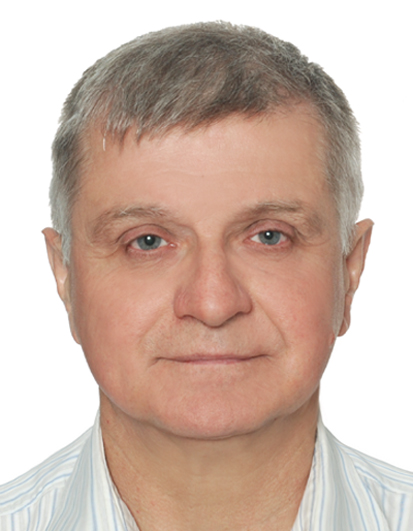
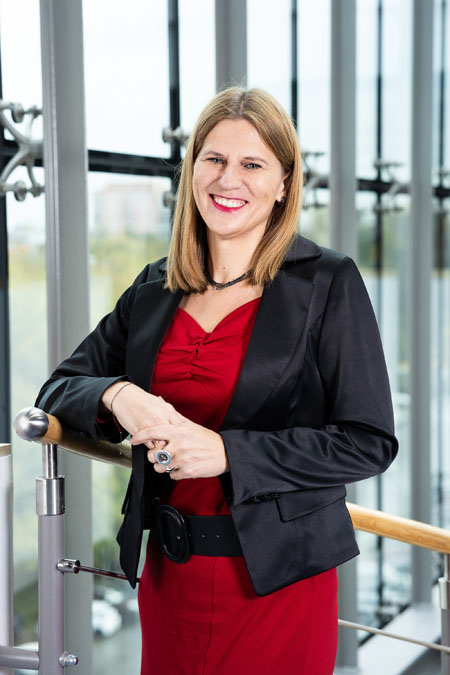
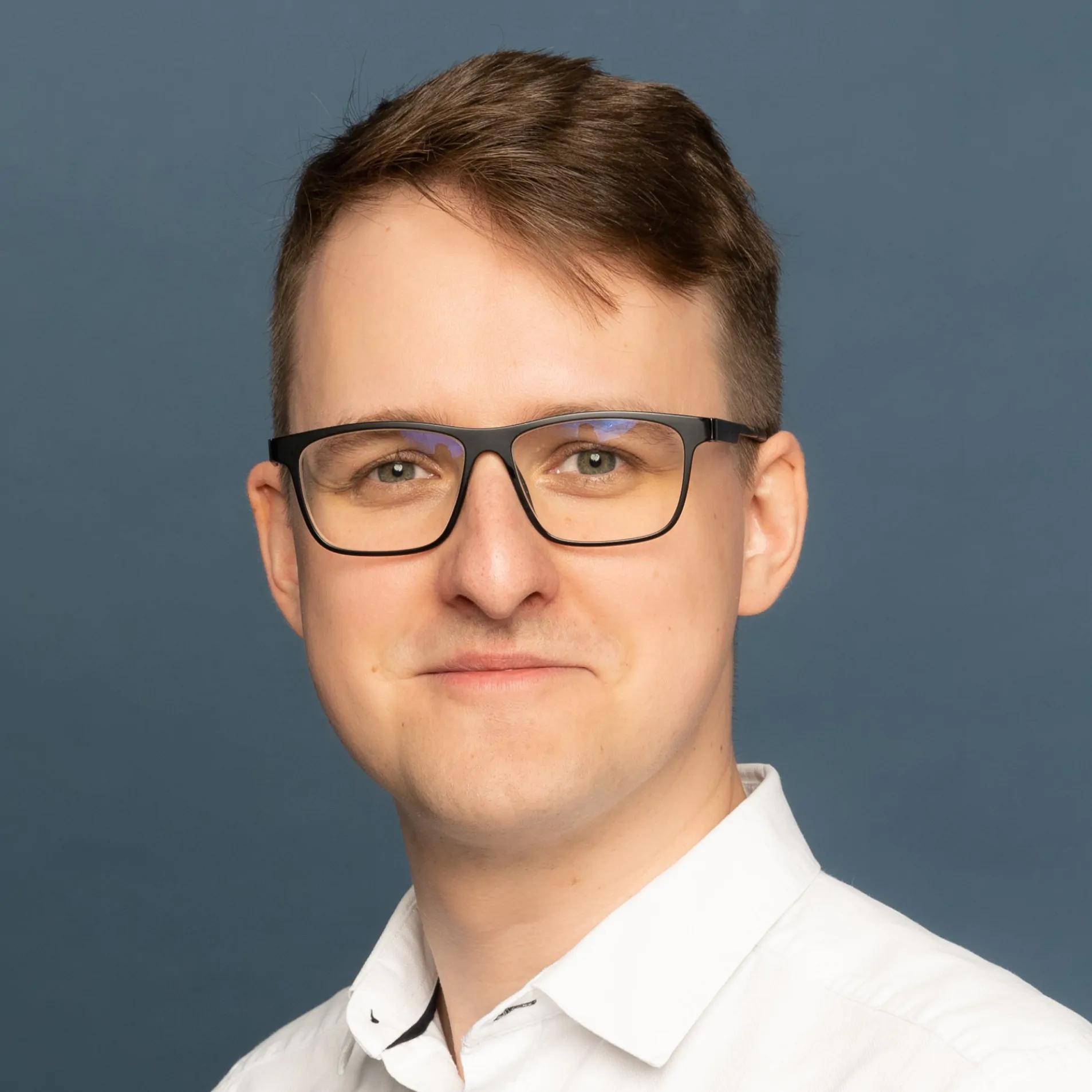
Damian Grela is a Lecturer in the Department of Automation and Computer Science at the Faculty of Electrical and Computer Engineering, Cracow University of Technology. His work spans two distinct research domains: software engineering (focusing on BPEL processes, web services, and fault injection testing) and environmental engineering (specializing in diatomite-based biogennic pollutant removal, rain gardens, and surface water quality monitoring).
Michał Paweł Michalak is an Assistant Professor at AGH University of Science and Technology in Kraków, affiliated with the Faculty of Geology, Geophysics and Environmental Protection and Department of Geoinformatics and Applied Informatics. His research spans computational geometry in geological modeling, machine learning applications in Earth sciences, statistical epidemiology, and ecclesiological dynamics. Doctoral degree from University of Silesia in Katowice Developed GeoAnomalia software suite combining C++, R, and ParaView Created unbiased risk metrics (WCSIR) for infectious disease surveillance Research focuses on: Subsurface geological modeling using combinatorial algorithms and machine learning; Spatial epidemiology emphasizing testing heterogeneity bias; Ecclesiological dynamics analyzing factional theological interactions. His 2020/37/N/ST10/02504 grant project received 'very good' evaluation for developing angular distance metrics in geological contacts. Scientific contributions include: 2025 Solid Earth paper on fault-related structure detection 2025 Frontiers in Public Health work on global pandemic risk evaluation 2023 AGH Rector award recipient Developer of open-source geological analysis tools Collaboration network includes Harvard University, Technische Universität Freiberg, and University of Texas at Austin. Currently teaching GIS modeling, optimization methods, and geoinformatics systems. Maintains a personal website with open data access.
Jacob Fish holds the Rosalind and John J. Redfern Jr. Chair in Engineering at Columbia University's Department of Civil Engineering and Engineering Mechanics within the Fu Foundation School of Engineering and Applied Science. His research program focuses on computational mechanics and multiscale modeling with applications across material science and structural engineering. His research interests center on developing advanced computational frameworks for multiscale analysis of heterogeneous materials. Key areas include computational continua, atomistic-to-continuum coupling, fracture mechanics of composites, and thermomechanical modeling of advanced materials. His work bridges theoretical developments with practical engineering applications through reduced-order modeling and data-physics integration. His recent publications demonstrate strong trends in multiscale computational engineering, particularly in homogenization techniques, phase-field fracture modeling, and data-driven approaches for material behavior prediction. The research spans from atomistic simulations to structural-scale analysis with emphasis on computational efficiency and physical fidelity. Fellow, U.S. Association for Computational Mechanics (USACM) Computational Structural Mechanics Award, 2005 Fellow, International Association for Computational Mechanics (IACM), 2002 National Science Foundation Presidential Young Investigator Award, 1992 Walter P. Murphy Fellowship, Northwestern University, 1986 Fish serves as Editor-in-Chief of the International Journal for Multiscale Computational Engineering and has secured numerous research grants focused on multiscale modeling of advanced materials. His collaborative network spans multiple institutions and disciplines, particularly in computational mechanics and material science. His laboratory develops computational frameworks for multiscale analysis with applications in structural engineering, material science, and biomechanics, focusing on efficient algorithms for complex material behavior prediction.
Prof. Dr. hab. Marek Pawlak is a tenured Professor at the Department of Business Management , Institute of Journalism and Management , Faculty of Social Sciences , John Paul II Catholic University of Lublin . He holds academic degrees including MBA, Technical University of Lublin (1980) PhD, Technical University of Gdańsk (1987) Hab. PhD, Institute of Organization and Management in Industry, Warsaw (1997) Professor, Institute of Organization and Management in Industry, Warsaw (2009) His research focuses on Corporate Governance Computer Sciences Application in Management Business Ethics Strategic Management Project Management . His recent publications analyze generational changes in family business leadership, tax haven usage by multinational corporations, and moral development indices of future leaders. He has coordinated international projects like TEMPUS JEP 04214 and received grants from the Polish Ministry of Science and Higher Education on topics including genetic algorithms for production scheduling and CSR impact on consumer behavior. He has served as a Vice-Dean at both Technical University of Lublin and John Paul II Catholic University of Lublin. Professional activities include multiple Erasmus+ teaching assignments at Spanish institutions (Universidad Francisco de Vitoria, University of Seville) and industry consultancy roles. His scientific work spans 40+ years with over 140 publications, including books like Zarządzanie projektami (PWN, 2006) and Zarządzanie grupą przedsiębiorstw (KUL, 2015).
Michał Turek is a Professor at the Department of Applied Informatics within the Faculty of Electrical Engineering, Automatics, Computer Science and Biomedical Engineering at AGH University of Science and Technology in Kraków, Poland. His primary workplace is located in room 303a of building C-2, and he maintains active contact through email (mitu@agh.edu.pl) and phone (+48 12 617 52 03), indicating current academic engagement. His research spans Software Engineering with particular emphasis on Workflow Management Systems integration with industrial applications, Image Analysis for 3D surface inspection, and Agile Methodologies implementation. Turek has pioneered innovations in Scrum adaptation for multi-project environments and software product lines, while developing formal verification frameworks for business processes and service-oriented architectures. His work bridges theoretical computer science with practical industrial solutions, especially in automated damage identification systems and workflow optimization. Analysis of his 15 most recent publications reveals consistent focus on workflow system intelligence (2020-2022), with significant contributions to automatic correction mechanisms and smart procedure integration. Earlier works (2010-2016) demonstrate deep expertise in formal verification methods, Scrum economics, and 3D surface analysis techniques. The publications show interdisciplinary convergence between software engineering, computer vision, and industrial automation, with recurring themes of system resilience and process optimization across both English and Polish scholarly outputs.
Ignacy Wiśniewski is a Doctor of Fine Arts, jazz pianist, composer, and Assistant Professor at the Academy of Music in Gdańsk (Faculty IV - Choral Conducting, Church Music, Artistic Education, Rhythmics and Jazz). He specializes in vocal collaboration as arranger, coach, and songwriter, creating over a dozen musicals performed in major Polish theaters. Academy of Music in Gdańsk (Graduate and Faculty Member) Hochschule fur Musik, Theater und Medien Hannover Academie Musicale de Villecroze His research interests include improvisation as human-machine distinction , cross-genre musical collaboration , and theatrical jazz integration . His 2021 DUOS project explored algorithm-resistant composition through saxophone, double bass, and drum collaborations. Scientific Awards: Honorary Badge of Merit for Polish Culture (2022) Special Award of Pomeranian Voivodeship Marshal (2024) Young Poland Scholarship (2018) Wiśniewski leads the Ignacy Wiśniewski Trio (Jazz Shirim debut 2016) and co-founded the Almost Jazz Group quartet (2012-2017). He has collaborated with directors like Agata Duda-Gracz and received funding through the Minister of Culture's Culture on the Web program.
Szymon Zawodny is a saxophonist, composer, and educator at the Stanisław Moniuszko Academy of Music in Gdańsk, where he leads the saxophone class in the Instrumental Department. His career spans classical, contemporary, jazz, and improvised music performances. He is a member of The Whoop Group, Szymon Zawodny Quintet, and collaborates with renowned artists like Zbigniew Namysłowski and Krzysztof Herdzin. Education: Doctor of Musical Arts (2019), Vienna State University of Music and Arts; Master’s in Saxophone Performance (2016), Fryderyk Chopin University of Music. Awards: Fryderyk 2023, Gdańsk City Award 2024, scholarships from the Minister of Culture, and multiple competition accolades. Research interests include saxophone pedagogy, fusion of classical/jazz traditions, and electronic music integration. His performances span venues like Wiener Konzerthaus and National Philharmonic, and he has released over 10 albums across genres. Grants & Projects: Culture on the Net scholarship (2020) for 'Sound of the Cosmos' project. Active in international festivals (e.g., Un Violon sur le Sable, Transatlantyk).
Krzysztof Komendarek-Tymendorf is an Associate Professor of Viola and Chamber Music at the Stanisław Moniuszko Academy of Music in Gdańsk and the Feliks Nowowiejski Academy of Music in Bydgoszcz. He holds a PhD and habilitation, specializing in viola performance and contemporary music interpretation. His academic career began at age 24 after winning assistant professor competitions. He has performed globally with major orchestras like the National Philharmonic, Gdańsk Baltic Opera, and international festivals including Berliner Philharmonie and Vienna Konzerthaus. He completed postgraduate studies in Culture Management and MBA at Adam Mickiewicz University. Notable awards include the Bronze Medal for Merit to Culture (Gloria Artis), Opus Klassik nomination, and Fryderyk Award recognition. His discography includes acclaimed albums like ReVIOLAtion (NAXOS) and Quantum of Silence (ODRADEK). As an educator, he teaches at three institutions and mentors over 40 students, many of whom hold positions in leading orchestras and music schools. He actively engages in masterclasses across Europe and North America, and leads initiatives like the EURO Chamber Music Festival. His research focuses on Baroque to contemporary viola repertoire, with publications in the Journal of the American Viola Society.
Magdalena Kapelko is a Professor at the Department of Logistics, Wrocław University of Economics. Her research focuses on efficiency and productivity analysis, with a strong emphasis on applications within agribusiness, corporate social responsibility (CSR), and environmental economics. She employs advanced methodologies such as Data Envelopment Analysis (DEA), machine learning, and composite indicators to evaluate organizational performance across industries. Her work spans dynamic inefficiency measurement, sustainability-linked financial instruments, and cross-national comparisons of industrial performance. Notable areas include judicial system efficiency, transport industry CSR, and environmental impact analysis in construction. She maintains an active academic presence through consultations and collaborations, with a dedicated website showcasing her research outputs. Key contributions include integrating CSR into efficiency frameworks and developing non-convex approaches for composite indicators. Her publications address both theoretical advancements and practical applications, such as analyzing Polish consumer behavior toward new food products and evaluating resource allocation in the European dietetic food industry.
Prof. Ireneusz Ewiak is affiliated with the Military University of Technology, specifically the Faculty of Mechanical Engineering. His research spans interdisciplinary applications of materials science and remote sensing technologies. Active in environmental and civil engineering domains since 2018 Key contributions to sensor fusion and sustainable construction materials Research Interests: Materials Science : Development of eco-friendly composites using recycled materials Remote Sensing : Application in environmental monitoring and historical land cover analysis Sensor Fusion : Advancing pan-sharpening techniques for aerial and satellite imagery Recent publications demonstrate expertise in spectral imaging , multi-sensor integration , and environmental remote sensing , with a focus on both theoretical and applied engineering solutions.
Alicja Anuszkiewicz, D.Sc., is an Associate Professor at the Institute of Electronic Systems within the Faculty of Electronics and Information Technology at Warsaw University of Technology (PW). With 35 publications, 6 projects, and 1 patent, her work focuses on optics, fiber Bragg gratings (FBG), birefringence engineering , and sensor development . Her research spans nanostructured optical fibers , mode-division multiplexing , and medical/photonics applications . Academic Rank: Associate Professor Email: alicja.anuszkiewicz@pw.edu.pl Consultations: Mondays 14:15–15:15 Research Highlights : Developed numerical tools for FBG spectral analysis in few-mode fibers. Engineered nanostructured ZEBRA fibers for polarization-insensitive sensors. Optimized weakly-coupled few-mode fibers for telecommunications systems. Created 3D-printed mechanical elements with embedded FBG sensors. The tag cloud derived from her work includes optoelectronics, UV radiation, fiber optic sensors , and graded index optics . Her bibliometric indices (h-index: 7, Total CiteScore: 111.2) reflect significant impact in automation, electronics, and space technologies .
Dr. Eng. Joanna Strug is a lecturer at the Department of Automation and Computer Science within the Faculty of Electrical and Computer Engineering at Cracow University of Technology. Her research focuses on software testing methodologies, machine learning applications in test automation, and database technologies. Specialization in mutation testing and fault injection Expertise in UML/OC validation and business process testing Active researcher in relational and non-relational database modeling Recent research trends indicate a focus on database technology performance analysis, including: Comparative benchmarking of relational vs. NoSQL databases Cost optimization in mutation testing using machine learning Structural similarity applications for test classification Validation frameworks for service-oriented architectures Model-based testing of business processes Bytecode-level mutant classification Her work appears in prominent venues including: Information Systems Architecture and Technology Artificial Intelligence and Soft Computing Journal of Engineering International Conference on Software Engineering (ENASE)
Professor Małgorzata Walentynowicz is a distinguished faculty member at the Academy of Music in Gdańsk, specifically within Faculty I – Conducting, Composition and Music Theory. She holds the position of Professor ("prof. dr hab.") and specializes in contemporary music performance, particularly piano interpretation of new works. Her research interests span contemporary music performance, multimedia and transmedia works, musical theatre, and performance art. She has developed significant expertise in the interpretation of avant-garde compositions, with particular focus on Polish contemporary music and international new music repertoire. Her work explores the boundaries between traditional piano performance and experimental musical practices, integrating technology and interdisciplinary approaches. Professor Walentynowicz has established herself as a leading interpreter of contemporary piano works through her extensive discography and performance history. Her recent recordings and premieres demonstrate a consistent focus on cutting-edge compositions that push the boundaries of piano performance, including works incorporating electronics, multimedia elements, and theatrical components. She frequently collaborates with major contemporary music ensembles across Europe. First Prize at the 37th Gaudeamus Interpreters Competition in Amsterdam First Prize at the Yvar Mikhashoff Trust for New Music competition in Buffalo, NY, USA Summer Courses of New Music award in Darmstadt for excellence in interpretation City of Gdańsk Award for Young Artists in the Field of Culture Nominee for the Classical:NEXT Innovation Award 2017 in Rotterdam Professor Walentynowicz maintains an active international concert schedule, regularly performing at major contemporary music festivals across Europe and beyond. She has collaborated with prestigious ensembles including Ensemble Garage from Cologne and LUX:NM from Berlin. Her educational background includes studies at the Academy of Music in Gdańsk, Hochschule für Musik und Theater in Hanover, and Hochschule für Musik und Darstellende Kunst in Stuttgart, where she graduated with distinction in contemporary music interpretation under Nicolas Hodges.
Arkadiusz Klimczyk is a Lecturer at the Department of Plastic Metal Processing and Extractive Metallurgy, Faculty of Metals Engineering and Industrial Computer Science, AGH University of Science and Technology in Kraków. His academic work focuses on metallurgical engineering, particularly blast furnace technology, fuel optimization, and metallurgical waste utilization. Research Interests: Metal processing techniques Metallurgical emission analysis Computational modeling of smelting processes Industrial computer science applications Metal recovery optimization Sustainable metallurgical practices Recent publications analyze carbon monoxide emissions, fuel consumption dependencies in smelting, coke layer dynamics, raceway shape prediction, and metallurgical waste utilization. His work integrates mathematical modeling and neural networks for process optimization.
Dr. Mikołaj Dziurzyński is a researcher at the University of Warsaw, specializing in systems biology and microbial interactions. His work focuses on optimizing microbial cultivation methods, enhancing compound production through metabolic modeling, and studying fungal-bacterial symbiosis. He leads the NCN WEAVE-UNISONO 2024 project exploring functional diversity in Mortierellaceae fungi and collaborates on projects like FunDive for fungal biodiversity monitoring. His research spans Arctic microbiology, antibiotic resistance mechanisms, and biocontrol strategies for plant pathogens. Key projects include: NCN WEAVE-UNISONO 2024/06/Y/NZ8/00013 (Project Head) FunDive – Biodiversa+ BiodivMon (Co-Investigator) ALTF 565-2021: Fungi-bacteria symbiosis modeling His research interests integrate computational biology with experimental approaches, addressing challenges in environmental microbiology, biotechnology, and clinical diagnostics. Notable contributions include the LCPDb-MET database for metal resistance gene detection and the Prototheca-ID web application for algal pathogen identification. Dr. Dziurzyński’s publications highlight his expertise in permafrost microbiota analysis, Mycobacterium tuberculosis drug resistance, and fecal microbiota transplantation assessments. He actively engages in international collaborations, bridging ecological, computational, and applied microbiology domains.