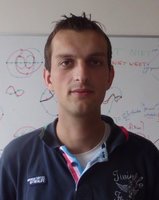
Vasilis Samoladas is an Associate Professor at the School of Electrical and Computer Engineering, Technical University of Crete. His research spans computational geometry, database complexity, distributed systems, and parallel programming, with a focus on algorithmic challenges in multidimensional problems and quantum computing. PhD and MSc in Computer Science from University of Texas at Austin Diploma in Electrical Engineering from Aristotle University of Thessaloniki Research Interests: His work addresses fundamental issues in computational geometry, database complexity, and distributed information systems. He has contributed to external memory data structures and multidimensional algorithmic complexity. Scientific Contributions: He has published in top-tier venues like JACM, Algorithmica, PODS, and VLDB, and served on numerous international conference program committees, including roles as chairman for HDMS'08. Best publication award winner at PODS'98 Scientific director for TUC's High Performance Computing Infrastructure Laboratory Affiliation: Member of the Software Systems and Network Applications Technology Laboratory.
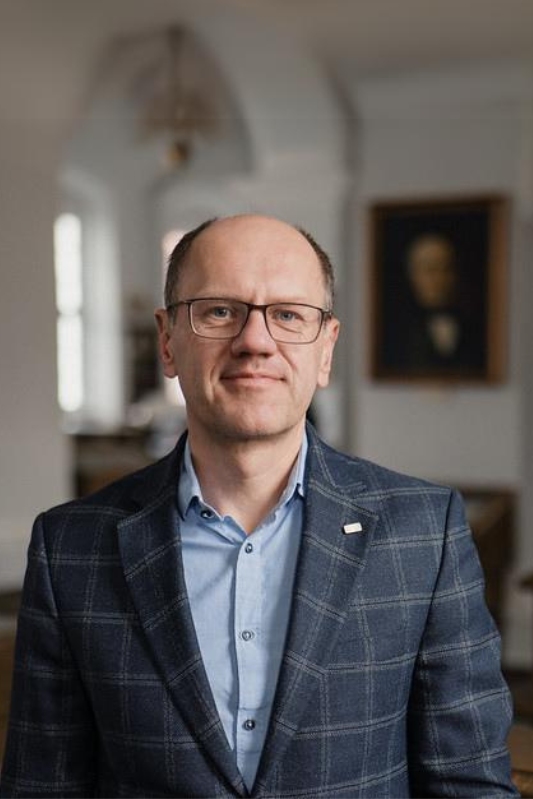
Frank Staals is an Assistant Professor in the Department of Information and Computing Sciences at Utrecht University. He holds a PhD from Utrecht University and was previously a PostDoc at MADALGO, Aarhus University. His research focuses on Computational Geometry , with emphasis on algorithms for moving objects, geometric data structures, and shortest-path problems. Applications include Geographic Information Science (GIS) and Visualization. Research Interests: Staals develops theoretically rigorous and efficient algorithms for geometric data. Key areas include: Trajectory analysis (grouping, segmentation) Geodesic computations in polygons and terrains Dynamic data structures for spatial queries Robust classification of geometric data His publications demonstrate a trend toward scalable algorithms for real-world spatial data, including trajectory grouping, visibility queries, and terrain analysis. Recent work addresses the computational complexity of geodesic spanners and dynamic connectivity in geometric graphs. Awards: Best Paper Award at SIGSPATIAL 2019 Staals leads courses in Functional Programming and Geometric Algorithms and develops open-source software (HGeometry). He collaborates with international teams on projects in GIS and algorithmic geometry.
Antonio Luciano Martire is a Researcher at Sapienza University of Rome, affiliated with the Department of Methods and Models for Economy, Territory, and Finance within the Faculty of Economics. He teaches courses including Computer Science and Excel Laboratory for Business and Quantitative Finance, with office hours held on Wednesdays from 11-12 AM. His educational background includes a Bachelor's Degree in Mathematics (2008), Doctorate in Mathematics for Economic and Financial Applications (2012), and a Specialization Diploma in Applied Econometrics (2014), all from Sapienza University of Rome. Martire's research focuses on mathematical finance, computational methods, and actuarial science, with particular expertise in Volterra integral equations, options pricing models, and quantitative finance applications. His work bridges theoretical mathematics with practical financial applications, developing numerical methods for complex financial instruments and insurance products. His recent publications (2020-2024) demonstrate a consistent research trajectory in developing numerical solutions for integral equations with applications to financial derivatives, insurance products, and cryptocurrency markets. The research shows increasing sophistication in computational approaches, including neural network applications to fractional calculus problems. Martire has extensive teaching experience, having taught Financial Mathematics Laboratory and Quantitative Finance courses since 2013. His technical expertise includes scientific software (Matlab, Mathematica, R, STATA) and programming languages (C/C++).
Christopher L. Barrett is the Executive Director of the Biocomplexity Institute and Distinguished Professor of Computer Science at the University of Virginia. He holds a joint appointment in the School of Engineering and Applied Science. His interdisciplinary work spans computational science, dynamical networks, and AI-driven modeling. He leads large-scale research initiatives for federal agencies and has advised organizations like the Department of Defense and the European Commission. Education: Ph.D. in Bioinformation Systems (Caltech, 1985), Post-Ph.D. in Aerospace Experimental Psychology (U.S. Navy, 1986) Awards: 2021 Virginia Academy of Science Award, Jubilee Professorship (Chalmers University, 2012–2013), Distinguished International Professor (Royal Institute of Technology, 1997–1998) Research focuses on multi-scale systems, including RNA evolution, pandemic modeling, and sociotechnical infrastructure resilience. His work bridges computational methods with real-world problems like disaster preparedness and vaccine distribution strategies. He has published over 100 articles and holds seven patents. Recent publications emphasize agent-based frameworks for migration modeling, genomic surveillance, and HPC-driven epidemic analysis. His interdisciplinary approach unifies mathematical, biological, and social science methods to address complex global challenges.
Conrado Martinez Parra is a Professor in the Department of Computer Science at the Faculty of Computer Science, Universitat Politècnica de Catalunya (UPC). He is a core member of the ALBCOM research group, which focuses on Algorithmics, Bioinformatics, Complexity, and Formal Methods. Affiliation : Department of Computer Science, Faculty of Computer Science (FIB), UPC Research Group : ALBCOM - Algorísmia, Bioinformàtica, Complexitat i Mètodes Formals Email : conrado@cs.upc.edu ORCID : 0000-0003-1302-9067 Researcher ID : G-4629-2015 His research spans theoretical computer science with a strong emphasis on the design and analysis of algorithms and data structures. His work includes average-case analysis of algorithms, combinatorial generation, probabilistic methods in algorithmics, and applications in information retrieval and data stream processing. He has extensively studied multidimensional data structures such as quadtrees, K-d trees, and skip lists, analyzing their performance under various query models including partial match and orthogonal range searches. His recent publications reveal a sustained focus on algorithmic efficiency, sampling techniques, and probabilistic modeling in data structures. Trends indicate a deep engagement with randomized algorithms, unbiased estimation, and cache-efficient selection methods, reflecting both theoretical rigor and practical applicability in modern computing environments. Scientific Contributions Extensive publication record spanning over three decades, from 1989 to 2024. Active in major algorithmic conferences such as ANALCO, AofA, and AAAI. Contributions to foundational algorithm analysis including Hoare’s FIND, Quickselect variants, and deletion in binary search trees. Collaborative research with prominent figures in theoretical computer science across Europe. Professor Martinez Parra has advised or collaborated with several doctoral students, including Gustavo Lau, whose thesis on partial match queries he supervised. He has participated in numerous competitive R&D projects funded by national and regional programs, focusing on large-scale information processing and graph-based computing models. His work is supported by long-standing grants from Spanish and Catalan research councils. He is affiliated with the ALBCOM research group, a leading team in algorithmic research at UPC, contributing to both theoretical advances and practical implementations in combinatorics and data structure optimization.
Sameer Agarwal serves as an Affiliate Professor in the Department of Computer Science & Engineering at the University of Washington, Seattle, while concurrently working as an engineer at Google. His dual affiliation bridges academic research with industrial application in computer vision. His primary research domains include: Computer Vision Optimization Machine Learning Image Processing 3D Reconstruction Nonlinear Least Squares Agarwal specializes in developing algorithmic solutions for complex vision problems, particularly through algebraic methods and optimization frameworks. His work has produced influential open-source tools like Ceres Solver for bundle adjustment and contributed to practical global optimization techniques in multiview geometry. Publication analysis reveals consistent focus on efficient computational methods across vision and graphics, with landmark contributions in multiview geometry (2008), multidimensional scaling (2007), and environment map sampling (2003). His research trajectory emphasizes translating theoretical optimization into robust, deployable systems. No information regarding student advisement, grant funding, or laboratory teams was provided in the source materials.
Rüştü Murat Demirer serves as an Assistant Professor in the Department of Electrical and Electronics Engineering at Işık University's Faculty of Engineering and Natural Sciences. His academic career spans decades with active teaching responsibilities including Biomedical Engineering courses such as Clinical Care Informatics, Biosignal Processing, and Medical Imaging since at least 2012 across multiple institutions including Işık University and Bahçeşehir University. His educational foundation includes: PhD in Biomedical Engineering from Boğaziçi University (1983-2002) MS in Energy from Istanbul Technical University (1980-1982) BS in Electronics and Communications Engineering from Kocaeli University (1976-1980) Dr. Demirer's research integrates Biomedical Engineering with cutting-edge computational neuroscience, focusing on Bioelectronics, Artificial Intelligence applications, and Neuroscience. He pioneers methodologies for analyzing brain dynamics through EEG/ECoG signal processing, entropy-based biomarker development, and machine learning algorithms for neurological and psychiatric conditions. His work bridges theoretical neuroscience with clinical applications in epilepsy, bipolar disorder, and brain-computer interfaces. Analysis of his publication trends reveals strong interdisciplinary convergence between neuroscience, biomedical engineering, and artificial intelligence. Key methodological themes include Hilbert transform applications, nonlinear dynamics in brain signals, entropy quantification for psychiatric diagnostics, and hybrid machine learning approaches for medical signal classification. This research trajectory demonstrates consistent innovation in translating complex brain signal analysis into clinically relevant diagnostic tools. Dr. Demirer has actively mentored 11 graduate students (10 Master's and 1 PhD) between 2013-2025. His advisees' research spans diverse applications including: Machine learning for cybersecurity threat detection Cryptocurrency market analysis using predictive modeling EEG/eye-tracking fusion for cognitive decision studies Medical diagnostics through convolutional neural networks Natural language processing for offensive language detection He maintains professional engagement as a member of the Chamber of Electrical Engineers (Elektrik Mühendisleri Odası) while teaching specialized courses across biomedical engineering, cybersecurity, and data science domains.
Professor Julius Žilinskas is a distinguished academic at Vilnius University, serving as Chief Researcher and Group Leader of the Global Optimization Group within the Institute of Data Science and Digital Technologies. He is also a Member of the Senate of Vilnius University and serves on the Expert Committee of Natural and Technical Sciences of the Research Council of Lithuania. His academic career spans multiple institutions including Vilnius Gediminas Technical University and Kaunas University of Technology. Vilnius University, Institute of Data Science and Digital Technologies (Current) Vilnius Gediminas Technical University (Professor appointment, 2012) Kaunas University of Technology (Doctorate awarded, 2002) Professor Žilinskas' research interests focus on global optimization algorithms , multidimensional scaling , and parallel computing for complex optimization problems. His work bridges theoretical computer science with practical applications in facility location, data analysis, and educational assessment. He has made significant contributions to developing and analyzing algorithms for black-box global optimization, particularly in constrained and competitive settings. His recent publications reveal a strong focus on Bayesian optimization techniques , facility location problems , and educational data analysis . The research demonstrates increasing interdisciplinary collaboration, particularly with economists and educational researchers. His work shows a consistent trajectory from theoretical optimization methods to practical applications in diverse fields. Professor Žilinskas has served in numerous leadership roles including: Member of the Senate of Vilnius University Member of the Expert Committee of Natural and Technical Sciences of the Research Council of Lithuania Editor for special issues of the Journal of Global Optimization He leads the Global Optimization Group, which focuses on developing and implementing advanced optimization algorithms for complex real-world problems. The group maintains strong international collaborations and contributes to both theoretical advances and practical applications of optimization techniques.
Martynas Sabaliauskas is an Associate Professor and Researcher at the Cognitive Computing Group , Institute of Data Science and Digital Technologies , Vilnius University , Lithuania. His research focuses on multidimensional scaling, geometric optimization, data visualization, and prime number theory. His research interests include: Multidimensional Scaling (MDS): Developing geometric approaches for efficient data dimensionality reduction and visualization. Prime Number Theory: Investigating properties of the Riemann zeta function, prime sequences, and fractal structures. Computational Mathematics: Designing algorithms for complex mathematical problems with applications in data science. Recent publications reflect a strong focus on geometric MDS techniques, visualization of complex mathematical structures, and computational approaches to number theory. Notable works include studies on the Riemann zeta function's zeros, fractal visualizations, and efficient algorithms for large-scale data analysis. Contact Information: Address: Akademijos St. 4, room 617, Vilnius, Lithuania Phone: +370 5 210 9305
Senior Lecturer Fredrik Bengtsson is affiliated with Luleå University of Technology, where he works in the Department of Computer Science, Electrical and Space Engineering. His research focuses on Dependable Communication and Computation Systems within the Computer Science division. His research interests include: Algorithms for aggregate information extraction from sequences Computational theory and data structures Range-sum computation in multidimensional arrays k maximum sum subsequences problem Efficient algorithms for information extraction Dr. Bengtsson's work has applications in several important areas including large databases and DNA sequence segmentation. His research contributes to the development of efficient computational methods for data analysis, with particular emphasis on optimizing query performance and pattern recognition in sequential data. His notable publications include his 2007 doctoral thesis 'Algorithms for aggregate information extraction from sequences' and several related papers on computing maximum-scoring segments and ranking k maximum sums, which demonstrate his expertise in developing theoretically sound and practically applicable algorithmic solutions. As a Senior Lecturer and Recognised University Teacher, Dr. Bengtsson is involved in teaching and mentoring students in computer science and related fields, contributing to both research and education at Luleå University of Technology.
Sergey Vladimirovich Samsonov is an Associate Professor at the Faculty of Computer Science of the National Research University Higher School of Economics (HSE), where he also serves as Head of the International Laboratory of Stochastic Algorithms and Multidimensional Data Analysis within the Institute of Artificial Intelligence and Digital Sciences. He is affiliated with the Department of Big Data and Information Retrieval and the Joint Department of the A.A. Kharkevich Institute for Information Transmission Problems of the Russian Academy of Sciences. Samsonov began his tenure at HSE in 2018 and has accumulated 7 years of scientific and teaching experience. His educational background includes a PhD from HSE (2024) and a Bachelor's degree in Applied Mathematics and Computer Science from Lomonosov Moscow State University (2017). Samsonov's research focuses on stochastic approximation, reinforcement learning, sampling techniques, Markov chain Monte Carlo (MCMC) methods, and multivariate statistics . His work bridges theoretical mathematics with practical machine learning applications, particularly in developing algorithms with strong theoretical guarantees. He has made significant contributions to understanding convergence properties of stochastic algorithms and developing variance reduction techniques. Analysis of his recent publications reveals a consistent focus on the mathematical foundations of machine learning, particularly in stochastic approximation methods, reinforcement learning theory, and generative modeling. His work often combines rigorous theoretical analysis with practical applications, demonstrating expertise in both pure mathematics and applied machine learning. The publication venues (including top conferences like NeurIPS, ICLR, and AISTATS) reflect the high impact and quality of his research in the machine learning community. Young Scientist Badge (December 2024) Letter of gratitude from the First Vice-Rector of HSE (March 2023) Letter of gratitude from the Faculty of Computer Science at HSE (September 2021) Rector's personal allowance (2022-2023) Numerous bonuses for high-impact publications (2021-2027) Best Teacher award (2024-2025, 2022, 2020) Segalovich Scientific Prize (2022) National Prize 'Leaders in AI - 2024' Samsonov teaches advanced courses including Markov Chains, Sampling and Generative Modeling, and Matrix Computations. His laboratory work focuses on developing stochastic algorithms for machine learning applications. He has been involved in HSE's collaboration with Sber, which has resulted in 19 successfully implemented AI projects since 2021. His research has gained significant recognition, with multiple papers accepted at top-tier conferences including 12 papers presented at NeurIPS in recent years.
Denis Vitalievich Belomestny is a Leading Researcher at the Faculty of Computer Science of the National Research University Higher School of Economics (HSE) in Moscow. He is affiliated with the Institute of Artificial Intelligence and Digital Sciences and the International Laboratory of Stochastic Algorithms and Multidimensional Data Analysis. Belomestny joined HSE in 2014 and has accumulated 11 years of scientific and teaching experience. His academic background includes a Candidate of Physical and Mathematical Sciences degree from Lomonosov Moscow State University (2002) and a specialty in Applied Mathematics from the same university (1998). Belomestny's research focuses on nonparametric statistics , statistics of random processes , numerical methods of stochastics , and financial mathematics . His work demonstrates a strong interdisciplinary approach bridging theoretical mathematics with practical applications in machine learning and artificial intelligence. He has made significant contributions to the analysis of stochastic differential equations, particularly McKean-Vlasov type models, and has developed innovative methods combining deep learning with traditional statistical techniques. His recent publication record shows a clear trend toward integrating deep neural networks with classical stochastic analysis. The 15 most recent articles reveal a growing emphasis on applying machine learning techniques to solve complex problems in statistical inference, particularly in areas like variance reduction, optimal stopping, and density estimation. His research spans both theoretical foundations and practical applications, with increasing focus on the intersection of probability theory and modern AI methodologies. Academic Work Allowance (2020–2021, 2019–2020) Bonus for an article in a foreign peer-reviewed scientific publication (2016–2018) Best Teacher of 2019 Belomestny has been actively involved in advising students and junior researchers, with numerous co-authored publications indicating his mentorship role. He is a key member of the International Laboratory of Stochastic Algorithms and Multidimensional Data Analysis, which received a significant grant from the Russian Science Foundation in 2018 (project No. 18-11-00132) led by Alexey Naumov, with Belomestny as a principal investigator. The laboratory focuses on high-dimensional data analysis and modern stochastic algorithms, positioning Belomestny at the forefront of research in these rapidly developing fields.
Maxim Evgenievich Beketov is a Research Fellow at the Faculty of Computer Science of the National Research University Higher School of Economics (HSE), where he has been working since 2020. He is affiliated with the Institute of Artificial Intelligence and Digital Sciences and the International Laboratory of Stochastic Algorithms and Multidimensional Data Analysis, contributing to cutting-edge research in computational methods and artificial intelligence. His educational background includes: Master's degree (2017) in Applied Mathematics and Physics from Moscow Institute of Physics and Technology Bachelor's degree (2015) in Applied Mathematics and Physics from Moscow Institute of Physics and Technology Beketov's research spans multiple interdisciplinary fields with a strong mathematical foundation. His primary interests include topological data analysis, machine learning, mathematical and Bayesian statistics, differential geometry, and computational neuroscience. He applies these methods to problems in dimensionality reduction, variety assessment, and graph neural networks. His work bridges theoretical mathematics with practical applications in artificial intelligence and neuroscience, particularly in understanding cognitive processes through topological approaches. An analysis of his recent publications reveals a strong focus on topological methods in machine learning, with increasing emphasis on applications to neuroscience and cognitive mapping. His work demonstrates a progression from theoretical mathematical foundations toward practical implementations in spiking neural networks, traffic control systems, and music information retrieval. The interdisciplinary nature of his research connects computer science, mathematics, and neuroscience through topological approaches. His scientific achievements include: High Professional Potential Group (HSE Personnel Reserve), Category: New Researchers (2025) Beketov has been actively involved in academic teaching, offering courses including Introduction to Discrete Differential Geometry and Mathematical Analysis. His research is supported through the HSE University Basic Research Program, as acknowledged in his publications. He collaborates with researchers across multiple institutions, as evidenced by his co-authorship on papers with numerous collaborators. He is a core member of the International Laboratory of Stochastic Algorithms and Multidimensional Data Analysis, where he contributes to projects involving topological data analysis, machine learning, and computational neuroscience. His work in the laboratory focuses on developing advanced mathematical methods for analyzing complex data structures, with applications ranging from cognitive neuroscience to transportation systems.
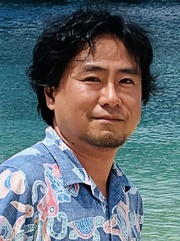
Zin Arai is a Professor in the Department of Mathematical and Computing Science at the School of Computing, Institute of Science Tokyo (formerly Tokyo Institute of Technology). He serves as Research Supervisor for JST PRESTO's 'Mathematical Sciences for the Future' initiative. His research centers on dynamical systems using topological and computational methods, with applications spanning chemistry, biology, and engineering. Key research areas include: Dynamical systems theory (Hénon maps, hyperbolic dynamics) Computational topology (Conley index, validated numerics) Interdisciplinary applications (primate social behavior, chemical reaction dynamics) His 15 most recent publications (2007–2025) demonstrate consistent focus on rigorous computational methods, bifurcation analysis, and topological approaches to nonlinear systems. Notable tools developed include programs for parameter space analysis of Hénon maps and tangency verification. As JST PRESTO supervisor, he oversees projects advancing mathematical sciences. No explicit lab affiliation or awards are documented, but his computational work supports broad scientific collaboration.