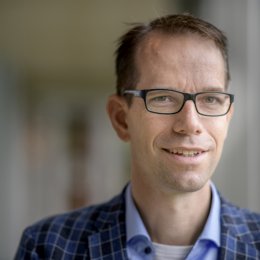
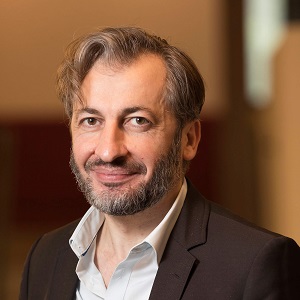
Mahdi Khodadadzadeh is an Assistant Professor in the Department of Geo-information Processing, specializing in machine learning, data mining, and geospatial analysis. His work bridges traditional and deep learning methods with applications in mineral exploration, environmental modeling, and circular economy initiatives. Research outputs include novel cross-validation techniques for geospatial machine learning (Spatial+, dissimilarity-adaptive methods), hyperspectral mineral mapping for ore characterization, and hybrid models combining artificial neural networks with optimization algorithms. He actively contributes to open-access datasets and methodologies, particularly in drill-core analysis and multi-source data fusion. Collaborations with researchers like R. Zurita-Milla and R. Gloaguen are evident through co-authored publications and shared datasets. His work impacts domains such as mineral exploration, geospatial modeling, and sustainable resource management, with a focus on robust statistical evaluation frameworks and spectral-spatial analysis.
Francesco Nex is an Associate Professor at the University of Twente in the Department of Earth Observation Science , where he holds the chair of real-time analytics for ubiquitous geo-sensors. He earned a Master's in Environmental Engineering (2006) and a PhD (2010) from TU Turin. His career spans roles at Italy's FBK institute (2011-2015) and the University of Twente (2015-present). His research integrates photogrammetry , deep learning , and robotics to enable automated UAV-based solutions for applications like disaster management , infrastructure monitoring , and precision farming . Key projects include EU-funded initiatives (Ingenious, Panoptis, RECONASS) and leadership roles in the ISPRS (Chairman of ICWG II/Ia). He has supervised 12 PhD students directly and co-supervised others at institutions like Politecnico Milano and Politecnico Torino. Recent publications highlight advancements in glacier monitoring using low-cost UAV systems, real-time 3D reconstruction , and autonomous drone navigation . Awards include the ISPRS President’s Honorary Citation (2021) and the E.H. Thomson award (2020). His work aligns with UN Sustainable Development Goals for Smart Industry , Climate Action , and Robotic Mobility .
Stein Ørn is a Professor of Cardiology at the University of Stavanger and a senior researcher at Stavanger University Hospital's Department of Cardiology. With an MD and PhD, he has established himself as a leading researcher in exercise cardiology and cardiac biomarkers. University of Stavanger - Professor since February 2016 Stavanger University Hospital - Continuous position since 1996 University of Bergen - Associate Professor (2013-2014) University of Oslo - Medical degree (1987-1994) Professor Ørn's research primarily focuses on cardiac responses to exercise, particularly the diagnostic implications of exercise-induced cardiac biomarker elevations. His groundbreaking NEEDED study has demonstrated that patterns of troponin elevation following endurance exercise can help identify individuals with occult coronary artery disease. His work extends to cardiac imaging, where he has developed innovative machine learning approaches for automatic scar assessment in cardiac MRI. His publication record shows consistent output in high-impact cardiology journals, with recent work exploring the relationship between exercise intensity, cardiac biomarkers, and underlying cardiovascular conditions. His research has important clinical implications for athlete screening protocols and understanding the cardiovascular effects of endurance exercise. Professor Ørn leads an active research group focusing on: Cardiac biomarker dynamics during exercise Advanced cardiac imaging techniques Machine learning applications in cardiology Heart failure prognostic markers Risk stratification in athletes His research has received substantial attention in the field, with over 6,600 citations across his 144 publications, demonstrating significant impact on cardiovascular medicine and exercise physiology.
Suhyb Salama is Associate Professor of Remote Sensing of Water Quality and Water Resources Management at the Department of Water Resources, Faculty of Geo-information Science and Earth Observation (ITC), University of Twente, the Netherlands. His research integrates radiative-transfer physics, machine-learning analytics and multi-sensor satellite data to unravel hydrological and water-quality processes from micro-scale spectroscopy to meso-scale land–atmosphere interactions, directly supporting UN Sustainable Development Goals 6 and 14. Education: PhD in Civil Engineering, Katholieke Universiteit Leuven, Belgium (2003) MSc in Hydraulic Engineering (magna cum laude), KU Leuven (1999) BSc in Civil Engineering, Damascus University, Syria (1993) Research interests: Salama’s scholarly work spans remote sensing of biogeophysical variables, spatiotemporal modelling of suspended sediments and algal blooms, radiative-transfer theory across visible to microwave domains, development of smartphone-based water-quality apps, detection of floating plastic litter, and assessment of groundwater–vegetation feedbacks. He combines optical, thermal and microwave observations with physical and data-driven models to deliver actionable information on water scarcity, pollution extremes and climate-change impacts. Recent publication trends (2023-2025): His latest articles focus on machine-learning quantification of estuarine sediment variability, advanced detection of floating plastics, smartphone calibration for citizen-based water-quality monitoring, spectral-textural mining mapping, and analytical derivation of water-clarity time series from Sentinel-2 imagery. Collectively these works push toward operational, open-source solutions for high-frequency, basin-scale water-quality monitoring and UN SDG reporting. Editorial & professional service: Salama serves as topical editor for the journal Remote Sensing (2020-2024) and has chaired sessions on long-term earth-observation of suspended particulate matter. He actively collaborates across Europe, Africa and Asia on projects that merge remote sensing, hydrodynamic modelling and capacity development. Teaching & capacity building: He teaches MSc courses on optical and microwave remote sensing for water resources, supervises MSc and PhD research, and champions problem-based learning that equips students with enterprising skills to tackle complex water and climate challenges.
J.S. Rellermeyer is a Professor at Delft University of Technology's College of Electrical Engineering, Mathematics and Computer Science , specializing in Data-Intensive Systems . His work bridges software engineering, machine learning, and distributed systems to address challenges in AI reliability and sustainability.
Prof. Dr. Ir. Dannis Brouwer is a professor at the Faculty of Engineering Technology, University of Twente, leading the Precision Engineering group. His work focuses on flexure mechanisms with applications in ultra-precision machinery, robotics, orthoses, and flexible implants. He lectures Design Principles for Precision Mechanisms in Mechanical Engineering programs and has pioneered advancements in large-motion flexure joints. Education: MSc in Mechanical Engineering and Mechatronic Design (Eindhoven University of Technology, 1998-2001); PhD (University of Twente, 2007) Past Roles: Mechatronics System Designer at Philips (2001-2004); Senior Applied Research Engineer at Demcon (2007-2009) Brouwer’s research addresses the limitations of traditional bearings by optimizing flexure joints for high load capacity, large motion, and stiffness. His group developed topology synthesis methods and leverages additive manufacturing to enable geometric complexity at low cost. Applications span space mechanisms, cryogenic systems, and medical devices. His 15 most recent publications focus on flexure modeling, optimization, and applications in robotics and precision engineering. Key subfields include torsion reinforcement, underactuated grippers, and superelement formulations. Scientific Leadership: Associate Editor of Precision Engineering; Director-at-Large, American Society for Precision Engineering (2015-2017) Grants: 14 projects (total 5.5M€), supervising 11 PhD students, 7 PostDocs, and 2 EngD candidates Brouwer integrates education with industry through intensive Master’s courses and lectures at industrial academies. His work bridges theoretical advancements with practical implementations in mechatronic systems.
Dr. Vicente Alarcon-Aquino is a Professor in the Department of Computing, Electronics, and Mechatronics at Universidad de las Americas Puebla (UDLAP), Mexico. He received his Ph.D. and D.I.C. degrees in Electrical and Electronic Engineering from Imperial College London in 2003. He previously served as department head from October 2012 to June 2018 and spent a research stay at King's College London in 2017. Dr. Alarcon-Aquino is a Senior Member of IEEE, a Level I member of the Mexican National System of Researchers (SNI), and a Fellow of the Mexican Academy of Sciences. His educational background includes: Ph.D. and D.I.C. in Electrical and Electronic Engineering, Imperial College London, UK (2003) Dr. Alarcon-Aquino's research focuses on cybersecurity, network monitoring, anomaly detection, wavelet analysis, and machine learning. His work spans theoretical foundations to practical applications in network security, with significant contributions to intrusion detection systems, cryptographic techniques, and machine learning approaches for security applications. He has developed innovative methods combining wavelet transforms with neural networks for various security and signal processing applications. His scholarly contributions include over 180 research articles in refereed journals and conference proceedings, a book on MPLS networks, and numerous citations. As an editor, he serves as Associate Editor for IEEE Access Journal and as Academic & Section Editor for PeerJ Computer Science, focusing on Security & Privacy. Notable professional recognitions include: Senior Member of IEEE Mexican National System of Researchers (SNI Level I) Member of the Mexican Academy of Sciences Dr. Alarcon-Aquino has supervised over 70 theses, including 8 Ph.D. dissertations, 15 Master's theses, and more than 37 Bachelor's theses. His supervision spans topics including network intrusion detection, information security, encryption algorithms, wavelet-based signal processing, neural networks, EEG signal processing, and biometric cryptosystems. He has hosted international research students from institutions including the Polytechnic University of Madrid and Kiel University of Applied Sciences. His research group at UDLAP focuses on developing advanced security solutions for modern network environments, with particular emphasis on applying machine learning techniques to cybersecurity challenges. Current projects include blockchain-based security solutions, federated learning approaches for intrusion detection, and advanced anomaly detection systems for IoT environments.
Pengcheng Liu is an Associate Professor in the Department of Computer Science at the University of York, holding this position since January 2020. He maintains active memberships in IEEE, IEEE Robotics and Automation Society (RAS), IEEE Control Systems Society (CSS), and the International Federation of Automatic Control (IFAC), while serving on the IEEE Technical Committee for Bio Robotics, Soft Robotics, Robot Learning, and Safety, Security and Rescue Robotics. His research spans robotics, machine learning, automatic control, and optimization, with specialization in humanoid robotics, rehabilitation systems, agricultural applications, and human-computer interaction. Key focus areas include developing lightweight neural networks for embedded agricultural systems, bionic-companionship frameworks for service robots, EMG-controlled rehabilitation devices, and precise control of robotic manipulators using ROS/Gazebo. His work consistently bridges theoretical control systems with practical implementations in healthcare and precision agriculture. Analysis of his publication trends reveals strong emphasis on applying machine learning to real-world robotics challenges, particularly in resource-constrained environments (e.g., agricultural robotics with efficient neural networks) and human-centered applications (e.g., rehabilitation gloves and brain-computer interfaces). Recent work demonstrates increasing integration of computer vision with control systems for autonomous operation. His notable scientific awards include: Global Peer Review Awards from Web of Science (2019) Outstanding Contribution Awards from Elsevier (2017) Dr. Liu has secured and managed research funding through major programs including EPSRC, Newton Fund, Innovate UK, Horizon 2020, Erasmus Mundus, FP7-PEOPLE, and NSFC. He serves as a regular reviewer for EPSRC, NIHR, and NSFC grant panels while reviewing for over 30 flagship journals and conferences in robotics, AI, and control systems. His editorial roles include Associate Editor for IEEE Access and PeerJ Computer Science, where he has edited 17 publications. Though specific lab affiliations aren't detailed, his research in agricultural robotics, rehabilitation systems, and humanoid platforms suggests active collaboration with York's robotics and AI research groups, particularly in developing practical implementations of control algorithms and machine learning models for real-world deployment.
Paulo Jorge Coelho serves as an Adjunct Professor in the Electrical Engineering Department at the School of Technology and Management, Polytechnic University of Leiria, and as an integrated researcher with the ROBiTECH (Advanced Robotics and Smart Factories) group at INESC Coimbra's Leiria delegation. With over 20 years of academic experience since 2004, he specializes in Microprocessors, Industrial Automation, and Computer Vision instruction. Education: Ph.D. in Informatics (2019), Trás-Os-Montes and Alto Douro University Specialization in Automation and Control (2007), Coimbra University Bachelor of Electrical Engineering (2004), Coimbra University Research Focus: His work bridges industrial automation and computer vision with cutting-edge machine learning applications in biomedical imaging, ambient assisted living, and assistive technologies. Current projects emphasize practical implementations for reducing physical impairments and enhancing healthcare solutions through deep learning frameworks. Publication Trends: Recent work (2024-2025) reveals strong interdisciplinary convergence between healthcare diagnostics (schizophrenia/EEG analysis, perinatal depression prediction) and industrial/computer vision systems (sports analytics, activity recognition). His research consistently leverages sensor fusion and deep learning architectures to solve real-world problems across medical and engineering domains. Professional Engagement: Active member of the Portuguese Engineers Order and Portuguese Association for Pattern Recognition, with significant editorial contributions (89+ edited articles) across AI and computer vision domains. Previously served as course director and Scientific-Pedagogical Committee member for the Master's in Electrical and Electronic Engineering. Research Infrastructure: Operates within ROBiTECH's advanced robotics ecosystem at INESC Coimbra, focusing on smart factory solutions and human-robot interaction systems. His lab environment integrates industrial automation testbeds with biomedical sensor networks for cross-domain innovation.
Luke Munn is a Research Fellow in Digital Cultures & Societies at the University of Queensland. His work investigates the sociocultural impacts of digital cultures, focusing on data infrastructures in Asia, platform labor, and far-right radicalisation. His research has been published in leading journals including Cultural Politics , Big Data & Society , and New Media & Society , with additional commentary featured in The Guardian , Los Angeles Times , and Washington Post . Dr. Munn's research integrates critical media studies, race theory, and cultural analysis to examine algorithmic systems and digital emotional landscapes. His five-book portfolio includes Unmaking the Algorithm (2018), Logic of Feeling (2020), Automation is a Myth (2022), Countering the Cloud (2022 forthcoming), and Technical Territories (2023 forthcoming), addressing critiques of technological determinism, cloud infrastructure politics, and embodied digital experiences through innovative methodological frameworks.
Rainer Mühlhoff is Professor of Ethics of Artificial Intelligence at the University of Osnabrück's Institute of Cognitive Science, with additional affiliation at the Weizenbaum Institute for the Networked Society in Berlin. He leads the Ethics and Critical Theories of Artificial Intelligence research group, focusing on the societal implications of digital technologies through interdisciplinary collaboration between philosophy, media studies, and computer science. His research spans critical analysis of AI's ethical dimensions, including data protection frameworks, predictive privacy violations, and the relationship between algorithmic systems and authoritarian tendencies. Key thematic areas include: Power dynamics in datafication and AI governance Intersectional discrimination in automated decision-making Collective privacy as a structural concern Historical parallels between digital fascism and 20th-century authoritarianism Educational strategies for digital literacy and critical engagement Mühlhoff's recent publications analyze how predictive algorithms enable new forms of population management through insurance discrimination, hiring practices, and immigration control. His work advocates for reimagined regulatory frameworks that address AI's structural power imbalances rather than merely technical fixes. Current research initiatives include the DFG-funded project Predictive Knowledge is Power (2025) examining collective privacy frameworks, and development of school curricula through the Data Ethics Outreach Lab (DEOL) which translates academic research into educational materials for critical digital literacy. Professional activities include regular appearances at major conferences (Chaos Communication Congress, re:publica), media commentary (Deutschlandfunk, ARD), and public engagement through book launches and radio discussions addressing AI's societal impacts.
Ciano Aydin serves as Professor of Philosophy of Technology at the University of Twente, where he also heads the Department of Philosophy of Technology and acts as Vice-Dean (Education Portfolio) for the Faculty of Behavioral, Management, and Social Sciences (BMS). Additionally, he holds a professorship in Philosophy and Applied Sciences at Delft University of Technology. His academic work bridges theoretical philosophy with practical technological applications, focusing on how digital transformations reshape society. Aydin's research interests center on the philosophical dimensions of technology, with particular emphasis on algorithmic bias, digital privacy, and the societal implications of AI. His work critically examines how data collection influences human behavior and how digital networks transform organizational structures. He argues that technology is increasingly embedded in our physical environment through invisible sensors that monitor behavior, raising profound ethical questions about privacy in the digital age. His recent publications reveal a consistent focus on the dual nature of technological advancement - examining both threats and opportunities in digital transformation. Aydin's work demonstrates how biased data leads to biased algorithms, challenging the notion that AI can be truly neutral since it reflects the biases inherent in our world. He emphasizes that humans cannot be fully represented by datasets, arguing for philosophical reflection as essential to achieving genuine diversity and inclusion. As an educator, Aydin serves as core lecturer in the Digital Transformations program, guiding executives through technological revolutions from the Industrial Revolution to the current digital network society. His teaching emphasizes developing thoughtful visions for organizational roles within the evolving digital landscape rather than merely replicating physical processes online.