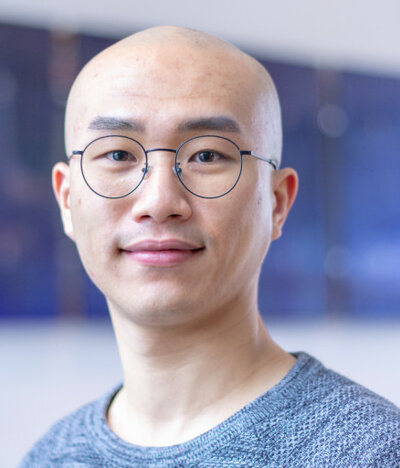
Juseong Lee is an Assistant Professor at the Eindhoven University of Technology (TU/e), affiliated with the Department of Industrial Engineering and Innovation Sciences. His research focuses on integrating data-driven models and artificial intelligence into industrial processes, with a specific emphasis on predictive maintenance approaches for engineering systems. PhD in Aerospace Engineering from Delft University of Technology (2022) MSc and BSc in Aerospace Engineering from Korea Advanced Institute of Science and Technology (2018, 2016) His work employs methodologies such as digital twins, multi-objective optimization, and deep learning to enable real-time decision-making in business contexts. He aims to improve the reliability, efficiency, and sustainability of Industry 4.0 systems through his research. Recent publications highlight his expertise in predictive maintenance, with applications to aircraft systems, landing gear brakes, and turbofan engines. Key techniques include Gaussian process learning, adaptive sampling, deep reinforcement learning, and stochastic Petri nets. These studies often involve collaborations with researchers like Mihaela Mitici. Lee's research is supported by the European Union's Horizon 2020 program (Grant No. 769288). He teaches courses on quality and reliability engineering, maintenance optimization, and service logistics.
Jan Martijn van der Werf serves as Associate Professor in Process Science at Utrecht University's Faculty of Science, Department of Information and Computer Science. Since September 2022, he has held the position of Programme Director for the Bachelor Information Sciences, overseeing curriculum development and academic operations for both Business Informatics and Information Sciences programs. Education: Dual PhD in Computer Science from Eindhoven University of Technology and Humboldt Universität zu Berlin (Thesis: 'Compositional Design and Verification of Component-based Information Systems') Research Focus: Van der Werf's work centers on process mining and behavioral modeling in software architectures, with emphasis on the interplay between data and processes. His expertise spans Conceptual Modelling of Information Systems , Enterprise Architecture , and Service-Oriented Architecture , addressing challenges in process discovery, verification, and practical implementation within complex organizational contexts. Current research explores the human dimensions of process mining adoption and AI-driven event log extraction. Publication Trends: Recent work (2023-2024) reveals increasing focus on methodological rigor in process discovery, human factors in process mining initiatives, and formal verification techniques for Petri nets. His publications bridge theoretical foundations with practical applications, particularly in event log extraction using large language models and visualization of complex process chronologies from heterogeneous data sources. Academic Contributions: Van der Werf teaches core courses in Process Modelling and Software Architecture , actively participates in academic workshops (including the 2020 'Information System Modeling' workshop), and supervises graduate research. His Scopus profile indicates 77 research outputs and supervision of 3 students, reflecting sustained scholarly engagement in process science and information systems.
Arturo Tejada Ruiz is a Part-time Assistant Professor at the Mechanical Engineering Department of Eindhoven University of Technology (TU/e), specializing in Safe Autonomous and Cooperative Vehicles . He also serves as a Senior Scientist at TNO in the Integrated Vehicle Safety department, supporting OEMs and regulators in certifying automated vehicles. His research integrates human factors , artificial intelligence , and motion control to enable socially acceptable self-driving systems. Education : BSc/MSc/PhD in Electrical Engineering (Pontificia Universidad Católica del Perú, Old Dominion University) Research Focus : Developing reference models of human driving to extract safety requirements for automated vehicles, with emphasis on probabilistic risk evaluation and real-time collision probability estimation. Recent work includes the PRISMA method for data-driven risk measures and novel approaches for multi-circular shape approximations in collision probability estimation. Publications highlight advancements in: Motion planning algorithms for autonomous vehicles Stochastic and robust model predictive control Human-centric safety certification frameworks His work bridges theoretical modeling with industrial applications, particularly in quantifying risk trends and improving computational efficiency for real-world deployment.
Dr. ir. Cynthia C.S. Liem is an Associate Professor in the Multimedia Computing department at Delft University of Technology, specializing in ethical and reliable AI frameworks. Her work bridges machine learning, human-computer interaction, and societal impact. Academic Rank: Associate Professor Department: Multimedia Computing School: Electrical Engineering, Mathematics and Computer Science Liem’s research focuses on Explainable AI , Algorithmic Transparency , and AI Ethics , emphasizing fairness in machine learning and societal implications of autonomous systems. Recent publications explore adversarial testing, energy-constrained counterfactuals, and critiques of unscientific AGI claims. Her most recent articles highlight trends in autonomous vehicle testing , AI explainability , and ethical algorithmic design , leveraging techniques like conformal prediction and differential evolution . Scientific Awards : SBFT 2023 Best Paper Award TU Delft Education Fellow WWW 2018 Challenge Winner 2024 Women in AI Netherlands Diversity Leader Award Liem serves as an advisor for DUO’s research ethics audits and frequently contributes to public discourse on AI’s societal role, appearing in national media outlets like Delta and Trouw . She also leads datasets on music representation learning and algorithmic recourse.
C.G. Chorus is a Professor at the Faculty of Industrial Design Engineering at Delft University of Technology (TU Delft). His work bridges transport policy , machine learning , and behavioral economics , focusing on decision-making, moral psychology, and mobility systems. Key Research Areas : Transport modeling, participatory value evaluation, AI ethics, and behavioral decision theory. Collaborations : Active in interdisciplinary projects with institutions like 4TU.ResearchData and editorial roles in journals such as European Journal of Transport and Infrastructure Research . Recent publications highlight applications of random forests and association rules to analyze complex choice experiments, alongside investigations into moral foundations in judicial contexts and system safety in public-sector AI. His work often integrates data science and policy analysis to address real-world challenges in infrastructure and mobility. Scientific Awards 2008 IEEE Intelligent Transportation Systems Society Best PhD Dissertation Award BIVEC-GIBET PhD Award (2007) Honourable Mention for Best Transportation Science and Logistics Paper (2007) Traveler Response to Information Prize (2009) Chorus contributes to open-access datasets and software, including travel behavior studies and moral decision-making experiments. His editorial and conference activities underscore his leadership in advancing transport and infrastructure research.
Prof. dr. Cadence Kinsey is Professor of Contemporary Art and Global and Social Challenges at Utrecht University's Department of History and Art History. Previously, she served as Associate Professor of Contemporary Art at University College London and Lecturer in Recent and Contemporary Art at the University of York. Current research explores post-2008 subjectivity and inequality through feminist science & technology studies and sociology Key expertise in digital technologies, internet culture, and social class dynamics Author of Walled Gardens: Autonomy, Automation, and Art After the Internet (OUP, 2021) Her research output spans post-internet art, digital representation, and the intersection of technology with bodily identity. Articles like Matrices of Embodiment (2014) and Fluid Dynamics (2020) reveal consistent themes of: Digital materiality and subjectivity Networked embodiment Platform-specific artistic practices Temporal structures in digital art Post-internet aesthetics Feminist technocultural critique Active in curatorial practice through exhibitions like Exposure and Contrast (2024) at LSE, Kinsey continues to bridge academic research with public engagement. Her work appears in journals like Art History , Grey Room , and Signs .
Dr. Loes Hollestein is an Assistant Professor in the Department of Dermatology at Erasmus MC, a prominent medical center in the Netherlands. She also holds an external position as a Researcher at the Netherlands Comprehensive Cancer Organization (IKNL) since June 2015. Her academic work focuses on skin cancer epidemiology and prediction models. Dr. Hollestein's research primarily centers on the epidemiology of skin cancers, with particular expertise in melanoma, cutaneous squamous cell carcinoma, and basal cell carcinoma. Her work investigates the prediction of multiple skin cancers and metastasis, contributing significantly to understanding cancer progression and risk factors. She has developed expertise in cohort analysis, cancer registry research, and actinic keratosis studies, forming a comprehensive approach to skin cancer epidemiology. Her recent publications demonstrate a growing integration of artificial intelligence in dermatological research, particularly for early detection of metastatic cutaneous squamous cell carcinoma and automated assessment of skin histological structures. Dr. Hollestein's work spans population-based studies across the Netherlands, examining skin cancer risks in various patient populations including those with hematological malignancies. Her research portfolio shows a consistent focus on improving detection methods, understanding risk factors, and evaluating treatment approaches for various skin cancers. Dr. Hollestein has received attention for her work, with several publications picked up by news outlets and discussed on social media platforms. Her research outputs have been cited and captured the interest of readers on academic platforms like Mendeley. As a supervisor, Dr. Hollestein has guided four supervised works, contributing to the development of the next generation of researchers in dermatology and oncology. Her collaborative approach is evident in her numerous co-authored publications with researchers across various specialties. Dr. Hollestein's laboratory and research team focus on epidemiological studies of skin cancer, utilizing large population datasets and cancer registries. Her work contributes to Sustainable Development Goals related to good health and well-being, particularly in cancer research and prevention.
Eline van Es is a Researcher at Erasmus MC in the Department of Orthopedics and Sports Medicine . Her work focuses on 3D biomechanical modeling, corrective osteotomy techniques, and bone morphology analysis. Research interests include: 3D surgical planning for orthopedic procedures Bone growth dynamics in pediatric patients Biomechanical analysis of upper limb deformities Computational modeling for osteotomy corrections Publication trends : Recent articles emphasize 3D technology applications in orthopedic surgery, with specific focus on forearm malunion correction (2025), bone growth modeling (2025), and automated landmark identification (2024). Research spans both adult and pediatric populations, covering diagnostic imaging, surgical simulation, and biomechanical analysis.
Wens Kong is a Researcher in the Radiotherapy department at Erasmus University Medical Center, specializing in advanced proton therapy techniques. Their work focuses on optimizing treatment planning for head and neck cancers through computational innovations. Research interests center on Proton Therapy (100% fingerprint match), with significant contributions to Head and Neck Cancer (35%), Oropharynx Carcinoma (24%), and Treatment Planning (19%). Key methodologies include Bragg Peak engineering, DNA template modeling, and reduction of xerostomia through precision beam targeting. Current work emphasizes automated optimization systems for improving dose distribution while minimizing side effects. Recent publications demonstrate a strong trend toward fully-automated multi-criterial optimization systems, particularly for oropharyngeal cancer treatment. Research consistently addresses lateral dose penumbra reduction, robust treatment planning validation, and sparsity-induced computational acceleration - all aimed at enhancing proton therapy precision while maintaining clinical efficiency. Collaborations include prominent researchers at Erasmus MC: Huiskes M., Habraken S.J.M., Astreinidou E., Rasch C.R.N., Heijmen B.J.M., and Breedveld S. The research network shows significant international collaboration in medical physics and radiation oncology.
Yingqian Zhang is an Associate Professor in the Information Systems group at the Industrial Engineering and Innovation Sciences department of Eindhoven University of Technology (TU/e). She is affiliated with the Eindhoven Artificial Intelligence Systems Institute (EAISI), specifically with the EAISI High Tech Systems and EAISI Foundational groups. Her research focuses on applying Artificial Intelligence to solve complex decision-making problems across various domains including logistics, transportation, manufacturing, and e-commerce. Dr. Zhang received her PhD in Computer Science from the University of Manchester, UK. Prior to joining TU/e, she served as an Assistant Professor in the Econometrics Institute at Erasmus University Rotterdam and as a postdoc researcher in the Algorithmics group at TU Delft. She was also a visiting professor at the Institute for Advanced Computer Studies at University of Maryland, College Park, USA. Her research expertise lies at the intersection of Artificial Intelligence and optimization, with particular focus on machine learning, deep reinforcement learning, and trustworthy data-driven optimization. Dr. Zhang develops socially aware algorithms that can optimize decisions in data-rich environments. Her work bridges the gap between theoretical AI advancements and practical applications in industrial settings, addressing real-world challenges through innovative algorithmic solutions. She is particularly interested in how AI can support human decision-making while maintaining transparency and trustworthiness. Dr. Zhang's recent publications reveal a strong trend toward applying graph neural networks and reinforcement learning to complex scheduling and optimization problems. Her work demonstrates increasing sophistication in handling stochastic elements in decision-making processes, with applications spanning healthcare diagnostics, logistics, transportation, and manufacturing. She has made significant contributions to the field of neural combinatorial optimization, particularly for job shop scheduling problems and vehicle routing. Dr. Zhang has received several prestigious awards recognizing her contributions to the field: Winner of the MLVRP2023 GECCO competition (2023) Best Paper Award from Omega-International Journal of Management Science (2017) Best Industrial Paper Award (2020) Best Student Paper Award (2019) Best Student Paper Award of ICAART 2022 (2022) As a dedicated mentor, Dr. Zhang supervises numerous PhD students including Mohsen Abbaspour Onari, Abdo Abouelrous, Luca Begnardi, Xia Jiang, Chengpeng Hu, Minshuo Li, Robbert Reijnen, Jesse van Remmerden, Bart von Meijenfeldt, Ya Song, and Igor Smit. Her research is supported by various grants, including the LEO (Learning and Explaining Optimization) project co-funded by Holland High Tech | TKI HSTM via the PPP allowance scheme for public-private partnerships. Dr. Zhang actively contributes to the academic community as the Chair of the Benelux Association for Artificial Intelligence (BNVKI) and as a member of the Technical Board for the European Big Data Value Association (BDVA). She serves as an associate editor for the "Annals of Mathematics and Artificial Intelligence" journal and participates in the technical Program Committee for major AI conferences such as IJCAI, AAAI, AAMAS, and ECAI. She is also on the executive committee of the Data Science meets Optimisation (DSO) working group of EURO to promote collaboration between AI and Operations Research communities.
Annekoos Schaap is a Doctoral Candidate at Eindhoven University of Technology's Department of Electrical Engineering, working within the Electronic Systems research group and Eindhoven MedTech Innovation Center. Supervised by Professor Sveta Zinger and Part-time Professor Danny Ruijters, her research bridges AI-driven medical imaging and clinical applications. Her primary research interests focus on AI-powered medical image processing for healthcare optimization. Key areas include: Development of machine learning algorithms for cerebral aneurysm treatment Radiogenomic analysis linking MRI imaging with genomic/transcriptomic data Workflow automation to reduce cognitive load in medical interventions Non-invasive prostate cancer prognosis systems Recent publications demonstrate her specialization in correlating quantitative imaging features with underlying genomic landscapes, particularly in prostate cancer research. Her work emphasizes clinical usability through reader studies and real-world implementation of AI-assisted procedural guidance systems. Current projects target reducing X-ray exposure and procedural time in minimally invasive interventions while improving diagnostic accuracy. Annekoos is embedded in two key research ecosystems: Electronic Systems Group : Focusing on hardware/software co-design for medical applications Eindhoven MedTech Innovation Center : Translating engineering solutions to clinical practice
Jeroen Voeten is a Full Professor in the Electronic Systems group of the Department of Electrical Engineering at Eindhoven University of Technology (TU/e). He also holds a position as a Research Fellow at the Embedded Systems Institute in Eindhoven and is a Senior Scientist and Scientific Advisor to TNO-ESI since 2017. Academic Background: MSc in Mathematics and Computing Science (1991, TU/e) PhD in Electrical Engineering (1997, TU/e) Voeten's research focuses on formal methodologies for hardware/software system specification, design, and implementation. His work spans computer architectures, embedded systems, performance modeling, and cyber-physical systems. He is currently leading the Carm 2G project with ASML to enhance model-based engineering environments for wafer scanner control systems. His recent publications emphasize advancements in global scheduling, fault-tolerant real-time systems, and hybrid performance modeling. These studies address critical areas like latency reduction, schedulability improvements, and data age analysis in multi-rate task chains. Scientific Awards: Best Paper Award, Forum on Specification and Design Languages (FDL 2005) Best Paper Award, Property-Preserving Synthesis for Unified Control and Data-Oriented Models (2005) Voeten has contributed to 87 conference reports, 13 academic reports, 11 book chapters, and 11 journal articles, reflecting his extensive involvement in both academic and industrial research. Labs and Collaborations: He is affiliated with the Model-Based Design Lab and the High Tech Systems Center at TU/e, collaborating with institutions like TNO-ESI and industry leaders such ASML. His work aligns with the UN Sustainable Development Goals (SDGs) through applications in embedded systems and high-tech manufacturing.
Kees Goossens is Full Professor of Real-time Embedded Systems in the Electronic Systems group at Eindhoven University of Technology (TU/e). He leads the CompSOC Lab focused on predictable and composable embedded systems. His research spans composable virtualization, real-time systems, low-power design, and FPGA-based dynamic partial reconfiguration. Previously at NXP Semiconductors, he pioneered networks-on-chip research including the Aethereal NoC architecture. His research interests include: Composable and predictable embedded systems Real-time networks-on-chip (NoC) Memory management and controllers FPGA reconfiguration Hardware verification Low-power electronic design Publication analysis shows consistent focus on real-time systems, networks-on-chip, memory controllers, and embedded systems design, with recent expansion into machine learning applications for networking and error-correction coding. His work frequently addresses automotive and industrial control applications. Editorial contributions include: ACM TODAES editorial board (since 2009) Associate editor for Springer DAEM journal (since 2006) Guest editor for multiple NoC special issues He leads the CompSOC laboratory developing virtualized execution platforms for mixed-criticality systems. Current educational activities include courses on Systems-on-Chip, Embedded Systems, and Computer Architecture.
Michel J.A.M. van Putten is a Full Professor of Clinical Neurophysiology at the TechMed Centre, University of Twente , with an h-index of 52 and 9261 Scopus citations. His research focuses on: EEG-based outcome prediction in post-cardiac arrest coma Deep learning applications for seizure and interictal discharge detection Neurophysiological modeling of epilepsy and traumatic brain injury Cultured cortical neural networks for disease mechanism inference AI-driven analysis of brain connectivity and excitation-inhibition balance His work contributes to UN Sustainable Development Goals for Health and Well-being , Human-AI Interaction , and Economic Impact of AI . Recent research includes: 2025: Automated inference of disease mechanisms in patient-derived neuronal networks 2025: Expert-level deep neural network for interictal discharge detection 2024: Grassmann manifold methods for invariant EEG/MEG feature extraction Scientific recognition includes: 2011: NVvTG Congres Prize 2012: Tripartite prize for Near Infrared Spectroscopy and EEG research His datasets on EEG analysis and cortical network modeling are publicly available through Zenodo, and he has presented 17 oral presentations on topics including: Post-ictal brain recovery mechanisms Mathematical models of peripheral axons Ischemic cerebral damage pathways
Faiza Allah Bukhsh is an Associate Professor specializing in Artificial Intelligence, Data Mining, Process Mining, Health Informatics, Cybersecurity, and Ethical AI. Her work bridges technical innovation with societal impact, particularly in healthcare systems analysis, telecommunications resilience, and ethical data governance. Digital Society Institute TechMed Centre Datamanagement & Biometrics Her research focuses on Explainable AI , Process Mining , and Privacy Assurance in healthcare systems, with recent work on AI music perception, sepsis treatment analysis, and privacy-utility trade-offs. Key article trends include: AI in music and creative domains Process Mining for healthcare insights Explainable Machine Learning workflows Privacy-preserving analytics Telcom infrastructure resilience