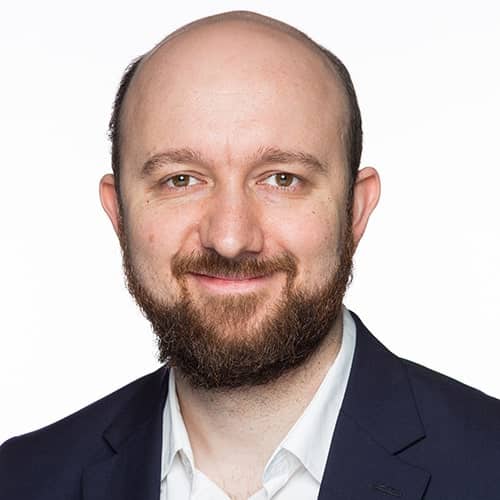
Amartya Sanyal is a Tenure Track Assistant Professor at the Department of Computer Science (DIKU), University of Copenhagen, specializing in Machine Learning. He also serves as an Adjunct Professor at the Indian Institute of Technology Kanpur (2023–2025). His research focuses on critical areas of AI safety, data privacy, and robust learning. University: University of Copenhagen Department: Department of Computer Science Academic Rank: Assistant Professor Adjunct Role: IIT Kanpur (2023–2025) His work addresses challenges like differential privacy , data poisoning attacks , machine unlearning , and robust mixture learning . Recent publications analyze privacy-preserving techniques for large language models, fairness in collective action algorithms, and certified data release mechanisms. Amartya has received the Villum Young Investigator Award (2025). His research outputs emphasize online learning , adversarial robustness , and privacy-utility tradeoffs through rigorous theoretical frameworks and practical implementations. Scientific Award: Villum Young Investigator Award His collaborations span institutions like IIT Kanpur and involve interdisciplinary projects with industry partners. Current activities include talks on privacy with correlated data and machine unlearning advancements.
Desmond Elliott is an Associate Professor in the Natural Language Processing section at the Department of Computer Science, University of Copenhagen (UCPH). His research focuses on multimodal and multilingual models with specific emphasis on vision-language integration and tokenization-free NLP approaches. He teaches Bachelor and Master's level courses including Advanced Topics in Natural Language Processing (since 2019), Grundlæggende Data Science (since 2023), and previously Data Science (2021-2023). His research interests center on building and understanding multimodal and multilingual models , particularly exploring vision and language interactions through billion-parameter systems. Current work investigates cultural representation disparities in vision-language models, parameter-efficient captioning, and multimodal distributional semantics across diverse domains including food culture and medical imaging. His methodology emphasizes real-world applicability in non-English contexts and ethical considerations in multimodal systems. Elliott's recent publications (2025) demonstrate leadership in multimodal NLP, with significant contributions to vision-language pretraining, multilingual evaluation frameworks, and clinical NLP applications. His work spans theoretical advancements in model architectures and practical implementations addressing challenges in low-resource languages and domain adaptation. Best Long Paper Award at EMNLP 2021 Best Poster Award at COLING 2019 As an active educator, Elliott contributes to courses on Fair and Transparent Machine Learning and previously taught Information Retrieval. His research collaborations span international institutions with particular focus on European and non-English language contexts, reflecting UCPH's recognition as Europe's #1 institution for HCI research over the past decade.
Jesper Rindom Jensen is an Associate Professor in the Department of Electronic Systems at Aalborg University, Denmark, under the Technical Faculty of IT and Design. He is the Head of the Audio Analysis Lab, a leading research group in audio signal processing, since 2023. His work bridges theoretical signal processing and practical applications in artificial intelligence and audio systems. Full Name: Jesper Rindom Jensen Institution: Aalborg University School: The Technical Faculty of IT and Design Department: Department of Electronic Systems Research Lab: Audio Analysis Lab Email: jrj@es.aau.dk Office: Fredrik Bajers Vej 7B, B5-206, 9220 Aalborg Øst, Denmark Education: M.Sc. in Electronic Systems, Aalborg University (cum laude, 2009) Ph.D. in Signal Processing, Aalborg University (2012) Research Interests: Jesper Rindom Jensen's research centers on audio signal processing, with a strong emphasis on artificial intelligence, speech enhancement, noise reduction, beamforming, and multichannel systems. His work applies to diverse domains including robot and drone audition, spatial audio, and active noise control. He develops novel filtering techniques, including variable span linear filters and harmonic beamformers, to improve speech quality and intelligibility in noisy and reverberant environments. Publication Trends: His recent publications (2023–2025) show a strong trend toward integrating deep learning with classical signal processing, particularly in direction-of-arrival estimation, underwater acoustics, and robust multichannel systems. There is a clear focus on real-world applications, including sound zone control, active noise control, and limited-data scenarios using knowledge distillation. His work consistently emphasizes robustness, efficiency, and practical deployment. Scientific Awards and Recognition: AAU Talent for emerging research leaders Recipient of a competitive postdoc grant from the Danish Independent Research Council Advising and Grants: Jesper has supervised multiple PhD and master’s students, including Nørholm, Karimian-Azari, Zhang, and Wang. He has led significant research projects such as 'Sound Processing for Robots and Drones' (2018–2020) and participated in others related to joint audio-visual tracking and speech enhancement. His research has been supported by national funding bodies, reflecting its innovation and impact. Labs and Teams: He is a founding and core member of the Audio Analysis Lab at Aalborg University, which focuses on cutting-edge audio signal processing and AI-driven solutions. The lab fosters interdisciplinary collaboration and has produced numerous publications, datasets, and real-world applications. Jensen’s leadership since 2023 underscores his pivotal role in shaping the lab’s research direction.
Stefan Oehmcke is an Assistant Professor at the Machine Learning Section of the Department of Computer Science , University of Copenhagen. His research focuses on applying machine learning techniques to environmental and geospatial analysis, particularly in forest ecology, tree monitoring, and climate impact studies. Research Trends: His recent publications emphasize deep learning for LiDAR data processing, multi-modal geospatial representation, and sustainable AI practices. Key Collaborations: Frequently collaborates with researchers in environmental science, remote sensing, and climate change (e.g., Martin Brandt, Christian Igel). Applications: Develops tools for forest biomass estimation, tree mortality mapping, and urban safety analysis using satellite imagery. While no specific educational background or scientific awards are mentioned in the provided texts, Oehmcke's work demonstrates technical innovation in AI explainability and environmental monitoring, with significant contributions to journals like Remote Sensing of Environment and Nature Communications .
Ilias Chalkidis is an Assistant Professor specializing in Natural Language Processing at the Department of Computer Science, University of Copenhagen. He is actively affiliated with the Natural Language Processing research section, contributing to both theoretical and applied advancements in the field. His research spans multiple high-impact domains with particular emphasis on: Legal natural language processing and multilingual legal reasoning Large language model applications in political and social contexts Fairness-explainability trade-offs in AI systems Innovative representation learning techniques for textual data Analysis of his recent publications reveals a strong focus on bridging legal informatics with cutting-edge NLP methodologies. His work on multilingual legal corpora (including the 689GB MultiLegalPile dataset) and legal decision influence prediction demonstrates practical applications for judicial systems. Simultaneously, his investigations into LLMs as voting assistants and European political spectrum analysis showcase innovative intersections between computational social science and language technology. His technical contributions to contrastive learning and hyperbolic embeddings provide foundational advances for document representation. Chalkidis actively participates in the research community through workshop organization (Natural Legal Language Processing Workshop 2023-2024) and conference presentations. His research has been published in top-tier venues including ACL, EMNLP, and ECAI, with significant citations reflecting community impact. While specific advising relationships aren't documented in the provided materials, his collaborative work patterns suggest active mentorship within the NLP research ecosystem.
Diego F. Aranha is an Associate Professor in the Department of Computer Science at Aarhus University . His research focuses on cryptographic systems, cybersecurity, and privacy-preserving technologies with applications in voting systems, post-quantum cryptography, and secure computation. He has contributed extensively to homomorphic encryption, secure multiparty computation (MPC), and cryptanalysis of cryptographic implementations. Key projects include: MPCC (2025-2028) : Multi-Party Computation in the Confidential Cloud SCI (2024-2027) : Secure Computation Infrastructures for the Retail Industry RENAIS (2021-2026) : Residue Number Systems for Cryptography His work emphasizes practical efficiency and formal verification of cryptographic protocols. Recent publications highlight advancements in lattice-based cryptography, secure voting schemes, and mitigating side-channel vulnerabilities in post-quantum algorithms. He actively collaborates on open-source cryptographic libraries and standards, with a focus on bridging theoretical security and real-world implementation challenges.
Ben Wagner is a leading academic in digital rights and technology governance, holding multiple prestigious positions: University Professor of Human Rights & Technology at IT:U, Director of the AI Futures Lab on Rights and Justice at TU Delft, and Professor of Media, Technology and Society at Inholland University of Applied Sciences. He leads the Digital Rights Research Team (DRRT) and co-founded the Sustainable Media Lab (SML) in The Hague, contributing to bridging research and education. He is also a visiting researcher at Oxford University's Human Centred Computing Group and serves on the advisory board of the journal Patterns . Inholland University of Applied Sciences – Professor, Media, Technology & Society (since 2021) TU Delft – Director, AI Futures Lab on Rights and Justice IT:U – University Professor, Human Rights & Technology European University Viadrina – Founding Director, Center for Internet & Human Rights Vienna University of Economics – Director, Sustainable Computing Lab ENISA – Advisory Group Member Ben Wagner earned his PhD in Political and Social Sciences from the European University Institute in Florence in 2013, with a dissertation on freedom of expression and online content regulation. He has held research positions at Cambridge University, University of Pennsylvania, Technical University of Berlin, and European University Viadrina. His research centers on digital rights, AI governance, freedom of expression online, and the societal impact of technology. He investigates how digital infrastructures shape human rights and advocates for sustainable, accountable systems. His work spans legal, technical, and social dimensions, focusing on public sector data practices, content moderation, ethical AI, and digital inclusion. He actively promotes citizen control over technological change and interdisciplinary collaboration. The recent publications reflect a strong focus on the ethical and governance challenges of AI and data science, digital rights frameworks, and platform accountability. Themes include the gap between policy and practice in public data use, global AI ethics, content governance on social media, and co-designing digital rights labels. His work emphasizes systemic accountability, hybrid digital-physical spaces, and embedding rights into technological design. Ben Wagner is an expert advisor to the European Parliament, European Commission, OSCE, Council of Europe, and UNESCO. He is a member of the policy advisory board for ECHOES (European Cloud for Heritage OpEn Science) and contributes to high-impact publications and international discourse. His research is widely covered in global media including CNN, The Guardian, Bloomberg TV, Der Spiegel, ORF, and SWR2. He advises on and contributes to major research initiatives such as ReSocial and fabricated. He is involved in developing a new Master’s program in Data-Driven Business at Inholland and leads efforts to integrate digital rights into education and innovation. His inaugural lecture, 'The Ground Beneath our Feet,' highlights the instability of digital infrastructures and the urgent need to embed digital rights at their core. Ben co-founded the Digital Rights Research Team and the Sustainable Media Lab at Inholland, fostering collaboration across faculties and sectors. These labs focus on creating a digitally responsible society through interdisciplinary research in design, policy, and technology. The AI Futures Lab at TU Delft explores justice-oriented futures for AI, while his work at IT:U advances human rights in digital contexts.
Omry Ross is an Associate Professor at the Department of Computer Science, University of Copenhagen. His research focuses on Programming Languages and Theory of Computation, with significant contributions to decentralized finance (DeFi), blockchain technology, and algorithmic governance. Research Interests: Decentralized Finance (DeFi) and Smart Contract Systems Blockchain Protocol Design and Cryptoeconomics Programming Language Theory and Formal Verification Token Governance in Decentralized Autonomous Organizations (DAOs) Algorithmic Game Theory and Market Mechanisms Recent publications highlight his work in AI moderation of online communities, compliance reporting in DLT systems, and MEV optimization in multi-block scenarios. His research bridges theoretical computer science with practical applications in financial cryptography. Scientific Awards: Nasdaq Nordic Foundation Grant (2021) Omry Ross collaborates extensively with researchers in blockchain and DeFi, including contributions to the Financial Cryptography and Data Security workshops.
Markus Strohmaier is Professor and Chair of Data Science in the Economic and Social Sciences at the University of Mannheim, with affiliations as Scientific Coordinator at GESIS – Leibniz Institute for the Social Sciences and External Faculty Member at the Complexity Science Hub Vienna. His interdisciplinary work bridges computer science, economics, and the social sciences. University of Mannheim – Chair for Data Science in the Economic and Social Sciences GESIS – Scientific Coordinator for Digital Behavioral Data Complexity Science Hub Vienna – External Faculty Former Professor at RWTH Aachen University and University of Koblenz-Landau Previous Post-Doc and Visiting Roles at Stanford University, Xerox PARC, University of Toronto, and Graz University of Technology His research focuses on computational social science , algorithmic fairness , network science , and the modeling of human behavior using machine learning and large-scale data. He develops methods to analyze textual, relational, and emerging data types to understand socioeconomic systems and digital societies. The recent articles reflect a strong trend in studying inequality in algorithmic systems , governance in decentralized organizations (DAOs) , and psychological profiling of AI . His work spans high-impact journals like Nature and Scientific Reports , emphasizing fairness, transparency, and societal impact of data-driven technologies. Notable scientific contributions include: Editor-in-Chief of EPJ Data Science (2018–2022) Founding co-chair of the Computational Social Science section of the German Informatics Society He advises students and leads research projects on algorithmic fairness, digital governance, and behavioral modeling. His team engages in both fundamental methodological development and applied studies in real-world digital platforms. He has been involved in significant grants and collaborative initiatives around digital behavioral data and computational social science infrastructure. His lab and projects include the Algorithmic Fairness initiative and the interactive visualization tool Planets of Disparity , which explores how algorithms behave on different network structures. These efforts aim to enhance public understanding and technical scrutiny of algorithmic systems.
Carsten Schürmann is a Professor of Theoretical Computer Science at IT University of Copenhagen, where he serves as Center Manager for the Center for Information Security and Trust. His research spans information security, cryptographic voting protocols, identity management, and digital democracy, with significant contributions to security ceremonies and formal verification of protocols. Professor, Department of Computer Science Center Manager, Center for Information Security and Trust Principal Investigator for multiple DIREC projects through 2025 Active researcher with 64 publications and 20 projects listed His research focuses on the intersection of theoretical computer science and practical security challenges, particularly in voting systems and security ceremonies. Schürmann has developed formal methods for analyzing security protocols, with emphasis on human factors in security implementations and cryptographic voting systems. His work bridges logical frameworks with real-world security applications, addressing both technical and socio-technical aspects of security. Analysis of his recent publications reveals a strong emphasis on voting security, with multiple papers on risk-limiting audits, receipt-free voting, and election integrity. His work increasingly incorporates formal logical frameworks to verify security properties, while also addressing human factors in security ceremonies. The research spans theoretical foundations in linear logic to practical applications in election systems. As Principal Investigator, Schürmann leads several major projects funded by the Innovation Fund Denmark, including DIREC initiatives focused on Capacity Building, PhD School, Voting, and Entrepreneurship (2020-2025). He has also established working groups in Adversarial AI and Machine Learning. Organized workshops on Code Scanning (2014) and Verifying Security Protocols in Tamarin (2016) Active media commentator on security issues with 311 media appearances through 2025 Principal Investigator for 7 ongoing and 13 completed research projects Schürmann directs the Center for Information Security and Trust, which serves as a hub for interdisciplinary security research connecting theoretical computer science with practical security applications. His center focuses particularly on voting systems security and security ceremonies, bringing together researchers from multiple disciplines to address complex security challenges.
Arun Rai is a Regents' Professor and Howard S. Starks Distinguished Chair at Georgia State University's Robinson College of Business. He serves as Director and Co-founder of the interdisciplinary Center for Digital Innovation (CDIN), which focuses on digital innovation and industry-university partnerships. His work bridges academia and practice, with collaborations spanning IBM, Intel, UPS, and healthcare organizations. Research Interests: Rai investigates digital innovation's role in transforming business models, supply chains, and societal systems. His research spans: AI's impact on workforce skills and economic disparities Governance of digital platforms and online communities IT-enabled solutions for poverty reduction and healthcare access Patent strategies for software and AI innovations Publication Trends: Recent articles (2019-2024) demonstrate a focus on AI ethics, platform economics, and regulatory impacts. Key themes include algorithmic governance in online communities, patent litigation risks in AI, and real-world applications of computer vision in operations. Awards & Honors: LEO Award for Lifetime Contributions (AIS, 2019) INFORMS ISS Practical Impacts Award (2022) AACSB Influential Leader (2024) Regents' Professor appointment (University System of Georgia, 2006) Leadership: Rai has served as Editor-in-Chief of MIS Quarterly (2016-2020) and advises Georgia's AI Advisory Council. His industry engagements include board positions at Apollo Hospitals and projects with Gartner, SAP, and Daimler-Chrysler.
Maria Maistro is a Tenure Track Assistant Professor at the Department of Computer Science, Faculty of Science, University of Copenhagen. Her research focuses on Information Retrieval (IR) with emphasis on evaluation, reproducibility, click log analysis, learning to rank, expert search, and machine learning applications to IR. She contributes to the AMAOS project aiming to advance expert search methodologies. PhD in Computer Science (IR) from University of Padua (2017) MSc in Mathematics (probability, stochastic methods) from University of Padua (2014) Maria's research addresses critical challenges in IR evaluation through stochastic modeling and user signal analysis. She investigates fairness-relevance tradeoffs in recommender systems, cross-cultural retrieval frameworks, and explainability techniques for language models and recommendation algorithms. Her work combines theoretical foundations with practical applications in healthcare records, insurance domains, and culinary contexts. Recent publications (2024–2025) demonstrate her expertise in: Retrieval-Augmented Generation (RAG) for cross-cultural adaptation Fairness evaluation in recommender systems EEG-based semantic relevance analysis Session-based recommendation explainability Language model pruning consistency Reproducibility frameworks for IR experiments Maria actively participates in academic activities through conference organization roles, including: Organizer, CENTRE@CLEF 2019 Organizer, CENTRE@NTCIR 2019 Organizer, CENTRE@CLEF 2018 Organizer, LEARNER 2017
Jan Trzaskowski is a Professor at the Department of Law within The Faculty of Social Sciences and Humanities at Aalborg University. His research focuses on digital privacy law, platform regulation, and GDPR compliance. He is actively involved in interdisciplinary initiatives such as the MASSHINE network (Mission: Improved Wellbeing Among Children And Youth In Denmark) and the SSH Children and Youth Research Network. Trzaskowski's work addresses modern legal challenges in the digital era, including generative AI regulation, dark patterns in consumer interfaces, and ethical synthetic data usage. He co-leads the SE3D project (2024–2028), exploring ethical development of synthetic health data via deep learning. His publications span books, journal articles, and conference proceedings on topics ranging from EU internet law to behavioral regulation in technology. He has been frequently cited in media discussions on digital privacy, AI ethics, and platform governance. Trzaskowski chairs the Nordjysk GDPR-netværk and contributes to policy debates through 62+ press/media engagements.
Ivan Smirnov is a computational social scientist currently serving as the AI Lead in Research and Researcher Training at the Graduate Research School, University of Technology Sydney (UTS). He is also an External Faculty Member at the Complexity Science Hub in Vienna. His work spans the intersection of AI, sociology, and education, with a focus on Generative AI's role in research and doctoral training. University: University of Technology Sydney School: Graduate Research School Previous Positions: Assistant Professor, University of Mannheim; Group Leader, Higher School of Economics, Moscow Smirnov’s research explores how digital traces and machine learning can illuminate social dynamics such as inequality, gender bias, and academic performance. He employs computational methods to study topics like online toxicity, student wellbeing, and the digital representation of gender. His methodological expertise includes natural language processing, social network analysis, and predictive modeling using social media data. His recent publications reveal a consistent trend in using large-scale digital data to address pressing social questions, particularly in education and mental health. He frequently publishes in leading interdisciplinary journals such as Proceedings of the National Academy of Sciences , EPJ Data Science , and Royal Society Open Science , and presents at major conferences including IC2S2 and ICWSM. His scientific contributions have been recognized through media coverage in Nature , MIT Technology Review , and The Times , as well as a Best Course Award at HSE for his pioneering teaching in computational social science. Best Course Award at Higher School of Economics Media features in Nature, MIT Technology Review, The Times, ABC TV Smirnov is actively involved in research leadership and training, having led AI initiatives at UTS and co-organized the Summer Institute in Computational Social Science. He has secured funding from the European Commission and the Russian Science Foundation. He supervises research students and has developed the open educational course Getting Started with Generative AI in Research , reflecting his commitment to empowering the next generation of researchers. He also contributes to the academic community through peer review for top conferences and journals. He is affiliated with professional groups including the Human-AI Collaborative Knowledgebase for Education and Research (HACKER) and the SDG Classification Expert Group, and leads initiatives focused on integrating AI into research training and supporting HDR student wellbeing.
Sille Schandorph Løkkegaard is an Associate Professor in Clinical Psychology at the Department of Psychology, Faculty of Health Sciences, University of Southern Denmark. She serves as Adjunct at The National Center of Psychotraumatology and CH:LD, focusing on child psychotraumatology research and clinical implementation. Her work bridges academic research with national child protection systems through the Danish Barnáhus (Children's Houses) network. Her research centers on developmentally sensitive trauma assessment for young children, notably the Odense Child Trauma Screening (OCTS) - a play-based story stem measure for ages 4-8. Key areas include validating ICD-11 PTSD/CPTSD in children, developing national assessment batteries for abuse-exposed children, and creating evidence-based interventions. Her fingerprint highlights expertise in Posttraumatic Stress Disorder (100%), Caregiver reporting (59%), Convergent Validity (25%), and Preschooler trauma assessment (13%). Løkkegaard leads implementation science projects adapting trauma tools for Greenlandic and Lithuanian contexts, with recent 2025 publications demonstrating cross-cultural OCTS validation and systematic reviews of childhood trauma treatments. Her work shows strong emphasis on translating research into practice through Denmark's national child protection infrastructure. ESTSS Innovation in Clinical Practice Award (2023) Principal Investigator for OCTS validation in Greenland (2019-2027) Co-PI for Autism and Trauma literature review (2024-2025) Developer of national trauma assessment protocols for Danish Barnáhus She supervises PhD projects on trauma treatment efficacy and coordinates training workshops for OCTS implementation. Current activities include leading the 2025 course 'Udviklingspsykologi' and presenting at the Nordic Conference on Child Abuse and Neglect, demonstrating active engagement in both academic and clinical communities.