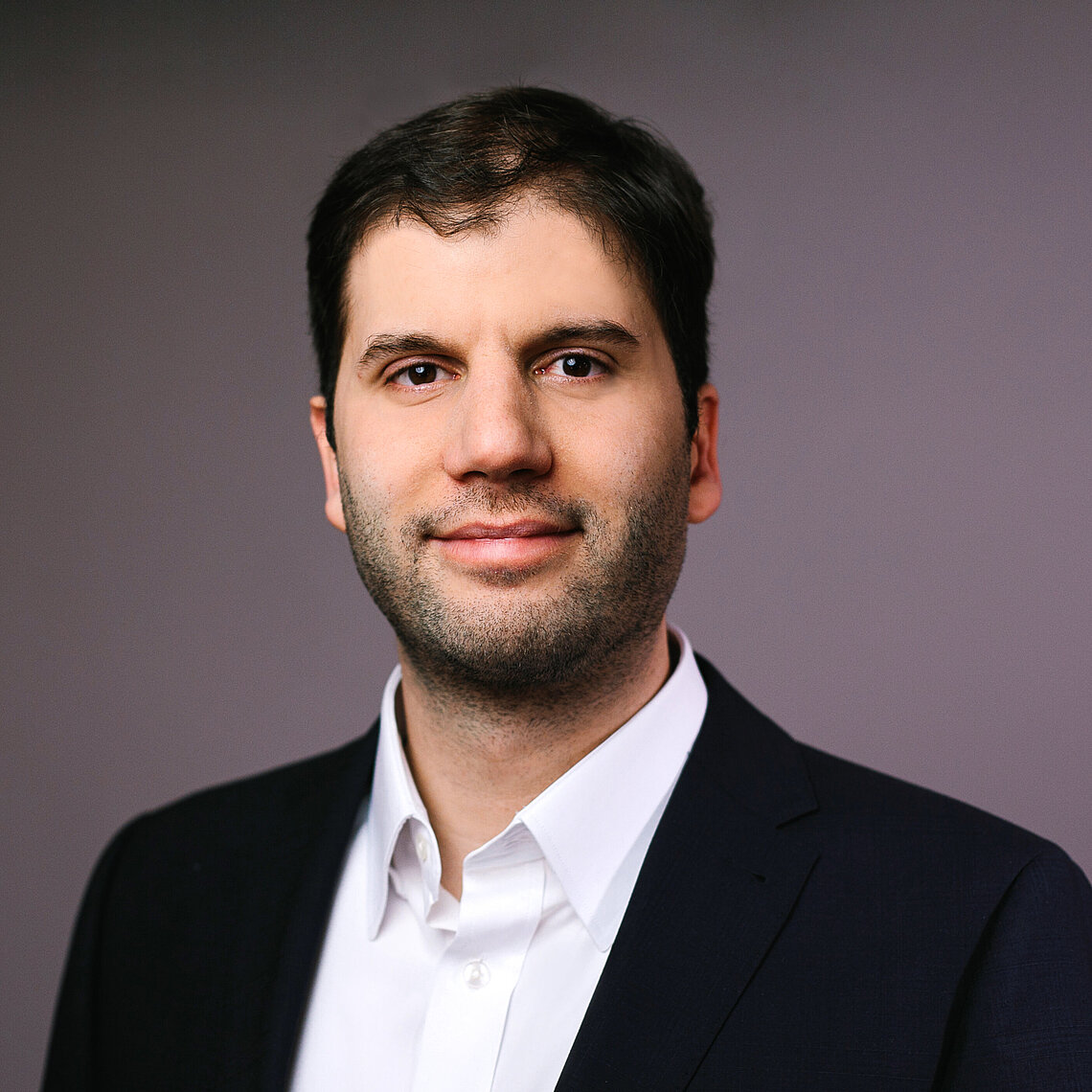
Frank Vallentin is a full professor of applied mathematics (computer science) at the Mathematical Institute of the University of Cologne, Germany. He has held academic positions at Technische Universiteit Delft, Centrum Wiskunde & Informatica (CWI), and the Hebrew University of Jerusalem. His research spans optimization, discrete geometry, harmonic analysis, and computational mathematics. Research Interests: His primary mathematical interests include semidefinite programming, combinatorial optimization, harmonic analysis, discrete geometry, combinatorics, geometry of numbers, special functions, computational complexity, and coding and information theory. These areas reflect a deep integration of theoretical mathematics with algorithmic and computational techniques. The 15 most recent publications reveal a strong focus on geometric optimization, lattice problems, energy minimization, and semidefinite programming bounds. Key themes include chromatic numbers of lattices, symplectic capacities, polarization phenomena, and algorithmic solutions to geometric problems. His work often involves recursive SDP hierarchies, extremal configurations, and computational verification of theoretical bounds. Scientific Awards and Grants: SIAG/Optimization Prize (2011, with Christine Bachoc) NWO VIDI Grant (2010–2015): Semidefinite programming and harmonic analysis DFG Project: Symplectic capacities of polytopes (2017–) EU Horizon 2020 MINOA Project: Optimization with limited quantum resources (2017–) DFG Project: Spectral bounds in extremal discrete geometry (2019–) Advising and Grants: Vallentin has advised numerous PhD and master’s students at TU Delft and the University of Cologne, covering topics in discrete geometry, optimization, coding theory, and quantum information. He has secured major research funding from NWO, DFG, and the EU, supporting interdisciplinary projects in algorithmic optimization and mathematical physics. He is actively involved in organizing workshops and summer schools. Labs and Teams: He leads a research group at the University of Cologne focusing on optimization and discrete geometry, with strong collaborations with CWI Amsterdam, TU Delft, and international institutes. His team works on theoretical and computational aspects of geometric optimization, often using symmetry reduction and harmonic analysis.