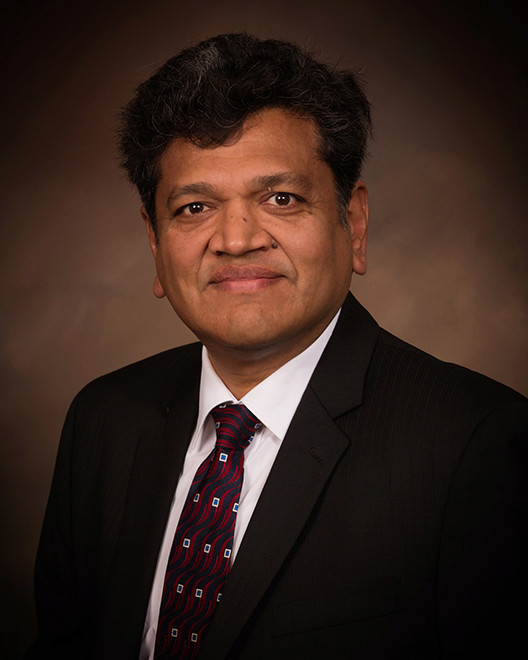
Professor Zhiyuan Luo is affiliated with the Department of Computer Science and the Centre for Machine Learning at Royal Holloway, University of London. His research focuses on machine learning applications in indoor positioning systems, wireless networks, and signal processing. He has contributed to over 146 research outputs, including peer-reviewed articles and conference contributions. Key collaborations include projects funded by Innovate UK and the European Union, such as DataSim (rail timetable optimization) and Exascale Compound Activity Prediction Engine. He serves as a Co-Investigator in multiple research initiatives, including smart transport and chemical synthesis machine learning projects. His work aligns with UN Sustainable Development Goals through advancements in technology and data-driven solutions. Notable research areas include WiFi fingerprinting, dynamic model switching algorithms, and viewer insights in linear television using ML techniques.
Prof. Selin Damla Ahipasaoglu is a Professor in Operational Research at the University of Southampton's School of Mathematical Sciences . She serves on the management team of the UKRI CDT SustAI (Artificial Intelligence for Sustainability) as Senior Tutor and Co-Lead for the Transportation and Logistics Theme . Her work bridges mathematical optimization with practical applications in sustainability, finance, and transportation systems. Research Interests : Convex Optimization Robust Optimization Discrete Choice Theory Experimental Design Machine Learning Current Research : Focused on robust optimization and its applications in discrete choice modeling, portfolio optimization, and transportation systems. She explores theoretical frameworks alongside real-world implementations, particularly through interdisciplinary projects like the UKRI CDT SustAI. Teaching : In the 2025/2026 academic year, she teaches MATH3017: Mathematical Programming and MATH2013: Operational Research II . She supervises PhD students in Mathematical Sciences, including Kexin Lai, Samuel Jericho Ward, and others.
Hugo Larochelle is an Associate Professor at the Université de Montréal's Department of Computer Science and Operations Research (DIRO) within the Faculty of Arts and Sciences. His expertise spans Neural Networks, Deep Learning, and Machine Learning, with contributions to fields like Computer Vision and Natural Language Processing. A graduate of DIRO (Bacc 2004, PhD 2009), he held roles at the University of Sherbrooke (2011–2016) and co-founded Whetlab (acquired by Twitter in 2015). Currently at Google Brain, he balances academic and industrial research, leading projects like the UNIQUE initiative exploring neuroscience-AI intersections. He actively contributes to Quebec’s AI ecosystem through MILA and has received prestigious awards, including the 2019 Diplômé d'honneur. His work emphasizes ethical AI, reproducibility, and interdisciplinary applications. Education: Baccalauréat (Computer Science), Université de Montréal, 2004 Doctorat (Computer Science), Université de Montréal, 2009 Research Interests: Hugo’s work focuses on advancing deep learning techniques for real-world applications, including environmental monitoring (e.g., tree crown segmentation via drone imagery), AI ethics, and model unlearning. He explores intersections between neuroscience and AI, leveraging interdisciplinary approaches to solve complex problems. Recent efforts emphasize benchmark standardization (e.g., EEVEE/GATE) and improving model efficiency through architecture innovations like SoftMoE. Articles Trends: Recent publications highlight contributions to instance segmentation (SAM models), ethical AI (unlearning frameworks), and interdisciplinary applications (e.g., bird species modeling with remote sensing). His work bridges theoretical advancements with practical tools for industries and environmental science. Scientific Awards: 2019 Diplômé d'honneur (Université de Montréal). Advising & Grants: Supervised PhD students in topics like neural networks, code modeling, and program execution (e.g., Sara Hooker, David Bieber). Co-PI on the UNIQUE project (2019–2024, FRQNT-funded), exploring neuro-AI synergies. Recipient of CIFAR funding for ICRA research (2017–2022). Labs & Collaborations: Active contributor to MILA as an associate member. Leads interdisciplinary efforts in AI for environmental challenges and healthcare imaging optimization.
Sean Qian is a Professor at Carnegie Mellon University (CMU), jointly appointed in the Department of Civil and Environmental Engineering, Heinz College of Information Systems and Public Policy, and the Department of Electrical and Computer Engineering. He directs the Mobility Data Analytics Center (MAC) and co-founded TraffiQure Technologies to commercialize AI-driven infrastructure solutions. His research focuses on dynamic network modeling, intelligent transportation systems, climate resilience, and infrastructure interdependency. Supported by NSF, U.S. DOT, and industry partners, his work integrates AI, big data, and policy analysis to address urban mobility challenges. Education: PhD in Civil Engineering (UC Davis, 2011), MS in Statistics (Stanford, 2012), and dual MS/BS in Civil Engineering (Tsinghua University, 2006/2004). Research emphasizes smart cities, EV integration, cybersecurity for infrastructure, and equity in mobility policies. He serves on editorial boards for Transportation Research journals and TRB committees. Awards include the NSF CAREER Award (2018) and Greenshields Prize (2017). Grants and collaborations include projects with Fujitsu, IBM, and state agencies, addressing curbside management, climate adaptation, and rural mobility. His lab develops tools like the Rural Access Mobility Platform and social digital twin technologies for infrastructure resilience.
Scott Miller is a Lecturer in the Department of Industrial & Systems Engineering at Texas A&M University. His research focuses on physical layer security, wireless communication systems, and signal processing in harsh environments. He specializes in visible light communication (VLC), acoustic telemetry, and hybrid FSO-mmWave systems. Key contributions include secure IM-OFDMA system design, IQ imbalance analysis, and medium-specific communication protocols for downhole monitoring. Research interests span secure communication protocols, network coding, cognitive radio networks, and system reliability in fading channels. He has pioneered work on VLC-based downhole gas pipeline monitoring using hydrogen/nitrogen mediums and developed learning-based link selection approaches for hybrid wireless systems. His work emphasizes practical applications in industrial telemetry and secure wireless transmission. Notable trends in his publications include: Advancements in physical layer security mechanisms for uplink systems Innovative use of non-traditional mediums (e.g., CO₂, hydrogen) for VLC Integration of machine learning for signal detection and link optimization Robustness analysis of hybrid FSO-mmWave networks under various impairments His research bridges theoretical communication frameworks with real-world industrial applications, addressing challenges in energy, oil/gas sectors, and secure IoT deployments.
Hang Li is a Researcher in the Department of Molecular Biophysics and Biochemistry at Yale University’s Yale School of Medicine. Their work focuses on advancing neural network architectures, quantization techniques, and spiking neural networks (SNNs). They are affiliated with the Molecular Biophysics and Biochemistry department and contribute to interdisciplinary research in artificial intelligence and computational neuroscience. Research interests include optimizing neural networks for efficiency through quantization, exploring spiking neural networks for low-power computing, and developing methods like hybrid SNN designs, post-training calibration, and neuromorphic architectures. Their recent work addresses challenges in extreme low-bit quantization, data augmentation for object detection, and temporal coding in SNNs. Publications highlight innovations in quantization methods (e.g., TesseraQ, GenQ), spiking transformer architectures, and workload-balanced pruning strategies. While no awards are explicitly listed, their contributions to model efficiency and neuromorphic computing are notable in the field. Hang Li collaborates on projects involving neuromorphic hardware, system inconsistency benchmarking (SysNoise), and data-driven spatio-temporal analysis. Their research bridges theoretical advancements and practical applications in AI and biomedical informatics.
Ziad Kobti is a Professor and Director of the School of Computer Science at the University of Windsor. His work focuses on advancing artificial intelligence, machine learning, and data science with applications in healthcare, cybersecurity, and social network analysis. He leads initiatives such as the Graph Neural Network Lab and collaborates with industry partners like Sterling Information Technologies to foster cybersecurity talent. Kobti has organized programming competitions, co-op education programs, and research workshops, emphasizing experiential learning for students. His research spans recommendation systems, graph neural networks, pandemic modeling, and medical diagnostics, with a focus on impactful real-world solutions. He is involved in academic leadership, program development, and community outreach through events like Computer Science Demo Day. Research interests include: Graph Neural Networks and Dynamic Link Prediction Recommender Systems and Anomaly Detection Social Network Analysis and Team Formation Healthcare Informatics and Medical Imaging Cybersecurity and Privacy Risk Analysis Machine Learning for Public Health and Pandemic Preparedness Recent projects include collaborations on AI-driven crop disease detection, electric vehicle research, and palliative care simulation frameworks. He has developed frameworks like UDIS and BeComE, and contributes to open-source tools for social network analysis and anomaly detection. His work integrates multi-disciplinary approaches, combining computational models with domain-specific expertise in healthcare, agriculture, and social systems.
Sneha Kumar Kasera is an Associate Dean for Academic Affairs and Professor at the John and Marcia Price College of Engineering, affiliated with the Kahlert School of Computing. She leads the ANSR Lab, founded in 2003, focusing on advanced networked systems research. Her work spans networks and systems, including mobile/pervasive systems, wireless security, IoT, crowdsourcing, and spectrum management. She has held leadership roles in conferences like IEEE WoWMoM, ACM WiSec, and ACM MobiCom. Kasera’s research emphasizes practical applications of networking and security, with contributions to spectrum sharing, dynamic zone protocols, and privacy-preserving technologies. Her professional activities include program co-chair roles for major conferences and editorial positions for IEEE Transactions. She advises numerous PhD and MS students, many of whom hold prominent roles in academia and industry. Kasera’s lab develops open platforms like POWDER for experimental wireless research, addressing real-world challenges in network design and security. Key research themes include spectrum monitoring, deep reinforcement learning for network optimization, and privacy-aware systems. Her publications highlight advancements in 5G/6G networks, wireless localization, and IoT ecosystems. Her work bridges theoretical contributions with scalable, deployable solutions for modern communication challenges.
Prof. Lena Maier-Hein is a full professor at Heidelberg University and managing director of the National Center for Tumor Diseases (NCT) Heidelberg. She leads the division of Intelligent Medical Systems (IMSY) at the German Cancer Research Center (DKFZ) and oversees the cross-topic program 'Data Science and Digital Oncology'. Her research focuses on machine learning in biomedical imaging, particularly surgical data science and computational biophotonics. She chairs the Surgical Data Science initiative and serves on editorial boards for journals like Nature Scientific Data and IEEE TPAMI. Her awards include the 2024 German Cancer Award, 2013 Heinz Maier-Leibnitz Prize, and European Research Council grants. She advocates for trustworthy AI in healthcare, co-developing frameworks like Metrics Reloaded and TRIPOD+ AI. Her work bridges academic, clinical, and industrial sectors through initiatives like the FeTS challenge. Key contributions include advancing photoacoustic imaging, surgical AI systems, and validation methodologies. She emphasizes ethical AI deployment and interdisciplinary collaboration to address clinical challenges.
Prof. Dr. Matthias Althoff is an Associate Professor of Cyber-Physical Systems at the Technical University of Munich (TUM), leading the Chair of Cyber-Physical Systems within the TUM School of Computation, Information and Technology. His research focuses on formal safety verification, model-based design, and reachability analysis for systems such as autonomous vehicles, robotics, and power grids. Education: He earned his diploma in Mechatronics and Information Technology (2005) and PhD (2010, summa cum laude) from TUM. He held postdoctoral positions at Carnegie Mellon University (2010–2012) and served as a junior professor at TU Ilmenau (2012–2013) before joining TUM as a full professor in 2013, becoming an associate professor in 2019. Research Interests: His work spans cyber-physical systems, formal methods for safety assurance, autonomous vehicles, modular robotics, and smart grid control. He develops tools like CommonRoad and CORA for scenario-based testing and reachability analysis. Awards: He has received the IEEE/ACM William J. McCalla ICCAD Best Paper Award (2012) and the Best Poster Award at the IEEE Intelligent Vehicles Symposium (2009). Labs/Projects: Leads the Cyber-Physical Systems group, collaborating on projects such as the Scenario Factory for automated vehicle testing and CommonPower for safe smart grid control. He also co-founded startups RobCo and aiina .
Eric Eaton is a prominent researcher in Computer Science, specializing in Artificial Intelligence, Reinforcement Learning, and Federated Learning. His work bridges theoretical advancements with practical applications in healthcare, robotics, and educational technology, as evidenced by his collaborations with institutions like the Vector Institute and co-authors such as Marcel Hussing and Amir-massoud Farahmand. Research Focus: Lifelong Learning, Object-Centric Representation, and Algorithmic Fairness Key Contributions: ELLA algorithm, Distributed Continual Learning frameworks, and AI integration in surgical video analysis His recent publications address critical challenges in high update ratio reinforcement learning, federated learning for surgical data, and ethical considerations in algorithmic fairness. These works highlight his interdisciplinary approach, combining AI with healthcare and education. Eaton's leadership in projects like FORLA and Slot-BERT demonstrates innovation in unsupervised learning and temporal coherence. His involvement in the CS2023 curriculum design underscores his commitment to advancing computer science education.
Friso Bostoen is an Assistant Professor of Competition Law & Digital Regulation at Tilburg University , affiliated with TILT and TILEC . He holds a Ph.D. from KU Leuven and was a Max Weber Fellow at the European University Institute. Research Focus: Regulation of online platforms, AI, and generative AI under antitrust law, with a global perspective (Africa, Asia, Latin America). Teaching: Competition law at KU Leuven, London School of Economics, Erasmus University, Waseda University, and University of Trento. Publications: 15+ articles on AI, DMA, platform power, and antitrust enforcement in top journals. Side Activities: Editor of the CoRe Blog and host of the Monopoly Attack podcast. Research Trends: His work bridges antitrust law with digital innovation, focusing on AI, metaverse, and global platform regulation. Key themes include contestability in tech markets, gatekeeper designation frameworks, and adapting abuse-of-dominance assessments for free/digital products. Collaborations: Regularly co-authors with Giorgio Monti, Nicolas Petit, and Anouk van der Veer, addressing challenges in tech mergers, platform neutrality, and regulatory design.
Anaís Garrell Zulueta is an Associate Professor at the Polytechnic University of Catalonia (UPC) and a Robotics Researcher at the Institut de Robòtica i Informàtica Industrial (CSIC-UPC) . She serves as Vice-Director of the Mobile Robotics and Intelligent Systems subline and supervises the RAIG - Mobile Robotics and Artificial Intelligence Group . PhD (2013): European Doctorate with highest honors from UPC B.S. in Mathematics (2006) from University of Barcelona Diploma d'Estudis Avançats (DEA) in Control, Vision, and Robotics from UPC Her research focuses on Human-Robot Interaction (HRI) and robot cooperation , particularly in urban environments . Key themes include: Explainable AI for robot transparency Human motion behavior prediction Socially aware navigation systems Collaborative transport robotics Autonomous last-mile delivery systems Cybernetic avatars and societal implications Recent projects (2023-2025) include: TORNADO: Foundation models for robots handling deformable objects HandIA: AI-based rehabilitation tools LENA: Lifelong navigation learning TRIFFID: First responder assistance robotics SOCIAL PIA: Cybernetic avatar modeling Scientific recognition includes: Second Prize for Best Spanish Robotics Thesis Best Paper Award Nomination (IEEE/RSJ IROS, 2009) As an advisor, she supervises: PhD students: Ferran Gebelli Guinjoan, Lavinia Hriscu, Edison Bejarano Final year projects: 8 students on topics like LLM-enhanced interaction and LiDAR SLAM systems She operates within the Institut de Robòtica i Informàtica Industrial (IRI) and collaborates with Carnegie Mellon University.
Martim Brandão is a Lecturer (Assistant Professor) in Robotics and Autonomous Systems at King’s College London, where he leads the Responsible Robotics and AI (RRAI) Lab and serves as Co-Director of the UKRI Centre for Doctoral Training in Safe and Trusted AI. His research focuses on ethical, explainable, and safe AI and robotics, with applications in human-robot interaction, motion planning, fairness, and societal impact. His research interests include: Explainable AI and Motion Planning Fairness and Bias in AI Systems Human-Robot Interaction and Social Robotics Adversarial Robustness in Robotics Value Alignment and Ethical AI Inclusive and Participatory Robotics Design His recent publications (2023–2025) reflect a strong trend toward socially responsible robotics, focusing on fairness in navigation, explainability of planning failures, worker-centered agricultural robotics, environmental justice in drone delivery, and the dangers of bias in drowsiness detection and LLM-driven robots. His work emphasizes user understanding, societal impact, and ethical safeguards in autonomous systems. He has advised and collaborated with numerous students and researchers across diverse topics in robotics and AI. He is actively involved in shaping responsible robotics through: Leadership in the RRAI Lab Co-directing a national CDT in Safe and Trusted AI Developing fairness-aware algorithms Advocating for inclusive and ethical design practices His lab and research group focus on: Responsible Robotics and AI Explainability in Multi-Agent Planning Fairness in Coverage and Navigation Human-Centered Evaluation of AI Systems
Emmanuel Papadakis , Senior Lecturer in Artificial Intelligence at the University of Huddersfield 's School of Computing and Engineering , focuses on Vacuum Technology , Planning , Knowledge Engineering , and Robotics . His research aligns with UN SDGs through applications in industrial systems and clinical diagnostics. Key Affiliation : Centre for Autonomous and Intelligent Systems Research Output : 12 publications (2020-2025), including 5 articles in 2023-2025 His work explores AI applications in: Vacuum technology optimization ADHD diagnostic modeling Ontology-based transport maintenance Blockchain-enabled supply chain compliance Recent publications demonstrate interdisciplinary impact across computer science, healthcare, and engineering. Co-authorships with researchers in psychiatry and mechanical engineering highlight collaborative breadth. Leadership : Research Degree Supervision at University of Huddersfield Metrics : h-index 2 (Google Scholar), 5 citations (Scopus) as of June 2025