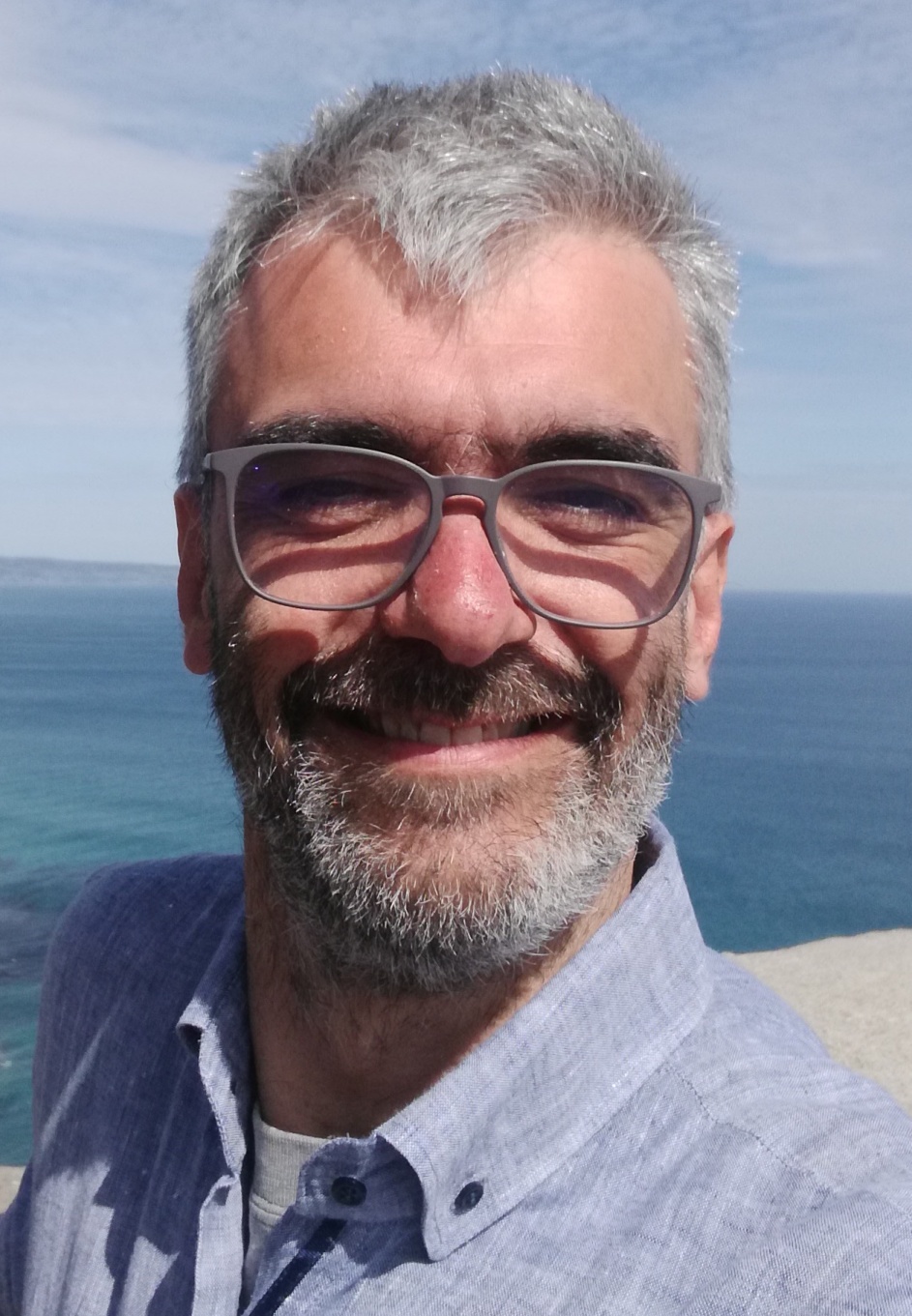
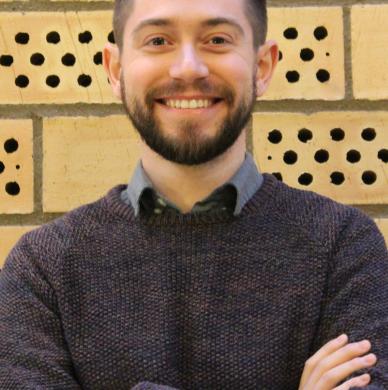
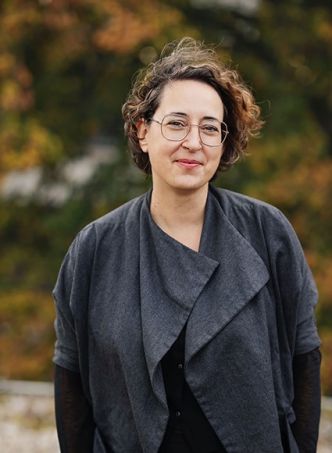
Andrea Garulli is a Professor in Control Systems at the Department of Information Engineering and Mathematics (DIISM), University of Siena. He served as Dean of the Faculty of Engineering (2011-2012) and Director of DIISM (2015-2021). His research focuses on control systems, including system identification, state estimation, robust control, multi-agent systems, and aerospace applications. He co-authored the book *Homogeneous Polynomial Forms for Robustness Analysis of Uncertain Systems* and developed the LFR_RAI toolbox for robustness analysis of uncertain models. Garulli has led projects like ACANTO (social robot navigation) and DALi (autonomous navigation for elderly care). His teaching includes courses on system dynamics, state estimation, and filtering. He is an Associate Editor for *Automatica* and has contributed to initiatives like the Automatic Control Telelab for remote experiments with mobile robots.
Prof. Michele Germani is a Full Professor at the Polytechnic University of Marche, Department of Industrial Engineering and Mathematical Sciences. His research focuses on ergonomics, sustainability, and human-centered design, with particular emphasis on industrial automation, wearable technologies, and circular economy principles. He leads projects on ergonomic risk assessment, environmental impact modeling, and smart manufacturing systems. Academic Background: Holds a position in the Faculty of Engineering, contributing to both teaching and research. His work integrates machine learning, sensor-based systems, and virtual reality to address challenges in manufacturing, healthcare, and sustainable design. Research Interests: Prof. Germani explores topics such as design for disassembly, eco-design tools, and the application of advanced technologies (e.g., exoskeletons, cobots) to enhance workplace safety and efficiency. His studies often bridge engineering and environmental science, aiming to reduce carbon footprints through innovative design methodologies. Key Projects: Development of decision support systems for fall risk detection, sensor-based ergonomic evaluation tools, and frameworks for circular economy implementation. He also investigates the impact of Industry 4.0 technologies on workforce dynamics and operator training via mixed reality simulations. Grants & Collaborations: Engaged in interdisciplinary collaborations focusing on sustainable manufacturing, healthcare technology, and smart systems. His research has led to tools like Durabot for durability analysis and Greenbuild for green building design. Labs & Teams: Oversees labs developing eco-design strategies, human-robot collaboration systems, and ergonomic assessment protocols, with a focus on real-world industrial applications.
Marco Martino Rosso is a Research Fellow at the Department of Structural, Building and Geotechnical Engineering (DISEG) at the Polytechnic University of Turin, where he also serves as an external lecturer and teaching assistant in both DISEG and the Department of Mathematical Sciences (DISMA). He is affiliated with the Doctoral School (SCDOTT) and completed his PhD under the supervision of Professor Giuseppe Carlo Marano. His academic work bridges civil engineering with advanced computational methods, focusing on structural health monitoring, optimization, and machine learning applications. His research interests center on Structural Health Monitoring , Machine Learning in Civil Engineering , Earthquake Engineering , Structural Optimization , Operational Modal Analysis , and AI-driven diagnostics for infrastructure. He applies deep learning, neural networks, and hybrid modeling techniques to problems such as damage detection, post-earthquake assessment, tunnel and bridge monitoring, and dynamic analysis of timber and concrete structures. His recent publications, spanning from 2023 to 2025, demonstrate a strong trend toward integrating artificial intelligence with structural engineering, particularly in automating modal analysis, optimizing structural forms, and enhancing seismic resilience. These works appear in journals like Mechanical Systems and Signal Processing , Computers & Structures , and Bulletin of Earthquake Engineering , as well as in proceedings of international conferences such as IOMAC and EWSHM. Marco Rosso has not received any explicitly mentioned scientific awards in the provided text. However, his extensive publication record and active role in research projects indicate strong recognition in his field. He has contributed to teaching as a course collaborator in subjects including Dynamic Identification of Structures , Statistics , Construction Techniques , and Safety Assessment and Retrofitting of Structures . He has also been involved in the ARTISTE 2025 Summer School, indicating engagement in advanced training programs. While no formal lab or team name is specified, his frequent collaborations with researchers such as Angelo Aloisio, Giuseppe Carlo Marano, and Jonathan Melchiorre suggest he is part of a vibrant research group focused on intelligent structural systems and data-driven engineering at Politecnico di Torino.
Sandro Rubino is a Fixed-term tenure-track Assistant Professor at the Department of Energy (DENERG) at Politecnico di Torino, where he is also a Member of the Interdepartmental Center PEIC - Power Electronics Innovation Center. His academic appointment falls under the scientific disciplinary sector IIND-08/A - Power Electronic Converters, Electrical Machines and Drives (Area 0009 - Industrial and Information Engineering). Dr. Rubino's research focuses on electric drives and electrical machines, with particular expertise in induction motor drives, synchronous motor drives, and advanced torque control techniques. His work spans from fundamental motor control theory to practical applications in electric vehicles and e-mobility systems. He has developed high-performance torque controllers for various types of electric motors including electrically excited synchronous motors, induction motors, and multi-three-phase motor configurations. His research addresses critical challenges in motor drive systems including fault tolerance, efficiency optimization, and performance derating under abnormal conditions. His publications reveal a strong focus on practical applications of motor control theory, particularly in the context of electric vehicles and sustainable transportation. The trend in his recent work shows increasing sophistication in control algorithms for multi-phase motor systems, with emphasis on fault tolerance and performance optimization under challenging operating conditions. His research bridges theoretical electrical machine modeling with practical implementation challenges in modern power electronic drive systems. Dr. Rubino has received multiple prestigious awards including the IAS-IDC ECCE Prize Paper Award in 2020, 2022, and 2024 from IEEE Transactions on Industry Applications, the IEEE Italy Section Power and Energy Society (PES) Chapter Best PhD Thesis Award in 2020, the IEEE Italy Section Industrial Electronics (IES) Chapter Best PhD Thesis Award in 2021, and the IAS-IDC Transactions Paper Award in 2024. He actively supervises PhD students including Nicola Macri', Alessandro Ionta, and Luisa Tolosano, focusing on advanced topics in multi-phase motor drives and torque control. Dr. Rubino leads or participates in several significant research projects including TEAMING - e-powerTrain prEdictive mAintenance using physics inforMed learnING (2023-2027), SUPERDRIVE - Superconductive Synchronous Machine Drives for High-Power Applications (2023-2025), and SEMDY - Sustainable and Efficient Motor Drive System for E-mobility Applications (2022-2025), where he serves as Scientific Responsible. Within the Power Electronics Innovation Center (PEIC), Dr. Rubino contributes to advancing the state-of-the-art in electric drive systems, with particular emphasis on applications supporting Sustainable Development Goals 7 (Affordable and Clean Energy), 9 (Industry, Innovation, and Infrastructure), and 11 (Sustainable Cities and Communities).
Prof. Alessandro Zaccagnini is an Associate Professor at the Department of Mathematical, Physical and Computer Sciences, University of Parma. He graduated in Mathematics in 1989 and obtained his PhD in 1994, focusing on Analytic Number Theory. His academic journey includes a competitive appointment as Associate Professor in 2004 after serving as a Researcher from 1993 to 2004. Education : PhD in Mathematics (1994), University of Parma Academic Positions : Researcher (1993–2004), Associate Professor (2004–present) His research spans Analytic Number Theory, focusing on additive problems like the Hardy-Littlewood conjectures, Goldbach representations, prime distribution in short intervals, Diophantine equations with primes, and Mertens' constants. He also contributes to Cryptography education. Key Research Areas Additive Number Theory (Goldbach, Goldbach-Linnik problems) Prime Distribution in Short Intervals Diophantine-type Problems with Prime Variables Mertens' Constant for Arithmetic Progressions Cryptography and Mathematical Education Recent publications include studies on Laplace convolutions, Cesàro averages for additive problems, and educational materials using everyday objects for mathematical teaching. His work bridges theoretical research (e.g., Riemann zeta function) and practical applications (e.g., cryptographic protocols). Teaching responsibilities include Mathematical Analysis , Cryptography , and Elementary Number Theory for undergraduate and graduate programs in Mathematics and Computer Science.
Roberto Giorgi is an Associate Professor of Computer Engineering at the Department of Information Engineering, University of Siena, Italy. He has held this position since October 1, 2006, following his tenure as an Assistant Professor since March 15, 1999. His educational background includes a Ph.D. in Computer Engineering from the University of Pisa (1999) with a thesis on coherence protocols for shared-memory multiprocessors, and an Electronic Engineering degree (1995) with a thesis on trace-driven performance evaluation of multiprocessors. Giorgi's primary research focuses on Computer Architecture , particularly on multiprocessor/multicore issues including processor design, coherence protocols, programmability, and energy efficiency. His work spans both theoretical and practical aspects of computer architecture, with emphasis on real-world implementations and educational tools. He has coordinated significant EU-funded projects including AXIOM (2014-2018) on Smart Cyber-Physical Systems and TERAFLUX (2009-2014) on Many-Cores. His recent publications (2022-2025) demonstrate a strong progression toward practical applications of computer architecture research, with particular emphasis on RISC-V architecture, FPGA-based acceleration, dataflow computing models (especially DF-Threads), and graph processing. Many of his papers address educational tools for computer architecture education, real-time object detection on embedded platforms, and novel execution paradigms for edge computing and HPC. IEEE Senior Member ACM Lifetime Member Coordinator of EU-funded AXIOM project (2014-2018) on Smart Cyber-Physical Systems Coordinator of EU-funded TERAFLUX project (2009-2014) on Many-Cores Giorgi has been actively involved in securing research funding and building collaborations, particularly in high-performance computer architecture research with emphasis on scalable architectures and embedded systems. He leads the Computer Architecture Lab (ROOM 223) at the University of Siena, which was established in 2007, and has been instrumental in developing practical implementations of architectural concepts including the AXIOM platform for cyber-physical systems.
Enzo Mastinu is an electronic engineer specialized in embedded systems for biomedical applications, holding an Associate Professor qualification in Bioengineering. He earned his bachelor's and master's degrees in electronic engineering from the University of Cagliari and a PhD in biomedical signals and systems from Chalmers University of Technology, Sweden. His research focuses on advanced prosthetics and neuroprostheses for upper limb amputations, incorporating embedded systems design, control algorithms, sensory feedback, signal processing, AI, and osseointegration. Key projects include the HAND and HAND2 initiatives, funded by the EU and the Italian Ministry of Research, aiming to develop semi-autonomous prosthetic hands. He has published 25 journal articles (75% in Q1) and 21 conference papers, contributing to a PCT patent. Mastinu is a Senior Member of IEEE EMBS and RAS, reviews for ~90 journals/conferences, and edits Transactions on Medical Robotics and Bionics (IEEE) and Scientific Data (Nature). He has supervised ~40 students across PhD, master's, internships, and postdocs, and teaches courses in biomedical engineering and STEM education. His scientific awards include the Marie Skłodowska-Curie Fellowship (2021), National Qualification as Associate Professor (2024), and a Young Researcher Grant (2025). Research emphasizes clinical implementation of prosthetics with neural feedback and intuitive control, as highlighted in high-impact journals like the New England Journal of Medicine.
Luca Mottola is a Full Professor at Politecnico di Milano and Senior Researcher at RI.SE Sweden. He leads the Networked Embedded Software Lab (NESLab), focusing on next-generation IoT, battery-less systems, and mobile robotics. His work bridges embedded computing, wireless networks, and cyber-physical systems, with applications in smart cities and space robotics. Education: No explicit details provided in texts. Research interests include energy-harvesting IoT, drone communication, and real-time systems. Notable awards include the ACM SENSYS Test of Time Award (2022) and multiple Best Paper Awards at top conferences like MOBICOM and RTCSA. Grants/Projects: Overseen projects on battery-less IoT, drone localization, and energy-efficient systems. Editorial roles include IEEE Transactions on Mobile Computing and ACM Transactions on Sensor Networks. Labs/Teams: NESLab, FlyZone Testbed for aerial drones, and collaborations with NXP Technologies, TU Graz, and USC.
Thomas Le Barbanchon is a Full Professor of Economics at Bocconi University since 2025 and holds the Rodolfo Debenedetti Chair in Labor Economics. He received his PhD from Ecole Polytechnique (CREST-ENSAE) in 2012 and has been affiliated with institutions like CEPR, CREST, J-PAL, LEAP, BIDSA, IGIER, IZA, and IFS. His research focuses on labor economics, particularly job search mechanisms, unemployment insurance effects, gender disparities, and labor market policy evaluation. Educational background: PhD in Economics (Ecole Polytechnique), MSc in Economics (Universitat Pompeu Fabra), Diplôme d'ingénieur statisticien-économiste (ENSAE), and Diplôme d'ingénieur (Ecole Polytechnique) Research highlights include: Quantifying the impact of unemployment insurance reforms in France Analyzing gender differences in job search behavior Studying the effectiveness of hiring credits during economic crises Investigating how traditional AI improves job matching Examining migrant-native job search segregation patterns Scientific contributions appear in top journals like American Economic Journal: Applied Economics , Quarterly Journal of Economics , and Review of Economic Studies . Awards include two ERC grants (2017 & 2024) and the Bocconi Impact Award (2022). He mentors PhD students in economics and labor policy, currently serves as Director of IGIER research center, and maintains active editorial roles at Review of Economic Studies and Journal of the European Economic Association .
Anna-Maria Meister is a Professor at the Karlsruhe Institute of Technology (KIT) and Lise Meitner Group Leader at the Kunsthistorisches Institut in Florenz (KHI), a Max Planck Institute. Her work bridges histories of architecture and technology, focusing on the political, social, and aesthetic consequences of design processes and standardized systems. Born from PhD at Princeton, Master's at Columbia, and Diploma at TUM Co-director of saai Archive for Architecture and Engineering Executive Board Member of 'Das große kleine Haus' housing cooperative Research Focus: Investigates 'coded objects' as intersections of design, bureaucracy, and technology, including: Proto-algorithmic thinking in pre-digital architecture Metadata's role in archival knowledge systems Material consequences of standardization regimes Entangled temporalities in design processes Her article trends (2020–2025) reveal cross-disciplinary analysis of: Material epistemologies in 20th-century Germany Algorithmic traces in modernist pedagogies Archival fragility as design method Postwar normative design systems Scientific Awards & Roles: Lise Meitner Fellowship (2022–present) Max Planck Institute for the History of Science Fellow (2020s) Co-curator of 'Radical Pedagogies' research project Advising & Collaborations: Co-director of saai Archive (KIT) with international impact DFG-funded Impact Research Network Collaboration with Center for Critical Studies in Architecture (CCSA)
Enrico Macii is a Full Professor at the Politecnico di Torino, affiliated with the Interuniversity Department of Regional and Urban Studies and Planning (DIST) and the Department of Control and Computer Engineering (DAUIN). He leads the Electronic Design Automation (EDA) research group and holds key roles as Scientific Advisor for the Politecnico-STMicroelectronics partnership and Scientific Contact for the European Chips Joint Undertaking. Research Interests: His work spans digital circuits and systems, energy efficiency, smart cities, Industry 4.0, and smart manufacturing. He focuses on embedded and cyber-physical systems, low-power design, neuromorphic computing, AIoT, and sustainable urban development. Recent Publications: His recent research demonstrates strong trends in edge AI, neuromorphic computing, and smart energy systems. Articles highlight innovations in low-power hardware acceleration, federated learning, physics-informed AI, and digital twin applications for urban and industrial systems. There is a clear emphasis on deploying AI efficiently on constrained devices and integrating physical models with machine learning. J. William Fullbright Fellowship (1993) Best paper award IEEE European Design Automation Conference (1996) Best paper award ACM/IEEE Great Lakes Symposium on VLSI (2008) DAC Service Award (2014) IEEE Fellow (2006) DATE Fellow (2014) Advising and Grants: He has supervised over 25 PhD students in computer engineering, AI, and urban systems. His research is funded by major EU programs (Horizon 2020, PNRR, KDT JU), national (PRIN, FAR), and regional grants, as well as industrial contracts with STMicroelectronics, Michelin, and Cefriel. He leads numerous high-impact projects in smart manufacturing, energy efficiency, and digital twins. Labs and Teams: He is a core member of the EDA Group, an interdepartmental research team at Politecnico di Torino focusing on VLSI-CAD, bioinformatics, smart cities, and Industry 4.0. He also contributes to IAM@PoliTo (Integrated Additive Manufacturing) and leads multiple EU and national research consortia.
Dr. Shervin Shirmohammadi is a Professor at the University of Ottawa's Faculty of Engineering, specifically within the School of Electrical Engineering and Computer Science. With an impressive h-index of 41 and over 6,800 citations across 473 publications, his research has made significant contributions to the fields of computer vision, biomedical instrumentation, and health monitoring systems. His academic journey spans over two decades, beginning with work on communication architectures for virtual environments in 2001 and evolving toward practical healthcare applications. Dr. Shirmohammadi's research interests center on Computer Vision , Image Processing , and Embedded Systems with a strong focus on healthcare applications including nutrition monitoring, mental health assessment, and driver safety systems. His most influential work examines computer vision applications for health monitoring, particularly food calorie measurement systems that use smartphone cameras to analyze nutritional content. His research has evolved to include EEG-based systems for ADHD detection and serious games for autism therapy, demonstrating a consistent trajectory toward practical healthcare solutions using advanced instrumentation techniques. Dr. Shirmohammadi maintains active collaborations with researchers including A. Yassine (118 joint publications), D. Ahmed, Ali Asghar Nazari Shirehjini, and B. Hariri. His publications appear primarily in IEEE Transactions on Instrumentation and Measurement, reflecting his strong connection to the instrumentation and measurement community.
Michele Gattullo serves as an Assistant Professor within the Department of Mechanics, Mathematics & Management at the Polytechnic University of Bari, Italy, specializing in design methods for industrial engineering (ING-IND/15). His research bridges cutting-edge extended reality technologies with practical industrial applications, focusing on human-centered solutions for manufacturing, maintenance, and workplace design. Dr. Gattullo's research portfolio centers on Augmented Reality, Virtual Reality, and Biophilic Design, with significant contributions to Human-Computer Interaction in industrial contexts. He investigates how nature-inspired elements in virtual workspaces enhance employee well-being and productivity, while simultaneously developing practical AR tools for assembly guidance, technical documentation, and maintenance support. His work uniquely integrates ergonomics, cognitive psychology, and industrial engineering to optimize human-technology interaction in complex production environments. Analysis of his 15 most recent publications reveals two dominant research trajectories: biophilic design frameworks for virtual/metaverse workspaces (2023-2025) and industrial AR authoring methodologies. The biophilic stream establishes evidence-based guidelines for digital nature integration, while the AR stream delivers validated tools like ADAM and minimal AR approaches that streamline technical documentation creation. Both trajectories emphasize user experience validation through rigorous industrial studies, demonstrating strong interdisciplinary impact across computer science, industrial engineering, and environmental psychology. Scientific Awards: No awards or honors were documented in the available sources. Advising and Grants: The provided materials contain no information regarding graduate student supervision, research grants, or funding sources. His academic profile emphasizes publication output over mentoring activities or project financing details. Laboratories and Teams: While Dr. Gattullo's research involves advanced XR technologies, the source text does not specify laboratory facilities, research groups, or collaborative teams associated with his work at Politecnico di Bari.
Daniele Apiletti is an Associate Professor at the Polytechnic University of Turin , affiliated with the Department of Control and Computer Engineering (DAUIN). He serves as a member of the Interdepartmental Center SmartData@PoliTO and acts as Academic Advisor for the Master's degree program in Data Science and Engineering. Research Groups: DBDM - Database and Data Mining Group (DAUIN) ERC Sectors: Algorithms, Artificial Intelligence, Machine Learning, Web and Information Systems Research Interests span Big Data Analytics, Data Science, Machine Learning, Computer Vision, and Quantum Computing. His work focuses on integrating data-driven and theory-guided approaches for heterogeneous data querying, cloud continuum machine learning, and spatio-temporal models for crisis management. Recent Publications highlight trends in medical image segmentation, predictive industrial modeling, and fault-tolerant data systems. Key subfields include AI in healthcare, scalable manufacturing analytics, and vision-language models for game tutorials. Teaching roles include course ownership of Big Data: Architectures and Data Analytics and Internships across multiple academic years. He has collaborated on courses in Data Science, Database Technologies, and Data Management. PhD Students Supervised: Etibar Vazirov (Cloud Continuum Machine Learning) Gabriele Scaffidi Militone (Cloud Storage Microservices) Daniele Rege Cambrin (Spatio-Temporal Ecology Models) Simone Monaco (Theory-Guided Data Science) Research Projects include commercial contracts on: - Natural language querying of corporate research archives - National tourism ecosystem platforms - AI for thermotechnical system design - Machine Learning in clinical trials and supply chains
Igor Simone Stievano is a Full Professor at the Polytechnic University of Turin , affiliated with the Department of Electronics and Telecommunications (DET) and the Interdepartmental Center Ec-L - Energy Center Lab . He holds a PhD in Electrical Engineering and has supervised numerous students in disciplines spanning electromagnetic compatibility, machine learning, and multi-energy networks. His research interests include: Modeling and simulation of integrated circuits Machine learning for signal integrity Multi-energy network resilience Stochastic analysis of electrical systems Electromagnetic compatibility Key projects include the EU-funded SHIMMER initiative on hydrogen injection in gas networks and commercial contracts for high-speed I/O macromodeling. He serves as a chair and committee member at major conferences like the IEEE Workshop on Signal and Power Integrity. Scientific recognitions : IEEE Senior Member Recipient of the 2013 Futuro in Ricerca grant Editorial Board member of ENERGIES (2020-) Stievano actively participates in PhD college evaluations for Mathematical Sciences and Metrology programs at Politecnico di Torino, while teaching courses in Electrical Engineering and Digital Technologies across biomedical, computer, and media engineering curricula.