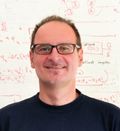
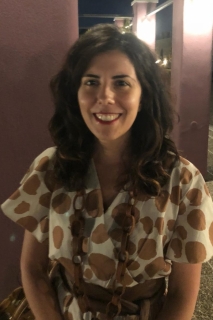
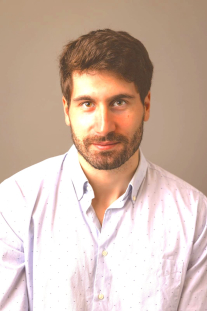
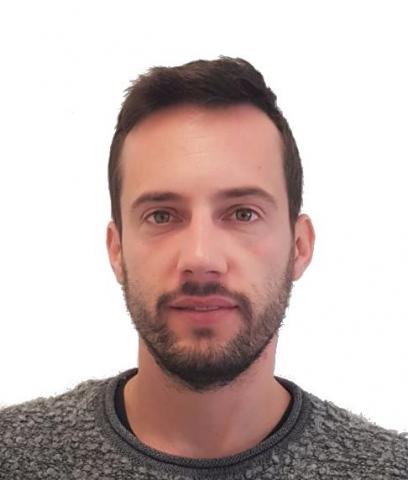
Marco Ghislieri is an Assistant Professor at the Department of Electronics and Telecommunications (DET) of Politecnico di Torino, Italy. He is a member of the Interdepartmental Center PolitoBIOMed Lab and teaches in the Biomedical Engineering program, including courses like Neuroengineering and Design of Programmable Biomedical Devices . His research spans Artificial Intelligence, Biomedical Signal Processing, Neuroscience, and Rehabilitation Engineering . PhD in Bioengineering and Medical-Surgical Sciences (2017-2021) at Politecnico di Torino Thesis: Muscle Synergy Assessment during Cyclic and Non-Cyclic Movements His research focuses on muscle synergy analysis in Parkinson’s Disease (PD) patients post- Deep Brain Stimulation (DBS) , AI-driven gait analysis for fall prevention, and wearable sensor applications for stress-cognitive decline monitoring. He leads the S-CoDe and OMNIA-PARK projects, and contributes to PRIN as a team member. Recent publications highlight advancements in machine learning for intraoperative DBS targeting , statistical gait analysis , and neurorehabilitation tools . He serves as Associate Editor for Scientific Reports and Applied Bionics and Biomechanics , and Guest Editor for Frontiers in Neural Circuits . Awards include the Carlo J. De Luca Award (2022) , GNB Doctoral Award (2022) , and the Best Poster Award at M. Grattarola Summer School (2022) . He supervises Fabrizio Sciscenti (PhD candidate) and collaborates on neuroengineering and biomedical device design courses. His work addresses Goal 3 (Good Health) and Goal 4 (Quality Education) of the UN SDGs.
Fabrizio Falchi is a researcher at the Artificial Intelligence for Media and Humanities (AIMH) Lab of the Institute of Information Science and Technologies (ISTI) within Italy's National Research Council (CNR). He also maintains an associate position at the Biorobotics Institute of Scuola Superiore Sant'Anna. His work focuses on developing advanced multimedia retrieval systems, with the VISIONE platform being his most notable contribution, which has won international competitions including the Video Browser Showdown in 2024 and placed second in 2023. Falchi's educational background includes: Ph.D. in Information Engineering from University of Pisa (Italy) Ph.D. in Informatics from Faculty of Informatics of Masaryk University of Brno (Czech Republic) M.B.A. from Scuola Superiore Sant'Anna in Pisa His research spans deep learning, convolutional neural networks, deep features extraction, similarity search algorithms, distributed indexing systems, multimedia information retrieval, computer vision applications, and peer-to-peer systems. Falchi has made significant contributions to fine-grained visual understanding, cross-modal retrieval (particularly image-text matching), and robustness of deep learning systems against adversarial attacks. His work demonstrates a strong focus on practical applications of these technologies, particularly in video retrieval systems and safety monitoring solutions. Analysis of Falchi's recent publications reveals a strong focus on video and image retrieval systems, with the VISIONE platform being central to his work. His research shows increasing emphasis on fine-grained understanding in computer vision, cross-modal retrieval, and addressing practical challenges like cross-resolution face recognition. Recent work demonstrates innovation in making these systems more efficient through techniques like knowledge distillation (ALADIN) and leveraging virtual worlds for training data. His publications consistently bridge theoretical advances with practical applications in surveillance, safety monitoring, and multimedia search. Falchi's work has received significant recognition: Best paper award at CBMI 2024 for 'Is ClLIP the main roadblock for fine-grained open-world perception?' VISIONE 2024 won the Video Browser Showdown competition in Amsterdam VISIONE obtained second place at Video Browser Showdown 2023 in Bergen Best Paper Award for 'Learning Safety Equipment Detection using Virtual Worlds' at CBMI 2019 Falchi collaborates extensively with researchers at ISTI-CNR, particularly within the AIMH Lab. His work on VISIONE involves collaboration with Giuseppe Amato, Paolo Bolettieri, Fabio Carrara, Claudio Gennaro, Nicola Messina, Lucia Vadicamo, and Claudio Vairo. As co-chair of Ital-IA 2023, the 3rd National Conference on Artificial Intelligence, he plays an active role in the academic community. He is a member of ACM (since 2012), the Computer Vision Foundation, the Italian Association for Computer Vision Pattern Recognition and Machine Learning (CVPL), and the CINI Lab on Artificial Intelligence and Intelligent Systems. Falchi is a key member of the Artificial Intelligence for Media and Humanities (AIMH) Lab at ISTI-CNR, where he leads research on video retrieval systems. The lab has developed the award-winning VISIONE platform, which combines multiple scientific results in content-based video retrieval. His team focuses on developing systems that enable users to search for target videos using textual prompts, drawing objects and colors, or images as query examples. The lab's work demonstrates strong interdisciplinary collaboration, bridging computer science with practical applications in media, safety monitoring, and urban environments.
Dr. Anh Nguyen Nguyen Duc serves as Full Professor at the University of South-Eastern Norway and the Norwegian University of Science and Technology (NTNU), with visiting scholar positions across Norwegian, Finnish, Italian, and Vietnamese institutions. His academic work centers on software engineering with emphasis on human, process, and ecosystem dimensions of development. Education: MS: Technical University of Kaiserslautern and Blekinge Institute of Technology (double degree) PhD: Norwegian University of Science and Technology Research fingerprint analysis reveals dominant focus on software startups (27%), supplemented by software processes (6%) and engineering education (5%). His expertise spans cybersecurity, global software development, business-driven methodologies, and software analytics, consistently addressing human-organizational challenges in dynamic development environments. Recent publications (2024-2025) demonstrate accelerating integration of AI in software engineering, particularly through large language models for startup assistance, generative AI adoption frameworks, and autonomous agent systems. Concurrently, he investigates risk management in software ventures and fairness in educational ML applications, reflecting interdisciplinary work bridging software engineering with business, AI ethics, and educational technology.
Saverio Mascolo is a Full Professor at the Polytechnic University of Bari , Department of Electrical and Information Engineering. He leads the Control of Computing and Communication Systems Lab (C3Lab) and contributes to IEEE/ACM Transactions on Networking as an Associate Editor. His research focuses on Future Internet, network congestion control, and real-time communication systems. Laurea in Electronic Engineering, Politecnico di Bari (1991) PhD in Electronic and Automatic Control, Politecnico di Bari (1995) Visiting researcher roles at UCLA (1995, 1999), INRIA (2004), and FTW (2004) Research spans network congestion control , adaptive video streaming , and real-time communication . His lab develops protocols like TCP Westwood+ and contributes to WebRTC standards. Current projects include low-delay protocols for immersive video streaming and autonomous systems control. Recent publications emphasize adaptive threshold mechanisms in congestion control, millimeter-wave radar datasets , and immersive teleoperation systems . Projects integrate nonlinear control , time-delay analysis , and cloud-based multimedia delivery . Scientific recognition includes: Elevated to IEEE Fellow (2018) for congestion control contributions Google Faculty Award (2014) for WebRTC research Cisco Research Award (2013) for video streaming control Best paper awards at MMSYS (2025, 2024, 2016) Grants fund research in cloud-based video platforms (MISE, 2017-2020), WebRTC optimization (MIUR, 2012-2015), and network control algorithms. His lab collaborates with institutions like Uppsala University (since 2001) and industry partners.
Giacomo Calzolari is a Full Professor of Economics at the European University Institute (EUI) in Florence, previously affiliated with the University of Bologna's Department of Statistical Sciences. His research focuses on competition policy, industrial organization, artificial intelligence, and banking regulation. He holds roles as a Research Fellow at the Centre for Economic Policy Research (CEPR) and serves on steering committees for the European Association of Industrial Economics and the Association of Competition Economics. Education: PhD in Economics from Toulouse School of Economics. His work spans theoretical and applied economics, with notable contributions to algorithmic pricing, collusion dynamics, and digital market regulation. Key publications include studies on AI-driven collusion and policy implications, featured in Science and top journals like the American Economic Review . Awards include the Young Economist Award (European Economic Association) and the ACE Best Paper Award. His research bridges economic theory and policy, addressing modern challenges in digital markets and AI governance.
Antonio D'ALOIA is a Full Professor of Constitutional Law at the Department of Law, Political and International Studies, University of Parma. He serves as Director of the University Center for Bioethical Studies since 2016 and has held leadership roles as Director of the Department of Legal Sciences (2002-2006). University of Naples 'Federico II' (Law Degree) University of Florence (Doctorate in Public Law) His research focuses on constitutional law intersections with bioethics, social rights, and sustainable development. Key areas include intergenerational responsibility, human rights in biotechnology, and legal frameworks for climate change. He has led multidisciplinary projects on European integration, criminal justice, and water resource governance. Recent publications emphasize AI regulation, bioethical decision-making, and fundamental rights protection. He actively participates in international conferences and advisory committees, including roles with the Journal of Fundamental Rights and Studies in Biolaw series. As an educator, he teaches Climate Change and Sustainability Law, Internet and AI Law, and Constitutional Rights Protection across both bachelor's and master's programs in Law and Social Services. His office hours are held on Tuesdays at 10:30am at the Law School Building in Parma.
Elisa Capello is a Full Professor of Flight Mechanics at Politecnico di Torino, Department of Mechanical and Aerospace Engineering (DIMEAS). She serves as Contact person for internationalization of innovation and technology transfer, Member of the Interdepartmental Center PIC4SeR (PoliTO Interdepartmental Center for Service Robotics), and Deputy Coordinator of the Doctoral College in Aerospace Engineering. With over 100 publications, her work spans aerospace engineering, control systems, and robotics. Her research focuses on flexible spacecraft, flight control systems, robotic systems, and unmanned aerial vehicles. She designs guidance, control and navigation systems for aircraft and spacecraft, develops control systems for wind turbines and wind farms, studies flight mechanics of fixed and rotary wing aircraft, tests unmanned aerial systems, and plans mission control for autonomous systems. Her work bridges theoretical control systems with practical aerospace applications, with strong emphasis on experimental validation. Her recent publications demonstrate a strong focus on advanced control techniques for aerospace applications, particularly in UAV control, spacecraft formation flying, and robotic systems. There's a clear trend toward integrating machine learning with traditional control methods, as seen in transformer-based MPC and multimodal learning approaches. Her work spans theoretical development, simulation, and experimental validation across multiple platforms. Member of the Editorial Board of IEEE Control Systems Society (2019-) Member of the Scientific Committee - IEEE Technical Committee Aerospace Control (2016-) International FAI Judge for Helicopter Championship (2009-2015) Professor Capello supervises numerous PhD students working on topics including autonomous aerial vehicles, path planning, risk analysis, spacecraft dynamics, and control. She leads multiple research projects including CREATEFORUAS (2019-2022), Assessment of drag free control systems for L3 gravity wave observatory (2018-2019), and Guidance, Navigation and Control algorithms for in-Orbit servicing (2020-2021). Her international collaborations include institutions in the USA, Japan, and Germany. She is actively involved with the Flight Dynamics, Control and Simulation research group at DIMEAS and the DRAFT (DRones Autonomous Flight Team) at PoliTo, where she mentors students in developing autonomous flight capabilities for various applications.
Luciano De Sio is an Associate Professor at Sapienza University of Rome, affiliated with the Department of Medical-Surgical Sciences and Biotechnologies. He leads a research group focused on biotechnology, liquid crystals, nanotechnology, optics, and bio-photonics. De Sio has over five years of experience as a senior research scientist at Beam Engineering for Advanced Measurements in Orlando, FL, with collaborations spanning U.S. agencies like AFOSR and AFRL. Current position: Associate Professor Institution: Sapienza University of Rome Department: Department of Medical-Surgical Sciences and Biotechnologies His research integrates nanotechnology with biomedical applications, including photo-thermal therapy and reusable biosensors . Notably, he has co-authored 140 ISI-JCR publications, holds 18 international patents, and has delivered over 50 conference presentations. Recent work involves NATO-funded projects for nanotechnology-inspired biosensors with photo-responsive liquid crystals. NATO Science for Peace and Security Programme European Office of Aerospace Research & Development (EOARD) De Sio's projects include advanced thermoplasmonic optical filters , smart windows , and multifunctional face masks with hybrid nanostructures. His expertise spans computational modeling of heat transfer, plasmonic nanoparticle synthesis, and bio-photonic device development. He teaches foundational physics courses for Medicine, Dentistry, and Nursing programs, including Medical Physics and Basics of Cellular and Molecular Biology . His group operates in the Laboratory of Biofotonica and Laboratorio di Biofotonica Ultrafast , advancing technologies from microfluidic circuits to gamma imaging systems.
Dr. Silvia Bonomi serves as an Associate Professor in the Department of Computer, Control and Management Engineering at Sapienza University of Rome, where she has held academic positions since 2006. Her career progression includes Research Fellow (2010-2011), Tenure Track Assistant Professor (2016-2019), and current Associate Professor appointment since 2019. She maintains her office in Room B114 and is actively engaged in research and teaching within the university's engineering faculty. Her educational background includes: PhD in Computer Engineering, Sapienza University of Rome and Institut de Formation Supérieure en Informatique et Communication (IFSIC/IRISA), Rennes, France (completed under advisors Prof. Roberto Baldoni and Prof. Michel Raynal) Dr. Bonomi's research critically examines dynamic distributed systems where entities autonomously join and leave networks, with applications spanning VANETs, airborne networks, social networks, and distributed cloud services. She pioneers work in Byzantine fault tolerance for mobile environments, blockchain security with emphasis on smart contract vulnerability analysis, and resilient cybersecurity frameworks integrating human factors. Her investigations into publish-subscribe systems focus on quality-of-service enhancements, while her peer-to-peer systems research addresses fundamental connectivity challenges in large-scale decentralized environments. This interdisciplinary approach bridges theoretical distributed computing with practical cybersecurity applications. Analysis of her 15 most recent publications (2021-2024) reveals dominant trends in blockchain security (particularly smart contract vulnerability taxonomies and analysis tool efficacy) and fault-tolerant distributed systems (reliable communication under Byzantine faults in dynamic networks). Her work increasingly integrates human factors into cybersecurity models and develops visual analytics for business-centric risk assessment. Publications span top venues including IEEE CSR, OPODIS, SAFECOMP, and journals like Computers & Security, demonstrating consistent contributions to both theoretical foundations and practical cybersecurity implementations.
Emma Colamarino is a Researcher at the Department of Computer, Control and Management Engineering "Antonio Ruberti" of Sapienza University of Rome. She holds an M.Sc. in Biomedical Engineering (2014, cum laude) and a Ph.D. in Bioengineering (2019). Since 2015, she has been a research collaborator at the Neuroelectrical Imaging and Brain-Computer Interfaces Lab of IRCCS Fondazione Santa Lucia in Rome and served as a Visiting Ph.D. student at Imperial College London (2018). From 2019 to March 2023, she was a Post-Doctoral Fellow at Sapienza University. Her research focuses on Advanced electroencephalographic (EEG) and electromyographic (EMG) signal processing Brain-Computer Interface (BCI) protocols for cerebral function recovery Machine learning in neurorehabilitation Hybrid BCIs integrating cortico-muscular networks Recent publications address stroke rehabilitation, BCI design, spectral graph theory, and EMG-EEG integration. Her work spans biomedical data analysis, neuroengineering, and rehabilitation technology validation. Scientific awards include multiple grants from Sapienza University and the Italian Ministry of Health, a Student Award at the 7th International BCI Meeting (2018), and recognition as a Subject Expert (2019). She has supervised/co-supervised 18 MD theses across Biomedical, Management, and Robotics Engineering disciplines.
Andrea Appolloni is an Associate Professor at the Department of Management and Law, University of Rome Tor Vergata. His academic career focuses on Management with emphasis on Sustainable Supply Chain Management , Digital Transformation , and Circular Economy . His research explores the intersection of technological innovation and sustainability, particularly through topics like AI in Logistics , Green Procurement , and Policy Optimization . Publications span both theoretical frameworks and empirical studies in China, Italy, and Malaysia, with a strong focus on environmental impact and organizational performance. Recent work includes digital twin applications for human-AI collaboration, blockchain integration in sustainable supply chains, and analyzing barriers to circular economy adoption. His 15 most recent articles (2025-2022) demonstrate a trend toward combining Artificial Intelligence , Operations Management , and Environmental Governance .
Federico Nutarelli is an Assistant Professor of Economics at the IMT School for Advanced Studies Lucca, Italy. His research focuses on the intersection of machine learning and economic analysis, particularly in international trade, health economics, and industrial organization. He holds a Ph.D. in Economics from IMT Lucca, and previously conducted postdoctoral research at Bocconi University. In 2024, he was a Visiting Scholar at MIT Sloan School of Management. Key research interests include causal machine learning methods to analyze heterogeneous firm responses to economic shocks, pharmaceutical market pricing strategies, and structural demand models. His work bridges methodological rigor with applied relevance, contributing to health economics, trade dynamics, and innovation policy. Recent publications (2020–2025) explore topics such as matrix completion for world trade analysis, machine learning applications in economic complexity, and modeling innovation ecosystems. His work often employs advanced statistical techniques like Shapley values and reinforced Bernoulli processes. No scientific awards were explicitly mentioned in the provided texts. Federico collaborates with institutions like Bocconi University and MIT Sloan, reflecting his interdisciplinary network in economics and data science.
Andrea Morichetta is an Associate Professor at the University of Camerino (UNICAM). His research focuses on blockchain technology, smart contracts, and business process management. He explores the integration of blockchain with choreography-based systems, model-driven engineering, and process mining. His work addresses challenges in smart contract testing, distributed systems coordination, and auditability in decentralized applications. Key research areas include: Blockchain-based execution frameworks for BPMN choreographies Mutation testing strategies for Solidity smart contracts Decentralized identity systems using blockchain Event log analysis for Ethereum applications His publications highlight advancements in: Smart contract security and testing methodologies Choreography-driven architectures for IoT and MLOps Formal analysis of business process collaborations He contributes to international conferences and workshops on blockchain, enterprise modeling, and business informatics research. His work bridges theoretical foundations with practical implementations in distributed systems and process automation.
Luca Barra is Full Professor of Television and Digital Media at the Department of Arts, University of Bologna. His research focuses on media studies, particularly television history and contemporary evolution, transnational circulation of content, serialization, and comic/humorous genres. He has coordinated the Master's Degree in Information, Cultures and Media Organization since 2021 and serves as editor-in-chief of VIEW. Journal of European TV History and Culture. University of Bologna, Department of Arts Research areas: Television History, Transnational Media, Digital Transformation, Italian TV Production Barra's work examines the international mediation of ready-made TV formats, Italian streaming partnerships, and the cultural implications of digital television. His recent articles analyze dystopian narratives, sitcom reception in Italy, and the redefinition of celebrity during the pandemic. He contributes to academic discourse through editorial roles in journals like SERIES and Comunicazioni Sociali. His publications include monographs on Italian television programming, sitcoms, and co-edited volumes exploring European premium TV fiction and digital media frameworks. Barra has led research projects such as ATLas and F-ACTOR, and collaborates with international institutions including Brown University and NECS.
Alexander Kocian is an Assistant Professor at the Department of Computer Science, University of Pisa. He holds a Ph.D. in Electrical and Electronic Engineering from Aalborg University (Denmark) and a Master's in Electrical Engineering from TU Vienna (Austria). His research focuses on Machine Learning, IoT, Agro Informatics, Health Informatics, and Real-time embedded systems. He has led major projects like AGRITECH (€40M funded by PNRR) and FuorisuoloSmart, advancing smart agriculture and healthcare technologies. Dr. Kocian serves as IEEE Senior Member (since 2024) and EAI Fellow (since 2022). He is Associate Editor of IEEE Access (2025–present), and Editorial Board member of Stats (2019–present) and Signals (2020–present). He has organized conferences like the EAI Int. Conf. on Intelligent Transport Systems (INTSYS) as General Chair (2024) and Steering Committee Member (2023). His work includes 50+ peer-reviewed publications, 4 patents, and contributions to telemedicine platforms like TESHEALTH (ESA-funded). Key projects span precision farming, IoT-based greenhouses, and AI-driven healthcare solutions. Current efforts emphasize data spaces for agritech and health informatics interoperability.