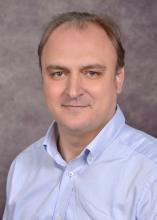
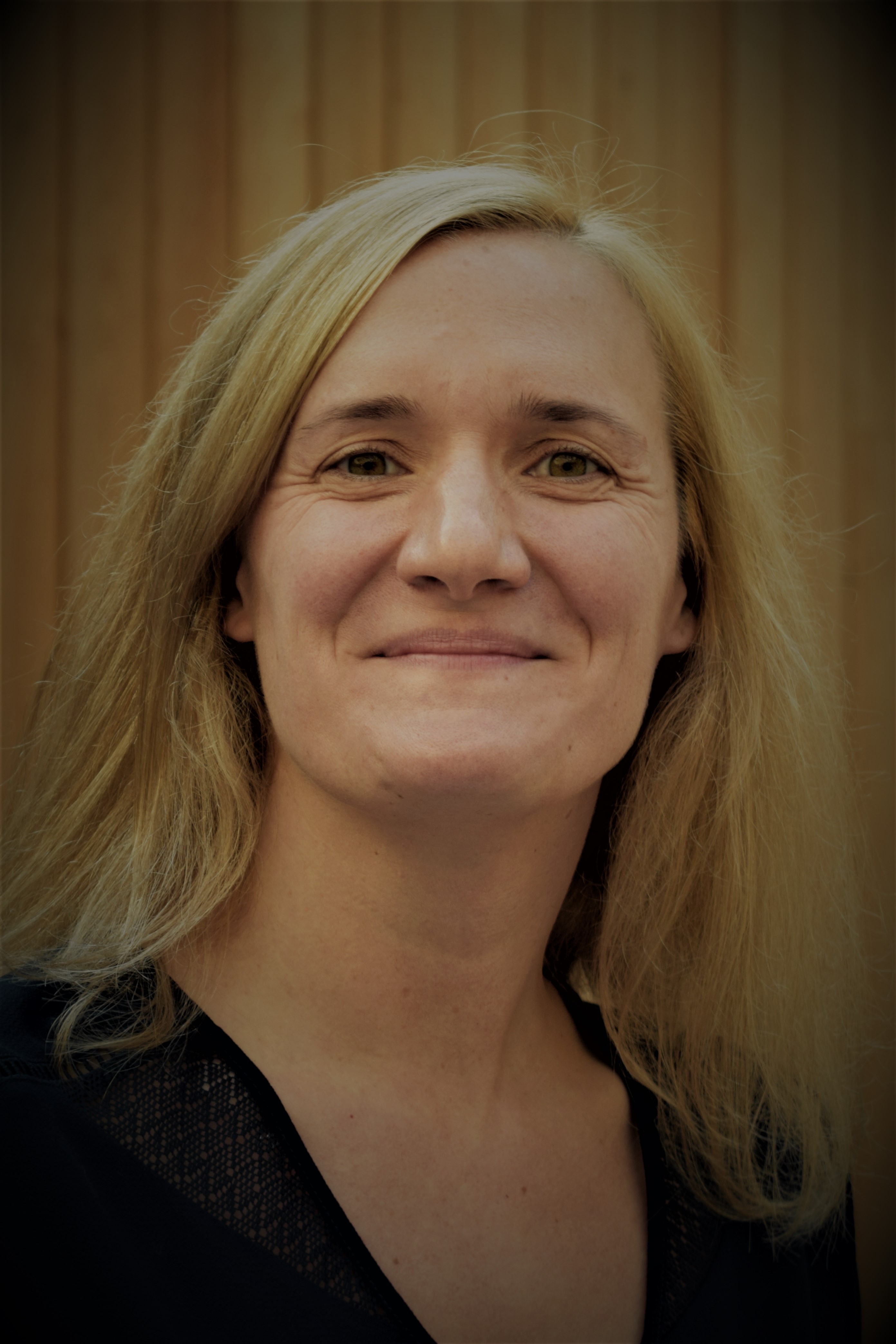
Dominique Unruh is a Professor at RWTH Aachen University , leading the Chair for Quantum Information Systems . Additionally, they hold a Professorship in Cryptography at the Institute of Computer Science of the University of Tartu , Estonia. Their research spans quantum computing , quantum cryptography , post-quantum cryptography , and formal verification of cryptographic protocols and programs. Research Focus : Quantum programs, zero-knowledge proofs, lattice-based cryptography, and quantum random oracle model. Key Contributions : Advancements in NTRU encryption efficiency, quantum Hoare logic, and rewinding techniques for security proofs. Tools : Active development in the EasyCrypt framework for cryptographic verification. Email : unruh@cs.rwth-aachen.de
Boro Jakimovski is an Assistant Professor at the Institute of Informatics, Faculty of Natural Sciences and Mathematics, Ss. Cyril and Methodius University in Skopje. He specializes in Grid computing, High-performance computing, and Parallel and distributed processing, with significant contributions to international projects like the European Grid Initiative and SEE-GRID series. PhD in Informatics (2010) - Thesis: Modelling and verification of Grid workflows MSc in Informatics (2004) - Thesis: Communications in Grids BSc in Informatics (2000) - Graduated top of class His research focuses on optimizing computational grids through adaptive workflows and genetic algorithms. He teaches courses such as Distributed Operating Systems and Software Construction, while previously tutoring foundational informatics topics including Algorithms and automata, Data structures, and Parallel processing. Publications span 18 international conferences and 1 journal article, with a notable awarded paper at MII 2003 . Key projects include FP7 coordination for Pan-European infrastructure and leadership in SEE-GRID initiatives as Grid Infrastructure Manager for Macedonia. Scientific Awards : Awarded paper at MII 2003 International Conference Grants : Participated in 15+ international projects (FP6, FP7, TEMPUS, UNESCO, DAAD, INTERREG III) International Engagement : Lectured at 20+ workshops, visited 10+ universities/summer schools Specializations include Grid infrastructure development, having completed professional visits to institutions like CERN (Switzerland), Humboldt University (Germany), and Software Technology Research Laboratory (UK). He chairs Macedonia's coordination in European Grid Initiative projects and contributes to curriculum development across SEE countries.
Roberto Giacobazzi is a Professor at the University of Arizona specializing in theoretical computer science with a focus on abstract interpretation, program analysis, and verification. His research bridges theoretical foundations with practical applications in software security and verification systems. Dr. Giacobazzi received his Ph.D. from the University of Pisa in Italy in 1993, establishing a long-standing academic career focused on the theoretical underpinnings of program analysis. His educational background forms the foundation for his contributions to abstract interpretation theory. His primary research interests center around abstract interpretation, a theoretical framework for approximating program semantics. This work spans theory of computation , programming languages , program analysis and verification , and logic in computer science . Giacobazzi has made significant contributions to understanding completeness and precision in abstract interpretation, with applications extending to code obfuscation, security analysis, and more recently, AI fairness in legal contexts. His work demonstrates how theoretical computer science concepts can address practical software engineering challenges. An analysis of his recent publications (2022-2025) reveals a consistent research trajectory with increasing sophistication in abstract interpretation theory. His work shows a growing emphasis on completeness properties, precision limitations, and security applications. Notably, his 2024 publication on "Fairness of AI Systems in the Legal Context" indicates an expansion of his theoretical expertise into AI ethics and regulatory compliance, demonstrating the versatility of abstract interpretation frameworks. Dr. Giacobazzi has contributed extensively to major conferences in programming languages and verification, including SAS (Static Analysis Symposium), POPL (Principles of Programming Languages), and VMCAI (Verification, Model Checking, and Abstract Interpretation). His publications reflect deep theoretical insights while maintaining relevance to practical software analysis challenges. His research has significant implications for software security, particularly in code obfuscation techniques based on abstract interpretation. The systematic approach to measuring incompleteness in abstract interpretations has provided new frameworks for understanding and improving program analysis tools. His work continues to influence both academic research and practical applications in program verification and security.
Harutyun Ishkhanovich Avetisyan is a Professor and Head of the Basic Department "System Programming" at the Faculty of Computer Science of the National Research University Higher School of Economics (HSE). He began his tenure at HSE in 2017 and brings 30 years of scientific and teaching experience to his role. Additionally, he serves as the Director of the Institute for System Programming of the Russian Academy of Sciences (ISP RAS), a position he has held since 2015. Avetisyan holds numerous prestigious academic distinctions, including being elected as an Academician of the Russian Academy of Sciences in 2019 and as a Corresponding Member in 2016. He earned his Doctor of Physical and Mathematical Sciences degree in 2012 and was awarded the academic title of Associate Professor in 2009. His educational background includes a specialty in "Applied Mathematics" from Yerevan State University (1993). His research focuses on three main areas: analysis and transformation of programs, software security, and parallel and distributed computing technologies. These interests are reflected in his extensive publication record and leadership in major research initiatives. His work bridges theoretical computer science with practical applications in cloud computing, secure data storage, and high-performance computing systems. Avetisyan's scholarly contributions demonstrate a consistent focus on system programming challenges, particularly in the areas of code analysis, optimization, and security. His recent publications indicate a growing interest in cloud computing paradigms, smart city infrastructure, and energy-efficient computing solutions. His research has significant implications for both academic theory and industrial applications in software development. Among his notable recognitions, Avetisyan was awarded the medal of the Order "For Merit to the Fatherland" 2nd degree in 2021 for his significant contributions to science and dedicated service. He also serves on the editorial boards of several prestigious journals including "Programming" (since 2015) and "Proceedings of the Institute for System Programming of the RAS" (since 2010). Throughout his career, Avetisyan has led and participated in numerous research grants funded by the Ministry of Education and the Russian Foundation for Basic Research. His professional trajectory shows steady progression from postgraduate studies (1997-2000) to research fellow (2000-2002), deputy director of ISP RAS (2002-2015), and ultimately director of the institute (2015-present). At HSE, Avetisyan teaches courses in parallel programming and mentor seminars for master's students in Software Engineering. His teaching philosophy emphasizes the integration of cutting-edge research with practical software development skills, preparing students for careers at the forefront of computer science.
Kristian Gjøsteen is a Professor at the Department of Mathematical Sciences within the Norwegian University of Science and Technology (NTNU) . He actively contributes to the Algebra Group and specializes in cryptographic systems with a focus on electronic voting , security proofs , and privacy-enhancing technologies . Educational Background: MSc and PhD from NTNU Research Interests: His work spans cryptography , key exchange protocols , cloud security , and formal verification of security mechanisms. Particular emphasis is placed on coercion-resistant voting systems , lattice-based encryption , and blockchain privacy models . Article Trends: Recent publications demonstrate expertise in post-quantum cryptography , machine-checked security , and privacy-preserving voting architectures . Collaborative efforts explore hybrid cryptographic schemes , verifiable decryption , and mix-net implementations for secure elections.
Nele Mentens is a full professor at both KU Leuven and Leiden University, where she leads cutting-edge research in applied cryptography, hardware security, and secure embedded systems. At KU Leuven, she is affiliated with the Faculty of Engineering Technology and the Electrical Engineering Department (ESAT), leading the Emerging Technologies, Systems & Security (ES&S) research group at the Diepenbeek campus. Simultaneously, she holds a full professorship at Leiden University’s Leiden Institute of Advanced Computer Science (LIACS), focusing on applied cryptography and security. She has been instrumental in numerous national and international research initiatives, including Horizon Europe and NWO-funded projects. Full Professor, KU Leuven (since 2023) Full Professor, Leiden University (since 2020) Associate Professor, KU Leuven (2014–2023) Post-doctoral Researcher & Lecturer, KHLim / KU Leuven (2007–2014) Ph.D. in Engineering Science, KU Leuven (2007) M.Sc. in Electrical Engineering, KU Leuven (2003) Her research focuses on secure and efficient hardware design, particularly for cryptographic applications on FPGAs, reconfigurable architectures, IoT security, and neuromorphic computing. She explores physical attack resistance, side-channel analysis protection, and trusted computing architectures, with applications in healthcare, industrial monitoring, and endpoint AI. Her work bridges theoretical cryptography with practical hardware implementations, emphasizing energy efficiency and real-time performance. The 15 most recent publications reflect a strong trend toward secure, energy-efficient, and intelligent embedded systems. Topics include neuromorphic AI accelerators, trusted IoT architectures, dynamic reconfiguration for side-channel protection, and secure medical data processing. These works span disciplines such as computer architecture, cybersecurity, digital design, and embedded systems, with a focus on hardware-software co-design and real-world deployment. Nele Mentens has received recognition for her contributions, including: Best Paper Award, DATE'16 Best Paper Nomination, AsianHOST'17 Best Paper Award, CHES'19 She has supervised over 15 Ph.D. students and post-docs, both current and former, and has served as principal investigator in approximately 25 funded research projects. Her work has attracted significant grants from Horizon Europe, NWO, FWO, and national innovation programs. She actively contributes to the academic community through editorial roles in top journals and leadership in major conferences. Nele Mentens leads the ES&S research group at KU Leuven and collaborates closely with LIACS at Leiden University. Her team includes Ph.D. students, post-docs, and research experts working on projects like NimbleAI, NeuroSoC, and TrustedIoT. She has also established secure electronics labs through infrastructure grants and maintains strong international ties with institutions such as EPFL, Ruhr University Bochum, and ETH Zurich.
Alan Mantooth is a Distinguished Professor holding the Twenty-First Century Research Leadership Chair in Engineering within the Department of Electrical Engineering at the University of Arkansas, Fayetteville. He serves as Director of the National Center for Reliable Electric Power Transmission (NCREPT), Executive Director for GRAPES (NSF I/UCRC) and SEEDS (DoE Center), and Deputy Director of the NSF Engineering Research Center for Power Optimization of Electro-Thermal Systems (POETS). His educational background includes: B.S. in Electrical Engineering, University of Arkansas M.S. in Electrical Engineering, University of Arkansas Ph.D. in Electrical Engineering, Georgia Institute of Technology Dr. Mantooth's research centers on analog/mixed-signal IC design, power electronics CAD, and semiconductor device modeling with emphasis on harsh-environment applications. His pioneering work in silicon carbide (SiC) and gallium nitride (GaN) power systems has enabled high-temperature operation for electric vehicles and renewable energy infrastructure, significantly advancing reliability in extreme conditions. His 2025 publications reveal strong trends toward AI-driven power electronics (e.g., SolarFormer++ for PV profiling), wide-bandgap device modeling (β-Ga2O3, SiC), and innovative packaging solutions. Key themes include reliability engineering for extreme environments, multi-physics optimization, and explainable AI for safety-critical power systems. Major scientific recognition includes: IEEE Fellow (2009) for power electronic device modeling Three R&D 100 Awards (2009, 2014, 2016) for SiC power modules IEEE Power Electronics Society Technical Achievement Award (2019) Multiple university teaching/research awards including SEC Faculty Achievement Award (2015) As an exceptional mentor (UA Outstanding Mentor 2006-2008), he co-founded Lynguent and Ozark Integrated Circuits. His centers NCREPT, GRAPES, and SEEDS have secured major funding from NSF, DoE, and industry partners, supporting over 350 refereed publications and numerous patents. Current research focuses on AI-enhanced power electronics, recyclable packaging, and next-generation wide-bandgap device characterization. He leads the NCREPT test facility and multi-institutional teams developing grid-connected power electronic systems, secure energy delivery architectures, and thermal management solutions for high-power-density applications, with direct impact on electric transportation and renewable energy integration.
Mario Piattini is a Full Professor at the School of Computer Science of the University of Castilla-La Mancha (UCLM) in Spain, where he has served since 2002. He is the founder of the Alarcos research group and has held leadership roles including Director of the Mixed Center for Software Research and Development UCLM-Indra and Director of the Institute of Technologies and Information Systems (ITSI) at UCLM. He has also served as an associate professor at Universidad Complutense and Universidad Carlos III de Madrid. His educational background includes a PhD and degree in Computer Science from Universidad Politécnica de Madrid, a Psychology degree from UNED, and a Doctor Honoris Causa from Universidad de La Plata (Argentina). He holds multiple master's degrees in IT Audit, Human Resources Management, and Project Management, along with professional certifications including CISA, CISM, CRISC, CGEIT, PMP, and data governance certifications from DAMA. Professor Piattini is a leading expert in software quality, information systems, and security, with a recent strong focus on quantum computing and quantum software engineering. His research spans software engineering methodologies, data quality, AI systems, and the emerging field of quantum software development. He has been recognized as one of the top 15 scholars in systems and software engineering (2004-2008) and among the most active software engineering researchers (2010-2017). His recent publications reveal a significant shift toward quantum computing, with numerous articles on quantum software engineering, quantum-classical hybrid systems, quantum testing frameworks, and quantum software architecture. His work bridges theoretical foundations with practical engineering approaches for the emerging quantum computing paradigm. His scientific recognition includes multiple prestigious awards: Premio Nacional a la Trayectoria Profesional del Ingeniero Informático Premio Gabriel Alonso Herrera from JCCM for research trajectory Premio Grace Hooper from COIICLM Premio Aritmel from SCIE Premio FIUM from Universidad de Murcia Premio a la Trayectoria Profesional de ISACA Madrid As an academic leader, Piattini has founded several spinoff companies including Cronos Ibérica (now Alten), Kybele Consulting, Lucentia Lab, DQTeam, AQCLab (the first ENAC-accredited laboratory for software product quality and data evaluation), and I2SC. He serves as secretary of CTN71/SC7 and is a member of various ISO/IEC and UNE standardization committees, contributing significantly to software quality standards development. His research group has established AQCLab, which has been evaluating software quality for 25 years, demonstrating his long-term commitment to practical applications of software engineering research. Through his leadership in both academic and industrial contexts, Piattini has created a robust ecosystem connecting theoretical research with real-world software quality practices.
Mubashir Sultan is a Predoctoral Fellow at the Max Planck Institute for Human Development in the Adaptive Rationality Research Team , where he focuses on the psychology of misinformation, social media behavior, and decision-making mechanisms. He combines computational modeling with empirical studies to analyze how individuals process and propagate information online. Education: PhD (ongoing), Max Planck Institute for Human Development (2021–present) M.Sc. in Brain and Cognitive Sciences, University of Amsterdam (2019–2021) M.Sc. in Cultural Psychology, University of Amsterdam (2017–2019) B.A. in Psychology and English Literature, Trinity College Dublin (2012–2016) His research bridges social psychology and computational behavioral science , examining how demographic factors , partisan biases , and cognitive limitations shape misinformation susceptibility. Recent work demonstrates that time pressure impairs misinformation detection while highlighting the role of myside bias in social media sharing. Current publications reveal trends in online misinformation interventions , digital trace data analysis , and social information processing . His methodological toolkit spans experimental designs , meta-analyses , and computational modeling of decision-making under uncertainty. As part of the Adaptive Rationality team, Sultan contributes to interdisciplinary projects exploring adaptive behavior in digital environments , collaborating with researchers in psychology, computer science, and behavioral economics.
Karl Palmskog is a Lecturer at KTH Royal Institute of Technology in the Division of Theoretical Computer Science and the STEP research group. His work focuses on program verification and proof engineering, with particular emphasis on developing techniques and tools based on proof assistants for constructing functionally correct and secure software systems. Palmskog received his Ph.D. in Computer Science in 2014 from KTH, advised by Mads Dam, and his M.Sc. in Computer Science and Engineering from KTH in 2007. Prior to his current position, he was a postdoc at The University of Texas at Austin and University of Illinois at Urbana-Champaign. His research interests span programming languages, software engineering, and formal verification, with a particular focus on developing techniques and tools based on proof assistants. He is an avid user of the Coq proof assistant for both proving and programming, often complemented by OCaml, and also utilizes HOL4 and other ML family dialects. His work bridges theoretical foundations with practical applications, particularly in the domains of blockchain systems, distributed systems, and automotive software verification. Analysis of his recent publications reveals a strong focus on Coq-based verification, with significant contributions to proof engineering tools and methodologies. His work includes developing tools for regression proving, change impact analysis, mutation testing for Coq projects, and lemma name suggestion using deep learning. There's also a growing trend toward applying formal methods to real-world systems like blockchain protocols and automotive software. Palmskog has been involved in several research projects, including Coq-community Proof Engineering and Distributed Components. His past projects include Trustfull (SSF), Model-based Event Driven Scalable Programming for the Mobile Cloud (NSF), Highly Adaptable and Trustworthy Software (EU FP7), and 4WARD Future Internet (EU FP7). As an educator, Palmskog has served as examiner, course responsible, teacher, and assistant for various courses including Algorithms, Data Structures and Complexity; Degree Projects; Game Theory; Parallel and Distributed Computing; and Programming Paradigms. His work on Chip, a Coq formalization of change impact analysis, demonstrates his commitment to creating practical, certified tools that bridge formal methods with software engineering practice.
Dr. Mohammad Monfared is a Senior Lecturer in the Department of Electronic and Electrical Engineering at Swansea University's School of Aerospace, Civil, Electrical and Mechanical Engineering within the Faculty of Science and Engineering. He joined Swansea University in 2022 after previously working at Ferdowsi University of Mashhad in Iran, where he received the Best Researcher Award in 2015. His academic journey began with a PhD in electrical engineering from Amirkabir University of Technology (Tehran Polytechnic) in 2010, which he completed with honors. Dr. Monfared's research focuses on the control and utilization of renewable energy generation systems and power electronics in the context of distributed generation, microgrids, and smart energy systems. His work is particularly relevant to Sustainable Development Goals 7 (Affordable and Clean Energy), 9 (Industry, Innovation and Infrastructure), 11 (Sustainable Cities and Communities), and 13 (Climate Action). He collaborates extensively with the Energy and Power Research Group (EPRG) at Swansea University, particularly with Dr. Meghdad Fazeli and Professor Mike Jennings, who holds a Royal Academy of Engineering Research Chair in 'Advanced Semiconductors for Electric Vehicles'. His research has practical applications and includes experimental verification in nearly all of his published works. Dr. Monfared's recent publications demonstrate a strong focus on power converter topologies, control strategies for renewable energy integration, and smart grid technologies. His work spans from high-boost impedance networks and DC-DC converters to grid-forming inverters and energy management systems. A notable trend in his research is the emphasis on practical implementation with experimental validation, bridging the gap between theoretical concepts and real-world applications in power electronics and renewable energy systems. Best Researcher Award from Ferdowsi University of Mashhad (2015) Department's Best Teacher Award at Swansea University (2023-24) Outstanding Reviewer Award for IEEE Transactions on Power Electronics (2023) IEEE Senior Member (2015) Dr. Monfared actively supervises PhD and MSc students, with current research projects focusing on gate-oxide reliability of wide bandgap power MOSFETs, single-phase PV-battery grid-forming inverters, and day-ahead PV generation forecasting. He collaborates with industry partners including National Grid, ABB, Siemens, and Vishay Intertechnologies on high-impact research projects. His future research direction involves establishing stronger industry collaborations to bridge the gap between academic innovation and real-world application, with a focus on advancing renewable energy technologies and power electronics for distributed generation and smart energy systems. Dr. Monfared also serves as an Associate Editor for both IEEE Transactions on Industrial Electronics and IEEE Transactions on Power Electronics, contributing to the scholarly community in his field.
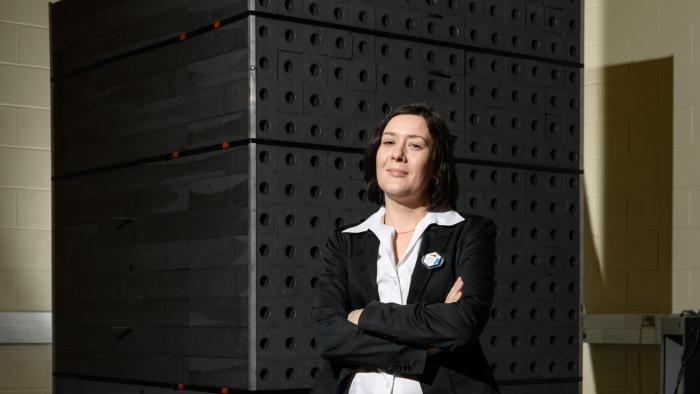
Anna Erickson serves as Woodruff Professor and Associate Chair for Research at Georgia Institute of Technology's George W. Woodruff School of Mechanical Engineering, where she bridges reactor engineering and nuclear nonproliferation through integrated theoretical and experimental approaches. Director of the $25M DOE NNSA-funded Consortium for Enabling Technologies and Innovation (12 universities, 12 national labs), she has authored over 100 publications including the seminal text Active Interrogation in Nuclear Security (Springer, 2018) and advises federal agencies on nuclear security policy. Education: Ph.D. in Nuclear Science and Engineering, Massachusetts Institute of Technology (2011) M.S. in Nuclear Science and Engineering, Massachusetts Institute of Technology (2008) B.S., Oregon State University (2006) Research Focus: Dr. Erickson pioneers nonproliferation-by-design methodologies through two integrated thrusts: advanced reactor analysis for proliferation-resistant nuclear energy systems and radiation detection for border security applications. Her work uniquely combines machine learning with nuclear engineering to develop safeguards for next-generation reactors, with significant contributions to antineutrino detection systems and medical physics applications like proton radiography. Current projects emphasize small modular reactor safety and spectral imaging techniques. Publication Trends: Analysis of her 15 most recent publications (2018-2020) reveals dominant themes in antineutrino-based reactor monitoring (60% of works), advanced radiation detection systems (30%), and small modular reactor design (10%). Key innovations include lithium-loaded scintillators for neutron detection, spectral X-ray correction algorithms, and high-temperature reactor concepts with inherent proliferation resistance, demonstrating consistent DOE funding focus on nuclear security infrastructure. Awards: Woodruff Professorship (2019) Lockheed Dean's Excellence in Teaching Award (2016) US Frontiers of Engineering Symposium (National Academy of Engineering, 2015) American Nuclear Society Graduate Scholarships (2006, 2009) Stewardship Science Graduate Fellowship (DOE, 2008-2011) Leadership & Funding: As director of the $25M Consortium for Enabling Technologies and Innovation, she manages cross-institutional R&D in machine learning, advanced manufacturing, and nuclear detection. Her Laboratory for Advanced Nuclear Nonproliferation and Safety (LANNS) coordinates with Aerospace Engineering, Chemistry, and International Affairs departments on nonproliferation projects, while her ELATES leadership program participation (2022) enhances STEM management capabilities. Recent media engagements with CBS News (nuclear fusion breakthrough) and CNN (radiation safety) demonstrate policy impact. Research Infrastructure: The multidisciplinary LANNS lab develops experimental detection systems alongside reactor modeling tools, supporting the Consortium's mission to create deployable nuclear security technologies. Collaborations with 12 national laboratories enable access to unique facilities for radiation source characterization and reactor simulation, with current efforts focused on AI-enhanced safeguards for commercial reactor fleets.
Garth Gibson is a Professor in the Computer Science Department and Department of Electrical and Computer Engineering at Carnegie Mellon University's School of Computer Science. He serves as Co-Director of the Master of Computational Data Science program and as Associate Dean for Master's Programs. Gibson has been a faculty member at CMU since 1991, after receiving his Ph.D. and M.Sc. in Computer Science from the University of California at Berkeley and a Bachelor of Mathematics in Computer Science and Applied Mathematics from the University of Waterloo. Gibson's research focuses on large-scale parallelism in computer systems, secondary memory system technologies and optimization, scalable file and key-value storage systems, scalable machine learning, and systematic testing for large scale systems. His work bridges theoretical concepts with practical implementations, with a strong emphasis on shepherding technological advances from academic research to commercial reality. He has made significant contributions to RAID technology, network-attached secure disks (NASD), and parallel file systems that have shaped industry standards and products. Gibson's recent publications reveal a strong trend toward data-intensive scalable computing, with increasing focus on machine learning systems, distributed storage solutions, and high-performance computing infrastructure. His research has evolved from foundational storage technologies to address the challenges of petascale and exascale computing environments, with particular attention to the intersection of storage systems and machine learning workloads. The papers demonstrate a consistent theme of addressing system scalability challenges through innovative architectural approaches. Scientific Awards: 2014 Fellow of the IEEE for contributions to the performance and reliability of transformative storage systems 2012 Fellow of the ACM for contributions to the performance and reliability of storage systems 2012 Jean-Claude Laprie Award in Dependable Computing Industrial/Commercial Product Impact Category 2011 SIGOPS Hall of Fame for the SIGMOD88 RAID paper 1999 Reynold B. Johnson Information Storage Award 1999 Allan Newell Award for Research Excellence 1998 Test of Time Award 1991 A.C.M. Doctoral Dissertation Award (tied for second) Gibson has advised numerous graduate students who have gone on to influential positions in both academia and industry, including Swapnil Patil who won first place in the 2010 ACM Graduate Student Research Competition. He has secured significant research funding through initiatives like the DOE Petascale Data Storage Institute and the Intel Science and Technology Center for Cloud Computing. His research has been supported by collaborations with national laboratories including Los Alamos, Sandia, Oak Ridge, Pacific Northwest, and Lawrence Berkeley. Gibson founded CMU's Parallel Data Laboratory (PDL) in 1993, which has grown into a vibrant research community comprising 6-9 faculty members, 2-3 dozen students, and 4-10 staff. The PDL operates with guidance from the Parallel Data Consortium, which includes 15-25 companies interested in parallel data systems. He also founded Panasas Inc. in 1999, a scalable storage cluster company that has deployed technology in national laboratories, energy sectors, and other high-performance computing environments. More recently, Gibson established the Big Learning research group and created the Systems Major curriculum within CMU's Master of Computational Data Science program.
Alex X. Liu is a Professor in the Department of Computer Science & Engineering at Michigan State University (2016-2022), currently serving as Chief Information Security Officer and President of Midea Software Engineering Institute. His academic career includes roles as Associate Professor (2012-2016) and Assistant Professor (2006-2012) at the same institution. He holds a Ph.D. and M.S. in Computer Science from The University of Texas at Austin, and a B.S. in Computer Science from Jilin University, China. Education Ph.D. in Computer Science (UT Austin, 2006) M.S. in Computer Science (UT Austin, 2002) B.S. in Computer Science (Jilin University, 1996) Liu's research focuses on Dependable computing , Networking algorithms , Cloud computing , Mobile computing , Privacy computing , and Computer/network security . His work spans secure systems, network protocols, and resource optimization in distributed environments. Recent publications address quantum neural networks , microservices autoscaling , RFID tag recognition , network traffic classification , and hybrid physical-layer authentication , demonstrating expertise at the intersection of AI and network security. Key trends include deep learning applications for cloud systems and robust security protocols. Scientific Awards IET Fellow (2021) IEEE Fellow (2019) ACM Distinguished Scientist (2019) Withrow Distinguished Scholar Awards (Senior 2019, Junior 2011) NSF CAREER Award (2009) IEEE & IFIP William C. Carter Award (2004)
Val Tannen is a Professor at the University of Pennsylvania, specializing in database systems, provenance analysis, and programming languages. His research focuses on data management, query languages, and systems like DBSP and ORCHESTRA. Collaborations include work with co-authors such as Zachary Ives, Susan Davidson, and Todd Green. Key research interests include provenance for databases, incremental view maintenance, and data integration. His work bridges theoretical foundations and practical applications in systems like DBSP for stream processing and ORCHESTRA for collaborative data sharing. Publications span provenance frameworks, query optimization, and distributed systems. While no awards are explicitly listed, his contributions to database theory and systems are widely recognized.