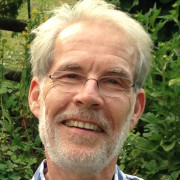
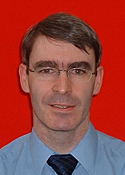
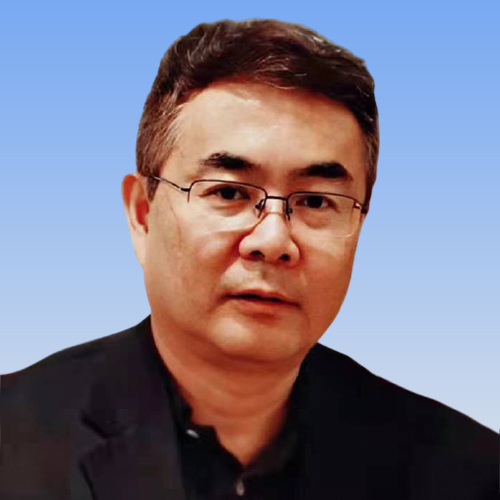
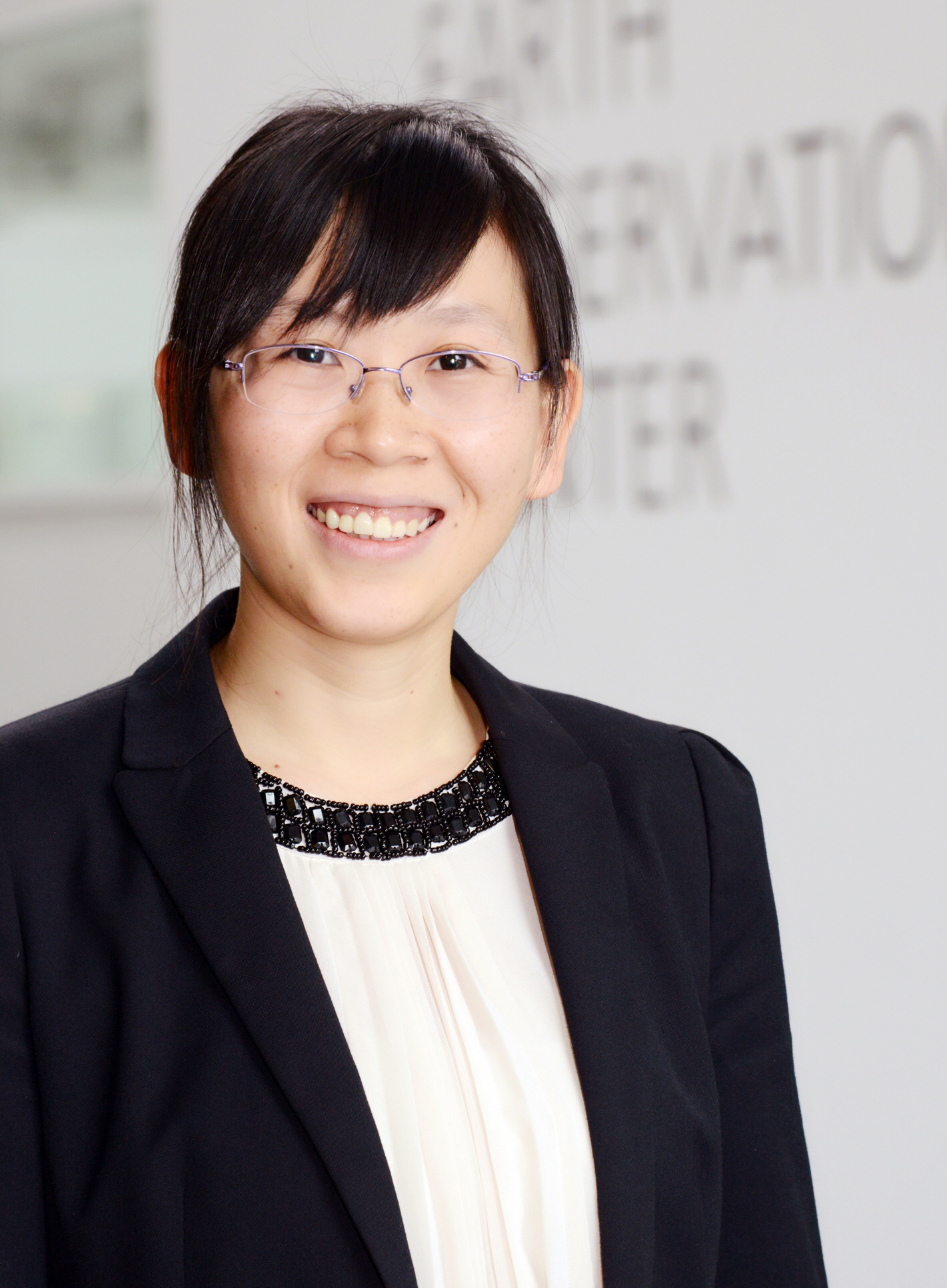
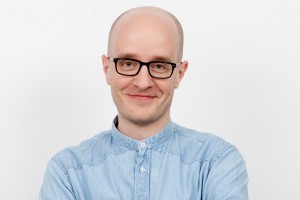
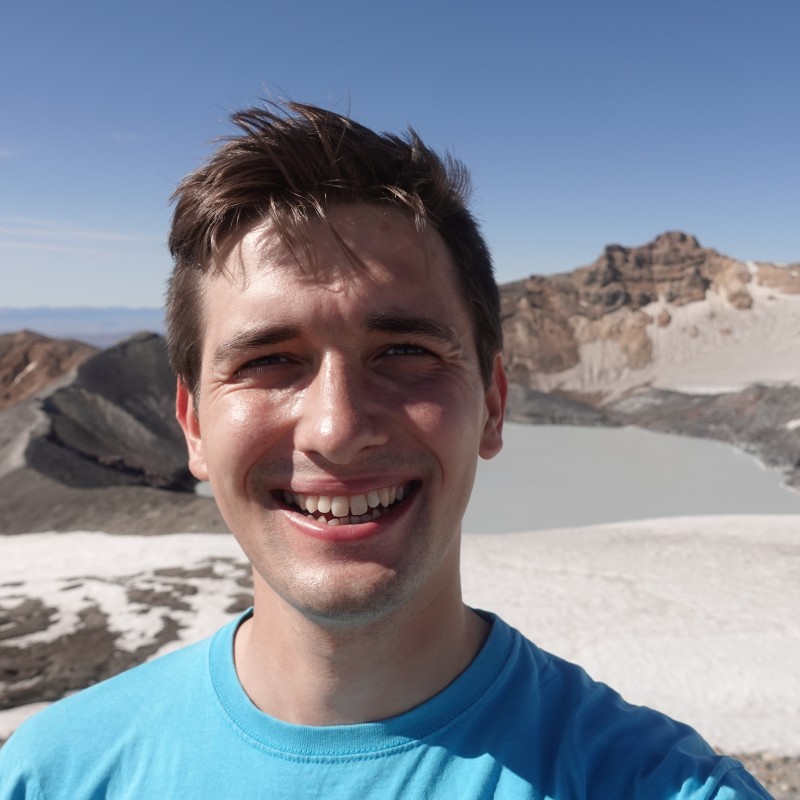
Thomas Graf is a Research Professor at the Centre for Genomic Regulation (CRG) in Barcelona, Spain, and an ICREA Research Professor since 2006. His academic career spans multiple prestigious institutions including Albert Einstein College of Medicine, European Molecular Biology Laboratory, and Max Planck Institute. Research focus: Cancer biology, Reprogramming, Genetic engineering, Molecular biology Key contributions: Hematopoietic stem cells, Transdifferentiation, Computational biology His recent publications demonstrate expertise in inverse imaging problems, diffusion models, and biomedical applications spanning cardiology and protein structure analysis. Scientific accolades include the Paul Ehrlich Prize and membership in Academia Europaea. 1989: Paul Ehrlich and Ludwig Darmstaedter Prize 1983: Wilhelm Warner Foundation Prize Other: Leukemia Research Award, German Society for Microbiology and Hygiene Prize, Academia Europaea membership
Harris Kenneth David Maclean is a Distinguished Research Professor at Cardiff University's School of Chemistry, serving as Head of Physical Chemistry since 2013 and former Head of Materials Chemistry (2003–2012). Previously, he held professorships at the University of Birmingham and University College London. His research focuses on physical chemistry of solids, crystallography, and advanced materials. Education: PhD in Chemistry from the University of Cambridge (1985–1989), supervised by Sir John Meurig Thomas, and a BSc (First Class Honours) in Chemistry from the University of St Andrews (1981–1985). Research Interests: X-ray diffraction techniques and their applications Crystal structure determination and polymorphism Quasicrystals and aperiodic materials solid-state NMR spectroscopy and molecular motion in solids Design of molecular materials via crystal engineering Awards: A prolific scholar, he has received prestigious awards including the Tilden Medal (2007/8), Corday-Morgan Medal (1999), and election to the Royal Society of Edinburgh (2008) and the Learned Society of Wales (2011). His work has led to over 368 publications and an H-index of 44. International Collaborations: He has held visiting professorships at institutions in Japan (Kyoto University, Tohoku University), France (University of Bordeaux), Spain (Autonomous University of Barcelona), and Taiwan. Professional Affiliations: Fellow of the Royal Society of Chemistry, Chartered Chemist, and member of multiple scientific societies, including the American Chemical Society and British Crystallographic Association.
Jiebo Luo is a Professor of Computer Science at the University of Rochester, where he has held this position since 2014. He earned his BS and MS in Electrical Engineering from the University of Science and Technology of China (1989 and 1992) and a PhD in Electrical Engineering from the University of Rochester (1995). Prior to academia, he spent 15+ years at Kodak Research Laboratories as a Senior Principal Scientist. His research focuses on computational social science, natural language processing, digital health, computer vision, data mining, and multimedia. Dr. Luo’s work has been recognized through numerous awards, including the ACM SIGMM Technical Achievement Award (2021), Fellowships from ACM, AAAI, IEEE, IAPR, and SPIE. He has authored over 500 peer-reviewed papers, holds 90+ patents, and serves as Editor-in-Chief of the IEEE Transactions on Multimedia. He actively contributes to conference organization (e.g., ACM Multimedia, CVPR) and editorial roles for top journals. Key contributions include pioneering work in social media analytics, sentiment analysis, and digital health, as well as foundational research in multi-label classification and action recognition datasets like UCF 101. His labs and collaborations span the Goergen Institute for Data Science and the Greater Rochester Data Science Industry Consortium.
Xiaoxiang Zhu is a Full Professor for Data Science in Earth Observation at Technical University of Munich (TUM) and Director of the International AI Future Lab (AI4EO). She leads interdisciplinary research on signal processing and machine learning applied to Earth observation (EO) data, addressing global challenges like urbanization and climate change. Her work focuses on extracting geoinformation from big EO datasets using innovative AI techniques. Education & Positions: Professor (W3) since 2019, TUM Former Head of EO Data Science Department at German Aerospace Center (DLR) Adjunct Teaching Professor (2013–2015) Research Interests: Deep learning in SAR and multispectral imagery Global urban morphology mapping Uncertainty quantification in AI models EO data fusion and big data analytics Climate change monitoring via satellite data Articles Trends: Her publications emphasize AI-driven solutions for EO challenges, including SAR tomography, benchmark datasets (e.g., So2Sat LCZ42), and uncertainty estimation in neural networks. Over 220 journal papers and 173 conference papers highlight her contributions to geosciences and remote sensing. Awards: IEEE Fellow (2021) ERC Grants (Starting & Proof of Concept) Heinz Maier-Leibnitz-Preis (2015) Member of German and Bavarian Academies of Sciences Advising & Grants: Supervised PhD students (e.g., Mou) Secured €10M+ in research funding Co-led Helmholtz AI Research Field MASTr (2019–2022) Labs & Teams: Founder of AI4EO Lab Co-leader of Munich Data Science Research School (MUDS) Member of ELLIS Society and IEEE committees
**Dominik Bork** is an Assistant Professor at the Department of Business Informatics within the Faculty of Informatics at TU Wien. His core research focuses on conceptual modeling, model-driven engineering, and the integration of artificial intelligence into enterprise systems. He leads projects such as the Network Lab and has coordinated initiatives like the Automatisiertes End-to-End-Testen von Cloud-basierten Modellierungswerkzeugen and MFP 4.2 Advanced Analytics for Smart Manufacturing . His work emphasizes GLSP-based web modeling tools , including the development of open-source platforms like BIGUML for UML modeling. He has published extensively on topics like knowledge graph transformation, accessibility in modeling tools, and AI-enhanced decision management. Bork actively contributes to academic communities through conference organizing roles and guest editorial work for journals like Enterprise, Business-Process and Information Systems Modeling . His research bridges theoretical advancements with practical applications in enterprise architecture and sustainable systems engineering. Education & Background : Holds titles including Dipl.-Wirtsch.Inf.Univ. and Dr.rer.pol., reflecting his interdisciplinary expertise in business informatics and economics. Key Contributions : - Developed CM2KGcloud , a web-based platform for conceptual model-to-knowledge graph transformation. - Pioneered EA ModelSet , a FAIR dataset advancing machine learning in enterprise modeling. - Authored influential papers on inclusive conceptual modeling for disability-aware tools. - Led efforts in model-based construction of enterprise architecture knowledge graphs . Grants/Projects : Automatisiertes End-to-End-Testen von Cloud-basierten Modellierungswerkzeugen (Principal Investigator) Digital Platform Enterprise (Principal Investigator) MFP 4.2 Advanced Analytics for Smart Manufacturing (Principal Investigator) Labs/Teams : Active in the Network Lab at TU Wien, focusing on cutting-edge research in modeling technologies and AI integration.
Georg Pölzlbauer is a researcher affiliated with the Department of Information and Software Engineering at Vienna University of Technology (TU Wien). His work focuses on machine learning, data visualization, and artificial intelligence, particularly leveraging self-organizing maps (SOM) for exploratory data analysis. He holds a Dipl.-Ing. (Diploma in Engineering) and a Dr.techn. (Doctor of Technical Sciences). His research emphasizes advanced visualization techniques for SOMs, including vector fields and graph-based methods, applied to diverse domains like petroleum data and political datasets. He has contributed to supervised learning algorithms inspired by self-organization, such as Decision Manifolds. Publications span algorithm design, cluster analysis, and pattern recognition, with applications in music feature extraction and industry-specific data visualization. No scientific awards are explicitly mentioned, but his work reflects sustained engagement with computational and visual data analysis. While no advising or grant information is provided, his affiliation with TU Wien’s research unit suggests active participation in collaborative academic projects.
Friedrich Slivovsky is a researcher at the Institute of Logic and Computation within the Faculty of Informatics at Technische Universität Wien (Vienna University of Technology). His work focuses on theoretical and practical aspects of computational logic, with particular expertise in Quantified Boolean Formulas (QBFs), Propositional Model Counting (#SAT), and Knowledge Compilation. His research interests span the theoretical foundations and practical applications of computational logic. Slivovsky investigates the complexity of logical reasoning problems, develops efficient algorithms for solving them, and creates practical tools that implement these theoretical advances. His work bridges the gap between theoretical computer science and practical applications in areas like hardware verification, artificial intelligence, and electronic design automation. Analysis of his publication trends reveals a consistent focus on QBF solving techniques, with increasing emphasis on circuit minimization, proof complexity, and practical solver engineering. His recent work (2023-2024) shows a strong focus on circuit minimization techniques, combining QBF and SAT approaches to solve complex optimization problems in hardware design. Earlier work (2019-2021) emphasized dependency schemes, certification methods, and theoretical foundations of QBF solving. Slivovsky leads several significant software projects that have become important tools in the computational logic community: Qute : A dependency learning QBF solver with GitHub repository showing active development (latest commit December 2024) Unique : A preprocessor for (D)QBF that computes unique Skolem and Herbrand functions Pedant : A certifying DQBF solver These projects demonstrate his commitment to translating theoretical advances into practical tools that benefit the broader research community.
Thomas Eiter is a Professor at TU Wien's Institute of Logic and Computation. His research focuses on declarative programming paradigms, knowledge representation, and artificial intelligence. He leads projects in neurosymbolic systems, answer set programming (ASP), and stream reasoning, with applications in visual question answering, scheduling optimization, and semantic scene generation. Eiter has contributed to foundational work in ASP semantics, computational complexity, and hybrid reasoning frameworks. His work bridges logical formalisms with practical AI challenges, emphasizing explainability and scalability. Projects like ALASPO and neurosymbolic integration showcase his focus on advancing both theoretical and applied aspects of AI. Projects: HumanE AI Network, WASP, REWERSE Research Themes: Neurosymbolic AI, Answer Set Programming, Stream Reasoning Notable achievements include pioneering work on semiring-based reasoning frameworks and developing efficient ASP solvers like Alpha. His contributions span over 471 publications, emphasizing interdisciplinary applications in computer vision, robotics, and automated planning.
Tomáš Skřivan serves as a Research Fellow at the Hoskinson Center for Formal Mathematics , Carnegie Mellon University. His work bridges formal mathematics with practical scientific computing through the development of the SciLean library in Lean 4, targeting enhanced reliability in machine learning and simulation software. Skřivan's research spans interdisciplinary domains with core emphases on: Physics-based simulation of fluid dynamics and wave phenomena Computer graphics algorithms for light transport and rendering Formal verification techniques applied to numerical methods Mathematical modeling of viscoelastic materials His publication trajectory since 2016 reveals evolving expertise from computational fluid dynamics (water wave simulation, viscoelastic modeling) toward formal methods in scientific computing, consistently merging theoretical rigor with practical implementation. Recent work on SciLean represents a strategic pivot toward verified software foundations. As a key contributor to the Hoskinson Center's mission, Skřivan collaborates on projects leveraging proof assistants to eliminate errors in scientific code. The center, established through Charles Hoskinson's support, pioneers mathematically guaranteed correctness in computational science through formal verification frameworks.
Univ.-Prof. Dr. Stefanie Auer is Dean of the Faculty of Health and Medicine at the University of Continuing Education Krems , Austria. She is a leading academic in dementia prevention, brain health, and public health interventions for older adults. Her work bridges clinical research, health policy, and community engagement. Her research interests focus on dementia prevention, brain health promotion, aging, psychogeriatrics, and health economics . She investigates lifestyle interventions, early detection models, and cost-effective care strategies. Her work emphasizes public awareness, education, and interdisciplinary collaboration to improve dementia care systems. The recent publications highlight a strong trend in dementia prevention, cost-effectiveness analysis, behavioral interventions in neurocognitive disorders, and public health education . Her work spans clinical research, health services, and societal engagement, often involving international collaborations and policy-relevant outcomes. Reduction and prevention of agitation in persons with neurocognitive disorders: an international psychogeriatric association consensus algorithm Mindfulness in Persons with Mild Dementia and Their Caregivers: Exploring Trait Rumination as a Clinical Outcome Measure Cost-Effectiveness of Prevention for People at Risk for Dementia: A Scoping Review and Qualitative Synthesis Attitudes towards dementia prevention in Austria—Results of an exploratory study Kunst zur Förderung der Hirngesundheit Dr. Auer leads significant research projects funded by national and international bodies, including the FWF and Austrian federal ministries. Her grants support initiatives such as Healthy Museum , Lower Austria's 1st Brain Health Action Day , and Demenz.Aktivgemeinde . While no formal advisees are listed, her leadership in PhD studies and research service indicates mentorship and academic supervision. She is actively involved in organizing conferences and public outreach, enhancing the impact of her research. She leads and contributes to interdisciplinary research groups focused on evidence-based health research and preventive and regenerative medicine . Her initiatives often involve collaborations with public institutions, healthcare providers, and community organizations to implement and evaluate dementia-friendly practices.
Sebastian Schrittwieser is a Researcher in the Research Group Security and Privacy, part of the Faculty of Computer Science. His work focuses on cybersecurity, code obfuscation, malware analysis, and machine learning applications in security. He leads and contributes to projects like INODES (Cyber Defense Strategies) and EMRESS (Resilience Evaluation Models). His research bridges theoretical foundations and practical applications, addressing challenges in software protection and threat detection. Key research interests include: Code Obfuscation Techniques and Resistance Adversarial Machine Learning and Risk Assessment Malware Analysis and Program Simulation User Behavior in Cybersecurity Contexts Recent publications emphasize empirical studies on IT/OT infrastructure security, graph neural network vulnerabilities, and quantum-inspired machine learning. He actively collaborates with institutions like SBA Research and presents at international conferences. Grants include Research Funding for projects on optimal cyber defense strategies (INODES) and software resilience evaluation (EMRESS). His work aligns with interdisciplinary efforts in security engineering and privacy-preserving technologies.
Franz Berthiller is an Associate Professor at the University of Natural Resources and Life Sciences, Vienna (BOKU), affiliated with the Department of Agricultural Sciences and the Institute of Bioanalytics and Agro-Metabolomics in Tulln an der Donau. His research specializes in mycotoxin analysis, mass spectrometry, and metabolomics, with a focus on developing advanced detection methods and understanding toxin metabolism in food/feed systems. He leads significant projects like the EU-funded BIOTOXDoc (2023–2027) and FWF-supported studies on modified fumonisins. Research interests include: Development of LC-MS/MS methods for mycotoxin quantification Metabolic pathways of trichothecenes and fumonisins Plant-fungal interactions affecting toxin production Biomarker discovery for contaminant exposure Multi-omics approaches in food safety Berthiller's recent publications emphasize metabolomics method optimization, environmental impacts on mycotoxin biosynthesis, and enzymatic modification of toxins. His work integrates analytical chemistry, molecular biology, and agricultural science to address food safety challenges. He directs a research group at the Institute of Bioanalytics and Agro-Metabolomics, collaborating internationally on projects related to mycotoxin management. No awards or supervised students are documented.
Christian Fennesz is a renowned Austrian guitarist, composer, and electronic musician who joined the Faculty of Performing Arts at the Music and Arts Private University of the City of Vienna as a lecturer in September 2019. Widely recognized as a key figure in electronic music, his innovative work combines traditional guitar techniques with advanced digital signal processing to create unique symphonic soundscapes. He is particularly known for his critically acclaimed albums that have redefined the perception of electronic music. As a lecturer, Fennesz contributes to the university’s mission of exploring new musical expressions and integrating technology with artistic performance. His teaching likely bridges his practical expertise in electronic music with academic frameworks. Research & Artistic Contributions : Fennesz’s work focuses on the intersection of guitar-based composition and electronic music production. His albums demonstrate pioneering approaches to: Transforming analog instruments through digital manipulation Creating immersive ambient environments Developing glitch and microsound aesthetics Integrating mathematical sound patterns Exploring non-linear audio editing Advancing real-time sound processing techniques Scientific Awards : Prix Ars Electronica (for Hotel Paral.lel , 1997) Collaborations & Projects : Fennesz has collaborated extensively with diverse artists including Ryuichi Sakamoto, David Sylvian, Keith Rowe, and Mike Patton. He was a member of the improvisational trio Fenn O'Berg with Peter Rehberg and Jim O'Rourke. His recent works continue to push the boundaries of electronic music through innovative studio releases and live performances.
Verena Ahlgrimm-Siess serves as a Clinical Associate Professor and Senior physician in the Department of Dermatology and Allergology at Salzburger Landeskliniken (SALK). With Privatdozent status indicating her post-doctoral academic qualification, she maintains an active clinical and research career with 150 research outputs spanning from 2007 to 2024. Her research interests focus on dermatoscopy as a non-invasive diagnostic tool with broad applications, particularly in facial lesion analysis, nevus examination, and melanoma detection. She has pioneered work in multiplex assays for allergy diagnosis, comparing technologies like Allergy Explorer 2 versus ImmunoCAP ISAC. Her fingerprint reveals strong expertise in allergen research (100%), sensitization (44%), immunoglobulin E (33%), and nevus analysis (33%). Dr. Ahlgrimm-Siess has demonstrated significant research productivity with publication peaks in 2012 (25 outputs) and consistent output through 2024. Her recent work integrates artificial intelligence with dermatology, enhancing diagnostic confidence in melanoma detection. She actively contributes to academic discourse through 98 recorded activities including 91 oral presentations, 5 publication peer-reviews, and conference organization. Her scientific engagement includes serving as a reviewer for Archives of Dermatological Research and delivering keynote presentations on dermatoscopy techniques, trichoscopy, and inflammatory skin condition visualization. Her research has gained notable attention with coverage by 10 news outlets, blog posts, and substantial readership on academic platforms.