
Mohammad Aliannejadi is an Assistant Professor at the IRLab (formerly ILPS) within the Informatics Institute at the University of Amsterdam. His research focuses on Information Retrieval (IR), machine learning, natural language processing (NLP), and conversational systems, particularly in modeling user information needs on mobile devices and conversational search systems. He holds a Ph.D. in Informatics from Università della Svizzera italiana (USI), Lugano, Switzerland, and a M.Sc. in Computer Engineering from Tehran Polytechnic. During his Ph.D., he visited the CIIR Lab at the University of Massachusetts Amherst, USA. His research interests include conversational search systems, recommender systems, unified search frameworks, and user-centric evaluation methodologies. Notable contributions include work on clarifying questions in open-domain dialogues, contextual suggestion systems, and cross-market recommendation. Aliannejadi has organized major shared tasks and workshops, including the IGLU Contest (NeurIPS 2021) and XMRec Workshop (RecSys 2021). He serves on program committees of top IR conferences like SIGIR, CIKM, and ECIR, and has authored over 50 peer-reviewed publications in these areas. His work has received recognition, including top performance in TREC Contextual Suggestion tracks (2015, 2016). He actively contributes to the IR community through teaching, including courses on Information Retrieval and Human-in-the-Loop Machine Learning at the University of Amsterdam.
جستجوی استاد راهنمای دانشگاهی
برای مسیر پژوهشیتان، استاد راهنما، استاد دانشگاه و پژوهشگر مناسب را پیدا کنید و با آنها ارتباط بگیرید.
نمایش ۱-۱۵ از ۲۶۴ استاد راهنما
اطلاعات پروفایلها از صفحات عمومی دانشگاهها گرفته شده و ممکن است بهروز نباشد.
- User-Generated Content Analysis
- Generative AI in Healthcare
- Online Platforms and Decision Making
- +۳ مورد دیگر
Dr. Dicle Yagmur Ozdemir is an Assistant Professor of Business Information Management at the Rotterdam School of Management (RSM), Erasmus University. She joined RSM in September 2023 after earning a PhD in Management Science (Information Systems concentration) from the University of Texas at Dallas, a Master's in Industrial Engineering from Sabanci University, and a Bachelor's in Industrial Engineering from Istanbul Technical University. Her research focuses on user-generated content dynamics in online platforms and the application of generative AI in healthcare. She employs econometric modeling and natural language processing to study how novel information in reviews influences stakeholders' decisions, and designs algorithms to mitigate information overload. In healthcare AI, she experiments with generative AI's impact on patient-provider interactions. Her work has been presented at top conferences including CIST, WITS, ICIS, WCBA, and INFORMS. Key themes in her research include algorithmic fairness in content selection, the psychological effects of AI-driven health advice, and the mediation effects of review novelty on consumer behavior. She has collaborated internationally, with research outputs including 6 works since 2023. Notable contributions address the moderating role of review dissimilarity in credibility assessments and the paradoxical effects of positive/negative review valence in decision contexts.

Tanja Lange is a Full Professor at the Department of Mathematics and Computer Science at Technische Universiteit Eindhoven. She chairs the Coding Theory and Cryptology group and serves as scientific director of the Eindhoven Institute for the Protection of Systems and Information (Ei/Ψ). Additionally, she holds a visiting professor position at Academia Sinica, Taiwan. Research & Teaching Her research focuses on cryptography and number theory , with leadership in post-quantum cryptography (including code-based, lattice-based, hash-based, and isogeny-based systems). She has taught courses like Introduction to Cryptology and Selected Areas in Cryptology at TU/e, covering quantum algorithms, cryptographic protocols, and mathematical foundations. Key Contributions Co-author of 5 recent publications (2023-2025) on differential addition chains, ROLLO-I analysis, CSIDH fault injection, and KpqC evaluations Recipient of the Best Master Lecturer 2016 award Active in NIST Post-Quantum Cryptography competition (e.g., NTRU Prime) Affiliated with the Center for Quantum Materials and Technology Eindhoven Contact MetaForum 5.062, TU/e Email: tanja@hyperelliptic.org (primary) | t.lange@tue.nl (TU/e)
David Goretzkoمشاهده پروفایل
استادیار
Dr. David Goretzko is an Assistant Professor in the Department of Methodology and Statistics at Utrecht University's Faculty of Social and Behavioural Sciences. He leads the Measurement and Machine Learning Lab and specializes in the integration of data science techniques with psychometric theory. His academic journey includes: Ph.D. in Psychological Methods from LMU Munich (2020) M.Sc. in Statistics from LMU Munich (2018) M.Sc. in Psychology from LMU Munich (2016) B.Sc. in Physics from LMU Munich (2015) B.Sc. in Psychology from LMU Munich (2014) Dr. Goretzko's research primarily focuses on the intersection of machine learning and psychometrics. His work addresses critical challenges in factor analysis, measurement invariance, and model fit assessment. He develops innovative methods that combine traditional psychometric approaches with modern data science techniques, particularly in the areas of exploratory factor analysis trees, regularized factor analysis, and cost-sensitive machine learning applications in psychological assessment. His research has significant implications for improving the validity and reliability of psychological measurements across diverse populations. His recent publications reveal a strong trend toward integrating machine learning methodologies with traditional psychometric approaches. A significant portion of his work focuses on factor analysis techniques, particularly addressing the challenge of determining the appropriate number of factors. His research also extensively covers measurement invariance testing across multiple covariates using tree-based approaches, and he has made notable contributions to evaluating model fit in confirmatory factor analysis. The interdisciplinary nature of his work spans psychology, statistics, and computer science. Dr. Goretzko serves as an Associate Editor for the European Journal of Psychological Assessment and is an active reviewer for numerous prestigious journals including Psychological Methods, Behavior Research Methods, and Structural Equation Modeling. He also reviews grant proposals for major funding agencies such as the German Research Foundation (DFG), National Science Foundation (NSF), and Dutch Research Council (NWO). He currently holds a Project Grant from the German Research Foundation (DFG GO 3499/1-1) since 2021. His research program focuses on developing and validating new methodologies for psychological assessment that incorporate machine learning techniques while maintaining psychometric rigor. His work has practical applications in educational measurement, clinical psychology, and organizational assessment. Dr. Goretzko leads the Measurement and Machine Learning Lab at Utrecht University, which focuses on developing innovative methodologies that bridge the gap between traditional psychometrics and modern data science. The lab's research has particular relevance for improving measurement practices in cross-cultural research, educational assessment, and clinical psychology settings where measurement invariance and factor structure validation are critical concerns.
Mannes Poelمشاهده پروفایل
پژوهشگر
Mannes Poel is a researcher specializing in Datamanagement & Biometrics with a focus on applied machine learning. His work spans healthcare analytics, sensor technology optimization, and meta-learning frameworks for missing data. ORCID: 0000-0002-3813-9732 Active Domains : Artificial Intelligence, Medical Predictive Modeling, Industrial Sensor Analytics Collaboration Network : Interdisciplinary work with institutions in healthcare (e.g., Diagnostics journal) and engineering (e.g., IEEE MEMS conference) Scientific Achievements : Best paper award at Intetain 2107 (2017) Research Trends : His recent publications (2024-2025) emphasize explainable AI for missing data in clinical contexts and machine learning-enhanced sensor systems for industrial fluid dynamics. These works combine traditional ML with real-time data processing and cross-domain model adaptation.
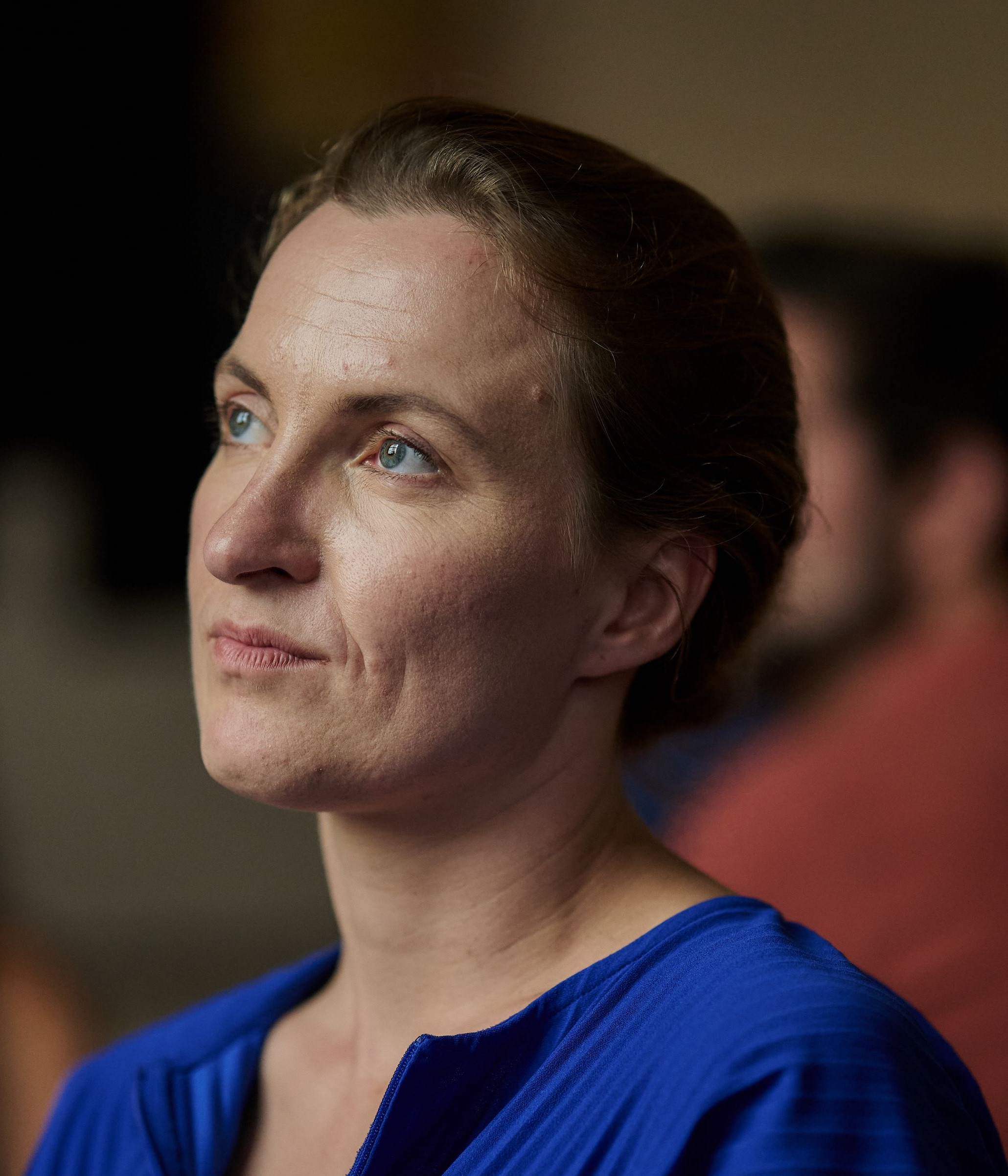
Antonia Krefeld-Schwalb is an Assistant Professor at the Department of Marketing Management, Rotterdam School of Management, Erasmus University. With a background in cognitive science and management, her research bridges computational modeling, eye-tracking, and consumer decision-making to address sustainability challenges. Current Affiliation: Assistant Professor, Rotterdam School of Management Research Focus: Sustainable consumer behavior, decision-making processes, and methodological improvements Key Collaborations: Columbia University, University of Geneva, Erasmus Sustainability Program Her cognitive science training informs methodological approaches like mouse/eye tracking and computational modeling applied to marketing problems. She investigates structural parameter interdependencies, external validity threats in surveys, and climate risk communication effectiveness. Recent research trends include climate adaptation strategies, sustainable behavior interventions, and meta-scientific analyses of statistical practices in consumer research. She advocates for heterogeneous population sampling and preregistration to enhance validity. Scientific Honors: Veni Grant (NWO) She develops targeted sustainability interventions through collaborations like the Erasmus Sustainability Program. Her work appears in journals such as PNAS, Journal of Marketing Research, and Psychological Review.
Nezihe Merve Gürelمشاهده پروفایل
استادیار
Nezihe Merve Gürel is an Assistant Professor in Computer Science at Delft University of Technology (TU Delft), affiliated with the Pattern Recognition & Bioinformatics Group within the Intelligent Systems Department of the Faculty of Electrical Engineering, Mathematics and Computer Science. Her research focuses on developing robust, reliable, and efficient machine learning methods with enhanced reasoning capabilities, bridging theoretical rigor and practical applications. She emphasizes data-centric approaches to improve ML systems. Education: PhD in Computer Science from ETH Zurich, MSc from EPFL (Switzerland). Research Interests: ML robustness, reliability, reasoning, data-centric ML, federated learning, and explainable AI. Her recent work includes certified robustness for retrieval-augmented models and time-efficient learning algorithms. She has contributed to the Journal of Data-centric Machine Learning Research as an executive editor and served as a reviewer for top ML conferences (NeurIPS, ICML, ICLR). She previously held roles at IBM Research, Stanford University's Human-Centered AI Lab, and Westlake Institute for Advanced Study. Her awards include the Generation Google Scholarship and Cisco Research Funding . Scientific Awards : Generation Google Scholarship (2021) Cisco Research Center University Funding Labs & Teams : She leads research in the Pattern Recognition Laboratory at TU Delft and collaborates with international institutions like Stanford and Westlake Institute for Advanced Study.
Asier Monevaمشاهده پروفایل
پژوهشگر
- Criminology
- Cybercrime
- Environmental Criminology
- +۴ مورد دیگر
Dr. Asier Moneva is a Postdoctoral Researcher at the Netherlands Institute for the Study of Crime and Law Enforcement (NSCR) and The Hague University of Applied Sciences , specializing in cybercrime , environmental criminology , and situational crime prevention . His work focuses on offender decision-making in cyberspace, cybercrime victimization patterns, and the application of data science to crime analysis. Education : PhD in Criminology (2020), Master in Crime Analysis and Prevention (cum laude, 2017) from Miguel Hernández University. Current Role : Analyzing cybercrime patterns through environmental criminology frameworks and data science methodologies. Moneva's research examines longitudinal offending patterns in cybercrime, particularly through analyses of web defacement archives ( Zone-H data) and hacker behavior. His studies reveal extreme concentration of cybercrime among chronic offenders, with 2.9% of hackers responsible for 68.5% of defacements. He also investigates repeat victimization dynamics in digital environments and the effectiveness of warning banners as deterrents. Recent publications focus on ransomware payment decisions by SMEs, stolen data markets on Telegram, and the intersection of familial relationships with cybercrime involvement. His work combines quasi-experimental designs , crime scripting , and conjunctive analysis to develop prevention strategies.
Alexander Skopalikمشاهده پروفایل
استادیار
Alexander Skopalik is an Assistant Professor in the Mathematics of Operations Research department, specializing in Game Theory, Congestion Games, and Algorithmic Game Theory. His work explores Strategic Resource Allocation, Equilibrium Analysis, and Network Games, with significant contributions to multi-agent systems and facility location optimization. Key research areas: Congestion Games Facility Location Nash Equilibrium Strategic Resource Allocation Algorithmic Game Theory His recent publications focus on equilibrium dynamics in facility location, battery charging games, and strategic resource allocation, emphasizing the interplay between theoretical guarantees and practical applications in AI and mobility systems. He actively participates as a committee member in leading conferences such as IJCAI and AAMAS.

- Causality
- Causal Modeling
- Causal Discovery
- +۵ مورد دیگر
Joris M. Mooij is a Professor of Mathematical Statistics at the Korteweg-De Vries Institute of the University of Amsterdam, Netherlands. His research focuses on causality, spanning causal modeling, discovery, and inference with applications in biology, medicine, fairness, and business analytics. He combines mathematical modeling with statistical and algorithmic approaches in his work. Dr. Mooij received his PhD with honors from Radboud University Nijmegen in 2007, focusing on approximate inference in graphical models. After postdoctoral work at the Max Planck Institute for Biological Cybernetics in Tübingen, Germany, he obtained an NWO VENI grant in 2011 for further postdoctoral research at Radboud University. He became Assistant Professor at the University of Amsterdam's Informatics Institute in 2013, was promoted to Associate Professor in 2017, and became a full Professor of Mathematical Statistics in 2020. Dr. Mooij's research centers on causal inference, with particular expertise in structural causal models, cyclic causal systems, and causal discovery algorithms. His work addresses fundamental questions about when causal relationships can be identified from observational data and how to develop robust causal discovery methods that work in complex real-world settings with latent variables, cycles, and selection bias. He has made significant contributions to understanding the limitations of existing causal discovery approaches and developing new methods that overcome these limitations. His research group organizes the Amsterdam Causality Meeting series and develops theoretical frameworks for causal modeling that encompass both acyclic and cyclic systems. Dr. Mooij has collaborated extensively on applications of causal methods in biological systems, including protein signaling networks and gene expression data. The group's recent work explores performative predictions, causal domain adaptation, and robust causal discovery methods that account for selection bias and missing data. Dr. Mooij has received numerous awards for his research, including: Best paper award at UAI for "Establishing Markov equivalence in cyclic directed graphs" IEEE Geoscience and Remote Sensing Society 2011 Letters Prize Paper Award ICML Test of Time Honorable Mention Best student paper award at UAI 2010 He has secured competitive research funding through an NWO VENI grant, NWO VIDI grant, and an ERC Starting Grant, which supported the establishment of his research group consisting of 3 PhD students and 3 postdocs focused entirely on causality. Dr. Mooij has supervised several PhD students, including Tineke Blom, whose work on "Causality and Independence in Perfectly Adapted Dynamical Systems" significantly influenced his thinking about causality in complex systems. He has co-taught the MasterMath course on Causality and published lecture notes titled "A Mathematical Introduction to Causality." His research continues to push the boundaries of causal inference methodology and its applications across diverse scientific domains.

Joaquin Vanschoren is an Associate Professor of Machine Learning at Eindhoven University of Technology (TU/e), affiliated with the Faculty of Mathematics and Computer Science. He leads the Automated Machine Learning group and serves as Education Director for the Data Science program. His research focuses on democratizing AI, algorithm selection, and open science platforms like OpenML. He has received awards including the Dutch Data Prize and Amazon Research Award. Education: PhD in Engineering (KU Leuven, Belgium), MSc in Computer Science (KU Leuven). Research visits included IBM, Amazon Research, and universities globally. Research Interests: Machine Learning, Automated ML, Meta-learning, AI Safety, Data-centric AI. He co-founded OpenML and chairs MLCommons' AI Safety working group. Key Projects: NeurIPS Datasets and Benchmarks track, MLCommons initiatives, OpenML platform. Supervised 78 research works and authored 200+ papers. Awards: Dutch Data Prize (2016), Amazon Research Award (2019), Microsoft Azure Research Awards (2016–2017). Labs/Teams: OpenML open source team, MLCommons collaborations, Automated Machine Learning group at TU/e.

Tos T.J.M. Berendschot is a University Researcher in Biomedical Engineering at Eindhoven University of Technology , specializing in Medical Image Analysis . His work spans interdisciplinary domains linking diabetes, neurodegeneration, and ophthalmology. Email: t.t.j.m.berendschot@tue.nl Research Interests focus on diabetic complications, retinal neurodegeneration, and AI-driven medical imaging. Key areas include: Maturity Onset Diabetes of the Young (MODY) Microvascular dysfunction Advanced Glycation End-Products (AGEs) Retinal vascular tree analysis Keratoconus detection via AI Optical Coherence Tomography (OCT) Selected Publications highlight AI applications in ophthalmology, diabetic neurodegeneration, and vascular connectivity studies. Collaborations include Maastricht University Medical Center and international conferences in computer vision. Media Contributions feature expert commentary on cataract surgery, keratoconus, Alzheimer's disease biomarkers, and intraocular lens calculations.

Tom Bootمشاهده پروفایل
دانشیار
Dr. Tom Boot is an Associate Professor at the Department of Economics, Econometrics & Finance at the University of Groningen. He holds a PhD in Econometrics from Erasmus University Rotterdam (2017) and an MSc in Econometrics from the same institution (2012), along with an MSc in Physics from the University of Groningen (2010). His research focuses on econometric theory applied to macroeconomic forecasting, high-dimensional data analysis, and causal inference. He has been recognized with the Veni grant (2021–2024) for his work on forecasting methodologies. Boot’s research interests include improving forecast accuracy through methods like subspace projections, structural break modeling, and privacy-aware marketing analytics. His recent work explores privacy-utility trade-offs in data-driven marketing and unbiased estimation techniques for clustered errors. He has supervised PhD students including Jhordano Aguilar Loyo and Gilian Ponte, whose theses addressed panel data heterogeneity and differential privacy applications. Boot is also a program director for the MSc Econometrics, Operations Research, and Actuarial Studies (since 2024). His contributions to econometrics span over a dozen peer-reviewed publications, with a focus on advanced statistical techniques for economic forecasting and policy analysis. Collaborations include work with institutions like Harvard/MIT and the organization of workshops on causal inference and machine learning.

Rodrigo Gonzálezمشاهده پروفایل
استادیار
Rodrigo González is an Assistant Professor at the Department of Mechanical Engineering, Eindhoven University of Technology, since 2022. His research focuses on data-driven modeling, estimation, and control methods for high-tech precision systems, with applications in motion control and continuous-time system identification. Education: Ph.D. in Electrical Engineering (KTH Royal Institute of Technology, 2022) M.Sc. in Electronic Engineering (Universidad Técnica Federico Santa María, 2016) His work emphasizes continuous-time system identification, state-space modeling, and Bayesian estimation techniques. Key research themes include motion control tuning, multivariable systems, and noise/disturbance modeling in precision engineering applications. Rodrigo has received the Best Electronic Engineering Student Award (2016) and Best Thesis Award from Universidad Técnica Federico Santa María. He has active collaborations with institutions like Universidad Técnica Federico Santa María through visiting researcher appointments. Scientific awards include: Best Electronic Engineering Student Award (2016) Best Thesis Award (Universidad Técnica Federico Santa María)
Samanipour Saerمشاهده پروفایل
استاد مهمان
Dr. Saer Samanipour is a Visiting Professor at the Van 't Hoff Institute for Molecular Sciences, part of the Faculty of Science at the University of Amsterdam. His research focuses on advanced analytical techniques for environmental and biomedical applications, with a strong emphasis on non-targeted analysis, mass spectrometry, and machine learning integration. He leads efforts in developing open-source tools like GcDUO and jHRMSToolBox to enhance data interpretation in complex chemical datasets. Key areas include environmental contaminant detection, chemical exposure assessment via wastewater-based epidemiology, and proteomic analysis of snake venoms. His work bridges computational methods with experimental chemistry to address global challenges in environmental health and toxicology. Primary affiliation: Van 't Hoff Institute for Molecular Sciences Research themes: Non-targeted LC-HRMS workflows, machine learning applications in analytical chemistry, PFAS analysis, and exposome research Software contributions: GcDUO (GC×GC-MS), jHRMSToolBox (HRMS data processing) His publications highlight innovations in data-driven approaches for compound prioritization, toxicity prediction, and method optimization. Recent work explores chemical space exploration and chemometric strategies for complex mixture analysis, with applications to environmental monitoring and forensic science.