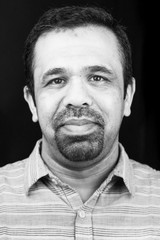
Chad Patrick Osorio is Adjunct Assistant Professor at the University of the Philippines Los Baños and PhD Researcher in Environmental Economics and Law at Wageningen University. His interdisciplinary work spans environmental law, AI governance, and economic anthropology, with regional focus on Southeast Asia. Research examines illegal wildlife trade through legal-financial frameworks, climate vulnerability in post-colonial contexts, and AI regulation in ASEAN markets. Fieldwork includes ethnographic studies of Christian vocal practices in South Korea and regulatory systems across Asia. Osorio contributes to World Bank's Business Ready Report and FAO consultant rosters while serving on Wageningen's Graduate School board. His publications integrate law, economics, and semiotics to address sustainable development challenges. Awards include recognition from Yale University (Sen Prize), Peter Drucker Society, and selection as Global AI Ambassador. Volunteer initiatives focus on legal education in underserved communities across Europe and Asia.
Ayse Sena Eruguz is an Assistant Professor at the Department of Operations Analytics, School of Business and Economics, Vrije Universiteit Amsterdam. She previously held positions as an Assistant Professor at Erasmus University Rotterdam (2020-2023) and a postdoctoral researcher at Eindhoven University of Technology (2017-2020). She earned her Ph.D. in Industrial Engineering from CentraleSupélec (France) in 2016. Her research focuses on operations research applied to supply chains, inventory control, sustainability, and maintenance systems, with collaborations in high-tech and maritime industries. Her teaching includes courses on E-Commerce Supply Chain Management, Procurement and Supply Management, and Sustainable Operations. She leads the 'Startersbeurs - Eruguz' research project (2023-2027), investigating maintenance optimization strategies for multi-component systems. She contributed to datasets such as the 'Maintenance Optimization for Multi-Component Systems with a Single Sensor' (2024). Research trends emphasize sustainability integration, e-commerce logistics challenges, and food waste reduction through inventory strategies. Her work bridges theory and practice, addressing real-world issues in global supply chains and maintenance systems.
Bastiaan Privé is a Researcher at the Department of Radiotherapy, Erasmus University Medical Center (Erasmus MC). His research focuses on advanced molecular imaging and radioligand therapy, particularly in prostate cancer and salivary gland malignancies. He specializes in the development and optimization of PSMA-targeted therapies using radiopharmaceuticals like lutetium-177 and fluorine-18. Key research areas include dosimetry modeling for radiation therapy, genetic biomarker analysis (e.g., TP53 alterations), and comparative imaging studies (MRI/PET/CT). His work integrates clinical trials, pharmacological evaluations, and computational methods to improve diagnostic accuracy and treatment efficacy. Recent studies highlight innovations in single-time-point dosimetry using Bayesian fitting, the impact of genetic profiles on therapy response, and the application of PSMA-1007 PET for prostate cancer recurrence detection. Collaborations span multidisciplinary teams involving oncologists, radiologists, and biomedical engineers. Notable contributions include pioneering PSMA-based therapies for salivary gland cancers and advancing multimodal imaging protocols for early cancer detection. His research emphasizes translational applications with direct clinical relevance, supported by peer-reviewed publications in journals like Theranostics and Radiology .
Wouter J.A. van Heeswijk is an Assistant Professor in the Department of Industrial Engineering & Business Information Systems at the University of Twente, Faculty of Engineering Technology. His research lies at the intersection of operations research, logistics, and artificial intelligence, with a strong focus on decision-making under uncertainty. University: University of Twente School: Faculty of Engineering Technology Department: Industrial Engineering & Business Information Systems Academic Rank: Assistant Professor His research interests include logistics, simulation, dynamic programming, reinforcement learning, urban mobility, and human-centered automation . He applies advanced computational methods to real-world challenges in transportation, disaster response, and business process optimization. His work often integrates machine learning with optimization techniques to build adaptive, data-driven decision support systems. The most recent articles reflect a strong trend toward applying reinforcement learning and simulation-based optimization in complex logistics and urban systems. Topics include traffic equilibrium prediction, post-disaster inventory allocation with UAVs, and self-organizing transportation networks. His publications span high-impact journals and conferences in operations research and computer science. Scientific Awards and Recognitions: No specific awards mentioned in the provided text. Advising and Grants: Dr. van Heeswijk supervises graduate students, including PhD candidates such as R. Bosch. While specific grants are not listed, his active publication record across multiple years and diverse topics suggests ongoing research funding. He collaborates extensively with colleagues like M.R.K. Mes and others in the logistics and operations research domain. Labs and Research Teams: He is part of a research group focused on logistics, simulation, and decision support systems within the Industrial Engineering department. His work contributes to the broader fingerprint of ‘Logistics’, ‘Simulation’, and ‘Reinforcement Learning’ at the university.
Ymro Hoogendoorn is an Assistant Professor at the Department of Technology and Operations Management at Rotterdam School of Management, Erasmus University Rotterdam. His research focuses on stochastic optimization, vehicle routing problems, and logistics management. He holds a PhD from the same institution (2024), with his thesis addressing vehicle routing under varying demand information conditions. His key research interests include developing robust algorithms for stochastic vehicle routing, integrating valid inequalities into optimization models, and enhancing computational efficiency in large-scale logistics systems. His work frequently addresses real-world challenges such as demand uncertainty and resource allocation. Hoogendoorn's publications span peer-reviewed journals like the European Journal of Operational Research and INFORMS Journal on Computing, as well as technical reports. His recent work emphasizes methodological advancements in stochastic programming and algorithmic improvements for vehicle routing variants. Notable contributions include the Improved Integer L-Shaped Method and resource-robust valid inequalities for combinatorial optimization problems. No scientific awards or grants are explicitly mentioned in the provided texts, though his research has garnered citations (e.g., 8 citations for his 2023 INFORMS paper). His academic advising and lab affiliations remain unspecified in the data provided.
Susan Niessen is a University Lecturer in the Faculty of Behavioural and Social Sciences at the University of Groningen, affiliated with the Psychometrics and Statistics department. Her work spans psychometrics, personnel selection, algorithmic decision-making, and talent identification in sports and education. Research Interests: Her research focuses on predictive validity, decision-making, organizational psychology, and educational assessment. She investigates how algorithms and psychological tests can improve fairness and accuracy in hiring and admissions. Her work also explores talent scouting in soccer and the use of multimodal data for personality assessment. Publication Trends: Her recent articles emphasize algorithmic transparency in hiring, athlete assessment using cognitive models, and longitudinal analysis of career pathways in sports. She combines psychometric rigor with real-world applications in education, HR, and sports science. Scientific Awards: Gratama Award (2024) ABBAS Dissertation Award (2019) Top Cited Paper Certificate, International Journal of Selection and Assessment (2018) BSS Science for Society Award (2016) Advising and Grants: She serves as co-supervisor for a PhD project on algorithmic fairness in secondary education admissions (2024–2029). She has contributed to consultancy projects, including the evaluation of selection procedures for R(h)io’s (2024). Her datasets on higher education performance and soccer talent are publicly available. She is an editor for the Journal of Personnel Psychology and actively participates in peer review and academic presentations. Labs and Teams: She collaborates closely with researchers like R.R. Meijer, M. Neumann, and R.J.R. den Hartigh. Her work is embedded in the Psychometrics and Statistics group at the University of Groningen, contributing to both academic research and societal impact through public engagement and policy-relevant studies.
Hans de Ferrante is a University Researcher at the Faculty of Mathematics and Computer Science, Eindhoven University of Technology, specializing in Combinatorial Optimization. His work focuses on applying operations research and mathematical modeling to organ transplantation policy within the Eurotransplant system, which coordinates organ allocation across multiple European countries. His primary research interests include healthcare operations research, organ allocation systems, mathematical modeling of transplant outcomes, combinatorial optimization for policy evaluation, medical statistics, and health equity. He has conducted significant research on liver allocation (addressing sex disparities and model revisions for end-stage liver disease) and kidney allocation (focusing on barriers for immunized patients). Analysis of his recent publications (2023-2025) shows a consistent methodological approach using discrete event simulation, statistical correction for selection bias, and optimization algorithms to evaluate organ allocation policies. This interdisciplinary work bridges computer science, mathematics, and transplant medicine to produce actionable insights for improving equity and efficiency in organ distribution systems. Dr. de Ferrante is an active member of the Combinatorial Optimization research group at Eindhoven University of Technology, where he develops computational frameworks for healthcare policy analysis. He also contributes to academic community through conference organization (including FRICO 2023) and teaching Mathematics courses.
Claudia Fecarotti is an Assistant Professor in Resilient Asset Management and Maintenance at Eindhoven University of Technology (TU/e), Netherlands, since January 2019. She is affiliated with the Operations, Planning, Accounting and Control Group (OPAC) within the Department of Industrial Engineering and Innovation Sciences, as well as EAISI and the 4TU Centre for Resilience Engineering. Prior to TU/e, she was a Research Associate at the University of Nottingham's Resilience Engineering Research Group (RERG), where she earned her PhD in Reliability Engineering and Infrastructure Asset Management in 2018. Education: BSc in Civil Engineering, University of Palermo, Italy MSc in Transportation Systems and Infrastructures, University of Palermo, Italy PhD in Reliability Engineering and Infrastructure Asset Management, University of Nottingham, UK Her research focuses on reliability engineering, maintenance modeling and optimization, and infrastructure asset management. She develops methodologies for planning, operating, and maintaining complex safety-critical systems (railways, fuel cells, offshore oil/gas, agricultural robots) to enhance performance and reduce costs. Her work bridges academic rigor with industrial relevance. Recent research trends include condition-based maintenance for multi-component systems, intervention planning for interconnected infrastructures, and digital tools for railway and modular construction systems. Her work aligns with UN Sustainable Development Goals for resilient infrastructure and sustainable cities. Scientific Awards: IMechE’s Best Young Researcher Award 2013 IMechE’s Donald Julius Groen Prize 2017 She is actively involved in projects like Modular prefabricated construction (2024–2027) and serves on the editorial board of the Journal of Infrastructure Systems (ASCE). Her expertise spans Petri nets, fault tolerance, and systems performance optimization.
Eric Nalisnick is an Assistant Professor in the Department of Computer Science at Johns Hopkins University. He holds affiliations with the Institute for Assured Autonomy, Mathematical Institute for Data Science, and Data Science and AI Institute. His research focuses on developing safe and robust intelligent systems through probabilistic modeling and computational statistics, with applications in healthcare, online content moderation, and sign language processing. His work emphasizes human-centered design, exploring how to incorporate prior knowledge, detect system failures, and integrate human-machine decision-making. Research Trends: Recent publications highlight advancements in uncertainty quantification (e.g., Lightning UQ Box tool), early-exiting neural networks for risk control, and generative models for symmetry transformations. He also investigates calibration in multi-distribution learning and ethical considerations in hate speech detection systems. Advising & Contributions: Eric mentors a diverse cohort of PhD students and has developed influential open-source tools like Lightning UQ Box and Learning to Defer frameworks. His teaching includes courses on Deep Learning, Human-in-the-Loop Machine Learning, and Bayesian Methods.
Hans Van Eyghen is an Assistant Professor in the Tilburg School of Catholic Theology at Tilburg University, specializing in religious epistemology and cognitive science of religion. He holds a PhD from Vrije Universiteit Amsterdam and master's degrees in theology and philosophy from KU Leuven. His research explores the intersection of religious belief systems with cognitive neuroscience, emphasizing topics like spirit beliefs, psychedelics, and replication in the humanities. Research Interests include: religious epistemology, cognitive science of religion, philosophy of psychedelics, replication studies in humanities, and Afro-Caribbean religious practices. Recent work focuses on AI ethics, the justification of spirit beliefs, and historical replication of scientific-religious narratives. Publications span Discover Artificial Intelligence , Zygon , and Religious Studies , with a notable book The Epistemology of Spirit Beliefs (2023). He has led projects on replication in historiography and organized conferences on topics like 'Psychedelics and the Entropic Brain.' His work bridges philosophy, cognitive science, and theology, advocating interdisciplinary approaches to understanding religious cognition and its societal implications.
Seenivasan Hariharan is a Researcher at the Department of Algorithms and Complexity, Universiteit van Amsterdam. His work focuses on advancing computational methods for heterogeneous catalysis and quantum computing applications. He holds a PhD in Chemical Engineering and has over a decade of experience in simulating molecule-surface interactions using density functional theory (DFT) and quantum dynamics approaches. His research interests bridge traditional computational chemistry with emerging quantum technologies. Key areas include quantum algorithm development for catalytic interfaces, optimization of alloy catalysts, and modeling surface reactions under extreme conditions. Current projects involve applying variational quantum eigensolvers (VQE) and quantum phase estimation (QPE) algorithms to address limitations of classical DFT methods in capturing spin-related phenomena and strong correlation effects. Publications highlight interdisciplinary contributions, including a 2024 review on quantum computing's role in catalysis modeling and foundational work on surface reaction dynamics since 2013. His work explores material systems ranging from graphene to bimetallic alloys, addressing topics like CO oxidation mechanisms, water dissociation pathways, and coating material characterization through electrodeposition methods. Active in both academic and industrial collaborations, his research emphasizes embedding quantum computing strategies within traditional chemical modeling frameworks to enable large-scale simulations. Recent efforts focus on qubit routing optimization for quantum hardware and developing fault-tolerant algorithms for future quantum systems.
Eric Pauwels is a Scientific Staff Member at Centrum Wiskunde & Informatica (CWI) in Amsterdam, The Netherlands, affiliated with the Intelligent and Autonomous Systems department. His research spans interdisciplinary domains including transportation systems, energy markets, and behavioral economics. Key Research Areas: Transportation demand modeling, machine learning applications in mobility, reinforcement learning for cooperative systems, and energy systems optimization. Active Projects: ALIGN4energy (aligning citizen behavior with systems), Energy Intranets (NEAT project), and industrial collaborations like Impactstudie Noord/Zuidlijn. Scientific Contributions: 2005 ERCIM Best Working Group Prize recipient, with expertise in discrete choice modeling, wavelet analysis, and production scheduling optimization. Publications: Recent work focuses on bicycle-train integration, electric vehicle bidding frameworks, and CKLS financial process analysis. Contact: Email Eric.Pauwels@cwi.nl , Phone +31 20 592 4225 (Room M358).
Jin-Kao Hao is a Professor of Computer Science at Université d'Angers , France, and a Senior Fellow of the Institut Universitaire de France . He specializes in computational methods for large-scale combinatorial optimization problems, with applications in computer science, artificial intelligence, and computational biology. Editorial Board Member: PeerJ Computer Science Research Affiliation: LERIA Laboratory , SFR MathSTIC Research Interests: His work spans algorithms, optimization theory, artificial intelligence, and computational biology. He develops advanced techniques for solving complex combinatorial problems, including parallel exact algorithms, dynamic thresholding, and metaheuristics. Publication Trends: Recent articles focus on feedback set problems, traveling salesman variants, gene-gene interactions, and scheduling. These align with his expertise in optimization, graph theory, and computational biology applications. Scientific Awards: Senior Fellow, Institut Universitaire de France Labs & Teams: Affiliated with the LERIA Laboratory at Université d'Angers and the SFR MathSTIC research federation.
Nevin Mutlu is an Assistant Professor in the Operations Planning, Accounting & Control (OPAC) Group within the School of Industrial Engineering at Eindhoven University of Technology (TU/e). She is affiliated with multiple research centers including the Data Science Center Eindhoven (DSC/e), Efficient Consumer Response (ECR) Community, Retail Operations Lab, and Freight Transport & Logistics Research Group. Her industry partnerships include Nike and the ECR Community, demonstrating strong connections between her academic research and practical retail applications. Dr. Mutlu received her PhD and MSc degrees in Industrial and Systems Engineering from Virginia Tech, USA in 2016 and 2013, respectively. She also holds a BSc degree in Industrial Engineering and a BA degree in Economics from University at Buffalo, State University of New York, USA. Prior to joining TU/e in 2016, she served as a graduate teaching assistant and instructor at Virginia Tech, teaching courses in operations research and working with the Office of Emergency Management on real-world applications. Her research bridges optimization, economics, and marketing to address industry-relevant problems in retail operations and logistics. She specializes in modeling how operational decisions impact consumer behavior, with particular focus on retail pricing, experiential retail, e-commerce adoption, and transportation systems. Her interdisciplinary approach combines theoretical optimization techniques with practical business considerations, resulting in impactful research that addresses current challenges in retail and supply chain management. Analysis of her publications reveals a strong trajectory in operations research with increasing focus on consumer behavior dynamics. Her work spans theoretical optimization methods (resource allocation, production-routing problems) and applied retail contexts (experiential retail, dual-channel strategies). Recent publications show growing interest in sustainability aspects of retail operations and transportation, reflecting contemporary industry challenges. Her research consistently addresses the complex interplay between operational decisions and consumer responses, providing valuable insights for both academia and industry. EU Horizon 2020 Marie Curie Individual Fellowship (2018-2020) Dr. Mutlu actively contributes to research funding through projects like SYNERCIZE: SYnchromodal Transport NEtworks for a Construction Industry towards Zero Emissions (2025-2027), where she serves as a project member. Her teaching portfolio includes Supply Chain Management, Revenue Management and Pricing Analytics, and Project and Process Management courses. She has also served on committees such as the AI Planner of the Future program, demonstrating engagement with emerging technologies in her field. Her research is supported by multiple affiliations including the Data Science Center Eindhoven, ECR Community, and Retail Operations Lab, providing collaborative environments for interdisciplinary work. Her industry partnerships, particularly with Nike, facilitate the translation of academic research into practical retail solutions. The SYNERCIZE project demonstrates her expanding research scope into sustainable transportation networks for construction industries.
Dr. Shoko Jin is a Researcher at the Kapteyn Astronomical Institute within the Faculty of Science and Engineering at the University of Groningen. Her work centers on astronomical instrumentation and galaxy evolution, with no indication of part-time status or additional institutional affiliations. Her research spans: Galaxy formation and evolution dynamics Stellar population analysis and star formation processes Spectroscopic survey design (notably the WEAVE project) Applications of machine learning in astrophysical data analysis High-redshift cosmic structures and gravitational lensing Dr. Jin's publications (2018-2025) show consistent focus on large-scale astronomical instrumentation, particularly the development and optimization of the WEAVE spectrograph. Her collaborative work frequently addresses galaxy surveys, data retrieval methods, and telescope system validation. She is affiliated with the Kapteyn Astronomical Institute but leads no explicitly named research group. Prospective collaborators may contact her via s.jin@rug.nl.