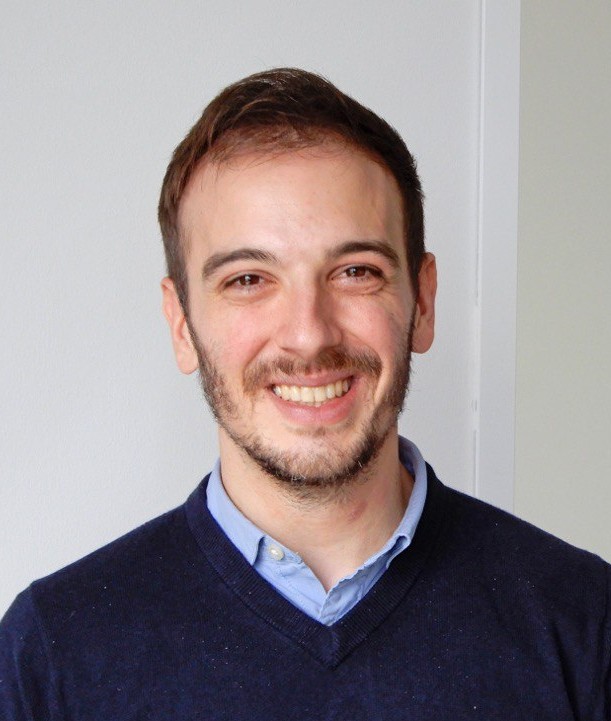
Prof. Niki Kilbertus is an Assistant Professor at the Technical University of Munich (TUM) in the Department of Informatics, and Group Leader at Helmholtz AI. His research focuses on causal machine learning, ethical AI systems, and applications in healthcare, climate science, and dynamical systems. He earned his PhD from the University of Cambridge (2020) and has held positions at DeepMind, Google, and Amazon during his studies. His research interests include causal discovery, fairness in AI, counterfactual reasoning, and integrating physics-based constraints into neural networks. Key contributions include foundational work on fair machine learning (e.g., avoiding discrimination through causal models) and developing methods for causal inference in complex systems like healthcare and climate modeling. Recent work emphasizes generative models for causal interventions, robust treatment effect estimation, and physically consistent neural differential equations. He leads a large interdisciplinary group with over 20 students and postdocs working on projects funded by Helmholtz Association, ERC, and industry collaborations. Notable awards include the Leopoldina Prize for Young Scientists (2024) and membership in the Junge Akademie. His lab maintains active partnerships with ELLIS, MCML, and the Zuse Institute Berlin.
Paul Gölz is an Assistant Professor at Cornell University's School of Operations Research and Information Engineering (ORIE), with affiliations in Computer Science. His research focuses on computational social choice, algorithmic fairness, and AI ethics, addressing topics like democratic innovation, fair resource allocation, and AI systems for diverse users. Education: Undergraduate studies at Saarland University (Germany), PhD in Computer Science from Carnegie Mellon University, followed by postdoctoral research at Harvard University, UC Berkeley, and the Simons Laufer Mathematical Sciences Institute. His work has been recognized with awards including the JPMorgan Chase AI Research Fellowship (2021) and honorable mentions for prestigious dissertation awards (Dantzig and ACM SIGecom). Research Highlights : Developed Panelot, a tool for selecting citizens' assemblies using state-of-the-art algorithms. His work on fair refugee resettlement and apportionment methods has been featured in Operations Research and Nature . Recent projects include AI alignment distortion analysis and generative social choice mechanisms. Teaching : Teaches Optimized Democracy (Spring 2025) and Mathematical Programming (Fall 2024). Supervises PhD students in ORIE, focusing on interdisciplinary applications of optimization and social choice. Awards & Grants : Received a $40K Structural Democracy Fellowship (Crankstart) and an OpenAI grant for Democratic Inputs to AI. Active in policy briefs (e.g., mini-public selection strategies). Labs/Tools : Co-developed Panelot.org , a nonprofit platform for fair citizen assembly selection. Active in open-source tool development for social choice applications.
Susanne Weis is a Research Professor and Group Leader of the 'Variability of the Brain' group at the Department of Brain and Behavior (INM-7), part of the Institute of Neuroscience and Medicine (INM) at Research Center Jülich GmbH. Her work focuses on understanding brain variability through advanced neuroimaging techniques and machine learning, with particular emphasis on sex differences, hormonal influences, and clinical applications in mental health. Her research interests include neuroimaging methodologies, machine learning applications in cognitive neuroscience, and the structural-functional relationships underlying brain variability. She investigates how factors like sex hormones and naturalistic stimuli (e.g., movies) affect brain connectivity and cognitive performance, aiming to improve diagnostic and predictive tools for disorders such as schizophrenia and Alzheimer’s disease. Publications highlight her contributions to developing datasets (e.g., SpEx), analyzing confound leakage in ML models, and exploring meta-analytic networks during naturalistic viewing. Her work bridges basic science and clinical impact, addressing challenges in interpreting neuroimaging data and advancing personalized medicine approaches. In her role as a group leader, Weis oversees research projects and collaborates with interdisciplinary teams. She is affiliated with the Helmholtz Association and contributes to the broader scientific community through her research in neuroimaging and computational neuroscience.
Prof. Dr. André Bardow is a Full Professor in Energy and Process Systems Engineering at ETH Zurich , leading research at the intersection of thermodynamics, machine learning, and sustainable energy systems. Previously, he held professorships at RWTH Aachen University (2010-2020) and TU Delft (2007-2010). He also served as part-time director at Forschungszentrum Jülich (2017-2022) and visiting professor at UC Santa Barbara (2015/16). His work focuses on energy systems optimization , computer-aided molecular design , and CO2 capture & utilization . PhD from RWTH Aachen University Current ETH Zurich affiliation Former roles at RWTH Aachen, TU Delft, Jülich Research Center His research integrates machine learning with thermodynamic modeling to optimize processes like crystallization and electrochemical cooling . Recent publications demonstrate advancements in solvent design, CO2 transport LCA, and ORC working fluid optimization. He chairs the VDI Technical Committee for Thermodynamics (2016-2024) and has received multiple awards including the Covestro Science Award and Arnold-Eucken-Award . Current projects address carbon circular economies , electrified chemical production , and AI-driven process optimization . His lab at ETH Zurich develops cutting-edge technologies like ML-CAMPD frameworks for sustainable separation processes and photoacid-based CO2 capture systems. Funding from the H2020 Systemic Expansion of Circular Ecosystems (grant 101036854) supports these initiatives. 2024 Clarivate Highly Cited Researcher 2022 Inaugural Lecture: "To sustainability and beyond: A computer-animated story on energy & chemicals" Recipient of multiple teaching and research excellence awards
Matthias Feurer is a Thomas Bayes Fellow and interim professor at the Chair of Statistical Learning and Data Science, funded by the Munich Center for Machine Learning (MCML) at Ludwig Maximilian University of Munich. He is a member of the Department of Statistics at LMU Munich, working under Prof. Dr. Bernd Bischl. His academic background includes: PhD in Computer Science from Albert-Ludwigs-Universität Freiburg, supervised by Prof. Dr. Frank Hutter M.Sc. in Computer Science from the University of Freiburg B.Sc. in Computer Science and Media from the Media University Stuttgart Feurer's research focuses on simplifying machine learning usage through Automated Machine Learning (AutoML). His work encompasses hyperparameter optimization, meta-learning, and model selection, with increasing emphasis on multi-objective AutoML that considers factors beyond predictive performance such as interpretability, deployability, and fairness. He actively develops open-source tools to advance the field. His recent publications demonstrate a strong trajectory in practical AutoML systems, with growing attention to tabular machine learning, foundation models integration, and addressing real-world constraints in optimization. His work consistently bridges theoretical advances with practical implementations through several widely-used open-source projects. Notable achievements include: 1st place in the warmstarting-friendly leaderboard of the BBO NeurIPS challenge Winner of the 2nd AutoML challenge Winner of the kdnuggets blog contest on AutoML Feurer is actively mentoring and teaching, having advertised PhD positions focused on AutoML, optimization, and benchmarking. He co-founded the Open Machine Learning Foundation supporting OpenML.org. His upcoming move to TU Dortmund as an assistant professor in AutoML and Optimization signals continued growth in his academic career while maintaining his research focus on making machine learning more accessible and rigorous.
Prof. Dr. Markus Zimmermann leads the Chair of Product Development and Lightweight Design at the Technical University of Munich (TUM). With a background in mechanical engineering from TU Berlin and the University of Michigan, and a doctorate from MIT on solid-state singularities, he bridges academic rigor with industrial application. His career spans 12 years at BMW focusing on vehicle development before transitioning to academia. Specializes in solution space engineering for robust design Expert in additive manufacturing and systems engineering Develops methodologies for managing design complexity and uncertainty His research focuses on multidisciplinary design optimization and lightweight structures , particularly in robotics and automotive systems . His team applies digital twin frameworks and attribute dependency graphs to enhance design processes. Recent publications emphasize topology optimization in robotic systems and thermal management for medical X-ray sources. Key trends in his 2024-2025 publications include: Topological optimization for additive manufacturing and robotics Application of solution spaces to manage design uncertainty Development of compact X-ray systems for medical therapy Integration of digital twin technologies in industrial contexts
Dr. Yolanda Gil is a Research Professor in Computer Science and Spatial Sciences at the University of Southern California, where she serves as Principal Scientist and Senior Director for Strategic Initiatives in Artificial Intelligence and Data Science at the Information Sciences Institute (ISI). She is also the Director of AI and Data Science Initiatives in the Viterbi School of Engineering and leads the USC Center for Knowledge-Guided Interdisciplinary Data Science (CKIDS). Dr. Gil received her Licenciatura in Computer Science from the Polytechnic University of Madrid and her M.S. and Ph.D. in Computer Science from Carnegie Mellon University, with a focus on artificial intelligence and cognitive science. Her research focuses on developing AI approaches that use knowledge to accelerate scientific discovery processes. Her key research interests include knowledge capture and representation, semantic workflows, ontology tools, scientific discovery methods, task-based collaboration, provenance tracking, knowledge networks, reproducibility in science, and machine learning for data analysis. She collaborates with scientists across multiple domains to improve how scientific knowledge is created, shared, and used. Dr. Gil's work has significant impact across multiple scientific domains including climate science, neuroscience, and omics research. Her projects demonstrate her commitment to building knowledge-guided systems that transform how scientists conduct research. She has pioneered approaches to capture the provenance of scientific experiments and to automate the analysis of complex scientific data. Fellow of the Association for Computing Machinery (ACM) Fellow of the Association for the Advancement of Science (AAAS) Fellow of the Institute of Electrical and Electronics Engineers (IEEE) Fellow of the Association for the Advancement of Artificial Intelligence (AAAI) 24th President of the Association for the Advancement of Artificial Intelligence Co-chair of the CRA/AAAI 20-Year Artificial Intelligence Research Roadmap for the US Initiator and leader of the W3C Provenance Group that resulted in a widely-used standard for web trust As an educator and leader, Dr. Gil directs the Data Science Program in Computer Science and serves as Co-Director of multiple joint MSc programs including Communication Data Science, Spatial Data Science, Environmental Data Science, Public Policy Data Science, and Healthcare Data Science. She also leads the new dual degree USC-Tsinghua University on Communication Data Science. Her leadership extends to mentoring numerous students and researchers in AI and data science. Through the USC Center for Knowledge-Guided Interdisciplinary Data Science (CKIDS), Dr. Gil organizes DataFest events each semester, fostering collaboration and innovation in data science across disciplines.
Prof. Dr. Judith Möller is the Scientific Director of the Leibniz Institute for Media Research | Hans-Bredow Institute (HBI) and holds a joint professorship at the University of Hamburg's Institute for Journalism and Communication Studies. Her research focuses on political communication effects, media's role in public opinion formation, and algorithmic impacts on society. She previously served as Associate Professor at the University of Amsterdam and Adjunct Professor at the University of Trondheim. Key awards include the 2019 VENI Talent Track grant from NWO for her work on AI-driven societal effects. Her collaborative projects address disinformation, media regulation, and AI ethics. She advises institutions like ERGA, EPRA, and German media authorities, emphasizing practical applications of her research. Notable contributions include the Reuters Digital News Report series and studies on generative AI's societal implications. Education: Previous academic roles at University of Amsterdam & Trondheim. Affiliated with ASCoR, CPC, and ICDS research initiatives.
Prof. Alexander Pretschner is a Professor of Software & Systems Engineering at the Technical University of Munich (TUM) and Founding Director of the Bavarian Research Institute for Digital Transformation (bidt). He also serves as Scientific Director of fortiss, a Bavarian research institute for software-intensive systems. His research focuses on software engineering, testing, information security, and ethical software development. Pretschner holds a PhD from TUM and has held academic positions at Karlsruhe Institute of Technology (KIT) and TU Kaiserslautern. He is a co-editor of several prestigious journals, including IEEE Transactions on Reliability and the Journal of Software Testing, Verification and Reliability. Education: PhD in Computer Science, Technical University of Munich MSc in Computer Science, University of Kansas (on Fulbright Scholarship) Diplom in Computer Science, RWTH Aachen University Research Interests: His work spans testing methodologies, secure software design, and ethical considerations in agile development. Notable contributions include frameworks for metamorphic testing, distributed data usage control, and accountability mechanisms for cyber-physical systems. Awards: IBM Faculty Award (2012, 2013) Google Focused Research Award (2011, 2012) EARTO Innovation Prize (2014) 2nd Platz Supervisory Award (2020) Advising & Grants: Pretschner has supervised numerous PhD and Master’s students, contributing to over 200 publications. He leads projects like EDAP (Ethical Deliberation in Agile Processes) and collaborates with industry partners on cybersecurity and AI ethics initiatives. Labs & Teams: His work is anchored in bidt, fortiss, and TUM’s Chair of Software & Systems Engineering, focusing on societal impacts of digitalization and trustworthy AI systems.
Prof. Dagmar Haase is a Full Professor in Landscape and Urban Ecology at Humboldt Universität zu Berlin, serving as Deputy Director of the Geographical Institute. She holds affiliations with the Helmholtz Centre for Environmental Research (UFZ) and has earned honorary professorships in Sweden and Romania. Her academic journey includes a PhD from the University of Leipzig (1999) and Habilitation from Martin-Luther-University Halle-Wittenberg (2009). Her research focuses on urban ecosystem services, social-ecological systems, and nature-based solutions to urban challenges. Key projects include EU-funded initiatives on green infrastructure (e.g., Horizon Europe’s NaturaConnect) and climate resilience. Awards include the AXA Research Fund Award (2014) and Honorary Wallenberg Professorship (2016). Haase’s work integrates remote sensing, citizen science, and participatory modeling to address urban sustainability. Over 250+ publications and an h-index of 77 reflect her prolific contributions. She advises numerous PhD candidates exploring urban dynamics, biodiversity, and governance. Current grants span climate adaptation, urban densification, and ecological networks.
Krishna Gummadi is a Scientific Director and Professor at the Max Planck Institute for Software Systems (MPI-SWS) in Germany, where he leads the Networked Systems Research Group. He also holds a professorship at the University of Saarland, demonstrating his dual commitment to research and academic instruction in computer science. His educational background includes: Ph.D. in Computer Science and Engineering from the University of Washington (2005) B.Tech. in Computer Science and Engineering from the Indian Institute of Technology, Madras (2000) Gummadi's research spans networked and distributed computer systems with a current focus on social computing systems. His work addresses critical challenges in algorithmic fairness, privacy in social media, trustworthiness of online identities, and information dissemination in social networks. He approaches these problems through interdisciplinary methods combining user-centric studies, data-centric analysis, and systems-centric design to create practical solutions that enhance fairness, transparency, and user control in online platforms. His methodology integrates large-scale observational studies, computational modeling, and system implementation to tackle complex human-computer interaction challenges at societal scale. His recent publications reveal a strong emphasis on fairness in algorithmic decision making, with significant contributions to quantifying and addressing discrimination in machine learning systems. His work bridges computer science, social science, and ethics, creating frameworks for fair classification, understanding media bias, and developing privacy-preserving techniques that maintain functionality while protecting user data. The research demonstrates a progression from technical system design to addressing societal implications of computing systems. Among his notable scientific achievements: ERC Advanced Grant in 2017 for 'Foundations for Fair Social Computing' Test of Time Awards at ACM SIGCOMM and AAAI ICWSM Casper Bowden Privacy Enhancing Technologies (PET) and CNIL-INRIA Privacy Runners-Up Awards IW3C2 WWW Best Paper Honorable Mention Multiple Best Paper awards across prestigious conferences Gummadi has advised numerous PhD students and postdoctoral researchers who have gone on to prominent positions in academia and industry. His ERC Advanced Grant has supported extensive research into fair social computing, while his leadership in major conferences (including serving as General Chair for ICWSM 2016 and Program Chair for WWW 2015) has shaped research directions in the field. His teaching portfolio includes courses on Distributed Systems, Human-Centered Machine Learning, and Social Media Analysis. He leads the Networked Systems Research Group at MPI-SWS, which has developed several publicly available systems including tools for fair classification, privacy risk assessment, trust evaluation in social media, and information diet management. The group's work bridges theoretical advances with practical implementations that address real-world challenges in social computing, with numerous software releases and datasets made available to the research community.
Sarah Pink is a leading Professor at Monash University , holding a joint appointment across the Faculty of Art, Design and Architecture and the Faculty of Information Technology . She serves as Director of the FUTURES Hub and Emerging Technologies Research Lab , focusing on human futures in digital and net zero transitions. PhD in Social Anthropology, University of Kent Honorary Doctorates from Malmö and Halmstad Universities Fellow, Academy of the Social Sciences in Australia Her research spans design anthropology, emerging technologies, automated decision making, and future mobilities . Recent work examines: AI ethics in clean energy Smart homes for seniors Automated mobility futures Selected 2025 article trends show focus on technological ethics, urban data systems, and human-machine interaction across 6 subfields including automated decision making and sensory design. Major awards: CIOB Award for Best International Paper (2016) Asia Pacific Eldercare Innovation Gold (2021) Good Design Awards (2023) As research director for Monash Grid Innovation Hub and Human-Centred Computing , she leads projects funded by Australian Research Council, EU, and national research councils across five countries. Her lab engages 20 active projects and 20+ industry partners globally.
Prof. Dr. Fabian Gieseke is a Professor and Chair of Machine Learning and Data Engineering at the University of Münster. He holds a PhD in Computer Science from Carl von Ossietzky University of Oldenburg and a dual degree in Mathematics and Computer Science from the University of Münster. His research focuses on Machine Learning, High-Performance Computing, and their applications in Geosciences, Smart Cities, and Astrophysics. Education: PhD in Computer Science (2012), Carl von Ossietzky University of Oldenburg University studies in Mathematics and Computer Science (2006–2011), University of Münster Research Interests: Data Mining and Machine Learning High-Performance Computing & Distributed Systems Deep Learning Applications in Environmental Science and Astrophysics Geospatial Data Analysis using Satellite Imagery Publications Trends: His recent work emphasizes large-scale environmental monitoring via deep learning, including canopy height estimation, forest biomass prediction, and national-scale tree counting. He also explores interactive systems for geospatial data retrieval and optimization of machine learning models for resource-constrained environments. Advising & Grants: Supervised over 30 theses on topics like satellite image analysis, deep learning on microcontrollers, and data marketplaces for smart grids. Active in securing grants for interdisciplinary projects combining AI with Earth observation. Labs/Teams: Leads the Machine Learning and Data Engineering group at the University of Münster, focusing on scalable AI solutions for real-world challenges in science and industry.
Saurabh Bagchi is a Professor at Purdue University, West Lafayette, USA. He holds a PhD in Computer Science from the University of Illinois Urbana-Champaign (2001). His research focuses on distributed systems security, networking, and embedded systems. Key areas include IoT security, cyber-physical systems resilience, and machine learning applications in edge computing. Bagchi's work spans theoretical and applied domains, addressing challenges in distributed algorithms, fault tolerance, and secure communication protocols. His contributions to firmware analysis, serverless computing optimization, and anomaly detection in industrial IoT systems have been widely recognized. He has published over 300 papers in top-tier conferences and journals such as IEEE Transactions on Dependable and Secure Computing, ACM Transactions on Sensor Networks, and CVPR. He collaborates with researchers in academia and industry to advance resilient networked systems, including projects funded by NSF and industrial partnerships. His lab explores cutting-edge topics like federated learning security, edge computing architectures, and game-theoretic approaches to cyber defense.
Carlo D'Eramo is a Professor of Reinforcement Learning and Computational Decision-Making at the University of Würzburg. He leads the LiteRL group at hessian.AI until 2025 and is affiliated with the Intelligent Autonomous Systems group at TU Darmstadt's Computer Science Department, as well as the Hessian Centre for Artificial Intelligence. Ph.D. : Information Technology, Politecnico di Milano (2019) Double MSc : Computer Engineering, Politecnico di Milano (2015) and University of Illinois at Chicago (2015) BSc : Computer Engineering, Politecnico di Milano (2011) His research focuses on lightweight reinforcement learning methods for adaptive autonomous agents, spanning multi-task/curriculum RL, multi-agent RL, deep RL, uncertainty quantification, residual learning, and planning. He developed MushroomRL, a widely adopted RL library, and investigates how agents can acquire real-world expert skills efficiently. The 15 most recent publications highlight trends in deep reinforcement learning architectures, adversarial and multi-agent systems, domain randomization, and curriculum design. Key subfields include optimal transport applications, entropy maximization, neural network distillation, and bounded rationality frameworks for robust learning. He has contributed to top venues like ICML, NeurIPS, AAAI, ICLR, JMLR, and IEEE Transactions on Pattern Analysis and Machine Intelligence, with a focus on advancing scalable and adaptive RL methodologies.