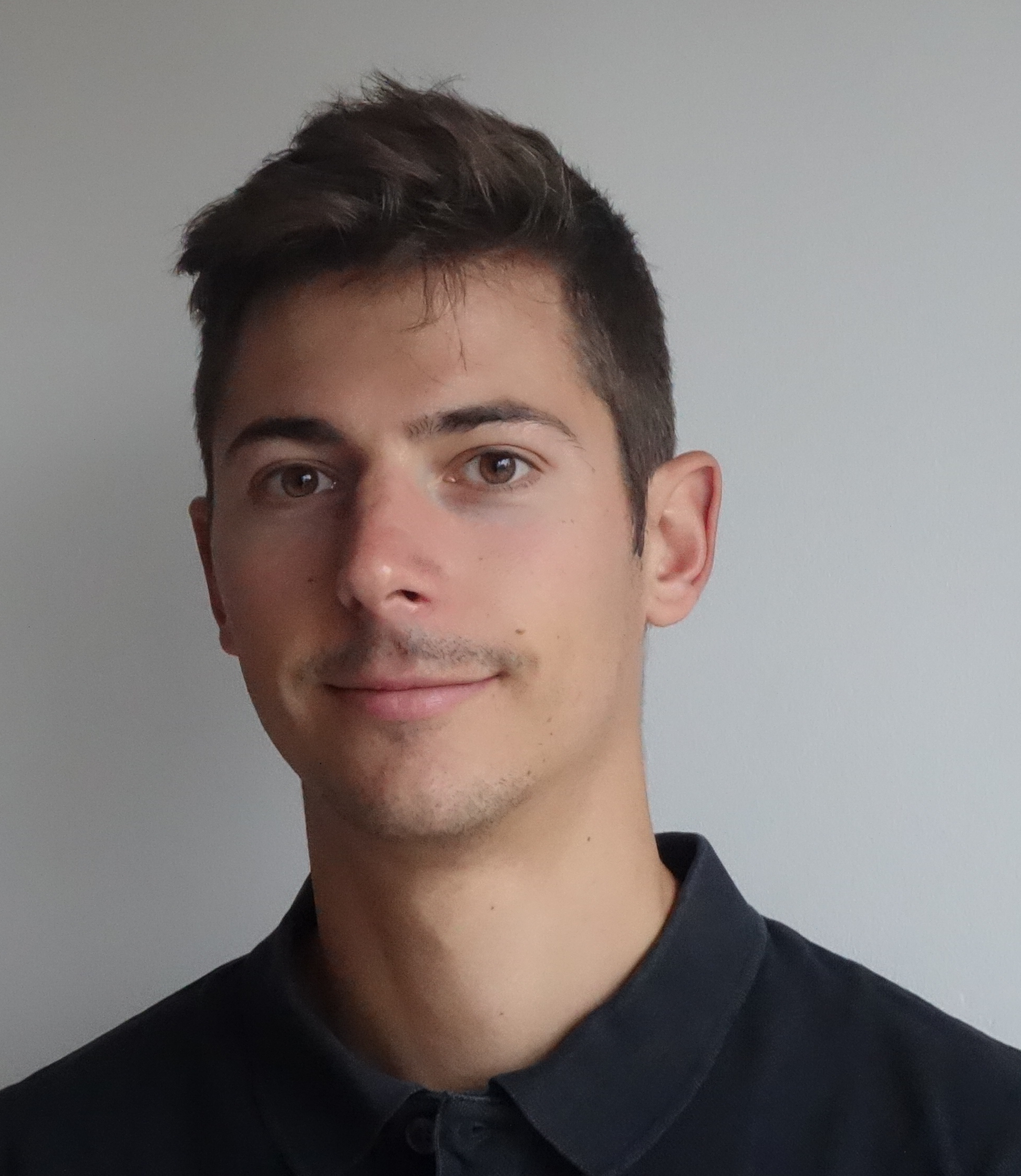
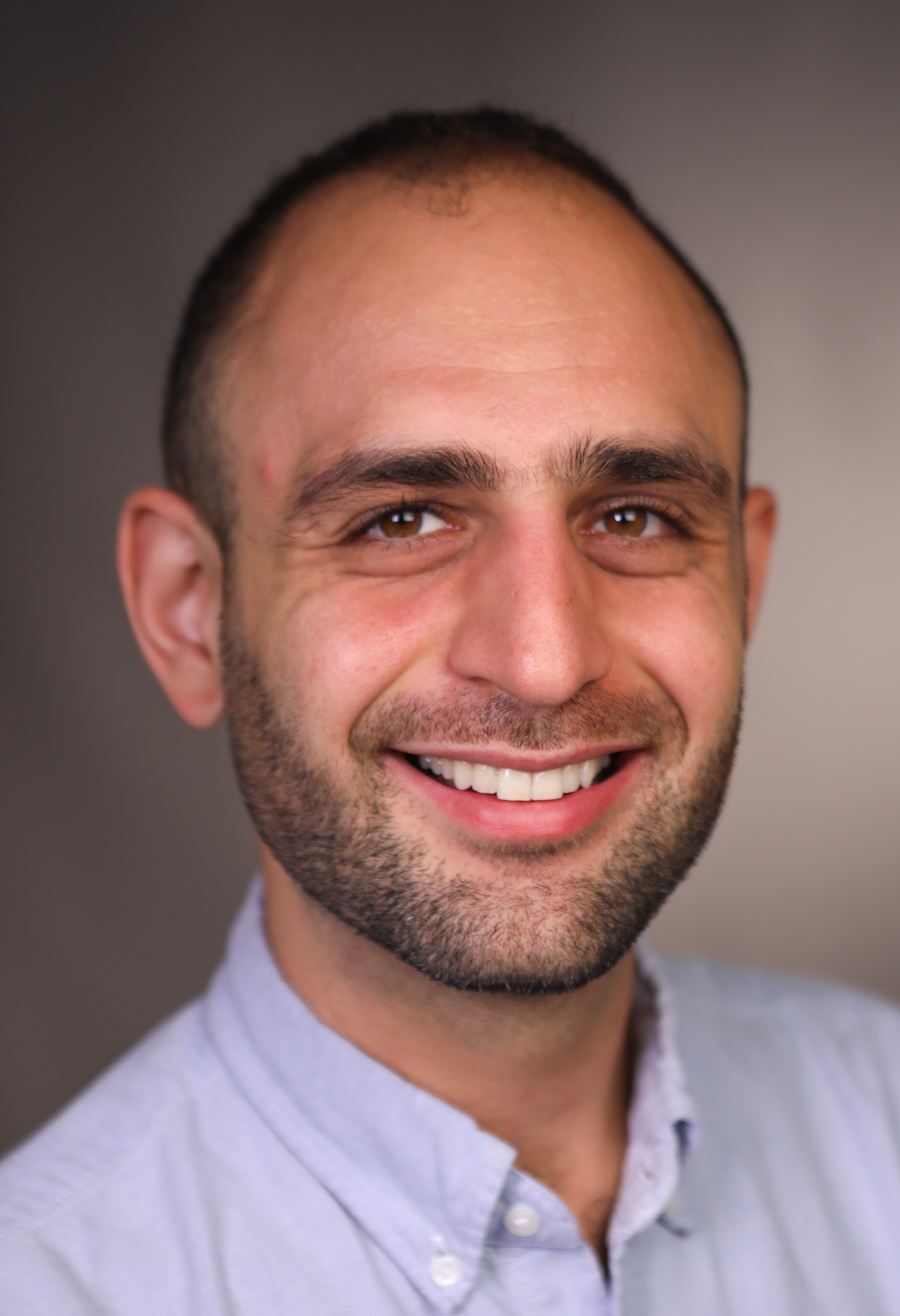
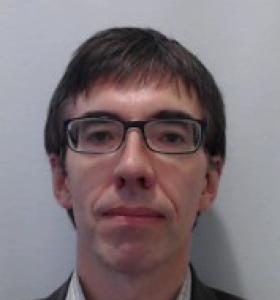
Martin David is an Associate Professor at the University of Perpignan Via Domitia in the LAMPS - Multidisciplinary Modeling and Simulation Laboratory . He holds a PhD in Thermal Engineering from the same university (2021), focusing on gas-pressurized solar receiver flows . As a Postdoctoral Researcher at Inria Bordeaux (2022-2024), he developed self-adaptive hybrid RANS/LES strategies based on physical criteria. Research interests include Computational Fluid Dynamics , Turbulence Modeling , Heat Transfer , Conjugate Heat Transfer , Uncertainty Quantification , and Multi-fidelity Approaches . His work bridges academic innovation and industrial applications , particularly in renewable energy systems and certified CFD development. His 15 most recent publications (2020-2024) demonstrate expertise in hybrid nanofluids , LES/DNS of solar receivers , self-adaptive algorithms , and machine learning integration for turbulence modeling. Key themes include thermal dissipation discontinuities , user-independent CFD , and multi-phase flow modeling . Scientific awards include: 26 million computational hours on DARI/PRACE projects Selection in GENCI annual report (2022) He supervises PhD students in topics ranging from high-performance computing to artificial intelligence in turbulence modeling . His teaching portfolio covers 560+ hours across CFD , Thermodynamics , Fluid Mechanics , and Renewable Energies at L1-M2 levels.
Dr. Serge Dumont is a Professor at the University of Perpignan, affiliated with the Multidisciplinary Modeling and Simulation Laboratory (LAMPS) and the MATH-INFO Department. His academic work focuses on mathematical and numerical modeling in mechanics. His research primarily addresses: Nonlinear analysis of contact and interface mechanics problems Optimization strategies for poorly conditioned linear systems Development of numerical methods for multi-contact structures Energy conservation algorithms in contact dynamics Current research themes include: Frictional contact problems Hyperelastic material modeling Applications to granular media and fluid/structure interactions Primal-dual active set methods Bipotential numerical approaches
Florent Nacry is a Senior Lecturer in Mathematics at the University of Perpignan Via Domitia (UPVD), affiliated with the LAMPS Multidisciplinary Modeling and Simulation Laboratory. His research focuses on unilateral variational analysis , spanning strong/weak convexity, non-regular functions, metric regularity, non-convex optimization algorithms, and differential inclusions like Moreau processes. He is actively involved in the SMAI-MODE thematic group as Vice-President for public actions and communication, and serves on steering committees for GdR MOA (2022-2026) and SMAI-MODE liaison committees (2020-2023; re-elected 2023-2026). Deputy Director of the Mathematics-Computer Science Department at UPVD (2023-2025) Head of the MEEF Mathematics Master's program at UPVD since 2020 Webmaster of the SMAI-MODE website His teaching spans all levels (L1-M2) across linear algebra, topology, optimization, and numerical analysis, with delivery formats including lectures (CM), tutorials (TD), and projects.
Berk Ustun is an Assistant Professor at the Halıcıoğlu Data Science Institute and the Department of Computer Science & Engineering at the University of California, San Diego. His research focuses on responsible machine learning, with applications in medicine, consumer finance, and the physical sciences, emphasizing algorithmic fairness, interpretability, and personalization. Previously, he held research positions at Google AI and the Harvard Center for Research on Computation and Society , and co-founded Petal , a company using ML to broaden credit access. He earned a PhD in Computer Science from MIT and Bachelors degrees in Operations Research and Economics from UC Berkeley . His group at UCSD recently expanded with the addition of Harry Cheon and Shreyas Kadekodi . He has received multiple awards, including the Kavli Fellowship , NSF Awards for Recourse Verification and AI-Driven Wildfire Prevention, the FAI Award for Fair AI in Medicine, and an Amazon Research Award for Participatory Personalization in ML. 2025 : Notable Area Chair at NeurIPS 2023 : NSF Award for Recourse Verification 2023 : Amazon Research Award for Participatory Personalization 2021 : Kavli Fellow by NAS 2021 : FAI Award for Fair AI in Medicine Berk actively hires postdoctoral researchers in responsible ML through his UCSD lab , with recent projects addressing label indeterminacy, predictive multiplicity, and equitable algorithm design. He advocates for ethical frameworks in AI, challenging the efficacy of explanation laws in detecting discrimination and exploring the societal impact of machine learning systems.
Gioia Maria Vago is a Lecturer at the University of Burgundy , affiliated with the Institute of Mathematics of Burgundy (IMB) and the research team Geometry, Algebra, Dynamics and Topology . She holds a Habilitation à Diriger des Recherches (HDR) (2013) and a PhD in Mathematics (1998) under the supervision of Christian Bonatti. Research Focus : Topological, algebraic, combinatorial, and algorithmic aspects of discrete and continuous dynamical systems, including hyperbolic dynamics, Morse flows, cellular automata, and aperiodic tilings. Teaching : Diversified instruction in Mathematics, Computer Science, and Mathematics-Computer Science for audiences ranging from mathematicians to biologists, including courses on Discrete Mathematics, Graph Theory, Unix/Linux, programming, and statistical software (R, Maple, Statistica). Students : Co-directed PhD thesis of Abdelrazak Jmel (2013) and supervised post-doc Maria Alice Bertolim (2004-2005) under a French Ministry fellowship. Notable Collaborations : Work with Michel Boileau on three-dimensional Ogasa invariants, and with Alain Jacquemard on computational biology projects (allosteric regulation models). Software Achievements : Developed Maple programs for unstable manifold conjugacy analysis and VBA tools for biochemical data optimization. Scientific Awards : HDR in Mathematics (2013) PhD Thesis with Mention Très Honorable et Félicitations du Jury (1998) French Ministry Postdoctoral Fellowship for Maria Alice Bertolim (2004-2005) Research Trends : Her work bridges topological complexity (e.g., Ogasa invariant) with combinatorial and algorithmic methods, particularly in high-dimensional dynamics (2008 paper on diffeomorphism centralizers) and low-dimensional systems (1999-2001 papers on hyperbolic manifolds).
Lylia Abrouk is a Research Professor in the Data Science department at the University of Burgundy . Her work focuses on leveraging semantic technologies, machine learning, and ontologies to address challenges in financial fraud detection and decision support systems. Her research integrates: Semantic Web for knowledge representation and ontology population Community Detection in collaborative networks User Modeling for personalized decision support Machine Learning in financial analytics and automotive data Recent publications highlight her contributions to: Ontology-driven fraud detection in interbank transactions Decision trees for cost-sensitive financial modeling Knowledge extraction using hybrid learning approaches Data analytics for automotive industry applications She collaborates extensively within the Data Science team, applying semantic modeling to real-world problems in banking and insurance sectors.
Olivier Bailleux is a Research Professor at the University of Burgundy within the Faculty of Science and Technology . His work focuses on computational logic and optimization. Teaching: C/C++ programming, constraint programming, logical programming Research: SAT resolution, constraint decomposition, genetic algorithms Team: Data Science Research Interests: SAT solvers, constraint programming, and algorithmic optimization. His projects explore efficient translations of complex constraints into Boolean models. Publications span topics like Pseudo-Boolean encoding, DPLL/CDCL algorithm comparisons, and minimal resolution refutations, reflecting interdisciplinary work in logic and artificial intelligence.
Rémi Monasson is a Researcher at the Laboratoire de physique de l’ENS (LPENS) within the Department of Physics at École normale supérieure (ENS-PSL) in Paris, France. His work bridges Statistical Physics , Machine Learning , Biophysics , and Computational Biology . Active in interdisciplinary research, he contributes to understanding complex systems through theoretical modeling and data-driven approaches. University: École normale supérieure (ENS-PSL) Department: Department of Physics Research Interests: Statistical Physics, Machine Learning, Biophysics, Computational Biology, Neural Networks, Protein Structure Prediction Email: remi.monasson@phys.ens.fr Rémi Monasson's recent publications focus on leveraging Restricted Boltzmann Machines for molecular design, protein sequence modeling , and neural network dynamics . His work spans applications in evolutionary biology , immunology , and biological sequence analysis , often integrating statistical mechanics with machine learning methodologies.
Veronique Benzaken is a Full Professor (Professeur de classe exceptionnelle) at University of Paris Sud 11, where she is a member of the LRI (Laboratoire de Recherche en Informatique), UMR 8623 - CNRS. She is currently a member of the VALS (Verification of Algorithms Languages and Systems) research group, a joint team between LRI and the Toccata group at INRIA - Saclay. Her research focuses on data-centric programming languages and systems, with particular expertise in XML processing, type systems, and formal verification of database systems. Her academic background includes: Dec 1996: Habilitation à diriger des recherches, University Paris Sud 11 (UFR des Sciences - Orsay) Jan 1990: PhD in Computer Science, University Paris Sud 11 (UFR des Sciences - Orsay) Sep 1986: DEA d'Informatique fondamentale, University Denis Diderot Paris 7 (Master in Theoretical Computer Science) June 1983: Diplomée de Chant et d'Art-Lyrique, Conservatoire National de Région de Grenoble Professor Benzaken's primary research interests lie at the intersection of database systems, programming languages, and formal methods. She has made significant contributions to XML-centric programming through the design and development of ℂDuce, an XML-centric general purpose functional programming language developed under an MIT license. Her work emphasizes type-safe and fast query and transformation of XML documents. More recently, she has focused on the formalization of data intensive management systems using the Coq proof assistant, particularly in the context of the Datacert project (2016-2021) which aims to certify and verify data intensive systems such as RDBMS's and XML processing engines. Her research spans several interconnected areas including type systems for data languages, formal semantics of query languages, verification of database systems, and language-integrated query processing. She has led significant research projects such as the ANR project Blanc SIMI2 Typex (Typeful certified XML) and has collaborated with Oracle Labs on developing intermediate representations for multi-lingual querying interfaces. Her publication record shows a clear trajectory from XML processing and type systems toward increasingly rigorous formal verification of database technologies. Professor Benzaken has been actively involved in the academic community through service on program committees for major conferences including ESOP, ICDE, VLDB, and others. She has also been an invited speaker at workshops such as the Coq workshop (CoqWS@FLOC) in 2018. Her research is supported by significant grants including the ANR project Datacert (2016-2021) and the ANR project Blanc SIMI2 Typex. She has collaborated extensively with researchers such as Évelyne Contejean, Chantal Keller, and Stefania Dumbrava on formal verification projects, producing notable publications at ITP 2017 and ITP 2018 on Datalog and SQL formalization. Professor Benzaken is a member of the PCRI research group within LRI, focusing on programming, systems, and their applications. Her work bridges theoretical computer science with practical database system implementation, contributing to both the academic understanding and industrial application of data management technologies, particularly in the areas of XML processing, query languages, and formal verification of database systems.
C.-H. Luke Ong is Professor of Computer Science and Director of Graduate Studies at the Department of Computer Science, University of Oxford, and Tutorial Fellow at Merton College. He holds a BA in Mathematics (1984, Triple First) and a Postgraduate Diploma in Computer Science (1985, Distinction) from University of Cambridge, and PhD in Computer Science (1988) from Imperial College University of London. After positions at National University of Singapore (1991) and Trinity College Cambridge (1992-1993), he joined Oxford in 1994, becoming Reader in 2002 and Professor in 2004. His research spans multiple areas of theoretical computer science with recent focus on probabilistic programming, higher-order model checking, and semantics of computation. His work bridges theoretical foundations with practical applications in program verification and analysis. Ong has made significant contributions to game semantics, lambda calculus, and type theory, with recent work extending into algorithmic game theory and probabilistic computation. Ong's publication record shows a clear evolution from foundational work in semantics toward practical applications in verification and probabilistic programming. His recent articles demonstrate increasing focus on bridging theoretical computer science with practical problems in machine learning, probabilistic inference, and program analysis, particularly through higher-order model checking techniques applied to modern programming paradigms. General Chair of ACM/IEEE Symposium on Logic in Computer Science (LICS) Vice Chair of ACM Special Interest Group in Logic and Computation (SIGLOG) Member of European Association of Theoretical Computer Science (EATCS) Chairman of Singapore's Expert Panel on Mathematics and Informatics (2006-2014) Member of Singapore's Academic Research Council (since 2013) Ong has supervised 20 doctoral students to completion and currently co-supervises 9 doctoral candidates. His research has been supported by numerous grants from EPSRC and international collaborations. He has served as PC Chair for major conferences including LICS 2007, CSL 2005, FoSSaCS 2010, and TLCA 2011, demonstrating significant leadership in the theoretical computer science community. He leads research in the Centre for Metacomputation at Oxford, with active projects in higher-order model checking, algorithmic game semantics, and verification of concurrent systems. His work with the Games for Design and Verification research network has fostered international collaboration across Europe and Asia.
Jean-Philippe Chancelier is a researcher at Cermics (École des Ponts ParisTech) , focusing on stochastic optimization , optimal control , and decomposition methods . His work bridges mathematical theory and computational tools, with applications in energy systems, supply chain management, and sparse optimization. Key Research Themes : Stochastic and multistage optimization Capra-convexity and sparsity-inducing norms Decomposition-coordination algorithms Tropical numerical methods for control Recent Article Trends : Unified frameworks for sparsity-inducing norms Coq-assisted formalization of conditional separation Two-time-scale models for storage and energy systems Complexity bounds for POMDP and deterministic systems Applications in hydrogen infrastructure and reservoir management Software Contributions : NSP (Numerical Scientific Programming) package Integration with ScicosLab and ScilabGtk His research often involves collaboration with colleagues like Michel De Lara, Pierre Carpentier, and Benoît Heymann, and is published in journals such as Transportation Science , JMLR , and Computers & Chemical Engineering .
Jérôme Lelong is a Professor at Grenoble Institute of Technology - ENSIMAG, Université Grenoble Alpes, and Director of AMIES. He is a member of the DAO team at Laboratoire Jean Kuntzmann, where he leads the development of the open-source numerical library PNL. He also maintains the LaTeX extension for Visual Studio Code (LaTeX Workshop) and vscode-latex-basics. His research focuses on: Computational finance and stochastic optimization Advanced Monte Carlo methods and parallel computing Stochastic modeling for financial and industrial applications Machine learning approaches for option pricing and risk management Lelong's publications demonstrate consistent focus on stochastic methods in finance, with recent emphasis on machine learning integration. His work bridges theoretical mathematics with practical applications in derivatives pricing, risk analysis, and high-performance computing. He actively advises doctoral students, including: Valentin Reis (co-directed, defended 2018) Zineb El Filali Ech-Chafiq (CIFRE Natixis, defended 2022) Tom Picard (CIFRE Nexialog Consulting, defended 2023) William Thévenot (CIFRE SCOR, ongoing) Ghada Ben Youssef (CIFRE Exiom Partners, ongoing) At ENSIMAG, he co-heads the Financial Engineering major and teaches specialized courses including FX derivatives, Monte Carlo methods for finance, and C++ implementation techniques for pricing models.
Robert McCraith is a Researcher at the Oxford Internet Institute, University of Oxford , and a Computer Vision Research Scientist at AiFi since January 2022. He completed his DPhil (PhD) in Computer Vision and Machine Learning at the University of Oxford in 2022, with prior academic training in Computer Science, Mathematics, and Statistics at Maynooth University (2017). His research focuses on Computer Vision, Machine Learning, and Generative AI , with applications to autonomous systems, medical question answering, and retail AI. Recent work includes Lifting 2D Object Locations to 3D (ICRA 2022), Monocular Depth Estimation (arXiv 2020), and evaluations of Large Language Models in healthcare contexts (2023-2024). Scientific Contributions: Developed LiDAR outlier discounting frameworks for 3D object localization Created synthetic data pipelines for real-time velocity estimation Explored human-inspired learning strategies for LLM fine-tuning Investigated domain-specific limitations of language models Teaching & Mentorship: Teaching Assistant in Computer Vision, AI, and Algorithms at Oxford (2019-2021) Mentored junior researchers at AiFi Volunteer mentor at CoderDojo (2011-2017)
Jean-Christophe Pesquet is a Professor affiliated with the Laboratory Digital Vision Center. His work spans optimization, inverse problems, artificial intelligence, signal and image processing . He actively collaborates on advanced algorithm design and computational methods for imaging and signal recovery. Key research areas: Optimization, Wavelet Analysis, Blind Source Separation, Deep Learning Recent publications focus on nonconvex optimization, primal-dual splitting, and deep unfolding techniques. His methodological contributions include proximal algorithms, stochastic subspace approaches, and Bregman divergences. Applications range from biomedical imaging (e.g., PET, CT scans) to seismic data analysis and aerospace defect detection. Notable collaborations include researchers like Emilie Chouzenoux , Audrey Repetti , and Caroline Chaux . Current projects integrate neural networks with classical signal processing frameworks (e.g., lifting schemes, MCMC algorithms).
Stanislav Aranovskiy is a Lecturer with the AUT team at CentraleSupélec in Rennes, France, specializing in Control Science and Engineering. He is affiliated with the Rennes Institute of Electronics and Telecommunications and maintains an active role in the international control community as a member of the IFAC Technical Committee 1.2 since 2016 and the IEEE Control Systems Society's Technical Committee on System Identification and Adaptive Control since 2018. He achieved IEEE Senior Member status in 2018, reflecting his significant contributions to the field. Dr. Aranovskiy's research spans several critical areas in modern control theory: Adaptive control and estimation methodologies Nonlinear systems analysis and control design Advanced parameter estimation techniques Observers design for complex dynamic systems Disturbance attenuation methods Dynamic Regressor Extension and Mixing (DREM) framework development His publication trajectory reveals a strategic evolution from fundamental adaptive control theory toward increasingly sophisticated data-driven approaches. Recent work demonstrates substantial contributions to Model Predictive Control (MPC) frameworks, particularly in maintaining relevant datasets using Willems' fundamental lemma. A defining characteristic of his research is the innovative application of DREM methodology across diverse estimation problems, consistently demonstrating superior convergence properties compared to conventional approaches. This work has found applications in power systems, motor control, and signal processing domains. Professional Recognition: Member of IFAC Technical Committee 1.2 (Adaptive and Learning Systems) since 2016 Member of IEEE Control Systems Society Technical Committee on System Identification and Adaptive Control since 2018 IEEE Senior Member since 2018 As a Lecturer at CentraleSupélec, Dr. Aranovskiy contributes to both teaching and research supervision. His HDR (Habilitation à Diriger des Recherches) completed in December 2023 qualifies him to supervise doctoral candidates in the French academic system. His collaborative research network includes prominent scholars such as Alexey Bobtsov, Roméo Ortega, and Anton Pyrkin, indicating a robust research environment focused on theoretical and applied control systems. Dr. Aranovskiy works within the AUT (Automatic Control) team at CentraleSupélec, which forms part of the Rennes Institute of Electronics and Telecommunications. His research group maintains strong interdisciplinary connections, with publications spanning theoretical control advances to practical implementations in renewable energy systems and electromechanical devices.