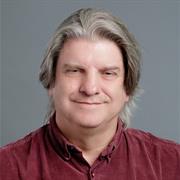
Professor Alexander Kruger is an Adjunct Professor in the School of Science at RMIT University, Australia. His research focuses on applied mathematics, numerical and computational mathematics, and pure mathematics. He explores advanced topics such as variational analysis, optimization theory, and set regularities, with notable contributions to calmness properties, sharp minima, and feasibility problems in mathematical programming. His work bridges theoretical foundations with practical applications in optimization and control systems. Research Areas: Applied Mathematics, Optimization Theory, Variational Analysis, Non-Smooth Analysis Key Contributions: Hölder graphical derivatives, feasibility problem methodologies, and non-Lipschitz optimization frameworks His publications emphasize interdisciplinary approaches, combining analytical rigor with computational methods. No scientific awards are explicitly listed in the provided texts, though his research impact is reflected in citations across peer-reviewed journals. He advises no students listed here and maintains active collaboration networks through RMIT's academic infrastructure.
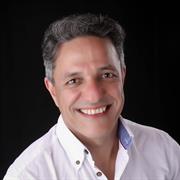
Professor James Scott is a faculty member in the School of Engineering at RMIT University. His research focuses on microwave engineering, nonlinear device modeling, radar systems, and sensor technologies. He has held academic positions since 1987, including Discipline Director of Communication Engineering since 2003. His industry experience includes roles at AWA Defence Industries and British Aerospace (Australia), specializing in microwave receiver design and smart antenna systems. Key research areas include radar warning receivers, high-efficiency power amplifiers, and microwave measurement techniques. Professor Scott has contributed to numerous peer-reviewed articles and holds an ORCID identifier (0000-0003-3200-6821). Current Role: Professor, School of Engineering, RMIT University Research Interests: Microwave circuits/devices, radar systems, sensor technologies Industry Collaborations: Defense electronics, satellite communication systems
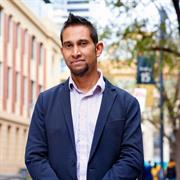
Dr. Katrina Simon is an Associate Professor at the School of AUD (Architecture and Urban Design) at RMIT University, based at City Campus, Australia. Her research focuses on architecture, landscape architecture, and urban design with an emphasis on spatial evolution, memorials, and climate-responsive design. She supervises research projects exploring multispecies cooperation, urban imaginaries, and landscape commoning. Her teaching interests include design thinking, cemetery design, and representation techniques. Her work bridges creative practice and critical theory, addressing themes like urban memory, postcolonial spatial dynamics, and generative design methodologies. Key research outputs include studies on Windhoek’s urban morphology, climate activism in design education, and algorithmic approaches to infrastructure planning.
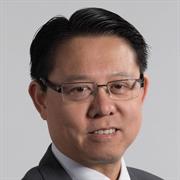
Professor Majid Nazem is a faculty member in the School of Engineering at RMIT University, specializing in Geotechnical Engineering. His research focuses on Computational Geomechanics, Finite Element Methods, Meshless Analysis, and Offshore Geomechanics. He has contributed to advancements in numerical modeling, soil-structure interaction, and dynamic soil behavior. Professor Nazem holds several notable awards, including the Manby Prize (2012) and the D.H. Trollope Medal (2006). His teaching expertise spans Geomechanics, Finite Element Analysis, and Engineering Mechanics. He actively supervises PhD and Master's students in areas like AI-driven geotechnical analysis and multi-phase media modeling. His work integrates machine learning with traditional geotechnical methods, addressing challenges in infrastructure maintenance and slope stability. Awards and Fellowships: Manby Prize by the Institution of Civil Engineers, UK (2012) Outstanding Reviewer Award by Elsevier (2012) Research Fellowship, The University of Newcastle, Australia (2009) The D.H. Trollope Medal by Australian Geomechanics Society (2006) Research Prize by Faculty of Engineering and Built Environment, The University of Newcastle (2005) Teaching and Supervision: Professor Nazem teaches courses in Geomechanics, Stress Analysis, and Engineering Computations. He supervises research projects focusing on computational geomechanics, meshless methods, and AI applications in geotechnical engineering. Recent projects include predicting soil behavior under dynamic conditions and optimizing tram track maintenance using machine learning. Research Trends: His recent articles emphasize machine learning integration in geotechnical analysis, dynamic seabed penetrators, and slope stability predictions. Key themes include surrogate modeling for tunnel stability, seismic collapse load analysis, and parameter identification using AI frameworks.
Dr. Elham Naghizade is a Lecturer at RMIT University's School of Computing Technologies. Her research focuses on machine learning, applied computing, data science, and human-centered computing. She has supervised projects addressing topics like cryptocurrency consensus algorithms, social media analysis, and urban sensing data. Her work integrates interdisciplinary approaches to solve real-world problems, including privacy-preserving data analysis, sentiment-driven service quality assessment, and error detection in spatial data. Recent contributions include advancements in time series classification, trajectory analysis, and fake news detection via Twitter data. Dr. Naghizade actively collaborates on research-based supervision projects, exploring cutting-edge areas such as prescriptive analytics and XAI-driven 3D model construction. Her publications span journals like Data Mining and Knowledge Discovery and Public Transport , reflecting her expertise in algorithm design, geospatial computing, and data-driven solutions. Advising and grants: Her research has been supported through collaborative projects focusing on urban mobility, healthcare communication, and public transport service quality. Key contributions include developing frameworks for vaccine information dissemination and improving spatial data quality through qualitative reasoning.
John Thangarajah is a Professor in AI and Director of Research at the Center for Industrial AI Research & Innovation (CIAIRI) at RMIT University, Melbourne. He leads research directions, academic partnerships, and industry collaborations, focusing on applied research with over $4M in government/industry funding. His expertise spans Autonomous Systems, Knowledge-Based Reasoning, and Agent-Based Modelling. He holds awards including the 2020 Vice Chancellor’s Leadership Award for fostering collaboration in Computer Science and the 2017 AAMAS Best Paper Blue Sky Track. Education: Extensive background in CS/IT education, transformed first-year Computer Science curricula to hands-on experiential learning. Research: Specializes in AI-driven smart systems, human-machine teams, and multi-agent systems. Member of IFAAMAS board. Publications: Over 147 peer-reviewed works in AI, including advancements in explainable agents, reinforcement learning, and medical imaging applications. Awards: Recognized for innovation in AI (Telstra 2011), demonstration excellence (2005), and leadership in academia. Grants: Secured significant funding from DST Group and industry partners, emphasizing practical impact. His lab focuses on AI applications in security, resilience, and industrial innovation through CIAIRI and the Security & Resilience Hub.
Xinghuo Yu is a Distinguished Professor and Vice-Chancellor's Professorial Fellow in the School of Engineering at RMIT University (Australia). He holds leadership roles, including Associate Deputy Vice-Chancellor and Chair of the RMIT Professorial Academy. His academic career spans over three decades, with prior positions at the University of Adelaide and Central Queensland University. Research & Awards: Yu specializes in Control Systems, Complex Networks, Cyber-Physical Systems, Smart Grids, and Artificial Intelligence. He has been recognized with prestigious awards, including the Australasian Artificial Intelligence Distinguished Research Contribution Award (2018) , M A Sargent Medal (2018) , and IEEE Industrial Electronics Society Achievement Award (2013) . He is a Fellow of the Australian Academy of Science, IEEE, and Engineers Australia. Leadership & Engagement: Yu has held executive roles such as President of IEEE Industrial Electronics Society (2018–2019) and Non-Executive Director of Oceania Cyber Security Centre. His research bridges theory and application, with over 1,000 publications and recognition as a Clarivate Highly Cited Researcher in Engineering (2015–2024). Labs & Collaborations: Leads the Intelligent Informatics and Control Research Group , focusing on smart grid optimization, cyber-physical systems, and AI-driven solutions for energy and security challenges. His work addresses real-world issues like renewable energy integration, electric vehicle infrastructure, and resilient power systems.
Alisa Andrasek is a Professor at RMIT University's School of Architecture, Urban and Design (AUD). She leads research at the intersection of design, computational science, and exponential technologies, focusing on high-resolution architecture, robotic fabrication, and AI-driven design processes. Previously, she directed the award-winning Advanced Architectural Design program at UCL and co-founded Biothing, an experimental design lab, as well as AI Build, a robotic fabrication studio. Affiliations: RMIT University, AI Build, Biothing Research Focus: Generative algorithms, computational physics, robotic fabrication, and AI in architecture. Exhibitions: Featured at Centre Pompidou Paris, Venice Biennale, and Sydney Biennial. Her work explores 'data materialization,' creating intricate structures through algorithms and robotic processes. Projects include the Cloud Pergola (Venice Biennale), XenoCells , and MorphoCyte , which blend biological processes with computational design. She supervises research in topics like 'Integral Architectural Design Synthesis in the Metaverse' and 'Generative Practice Research.' Alisa advocates for architecture that resonates with ecological complexity through high-resolution microstructures and adaptive systems. Her teaching integrates cutting-edge technologies like machine learning and large data analytics into design pedagogy.
Dr. Estrid He is a Senior Lecturer at RMIT University's School of Computing Technologies. She obtained her PhD from the University of Melbourne in 2020, where she subsequently served as a postdoctoral research fellow. Her research bridges natural language processing, data mining, and deep learning optimization, with applications spanning healthcare, communications, and algorithmic fairness. Research Focus: Core NLP techniques for knowledge extraction from complex texts (patents, medical records) Enhancing security/efficiency of deep learning models in resource-constrained environments Multimodal learning integrating text, sensor data, and biomedical signals Fairness-aware AI systems for computer vision and graph neural networks Her publication portfolio demonstrates strong cross-disciplinary collaboration, with recent work in: Wireless communications (terahertz signal processing, 6G hardware) Biomedical applications (brain disorder prediction, clinical NLP) Generative models for sensor data and multimodal content Algorithmic fairness in computer vision and graph networks She actively supervises graduate research, with current projects including: Graph learning for brain disorder prediction Multimodal health data mining Privacy-preserving AI for urban sensing Integration of spiking neural networks with LLMs
Professor Xiaodong Li is a faculty member at RMIT University's School of Computing Technologies, serving as Assistant Associate Dean for Data Science & Artificial Intelligence. He holds a Ph.D. in Artificial Intelligence from the University of Otago, New Zealand. His research focuses on machine learning, evolutionary computation, swarm intelligence, and optimization techniques with applications in blockchain security, renewable energy, and logistics. He has received prestigious awards including the 2013 ACM SIGEVO Impact Award and the 2017 IEEE Transactions on Evolutionary Computation Outstanding Paper Award, and is an IEEE Fellow. His academic contributions include editorial roles at IEEE Transactions on Evolutionary Computation and leadership in IEEE Task Forces on Swarm Intelligence and Multi-modal Optimization. Current research interests span automated code generation, quantum AI-driven logistics, and anomaly detection. Supervision projects highlight interdisciplinary applications in AI ethics, solar energy monitoring, and fraud detection. Education: Ph.D. in Artificial Intelligence, University of Otago, New Zealand Key Roles: IEEE Fellow, ARC College of Experts (2023–2025) Publications: Over 280 peer-reviewed articles, including works on niching methods and evolutionary algorithms. Research trends show strong emphasis on hybrid optimization techniques, blockchain security, and AI-driven solutions for sustainability challenges. Recent articles explore dynamic environments, quantum rerouting strategies, and explainable machine learning systems. Awards: ACM SIGEVO Impact Award, IEEE Fellow, ARC College Membership Grants/Projects: Multiple industry-collaborative grants in smart logistics and energy systems. He leads the Data Science & AI team at RMIT, fostering innovation in large-scale optimization and metaheuristics. Active in international conferences like GECCO and IEEE CEC, he promotes open-source benchmark datasets for algorithm testing.
Associate Professor In-Young Yeo is a distinguished academic at the University of Newcastle's School of Engineering, where she serves as an Associate Professor in Civil, Surveying, and Environmental Engineering. With over 15 years of academic experience, she previously held positions at Ohio State University, Cornell University, and University of Maryland. Her work focuses on the critical intersection between landscapes and water resources, using sophisticated remote sensing and modeling tools to improve natural resource management and sustainability. Her research spans the nexus of land and water systems where human and physical systems interact. She pioneers integrative approaches using remote sensing, in-situ data, and process-based models to understand emergent land surface properties and hydrologic processes. Her work addresses water cycle changes across scales, soil moisture-stream flow connectivity, soil and water quality implications of conservation practices, and optimal land use management strategies for environmental sustainability under climate change pressures. Professor Yeo's publication record demonstrates a clear trajectory toward more sophisticated multi-sensor integration approaches and practical applications for agricultural water management. Her recent work increasingly combines machine learning with traditional remote sensing methods, focusing on soil moisture profiling, wetland dynamics monitoring, and developing integrated systems for resource management decision support. Her scientific contributions have been recognized with numerous prestigious awards: 2024 Best Research Paper of 2024, The Soil and Water Conservation Society 2021 Science Note - USDA NRCS Conservation Effects Assessment Project 2018 International Research Visiting Fellowship, University of Newcastle 2017 Women in Research Fellowship, University of Newcastle 2009 Editor's Highlights - AGU Geophysical Research Letters Professor Yeo actively mentors graduate students and offers PhD scholarship opportunities focused on land surface variables and ecosystem health monitoring. She has secured significant research funding from diverse sources including ARC, NASA, NOAA, USDA, Soil CRC, and Sydney Water. Her collaborative approach has led to leadership roles in international research initiatives including NASA-LCLUC and NASA-GRACE programs, the G20 initiative for agricultural monitoring, and the CRC for High Performance Soils. She leads a dynamic research team collaborating with Soil CRC, CSIRO, Australian Universities, and international space agencies. Her work with the US Conservation Effects Assessment Project (CEAP) and US Environmental Protection Agency has been particularly influential in demonstrating the effectiveness of conservation practices for improving soil productivity and water quality. She serves on the educational committee with the Surveying & Spatial Sciences Institute (SSSI) NSW and has contributed significantly to program development at the University of Newcastle.
Dr. Nathan Marks is a Postdoctoral Researcher at the School of Engineering , University of Newcastle, Australia. His career spans academic and defense-related research roles, including a 2016-2020 position as Electrical Research Engineer with Defence Science and Technology Group in Melbourne. Bachelor of Electrical Engineering (Honours 1, University Medal) - University of Newcastle, 2011 Doctor of Philosophy in Electrical Engineering - University of Newcastle, 2016 His research focuses on power electronics and renewable energy systems , particularly electric machines for maritime propulsion , multilevel converters , and real-time simulation . Key contributions include sensorless MPPT algorithms and stability analysis of PHIL systems . Recent publications (2024-2012) demonstrate expertise in electrical machine control , converter topologies , and power hardware-in-the-loop techniques. He teaches Power Electronics and Electric Machines courses while maintaining active IEEE memberships.
Robert Doe is a Lecturer in Architecture at the University of South Australia's UniSA Creative faculty. His research focuses on advancing offsite construction through improved interoperability standards, computational design integration, and modular prefabrication systems for the architecture, engineering, construction, and operations sector. Doe investigates how object-based standards and open modular formats can enhance information sharing across the construction ecosystem. His work compares interoperability frameworks between construction and other industries like oil and gas, identifying transferable solutions for digital transformation. Recent publications examine ecosystem-level approaches to data exchange and systematic methods for improving information flow in offsite construction. His computational design research develops tools facilitating the integration of prefabricated housing design with digital production workflows. This includes parametric optimization methods balancing multiple criteria like sustainability, cost-efficiency, and customization. Doe applies theoretical frameworks from spatial theory to computational design processes, examining how digital tools reshape architectural practice and production.
Professor Rita Kay Henderson is a distinguished academic at the School of Chemical Engineering, University of New South Wales (UNSW) , serving as Deputy Dean (Societal Impact & Translation) at UNSW Engineering. Her expertise lies in water quality engineering, algal biotechnology, and environmental technologies. She leads the Algal and Organic Matter (AOM) Lab , collaborating closely with the Australian water industry to develop innovative solutions for water treatment and resource recovery. Education: PhD in Water Sciences, Cranfield University (2008) MSc in Water Pollution Control Technology, Cranfield University (2004) MChem in Environmental Chemistry, University of Edinburgh (2002) Research Interests: Design and optimization of separation processes for microalgae and organic matter. Development of monitoring protocols for water quality events using advanced characterization techniques. Resource recovery from wastewater and algae-based biotechnology. With over $7M AUD in research funding, including six ARC grants, her work emphasizes collaboration with industry partners like Melbourne Water and Sydney Water. She has authored >90 peer-reviewed articles and chairs key committees, including the UNSW Sustainable Development Goal (SDG) Steering Committee. Awards: AWA NSW Kamal Fernando Mentoring Award (2016) Finalist, Australia Museum 3M Eureka Prize (2015) AIPS NSW Young Tall Poppy Science Award (2012) Advising & Grants: Current and past supervision of over 20 PhD/Master’s students. Key grants include ARC Discovery DP200102195 and industry-funded projects. Her lab, the AOM Lab, focuses on four core themes: natural organic matter, nuisance algae, algae harvesting, and resource recovery. She also contributes to global conferences and editorial roles at Water Research and AWWA Water Science .
Lachlan O'Neill serves as a Research Fellow at Impact Labs, Monash University, within the Department of Data Science & AI. His interdisciplinary work bridges computational methods with social science applications, focusing on data-driven analysis of policy and media narratives. His research centers on Natural Language Processing and Data Visualization, with specific expertise in narrative extraction, policy analysis, and time series classification. He develops innovative frameworks like CANarEx for contextually aware text analysis and narrative exploration maps for visualizing complex policy storylines, primarily applied to Australian social inequality research. Recent publications (2022-2023) demonstrate his focus on visualizing historical and current policy narratives, contextually rich text-as-data applications, and model training optimization through techniques like slingshot learning. His highly cited 2019 work on the Proximity Forest algorithm remains influential in time series classification. O'Neill served as Chief Investigator on the 2023 Strengthening Democracy Project funded by the Scanlon Foundation Trustee, which analyzed opportunity and disadvantage narratives through collaborative research with Angus, Dwyer, and Goodwin. He maintains active affiliation with Impact Labs at Monash University, contributing to interdisciplinary initiatives that merge data science with societal impact research.