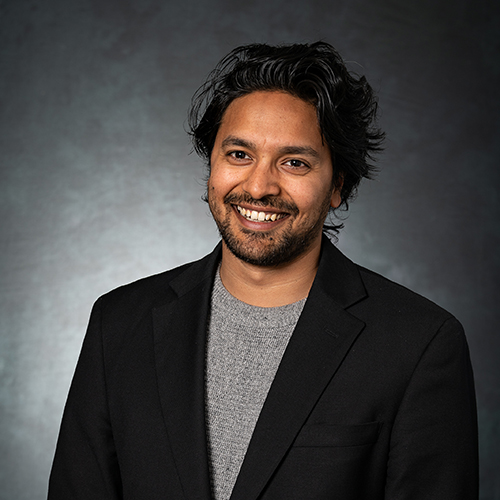
Mark Bedillionمشاهده پروفایل
عضو هیئت علمی
Mark Bedillion is an Associate Teaching Professor in the Department of Mechanical Engineering at Carnegie Mellon University (CMU), where he has been a faculty member since fall 2016. Prior to this, he served as an Associate Professor at the South Dakota School of Mines and Technology from 2011 to 2016. He earned all his degrees—B.S. (1998), M.S. (2001), and Ph.D. (2005)—in Mechanical Engineering from CMU. His industrial experience includes over seven years at Seagate Technology, focusing on servo-control systems for data storage. Current Position: Associate Teaching Professor, CMU Previous Position: Associate Professor, South Dakota School of Mines and Technology Education: All degrees from CMU in Mechanical Engineering Industry Experience: Seagate Technology (7+ years) His teaching focuses on dynamic systems, control theory, and mechatronics at both undergraduate and graduate levels. He has taught courses such as Multivariable Linear Control, Feedback Control Systems, and Electromechanical Systems Design. His research spans two main domains: (1) robotics and control, particularly distributed manipulation and brake-actuated mobile robots, and (2) STEM education, with a strong emphasis on systems thinking, systems engineering, and virtual laboratory development. His educational research aims to improve student learning outcomes through innovative curriculum design and assessment tools. The recent publications highlight a clear trend: a growing emphasis on educational research, particularly in systems thinking and systems engineering pedagogy. While earlier work focused on control algorithms and mechatronic design for robotics, the past five years have seen a significant shift toward developing and assessing educational tools, online modules, and inclusive teaching practices. This reflects his dual role as both a technical researcher and an educational innovator. Provost’s Inclusive Teaching Fellow, Carnegie Mellon University Mark Bedillion advises graduate students and is actively involved in curriculum development and educational grants, particularly in engineering education reform. He leads projects on virtual laboratories, systems thinking assessments, and outreach to underrepresented youth. His lab work includes experimental platforms for distributed manipulation and brake-actuated robots. He is also engaged in collaborative research on STEM education across multiple institutions, focusing on benchmarking and improving mechanical engineering curricula.