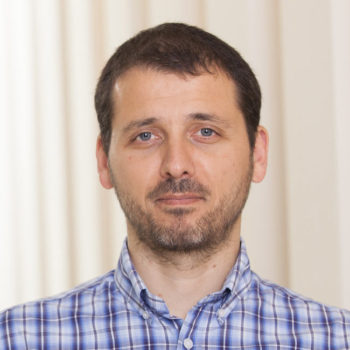
Christos Kapoutsis is an Associate Teaching Professor in the Computer Science Department at Carnegie Mellon University Qatar. His research focuses on theoretical computer science, particularly automata theory and computational complexity. He has contributed extensively to studies on two-way finite automata, nondeterminism, and state complexity. His work includes analyzing the complement problem for alternating automata, exploring reversal hierarchies, and investigating the role of oracles in small automata models. Key areas of research include the interplay between automata models and complexity classes such as L/poly and NL, as well as the minicomplexity framework for small computational devices. His publications often address foundational questions in formal languages and algorithmic lower bounds. He has also organized conferences like SOFSEM 2020, contributing to academic discourse in theoretical informatics. No scientific awards or grants are explicitly listed. His advising record is currently unknown. His academic contributions span over two decades, with notable work since 2004 on topics ranging from finite automata to morphological algorithms.
Ryan O'Donnell is a Professor in the Computer Science Department at Carnegie Mellon University's School of Computer Science. He specializes in theoretical computer science, with a focus on algorithms, complexity theory, quantum computing, and probability. His research includes Fourier analysis of Boolean functions, constraint satisfaction problems, and quantum information theory. He teaches courses such as 15251 (Fall 2025), 15754 (Spring 2025), and others. His work spans quantum tomography, pseudorandomness, and algorithmic design. Recent publications explore topics like quartic quantum speedups, uniformity testing, and explicit expanders. He advises PhD students William He, Noah Singer, and Jingxun Liang. His research interests bridge foundational theory and practical applications, including healthcare informatics and cryptographic tools. He actively contributes to academic conferences and program committees, reflecting his leadership in the field.
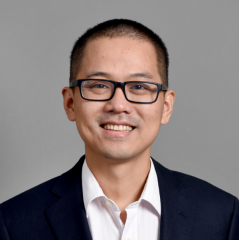
Richard Peng is an Associate Professor in the Computer Science Department at Carnegie Mellon University, part of the School of Computer Science. He specializes in designing efficient algorithms for fundamental computational problems, particularly in graph algorithms, dynamic algorithms, and linear algebraic computations. Prior to joining CMU in 2023, he earned his BMath from the University of Waterloo, a PhD from CMU under Gary L. Miller, and completed a postdoc at MIT's Applied Math department. His research focuses on advancing algorithmic efficiency, including work on sparse linear systems, graph convolutions, and flow optimization. He advises PhD students Hoai-An Nguyen, Alicia Stepin, and Junzhao Yang. His teaching includes courses such as 15495 and 15151, reflecting his engagement in both research and education. Peng’s articles span topics like approximate spanning tree counting, dynamic graph algorithms, and Laplacian solvers, emphasizing practical scalability and theoretical guarantees. His contributions bridge theoretical computer science with applied challenges in network analysis and numerical computation.
Isa Verdinelli is a Professor in Residence in the Department of Statistics and Data Science at Carnegie Mellon University. She maintains an office in Baker Hall 232 H in Pittsburgh, PA, and can be reached at isabella@stat.cmu.edu. She has co-authored a book titled "All of Regression" with L. Wasserman. Dr. Verdinelli's research interests span several areas of statistics and data science: Bayesian Statistics and Inference Nonparametric Statistics and Estimation Machine Learning and Statistical Learning Experimental Design and Optimization Manifold Learning and Geometric Statistics Feature Selection and Variable Importance Her recent work demonstrates a strong focus on developing novel statistical methodologies with applications in machine learning, particularly in the areas of feature importance, manifold learning, and nonparametric estimation. She has made significant contributions to the understanding of Bayesian experimental design, with publications spanning several decades. Her research often bridges theoretical statistical developments with practical applications across various domains. Dr. Verdinelli has received recognition for her contributions to statistical methodology, though specific awards are not mentioned in the available information. She has co-authored numerous influential papers in top statistical journals and has contributed to the advancement of statistical science through her research on Bayesian methods, nonparametric techniques, and statistical learning theory. Her work on the book "All of Regression" suggests she is also committed to statistical education and the dissemination of statistical knowledge.
Tuomas Sandholm is the Angel Jordan University Professor of Computer Science at Carnegie Mellon University (CMU), holding appointments in the Computer Science Department, Machine Learning Department, Algorithms, Combinatorics, and Optimization (ACO) Ph.D. Program, and the CMU/University of Pittsburgh Joint Ph.D. Program in Computational Biology. He co-directs CMU AI and leads the Electronic Marketplaces Laboratory. His research focuses on artificial intelligence, economics, and operations research, with notable contributions to game theory, optimization, and kidney exchange systems. Sandholm has pioneered algorithms for electronic marketplaces, including the first superhuman AI in poker (Libratus and Pluribus) and kidney exchange optimization. He has founded multiple companies, including CombineNet, Strategic Machine, and Strategy Robot, and has over 500 peer-reviewed publications and 29 patents. His awards include the Vannevar Bush Faculty Fellowship, AAAI Award for AI for Humanity, and honorary doctorate from the University of Zurich. Education: Ph.D. and M.S. in Computer Science Dipl. Eng. (M.S. with B.S. included) in Industrial Engineering and Management Science Research Interests: Artificial Intelligence, Optimization, Game Theory, Kidney Exchange, Electronic Commerce, Multiagent Systems, Market Design, and Healthcare Applications. His work bridges theoretical advancements with real-world applications, particularly in strategic reasoning, organ transplantation, and defense/intelligence systems. Recent Articles: Focus on solving large-scale games, kidney exchange optimization, and AI-driven decision-making. Key areas include imperfect-information game solving (e.g., poker AIs), algorithmic fairness in healthcare markets, and combinatorial auction design. Awards & Honors: Vannevar Bush Faculty Fellowship (2023) AAAI Award for AI for the Benefit of Humanity (2023) Fellowships: ACM, AAAI, INFORMS, AAAS Edelman Laureate (2005) Over 100+ awards, including honorary doctorates and industry recognitions Advising & Grants: Advised PhD students now in top positions at MIT, Stanford, and CMU. Secured grants for AI game-solving and healthcare policy optimization. Current openings for PhD students in game-solving and kidney exchange policy. Labs & Teams: Electronic Marketplaces Laboratory (EML) and CMU AI Initiative. Collaborates with industry partners (e.g., Baidu, Google) and government agencies on strategic AI applications.
David Rode is an Adjunct Professor at Carnegie Mellon University's Dietrich College of Humanities and Social Sciences, affiliated with the Social and Decision Sciences department and the Carnegie Mellon Electricity Industry Center. His research bridges normative and descriptive decision-making frameworks across finance and electric power markets. Education: Ph.D. in Social and Decision Sciences, Carnegie Mellon University M.S. in Behavioral Decision Making and Economics, Carnegie Mellon University B.S. in Economics, The Wharton School, University of Pennsylvania Rode's work focuses on quantifying decision-making gaps through risk analysis, decision analysis, and simulation modeling. His expertise spans regulatory uncertainty in energy markets, pandemic response strategies, and power plant lifecycle economics. He combines academic research with practical experience from a consulting career in the energy industry, where he testified before regulatory commissions and managed multi-billion-dollar infrastructure transactions. Recent publications highlight his contributions to energy policy (net-zero transitions, stranded cost proceedings, power plant lifespan implications), financial modeling (levelized cost of energy analysis, equity return puzzles), and behavioral economics (communication dynamics, hot potato game theory). His methodology integrates empirical data with decision-theoretic frameworks. Rode's affiliations include the Carnegie Mellon Electricity Industry Center, and he maintains a Google Scholar profile for his works.
Hanghang Tong is a Professor in the Department of Computer Science at the University of Illinois at Urbana-Champaign (UIUC), holding the title of University Scholar. He specializes in large-scale data mining, machine learning, and AI with a focus on graph and multimedia data. His research addresses applications in social networks, healthcare, cybersecurity, and cyber-physical systems. Education: PhD and M.Sc. in Machine Learning from Carnegie Mellon University (2008–2009). Prior to UIUC, he was an Associate Professor at Arizona State University. Research: Leads the IDEA Lab, focusing on network robustification, fair network learning, and multi-network alignment. Key areas include optimizing graph connectivity, algorithmic fairness, and developing tools like FASTEN and Sylvester Equation solvers. Awards: IEEE Fellow (2021), NSF CAREER Award (2017), multiple best paper awards, and the ICDM 10-Year Highest Impact Paper Award (2015). Editor-in-Chief of ACM SIGKDD Explorations and associate editor of ACM Computing Surveys. Teaching: Courses include CS512 (Data Mining Principles), CS514 (Advanced Network Science), and CS412 (Introduction to Data Mining). Authored influential textbooks like Data Mining: Concepts and Techniques (4th ed., 2022). Service: Organized key conferences (CIKM, DSAA) and workshops on adversarial activity modeling. Active in academic leadership and editorial roles. Labs/Teams: Runs the IDEA Lab, collaborating on projects like NetFair (fair network learning) and Network Correspondence Mining. Supervises a vibrant group of PhD and Master’s students in graph algorithms and data science.
Neil Spencer is an Assistant Professor in the Department of Statistics at the University of Connecticut. His primary research focuses on robust Bayesian inference, statistical network analysis, hierarchical Bayesian modeling, and efficient Bayesian computation, with applications in forensic footwear analysis and network data. He teaches statistical computing courses including STAT5410 for the Master of Data Science program. His educational background includes a joint PhD in Statistics and Machine Learning from Carnegie Mellon University, an MSc in Statistics from the University of British Columbia, and a BScH in Mathematics and Statistics from Acadia University. Previously, he was a postdoctoral researcher in Biostatistics at Harvard School of Public Health. Dr. Spencer's recent publications demonstrate a strong focus on Bayesian methodologies applied to network modeling, computational statistics, and experimental design. His work frequently appears in top-tier statistics journals such as the Annals of Statistics.
Hongyang Zhang is a tenure-track Assistant Professor at the University of Waterloo's David R. Cheriton School of Computer Science and Faculty of Mathematics, affiliated with the Vector Institute for AI. His research bridges theoretical and applied aspects of machine learning, including world modeling, AI inference acceleration, and security. He leads the SafeAI Lab and holds memberships in the AI Institute and Cybersecurity and Privacy Institute. Dr. Zhang completed his Ph.D. at Carnegie Mellon University's Machine Learning Department and conducted postdoctoral research at Toyota Technological Institute at Chicago. His educational background includes a degree from Peking University. Research interests focus on: Developing generative world models for robotics and autonomous systems Creating efficient algorithms for accelerating LLM inference Building System-2 LLMs for enhanced reasoning Advancing AI security against adversarial threats Publications demonstrate strong focus on efficient AI systems and security, with recent work on EAGLE series acceleration techniques and The Matrix world generation framework dominating top conferences like ICML, NeurIPS, and CVPR. Awards and honors: 1st place in CVPR 2021 Security AI Challenger Multiple NeurIPS challenge wins in adversarial vision AAAI New Faculty Highlights awardee IEEE Senior Member Leads SafeAI Lab focusing on trustworthy AI systems and regularly serves as area chair for top machine learning conferences including NeurIPS, ICML, and ICLR.
David Choi is an Associate Professor at the Heinz College, part of Carnegie Mellon University's Dietrich College of Humanities and Social Sciences, with a courtesy appointment in the Department of Statistics. His expertise lies in statistics and machine learning applied to network data, including community detection and causal inference in social networks. He holds a PhD in Electrical Engineering from Stanford University (2004) and has held roles at MIT Lincoln Laboratory, Harvard University, and UC Berkeley. Research focuses on network models involving latent variables, exploratory data analysis, and interference effects in network experiments. His work bridges statistical methodology with practical applications in public policy and social sciences. Recent studies include analyzing Medicaid expansion impacts, single-cell network construction, and Alzheimer's disease microglia regulation. Prominent publications address network clustering, dynamic network analysis, and causal inference in experimental settings. Technical reports explore structured blockmodels and exposure mappings in experiments. Contact: Hamburg Hall 2118B, davidch@andrew.cmu.edu.
Anderson Ye Zhang is an Assistant Professor in the Department of Statistics and Data Science at the Wharton School, University of Pennsylvania, with a secondary appointment in the Department of Computer and Information Science. He holds a PhD from Yale University and previously served as a William H. Kruskal Instructor at the University of Chicago. His research focuses on the theoretical and applied aspects of statistics and machine learning, emphasizing spectral methods, synchronization problems, clustering, and network analysis. Education: PhD in Statistics and Data Science, Yale University (2018) Bachelor's degree from Zhejiang University (2012) Research Interests: His work addresses foundational challenges in spectral analysis, group synchronization (e.g., phase synchronization, permutation synchronization), ranking systems, and high-dimensional clustering. He develops algorithms with provable guarantees for problems such as Gaussian mixture models, stochastic block models, and item response theory. Recent Trends in Publications (2021–2025): His articles emphasize spectral methods for synchronization and clustering, with a focus on optimality in high-noise regimes, privacy-preserving learning, and efficient algorithms for complex data structures like human response models and anisotropic covariances. His work bridges statistical theory and computational practice. Awards & Grants: 2025: Sloan Research Fellowship, NSF CAREER Award 2019: New Researcher Award (ICSA) 2018: Francis J. Anscombe Award Grants: NSF DMS-2440180 (CAREER: Statistical Inference in Group Actions) NSF DMS-2112988 (Ranking from Comparisons) Academic Contributions: He has advised multiple collaborative research projects with postdocs and students, particularly on spectral methods and synchronization problems. His teaching spans advanced statistical theory and linear models at Wharton and the University of Chicago.
Ying Jin is an Assistant Professor in the Department of Statistics and Data Science at the Wharton School, University of Pennsylvania. She received her PhD in Statistics from Stanford University in 2024, advised by Emmanuel Candès and Dominik Rothenhäusler, and holds a B.S. in Mathematics and B.A. in Economics from Tsinghua University. Current faculty at UPenn Wharton Former postdoctoral fellow at Harvard Data Science Initiative Her research focuses on Uncertainty Quantification and Generalizability in AI models, particularly through conformal prediction , causal inference , and multiple testing . Recent work explores distribution shifts in large-scale replication studies and methods for trustworthy AI in drug discovery and medical applications. Key article trends show expertise in: Conformal prediction methods Causal inference under distribution shifts LLM-driven scientific discovery Replicability analysis AI uncertainty quantification High-stakes AI validation Scientific awards include: 2025 IMS Lawrence D. Brown PhD Student Award 2024 Jack Youden Prize for best expository paper in Technometrics She organizes the Online Causal Inference Seminar and contributes to open science through the awesome-replicability-data GitHub repository containing curated replication datasets.
Christopher Harshaw is an Assistant Professor in the Statistics Department at Columbia University. His research focuses on causal inference and algorithm design, particularly in improving the design and analysis of randomized experiments, including experiments with interference and sequential experiments. He holds a PhD in Computer Science from Yale University and completed postdoctoral fellowships at MIT/UC Berkeley (via FODSI) and the Simons Institute for the Theory of Computing. Education: PhD in Computer Science (Yale University), Postdoctoral Fellowships at MIT/UC Berkeley and the Simons Institute. Research Interests: At the intersection of computation and statistics. Key areas include causal inference methodologies, algorithmic tools for experimental design, and submodular optimization. His work emphasizes balancing covariates, handling interference in experiments, and developing efficient experimental frameworks. Notable Achievements: Received the Best Paper Award at the CML4Impact NeurIPS 2022 Workshop and the Best Paper Award at CISRC 2016. His contributions include the Gram-Schmidt Walk Design for covariate balancing and the Conflict Graph Design for causal effect estimation under interference. Labs/Teams: Collaborations include work on software packages such as GSWDesign.jl and SubmodularGreedy.jl, advancing tools for statistical experimentation and submodular optimization.
Paul Pangaro is a Visiting Professor and Adjunct Faculty in Computational Design at Carnegie Mellon University, directing the Laboratory for Cybernetics. He holds a PhD in Cybernetics from Brunel University (UK) and a BSci in Humanities/Computer Science from MIT. Pangaro's work spans academia, startups, and art, focusing on conversation models in design, AI ethics, and systems thinking. He co-leads the #NewMacy Initiative addressing modern AI challenges and reconstructed Gordon Pask’s Colloquy of Mobiles for the ZKM museum. Affiliations : Laboratory for Cybernetics, Computational Design Laboratory (CodeLab), American Society for Cybernetics (President). Teaching : Courses include Lab for Cybernetics: Engaging Wicked Challenges and History and Future of Interaction Design at CMU, and Introduction to Cybernetics at Stanford. Research : Explores 'design for/as conversation,' applying cybernetic principles to human-machine interaction, organizational learning, and ethical AI. Key projects include the COLLOQUY 2018 art installation and prototyping conversational systems like THOUGHTSHUFFLER. Awards : Warren McCulloch Award (2014), Cine Golden Eagle (1973/74), MIT Stewart Award (1974). Labs/Teams : Leads the Laboratory for Cybernetics, collaborating on interdisciplinary projects with institutions like the University of Vienna and TU Berlin.
Ruiyi Zhang is a Postdoctoral Research Associate at the Neuroscience Institute, focusing on neural computation and AI integration. Her research bridges cognitive neuroscience and machine learning, examining prefrontal cortex functions in decision-making and neural network architectures for spatial navigation. Recent publications explore strategic cognitive processes, modular neural systems, and brain-inspired AI frameworks. Her work emphasizes computational approaches to understanding neural mechanisms and enhancing artificial intelligence systems.