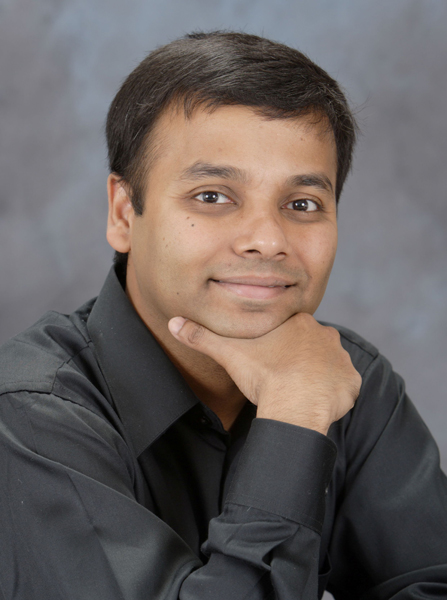
Dr. Philipp Seidl is a researcher at the Institute for Machine Learning at Johannes Kepler University Linz, Austria. He completed his PhD in Bioinformatics in 2024 with a focus on Multimodal Contrastive Learning for Drug Discovery. His work spans multiple domains including pharmaceutical research, emergency medicine applications, and financial modeling. Dr. Seidl's research interests center around advanced machine learning techniques with particular emphasis on drug discovery applications. His work integrates cutting-edge approaches including Hopfield Networks, Transformers, and Contrastive Learning to address complex problems in biomedical research. He has made significant contributions to the understanding of how modern neural network architectures can be applied to molecular representation and drug design. His publication record demonstrates expertise across multiple disciplines, with work appearing in top-tier conferences like ICML and ICLR as well as specialized journals in chemistry and medicine. The research shows a clear trajectory toward integrating multimodal information, particularly combining language understanding with molecular representations for enhanced drug discovery pipelines. Dr. Seidl actively supervises seminar projects and master's theses at JKU, focusing on two main research streams: drug discovery and EEG research. His GitHub activity shows consistent contributions to open-source machine learning projects related to chemical informatics and biomedical applications.
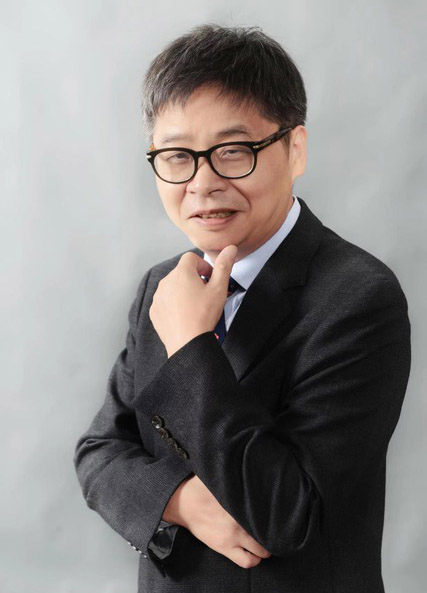
Oliver Amft serves as Professor of Intelligent Embedded Systems at the University of Freiburg and executive board member of the Hahn-Schickard research center, focusing on the convergence of embedded systems and healthcare applications. His academic foundation includes a Dipl.-Ing. (M.Sc.) in Electrical Engineering and Information Technology from Chemnitz Technical University (1999) and a Dr. sc. ETH (Ph.D.) from ETH Zurich (2008). Professor Amft's research pioneers intelligent wearable systems for continuous health monitoring, with core expertise in biomedical signal processing and AI-driven sensor analytics . His work addresses critical healthcare challenges through innovations in gastrointestinal monitoring via bowel sound analysis, dietary assessment using smart eyewear, and rehabilitation-focused motion tracking with inertial sensors. Methodologically, he specializes in unsupervised machine learning for real-time data stream processing in resource-constrained embedded environments. Analysis of his 2021-2023 publications reveals a strategic emphasis on edge AI for medical diagnostics , particularly in developing context-aware wearable systems that operate independently of cloud infrastructure. Key thematic clusters include gastrointestinal health monitoring (bowel sound analysis), behavioral nutrition science (eating detection), and biomechanical rehabilitation (joint angle estimation), consistently leveraging multi-sensor fusion and lightweight deep learning models. As an active academic contributor, Amft serves as Associate Editor for Frontiers in Computer Science specializing in Mobile and Ubiquitous Computing, shaping discourse in wearable/IoT systems design. His research ecosystem integrates the University of Freiburg's academic resources with Hahn-Schickard's engineering capabilities, facilitating translational development from laboratory prototypes to clinically viable embedded health technologies through cross-institutional collaboration.
Matthias Fahn is an Associate Professor at the University of Hong Kong Business School where he serves as Associate Director of the Center for AI, Management and Organization (CAMO). He co-directs the CAMO Lab for Organizational Transformation with colleague Jie Gong. Previously affiliated with Johannes Kepler University Linz (JKU) where he held a position in the Department of Economics within the Kurt Rothschild School of Economics and Statistics (RoSES), though his JKU profile indicates he is currently on leave. Current Institution: University of Hong Kong Business School Previous Institution: Johannes Kepler University Linz Research Leadership: Co-Director of CAMO Lab for Organizational Transformation Academic Service: Co-organizer of Workshop on Relational Contracts and Asian Conference on Organizational Economics Dr. Fahn's research focuses on the intersection of organizational theory, behavioral economics, and emerging technologies. His work examines how psychological factors like present bias affect labor market outcomes, how social norms shape workplace behavior, and increasingly, how AI is transforming organizational structures. His research integrates theoretical models with empirical analysis of labor market dynamics. His publication record shows consistent output with recent papers exploring non-common priors in promotions, the impact of firing costs on present-biased employees, and informal incentives in labor markets. His work demonstrates a progression from traditional organizational economics toward the emerging field of AI's role in organizational transformation. Symposium Editor: Journal of Institutional and Theoretical Economics on Relational Contracts (11 papers) Active Research Projects: Digital transformation of journalism and Informal Incentives in Labor Markets Dr. Fahn maintains an active scholarly presence through conference organization and editorial work, positioning himself at the forefront of research on relational contracts and the organizational implications of digital transformation.
Associate Professor Peter Knees holds a position at the Technische Universität Wien's Faculty of Informatics, specifically within the Department of Data Science. He serves as a Curriculum Coordinator for the Bachelor's Specialization in Artificial Intelligence and Machine Learning. His research focuses on Information Retrieval, Music Information Retrieval, Recommender Systems, and Digital Humanism. Knees has coordinated major projects such as the Vienna Doctoral College on Digital Humanism (2024–2029) and contributes to initiatives like FAIR-AI and HumRec. He teaches courses including Digital Humanism and Introduction to Information Retrieval. His work bridges technical innovation with ethical considerations, emphasizing transparency and fairness in AI systems. Education: Holds Dipl.-Ing. (TU Wien) and Dr.techn. (Technical Doctorate). His interdisciplinary projects span music technology, ethical AI, and smart grid systems. He has supervised numerous theses on topics like music recommendation algorithms and audio processing techniques. Research Interests: Explores intersections of music technology and AI, including content-driven recommendation systems, reproducibility in machine learning, and the societal impact of digital technologies. Recent work emphasizes ethical frameworks for recommender systems and human-centered design principles. Grants & Projects: Lead roles in WWTF-funded Digital Humanism initiatives, FFG projects on AI innovation, and EU-backed MIR research. Active in organizing conferences like RecSys and ISMIR workshops. Labs/Teams: Involved with the Vienna Doctoral College, TU Wien's Data Science group, and collaborations with institutions like ASEA-UNINET for ethnomusicology data integration. Leads efforts in neural-symbolic systems for smart grids and generative music interfaces.
Thomas Eiter is a Full Professor at the Vienna University of Technology (TU Wien) in the Department of Knowledge-Based Systems, Faculty of Informatics. His research focuses on artificial intelligence, knowledge representation and reasoning, logic programming, computational logic, and neurosymbolic AI integration. He leads projects in declarative problem-solving, intelligent agent systems, and stream reasoning frameworks like LARS. Eiter has contributed to foundational work in answer set programming (ASP), algebraic reasoning, and their applications in scheduling, robotics, and real-time data processing. He has extensive international collaborations, including EU-funded projects like HumanE-AI-Net and the Austrian Science Fund (FWF) initiatives. His work emphasizes bridging symbolic AI with modern machine learning techniques, particularly in visual question answering and neural-symbolic systems. Eiter has supervised numerous PhD students and maintains active roles in academic leadership, including editorial boards of journals like Theory and Practice of Logic Programming . Key contributions include development of the DLVHEX system for hybrid knowledge representation, optimization frameworks for ASP, and methodologies for stream reasoning in dynamic environments. His research also addresses ethical AI through projects like the TAIGER initiative, focusing on training AI agents with ethical rules.
Thomas Gärtner is a Full Professor of Machine Learning at TU Wien (Technical University of Vienna), leading the Machine Learning Research Unit (E 194-06). He previously held professorships at the University of Nottingham and the University of Bonn. His research focuses on efficient and effective machine learning algorithms, particularly in structured data domains like graphs and chemical compounds. Key areas include kernel methods, active learning, and graph neural networks. He is involved in projects such as NanoX (Austrian Science Fund) and StruDL (Vienna Science Fund), addressing challenges in structured data learning and trustworthy AI. Education: PhD from University of Bonn (2005), MSc from University of Bristol (2000), Diplom from University of Cooperative Education (1999). Research Interests: Machine Learning, Data Mining, Kernel Methods, Chemoinformatics, Graph Neural Networks, Active Learning, and Constructive Machine Learning. His work emphasizes real-world applications in chemistry and computer games. Grants & Awards: Emmy Noether Grant (2010), Best Paper Award (2016), ICLR Area Chair (2021), and recognition for contributions to EPSRC peer review (2020). Teaching: Offers courses like 'Introduction to Machine Learning' and 'Theoretical Foundations of Machine Learning.' Supervises PhD and diploma students in advanced topics such as graph algorithms and neural network distillation. Lab/Teams: Heads the Machine Learning Research Unit and collaborates with the competence center ML2R (Rhine-Ruhr region). Active in organizing ECML PKDD conferences and workshops on constructive machine learning.
Subhasish Mitra is Professor of Electrical Engineering and Computer Science at Stanford University. He directs the Stanford Robust Systems Group , leads the Computation focus area of the Stanford SystemX Alliance , and is a faculty member at the Wu Tsai Neurosciences Institute . He also holds the Carnot Chair of Excellence in NanoSystems at CEA-LETI in Grenoble, France. His research spans Nano-electronic systems Robust computing Electronic design automation Neurosciences 3D integrated circuits Key publications focus on revolutionary NanoSystems like the first carbon nanotube computer and 3D NanoSystems with computation immersed in data storage . These works combine Nano-electronics , Machine Learning Hardware , and Energy-Efficient Computing , achieving global recognition including Nature Cover Features and NSF Research Highlights to the US Congress. Scientific awards include: SIA-SRC University Researcher Award (2021) Humboldt Research Award (2019) ACM SIGDA/IEEE CEDA Technical Impact Award Presidential Early Career Award (PECASE, 2008) Intel Achievement Award (2004) His X-Compact and QED methodologies for test compaction and system validation are widely adopted in industry (Synopsys, Cadence) and have generated billions in cost savings . His group's work on soft error resilience and circuit failure prediction is standard practice in sub-10nm chip design.
Thomas Pock is a Professor at the Institute of Visual Computing at TU Graz. His research focuses on computer vision, optimization methods, and mathematical models in computer vision, with significant contributions to medical imaging and inverse problems. He leads projects integrating deep learning with traditional variational methods for applications in MRI reconstruction, microscopy, and cardiac signal analysis. His work emphasizes efficient sampling techniques, uncertainty quantification, and algorithmic optimization in computational imaging. Education and academic background are not explicitly detailed in the provided texts, but his extensive publication record indicates expertise in interdisciplinary areas such as biomedical engineering, signal processing, and machine learning. Key research themes include variational networks, total variation methods, and generative adversarial networks (GANs) for image reconstruction and segmentation. His research spans collaborations in both academic and clinical settings, addressing challenges in 3D reconstruction, particle flow estimation, and cardiac electrophysiology modeling. Notable projects include Total Deep Variation and inverse Eikonal methods for medical data analysis. He actively contributes to open-source tools and frameworks for variational optimization and deep learning integration.
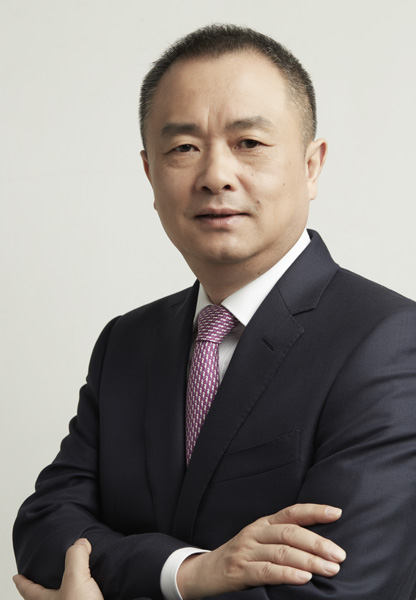
Minyi Guo is a Chair Professor and Head of the Department of Computer Science and Engineering at Shanghai Jiao Tong University (SJTU), China. Previously, he served as Professor and Department Chair at the School of Computer Science and Engineering, University of Aizu, Japan. Dr. Guo received his BSc and ME degrees from Nanjing University, China in 1982 and 1986, and his PhD from University of Tsukuba, Japan in 1998. Dr. Guo's educational background includes: BSc in Computer Science, Nanjing University, China (1982) ME in Computer Science, Nanjing University, China (1986) PhD in Computer Science, University of Tsukuba, Japan (1998) Dr. Guo's research spans multiple areas in computer science, with a primary focus on parallel/distributed computing , compiler optimizations , cloud computing , database systems , and big data . He has published over 400 papers including approximately 150 in major journals and 250 in international conferences, with more than 60 papers in IEEE/ACM transactions and over 100 papers in prestigious conferences. Dr. Guo has also authored 7 books (4 in English, 3 in Chinese) and received 5 best/highlight paper awards from international conferences. Dr. Guo's publication record demonstrates strong contributions across multiple domains of computer systems research. His recent work shows particular emphasis on big data processing, edge computing, graph neural networks, and data center optimization. The publications reveal a consistent trajectory of impactful research in parallel and distributed systems, with increasing focus on AI/ML applications and blockchain technologies in more recent years. Dr. Guo has received numerous prestigious awards and honors: State Technological Invention Award of China (second class award, 2019) Shanghai Technological Invention Award (first class award, 2018) IEEE Technical Committee on Scalable Computing Award for Excellence in Scalable Computing (2018) Ministry of Education Natural Science Award (first class award, 2017) IEEE Fellow (2017) Chief Scientist of National Basic Research Project (973 Program, 2014) Recruitment Program of Global Experts (2010) Excellent Academic Leaders of Shanghai (2010) National Science Fund for Distinguished Young Scholars (2007) As an academic leader, Dr. Guo has served as Department Head for ten years, managing a department with over 100 faculty members and 1000+ students. Under his leadership, the department was promoted to the top tier in China and ranked among the top 40 in the world. He has secured significant research funding, including serving as Chief Scientist of the prestigious 973 Program in 2014 and receiving the National Science Fund for Distinguished Young Scholars in 2007. Dr. Guo has also been selected for the Recruitment Program of Global Experts in China (2010). Dr. Guo actively contributes to the academic community as an associate editor of IEEE Transactions on Parallel and Distributed Systems, IEEE Transactions on Cloud Computing, and Journal of Parallel and Distributed Computing. He has served as General/Program Chair for IEEE conferences and delivered keynote speeches at well-established conferences. His research group has developed practical technologies with industry impact, including 28 licensed patents, some of which have been transferred to companies like Alibaba.
Mei Hong is a Professor and Vice President for HR and International Collaboration at Beijing Institute of Technology. Previously held roles include Professor and Vice President at Shanghai Jiao Tong University (2013-2016), Director of key national research centers at Peking University, and leadership positions in software engineering education and research. Holds dual academic leadership and technical expertise in software engineering. Education: BSc/MSc (Nanjing University of Aeronautics & Astronautics, 1984/1987); PhD (Shanghai Jiao Tong University, 1992). Research focuses on software architecture, cloud computing systems, component-based engineering, and software testing. Has pioneered the 'Internetware' paradigm and contributed to national standards for software development. Publications span software engineering methodologies and tools, with recent work emphasizing mobile computing optimization and automated testing techniques. Over 20 awards including IEEE Fellow (2014), Member of Chinese Academy of Sciences (2011), and multiple best paper awards. Advisory roles include Alibaba DAMO Academy's Academic Board, China's National Key R&D Program, and leadership in 863 High-Tech Program committees. PI of 40+ grants totaling over 200 million CNY. Editorial leadership includes SCIENCE CHINA-Information Sciences (Editor-in-Chief since 2018), ACM Computing Surveys, and top-tier journals/conferences. Active in conference organization (General Chair for ICSME 2017, SPLC 2016).
Ulrich Bauer is an Associate Professor in the Department of Mathematics at Technical University of Munich (TUM), leading the Applied & Computational Topology group. His research focuses on topology and geometry, particularly persistent homology, discrete Morse theory, and geometric complexes, supported by DFG and MDSI grants. He developed Ripser, a leading software for computing Vietoris–Rips persistence barcodes, and contributed to PHAT, a persistent homology library. Bauer holds editorial roles at Foundations of Computational Mathematics , Journal of Applied and Computational Topology , and SIAM Journal on Applied Algebra and Geometry . He is a core member of the Munich Data Science Institute (MDSI) and a principal investigator at the Munich Center for Machine Learning (MCML). His academic journey includes a PhD from the University of Göttingen and postdoctoral work at IST Austria under Herbert Edelsbrunner. Research Interests: Bauer's work bridges computational topology and geometry, with applications in topological data analysis. His key areas include persistent homology algorithms, discrete Morse theory, and geometric complexes. Recent focus includes Reeb graph analysis, stability theorems, and topological machine learning. His software tools (e.g., Ripser) are widely used in academia and industry. Publications Trends: Bauer's recent work emphasizes theoretical foundations (e.g., Reeb graph stability, Morse theory) and practical software development. His articles often address computational efficiency, algorithmic innovation, and interdisciplinary applications in data science and machine learning. Scientific Awards: None explicitly listed. Grants & Funding: DFG Collaborative Research Center (Discretization in Geometry & Dynamics), Munich Data Science Institute (MDSI). Labs & Teams: Leads the Applied & Computational Topology group at TUM, collaborates with MDSI and MCML. His advisory roles include the DFG CRC board and EPSRC's Centre for Topological Data Analysis.
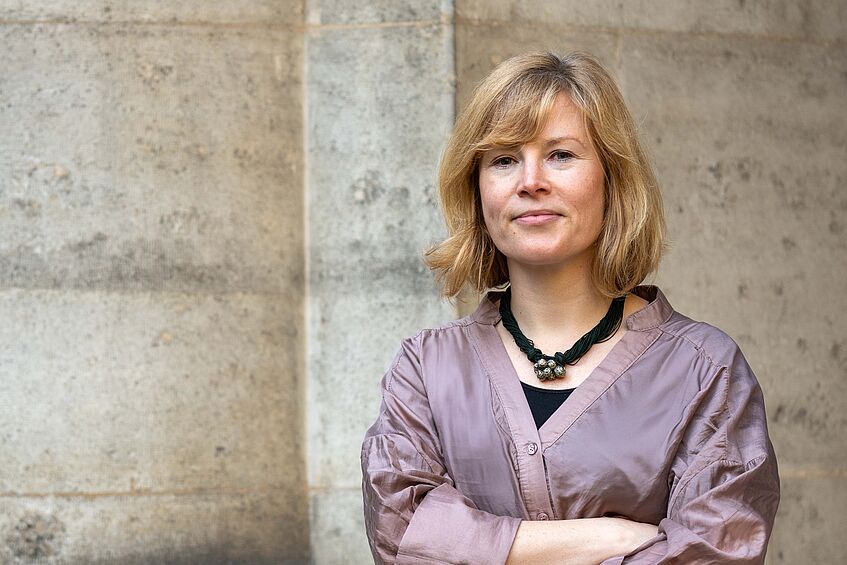
Claudia Wilhelm is an Associate Professor of Media & Intersectionality at the University of Vienna's Department of Communication. She serves as Vice-Director of Studies and part of the Doctorate in Social Sciences Directorate. Her academic career includes roles at Friedrich Schiller University Jena (PhD in 2012), University of Tübingen, and University of Erfurt, with a guest stay at the University of Texas at Austin. Her research focuses on digital communication, media use effects, and youth media research. She has led projects funded by the EU and Austrian Science Fund (FWF), including studies on media literacy interventions, time allocation in media use, and hate speech analysis. Her research interests emphasize digital visibility, gender aspects of media use, and intersectional approaches. Key collaborations include projects like 'Fake News Commissioner' (Vienna City-funded) and 'GENHA' (EU-funded), examining anti-gender hate speech. She has published widely in journals such as Journalism , New Media & Society , and Information, Communication & Society . Wilhelm’s work bridges theoretical frameworks and practical interventions, advocating for digital literacy and critical media engagement. She leads the Political Communication Research Group and contributes to academic discourse on journalist-audience relationships and media literacy strategies.
Benjamin Roth is a Professor at Saarland University holding dual affiliations in the Faculty of Computer Science (Research Group Data Mining and Machine Learning) and the Faculty of Philological and Cultural Studies (Department of European and Comparative Literature and Language Studies). His research focuses on natural language processing, large language models, machine learning, and computational linguistics. He leads multiple active research projects including 'Understanding Language in Context' (2025–2033) and 'Linguistic Methods for the Detection of Implicit Abuse' (2024–2027). Notable collaborations span cross-functional studies on LLM behavior, clinical text analysis, and knowledge graph integration. He actively participates in conference organization and has presented at venues like the Konferenz zur Verarbeitung natürlicher Sprache (2024). His work emphasizes methodological innovation in weak supervision, model calibration, and multimodal reasoning. Recent contributions include studies on persona effects in LLMs, specification overfitting mitigation, and zero-shot temporal relation extraction. He has co-authored over 20 peer-reviewed publications since 2020, with a focus on advancing ethical AI, model interpretability, and NLP education.
Siegfried Benkner is a full Professor at the Vienna University of Technology (TU Wien) within the Faculty of Computer Science and leads the Research Group for Scientific Computing. His work focuses on high-performance computing (HPC), parallel programming models, runtime systems, and performance optimization for heterogeneous architectures. He has actively contributed to EU-funded projects such as TROCI (2024–2027) and PEPPHER, addressing resilience in critical infrastructures and programmability for exascale systems. His research spans topics like task-based runtime systems (OCR-Vx), autotuning frameworks (Periscope PTF), and performance portability for GPUs/Xeon Phi architectures. Recent interests include accelerating graph neural networks via novel matrix compression formats and cloud-edge continuum systems for eHealth applications. Prof. Benkner has published over 270 articles, with a focus on runtime systems, parallel patterns, and HPC infrastructure. His work emphasizes practical applications, including semantic data management for medical research and cloud-based analytics frameworks for big data processing in cellular networks. He has led multiple EU projects (9 total), including the 2024 initiative on exascale computing and resilience, and frequently presents at conferences like Euro-Par and Supercomputing events. His activities include media engagement on topics like exascale hardware trends and HPC challenges.
Samir Moustafa is a researcher in the Faculty of Computer Science, affiliated with the Research Group Theory and Applications of Algorithms. His work centers on Graph Neural Networks, adversarial machine learning, and algorithmic security. He holds a B.Sc. and M.Sc. in Computer Science. Research Interests Samir's research explores the vulnerabilities of Graph Neural Networks (GNNs) to adversarial attacks, particularly bit flip attacks, and develops defense frameworks to enhance model robustness. He also investigates the role of information redundancy in GNNs, analyzing the trade-offs between storage overhead and model performance. His work integrates theoretical computer science with practical machine learning applications to improve the security and efficiency of graph-based AI systems. Publication Trends Recent publications (2023-2025) demonstrate a focus on securing GNNs against bit flip attacks and understanding redundancy mechanisms. His 2025 paper introduces "Crossfire", an elastic defense framework, while his 2024 works analyze attack indifference via the Weisfeiler-Leman algorithm and the dual nature of redundancy. These contributions highlight his expertise in both offensive and defensive strategies for graph-based machine learning. Scientific Awards Best Paper Award at ECML PKDD 2023 (awarded September 22, 2023) Advising and Grants No public information is available regarding graduate student advising or research grants. Labs and Teams Samir is an active member of the Research Group Theory and Applications of Algorithms, contributing to collaborative projects on algorithm design and machine learning security.