Sean Hanna is a Professor of Design Computing at The Bartlett School of Architecture , University College London , and a member of the UCL Space Syntax Laboratory . His interdisciplinary work bridges architecture, computational modeling, and machine learning.
Martha Tsigkari serves as an Associate Professor at The Bartlett School of Architecture, University College London (UCL), where she bridges architectural practice with cutting-edge computational research. Her position situates her at the forefront of digital transformation in the built environment, with institutional affiliations spanning UCL's Faculty of the Built Environment and direct contributions to UN Sustainable Development Goals 4 (Quality Education), 11 (Sustainable Cities), and 13 (Climate Action). Her research program critically examines the integration of artificial intelligence, machine learning, and cognitive psychology into architectural design processes. Key investigations include spatial and visual connectivity analysis, XR-enhanced collaborative design environments, and AI-driven optimization of building performance. She explores how digital tools reshape creativity, professional identity, and sustainability outcomes in architecture, with particular focus on data commoditization, skills evolution, and human-AI collaboration in design workflows. Her interdisciplinary approach connects architectural theory with computational neuroscience and industrial digitalization trends. Tsigkari's publication trajectory reveals a clear evolution from computational structural analysis (2012-2017) toward AI ethics and professional transformation (2022-2024). Early work established foundations in performance-driven facades and material systems, while recent output confronts existential questions about architectural practice in the AI era. Her scholarship consistently addresses the tension between technological capability and human-centered design values, with growing emphasis on sustainable development frameworks and educational implications. Scientific Awards: No major awards are documented in the available records. Advising and Grants: While specific supervisees and funding mechanisms aren't detailed in current sources, her extensive collaborative network across 30+ publications indicates active mentorship and research leadership. Co-authorship patterns suggest involvement in multi-institutional projects addressing AECO industry digitalization, with potential ties to UK research councils and industry partnerships like RIBA. Labs and Teams: Tsigkari operates within The Bartlett's digital research ecosystem through recurring collaborations with Kosicki, Tarabishy, and Psarras. Her work manifests in experimental toolsets including Glaucon (XR design environment), HYDRA (optimization framework), and SandBOX (conceptual design system), indicating leadership in UCL's computational design labs focused on human-AI interaction and sustainable building technologies.
Dr. Aghdas Badiee serves as a Post-Doctoral Research Associate at Heriot-Watt University's Edinburgh Business School, affiliated with both the Centre for Logistics and Sustainability and the Centre of Sustainable Road Freight. Her academic foundation spans Industrial Engineering with specialized expertise in data-driven decision systems and logistics optimization. Educational Background: B.Sc. in Industrial Engineering - System Planning and Analysis (Grade: 18.07/20), Iran University of Science and Technology M.Sc. in Socio-economic System Engineering - Location-Allocation Optimization (Grade: 19.30/20), Iran University of Science and Technology Ph.D. in Socio-economic System Engineering - Supply Chain Modeling and Sustainable Logistics (Grade: 19.35/20), Iran University of Science and Technology Her research integrates Sustainable Supply Chain Management , Resilient Cold Chain Logistics , and Operations Research methodologies to address complex transportation challenges. Current projects include the Africa Centre of Excellence for Sustainable Cooling and Cold Chain Systems (ACES) and Zero-Emission Cold-Chain initiatives, focusing on food security through sustainable logistics solutions. Her methodological approach combines descriptive, predictive, and prescriptive analytics using simulation, optimization, and data science techniques. Publication trends reveal consistent contributions to high-impact journals like Annals of Operations Research and IEEE Transactions on Fuzzy Systems , with growing emphasis on sustainable cold chain systems (2023-2025). Her work bridges theoretical operations research with practical applications in agri-food distribution, humanitarian logistics, and transportation procurement. Scientific Recognition: Ranked 1st in all academic degrees (B.Sc. 2010, M.Sc. 2012, Ph.D. 2019) Global Talent designation by UKRI (2022) Distinguished PhD Dissertation Award (2019) Reviewer for Annals of Operations Research Journal (2021-present) Member of WORMS (Women in OR/MS) since 2022 Her professional trajectory demonstrates continuous engagement across academia and industry, having served as Lecturer at University of Tehran and Senior Business Analyst at National Iranian Oil Products Distribution Company. Current activities include developing the MILES simulation platform for cold chain optimization and contributing to UN Sustainable Development Goals through sustainable logistics research. She actively participates in professional networks including Production and Operations Management Society while mentoring students in operations research methodologies.
Dr. Mihailo Ristic is a Senior Lecturer in the Department of Mechanical Engineering at Imperial College London, part of the Faculty of Engineering. He holds a First Class Honours Degree in Mechanical Engineering from University College London (1981), an M.Sc. in Control Systems (Imperial College London, 1982), and a Ph.D. in Robotics (Imperial College London, 1986). His research spans control systems, CAD/CAM, robotics, and medical engineering, with recent focus on Magnetic Resonance Imaging (MRI) systems and mechatronic devices for clinical applications. Dr. Ristic is a Chartered Engineer and Fellow of the Institution of Mechanical Engineers. He co-founded Turbo Power Systems, specializing in high-speed electric machines and power electronics. His work integrates robotics, medical imaging, and advanced manufacturing, addressing challenges in distributed power generation and biomedical device design. Key projects include novel MRI magnet configurations, intraoperative MRI tools, and robotic systems for MRI-guided interventions. Education: B.Sc. (First Class Honours) Mechanical Engineering, University College London (1981) M.Sc. Control Systems, Imperial College London (1982) Ph.D. Robotics, Imperial College London (1986) Affiliations: Robotics Forum CAD/CAM Research Group Mecheatronics in Medicine His research interests include medical engineering innovations, such as MRI system design, collagen fiber analysis, and robotic-assisted surgery. He has contributed to over 50 publications in journals and conferences, focusing on imaging technologies, robotics, and mechatronics. His work bridges academic research and industrial applications, particularly in energy systems and biomedical devices. Dr. Ristic’s awards include the Fellowship of the Institution of Mechanical Engineers. His grants and projects involve collaborations with industry partners to advance MRI hardware, teleoperated surgical systems, and energy-efficient power solutions.
Dr. Philip Brabazon is a Senior Lecturer at the University of Portsmouth, affiliated with the School of Organisations, Systems and People and the Centre for Operational Research & Logistics. His work focuses on operational research, logistics, and mass customization in industries such as automotive and manufacturing. He has published extensively on topics including order fulfillment systems, supply chain management, and production economics. Dr. Brabazon is currently accepting PhD students and has supervised 7 theses. His research explores themes like automotive order-to-delivery processes, virtual build-to-order systems, and the application of simulation in operational systems. He has contributed to understanding mass customization strategies, risk analysis in offshore operations, and safety case frameworks. His work bridges theoretical models with practical industry applications, particularly in optimizing supply chains and production systems. Notable publications include analyses of automotive logistics, long-tail retail dynamics, and Markovian approximations in fulfillment systems. His research has been cited over 100 times in key journals like the European Journal of Operational Research and Production and Operations Management.
Professor Vincent Fusco holds the position of Professor of High Frequency Electronics at Queen's University Belfast's School of Electronics, Electrical Engineering and Computer Science, and serves as CTO of the Institute of Electronics, Communications & Information Technology (ECIT). His research focuses on advanced wireless technologies, including active antenna systems, self-tracking antennas, and synthetic electromagnetic materials for space and medical applications. He has pioneered work in multimode antenna arrays and low-cost phased arrays. He leads high-impact industry collaborations in autonomous vehicles, IoT, satellite communications, and healthcare imaging. Notable awards include the IET Mountbatten Medal and IEEE Fellow status. Supervised students include Anil Chepala (PhD 2016-2019) and Grzegorz Wolosinski (PhD 2018-2018), with alumni such as Prof. Sandeep Sancheti. Research projects include GIGARADIO (short-range gigabit wireless) and New Technologies for Wireless Power Transfer. Key achievements include founding the field of active antenna technology and establishing Queen's wireless lab. His work spans over 689 publications and 13 major research projects, with active grants in mmWave antennas and 5G/6G systems.
Dr. Elham Delzendeh is an Associate Professor and College Academic Lead for Employability at the College of Built Environment, Birmingham City University. She specializes in Digital Built Environment and Technological Design, with research emphasizing cutting-edge digital technology, building energy performance, occupant behavior, and Building Information Modelling (BIM). Her academic background includes a PhD in Architecture and Built Environment, an MSc and BSc in Architectural Engineering. PhD in Architecture and Built Environment MSc in Architectural Engineering BSc in Architectural Engineering Her research bridges practical and academic expertise in design and construction, focusing on occupant behavior analysis, energy-efficient building simulation, and Industry 4.0 technologies like digital twins. She has contributed extensively to energy performance modeling, occupant-driven systems, and sustainable urban interventions. Selected scientific awards include Fellow of the Higher Education Academy (FHEA) . She has supervised postgraduate research in digital built environments and occupant behavior, integrating real-world industry insights into her pedagogy.
Dr. Luciana Basualdo Bonatto is a researcher at the Mathematical Institute , University of Oxford , specializing in topology and its intersections with algebraic structures. She contributes to the Topology research group and has published extensively on configuration spaces, operad theory, and manifold topology. Her research interests include: Configuration Spaces Diffeomorphism Groups Homological Stability Embedding Calculus Knot Theory Operad Theory Her recent publications span mathematical topology and computational applications, including a 2023 study on moduli spaces and a 2021 work on multi-agent consensus algorithms. She collaborates internationally with researchers like Nathalie Wahl and Safia Chettih. She is affiliated with Oxford's Topology research group and works from the Andrew Wiles Building, Radcliffe Observatory Quarter.
Dr. Juan Carlos De Luna Ducoing is a Research Fellow at the University of Surrey, specializing in advanced wireless communication systems with a focus on MIMO (Multiple-Input Multiple-Output) technologies. His work integrates neuromorphic computing, quantum annealing, and non-linear processing to enhance the efficiency and scalability of next-generation wireless networks. Research Interests: MU-MIMO detection and precoding Neuromorphic computing applications Quantum computing in wireless systems 6G network architectures Non-linear signal processing Hardware-software co-design (e.g., SWORD platform) Key Publications: His recent work includes NeuroMIMO (2024), which explores neuromorphic principles for power-efficient MU-MIMO detection, and Scalable MU-MIMO User Scheduling (2023), addressing resource allocation in dense networks. He also contributed to quantum annealing-based detection (2022) and Gyre Precoding (2021), achieving significant SNR gains. Collaborations: Works closely with Konstantinos Nikitopoulos and the SWORD research team to develop open-source platforms for rapid prototyping of advanced communication systems.
Dr. Wei Sun is a Chancellor's Fellow (equivalent to Assistant Professor) in Energy Systems Integration at the University of Edinburgh's School of Engineering. His research specializes in low-carbon energy systems with high renewable penetration, utilizing data science and optimization techniques. He contributes to major initiatives like the National Centre for Energy Systems Integration (CESI) and Hydrogen’s Value in Energy Systems (HYVE). Research encompasses network integration of distributed energy resources, climate impacts on renewables, and multi-vector energy systems. Recent publications focus on hybrid energy storage, hydrogen integration, and machine learning applications for system optimization. He holds professional credentials as a Chartered Engineer (CEng) with memberships in IET and IEEE. Teaching includes Hydropower Design Projects and Renewable Energy Fundamentals. Visiting research affiliations include University College London, enhancing collaborative networks in energy systems research.
Dr. Baraq Ghaleb is an Associate Professor within the Centre for Distributed Computing, Networks and Security at Edinburgh Napier University's School of Computing Engineering and the Built Environment. He actively delivers and leads modules for both Undergraduate and Postgraduate programs in the Cyber Security and Systems Engineering subject group. Dr. Ghaleb earned his PhD from Edinburgh Napier University in June 2019, following completion of his MSc and BSc degrees. His academic journey has positioned him as an expert in cybersecurity and IoT technologies. His research focuses on investigating security vulnerabilities of Internet of Things standards and utilizing cutting-edge advancements to address these vulnerabilities. With expertise spanning Cyber Security, Internet of Things, Blockchain, and Machine Learning, Dr. Ghaleb bridges theoretical research with practical applications, particularly in securing IoT ecosystems. His recent work shows a clear progression from foundational networking research to contemporary security challenges involving blockchain, cryptography, and AI-enhanced security solutions. Dr. Ghaleb has secured significant research funding as Principal Investigator and Co-Investigator across multiple projects with a total budget of approximately £435,000. His externally funded projects include SafeNet (Carnegie Trust), Trusted Threat Sharing (Innovate UK), TruElect (Innovate UK), and LastingAsset (Innovate UK). He currently supervises numerous PhD students working on diverse security challenges: Blockchain-based Privacy-preserving Cybersecurity Intelligence Sharing (Elfatih Ahmed) Enhancing Security and Privacy of Blockchain-based Healthcare Systems (Faneela) Design of complex encryption schemes for IoT security (Shahbaz Khan) Intelligent and Privacy-Preserving Security Solutions for IoT Networks (Iain Baird) Dr. Ghaleb is affiliated with the Centre for Distributed Computing, Networking and Security and the Centre for Cybersecurity, IoT and Cyberphysical Systems, where he contributes to cutting-edge research in secure network architectures, cryptographic techniques, and privacy-preserving frameworks across multiple domains including automotive supply chains, healthcare systems, and environmental monitoring.
Professor Ran Levi is a Chair in Mathematical Sciences at the University of Aberdeen, affiliated with the School of Natural and Computing Sciences and the Department of Mathematics. His research bridges pure mathematics and neuroscience, focusing on algebraic topology and its applications to neural systems. BSc in Mathematics, Hebrew University, Jerusalem (1988) PhD in Mathematics, University of Rochester (1993) His research interests include Algebraic Topology , Homotopy Theory of classifying spaces , Combinatorial Topology , and Neuro-Topology —the application of topological methods to neuroscience. He leads the Aberdeen Neuro-Topology Research Group and collaborates with the Blue Brain Project at EPFL. His work explores how topological and geometric frameworks can model and predict neural structures, potentially inspiring new mathematical concepts. Recent publications reveal a strong trend in topological data analysis of neural circuits , p-local groups , and combinatorial constructions in topology. His interdisciplinary work appears in journals such as iScience , eLife , PLOS ONE , and Algebraic & Geometric Topology . His research has been supported by grants including: EPSRC: Topological Analysis of Neural Systems (EP/P025072/1) Collaboration with École Polytechnique Fédérale de Lausanne (Blue Brain Project) Professor Levi has advised several researchers, including Dejan Govc, Janis Lazovskis, Henri Riihimaki, and Jason Smith. He is actively involved in international collaborations with mathematicians and neuroscientists across Europe and the US. He is a key member of the Institute of Pure and Applied Mathematics (IPAM) at Aberdeen and contributes to the AberdeenML and Cybersecurity and Privacy research groups. His work exemplifies the growing synergy between mathematics and computational neuroscience.
Dr Zichong Lyu is a researcher at the Hertfordshire Business School, specializing in optimization and decision-making in complex systems. His work integrates operations research, business analytics, and data science to address challenges in healthcare workforce planning, patient pathway optimization, and logistics operations. Education PhD in Mechanical Engineering (University of Canterbury, Christchurch) Research Interests : Focused on enhancing system resilience through stochastic modeling, hub-and-spoke architectures, and discrete-event simulation. Key applications include sustainable freight networks, last-mile delivery optimization, and climate change adaptation in logistics. Article Trends : Recent publications emphasize sustainable transportation systems, with a focus on electric vehicle adoption, stochastic optimization of urban freight networks, and resilience planning for climate-related disruptions. Methodologies include simulation-based modeling, cluster analysis, and multi-objective optimization frameworks. Research Groups : Active member of the Business and Digital Research Group and Sustainability Research Group at the University of Hertfordshire.
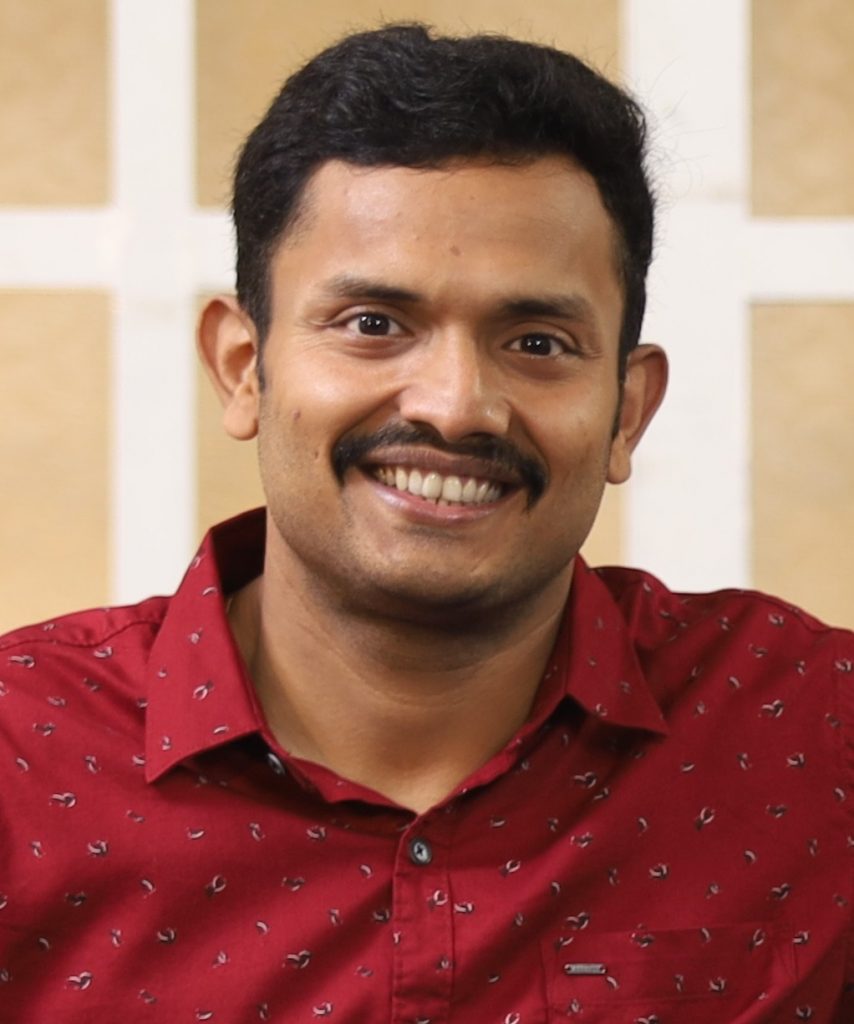
Jayakrishnan M. Purushothama is an Assistant Professor in the Microwave and Antenna Engineering Research Group at Heriot-Watt University's School of Engineering and Physical Sciences since March 2023. Previously, he held roles including Post-Doctoral Researcher (2019–2021) and Ph.D. scholar (2016–2019) at Université Grenoble Alpes, and Research Fellow (2014–2016) at Cochin University of Science and Technology. Education: B.Sc. (Electronics) & M.Sc. (Electronics Science), Mahatma Gandhi University & Cochin University of Science and Technology (2012–2014), both with first rank honours. Ph.D. (RF and Microwave Electronics Engineering), Université Grenoble Alpes (2019). Research interests focus on microwave antennas, beamforming, chipless RFID systems, CBRAM-based RF switches, medical biosensors, and electromagnetic compatibility. His work emphasizes reconfigurable systems, energy efficiency, and non-volatile memory applications in passive devices. Awards include the URSI Young Scientist Award (2020), 4th Prize in URSI Student Competition (2018), and UGC NET/JRF qualification (top 0.6% in 2013). Grants include ERC-funded ScattererID project (2019–2021) developing CBRAM-based RF switches. His lab explores innovations in antenna engineering, RF materials, and wearable electronics. Key contributions include reconfigurable antennas, low-cost RFID tags, and metamaterial-based shielding solutions.
Jonathan Rae is a Professor in the Department of Mathematics, Physics and Electrical Engineering at Northumbria University. His research focuses on space physics, plasma dynamics, and solar-terrestrial interactions, with a particular emphasis on magnetospheric processes, radiation belt dynamics, and space weather effects. He holds a PhD in Physics awarded in 2001. His work spans experimental analysis of geomagnetic storms, planetary magnetospheres (e.g., Jupiter), and the development of predictive models using machine learning techniques. Key research interests include: Geomagnetic storm evolution and radiation belt electron behavior Jupiter’s ionosphere-magnetosphere coupling mechanisms Space weather impacts on critical infrastructure Magnetic reconnection and plasma turbulence in Earth’s magnetotail Collaborations include international projects like the STFC Consolidated Grant for Solar and Space Physics, focusing on solar wind-magnetosphere interactions. His recent work highlights advancements in understanding Relativistic electron pitch angle distributions during geomagnetic disturbances Chorus wave-driven electron loss mechanisms Machine learning applications for neutral density modeling He has contributed to over 123 peer-reviewed publications and led research on Jupiter’s X-ray aurorae, lunar surface hydration via Earth wind, and UK geomagnetic hazard forecasting. Awards include high citation counts (2557 total) reflecting his impactful contributions to heliophysics and planetary science.