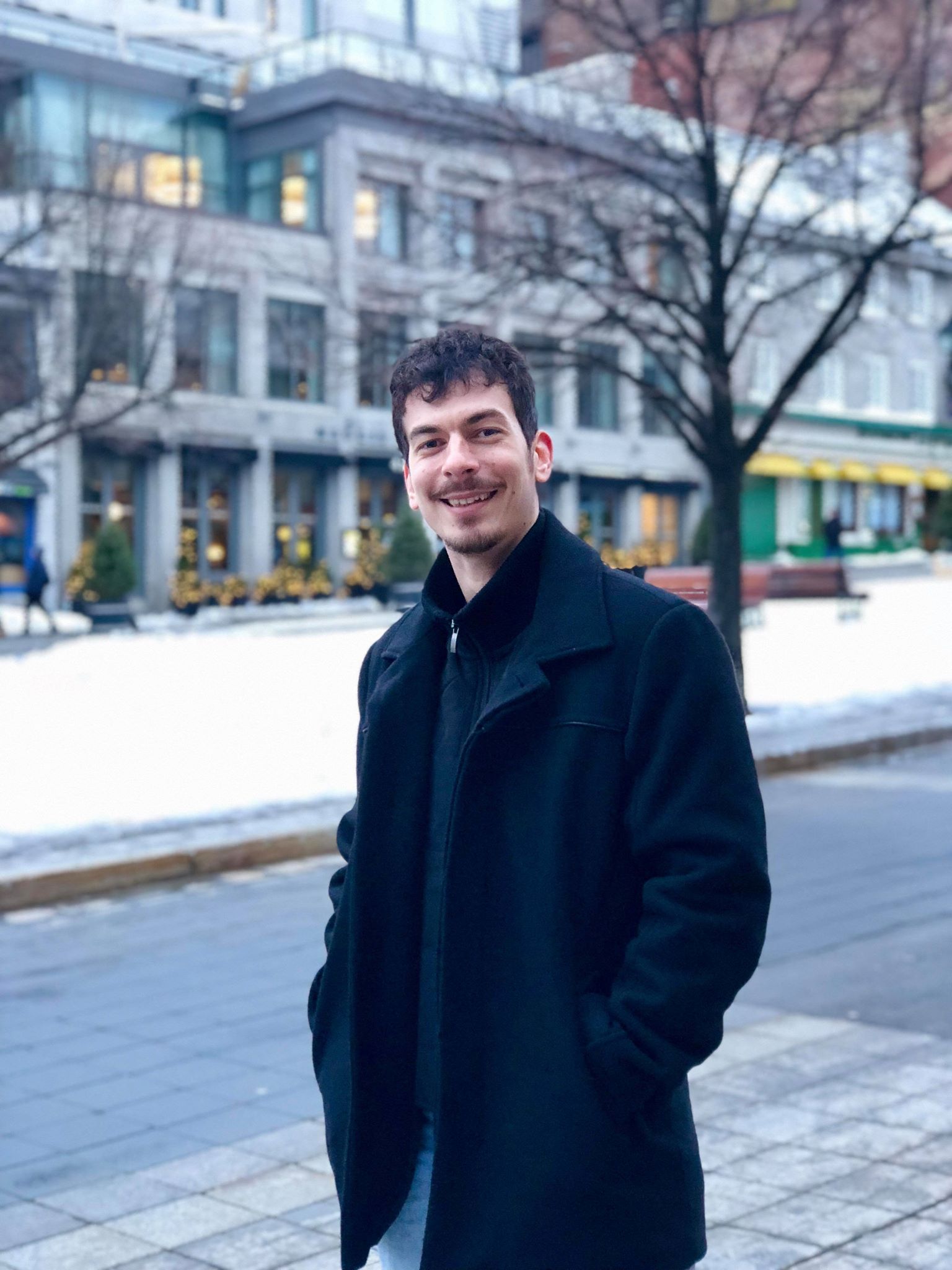
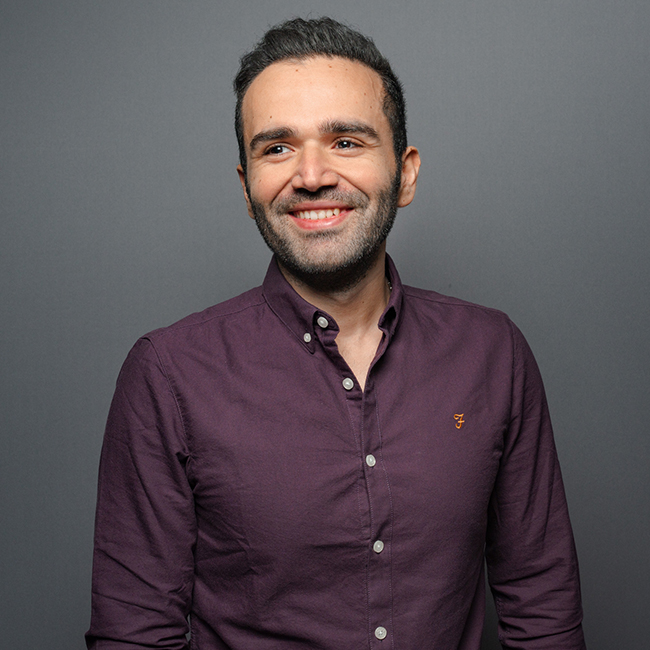
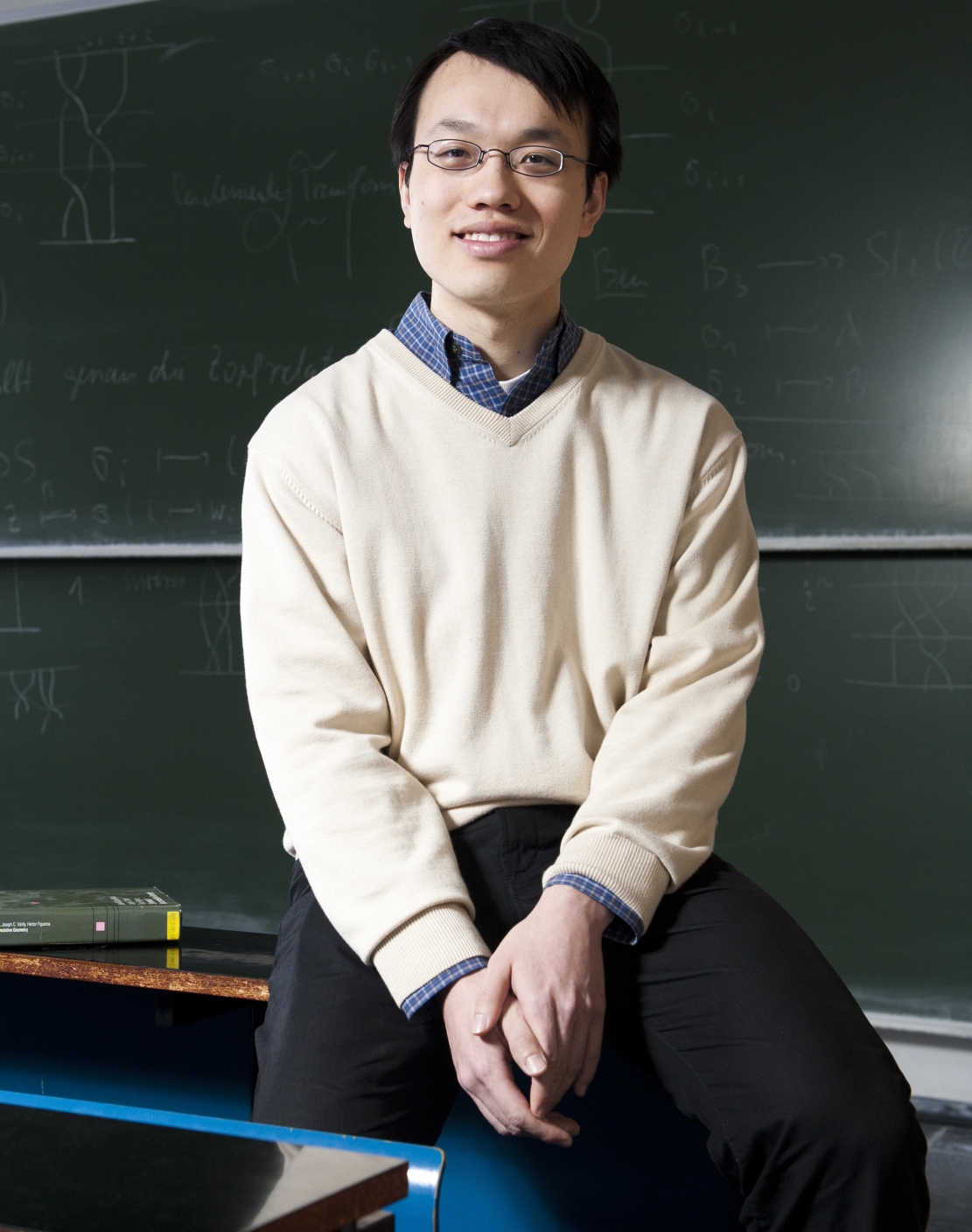
Professor Jordan Cheer holds a Royal Academy of Engineering Research Chair in Smart Acoustic Control Technologies at the University of Southampton's Institute of Sound and Vibration Research (ISVR). His research focuses on active control of noise and vibration, including smart structures and metamaterials. He is an Associate Editor for Journal of the Acoustical Society of America and Subject Editor for Journal of Sound and Vibration . Education: BMus (Tonmeister) in Music and Sound Recording, University of Surrey (2008) MSc in Sound and Vibration, ISVR, University of Southampton (2009) PhD in Active Control of Automobile Cabin Acoustics, ISVR, University of Southampton (2012) Research Interests: Active Noise/Vibration Control, Smart Structures, Acoustic Black Holes, and Metamaterials. Current projects include the BAE Systems-funded Smart Acoustic Control Technologies Chair and the IN-NOVA MSCA Doctoral Network. Recent Work Trends: Publications emphasize neural network controllers, head-tracking systems, and metamaterial applications. Patents focus on vibration damping and acoustic control devices. Awards: Royal Academy of Engineering Research Chair (2024) Grants & Labs: Leads projects funded by EPSRC, MOD, and industry partners. Collaborates with teams like the Southampton Marine and Maritime Institute and the Centre for Defence and Security Research.
Dr. Wenjuan Yu is a Lecturer at the School of Computing and Communications (SCC), InfoLab21, Lancaster University, UK. She holds a PhD in Communication Systems from Lancaster University and has held prior roles, including Research Fellow at the 5G Innovation Centre (5GIC), University of Surrey (2018–2020), and part-time Research Officer at the University of Essex (2017–2018). She is a Fellow of the Higher Education Academy and a Senior Member of IEEE. Her research focuses on communication systems, with emphasis on radio resource management, mMTC, low-latency communications, B5G/6G, MEC, and machine learning. She actively contributes to IEEE conferences as a Technical Program Committee (TPC) member and holds editorial roles, including Executive Editor for Transactions on Emerging Telecommunications Technologies (2019–2022). Current teaching includes CNSCC141 Professionalism in Practice and CNSCC365 Advanced Networking . Dr. Yu supervises PhD students in EE/CS, particularly welcoming applicants from China via CSC scholarships. Her projects include DSI-funded initiatives on sustainable AI-driven resource allocation for 6G and Smart Multi-RAT Traffic Steering for V2X systems. She leads research groups in Security Lancaster (Networks, Systems, Distributed Systems).
Dr. Jose Escribano is a Lecturer in Aviation & Logistics at the Department of Civil and Environmental Engineering within the Faculty of Engineering at Imperial College London. His research focuses on humanitarian logistics optimization, AI-driven airspace management, and urban resilience strategies. He holds a First Class Honours bachelor’s degree (2015) and a PhD (2021) from Imperial College London. Dr. Escribano is affiliated with the Centre for Transport Engineering and Modelling and the Transport Systems and Logistics Project D-Risk SHIFT. His academic qualifications include a BEng in Engineering and a PhD in Civil Engineering, both from Imperial College London. His professional affiliations include the Institution of Civil Engineers, Chartered Institute of Logistics and Transport, and the American Institute of Aeronautics and Astronautics. He has received the 2023 Transportation Research Board Best Paper Award and a JSPS Fellowship for urban evacuation modelling. Dr. Escribano’s research integrates stochastic modelling, machine learning, and simulation to address challenges in humanitarian response, UAV coordination for disaster relief, and airspace safety. His work emphasizes endogenous value-of-information analysis and the application of cutting-edge technologies to enhance societal resilience. He has collaborated with the United Nations World Food Programme on UAV deployment models for humanitarian contexts. His recent publications span topics like air traffic network resilience, autonomous vehicle optimization, and last-mile delivery mechanisms. He advises doctoral candidates in transportation systems, logistics, and air traffic management, offering opportunities for PhD research in these domains.
Alexandros Kontogiannis is a research fellow at the University of Cambridge, Department of Engineering, specializing in fluid dynamics and applied mathematics. His work combines Bayesian inference, machine learning, and physics-informed algorithms to solve inverse problems in magnetic resonance velocimetry (MRV) and fluid-structure interaction. EPSRC National Fellow in Fluid Dynamics Member of Energy, Fluids and Turbomachinery Division Research Focus: Development of digital twin frameworks that integrate MRV data with Navier-Stokes equations to reconstruct flowfields, infer rheological parameters in non-Newtonian fluids, and estimate hidden quantities like pressure and wall shear stress. Key innovations include: Physics-informed compressed sensing for sparse MRV data Simultaneous boundary shape and flowfield estimation Bayesian turbulence model parameter learning Scientific Awards: ASME Fluids Engineering Division Graduate Student Scholar (2021) Technical Chamber of Greece (TEE) Award (2018) Limmat Foundation Academic Excellence (2017) Mentzelopoulos Scholarship for international studies (2017) Greek State Scholarships Foundation Award (2012) Key Contributions: Algorithms for 3D flow reconstruction with adaptive discretization, viscous signed distance field regularization, and multi-objective aerodynamic shape optimization. His methodologies enable 27x reductions in MRI scanning time while maintaining diagnostic accuracy.
Dr. Ashley Willis is a Senior Lecturer in Fluid Dynamics at the University of Sheffield's School of Mathematical and Physical Sciences. He holds roles including Admissions Head and Programme Leader for Study Abroad. His research focuses on fluid dynamics, turbulence, astrophysical flows, and magnetohydrodynamics, with applications in clean energy and planetary systems. Willis completed his Ph.D. in Applied Mathematics at Newcastle University (2002) and has held postdoctoral positions at the University of Bristol, Leeds, and a Marie Curie Fellowship at Ecole Polytechnique, Paris. He leads the Fluid Dynamics Group and is part of the cross-faculty Sheffield Fluid Mechanics Group. His research interests include transition to turbulence, nonlinear dynamics, and magnetic field generation in planetary interiors. He supervises PhD students like Shijun Chu and collaborates with industry on projects like turbulence suppression in pipe flows. Key contributions include the open-source Openpipeflow simulation code and studies on dynamo action in geophysical flows. Publications highlight work on turbulent transition mechanisms, optimal flow configurations, and dynamo theory. His teaching includes courses on mechanics, fluid dynamics, and mathematical modeling of natural systems.
Toby Davies is an Associate Professor in Criminal Justice Data Analytics at the University of Leeds, School of Law. His work focuses on quantitative criminology, spatial analysis, and computational methods to inform crime prevention. He holds a Mathematics degree from the University of Oxford (2008) and a PhD from University College London (UCL), followed by postdoctoral research on the EPSRC-funded Crime, Policing and Citizenship project. Before joining Leeds in 2023, he was at UCL’s Department of Security & Crime Science. His research spans interdisciplinary topics including urban form and crime, crime modeling, social networks, and cybercrime. He has collaborated with police agencies (West Yorkshire, Thames Valley, West Midlands Police) and governmental bodies (UK Home Office, London Mayor’s Office). A strong advocate for Open Science, he co-founded JDI Open to promote open practices in crime science. His recent work emphasizes policy interventions like phasing out pointed kitchen knives to reduce knife crime, leveraging data-driven approaches. He publishes widely in criminology, physics, network science, and general science journals, and has guest-edited special issues. His applied research aims to bridge theory and practice, developing tools deployed operationally in policing. Current interests include financial crime dynamics, social contagion of crime, and street network configurations’ impact on crime patterns.
Professor Geraint Jewell is affiliated with the University of Sheffield , serving as Director of the Rolls-Royce University Technology Centre in Advanced Electrical Machines (since 2006) and Director of the EPSRC Future Electrical Machines Manufacturing Hub (since 2019). He is a graduate of the university (BEng 1988, PhD 1992) and has held academic roles since 1994. EPSRC Advanced Research Fellowship (2000-2005) Royal Society Industry Fellowship at Rolls-Royce (2006-2008) Former Faculty Director of Research and Innovation (2008-2011) Former Head of Department (2013-2019) His research focuses on power-dense electrical machines for aerospace applications , including permanent magnet machines , switched reluctance machines , and linear actuators . He has supervised ~20 PhD students and led collaborations with Rolls-Royce on high-temperature devices (up to 800°C) and aero-engine starter-generators. Recent publications analyze stator insulation thermal degradation , eddy current control in additively manufactured materials , and magnetic loss prediction in silicon steel. His work spans electromagnetic modeling , core loss calculation , and advanced manufacturing techniques for electrical machines. EPSRC Advanced Research Fellowship (2000-2005) Royal Society Industry Fellowship (2006-2008) He has advised PhD students across topics like consequent-pole PM machines , doubly salient SynRMs , and core loss characterization . His Electrical Machines and Drives Research Group explores modular motor design and magnetic material optimization for aerospace and electric vehicles.
Dr. Dimitrios Anagnostou is an Associate Professor at Heriot Watt University's School of Engineering & Physical Sciences, affiliated with the Institute of Sensors, Signals & Systems (ISSS). He holds a Marie Skłodowska-Curie Fellowship and leads research in reconfigurable antennas, metamaterials, and biomedical sensing. He earned his PhD from the University of New Mexico (2005), followed by postdoctoral work at Georgia Tech and faculty roles at SDSMT before joining Heriot Watt in 2016. His research focuses on electromagnetic devices for aerospace, defense, and healthcare applications, including reconfigurable antennas, metamaterials, and AI-driven radar systems. He has published 169 papers and received 15+ awards, including the IEEE John D. Kraus Antenna Award and DARPA Young Faculty Award. Dr. Anagnostou serves as an Associate Editor for IEEE Transactions on Antennas and Propagation and actively contributes to conference committees. His lab specializes in antenna arrays, radar sensing, and functional materials like vanadium dioxide (VO₂). He supervises PhD students and supports interdisciplinary projects in sustainable RF electronics and medical imaging.
Professor Frank Kelly holds the Professor of the Mathematics of Systems at the University of Cambridge , affiliated with the Department of Pure Mathematics and Mathematical Statistics (DPMMS). His work bridges theoretical insights with practical applications in random processes , networks , and optimization . Academic Rank: Professor Department: DPMMS Research Themes: Stochastic systems, network resource allocation, mathematical modeling Kelly’s research focuses on stochastic networks , including congestion control in communication systems, fair bandwidth sharing , and electricity grid optimization . His work often incorporates proportional fairness principles and Markov models to analyze complex systems. Recent publications reveal a trajectory in network dynamics and resource allocation , with applications to electric vehicles, satellite routing, and virtualized networks. His work shows interdisciplinary impact across computer science , telecommunications , and energy systems . Kelly has contributed foundational works like Stochastic Networks (2014) and pioneered models for loss networks and congestion control . He maintains active collaborations and has advised on policy matters, including spectrum auctions and network regulation.
Dr. Hien Quoc Ngo is a Reader at Queen's University Belfast and a UKRI Future Leaders Fellow. He specializes in wireless communications, particularly in massive MIMO, cell-free massive MIMO, and cooperative systems. His research focuses on improving spectral efficiency, security, and energy efficiency in next-generation networks. Education: B.S., Electrical Engineering, Ho Chi Minh City University of Technology (2007) M.S., Electronics and Radio Engineering, Kyung Hee University (2010) Ph.D., Communication Systems, Linköping University (2015) Research Interests: Dr. Ngo's work spans massive MIMO systems, cell-free architectures, physical layer security, and millimeter-wave technologies. He has pioneered studies on channel estimation, power allocation, and interference management in distributed networks. Awards & Recognition: IEEE ComSoc Stephen O. Rice Prize (2015) IEEE ComSoc Leonard G. Abraham Prize (2017) Best PhD Award from EURASIP (2018) UKRI Future Leaders Fellowship (2019) Multiple AMiner Most Influential Scholar Awards (2022-2024) Grants & Projects: Lead on the Future Communications Hub in All-Spectrum Connectivity (UKRI-funded) Principal Investigator for Cell-Free Massive MIMO for ISAC Labs & Teams: He leads the Wireless Communications Research Group at Queen's University, focusing on 5G/6G technologies and intelligent systems.
Zhishu Qu is a Visiting Professor at Queen Mary University of London's School of Electronic Engineering and Computer Science. Her research focuses on reconfigurable antenna systems, particularly leveraging gallium-based liquid metals to enable dynamic beam steering, frequency agility, and phase control. She explores applications in millimeter-wave communications, LEO satellite systems, and phased array configurations. Key contributions include innovations in transmitarray unit cells, substrate integrated waveguide (SIW) phase shifters, and adaptive antenna designs. Her work spans theoretical analysis of antenna performance limits and practical implementations of liquid metal actuation in RF components. Research interests also encompass microwave engineering, electromagnetic compatibility, and next-generation wireless infrastructure. Current trends in her publications emphasize miniaturization, low-loss solutions, and reconfigurability for 5G and beyond. Notable research areas include: Beamforming algorithms for satellite communications Liquid metal integration in RF systems Millimeter-wave phased array optimization Adaptive antenna pattern reconfiguration Publications since 2020 demonstrate sustained contributions to reconfigurable antenna architectures, with recent work (2024-2025) focusing on beam switchable antennas and distributed beamforming schemes.
Davi De Castro Silva is a Researcher at the University of Cambridge, affiliated with the Department of Computer Science and Technology and the Centre for Quantum Information and Foundations. His current work is advised by Tom Gur and Sergii Strelchuk. Previously, he was a postdoc at CWI (Amsterdam) in QuSoft, advised by Jop Briët, and completed his PhD in Applied Mathematics at the University of Cologne under Frank Vallentin and Fernando de Oliveira Filho. He holds a Master's from IMPA (Brazil) under Roberto Imbuzeiro Oliveira and a BSc/MSc from École Polytechnique (France). His research focuses on theoretical computer science, quantum computing, and combinatorics, with recent emphasis on quantum speedups' structural foundations, such as symmetry's role. Key areas include additive combinatorics (e.g., higher-order Fourier analysis), computational complexity (lower bounds), combinatorial optimization (semidefinite programming), and quantum information theory. Notable contributions include studies on quasirandomness in additive groups, quantum algorithms' limitations, and tensor analysis. His work bridges combinatorial methods with quantum computing, exploring algorithmic efficiency and structural properties. He has published in journals like Discrete Analysis , Combinatorica , and Forum of Mathematics, Sigma , with preprints addressing quantum computation symmetry, Goldreich-Levin algorithms, and hypergraph quasirandomness. His research highlights interdisciplinary approaches to foundational questions in computing and mathematics.
Dr. Mohammad Monfared is a Senior Lecturer in the Department of Electronic and Electrical Engineering at Swansea University's School of Aerospace, Civil, Electrical and Mechanical Engineering within the Faculty of Science and Engineering. He joined Swansea University in 2022 after previously working at Ferdowsi University of Mashhad in Iran, where he received the Best Researcher Award in 2015. His academic journey began with a PhD in electrical engineering from Amirkabir University of Technology (Tehran Polytechnic) in 2010, which he completed with honors. Dr. Monfared's research focuses on the control and utilization of renewable energy generation systems and power electronics in the context of distributed generation, microgrids, and smart energy systems. His work is particularly relevant to Sustainable Development Goals 7 (Affordable and Clean Energy), 9 (Industry, Innovation and Infrastructure), 11 (Sustainable Cities and Communities), and 13 (Climate Action). He collaborates extensively with the Energy and Power Research Group (EPRG) at Swansea University, particularly with Dr. Meghdad Fazeli and Professor Mike Jennings, who holds a Royal Academy of Engineering Research Chair in 'Advanced Semiconductors for Electric Vehicles'. His research has practical applications and includes experimental verification in nearly all of his published works. Dr. Monfared's recent publications demonstrate a strong focus on power converter topologies, control strategies for renewable energy integration, and smart grid technologies. His work spans from high-boost impedance networks and DC-DC converters to grid-forming inverters and energy management systems. A notable trend in his research is the emphasis on practical implementation with experimental validation, bridging the gap between theoretical concepts and real-world applications in power electronics and renewable energy systems. Best Researcher Award from Ferdowsi University of Mashhad (2015) Department's Best Teacher Award at Swansea University (2023-24) Outstanding Reviewer Award for IEEE Transactions on Power Electronics (2023) IEEE Senior Member (2015) Dr. Monfared actively supervises PhD and MSc students, with current research projects focusing on gate-oxide reliability of wide bandgap power MOSFETs, single-phase PV-battery grid-forming inverters, and day-ahead PV generation forecasting. He collaborates with industry partners including National Grid, ABB, Siemens, and Vishay Intertechnologies on high-impact research projects. His future research direction involves establishing stronger industry collaborations to bridge the gap between academic innovation and real-world application, with a focus on advancing renewable energy technologies and power electronics for distributed generation and smart energy systems. Dr. Monfared also serves as an Associate Editor for both IEEE Transactions on Industrial Electronics and IEEE Transactions on Power Electronics, contributing to the scholarly community in his field.
Dr. Sina Pournouri is a Lecturer in Cyber Security at Sheffield Hallam University, having joined in 2019. His research explores cybersecurity, information security management, and data mining. Recent publications focus on threat prediction during the COVID-19 pandemic, vulnerability assessments of drone systems, space governance frameworks, and automated penetration testing using AI. His scholarly work demonstrates consistent focus on cybersecurity analytics, with articles applying classification techniques for attacker profiling and malware prediction. Research spans both technical security mechanisms and policy implications, particularly in crisis contexts.
Professor Xin Li is the Chair of Mathematical Analysis at the School of Mathematics & Statistics, University of Glasgow. His research focuses on interdisciplinary areas at the intersection of mathematical analysis, wireless communication systems, and blockchain technology. He holds a faculty position with expertise in reconfigurable intelligent surfaces (RIS), signal processing, and network optimization. Recent publications highlight his work on RIS-aided information-sensing integrated systems (ISAC), blockchain-based consensus networks in cellular environments, and adaptive beamforming techniques for multipath communication. His research emphasizes practical applications of theoretical mathematical models in telecommunications and distributed systems. Prof. Li's work demonstrates trends in integrating mathematical analysis with emerging technologies like millimeter-wave systems and Byzantine fault tolerance mechanisms. His contributions bridge pure mathematical rigor with real-world communication challenges, addressing both theoretical and applied aspects of modern wireless networks. He currently oversees academic activities within the School of Mathematics & Statistics and maintains an active research program supported by interdisciplinary collaborations. His contact information includes Xin.Li@glasgow.ac.uk and ORCID 0000-0002-2243-3742.