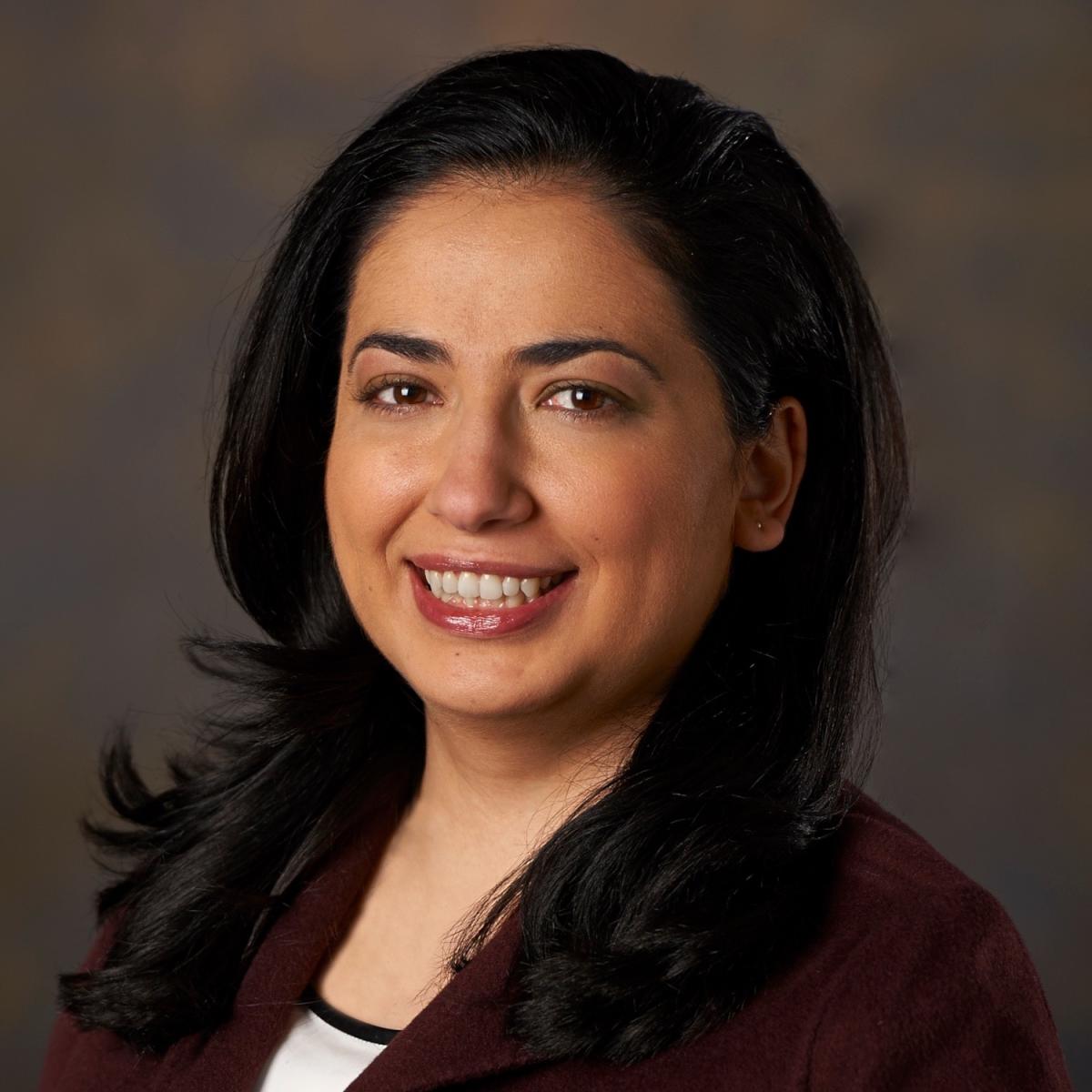
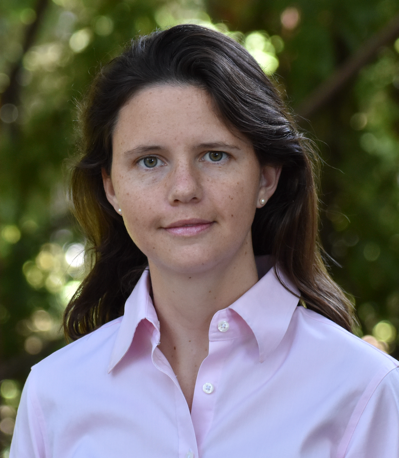
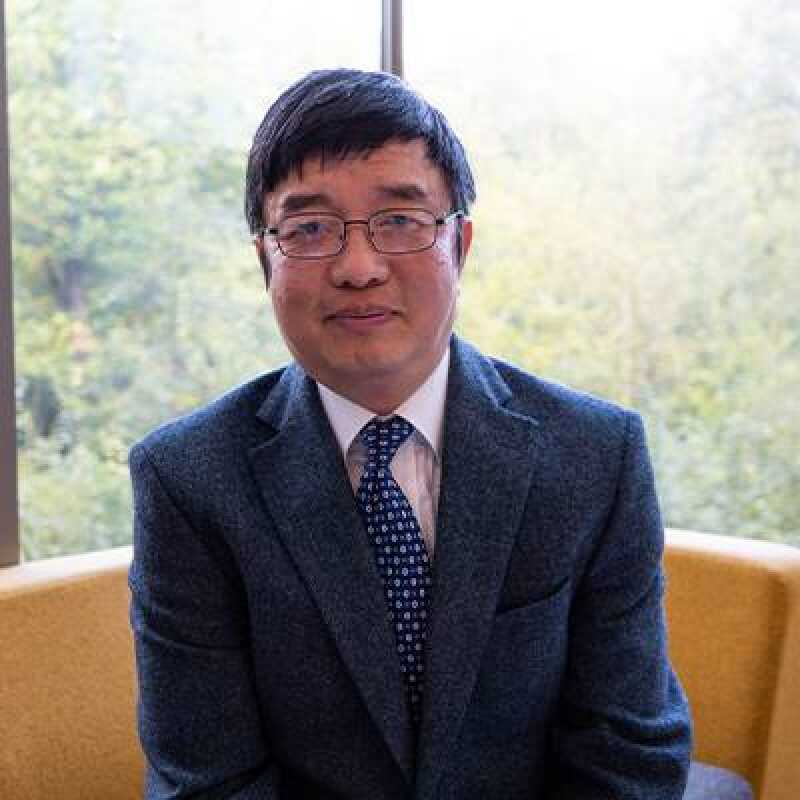
Alexandre Jacquillat is the Maurice F. Strong Career Development Associate Professor and Associate Professor of Operations Research and Statistics at MIT Sloan School of Management. His research focuses on data-driven decision-making with applications in air traffic management, urban mobility, and decarbonization. He holds a PhD in Engineering and MS degrees from MIT and École Polytechnique. Education PhD in Engineering, MIT MS in Technology and Policy, MIT MS in Applied Mathematics, École Polytechnique Research Interests His work develops scalable optimization models for efficient, equitable, and sustainable operations. Key areas include stochastic optimization, large-scale systems design, and machine learning applications in transportation and public policy. Recent projects explore vertiport planning for urban aerial mobility and prescriptive analytics for pandemic response. Awards Harold W. Kuhn Award (2024) INFORMS Harvey Greenberg Research Award (2023) MIT Jamieson Prize for Excellence in Teaching (2023) Multiple INFORMS Best Paper Awards (2015-2023) Named Leading Academic Data Leader by Chief Data Officer Magazine (2021-2022) Teaching & Grants Teaches courses in optimization (15.093, 15.083) and analytics (15.072). His grants support work in robotic warehousing, air traffic scheduling, and disaster response logistics. Advises on transportation analytics for industry and government. Labs/Teams Leads MIT Sloan's operations research group, collaborating with industry partners like McKinsey & Co. and Booz Allen Hamilton on transportation analytics and optimization projects.
Fatma Kılınç-Karzan is an Associate Professor of Operations Research at Carnegie Mellon University's Tepper School of Business, with a courtesy appointment as Associate Professor of Computer Science. She is also affiliated with the Algorithms Combinatorics and Optimization (ACO) PhD Program and was a Visiting Scientist at Berkeley's Simons Institute for the Theory of Computing during Fall 2017. Her educational background includes a PhD from Georgia Institute of Technology's H. Milton Stewart School of Industrial & Systems Engineering with a minor in Mathematics, supervised by Prof. Arkadi Nemirovski. She earned her B.S. and M.S. degrees from the Industrial Engineering Department of Middle East Technical University with a minor in Information Systems. Dr. Kılınç-Karzan's research spans mathematical optimization with emphasis on convex and non-convex optimization theory, algorithms, and applications. Her work bridges theoretical foundations with practical implementations in optimization under uncertainty (robust optimization, chance constraints, distributionally robust optimization), machine learning (preference learning from limited data), and business analytics. She develops foundational theory for large-scale optimization problems with applications in decision making under uncertainty and high-dimensional statistical inference. Analysis of her recent publications reveals a strong focus on convex hull characterizations, semidefinite programming relaxations, distributionally robust optimization, and online convex optimization frameworks. Her work demonstrates increasing integration of optimization theory with machine learning applications, particularly in developing data-driven approaches for decision making under uncertainty. NSF CAREER Award (2015) INFORMS Optimization Society Young Researcher Prize (2015) INFORMS Junior Faculty Interest Group (JFIG) Best Paper Award (2014) BP Junior Faculty Chair (2014-2015) Faculty Giving Chair (2012-2013) Wimmer Fellowship (2012-2013) Dr. Kılınç-Karzan has successfully mentored numerous PhD students who have received prestigious awards, including the 2021 INFORMS Optimization Society Best Student Paper (1st prize) and multiple honorable mentions. Her research has been supported by significant grants including an NSF CAREER Award, an ONR grant (with S. Küçükyavuz), and an AFOSR grant. She serves on editorial boards for Mathematical Programming, Operations Research, Mathematics of Operations Research, and other leading journals, and has held leadership positions in professional societies including the Mathematical Optimization Society and INFORMS Computing Society. Through her affiliations with CMU's Tepper School, Computer Science Department, and ACO Program, she collaborates across disciplines to advance optimization theory and its applications. Her professional service includes committee chair roles for major INFORMS competitions and program committee leadership for international optimization conferences.
Robert Wilson is an Associate Professor in the School of Psychology at Georgia Institute of Technology. His research focuses on computational cognitive neuroscience, reinforcement learning, decision making, and their applications in psychiatry and aging. Wilson leads a lab integrating computational modeling with behavioral experiments, neuroimaging, and neurostimulation to explore the algorithms underlying human cognition. He holds a Ph.D. in Bioengineering from the University of Pennsylvania (2009). Education: Ph.D. in Bioengineering, University of Pennsylvania, 2009 Research Interests: Wilson’s work spans computational models of decision making, reinforcement learning dynamics, and the neural mechanisms of explore-exploit trade-offs. His lab investigates phishing detection cognition, navigation strategies, and perceptual decision making, with recent studies on aging-related cognitive decline and psychiatric disorders. Publications: His recent work includes studies on computational models of exploration strategies, phishing susceptibility (PEST task), and aging effects on decision-making. Articles often bridge neuroscience and AI, such as applying reinforcement learning to large language models. Awards & Grants: While no formal awards are listed, his research has been supported by grants exploring computational psychiatry and neuroimaging. Labs & Teams: Wilson directs a multidisciplinary lab at Georgia Tech, collaborating with experts in AI, neuroscience, and clinical psychology to advance computational theories of the mind-brain relationship.
Allan Larsen is a Professor and Deputy Head of Division at the Department of Technology, Management and Economics (DTU Management) at the Technical University of Denmark. He heads the Operations and Supply Chain Management Section. His academic background includes an MSc in Applied Mathematics and a PhD in Operations Research, both from DTU. He teaches courses in Operations Management and Simulation at both undergraduate and graduate levels. Research Focus: His work applies operations research methodologies to complex planning problems in supply chain management, logistics, healthcare operations, and public transport. Key areas include urban freight transport, healthcare supply chains, and optimization of public transport resources like crew and fleets. Collaborations with industries, especially in freight transport, have been extensive. He previously co-directed the Transport DTU research center and co-chaired Denmark’s Transport Innovation Network. Education: MSc in Applied Mathematics (1989–1995), PhD in Operations Research (1997–1999), both from DTU. Recognition: Recipient of the Hedorf’s transportpris award in 2022 for contributions to transport research. Research Projects: Supervises multiple PhD students (e.g., on electric freight transport, healthcare resource optimization, and Industry 4.0 applications). Active in projects like 'Pioneering Electric Heavy-Duty Freight Transport' and 'Resource optimization in healthcare.' Labs/Teams: Leads the Operations and Supply Chain Management research group and collaborates in initiatives like the Transport Innovation Network, focusing on sustainable transport solutions.
Konstantinos Drakos is a Professor at the Department of Accounting and Finance, Athens University of Economics and Business (AUEB). Previously, he served as Assistant Professor at AUEB (2009–2012), Assistant Professor at the University of Patras (2003–2008), and Lecturer at the University of Essex (2001–2002). He holds a PhD in Economics from the University of Essex, preceded by an MSc and undergraduate studies in Economics at the University of Athens. His research focuses on Applied Financial Economics and the Economics of Security, with recent work analyzing hedge fund leverage, geopolitical risk impacts, cryptocurrency markets, and green banking. Teaching responsibilities include Macroeconomic Theory, Finance for Banking, and Risk Management at both undergraduate and postgraduate levels. Drakos' publications span over two decades, addressing topics such as terrorism's economic effects, bank lending behavior, and investment under uncertainty. His recent articles (2022–2025) emphasize cryptocurrency dynamics, geopolitical risk interactions, and financial stability in green banking. Notable themes include market volatility, capital allocation under uncertainty, and policy responses to systemic risks. No scientific awards are listed in the provided materials. His research has explored structural shifts in financial risk, macroeconomic sentiment, and cross-market linkages following major global events like 9/11 and the 2008 crisis. Drakos has advised on policy-related topics related to financial markets and regulatory frameworks, though specific grants or lab affiliations are not detailed here.
John P. O'Doherty serves as the Fletcher Jones Professor of Decision Neuroscience within Caltech's Division of Humanities and Social Sciences, holding continuous faculty appointments since 2004 (Assistant Professor 2004-07, Associate Professor 2007-09, Professor 2009-present, Fletcher Jones Professor 2021-present). He previously directed the Caltech Brain Imaging Center (2013-17) and maintains affiliations with the T&C Chen Center for Social and Decision Neuroscience. His educational background includes a B.A. from University of Dublin, Trinity College (1996) and D.Phil. from University of Oxford (2000). His research focuses on computational and neural mechanisms of reward-based learning and decision-making , employing fMRI, intracranial recordings, and mathematical modeling to investigate how the brain solves complex decision problems through evolutionarily conserved algorithms. Key areas include Reinforcement learning systems (model-based/model-free arbitration) Observational and social learning mechanisms Neural representation of value, risk, and uncertainty Computational phenotyping of mental disorders Temporal dynamics of goal persistence Analysis of his 2023-2025 publications reveals dominant trends in computational psychiatry (problem gambling, autism traits), hierarchical decision-making, and neuroeconomic modeling of social behavior. His work consistently integrates cross-species computational frameworks with human neuroimaging to identify transdiagnostic mechanisms. While specific awards beyond his endowed professorship aren't detailed, his leadership as Brain Imaging Center Director and prolific high-impact publications demonstrate significant recognition. Current advising includes graduate researcher Sneha Aenugu on goal-persistence projects, with administrative support from Mary A. Martin (mmartin@caltech.edu). His active research program continues to pioneer computational approaches to understanding decision pathologies.
Aaron D. Ames is the Bren Professor of Mechanical and Civil Engineering, Control and Dynamical Systems, and Aerospace at the California Institute of Technology (Caltech). He serves as the Booth-Kresa Leadership Chair and Director of the Center for Autonomous Systems and Technologies since 2025. His academic journey includes a BS in Mechanical Engineering and BA in Mathematics from the University of St. Thomas (2001), followed by an MA in Mathematics and a PhD in Electrical Engineering and Computer Sciences from UC Berkeley (2006). Research Interests span theoretical and experimental work in hybrid systems, nonlinear control, and bipedal robotic locomotion. Specific focus areas include: Control Barrier Functions (CBFs) for safety-critical systems Powered prostheses and robotic assistive devices Legged locomotion for bipedal and quadrupedal robots Cyber-physical systems and autonomous control Model predictive control and real-time optimization Humanoid robotics and geometric safety filters Recent publications emphasize risk-aware control, safety verification, and locomotion on constrained environments, with applications to drones, exoskeletons, and quadrupedal robots. His work often integrates theoretical advancements with practical validation through the AMBER Lab. Scientific Awards & Honors : NSF CAREER Award (2010) Donald P. Eckman Award (2015) Leon O. Chua Award (2005) Bernard Friedman Prize (2006) Teaching includes graduate courses on nonlinear control, hybrid systems, and robotics at Caltech, alongside prior roles at Georgia Tech and Texas A&M. He leads the AMBER Lab (Bipedal Robotics) and has secured major grants from the National Science Foundation, NASA, and industry partners like Miso Robotics and SRI International.
Margaret P. Chapman is an Assistant Professor in the Department of Electrical and Computer Engineering at the University of Toronto's Faculty of Applied Science and Engineering. She leads the DATA Lab (Decision Analysis for Trustworthy Autonomy), focusing on risk-averse and stochastic control theory with applications to environmental and human health. Education: B.S. and M.S. in Mechanical Engineering from Stanford University (2012, 2014), Ph.D. in Electrical Engineering and Computer Sciences from UC Berkeley (2020, advised by Claire Tomlin) Her research bridges robust and stochastic optimal control via risk measure theory, emphasizing safety-critical applications in healthcare and sustainable cities. Key challenges include scalable risk-sensitive control methods, integrating physics-based and data-driven models for safety analysis, and promoting technologies that enhance planetary and human well-being. Recent publications focus on risk-averse autonomous systems, CVaR-based safety analysis, and multi-time-scale modeling for cancer treatment. She has advised students in both graduate and undergraduate research roles, including NSERC awardees and thesis participants. Awards: US National Science Foundation Graduate Research Fellowship, Berkeley Fellowship, Terman Engineering Scholastic Award, Leon O. Chua Award She teaches courses like ECE 557 (Linear Control Theory) and ECE 1643 (Risk-Averse Control with Learning). Her invited talks span institutions such as MIT, Princeton, and Georgia Tech, highlighting risk-sensitive analysis and control for trustworthy autonomy.
Roles and Affiliations: Tien Foo Sing is the Provost's Chair Professor in the Department of Real Estate at the NUS Business School, National University of Singapore. He serves on the Management Board of the Institute of Real Estate and Urban Studies (IREUS) and was its former Director (2017–2022). He has held leadership roles including Head of the Department of Real Estate (2020–2022) and past President of the Asian Real Estate Society (AsRES). He is a CLC Fellow (2024–2026), Fellow of AsRES, and a Fellow of the Weimer School of Advanced Studies. He edits the International Real Estate Review and serves on editorial boards of journals like Real Estate Economics and Journal of Real Estate Finance and Economics. Education: PhD (Land Economy) and MPhil (Land Economy) from the University of Cambridge, UK; BSc (Estate Management) from NUS. Research Interests: Focuses on urban planning, real estate economics, housing markets, climate finance, transport economics, and environmental policy. His work bridges theory and policy, addressing issues like urban resilience, intergenerational mobility, and environmental externalities. Recent studies include impacts of sea level rise on housing prices, ESG-REIT linkages, and PropTech adoption. Awards: Recognized with the Outstanding Referee Award (2017) for Real Estate Economics, Fellowships from AsRES and the Weimer School, and book awards for his 'Kiasunomics' series. Professional Activities: Serves on government boards (e.g., Valuation Review Board, Singapore Chapter of APREA) and advises organizations like the PropTech Association of Singapore. His work influences policy on housing, transportation, and sustainable development. Labs/Teams: Leads research initiatives through IREUS and collaborates with institutions like the Sustainable & Green Finance Institute (SGFIN). His projects often involve large-scale data analysis (e.g., smart card transit data, housing transactions).
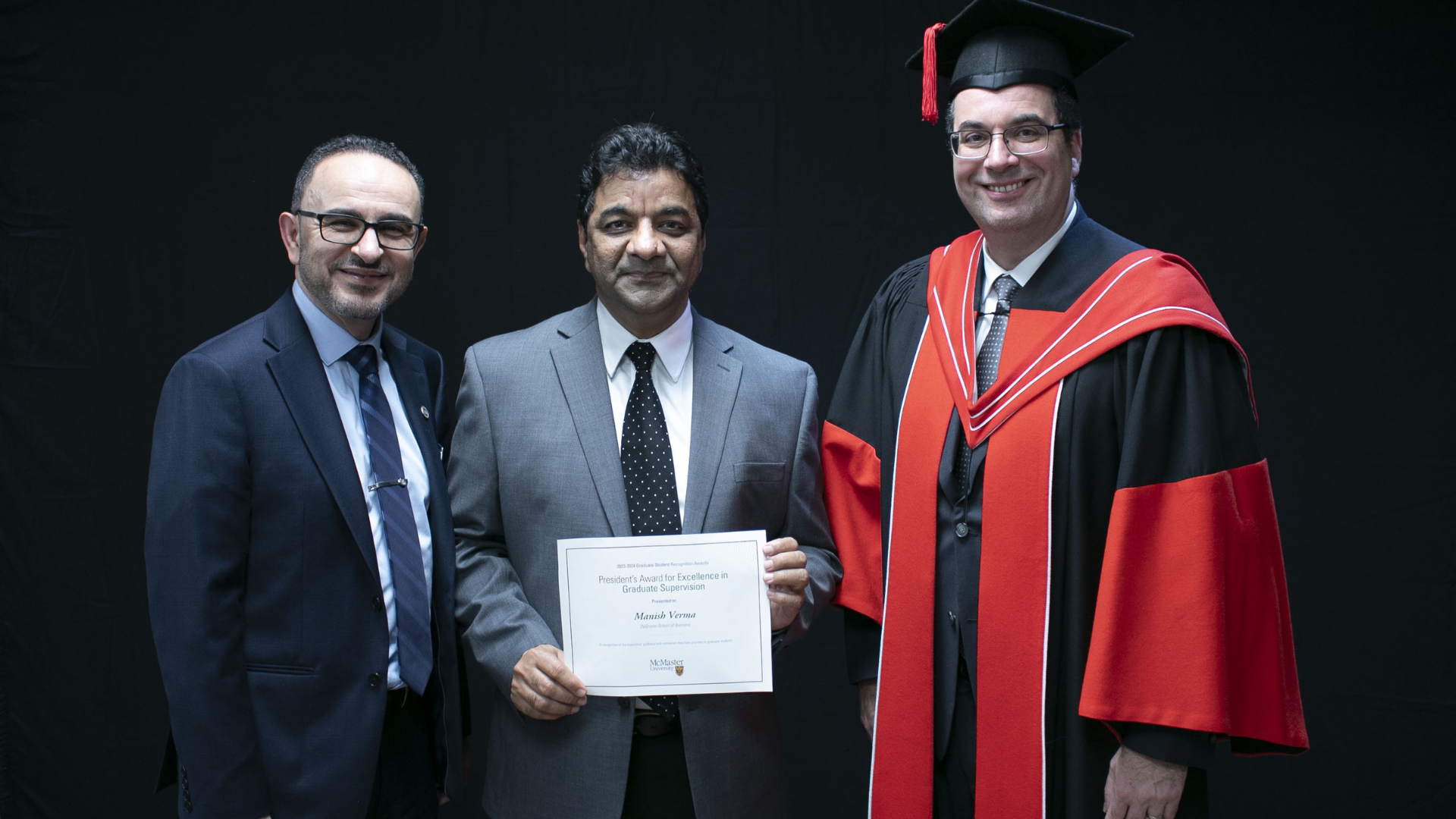
Manish Verma is Professor of Operations Management and Associate Dean, Graduate Studies at the DeGroote School of Business, McMaster University. His academic journey began with an MBA and PhD in Business Administration with Operations Management/Management Science specialization from Desautels Faculty of Management at McGill University. Dr. Verma's research focuses on multimodal transportation of dangerous goods, risk assessment, network design and planning in transportation, humanitarian logistics, green supply chain management, and disruption/resilience in transportation systems. His current research engagements center on safety and security issues in freight transportation and humanitarian logistics, funded by NSERC and SSHRC grants. He has been frequently approached by media to comment on railroad accidents involving dangerous goods. An analysis of his recent publications reveals a strong emphasis on hazardous materials transportation risk management, with significant contributions to rail-truck intermodal systems, hazmat risk modeling using value-at-risk methodologies, and emergency response planning for transportation networks. His work bridges theoretical operations research with practical transportation safety applications. $245K research grant for rail safety research from Government of Canada As an educator, Dr. Verma has taught courses including Predictive Analytics for Managers, Network Design Issues in Freight Transportation, and Management Science Research Issues. His scholarly impact is evidenced by publications in leading journals such as Transportation Research Part E, European Journal of Operational Research, and Safety Science. He actively contributes to real-world transportation safety through media commentary and research that informs policy decisions regarding dangerous goods transportation.
Michael U. Gutmann is a Senior Lecturer in Machine Learning at the School of Informatics, University of Edinburgh, and a member of the Institute for Adaptive and Neural Computation. His research lies at the intersection of machine learning, statistics, and scientific applications, with a focus on developing inference methods for complex and implicit models. Education: PhD in Computational Neuroscience, University of Tokyo MSc in Engineering and Applied Mathematics, Swiss Federal Institute of Technology (ETH) Zurich MSc, Ecole Centrale Paris His primary research interests include Bayesian inference, likelihood-free inference, optimal experimental design, unsupervised learning, and applications in computational biology and neuroscience. He is best known for introducing Noise-Contrastive Estimation (NCE), a foundational technique for training unnormalized statistical models. His recent work spans variational inference, density ratio estimation, flow models for missing data, and AI-driven experimental design in behavioral and biological sciences. His publications, including in NeurIPS , ICML , JMLR , and eLife , demonstrate a strong emphasis on methodological innovation for scientific discovery. He has contributed to open-source tools such as ELFI (Engine for Likelihood-Free Inference) and developed practical implementations of robust inference algorithms. Scientific Awards: No specific awards listed in the provided texts. Michael Gutmann actively supervises students and collaborates with leading researchers in machine learning and computational biology. He has secured research funding from EPSRC and BBSRC for projects in generative modeling and infectious disease epidemiology. He teaches advanced courses such as Probabilistic Modelling and Reasoning and Data Mining, reflecting his deep engagement with both theoretical and applied aspects of machine learning. Labs and Research Groups: Institute for Adaptive and Neural Computation (ANC), University of Edinburgh Former affiliations with Department of Mathematics and Statistics and Department of Computer Science at the University of Helsinki and Aalto University
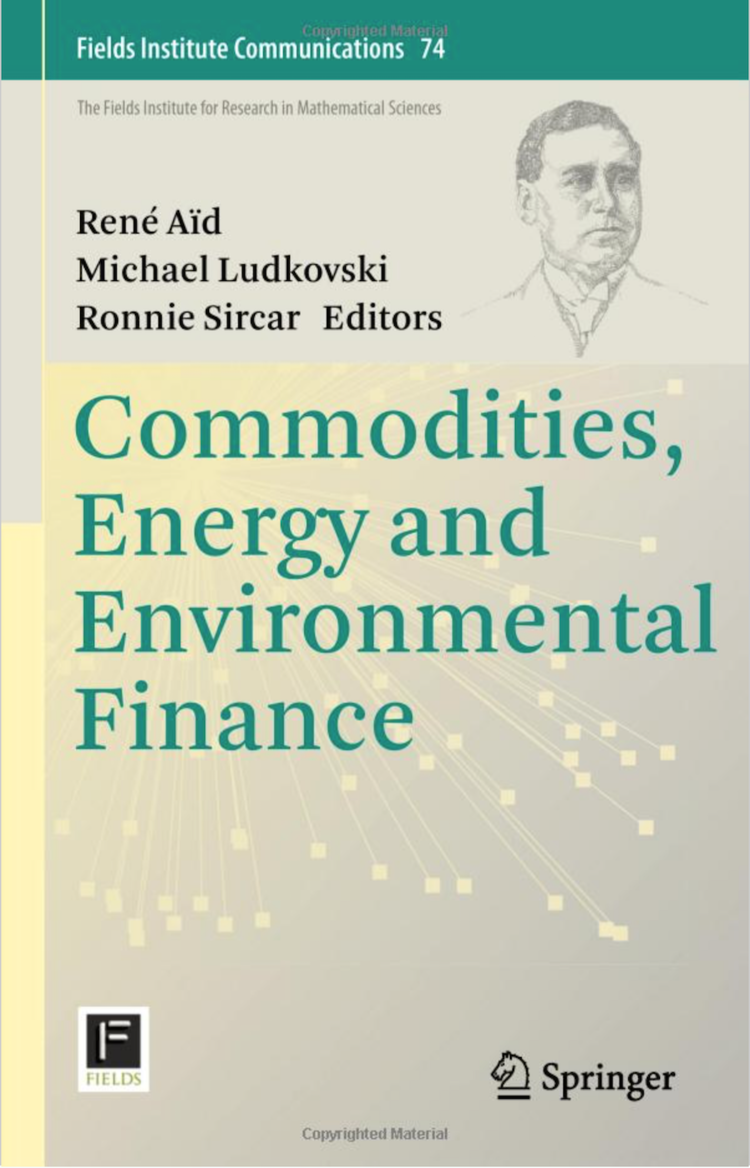
Ronnie Sircar is the Eugene Higgins Professor of Operations Research and Financial Engineering at Princeton University , where he contributes to the Department of Operations Research and Financial Engineering (ORFE). His work spans financial mathematics, stochastic modeling, and applied probability, with a focus on market volatility, optimal investment strategies, and dynamic game theory. Email: sircar@princeton.edu Office: Sherrerd Hall, Room 208, Princeton, NJ 08544 His research interests include: Stochastic Volatility: Asymptotic analysis, calibration, and impact on option pricing and portfolio optimization. Mean Field Games: Applications to cryptocurrency mining, energy markets, and interbank network formation. Portfolio Theory: Forward performance processes, drawdown constraints, and risk-averse strategies. Credit Risk: Multi-name credit derivatives, CDO valuation, and risk measures. Energy Systems: Renewable reliability, unit commitment, and electricity market design. Recent publications emphasize mean field games in energy and blockchain, stochastic volatility in portfolio optimization, and machine learning applications for financial engineering. He has advised graduate students such as Giulia Crippa, Nicolas Garcia, and Burak Aydin, often collaborating with researchers including M. Soner, P. Chan, and A.M. Reppen.
Professor Shaomin Wu is a faculty member at the University of Kent's Kent Business School, where he holds the academic rank of Professor of Business/Applied Statistics. He earned an MSc and PhD in applied statistics and has extensive industry experience, including a five-and-a-half-year stint at a global manufacturer in Shanghai before moving to the UK in 2001. He has held roles as a postdoctoral researcher and lecturer before joining Cranfield University and later the University of Kent. His research focuses on recurrent event data analysis, machine learning, and reliability mathematics, with funding from the EPSRC and ESRC. His research projects include managing risk in warranty servicing policies, smart data analytics for local government, and sustainable supply chain demand forecasting. He teaches modules such as risk analysis, reliability engineering, and machine learning. Currently supervising PhD students in time series forecasting, explainable AI, and recurrent event data analysis, he also serves as a co-chair of international conferences, editorial board member, and external examiner for doctoral degrees. Notably, he ranks among the top 2% of global scientists by Stanford University. His work integrates machine learning with business analytics, resilience engineering, and environmental sustainability. Key contributions include IoT-driven resilience methodologies for smart grids and unmanned systems, as well as frameworks for corporate carbon disclosure and maintenance optimization under uncertainty.
Hamsa Bastani is an Associate Professor of Operations, Information and Decisions at the Wharton School, University of Pennsylvania, with a secondary appointment in Statistics and Data Science. She co-directs the Wharton Healthcare Analytics Lab and serves as an Associate Editor for Operations Research, M&SOM and OR Letters. Her academic journey began with summa cum laude graduation from Harvard in 2012 with an A.M. in physics and A.B. in physics and mathematics. She completed her PhD in Stanford's Electrical Engineering department under Mohsen Bayati, followed by a Herman Goldstine postdoctoral fellowship at IBM Research. Professor Bastani's research focuses on developing novel machine learning algorithms for data-driven decision-making, with applications spanning healthcare operations, social good, and revenue management. Her work demonstrates particular expertise in sequential decision-making (bandits, reinforcement learning), learning from auxiliary data sources (transfer learning, meta-learning), and designing effective human-AI interfaces (interpretability, fairness). She has made significant contributions to understanding how AI systems affect and augment human behavior, with the goal of designing AI tools that help humans thrive. Her publications reveal a strong trend toward high-impact applications of machine learning in critical societal domains. A significant portion of her recent work focuses on healthcare applications, including optimizing health supply chains in low- and middle-income countries, designing clinical trial protocols, and creating targeted public health interventions. Another major theme examines the complex relationship between humans and AI systems, particularly how AI affects learning outcomes and decision-making processes. Her work frequently bridges theoretical advances with practical implementation, as evidenced by country-scale deployments in Greece and Sierra Leone. Wagner Prize for Excellence in Operations Research Practice (2021) Pierskalla Award for Best Paper in Healthcare (2021, 2019, 2016) Behavioral OM Best Paper Award (2021) Public Sector in OR Best Paper Award (2024) INFORMS Data Mining Best Paper Award (2022) Wharton Teaching Excellence Award (2019, 2020, 2021) Professor Bastani has advised numerous PhD students who have gone on to prominent positions, including Pia Ramchandani (Director of Responsible AI at PwC), Arielle Anderer (Assistant Professor at Cornell Johnson), and Kan Xu (Assistant Professor at ASU Carey). Her research has been supported by collaborations with national governments, including the Greek government where she co-designed Eva, the national-scale reinforcement learning system for targeted COVID-19 testing, and the Government of Sierra Leone where she improved patient access to essential medicines by nearly 20% via decision-aware learning. She has also conducted the first large field study deploying generative AI tutors in high school math classes. She leads the Wharton Healthcare Analytics Lab and serves on the Steering Committee for the Penn Center for Health Incentives and Behavioral Economics and on the statistics advisory committee for the AHA Food is Medicine Initiative. Outside academia, she serves on the Workday AI Advisory Board, demonstrating her commitment to translating academic research into practical applications.
Associate Professor Sam Kirshner is a faculty member at the University of New South Wales within the School of Information Systems and Technology Management . His research focuses on behavioral decision making , algorithmic impact on operations , and artificial intelligence applications in business contexts. PhD in Management Science from Queen’s University, Canada Teaching expertise in data visualization, predictive analytics, and AI ethics Co-author of Business Analytics: A Management Approach Member of the Ethical AI Advisory His research explores how psychological distance and construal level theory influence decisions in supply chains, technology management, and consumer behavior. Recent work examines ChatGPT's decision biases , algorithm aversion , and sustainable operations under financial constraints. Key publication trends show focus areas: AI ethics and human-AI collaboration Behavioral supply chain analysis Temporal/spatial psychological distance effects CO2 forecasting with sparse data Consumer behavior in digital platforms Virtual reality and cognitive processing Supervision roles include mentoring 2 PhD students and 6 honors students, contributing to the next generation of scholars in business analytics and technology management.