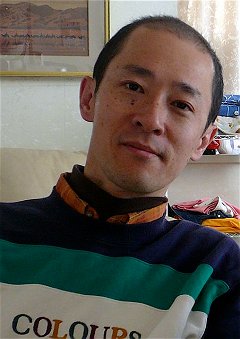
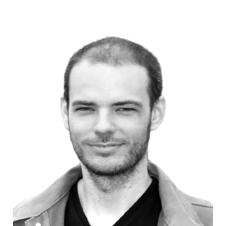
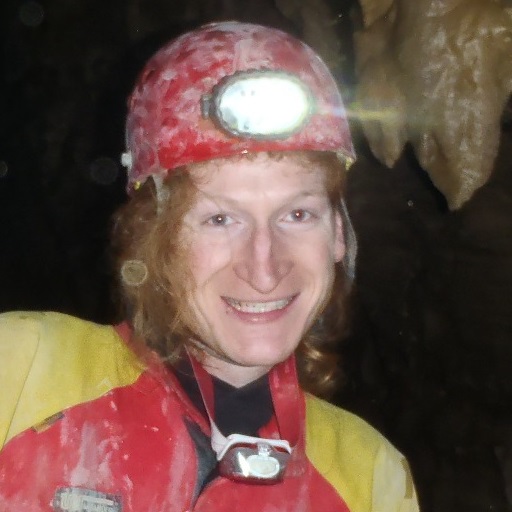
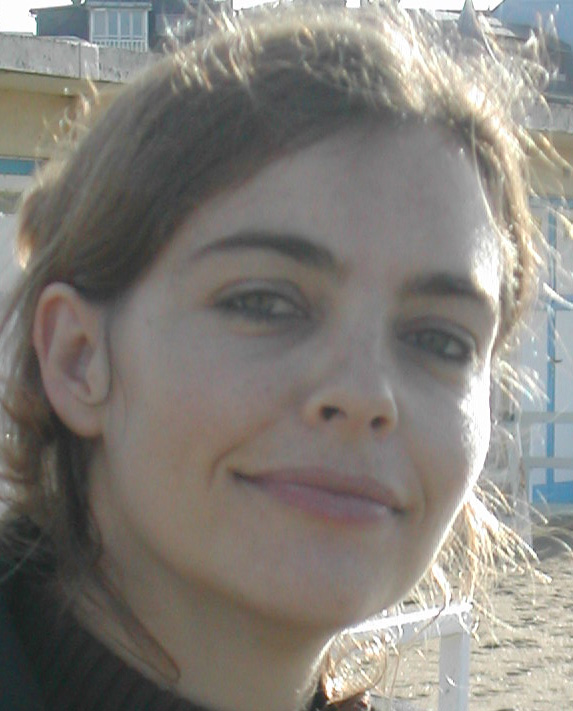
Kenichi Asai is a Professor in the Department of Information Science, Faculty of Science at Ochanomizu University . His research focuses on functional programming languages, type systems, and program analysis tools. Research Interests: Partial evaluation, continuations, reflection, type debugging, and algebraic effects. Projects: Developed the OCaml Type Debugger to improve error messages through interactive debugging. Conference Involvement: Active in PEPM, ICFP, and ML workshops as author, session chair, and committee member. The articles analyzed show expertise in type theory , continuation handling , and functional language design across OCaml and its extensions. Keywords include type debugging , metaOCaml , and algebraic effects . Scientific Awards: Peter Landin Prize (2013) for "An Embedded Type Debugger" Students: Collaborated with Yuki Ishii and Kanae Tsushima on type systems and functional programming education.
Mr. Nicolas THIBAULT is a Lecturer in Computer Science at Paris-Panthéon-Assas University, affiliated with the Center for Research in Economics and Law (CRED). His academic career combines teaching and research in theoretical computer science, with a focus on algorithms and network optimization. His research interests include: Algorithms (particularly randomized and truthful scheduling) Dynamic graph maintenance and incremental/decremental tree problems Online computation and bicriteria optimization Network interconnection and parallel machine scheduling Recent publications highlight his work on: Truthful mechanisms for weighted completion times Disturbance minimization in connection trees Hardness results for multi-group interconnection Competitive analysis of online scheduling Optimal rebuilding strategies for dynamic trees Scientific awards include the Best Young Researcher Article at AlgoTel 2006 for his work on connection tree updates. He co-heads the Professional License program in Organizational Management, specializing in Network and Information Systems Management.
Emmanuel Cledat is an Associate Professor of photogrammetry at the National Institute of Geographic and Forest Information (IGN) and lecturer at the ENSG (National School of Geographic Sciences), where he teaches courses in sensor technology, mathematics for photogrammetry, and applied photogrammetry. As a member of the UMR Lastig research unit and ACTE research team, he conducts interdisciplinary work spanning photogrammetry, geomatics, and transportation safety. His research interests focus on photogrammetry , sensor calibration , and measurement of risks faced by cyclists . Dr. Cledat specializes in macro-photogrammetry of small objects, drone-based mapping systems, and GNSS-denied environment navigation. His methodological expertise includes camera calibration models, 3D reconstruction, and fusion of photogrammetric and LiDAR data. Dr. Cledat's publication record demonstrates consistent contributions to photogrammetry and geospatial sciences since 2016, with recent work exploring AI applications in geomatics and historical bridge modeling. His research shows a clear trajectory from foundational work on drone photogrammetry calibration to more applied projects addressing transportation safety and cultural heritage preservation. ISPRS Best Young Author Award 2020 As principal investigator, Dr. Cledat leads the CycloSafe project which quantifies cycling risks using LIDAR-equipped bicycles, and the EntrePonts project focused on 3D modeling of historical bridge models from the 17th-19th centuries. His teaching portfolio spans undergraduate and graduate courses in photogrammetry fundamentals, underwater photogrammetry, and climate change workshops. His laboratory work centers around the UMR Lastig research unit, with projects involving drone mapping systems, 3D TOF camera calibration, and photogrammetric fieldwork methodologies for both small objects and large-scale environmental mapping.
Bénédicte Fruneau is an Associate Professor at Université Gustave Eiffel and a member of the ACTE research team within LASTIG (Laboratory of Studies and Research in Geomatics). She serves as co-coordinator of the Master 2 Geographical Information, Spatial Analysis and Remote Sensing program. Her expertise lies in radar interferometry for ground deformation monitoring and seismic cycle studies. Research Interests : DInSAR and MTInSAR techniques Seismic cycle deformation analysis Urban and suburban displacement monitoring Residual mining subsidence characterization Publications focus on satellite radar interferometry applications for glacier monitoring , forest phenology , anthropogenic deformation , and post-mining subsidence . Her work spans geophysics, remote sensing, and geotechnical risk assessment across France, Taiwan, Mexico, and India. Education : Habilitation (HDR) in Radar Interferometry, Université Paris-Est (2011) PhD in Geophysics, Université Paris 7 (1995) MSc in Signal/Image/Parole, Grenoble INP (1991) Electrical Engineering degree, Grenoble INP (1991)
Azelle Courtial is a Researcher at Institut Géographique National (IGN) , specializing in deep learning applications for cartographic generalization within the MEIG research team (Modélisation des Environnements Inhabités et Généralisation). Her work focuses on multi-scale mapping automation and spatial data representations , with recent contributions in GAN-based mountain road generalization and deep learning benchmark development . Education: PhD in Geographic Information Sciences (Université Paris-Est, 2023), Master's in GIS (2019), Licence in Math & Informatics (2017) Projects: ERC Consolidator Grant recipient (2021-2026) Software: Developer of CartAGen4Py and DeepMapGen libraries Her publications demonstrate a research trajectory combining deep learning for map generalization multi-scale cartography principles constraint-based evaluation frameworks spatial relation modeling in GIS Scientific recognition includes: Best short paper award at AGILE Conference 2022 Teaching contributions span spatial databases , webmapping , and GIS programming , with responsibilities in course material development and student project supervision.
Olivier Gauwin serves as an Assistant Professor at the University of Bordeaux, holding dual roles in academic instruction and research. He teaches within the Computer Science Department at the University Institute of Technology (IUT), while conducting research as a core member of LaBRI's Numeric and Sustainability team. His institutional presence spans both the IUT campus in Gradignan (office 111) and LaBRI's research facilities in Talence (office 311), reflecting his integrated contributions to theoretical computer science and applied sustainability initiatives. His educational trajectory demonstrates deep theoretical foundations: Habilitation à diriger des recherches (HDR) from University of Bordeaux (2020) titled Transductions: resources and characterization PhD in Computer Science from Université Lille 1 (2009) titled Streaming Tree Automata and XPath , conducted at LIFL/INRIA Master's degree (DEA) from Centre de Recherche en Informatique de Lens (2004) titled Fusion itérée de croyances Gauwin's research program bridges abstract theory and practical applications, with early work establishing fundamental results in automata theory for XML stream processing. His investigations into visibly pushdown automata, nested words, and transducers created novel frameworks for efficient query answering in data streams. Recent years show strategic expansion into sustainability, where he adapts formal methods to environmental modeling challenges. This evolution maintains rigorous theoretical grounding while addressing contemporary computational sustainability needs through the Numeric and Sustainability team. Analysis of his 15 most recent publications reveals consistent methodological excellence across theoretical computer science. Core themes include automata minimization (notably proving NP-completeness for visibly pushdown automata), logical characterizations of transductions, and streamability analysis for nested structures. His work demonstrates exceptional coherence—advancing from foundational XML processing (2008-2013) to resource-optimized transducers (2015-2018) and current sustainability applications, always maintaining focus on computational efficiency and formal verifiability. Dr. Gauwin actively mentors the next generation of computer scientists: Supervised PhD completion of Nathan Lhote (2015-2018) on logical characterizations of transductions Guided PhD research of Félix Baschenis (2014-2017) on transducer minimization and resource optimization His research is institutionally supported through LaBRI (UMR 5800), a joint CNRS-University of Bordeaux laboratory, though specific external grants aren't detailed in available materials. Current work continues through the Numeric and Sustainability team, where he integrates automata theory with environmental computation challenges in collaborative projects spanning theoretical innovation and real-world sustainability applications.
Florent Castagnino is a researcher at IMT Atlantique's Interdisciplinary Department of Social Sciences (DI2S), with affiliations to the Laboratoire d'économie et de management de Nantes Atlantique (LEMNA) and Lab-STICC. His work bridges sociology, political science, and technology studies, focusing on surveillance practices in railway and urban contexts. Research Themes : Surveillance rationalization, AI's role in urban security, risk management, data bias detection, and the social implications of predictive policing. Key Publications : He critiques surveillance societies (2018), analyzes railway safety-security dynamics (2023), explores AI's future in security (2024), and examines predictive policing challenges (2024). Awards : Recipient of the Prix du jeune auteur 2015 for railway database research. Collaborations : Works with institutions like LATTS, LEMNA, and Lab-STICC, contributing to interdisciplinary projects on data-driven security and crisis management.
Jérome Gallo serves as an Associate Professor in the Department of Economics and Social Sciences at Burgundy School of Business (BSB), where he is affiliated with the Wine & Spirit Business disciplinary team and contributes to the Wine & Spirits research axis. His academic work bridges economic theory with practical applications in the global wine industry, focusing on business strategy, international trade dynamics, and market analysis within specialized sectors. His research spans Wine Business , Wine Economics , and International Business , with particular emphasis on luxury wine markets, Chinese export strategies, and digital transformation in wine distribution. Gallo also investigates Alcohol Consumption Trends during economic crises and integrates Sustainable Development principles into viticulture economics, reflecting his dual expertise in traditional economic frameworks and contemporary industry challenges. His methodological approach combines quantitative trade analysis with qualitative market assessments, as evidenced by his work on clustering algorithms for Mediterranean trade flows. Analysis of Gallo's publication history reveals a consistent trajectory from foundational economic theory toward specialized wine industry applications. Early works on microcredit and Mediterranean trade evolved into targeted research on wine pricing strategies, e-commerce adaptation, and sustainability frameworks. His output demonstrates strong industry engagement through press contributions in Le Figaro and The Conversation , alongside academic publications in peer-reviewed journals and edited volumes. This blend of scholarly rigor and practical relevance positions him as a key contributor to wine business education and policy discourse. Gallo maintains active industry partnerships, notably through his coordination of the Wine Business Management textbook series and contributions to professional media outlets. His work with organizations like Réussir Vigne and France 3 highlights his role as a bridge between academic research and real-world wine sector challenges, particularly in emerging markets and crisis response scenarios.
HLEISS Rima is a Teaching Researcher at CESI, specializing in Digital Engineering and Tools . Her work bridges Industry 4.0 , Artificial Intelligence , and Telecommunications . MSc in Signal, Image, and Speech (Telecom ParisTech, 2004) Engineering Degree in Computer Networks and Telecommunications (ENPG, 2001) BSc in Computer Engineering (Lebanese University, 2000) Her research focuses on Industry 4.0 , Additive Manufacturing , and Data Modeling , with applications in IoT , Cloud Computing , and Biomedical Engineering . Recent publications emphasize neuroimaging and machine learning integration. Publications span OFDM modulation , signal processing , and Industry 4.0 challenges, reflecting a multidisciplinary approach. Key collaborations include LINEACT and ENSAM institutions.
Ahmed Nait Chabane is a Professor and teacher-researcher at CESI Engineering School in Saint-Nazaire, France, where he serves as the educational manager of the first year of the integrated preparatory cycle. His academic home is within the School of Engineering, specifically focusing on Electronics and Signal Processing. Education: Doctor of Signal and Image Processing from UBO Brest / ENSTA Bretagne (2013), Thesis: "Grazing-invariant segmentation of side-scan sonar images using a competitive neural approach" Specialized Master's degree in Image Processing and Geographic Information Systems from USTHB University, Algiers, and Télécom Bretagne (2009) Electronics Engineer from University of Bejaia (2007) Professor Nait Chabane's research spans multiple domains including acoustic signal and image processing, machine learning algorithms, decision systems, and Industry 4.0/5.0 applications. His early work (2010-2015) focused on acoustic signal processing and classification algorithms, while his current research (2017-present) emphasizes decision algorithms, heterogeneous data analysis, knowledge extraction, and human-robot collaboration systems. His work bridges theoretical research with industrial applications, particularly in aerospace and manufacturing sectors. His publication record shows a clear evolution from sonar image processing toward broader applications of machine learning in industrial settings, with recent work heavily focused on human-robot collaboration, Industry 4.0 applications, and optimization algorithms for manufacturing processes. The research demonstrates increasing interdisciplinary collaboration with industry partners through CIFRE theses. Professor Nait Chabane actively supervises multiple PhD students through CIFRE partnerships with industry, including Guillaume Morin-Duponchelle (completed), Pierre Hemono, and Houssein Olleik (ongoing). His teaching portfolio includes Electronics, Electricity, Signal and Image Processing, Artificial Learning, Statistics, and Operational Research. His Engineering and Digital Tools Research Team focuses on practical applications of advanced algorithms in industrial contexts, with particular emphasis on solving real-world constraints in confined environments, resource optimization, and human-robot interaction challenges.
Dr. Yi-Ping Fang serves as an Assistant Professor at the EDF Chair SSEC with a joint appointment at the Industrial Engineering Laboratory, CentraleSupélec, Université Paris-Saclay, France. His research focuses on developing computational methodologies for risk, vulnerability, and resilience analysis of critical infrastructure systems including smart grids, electrified transportation networks, and interdependent lifeline systems. His core research interests encompass: Risk Analysis Resilience Engineering Reliability Engineering Optimization under Uncertainty Decision Making under Uncertainty Critical Infrastructure Systems Smart Grids Interdependent Systems Dr. Fang's recent publications reveal a concentrated research trajectory applying distributionally robust optimization, stochastic programming, and game theory to infrastructure resilience challenges. His work demonstrates particular expertise in microgrid hardening, distribution network restoration, and maintenance optimization under uncertainty, with significant contributions to modeling supply-demand fluctuations, random contingencies, and climate change impacts. Key application domains include energy systems (microgrids, wind farms), transportation networks (electric vehicle integration), and communication infrastructures. Scientific Awards: No scientific awards documented in the provided materials Dr. Fang actively advises students in risk/resilience analysis and optimization methodologies, though specific advisee names are not listed. His research program involves substantial collaboration with industry partners like EDF and academic colleagues including Anne Barros and Henry Uncle, focusing on practical implementations of resilience frameworks for critical infrastructure protection. Current projects emphasize prescriptive analytics for infrastructure networks, maintenance optimization under imperfect monitoring, and game-theoretic approaches to interdependent system vulnerabilities. He operates within the Industrial Engineering Laboratory at CentraleSupélec, which serves as the primary research hub for his work on computational methods in industrial engineering contexts, particularly for complex infrastructure systems requiring advanced decision-making frameworks under uncertainty.
Cyril Allignol is a Lecturer and Researcher in the OPTIM team at the National School of Civil Aviation (ENAC) research laboratory. His work focuses on two primary themes: (1) solving combinatorial optimization problems related to air traffic and airport operations using constraint programming , and (2) formalizing reactive languages to ensure guaranteed properties for air traffic control and piloting assistance tools. PhD in Computer Science and Telecommunications (2011) from the University of Toulouse ENAC Engineer (2006) Master's in Computer Science and Telecommunications (2006) from the University of Toulouse His research spans air traffic conflict resolution , detect-and-avoid algorithms for UAVs/UAS , and formal methods in reactive language compilation . He has contributed to constraint programming frameworks, robust gate allocation models, and 3D trajectory deconfliction systems. His work integrates metaheuristics , geometrical algorithms , and formal verification techniques. Publications reveal expertise in mathematical optimization , UAS integration , and bigraph-based modeling for avionics systems. He collaborates with institutions across France, Italy, Georgia, and the United States through conferences like ICRAT , ATM Seminar , and ROADEF . His team affiliation ( OPTIM ) and technical focus on conflict resolution , self-separation , and navigation accuracy highlight his contributions to air traffic safety and efficiency . Current projects include 4D-trajectory deconfliction and formal methods for avionics software .
OKONGWU Uche is a Professor at the Toulouse Business School within the Department of Information, Operations and Decision Sciences . His academic work focuses on the intersection of supply chain management, decision science, and operational optimization, with a particular emphasis on sustainability and responsiveness in complex systems. Supply Chain Management Operations Research Decision Support Systems Humanitarian Logistics Genetic Algorithms Order Fulfillment His research explores advanced methodologies like heuristic-based genetic algorithms for multi-project scheduling, robust humanitarian facility location models, and sustainable supply chain planning frameworks. He has contributed to empirical studies on how supply chain practices impact organizational performance and tactical planning determinants. Recent publications highlight trends in humanitarian logistics , emergency response systems , and supply chain sustainability . His work includes tools for optimizing order fulfillment in stock-out situations and improving the maturity of sustainability disclosures in supply chains. For detailed publications, refer to the articles section. Contact: u.okongwu@tbs-education.fr .
Patricia Desgreys is a full professor at Institut Polytechnique de Paris , where she leads the Communication Circuits and Systems (C2S) research team within the Laboratory of Information Processing and Communication (LTCI) . Her work spans analog and mixed-signal (AMS) circuit design, cognitive radio systems, and digitally enhanced mixed-signal architectures for IoT and cyber-physical systems. Agrégation in Applied Physics, École Normale Supérieure de Cachan M.Sc. and Ph.D. in Microelectronics, University of Bordeaux (1995-1999) Her research focuses on AMS circuit design from transistor to architectural levels, including software-defined radio , cognitive radio , and neural-inspired analog-to-feature converters . She has contributed to digital predistortion techniques for power amplifiers, compressive sampling for astrophysical signals, and leadless pacemaker communication channels . Her 150+ publications highlight advancements in wireless systems, biomedical sensors, and 5G infrastructure. Recent work (2024) explores AI-driven analog design and 75 years of circuits innovation in IEEE Transactions. She has graduated 16 PhD students and co-authored the book Digitally Enhanced Mixed Signal Systems (IET, 2019). Her leadership includes Technical Program Chair roles at IEEE PRIME (2019), ICECS (2016), and NEWCAS (2012-2013), plus editorial work for IEEE TCAS-II special issues (2018-2019). She directs the ICS Master’s program (Institut Polytechnique de Paris/Paris-Saclay University) and teaches advanced electronics at SJTU-ParisTech in Shanghai . Her patents include signal sampling circuits and power amplifier linearization techniques.
Louis Jachiet is an Assistant Professor in Computer Science at Télécom Paris, affiliated with the Data, Intelligence and Graphs (DIG) team within the Information Processing and Communication Laboratory (LTCI) and the Computer Sciences and Networks (Infres) department. His research focuses on algorithms, databases, programming languages, and logic. His work spans query optimization distributed SPARQL evaluation graph algorithms formal language theory program synthesis data provenance with a strong emphasis on bridging theoretical and applied research. Analysis of his publications reveals expertise in database systems graph processing automata theory query enumeration SPARQL optimization probabilistic databases across both theoretical and practical applications.