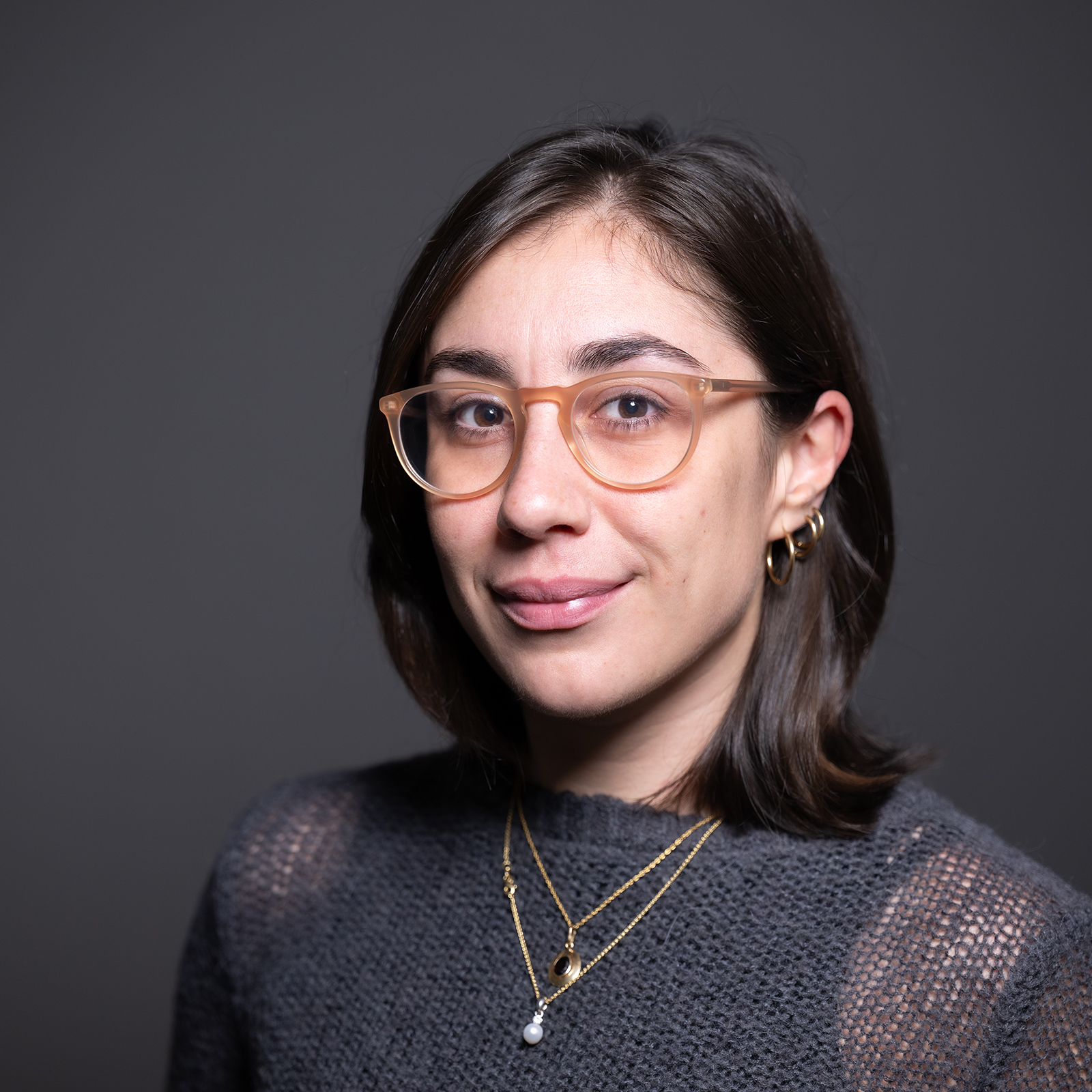
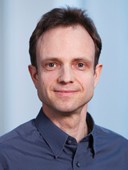

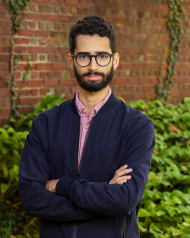
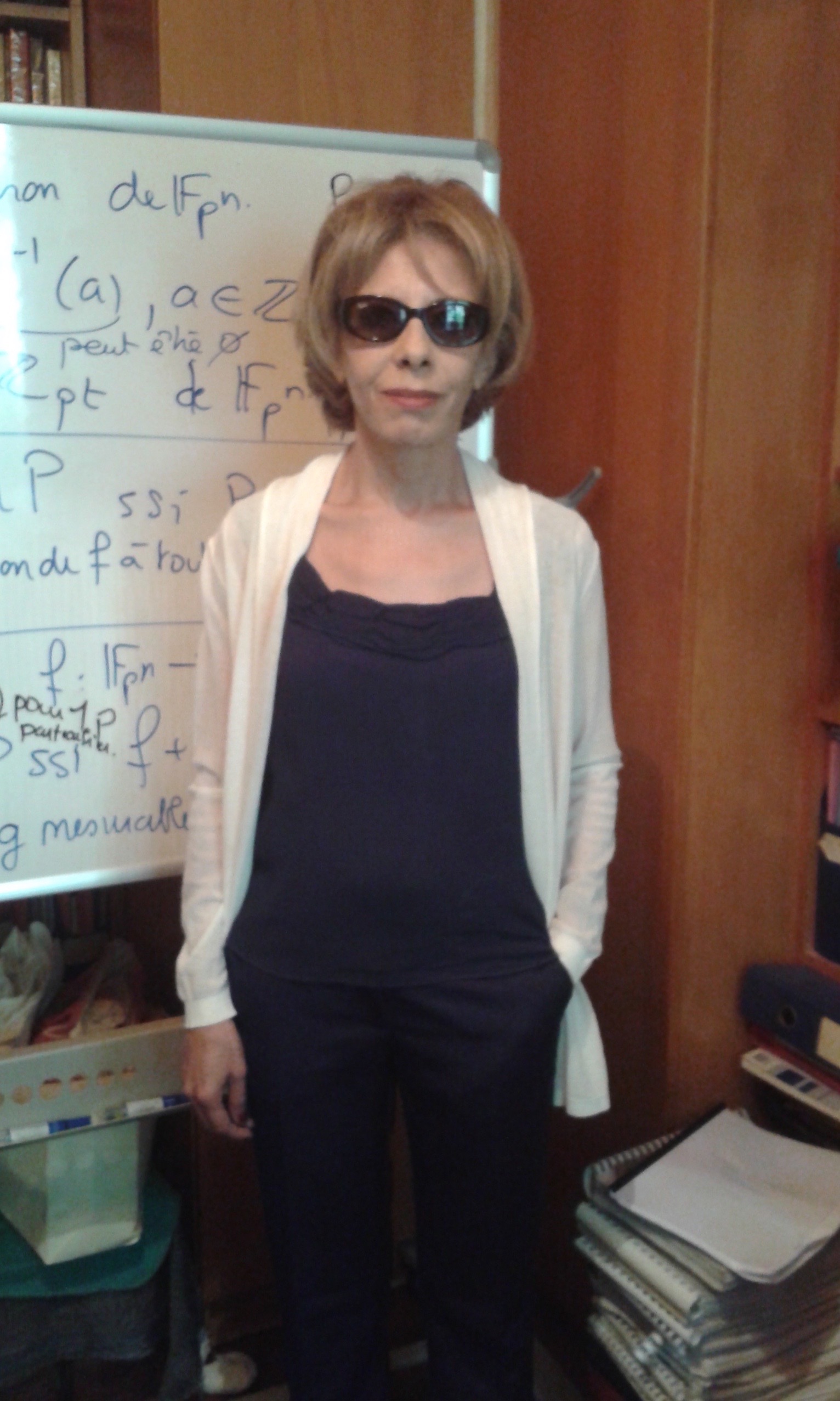
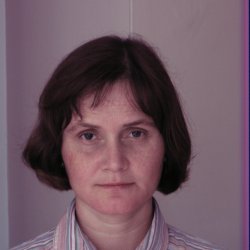
Giulia Guidi is an Assistant Professor of Computer Science at Cornell University, affiliated with the Cornell Ann S. Bowers College of Computing and Information Science. She leads the Cornell High-Performance Computing (HPC) Group and is an Affiliate Faculty at Lawrence Berkeley National Laboratory’s Performance and Algorithms Research Group. Her research focuses on high-performance computing for computational sciences, sparse linear algebra, and scalable software infrastructure for parallel systems. She holds a PhD in Computer Science from UC Berkeley (2022) and has been recognized with awards including the 2024 SIAG/Supercomputing Early Career Prize and the 2023 ISSNAF Young Investigator Award. Her work addresses challenges in genomics, population genetics, and scalable computational methods through collaborations like the NSF-funded 'ACED' project with April Wei’s Lab. Guidi mentors a diverse group of PhD, MEng, and undergraduate students, emphasizing parallel programming and HPC applications. Her lab’s research spans GPU-accelerated algorithms, sparse matrix computations, and bioinformatics tools like the Popcorn and BELLA aligners. She is also a Graduate Field Faculty in Computational Biology and Applied Mathematics at Cornell.
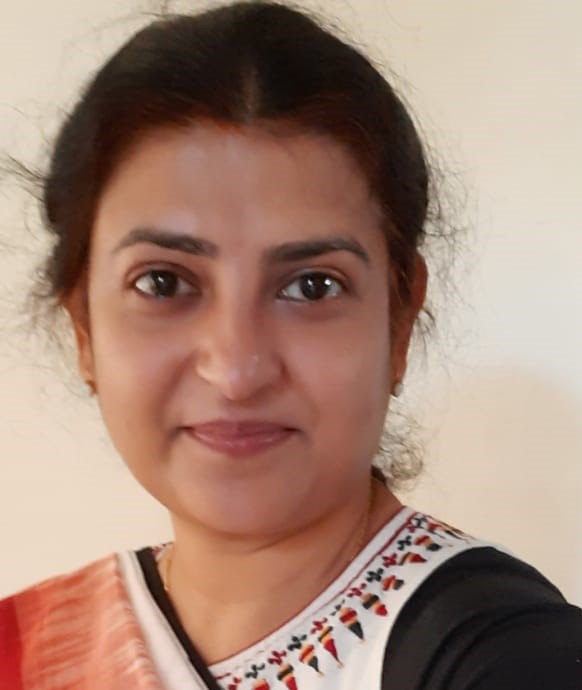
Dr. Dipanwita Thakur serves as Assistant Professor at the Department of Computer Engineering, Modeling, Electronics and Systems (DIMES) at the University of Calabria, Italy since July 2023. She is an active member of the European Cooperation in Science & Technology (COST Action CA22104) focusing on cybersecurity and serves in the IEEE Future Networks Working Group for Artificial Intelligence/Machine Learning. Previously, she held a 15-year Assistant Professor position at Banasthali University, Rajasthan, and has industry experience at TechMahindra and C-DAC. Education: Ph.D. in Smart Healthcare from West Bengal University of Technology, Kolkata M.Tech. in Software Engineering from Banasthali Vidyapith MCA from NIELIT, Government of India B.Sc. from University of Calcutta Her research pioneers Green Artificial Intelligence with emphasis on energy-efficient federated learning and smart healthcare applications. She develops privacy-preserving human activity recognition systems using multimodal data fusion, focusing on performance evaluation and environmental sustainability. Her work bridges theoretical machine learning with practical healthcare solutions, optimizing AI systems for reduced carbon footprint while maintaining clinical efficacy through hardware-algorithm co-design and quantization techniques. Recent publications reveal a strong trajectory toward sustainable AI, with increasing focus on energy-aware federated learning frameworks, multimodal medical segmentation, and non-IID data handling. Her work consistently addresses the critical balance between model accuracy, convergence speed, and energy consumption across edge devices, with growing emphasis on quantization techniques and hardware-algorithm co-design for real-world deployment. Scientific Awards: Elevated to IEEE Senior Member (2024) Dr. B.C. Roy Memorial Scholarship for outstanding 10th Board results (1992) Student Science Seminar Award by West Bengal Government (1990) Dr. Thakur actively mentors students as evidenced by her congratulations to advisee Farwa for paper acceptances. She serves as Associate Editor for Information Fusion (Elsevier) and IEEE Sensors Journal, and holds editorial roles at Scientific Reports. Her research is advanced through COST Action CA22104 and IEEE working groups, though specific grant details aren't listed in the source material. She has organized key workshops including Green-Aware AI 2024 and Green Federated Learning at IJCNN 2025. She leads research within the MONAI community on data quality and federated learning, and contributes to IEEE IoT and Future Networks initiatives. Her work with the COST Action CA22104 Behavioral Next Generation in Wireless Networks connects cybersecurity with sustainable AI development, while her Missouri S&T visiting scholar position focuses on energy optimization for federated learning systems.
Raul Adrian Oset Sinha is an Associate Professor in the Department of Mathematics at the Faculty of Mathematics, University of Valencia, Spain. His research is centered on singularity theory, differential geometry, and topology, particularly focusing on stable maps, geometric invariants, and the geometry of singular surfaces. His work lies at the intersection of Geometry and Topology , Singularity Theory , and Global Analysis . He investigates the geometric structure of mappings from manifolds, especially in low dimensions, analyzing projections, curvature properties, and topological invariants of singular images. The trends in his publications reveal a consistent focus on stable mappings , projections of surfaces , and classification of singularities . His recent work explores axial curvature, frontal surfaces, and augmentations, contributing to the understanding of geometric behavior in higher codimensions and corank-one settings. He is a member of the research group GEOSING: Singularities, Generic Geometry and Applications , collaborating with leading experts such as M. A. S. Ruas, F. Tari, and K. Saji. His publications appear in journals like Mathematische Annalen , Advances in Geometry , and Journal of Singularities . Oset Sinha earned his PhD from the University of Valencia in 2009 under the supervision of Dr. Maria del Carmen Romero Fuster. His thesis, Topological invariants of stable maps from 3-manifolds to three-space , laid the foundation for his ongoing research in singularity theory. He has advised students and supervised research, though specific names are not listed. He actively collaborates internationally and contributes to the academic community through peer reviewing and editorial work.
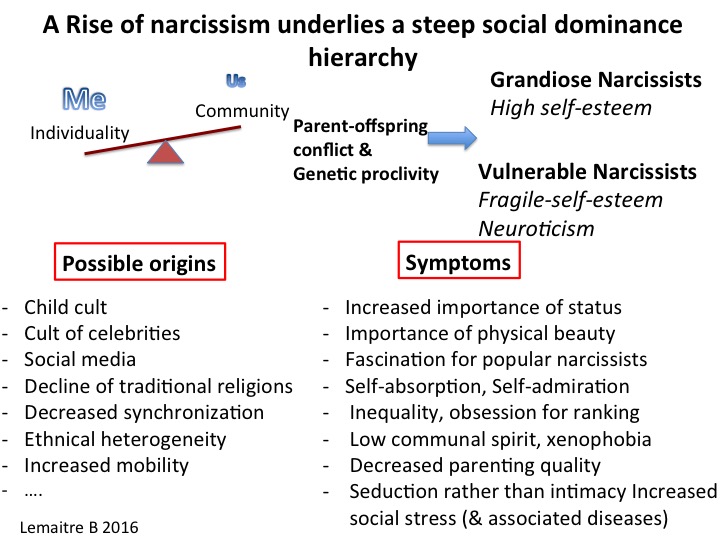
Bruno Lemaitre is a Full Professor at École Polytechnique Fédérale de Lausanne (EPFL), affiliated with the School of Life Sciences and the Global Health Institute (UPLEM). He also contributes to teaching in the Doctoral Program in Molecular and Cellular Life Sciences (EDMS), the School of Humanities (SHS), and the School of Basic Sciences (SV-SSV). He leads the Lemaitre Lab, focusing on immunology and host-pathogen interactions. Full Professor, EPFL – Global Health Institute (UPLEM) Full Professor, EPFL – School of Life Sciences (SV-SSV) Full Professor, EPFL – Doctoral Program (EDMS) Full Professor, EPFL – School of Humanities (SHS) Member, EPFL Committee of Academic Evaluation (CEAE) His research spans immunology, evolutionary psychology, and the sociology of science. Key areas include innate immunity, Toll-like receptors, Drosophila host defense, and the influence of narcissism on scientific success. He has published extensively on how personality traits shape research culture and ethics. The most recent 15 articles reflect a strong interdisciplinary trend, combining molecular immunology with psychological and sociological themes. While early works focus on TLRs and Drosophila immunity, recent publications explore narcissism, obesity, scientific discovery myths, and the cultural impact of personality. This indicates a broadening research scope from molecular biology to the human dimensions of science. Scientific awards and recognitions include: EMBO Member (2007) Bruno Lemaitre supervises a dynamic group of PhD students, both current and past, and is involved in significant educational initiatives, including MOOCs on immunology and authored textbooks. He has also contributed to public discourse through interviews and media appearances. His laboratory, the Lemaitre Lab, is a hub for research on infection and immunity, and he plays a role in academic governance through committee memberships.
Jonathan Leake is an Assistant Professor in the Department of Combinatorics and Optimization at the University of Waterloo. His research lies at the intersection of combinatorics, optimization, and theoretical computer science, with a focus on log-concave and Lorentzian polynomials and their applications in discrete and continuous settings. Assistant Professor, University of Waterloo (2022–present) Dirichlet Postdoctoral Fellow, TU Berlin (2020–2022) Postdoctoral Fellow, Institut Mittag-Leffler, Stockholm (Spring 2020) Postdoctoral Fellow, KTH, Stockholm (Fall 2019) James H. Simons Fellow, Simons Institute, UC Berkeley (Spring 2019) His research explores the deep connections between algebraic structures and combinatorial phenomena, particularly through polynomial capacity and Lorentzian polynomials. He applies these tools to problems in optimization, sampling, and representation theory. His work often involves developing new algebraic and analytic techniques to tackle longstanding conjectures and algorithmic challenges. The recent publications highlight a consistent focus on Lorentzian polynomials, capacity bounds, and their applications in combinatorics, optimization, and theoretical computer science. Key themes include matroid theory, log-concavity, sampling algorithms, volume approximation, and connections to Lie theory and representation theory. The research spans both theoretical developments and algorithmic applications, often in collaboration with leading researchers in the field. Dirichlet Postdoctoral Fellowship, TU Berlin Postdoc Fellowship in Algebraic and Enumerative Combinatorics, Institut Mittag-Leffler James H. Simons Fellowship, Simons Institute, UC Berkeley Jonathan Leake has advised or collaborated with several researchers, though formal advisees are not listed in the provided text. His work has been supported by prestigious fellowships and collaborations with institutions such as the Simons Institute and TU Berlin. He has taught courses including CO 250: Introduction to Optimization, MATH 239: Introduction to Combinatorics, and CO 739: Lorentzian Polynomials at the University of Waterloo and TU Berlin. While specific lab or research group names are not mentioned, Leake's collaborative work with researchers like Petter Brändén, Nisheeth Vishnoi, and Leonid Gurvits suggests active participation in research teams focused on algebraic combinatorics, optimization, and theoretical computer science. His publicly shared code for sampling from HCIZ densities and verifying positivity in Lie-theoretic contexts indicates an active computational research component.
Carlos Palazuelos Cabezón is a Professor in the Department of Mathematical Analysis and Applied Mathematics at the Faculty of Mathematical Sciences, Universidad Complutense de Madrid (UCM), with a joint affiliation at the Instituto de Ciencias Matemáticas (ICMAT). He holds a Ramón y Cajal contract and has been a Full Professor since 2024, following his role as Associate Professor from 2019 to 2024. His work bridges deep mathematical theory and quantum information science. Research Interests: His primary research lies at the intersection of functional analysis and quantum information theory. He investigates operator spaces and their applications to quantum entanglement, Bell inequalities, quantum channels, and nonlocal games. A second major line involves noncommutative harmonic analysis, particularly hypercontractivity in von Neumann algebras. His work is highly theoretical and appears in top mathematical and physics journals. Publication Trends: His recent publications demonstrate a consistent focus on the mathematical foundations of quantum information, particularly using tools from operator space theory and Banach space geometry to analyze quantum nonlocality, entanglement, and computational models. There is a strong trend toward solving foundational problems in quantum theory using advanced functional analysis. Scientific Awards: Premio Extraordinario de Doctorado (2008/2009) Doctorado Europeo Advising and Grants: While no specific students are listed, he is part of the MathQI research group and has likely mentored graduate students. He has been supported by prestigious postdoctoral and permanent research contracts in Spain, including the Juan de la Cierva and Ramón y Cajal programs, which are highly competitive grants for early-career and established researchers, respectively. Labs and Teams: He is a member of the MathQI research group (Mathematical Quantum Information) at UCM and is affiliated with ICMAT, a leading mathematics research institute in Spain. These affiliations provide a collaborative environment for interdisciplinary research in mathematical physics and quantum information.
Francesco Malaspina is a Full Professor at the Department of Mathematical Sciences (DISMA) of the Polytechnic University of Turin. His research focuses on vector bundles , projective algebraic geometry , and ACM (Arithmetically Cohen-Macaulay) bundles , particularly on varieties like quadrics, Grassmannians, and multiprojective spaces. He has contributed extensively to splitting criteria for vector bundles, cohomology properties, and moduli space classification. His work bridges abstract algebraic geometry with applications in mathematical physics and topological methods. Key research areas : Vector bundles, Ulrich bundles, instanton bundles, Castelnuovo-Mumford regularity, cohomology vanishing, projective varieties. Publications include studies on Ulrich bundles on Segre-Veronese varieties, instanton bundles on flag varieties, and cohomological properties of vector bundles. His articles often explore the interplay between algebraic structures and geometric intuition, emphasizing aesthetic-driven mathematical inquiry. Teaching spans linear algebra, geometry, and advanced topics for aerospace and pure/applied mathematics programs. He has also engaged in science communication, notably through his book Seven Simple Lessons in Mathematics; on Love, Death, Football, Meringues, and Geometry , which connects abstract math to humanistic themes.
Ralf Hiptmair is a Full Professor at ETH Zürich, serving as Head of the Seminar for Applied Mathematics and Deputy Head of the Department of Mathematics. He also holds the position of Director of Studies for ETH BSc and MSc in Computational Sciences and Engineering (CSE). His research spans computational mathematics, numerical analysis, finite element methods, boundary element methods, computational electromagnetism, multigrid methods, discrete differential forms, shape optimization, wave propagation, and kinetic equations. Hiptmair's work on auxiliary space methods was recognized as a breakthrough in computational science in the 2008 DOE Report on recent significant advancements in computational science. His research focuses on developing and analyzing numerical methods for partial differential equations, with particular emphasis on structure-preserving discretizations, computational electromagnetism, and boundary integral equations. His work has significant applications in engineering, physics, and computational science. Hiptmair's publications demonstrate a strong focus on advancing numerical techniques for electromagnetic problems, wave propagation, and shape optimization. His recent work shows increasing interest in computational topology, geometric numerical integration, and interdisciplinary applications of numerical methods. Featured as breakthrough in computational science in the 2008 DOE Report on recent significant advancements in computational science (for Auxiliary space methods) Hiptmair has supervised numerous doctoral, master's, and bachelor's students across mathematics, computational science and engineering, and related fields. His research group has received funding for developing advanced numerical methods with applications in electromagnetism, fluid dynamics, and computational physics. He is actively involved in teaching numerical methods courses at both undergraduate and graduate levels. Hiptmair leads research efforts in the Seminar for Applied Mathematics, collaborating with industry partners like ABB Corporate Research and Siemens on practical applications of computational methods. His work bridges theoretical numerical analysis with real-world engineering challenges.
Dr. Angela Ortega Ortega is a permanent Researcher in the Institute of Mathematics at Humboldt University of Berlin , affiliated with the Faculty of Mathematics and Natural Sciences . She is an active member of the Algebraic Geometry research group , focusing on moduli spaces and vector bundles. Her primary research interests include: Geometry of moduli spaces of vector bundles on algebraic curves Brill-Noether theory Prym varieties and Abelian varieties Cyclic coverings and ramified coverings Hyperelliptic curves and trigonal constructions Her work bridges theoretical algebraic geometry with applications in mathematical physics and number theory. Analysis of her recent publications (2018-2024) reveals a concentrated focus on Prym varieties, with 12 of 15 articles exploring their structural properties, connections to moduli spaces, and applications to curve theory. Key trends include the study of cyclic/etale coverings (7 articles), ramification effects (5 articles), and genus-2 curve specializations (4 articles). Her collaborations with H. Lange, G. Farkas, and P. Borowka dominate her output, indicating strong international research networks. Dr. Ortega actively contributes to the academic community through organizational roles : she co-organized the Berlin-Hannover Algebraic Geometry Workshop (2023) and participates in major conferences including the Math AMSUD Workshop (2024) and XXIV Congreso Latinoamericano de Álgebra (2024). Her teaching portfolio includes core analysis courses for physicists and specialized graduate topics like Abelian Varieties and Representation Theory. She maintains laboratory collaboration through the Algebraic Geometry research group , engaging in long-term projects on moduli spaces with international partners across Germany, France, Chile, and Mexico. Current work focuses on cyclic coverings of genus-2 curves and Prym-Torelli theorems for ramified coverings.
Daniel K. Nakano is a Distinguished Research Professor in the Department of Mathematics at the University of Georgia. He holds a Ph.D. in Mathematics from Yale University (1990) and a B.A. from the University of California, Berkeley (1986). His research focuses on representation theory, bridging algebra, geometry, and homological algebra, with applications to combinatorics, algebraic geometry, topology, and physics. His work investigates the interplay between tensor triangulated categories and geometric objects, uncovering hidden geometry in algebraic structures. Recent publications explore quantum groups, Lie superalgebras, Hecke algebras, and tilting module conjectures, often in collaboration with leading mathematicians like Christopher P. Bendel and Cornelius Pillen. Scientific Awards : National Science Foundation Postdoctoral Fellowship (1992-1995) Creative Research Medal, University of Georgia (2007) McCay Award, UGA Department of Mathematics (2008) Distinguished Research Professorship (2010) Fellow of the American Mathematical Society (2013, Inaugural Class) Lamar Dodd Creative Research Award (2016) Nakano has served on college and university committees and organized academic events, including the Southeastern Lie Theory Workshop Series. He advises Ph.D. students and mentors postdoctoral fellows, though specific advisees are not named in the provided data.
Dr. Olga Varghese is a Lecturer and Academic Advisor at the University of Münster since 2025, with prior research roles at Heinrich-Heine Universität Düsseldorf (2023-2025) and OvGU Magdeburg (2021-2023) under DFG projects. She holds a PhD in Mathematics from the University of Münster (2010-2015) and has been a Postdoc there since 2015. Her research focuses on geometric group theory, particularly Coxeter groups, automorphism groups, and profinite properties, with significant contributions to group actions on CAT(0) spaces and graph products. Her recent work explores profinite rigidity, involutions in Coxeter groups, and automatic continuity in group actions. She has taught foundational and advanced courses in topology, algebra, and mathematics for natural sciences, with a strong emphasis on geometric group theory and algebraic structures. Current affiliations include the University of Münster's Department of Mathematics and Computer Science. Her publications span journals like Algebraic and Geometric Topology , Journal of Group Theory , and Geometriae Dedicata , reflecting her expertise in algebraic and geometric interplay.
Pedro Paredes is a Lecturer in the Department of Computer Science at Princeton University . He completed his PhD in 2022 at Carnegie Mellon University under Ryan O'Donnell , following undergraduate and master's degrees from the University of Porto where he was advised by Pedro Ribeiro . He received the SEAS Excellence in Teaching Award in 2025. Education PhD, Carnegie Mellon University (2022) MSc & BSc, University of Porto (2017) Research Interests Specializes in Theoretical Computer Science , particularly Spectral Graph Theory , Pseudorandomness , Coding Theory , and Quantum Information Theory Contributes to Subgraph Analysis and Network Science through collaborative works Publication Trends Focuses on Expander Graphs and their applications in Quantum Computing , with recent works on Quantum LDPC Codes and Approximate Unitary Designs Develops algorithms for Spectral Graph Operations and Graph Expansion with mathematical rigor Engages in Interdisciplinary Research connecting Time Series Analysis with network theory Awards SEAS Excellence in Teaching Award (2025) Teaching & Outreach Teaches Algorithms and Data Structures at Princeton Organizes Competitive Programming Club at Princeton Active in Computer Science Education and Math Olympiads
Sihem Mesnager is a University Professor of Mathematics at the University of Paris VIII, affiliated with the Laboratory of Analysis, Geometry and Applications (LAGA) at Paris XIII (CNRS) and the AGC3 research group (Algebra, Geometry, Combinatorics) . She holds an adjunct professorship at Télécom Paris within the MIC2 Mathematics team of the Computer Science and Networks department (INFRES). Her work bridges pure mathematics and applied cryptography, focusing on Boolean functions, bent functions, and coding theory for secure communication and data protection. PhD in Mathematics, University of Pierre and Marie Curie (Paris VI), Sorbonne University (2002) Habilitation (HDR) in Mathematics, University of Paris VIII (2012) Research Interests Dr. Mesnager specializes in symmetric cryptography and coding theory , particularly their applications to secure digital communication, error correction, and post-quantum cryptographic protocols. Her algebraic approach employs finite fields, exponential sums, algebraic geometry, and finite geometry to analyze and construct cryptographic primitives like S-boxes, APN functions, and optimal linear codes. She also investigates algorithmic aspects of computer algebra in these domains. Scientific Awards George Boole International Prize (2020) PEDR Excellence Scientific Award (2019-2022) PEDR Excellence Scientific Award (2014-2017) Publications & Projects Her recent work includes constructing weightwise perfectly balanced Boolean functions for the FLIP cipher, optimizing Inner Product Masking schemes via coding theory, and developing post-quantum secure functional encryption using multivariate cryptography. She has contributed to Reed-Muller codes, BCH codes, and Gaussian sum-based linear codes with one-dimensional hulls, emphasizing their applications in side-channel attack resistance and quantum error correction.
Prof. Cornelia Drutu is a Professor of Mathematics at the Mathematical Institute , University of Oxford, specializing in geometric group theory, ergodic theory, and their applications to number theory. She holds a PhD and Habilitation, with significant contributions to the understanding of random groups, median structures, and divergence in Lie groups. Research Interests: Geometric Group Theory Ergodic Theory Number Theory Recent Publications Trends: Her work spans geometric analysis of random groups, Kazhdan projections, median geometries, and divergence functions in non-positively curved spaces. Scientific Awards: Whitehead Prize (2009)
Brian Street is a Professor in the Department of Mathematics at the University of Wisconsin-Madison . He specializes in partial differential equations, harmonic analysis, and geometric analysis, with a focus on subelliptic and multi-parameter singular integral theories. His work extends classical results like the Newlander-Nirenberg theorem and Frobenius theorem to quantitative and boundary settings. Research Highlights: Development of maximal subellipticity theory (2023), generalization of Calderón-Zygmund singular integrals to multi-parameter settings (2011–2013), and novel approaches to hypoelliptic and mixing flow problems. Publications: Authored a monograph on Multi-parameter Singular Integrals (Princeton University Press, 2012) and co-authored influential papers with leading mathematicians in functional analysis and PDEs. Methodologies: Employed techniques from ODEs, PDEs, and harmonic analysis, including wave equation propagation, non-isotropic Sobolev spaces, and diffeomorphism-invariant frameworks.