Ivan Dokmanic is an Assistant Professor at the Coordinated Science Laboratory (CSL) within the University of Illinois . His research bridges signal processing , machine learning , and applied inverse problems , with a focus on acoustics, biomedical imaging, and distance geometry. Current Role : Assistant Professor, CSL Email : dokmanic@illinois.edu Research Interests : Dokmanic explores machine learning applications in inverse problems , particularly distance geometry for molecular imaging and acoustics . His work includes unlabeled sensing , where distances between points are known but their arrangement is not. This has implications for powder diffraction , indoor localization , and echo modeling . Article Trends : His recent publications emphasize distance geometry in machine learning , acoustic signal processing , and inverse problem theory . Key areas include molecular imaging , audio encryption , and sensor positioning . Collaborative work spans medical imaging , cyberphysical systems , and geometric invariants . 2016 Google Faculty Award NSF Grant (1 year, $157,079) Students and Grants : Dokmanic mentors PhD students like Puoya, Shuai, and Anadi. His research is funded by the National Science Foundation , Google , VISA , and nVidia .
Henry Yuen is the Srivani Family Associate Professor of Computer Science at Columbia University, with affiliations in the CS Theory group, Data Science Institute, and Columbia Quantum Initiative. His work bridges theoretical computer science and quantum information, focusing on the computational foundations of quantum systems. Yuen received his BA in Mathematics from the University of Southern California (2010) and PhD in Computer Science from MIT (2016). His research explores quantum complexity theory, quantum cryptography, and quantum information through both theoretical frameworks and practical applications. His recent publications reveal a strong focus on quantum pseudorandomness, quantum circuit complexity, and quantum cryptographic primitives. The research trajectory demonstrates increasing sophistication in connecting quantum computational models with fundamental questions in complexity theory, particularly through the lens of quantum interactive proofs and quantum state complexity. His work frequently intersects with operator algebras and quantum information theory, reflecting the interdisciplinary nature of modern quantum computing research. NSF CAREER award Sloan Fellowship Yuen actively mentors graduate students, with several PhD students having graduated to postdoctoral positions or faculty roles. His service includes co-organizing the Columbia CS Theory Seminar and serving on program committees for major conferences including QIP, STOC, and ITCS. He has organized multiple workshops on quantum computing challenges and cryptography. As a member of the Columbia Quantum Initiative, Yuen contributes to Columbia's growing quantum ecosystem, collaborating across departments to advance both theoretical foundations and potential applications of quantum information processing.
Alexandros G. Dimakis is a Professor at the University of California, Berkeley's Department of Electrical Engineering and Computer Sciences (EECS), College of Engineering. He is also Co-Director of the National AI Institute for Foundations of Machine Learning and Co-Founder of BespokeLabs.ai. PhD (2008) and Diploma (2003) in Electrical Engineering His research focuses on Generative AI , Information Theory , and Machine Learning . Recent work includes advancements in diffusion models, compressed sensing, and causal inference. His publications (150+) emphasize inverse problems, neural network verification, and generative model optimization. Recent publications highlight trends in Diffusion Models for inverse problems, Language Model Scaling , and 3D-Aware Generative Systems . Collaborative projects span biomedical applications, large-scale dataset curation (Datacomp-LM), and parameter-efficient model fine-tuning. Scientific Awards : IEEE Fellow (2022) James Massey Award (2018) NSF CAREER Award (2011) Google Research Faculty Award Best Paper awards at UAI workshops Eli Jury Dissertation Award (UC Berkeley) He advises PhD students in generative modeling, compressed sensing, and information theory. His research group collaborates with institutions like MIT, NYU, and IBM Research. Former students hold positions at Google, Amazon, and academic institutions like Purdue University.
Pratyush Mishra is an Assistant Professor at the University of Pennsylvania in the Department of Computer and Information Science, where he is affiliated with the Security and Privacy Laboratory. His research focuses on the intersection of cryptographic proof systems and computer security , particularly on efficient implementations of zero-knowledge proofs and secure computation protocols. Pratyush completed his PhD in Computer Science at UC Berkeley , advised by Alessandro Chiesa and Raluca Ada Popa , and holds a BSc in EECS from UC Berkeley, where he worked with David Wagner . His current research group includes PhD students Anubhav Baweja , Tushar Mopuri , Bharath Namboothiry , and Alireza Shirzad , along with Matan Shtepel , a former research assistant who moved to CMU for his PhD. His work spans advanced cryptographic techniques like zkSNARKs , accumulation schemes , and private delegation of provers , with applications in decentralized systems and secure inference. His recent publications focus on optimizing polynomial commitments , read-write streaming for SNARKs, and horizontally scalable proofs . Key awards include: ACM SIGSAC Doctoral Dissertation Award Runner-Up (2022) CSAW Applied Research Award (2016) for Hidden Voice Commands He teaches courses like CIS 5560: Cryptography and 7000-2: Theory and Practice of Succinct Zero Knowledge Proofs , covering topics such as symmetric cryptography, public-key encryption, digital signatures, zero-knowledge proofs, and secure multiparty computation. His lab contributes to the arkworks ecosystem for zero-knowledge proof libraries and co-founded the startup Aleo based on his research.
Lawrence C. Washington is a Professor of Mathematics at the University of Maryland, College Park . His office is located in Mathematics Building 1105, and he can be reached at lcw@math.umd.edu . Teaching & Courses: In Spring 2023 he is teaching Cryptography 456 (TuTh 11:00–12:15) and co-organising the Algebra Seminar (MW 2–3). Office hours are held Tuesdays 1:30–2:30 and Thursdays 10:00–10:50. Research Interests: His work centres on number theory , with particular emphasis on cyclotomic fields , elliptic curves , cryptology , and Iwasawa theory . He has made extensive contributions to the study of p-adic L-functions , class groups , heuristics for class numbers , and the arithmetic of elliptic curves, often bridging deep theoretical questions with computational investigations. Textbooks & Scholarly Output: Washington is the author of several widely-used textbooks: Introduction to Cryptography with Coding Theory (3rd ed.) Introduction to Cyclotomic Fields Elliptic Curves: Number Theory and Cryptography An Introduction to Number Theory with Cryptography (2nd ed.) Elementary Number Theory Recent Publication Trends: Over the past five years his papers have focused on heuristics for Iwasawa invariants , anti-cyclotomic extensions , class groups of real cyclotomic fields , and analytic estimates for sums of prime powers . The work is characterised by a synthesis of algebraic, analytic, and computational techniques, frequently yielding explicit examples and numerical data that inform broader conjectures in algebraic number theory. Extracurricular Interests: Outside mathematics, Washington enjoys running and playing the bassoon , and he maintains a light-hearted page devoted to his favourite intersection in Chevy Chase, MD. Advising & Grants: While the provided text does not enumerate individual students or specific grants, his extensive publication record and long-standing professorship indicate ongoing supervision of graduate research and participation in funded projects in number theory and cryptography.
Ashley M R Montanaro is a Professor of Quantum Computation at the School of Mathematics, University of Bristol . Active in quantum computing research since at least 2014, they lead projects at the intersection of quantum algorithms , computational complexity , and quantum information theory , affiliated with the Bristol Quantum Information Institute. Research interests focus on quantum algorithm design , computational complexity analysis , and quantum simulation . Key work includes developing variational quantum algorithms for phase transition detection, Hamiltonian simulation techniques, and quantum-classical hybrid methods for solving complex problems in physics and optimization. Recent publications demonstrate expertise in: Quantum phase diagram simulation with low-depth circuits Quantum speedups for constraint satisfaction problems Quantum communication complexity of machine learning tasks Quantum-enhanced optimization heuristics Hamiltonian simulation with time-dependent product formulas Quantum algorithm complexity analysis Scientific awards include: EPSRC Fellowship (2014-2019) - "New insights in quantum algorithms and complexity" Active in quantum software development through projects like: "Quantum Algorithms from Foundations to Applications" (ERC-2018-COG) "Quantum Computing and Simulation Hub" (2019-2024) "Prosperity Partnership in Quantum Software" (2019-2023)
Prof. Dr. Kai Cieliebak is a Professor of Mathematics at the University of Augsburg, where he holds the Chair of Analysis and Geometry within the Institute of Mathematics under the Faculty of Mathematics, Natural Sciences, and Materials Engineering. He has been at Augsburg University since 2012, following a professorship at Ludwig-Maximilians-Universität München from 2001-2012. His research group includes several researchers and postdocs working on symplectic geometry and related fields. Dr. Cieliebak earned his Diplom in mathematics summa cum laude from Ruhruniversität Bochum in 1992, with thesis on "Pseudo-holomorphe Kurven und periodische Orbits auf Cotangential Bündeln" under advisor H. Hofer. He completed his PhD in mathematics at ETH Zürich in 1996, with thesis "Symplectic boundaries: closed characteristics and action spectra," also advised by H. Hofer. His academic journey included positions at Harvard University, Stanford University, and research at IBM Zürich before his professorships in Munich and Augsburg. Prof. Cieliebak's research focuses on symplectic and contact geometry , with significant contributions to understanding symplectic manifolds, Lagrangian and Legendrian knots, Stein manifolds, and string topology. His work in Hamiltonian dynamics explores variational methods, periodic orbits, and celestial mechanics problems, particularly the restricted three-body problem. In global analysis , he investigates solution spaces of elliptic PDEs and symplectic field theory. His approach often bridges differential geometry, topology, and dynamical systems, with applications to mathematical physics. Over the past decade, Prof. Cieliebak's publications reveal a consistent focus on symplectic homology, Floer theory, and their applications to geometric problems. His work shows increasing integration of algebraic structures with geometric methods, particularly in cyclic homology and string topology. Recent research demonstrates strong collaboration with Urs Frauenfelder on celestial mechanics problems, applying symplectic techniques to the restricted three-body problem and related orbital dynamics. Prof. Cieliebak has secured significant research funding throughout his career, including multiple DFG grants under project codes CI 45/1 through CI 45/12, NSF grants, and participation in European Science Foundation networking programs. His most notable grants include "Foundations of Symplectic Field Theory" (2009-2015) and the current "Rabinowitz Floer Homology" project (since 2023), both in collaboration with U. Frauenfelder. He has mentored numerous researchers and maintains an active research group at Augsburg University, including postdocs and collaborators working on symplectic geometry problems. His team includes researchers such as Dr. Filip Broćić, Zhen Gao, Dr. Hanna Häußler, Emilia Konrad, Shuaipeng Liu, Dominik Meidert, Dr. Airi Takeuchi, Dr. Evgeny Volkov, Milan Zerbin, and PD Dr. Lei Zhao. Prof. Cieliebak has also organized numerous workshops on symplectic geometry, including the annual "Symplectic Field Theory" workshop series.
Joachim Rosenthal is a Professor of Applied Mathematics at the University of Zurich's Department of Mathematics, leading the Applied Algebra Group. His research integrates coding theory, cryptography, and algebraic geometry with applications in communications and security systems. His primary research explores algebraic coding theory including convolutional codes, subspace codes, and post-quantum cryptography. He develops algorithms for error correction, code optimization, and cryptographic protocol analysis, with emphasis on mathematical structures in finite fields and rings. Professor Rosenthal serves as President of the Swiss Mathematical Society (2024-2025) and sits on IEEE Information Theory Society's Board of Governors. He has organized multiple international conferences on coding theory and cryptography, including the Zurich COST Meeting and Workshop on Convolutional Codes. His editorial contributions include roles at Archiv der Mathematik and SIAM Journal on Applied Algebra and Geometry. Recent publications focus on code construction methods, complexity analysis in group-based cryptography, and algebraic approaches to error-correcting codes.
Gábor Somlai is a mathematics researcher at Eötvös Loránd University's Faculty of Science, affiliated with the Department of Algebra and Number Theory since 2006. He is a core member of the HUN-REN-ELTE Geometric and Algebraic Combinatorics Research Group (previously MTA-ELTE until 2023) and participates in the Asymptotic Group Theory ERC project. His institutional roles include contributions to the Mathematics Doctoral School and the Institute of Mathematics. His research spans Algebra , Combinatorics , and Number Theory , with emphasis on spectral sets, tiling problems, group theory, and finite geometry. Recent work explores cyclotomic polynomials, the generalized trifference problem, and connections between tiling and spectral properties in finite abelian groups. His publications reveal a strong focus on combinatorial number theory and algebraic methods in discrete geometry. Somlai's publication trends show sustained contributions to theoretical foundations of tiling and spectral sets (testing Fuglede's conjecture in cyclic groups) Cayley graph properties and CI-group classifications polynomial methods in finite geometry and direction problems His work bridges pure algebra with combinatorial applications, often resolving long-standing conjectures in specialized domains. As part of the HUN-REN-ELTE research group, he collaborates on geometric and algebraic combinatorics projects, leveraging ERC funding for asymptotic group theory investigations. His research infrastructure includes access to the Alfréd Rényi Institute of Mathematics (http://www.renyi.hu) resources.
Nathan (Nati) Linial is a Professor at the School of Computer Science and Engineering at the Hebrew University of Jerusalem, where he has been a faculty member since completing his postdoctoral period at UCLA. He earned his undergraduate degree in mathematics from the Technion and his PhD in graph theory from the Hebrew University. His research spans multiple areas of theoretical computer science and mathematics, with primary focus on combinatorics, theoretical computer science, and bioinformatics. Linial's work has made significant contributions to high-dimensional combinatorics, expander graphs, metric embeddings, and computational molecular biology. His research often bridges geometry, analysis, and combinatorial structures, demonstrating deep connections between seemingly disparate mathematical fields. Linial's recent publications reveal a strong trend toward high-dimensional combinatorial structures, including simplicial complexes, hypertrees, and high-dimensional permutations. His work frequently employs probabilistic methods, linear programming techniques, and geometric approaches to solve fundamental combinatorial problems. The breadth of his research is evident in both pure mathematical contributions and applications to computational biology. Fellow of the American Mathematical Society ISI Highly Cited Researcher Conant Prize (2008) for the influential survey paper "Expander graphs and their applications" Linial has served on the editorial boards of several prestigious journals including the Israel Journal of Mathematics (as Chief Editor 2013-2017), Random Structures and Algorithms, and Combinatorica. His academic leadership extends to organizing conferences and workshops in combinatorics and theoretical computer science. He has mentored numerous students whose work spans theoretical computer science, combinatorics, and computational biology. Linial is associated with research projects including ProtoNet (for protein sequence classification) and EVEREST (for evolutionary conserved protein domains), demonstrating his commitment to interdisciplinary research that bridges computer science with molecular biology.
Elette Boyle is an Associate Professor at Reichman University (IDC Herzliya) and a Senior Scientist at NTT Research . She holds a Ph.D. in Mathematics from MIT (advised by Shafi Goldwasser and Yael Tauman Kalai) and an undergraduate degree from Caltech . Education Ph.D. in Mathematics, MIT B.S. in Mathematics, Caltech Her research focuses on cryptographic solutions for secure data processing , particularly in secure multi-party computation , function/homomorphic secret sharing , and distributed point functions . Recent work explores topology-hiding communication , memory checking complexity , and sublinear-communication MPC . Key trends in her publications include: Advancements in Function Secret Sharing for branching programs and sparse vectors. Efficient Secure Multi-Party Computation protocols with preprocessing. Information-theoretic and computational Topology-Hiding Broadcast schemes. Optimized Oblivious Transfer with constant computational overhead. Scientific Awards European Research Council (ERC) Award Israeli Science Foundation (ISF) Grant United States Air Force Office of Scientific Research (AFOSR) Grant Google Research Scholar Award International Association for Cryptologic Research (IACR) Recognition As Director of the Foundations & Applications of Cryptography (FACT) Research Center , she leads collaborative work with institutions like Technion Israel , Cornell University , and NTT Research . Her students include Pierre Meyer (Ph.D.) , Matan Hamilis (Ph.D.) , and D'or Banon (MSc.) .
Pengtao Xie is an Associate Professor (tenured) in the Department of Electrical and Computer Engineering at UC San Diego, with cross-appointments in the Division of Biomedical Informatics and affiliations across multiple schools and institutes including the Halıcıoğlu Data Science Institute, School of Biological Sciences, and Skaggs School of Pharmacy. His research bridges human-inspired machine learning and healthcare applications. Education: PhD in Machine Learning, Carnegie Mellon University (2018) MS from Tsinghua University BS from Sichuan University Research Interests: His work focuses on machine learning inspired by human learning strategies , including learning by testing, interleaving, self-explanation, and teaching. These techniques are applied to large language models , foundation models , healthcare , and biomedicine . Recent efforts emphasize generative AI for medical image segmentation and protein function prediction. Scientific Awards: NIH MIRA Award (2025) NSF Career Award (2024) Best Graduate Teacher Award, ECE UCSD (2023) ICLR Notable-Top-5% Paper (2023) Global Top-100 Chinese Young Scholars in AI (2022) Tencent Faculty Award (2021) AMIA Doctoral Dissertation Award Finalist (2020) Siebel Scholarship (2014) Teaching & Mentorship: He has developed and taught courses such as Deep Generative Models , Probabilistic Graphical Models , and Linear Algebra and Applications . He actively mentors PhD, master's, and undergraduate students, with alumni now at CMU, Stanford, Mila, and industry roles. Labs & Teams: He leads a research group within the Center for Machine-Intelligence, Computing and Security and collaborates with the Institute for Genomic Medicine and Institute of Engineering in Medicine at UC San Diego.
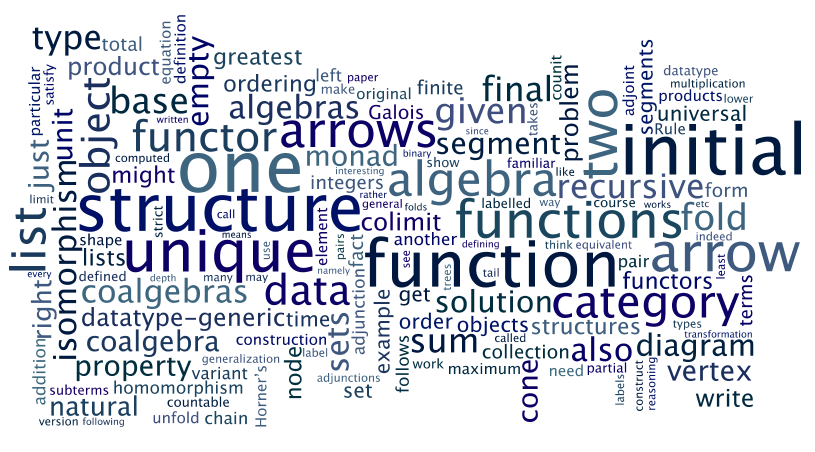
Jeremy Gibbons is a Professor of Computing at the University of Oxford, affiliated with the Department of Computer Science within the Faculty of Computer Science. He serves as Director of the Professional Programmes, overseeing part-time postgraduate degrees in Software Engineering. His roles include Chair of the Faculty of Computer Science (2012–2016), Director of the Software Engineering Programme, and Fellow of Kellogg College. Gibbons' research focuses on programming methodologies, particularly functional and object-oriented languages, with an emphasis on program calculation, design patterns, and bidirectional transformations. He leads the Algebra of Programming research group and is Editor-in-Chief of the Journal of Functional Programming and The Art, Science, and Engineering of Programming . Education includes a D.Phil. from Oxford University. His work spans formal methods, domain-specific modeling for clinical trials (e.g., CancerGrid project), and semantic frameworks for software systems. He has advised numerous students and contributed to open-access initiatives in publishing. Key collaborations include roles in ACM SIGPLAN and IFIP Working Groups 2.1 and 2.11. Research interests emphasize foundational aspects like profunctor optics, categorical programming, and algorithm design. Notable projects include datatype-generic programming and metadata-driven engineering for clinical trials. His work bridges theoretical computer science with practical applications in software architecture and system design.
Richard Garner is a lecturer at Macquarie University's School of Mathematical and Physical Sciences, Faculty of Science and Engineering. He specializes in teaching mathematics to engineering and computing students in units like MATH2055 and MATH1007, focusing on problem-solving and real-world applications. His teaching philosophy emphasizes authentic mathematical experiences, blending abstract concepts with practical examples, such as connecting multivariable calculus to AI technologies. School: School of Mathematical and Physical Sciences University: Macquarie University Teaching Areas: Mathematics for engineering and computing, convolution, multivariable calculus Richard won a Student Nominated Award in the 2023 Vice Chancellor’s Learning and Teaching Awards, reflecting his commitment to student-centered education. He prioritizes clarity in course design, using visual tools and accessible materials to enhance learning, and fosters a supportive environment where students feel comfortable asking questions. Key Teaching Strategies Organized iLearn layouts following Macquarie University's standards Multiple formats for lecture materials (diagrams, color-coded slides) Weekly task clarity and real-world problem framing Live worked examples and transparent success criteria His research spans category theory, computational effects, and homotopy theory, with publications on topics like comodels, monoidal bicategories, and enriched categories. Richard's work bridges abstract mathematics with applications in computer science and logic. Scientific Awards 2023 Vice Chancellor’s Learning and Teaching Award (Student Nominated) Students praise his ability to make complex concepts intuitive, his enthusiasm for mathematics, and his dedication to explaining the 'why' behind the subject. His teaching design, including time-sensitive banners and structured weekly content, has been highlighted as exemplary.
Günter Rote is a Professor in the Department of Computer Science at Freie Universität Berlin, specifically within the Theoretical Computer Science group (Arbeitsgruppe Theoretische Informatik). He holds a formal academic title of Professor Dr. and is affiliated with the Faculty of Mathematics and Computer Science. His research focuses on theoretical computer science, computational geometry, algorithms, and discrete mathematics. Key research interests include geometric algorithms, optimization problems (e.g., shortest paths, traveling salesman problems), and algorithm design for parallel computing systems. His work spans topics such as systolic arrays, convex hulls, and combinatorial optimization. Rote’s contributions include foundational studies on computational geometry problems, algorithmic complexity, and practical applications in energy equity and infrastructure design. Publications highlight contributions to solving extremal equations, polygon transformations, and the quadratic assignment problem. He has been active in academic leadership, mentoring students, and contributing to computational science communities. His email is rote@inf.fu-berlin.de, and his office is located at Takustraße 9 in Berlin.