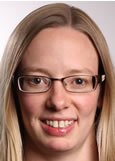
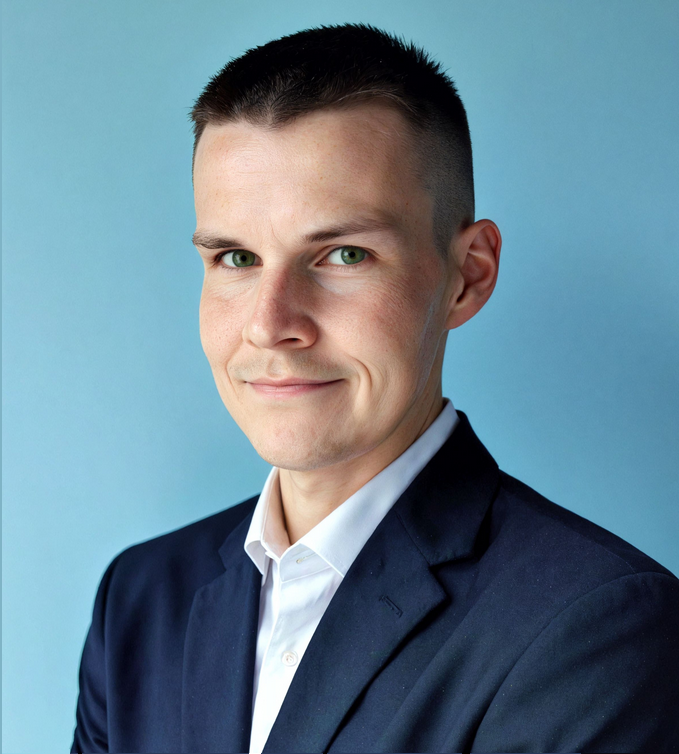
Renjie Feng is a Research Fellow in Mathematics and AI at the School of Mathematics and Statistics and the Sydney Mathematical Research Institute , University of Sydney. His work bridges probability theory, statistics, and applications in machine learning, deep learning, and artificial intelligence. His research interests focus on probability theory and its applications to machine learning , random matrix theory , and statistical physics . He investigates extreme value problems, spectral properties of random matrices, and topological features of random fields over Riemannian manifolds. Recent publications highlight trends in random matrix theory (GUE, GOE, GSE), extreme gap problems , determinantal point processes , and Wiener chaos . Collaborative works with F. Götze, D. Yao, and R. Adler emphasize U-statistics , multivariate linear statistics , and random topology inspired by Poisson point process studies.
Demetris Christodoulou is an Associate Professor in Accounting, Governance and Regulation at the University of Sydney. He holds a BEcon from Piraeus University, an MSc(Fin) from the University of York (UK), and a PhD from Athens University of Economics and Business (AUEB). His research focuses on applying data analytics, econometrics, and visualization techniques to financial analysis, equity valuation, life insurance, and financial advice. He co-directs the PEMA research group, specializing in productivity and performance measurement analytics, and previously led the MEAFA research group (2007–2022). He has collaborated extensively with industry partners including Deloitte and Australian insurers, and developed training programs for over 1,000 executives. His work includes open-source contributions to Stata software and the Graph Workflow platform, alongside $662k in workshop-generated funds supporting academic programs. He has advised multiple PhD students and taught at leading universities globally. Education: BEcon in Economics (Econometrics), Piraeus University MSc in Finance, University of York (UK) PhD in Accounting and Financial Analysis, Athens University of Economics and Business His research interests span financial reporting models, life insurance underwriting strategies, and behavioral finance. Recent projects address dishonesty mitigation in insurance disclosures and the adviser effect on customer disclosures. He has published widely in top journals like the Review of Accounting Studies and Stata Journal , and his work was featured in The Australian for insights on insurance fraud reduction. He maintains international collaborations, including visiting roles at Columbia Business School and the University of Cyprus, and serves on advisory boards for organizations like Behaviour.ai. Publications highlight methodological innovations in econometrics and visualization, with 2025's upcoming Stata Journal paper advancing time-series analysis techniques. His grants include partnerships with industry on longitudinal studies of insured lives, aiming to improve risk modeling and public policy insights.
Kevin Coulembier is a Professor in the Algebra Research Group at the University of Sydney . He has held a continuing position since 2017 and received prestigious awards including the Christopher Heyde Medal (2021), G. de B. Robinson Award (2022), and the Frontiers of Science Award (2024). Research Focus: Representation theory of algebraic groups, Lie (super)algebras, quantum groups, and monoidal categories; tensor ideals; and homological algebra. Grants: ARC Future Fellowship (2023), ARC Discovery Projects (2021, 2018), and DECRA Fellowship (2017). Students: Supervised postdocs and PhD students including Nick Bridger, Joseph Newton, Bregje Pauwels, Alexander Sherman, and Willow Stewart. Editorial Roles: Editor for Annals of Representation Theory and Mathematische Zeitschrift .
Professor Laurentiu Paunescu is a faculty member in the School of Mathematics and Statistics at the University of Sydney . His research focuses on Real and Complex Singularities , Stratifications , and Real and Complex Algebraic Geometry , with particular interest in geometric criteria for ignoring higher-order terms in analytic maps and blow-analytic equivalence. University: University of Sydney School: School of Mathematics and Statistics Academic Rank: Professor Email: laurentiu.paunescu@sydney.edu.au, laurent@maths.usyd.edu.au Address: F07 - Carslaw Building, The University of Sydney Paunescu's research aligns with the University of Sydney's Understanding the Universe and Fundamental Laws of Nature strengths. He investigates topological invariance under bi-Lipschitz homeomorphisms, Lipschitz stratification, and connections between real and complex Milnor fibers. His work often involves collaborations with researchers like S. Koike, A. Parusiński, and M. Tibar. Recent publications (2024–2019) emphasize Lipschitz geometry (e.g., directional bundles, stratification), cohomology of hypersurface singularities , and polynomial function finiteness . Notable collaborations include studies on vanishing cohomology , clustered polar curves , and CAD construction validity . Grants from DVC Research and ARC Discovery Projects support his work. He supervises research students in areas like O-minimal Geometry and contributes to Metric Spaces (Advanced) teaching. Paunescu co-edits workshops such as the Australian-Japanese Real and Complex Singularities Workshop , advancing international collaboration in singularity theory.
Jan de Gier is a Professor at the School of Mathematics and Statistics, The University of Melbourne . He is also the Founding Director of MATRIX , Australia’s residential research institute in the mathematical sciences, and a former Deputy Director and Chief Investigator in the Australian Research Council Centre of Excellence for Mathematical and Statistical Frontiers (ACEMS) . Additionally, he co-founded the Australian and New Zealand Association for Mathematical Physics (ANZAMP) in 2011 and served as its inaugural Chair. His research focuses on solvable lattice models at the intersection of mathematical physics and statistical mechanics . Key areas include the application of quantum integrability , algebraic structures like the Yang-Baxter equation, Hecke algebras, and quantum groups, as well as analytical methods such as complex analysis and elliptic curves. His work bridges pure and applied mathematics through connections between enumerative combinatorics , representation theory , and real-world phenomena like traffic flow modeling via exclusion processes . The 15 most recent articles reflect his expertise in integrable systems , non-equilibrium statistical mechanics , and algebraic combinatorics . Topics span Macdonald polynomials , stochastic duality , quantum spin chains , and traffic modeling , with methodologies involving matrix product forms , exact solutions , and critical phenomena analysis. He has contributed to editorial efforts through the AustMS Gazette and MATRIX Annals, and has been involved in public science communication via opinion pieces on mathematics funding and applications. His work emphasizes the importance of fundamental research in driving technological innovation, as highlighted in media articles discussing pi calculation , zero-knowledge proofs , and mathematics education .
Richard Garner is a lecturer at Macquarie University's School of Mathematical and Physical Sciences, Faculty of Science and Engineering. He specializes in teaching mathematics to engineering and computing students in units like MATH2055 and MATH1007, focusing on problem-solving and real-world applications. His teaching philosophy emphasizes authentic mathematical experiences, blending abstract concepts with practical examples, such as connecting multivariable calculus to AI technologies. School: School of Mathematical and Physical Sciences University: Macquarie University Teaching Areas: Mathematics for engineering and computing, convolution, multivariable calculus Richard won a Student Nominated Award in the 2023 Vice Chancellor’s Learning and Teaching Awards, reflecting his commitment to student-centered education. He prioritizes clarity in course design, using visual tools and accessible materials to enhance learning, and fosters a supportive environment where students feel comfortable asking questions. Key Teaching Strategies Organized iLearn layouts following Macquarie University's standards Multiple formats for lecture materials (diagrams, color-coded slides) Weekly task clarity and real-world problem framing Live worked examples and transparent success criteria His research spans category theory, computational effects, and homotopy theory, with publications on topics like comodels, monoidal bicategories, and enriched categories. Richard's work bridges abstract mathematics with applications in computer science and logic. Scientific Awards 2023 Vice Chancellor’s Learning and Teaching Award (Student Nominated) Students praise his ability to make complex concepts intuitive, his enthusiasm for mathematics, and his dedication to explaining the 'why' behind the subject. His teaching design, including time-sensitive banners and structured weekly content, has been highlighted as exemplary.
Dr Alex Sherman is a Lecturer at UNSW Sydney in the School of Mathematics & Statistics . He previously held postdoctoral positions at the University of Sydney with Kevin Coulembier and at Ben-Gurion University of the Negev with Inna Entova-Aizenbud. His research focuses on representation theory and supergeometry , with applications to Lie superalgebras , modular representation theory , and tensor categories . He has published extensively on topics such as ghost distributions, Duflo-Serganova functors, and the geometry of spherical supervarieties. Email: alex.sherman@unsw.edu.au Location: Room 4111, The Red Centre, UNSW Sydney, NSW 2052 In 2025 , he will lecture the Linear Algebra stream of MATH1241. He organizes the UNSW Pure Maths Seminar and Algebra Seminar , and has co-organized courses on Kazhdan-Lusztig equivalences and tensor categories.
Arun Ram is a Professor and Chair of Pure Mathematics at the School of Mathematics and Statistics . His work bridges representation theory, algebraic combinatorics, and mathematical physics, with a focus on Hecke algebras, Macdonald polynomials, and symmetry in algebraic structures. Education: PhD, University of California - San Diego Bachelors Degree, Massachusetts Institute of Technology His research explores the interplay of representation theory with combinatorial models and geometric configurations, including applications to network analysis and number systems. Key contributions include advancements in understanding Macdonald polynomial expansions, Clebsch-Gordan coefficients, and Monk rules. His projects, such as Tantalizer Algebras and Macdonald Polynomials: Combinatorics and Representations , highlight collaborations and grants in algebraic research. While no explicit scientific awards are listed, his 66+ scholarly works and 2007-2016 research contracts demonstrate sustained academic impact.
Uri Onn is a Professor at the Mathematical Sciences Institute of the Australian National University (ANU). His research focuses on advanced algebraic structures, including zeta functions, arithmetic groups, and representation theory. He contributes to the understanding of nilpotent groups, valuation rings, and Lie algebras through rigorous mathematical frameworks. Research Interests: Dr. Onn’s work spans number theory, group theory, and algebraic geometry, with a particular emphasis on zeta functions, arithmetic groups, and representation growth. His studies explore the interplay between algebraic structures and their applications in modern mathematics. Key Research Trends: His articles address topics like zeta functions in nilpotent groups, representation theory over finite rings, and the behavior of arithmetic groups under base change. These contributions advance foundational knowledge in abstract algebra and number theory. Grants and Projects: He leads projects such as the Geometry of Character Varieties (2025–2028) and Representations of Arithmetic Groups (2017–2023), focusing on algebraic and geometric representations.
Tao Zou is an Associate Professor at the Research School of Finance, Actuarial Studies and Statistics, Australian National University. His research spans covariance regression modeling, network data analysis, and applications in financial and environmental statistics. He earned a Ph.D. in Statistics in 2016. Ph.D. in Statistics, 2016 Dr. Zou’s work pioneers covariance regression, where covariances are modeled as functions of covariiates. Key contributions include robust estimation techniques, spatio-temporal modeling, missing data imputation via semi-supervised learning, and distributed data aggregation. His methods address challenges in high-dimensional and non-Euclidean data analysis. Recent publications (2025–2023) explore quasi-score matching for spatial autoregressive models, regularization in network regression, functional principal component analysis for complex data, and environmental applications like PM2.5 pollution studies. These works emphasize robustness, scalability, and interdisciplinary relevance in economics, finance, and environmental science. Dr. Zou collaborates on projects like the 2023 Data Analysis App to Empower Assessment of Immunogenicity of Biologics (Co-Investigator). While his student supervision list isn’t explicitly provided, his methodological advancements influence big data and spatial statistics. He contributes to open-access software and continues expanding covariance regression for non-normal and functional data.
Dr. James Saunderson is a Senior Lecturer and Director of Education in the Department of Electrical and Computer Systems Engineering at Monash University. He holds a PhD in Electrical Engineering and Computer Science from MIT and has held postdoctoral roles at Caltech and the University of Washington. His expertise spans convex optimization, semidefinite programming, and quantum information theory. Education : PhD in EECS, MIT (2015) MS in EECS, MIT (2011) Bachelor of Engineering (Honours) and Bachelor of Science (Honours), University of Melbourne (2008) Research Interests : Convex optimization, quantum information theory, signal processing, and algorithm design. Focuses on algebraic and geometric aspects of optimization, with applications in engineering and quantum systems. Recent Projects : Exploiting duality in quantum relative entropy optimization Hyperbolic programming and conic optimization Applications in nanotechnology and bioinformatics Teaching : Courses include Control System Design, Signals and Systems, and Optimization for Engineers. Awards : SIAM Optimization Best Paper Prize (2020) Grants and Collaborations : Australian Research Council Discovery Early-Career Research Fellow (2020–2024) Leading projects in quantum optimization and bioengineering applications.
Professor Guoyin Li is a faculty member at the School of Mathematics & Statistics , University of New South Wales (UNSW Sydney). He holds a Ph.D. from The Chinese University of Hong Kong (2007) and has been at UNSW since 2011, currently serving as Professor and Research Director. Research Interests His work spans optimization , variational analysis , and multilinear algebra , with applications in robust optimization , structural engineering , and machine learning . He specializes in nonconvex nonsmooth optimization , tensor eigenvalue problems , and exact semi-definite programming relaxations . Recent Publications His articles focus on robust optimization for structural design, nonlinear approximation techniques, and conic programming for uncertain data. Key journals include Foundations of Computational Mathematics , Mathematical Programming , and Computer Methods in Applied Mechanics and Engineering . Awards and Grants Fellow of the Australian Mathematical Society (2023) 2022 AustMS Medal 2024 Marguerite Frank Award ARC Discovery Grants (2021-2023, 2025-2027) ARC Research Hub Project (2017-2021) Professional Roles He serves on editorial boards of SIAM Journal on Optimization , Optimization Letters , and Journal of Optimization Theory and Applications , and has delivered plenary lectures at international conferences in Austria, Spain, and Canada.
Dr. Emma Carberry is a Lecturer in the School of Mathematics and Statistics at the University of Sydney, within the Faculty of Science. Her research focuses on differential geometry and integrable systems, particularly harmonic maps, conformal surface theory, and constant mean curvature surfaces. She is a member of the Sydney Southeast Asia Centre. Her research interests include geometric applications of integrable systems, spectral curves, and the interplay between differential geometry and complex algebraic geometry. Notable contributions include studies on harmonic tori, Whitham deformations, and constant mean curvature surfaces in various spaces. Dr. Carberry has secured grants including the DVC Research/Brown Fellowship (2016) and DVC Research/Laffan Fellowship (2010). Her teaching includes advanced courses such as MATH3968 (Differential Geometry: Advanced), Honours Riemannian Geometry, and undergraduate modules like MATH1011 (Applications of Calculus). Her academic work spans over two decades, with publications in journals like the Journal of Geometry and Physics and the Journal of the London Mathematical Society. She collaborates internationally and maintains an active research profile in geometric analysis and integrable systems.
Dr. Daniel Tubbenhauer is an ARC Future Fellow at the University of Sydney's School of Mathematics and Statistics, specializing in categorical representation theory, 2-representation theory, and their applications to topology, cryptography, and machine learning. His research bridges algebra, category theory, and low-dimensional topology, with a focus on modular representation theory and diagrammatic algebra. Education: PhD in Mathematics (2013), supported by extensive postdoctoral research globally. Research Interests: He explores categorical structures in representation theory, including categorification of quantum groups, link homologies, and applications in cryptography. His work emphasizes diagrammatic methods and computational approaches to algebraic problems. Publications: Over 30 peer-reviewed articles, including foundational work on web categories, Soergel bimodules, and applications of representation theory to machine learning. Recent projects analyze growth rates in tensor powers and fractal behavior in algebraic structures. Awards: Australian Research Council Future Fellowship (2023), supporting his research on categorical representation theory. Teaching & Supervision: Taught courses on quantum topology, category theory, and representation theory. Current student: Daniel Collison (PhD). Advises on projects linking representation theory to AI and cryptography. Labs/Teams: Collaborates with global networks in algebraic topology and categorification, including projects at the Sydney Mathematical Research Institute. Maintains an active YouTube channel ( VisualMath ) for outreach.
Dr. Alessandro Ottazzi is a Senior Lecturer in the School of Mathematics and Statistics at the University of New South Wales (UNSW). He earned his PhD from the University of Genoa (Italy) and held postdoctoral positions at the University of Bern (Switzerland), Università di Milano-Bicocca, and Università di Trento. His research spans geometric analysis, Lie groups, sub-Riemannian geometry, and CR structures, with a focus on the interplay between algebraic topology and analytic methods. Ottazzi's work consistently explores geometric rigidity, function spaces on non-Euclidean structures, and mappings in stratified groups. Recent publications emphasize Hardy spaces, Carnot group embeddings, and measure theory on metric trees. His research demonstrates deep connections between differential geometry, harmonic analysis, and operator theory.