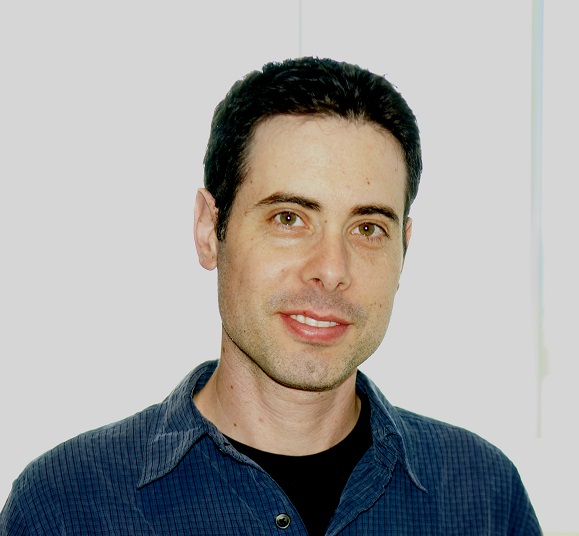
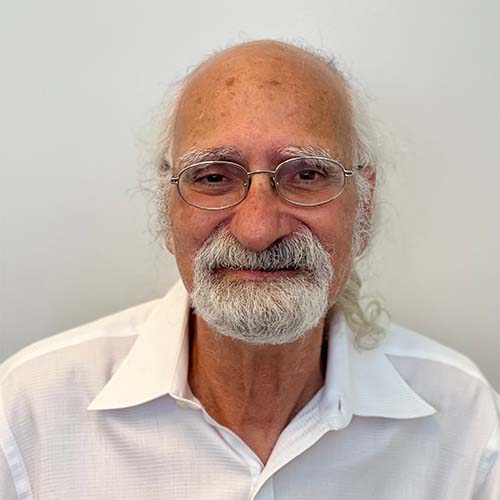
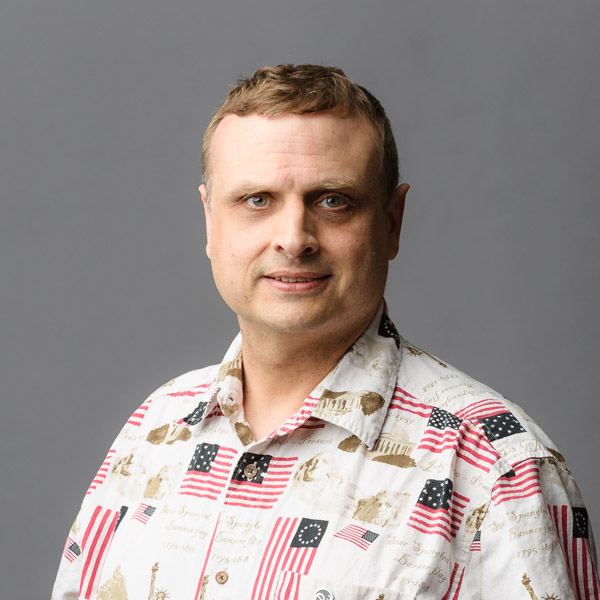
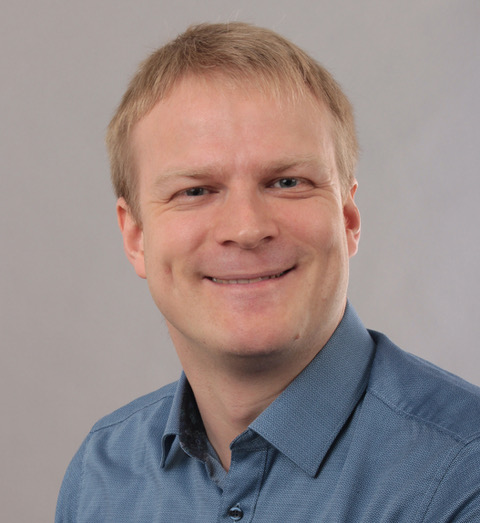
Eran Treister is an Assistant Professor at the Ben Gurion University of the Negev in the Department of Computer Science. He completed his postdoctoral fellowship at the University of British Columbia (2014-2016) and earned his PhD from the Technion in 2014 under Prof. Irad Yavneh. His research spans computational science, numerical methods, and machine learning, with a focus on: Scalable algorithms for inverse problems Graph Neural Networks (GNNs) optimization Seismic and optical imaging via PDE solvers Low-precision deep learning acceleration Multilevel preconditioning techniques Recent work explores: Graph neural networks for PDEs with adaptive meshes Deep learning approaches to Helmholtz equation modeling 3D shape reconstruction via parametric level sets He serves on editorial boards: SIAM Journal on Scientific Computing (2024-) Copper Mountain Conference on Multigrid Methods (2025) International Conference on Machine Learning (ICML) as Area Chair (2025) Current teaching: Optimization Methods for Data Science (Spring 2025) Deep Learning Mini-Project (Winter 2024/5) Advanced Numerical Optimization (Spring 2025)
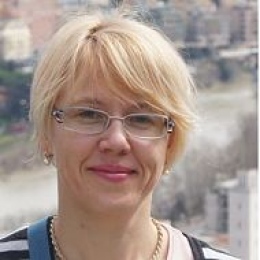
Tatjana von Rosen is an Associate Professor in Statistics at the Department of Statistics, Stockholm University . She earned her PhD in Mathematical Statistics (2004) and MSc in Biostatistics (1994) from the University of Tartu and Limburg Universitair Centrum respectively. Her research focuses on Univariate and multivariate linear models Statistical diagnostics and model validation Matrix algebra applications Educational statistics She collaborates with researchers in linguistics, special education, biology, and medicine. Her funded projects include: Swedish Research Council grants (2018-2021, 2011-2013) Royal Swedish Academy of Sciences funding (2011) Estonian Research Council support (2006-2008) Notable supervision includes: PhD candidates Azadeh Chizarifard (2024), Karin Stål (2015), Yuli Liang (2015), Chengcheng Hao (2014) MSc student Ilf Jederlund (2021) Current research directions involve: Hybrid machine learning-statistical modeling for categorical repeated measures Generalized Linear Mixed Model inference Covariance matrix misspecification analysis
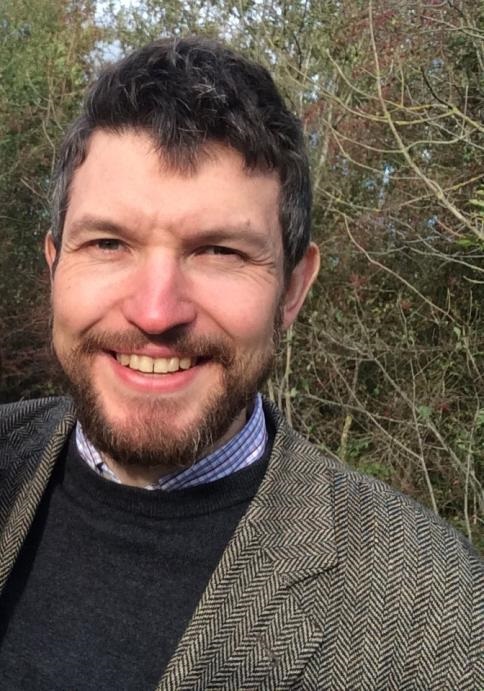
Prof. Dr. Frederik Herzberg is a Lecturer in the Department of Mathematics at Saarland University since 2022, holding the formal academic title of Titular Professor (apl. Prof.) from Bielefeld University (2016). His academic journey spans multiple disciplines, with habilitations in both Philosophy (University of Munich, 2017) and Economic Theory (Bielefeld University, 2011), reflecting his interdisciplinary expertise. Herzberg's educational background includes dual doctorates: a DPhil in Mathematics from the University of Oxford (2006) specializing in Mathematical Finance, and a Dr.rer.nat. in Mathematics from the University of Bonn (2005) focusing on Probability Theory. He also holds a Diplom in Mathematics from Bonn (2003) and a Master of Theology from the University of Aberdeen (2018), demonstrating remarkable breadth across quantitative and humanities disciplines. His research interests bridge mathematical finance, nonstandard analysis, social choice theory, and epistemology. Herzberg has developed innovative applications of nonstandard analysis to financial mathematics and has made significant contributions to the theoretical foundations of probabilistic aggregation and social choice. His work often explores the intersection of mathematical rigor and philosophical implications, particularly regarding infinitesimals, decision theory, and collective rationality. Analysis of his recent publications reveals a consistent focus on the mathematical foundations of decision-making under uncertainty, with particular attention to aggregation problems, non-Archimedean probability structures, and the philosophical implications of mathematical models. His work spans both theoretical developments in stochastic calculus and practical applications in financial economics. Shortlisted for permanent professorships at the University of Würzburg (Institute of Mathematics, 2009) and other universities Research fellowships from prestigious organizations including the John Templeton Foundation, Alexander von Humboldt Foundation, and German Research Foundation Extensive service as reviewer for major funding bodies including the European Research Council and Austrian Academy of Sciences Herzberg has supervised doctoral students including Geghard Bedrosian (2012-2015) and Tolulope Fadina (2011-2015), and maintains active research collaborations across Europe and North America. His academic service includes editorial work, conference organization, and membership on Bielefeld University's Ethics Committee (2014-2022).
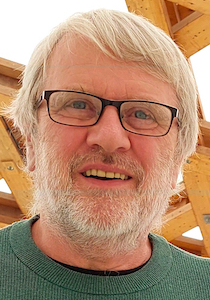
Roland Speicher is a Professor at the Department of Mathematics, Saarland University. His research focuses on Free Probability Theory , Random Matrices , and Operator Algebras , with applications in quantum physics, machine learning, and statistical mechanics. University: Saarland University Department: Mathematics Academic Rank: Professor Email: speicher@math.uni-sb.de Roland Speicher's research explores the interplay between free probability and random matrices, particularly through the lens of quantum mechanics and computational mathematics. He has contributed to understanding the effects of non-linear transformations on random matrices and their eigenvalue distributions, extending free probability tools to problems in machine learning and quantum information theory. His recent publications address: Non-linear functions on orthogonally invariant matrices Fuglede-Kadison determinants in operator-valued free probability Structured random matrices and cyclic cumulants Free probability applications in quantum gravity and black hole entropy Connections to the replica trick and quantum de Finetti theorems Key scientific recognitions include the ERC Advanced Grant (2014-2019) for non-commutative distributions. He leads a research group at Saarland University, collaborating with Dr. Johannes Hoffmann, Dr. Tobias Mai, and M.Sc. Alexander Wendel. His teaching includes advanced courses on random matrices, with lecture notes published by EMS Press.
Ilhan Izmirli is an Associate Professor in the Department of Statistics within the Volgenau School of Engineering at George Mason University. He maintains an active research program spanning mathematics education, philosophy of mathematics, history of mathematics, and interdisciplinary applications in music and physics. His institutional roles include Course Coordinator for STAT 250 – Introductory Statistics since 2013 and Department Representative on the Distance Education Committee. His educational background includes: PhD in History of Mathematics from American University PhD in Mathematics from University of South Carolina MS in Mathematics from University of Istanbul BS in Mathematics from Bosphorus University Izmirli's research program demonstrates remarkable interdisciplinary breadth, connecting mathematical concepts across domains. His work in mathematics education emphasizes social constructivist approaches, while his investigations into the philosophy of mathematics draw from Lakatos' quasi-empiricism. The music-mathematics interface appears consistently throughout his publications, exploring topics from dodecaphony to interval vectors and contour classes. His historical analyses of mathematical concepts—from Bernoulli's inequality to cubic equations—reveal deep engagement with the evolution of mathematical thought. Recent work shows increasing focus on the pedagogical implications of historical mathematical developments. His scientific contributions have been recognized through multiple honors: Fulbright Scholarship recipient Multiple comprehensive exams passed with distinction Strayer University Faculty Award of Excellence NSF workshop scholarship Selection to Who's Who Among America's Teachers Izmirli maintains active scholarly service through book and paper reviews for Mathematical Reviews/MathSciNet and various journals. His teaching portfolio spans foundational mathematics courses through advanced graduate seminars, with particular emphasis on statistics education. Professional memberships include the Mathematical Association of America, American Mathematical Society, and American Statistical Association. His current research trajectory shows continued exploration of mathematical structures in music theory alongside historical and philosophical investigations of mathematical concepts.
Buşra Aktaş is an Assistant Professor in the Department of Mathematics at the Faculty of Arts and Sciences, Kırıkkale University. She holds a PhD in Mathematics from Kırıkkale University (2020) and has been affiliated with the institution since 2015, initially as a Research Assistant and then as a Research Assistant Doctor (2020-2022) before transitioning to her current role in 2023. Her academic journey began at Erciyes University, where she earned her undergraduate degree with honors in 2012, followed by a master's degree at Fırat University (2015). Education: BSc, Mathematics, Erciyes University (2012) MSc, Mathematics, Fırat University (2015) PhD, Mathematics, Kırıkkale University (2020) Research Interests: Buşra Aktaş specializes in differential geometry, non-Euclidean geometry, and theoretical physics. Her work explores constraint manifolds, dual numbers, and hyperbolic structures in Lorentzian space. She also investigates topological properties and analyticity in geometric contexts. Publication Trends: Her recent publications (2017-2025) focus on geometric and algebraic structures in Lorentzian space, including constraint manifolds, dual hyperbolic spheres, and Rodrigues parameters. These works bridge theoretical mathematics with applications in kinematics and topological modeling. Professional Experience: She has held research assistant roles at Fırat University (2013-2015) and Kırıkkale University (2015-2020, 2020-2022), followed by her current position as Assistant Professor. Her career spans both academic research and teaching in mathematics.
Dr. William Paulsen is a Professor of Mathematics at Arkansas State University 's Beck College of Sciences & Mathematics in the Department of Mathematics & Statistics. His academic journey includes a B.A., M.A., and Ph.D. from Washington University in St. Louis (1985, 1987, 1990). His research spans Applied Mathematics , Fractal Dimensions , and Abstract Algebra , with notable contributions to structural dynamics and aperiodic tiling theories. Education B.A., Mathematics, Washington University - St. Louis, 1985 M.A., Mathematics, Washington University - St. Louis, 1987 Ph.D., Mathematics, Washington University - St. Louis, 1990 Research Interests Dr. Paulsen's work in Applied Mathematics focuses on eigenfrequency distributions in beam structures and fractal dimensions. In Abstract Algebra , he explores group presentations and Galois theory. His 2002 Geombinatorics paper on 3-coloring Penrose tilings demonstrates intersectional creativity in discrete geometry. Publications and Projects Recent studies include the 2014 Journal of Sound and Vibration work on Exterior Matrix Methods for eigenfrequencies and the 2002 Complex Variables analysis of polylogarithms. Earlier works (1990s) address structural engineering challenges and fractal dimension theory. His projects include tetration problem-solving and Abstract Algebra courseware development . Scientific Awards No scientific awards are mentioned in the provided texts. Advising and Collaborations No advisees or collaborative projects beyond co-authored works (e.g., with M. Manning and M. Franklin) are listed in the texts.
Zhaojun Bai is a Distinguished Professor in the Department of Computer Science and Department of Mathematics at the University of California, Davis, and a Faculty Scientist at Lawrence Berkeley National Laboratory's Scalable Solver Group. He obtained his PhD from Fudan University, China, and completed postdoctoral training at the Courant Institute of New York University. Research Interests Professor Bai's research spans several key areas of computational mathematics: Numerical Linear Algebra and Matrix Computations : Developing algorithms for eigenvalue problems and matrix functions Mathematical Software Engineering : Creating high-performance libraries like LAPACK Scientific Computing : Applications in circuit simulation, MEMS, and quantum systems Information-based Computing : Methods for data clustering and image segmentation Quantum Simulations : Development of QUEST software for quantum Monte Carlo methods Publication Trends His recent publications (2015-2020) primarily focus on advanced numerical methods for eigenvalue problems, quantum Monte Carlo simulations, and high-performance computing. Research themes include nonlinear eigenvalue solvers, model reduction techniques, quantum system simulations, and applications in materials science and data science. Awards and Honors SIAM Fellow Research Teams and Labs Professor Bai leads significant collaborations including the PETAMAT project for next-generation quantum simulation software and contributes to the LBL Scalable Solver Group. He has supervised multiple software development projects including LAPACK, QUEST quantum simulation toolbox, and various numerical algorithm implementations.
Ong Kai Lin is an Assistant Professor at Heriot-Watt University's School of Mathematical & Computer Sciences. Her work focuses on algebraic structures and their applications in coding theory, quantum computing, and machine learning. She leads initiatives like the Maths Gym to enhance student learning and serves as First Year Coordinator of Studies for AMS programmes. Ribbons of her research include: Algebraic applications in quantum error-correction Idempotent-based code construction Zero-divisor code equivalence analysis Quantum stabilizer code design Statistical process control techniques She received the HWU Teaching Excellence Award (Global Teaching Team) in 2021 for her innovative student-staff collaboration practices. Ong actively engages in academic outreach through oral presentations on topics like Globally Connected Learning and Linear Algebra education .
Jaouad Mourtada is an Assistant Professor in the Department of Statistics at ENSAE Paris, a founding member of the Institut Polytechnique de Paris, and a permanent member of CREST (Center for Research in Economics and Statistics). Since September 2020 he has held this faculty position, after completing a post-doctoral fellowship at the University of Genoa and earning his PhD from École Polytechnique. Education PhD in Statistics, École Polytechnique (2016–2019) MSc in Mathematics, "Probability and Random Models", Université Pierre et Marie Curie (2016) MSc in Mathematics, "Fundamental Mathematics", Université Pierre et Marie Curie (2015) BSc in Mathematics, Université Pierre et Marie Curie & École Normale Supérieure (2013) Student at École Normale Supérieure (2012–2016) Research Interests Mourtada’s work lies at the intersection of statistics and learning theory, with a focus on understanding the fundamental complexity of prediction and estimation tasks. His interests span: High-dimensional statistics and minimax theory Statistical learning theory and generalization bounds Online learning, regret minimization, and expert aggregation Density estimation and robust statistics Random forests, kernel methods, and convex optimization Research Output Trends Across more than fifteen recent publications, Mourtada has systematically advanced the understanding of statistical and computational limits in learning. His contributions range from exact minimax analyses of linear least squares and novel robust regression guarantees to refined PAC-Bayesian bounds for aggregation and sharp asymptotics for ridge regression. A recurrent theme is the development of estimators that achieve optimal or near-optimal rates while remaining computationally tractable and adaptive to unknown parameters. Scientific Awards & Recognition While the provided materials do not list specific awards, his sustained publication record in top venues such as Annals of Statistics , Journal of Machine Learning Research , Journal of the European Mathematical Society , and leading ML conferences (NeurIPS, COLT, AISTATS) attests to significant peer recognition. Teaching & Mentoring Mourtada has extensive teaching experience at both undergraduate and graduate levels, covering probability, statistics, and machine learning. Courses delivered include: Statistical Learning Theory (M2 Data Science, École polytechnique & ENSAE) Probability Theory (ENSAE) Python for Probability, Statistics, and Machine Learning (École polytechnique) Optimization for Data Science (M2 Data Science, École polytechnique) Laboratories & Collaborations He is affiliated with CREST/ENSAE and has previously collaborated with the Laboratory for Computational and Statistical Learning at the University of Genoa, the Center for Applied Mathematics (CMAP) at École Polytechnique, and maintains ongoing research ties with international scholars in statistical learning and optimization.
Professor Torben Krüger is a Chair for Stochastics at FAU Erlangen-Nürnberg , focusing on random matrix theory , probability theory , and mathematical physics . His research explores statistical properties of large complex systems in physics, statistics, and engineering. Education : PhD in Mathematics (2015), Diplomas in Physics (2013) and Mathematics (2012) from LMU Munich. Employment : Previously at University of Copenhagen (2020-2023), University of Bonn (2017-2020), IST Austria (2014-2017), and LMU Munich (2012-2014). His group investigates disordered quantum systems and dynamic evolution on random networks , with applications in neural networks , communication theory , and quantum transport . Key projects include Universality in Disordered Quantum Systems and Dynamics on Correlated Networks . Notable awards : 2021 NNF Project Grant (2.7 Mio. DKK) 2020 Villum Young Investigator Award (9.3 Mio. DKK) 2017 Carathéodory Dissertation Prize (LMU Munich) He has delivered invited talks globally, including at Jeju , Oberwolfach , and New York . His work spans supersymmetric methods , Dyson-Brownian motion , and random Schrödinger operators .
Ágnes Backhausz is a habilitated assistant professor at Eötvös Loránd University's Faculty of Science, Institute of Mathematics, Department of Probability Theory and Statistics, with a part-time research position at the Alfréd Rényi Institute of Mathematics. Her academic career spans theoretical probability and practical applications in network science. Dr. Backhausz's research focuses on probability theory with specializations in random graphs, matrices and their limits, spectral theory of random graphs, and factor of iid processes. Her work bridges pure mathematics with real-world applications, particularly in epidemiological modeling on complex networks. She has made significant contributions to understanding the eigenvectors of random regular graphs and the behavior of processes on infinite trees. Her recent publications demonstrate a growing emphasis on applying probabilistic methods to epidemic modeling on multilayer networks with overlapping communities. This research has important implications for public health policy and disease control strategies. The trend in her work shows increasing interdisciplinary collaboration, combining mathematical rigor with practical healthcare applications. Dr. Backhausz holds significant academic responsibilities including serving as Supervisor and training lead for the Beyond The Edge Marie Curie Doctoral Network (2024-2027) and as a researcher at the National Laboratory for Health Security, Hungary (2023-2026). She is an editor for Acta Mathematica Hungarica since March 2021 and has been organizing the Departmental seminar of the Department of Probability Theory and Statistics since 2010. She actively contributes to the mathematical community through program committee memberships for major conferences like Eurocomb and by organizing workshops on graph limits, groups, and stochastic processes. Her editorial work further demonstrates her standing in the mathematical research community. As an educator, Dr. Backhausz teaches mathematical statistics, probability theory, and related subjects across multiple programs at ELTE, including courses for mathematics students, earth science students, and informatics programs, showcasing the interdisciplinary nature of her expertise.
Assoc. Prof. Petya Asenova, PhD, is a permanent faculty member at New Bulgarian University's Bachelor's Faculty since 2001, holding the rank of Associate Professor in the Department of Informatics. She has served as Director of bachelor's programs in Informatics and Network Technologies, Director of the Master's program in IT Project Management, Head of the Department of Informatics, and Dean of the Bachelor's Faculty. Her academic credentials include: Bachelor's degree in Computational Mathematics from Plovdiv University "P. Hilendarski" Master's degree in Mathematics Education from Plovdiv University "P. Hilendarski" Master's degree in Informatics from Sofia University "St. Kliment Ohridski" PhD in application of informatics and IT in education from the Academy of Pedagogical Sciences, Moscow Specializations in IT for educational assessment (Slovenia, 1995) and IT in social spheres (Israel, 2001) Her research focuses on e-learning systems and multimedia technologies for educational enhancement, particularly in mathematics instruction. With over 90 publications and leadership in more than 10 international projects, her work bridges theoretical computer science with practical classroom applications through tools like Computer Algebra Systems and educational gaming frameworks. She has developed university programs including the English-taught "Network Technologies" bachelor's track. Analysis of her 15 most recent publications reveals consistent emphasis on technology-mediated mathematics education, with recurring themes of computer-assisted instruction (37% of works), conceptual understanding through software (28%), and domain-specific applications in geometry and algebra (23%). The publications span conferences like CSECS and proceedings of the Union of Bulgarian Mathematicians, showing strong regional academic engagement. No scientific awards or fellowships were documented in the source material. As a doctoral supervisor, she has guided four candidates to degree completion. Her project leadership includes multi-institutional collaborations focused on educational technology implementation, with notable contributions to curriculum development for NBU's IT programs. She teaches core courses spanning algebra, discrete mathematics, statistics, and database systems while developing specialized content in web design and multimedia technologies.
Örs Rebák is a Doctoral Research Fellow at the Department of Mathematics and Statistics of UiT The Arctic University of Norway . His research focuses on number theory, mathematical analysis, and computational mathematics, particularly related to Ramanujan's theta functions and matrix analysis. Research Interests : Number Theory, Modular Forms, Ramanujan Theta Functions, Computational Mathematics, Algebraic Identities, Matrix Analysis Publications : Key works include studies on cubic/quintic analogues of Ramanujan’s septic theta function identity, explicit evaluations of Ramanujan’s φ(q), and efficiency analysis of perturbed pairwise comparison matrices (2018-2025). Location : Forskningsparken 1 B401, Tromsø.
Professor Jeya Jeyakumar is a leading applied mathematician at the School of Mathematics and Statistics of the University of New South Wales (UNSW) , internationally recognized for pioneering contributions to mathematical optimization. His work bridges rigorous theoretical analysis with practical computational methods, advancing fields like global optimization, robust decision-making, and machine learning-inspired models. PhD in Optimization, University of Melbourne His research focuses on transforming complex mathematical concepts into robust optimization frameworks for uncertainty quantification, risk minimization, and multi-stage decision-making. Key applications include medical decision support tools (e.g., Alzheimer’s detection via handwriting analysis), radiation therapy planning, and Huntington’s disease characterization. Recent work spans distributionally robust optimization, polynomial optimization, and convexifiable systems. His 15 most recent publications address topics like data-driven optimization over measure spaces, adjustable robustness in medical contexts, and algebraic approaches to fuzzy sets. 2025: Marguerite Frank Award for EURO Journal on Computational Optimization 2019: Joint winner of Journal of Global Optimization Best Paper Prize 2017: Optimization Letters Best Paper Prize Professor Jeyakumar has secured multiple ARC Discovery Project grants (e.g., $471,300 in 2025 for risk-aware optimization) and industry collaborations. He supervises HDR students in areas like two-stage robust optimization and feature selection under uncertainty.