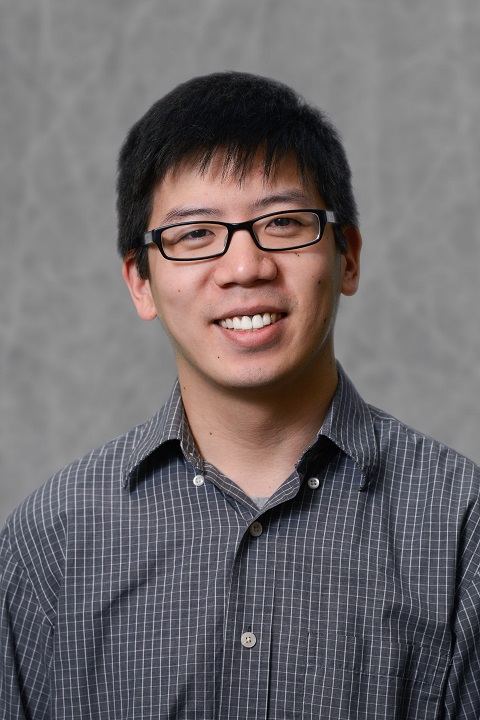
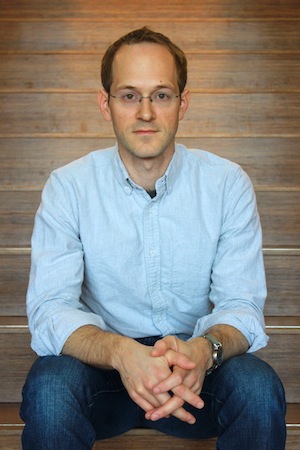
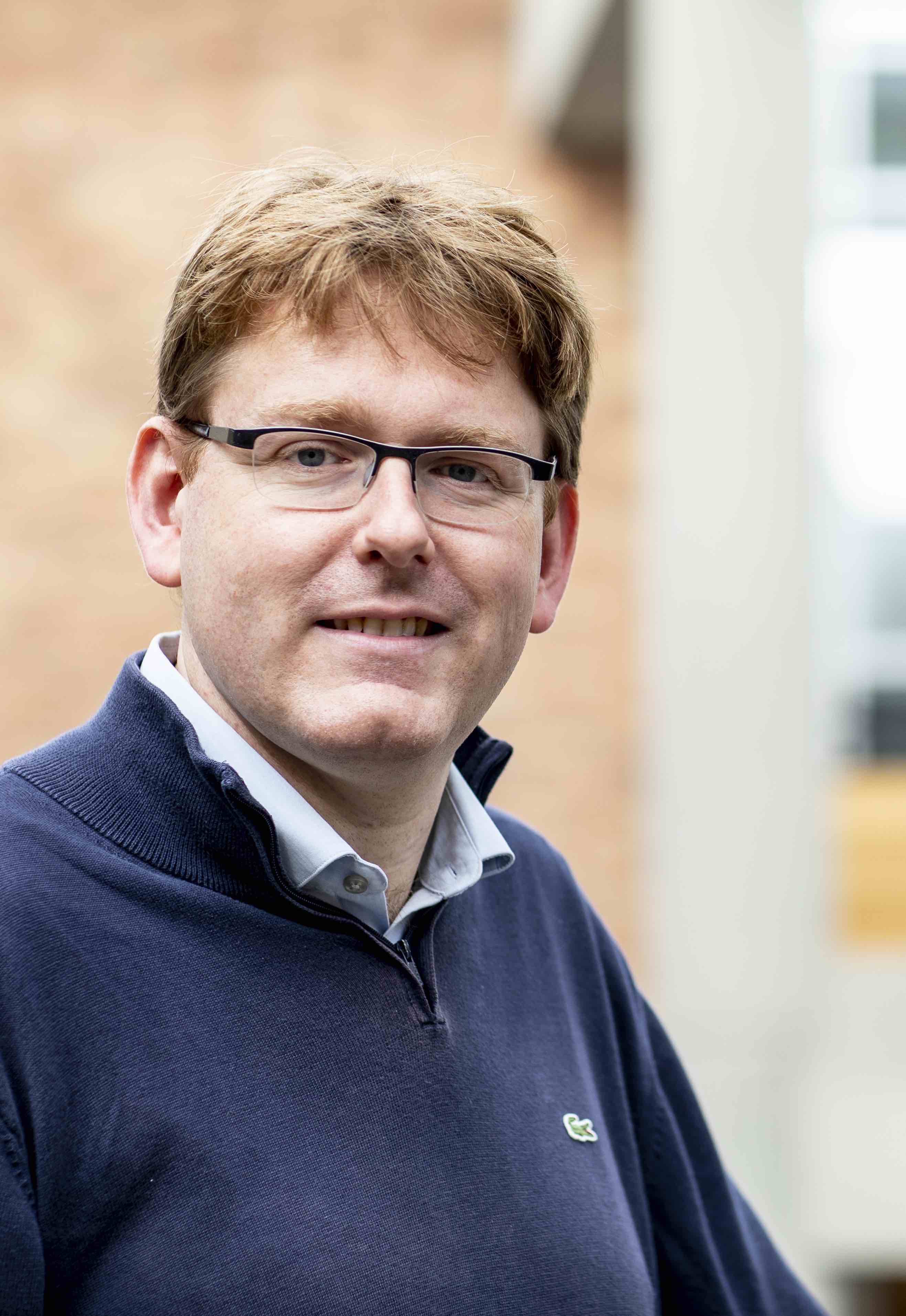
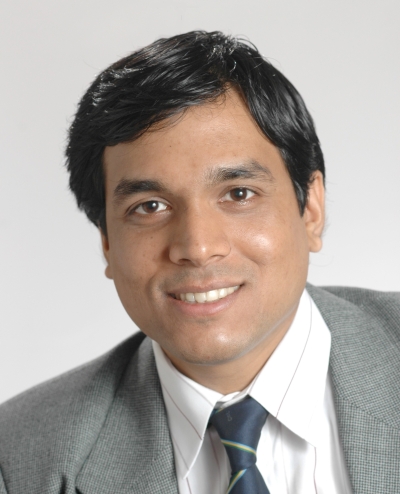
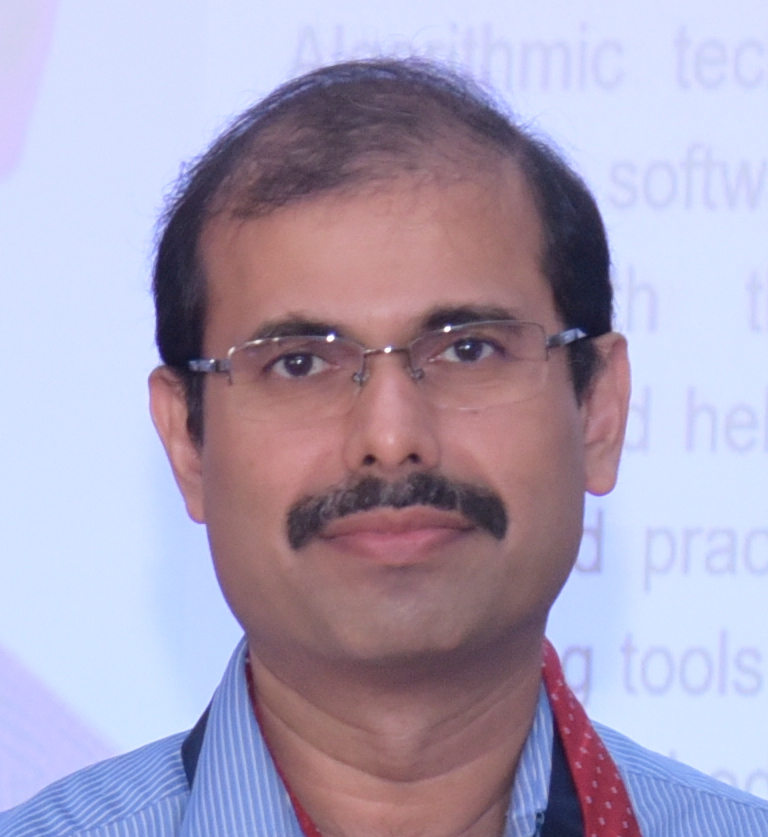
Ricky Ini Liu is an Associate Professor in the Department of Mathematics at the University of Washington. Previously, he held positions at North Carolina State University, the University of Michigan, and the University of Minnesota. He earned his Ph.D. in Mathematics from MIT in 2010 under Alexander Postnikov. His research focuses on algebraic combinatorics, particularly its intersections with algebraic geometry, combinatorial geometry, and representation theory. Key interests include Schubert polynomials, polytopes, Hopf algebras, and Kronecker coefficients. He has contributed to foundational work on birational rowmotion, Gelfand-Tsetlin polytopes, and Fomin-Kirillov algebras. Liu has taught a wide range of courses at UW, including special topics in dynamical algebraic combinatorics, combinatorial theory, and problem-solving. He has also been a key instructor at the Mathematical Olympiad Summer Program since 2007 and mentored undergraduates in research programs at the University of Minnesota, Duluth. His publications span high-impact journals like Selecta Mathematica and Journal of Combinatorial Theory , with recent work addressing topics such as determinantal formulas for Schubert polynomials and applications of flow polytopes to diagonal harmonics. Though no specific awards are listed, his extensive publication record and academic roles reflect significant contributions to combinatorial mathematics.
Andreas Bode is a Research Fellow at the University of Wuppertal, where he is part of the group led by Sascha Orlik in the Department of Mathematics. His research focuses on D-modules on rigid analytic spaces, integrating geometric representation theory and nonarchimedean geometry. His research interests span several areas of algebraic geometry and number theory, including the study of p-adic differential operators, nonarchimedean geometry, and representation theory. He explores the interplay between D-modules and rigid analytic spaces, contributing to the understanding of holonomicity, Auslander regularity, and the application of almost mathematics in p-adic contexts. His work bridges geometric and analytic approaches to problems in nonarchimedean settings. Bode's recent publications include advancements in the theory of Auslander regularity for p-adic structures, contributions to the holonomicity of D-cap-modules on rigid analytic spaces, and explorations into locally analytic representations of p-adic groups. His work often intersects with homological algebra and functional analysis, reflecting a deep engagement with both theoretical and methodological challenges in nonarchimedean geometry. He has not been mentioned as having received any scientific awards in the provided texts. Bode's current role as a postdoctoral researcher does not involve formal academic advising of students. No grants are specifically mentioned in the provided information. He is affiliated with the Algebra and Number Theory group at the University of Wuppertal, collaborating with colleagues such as Sascha Orlik and contributing to the broader research community in nonarchimedean geometry.
Priyanka Raina is an Assistant Professor of Electrical Engineering at Stanford University, with a courtesy appointment in Computer Science. She leads the Stanford Accelerate research group, focusing on domain-specific hardware architectures and agile hardware-software co-design. Her work emphasizes high-performance, energy-efficient accelerators for emerging technologies. Education: B.Tech. from IIT Delhi (2011), M.S. and Ph.D. from MIT (2013/2018). Postdoctoral experience includes NVIDIA Research (2018) and Amazon Visiting Academic (2023–present). Awards include the Sloan Research Fellowship (2024), NSF CAREER Award (2023), and Terman Faculty Fellowship (2018). Research Interests: Domain-specific architectures, near-memory computing, design productivity, and machine learning acceleration. Her group develops frameworks like AHA (Agile Hardware) for efficient accelerator design and compilers. Awards: Over 10 major awards, including best paper recognitions at VLSI, MICRO, and JSSC. Active roles as Associate Editor for IEEE JSSC and Program Chair for IEEE Hot Chips (2020). Advising & Teaching: Supervises multiple PhD and MS students in hardware design, CGRAs, and ML accelerators. Teaches VLSI design courses (EE271/272/372) and oversees independent studies in embedded systems and chip design. Labs & Collaborations: Affiliated with Stanford PORTAL Center, AHA Center, and SystemX Alliance. Projects include MINOTAUR (edge AI accelerator), Amber (CGRA-based SoC), and EMBER (RRAM macros).
Bahar Asgari is an Assistant Professor in the Department of Computer Science at the University of Maryland, College Park. She holds appointments in CS, UMIACS, and ECE, and directs the Computer Architecture and Systems Lab (CASL). Her research focuses on domain-specific architecture design, near memory processing, and reconfigurable computing. Before joining UMD, she worked at Google, contributing to system optimization and memory utilization strategies. Education: Ph.D., Georgia Institute of Technology, 2021. Research Interests: Developing energy-efficient architectures for sparse problems, scientific computing acceleration, FPGA optimizations, and reconfigurable hardware systems. Her work addresses challenges in memory efficiency, parallelization, and hardware-software co-design across domains like machine learning and IoT. Key Awards: 2024 UMD Excellence in Teaching Award 2023 DOE Early Career Award Advising & Grants: Supervises 9 graduate students and leads projects sponsored by NSF, DOE, and industry partnerships. Her lab explores systolic arrays, near-data processing, and fault-tolerant computing. Labs/Teams: Directs CASL, which builds next-generation computing systems through hardware innovation and algorithm-architecture co-design.
Stephen S. Kudla is a Professor in the Department of Mathematics at the University of Toronto, located in the Bahen Centre for Information Technology. He holds the prestigious distinction of being a Fellow of the Royal Society of Canada (FRSC), reflecting his significant contributions to mathematical research. Professor Kudla's research focuses on the deep connections between number theory and geometry, with particular expertise in automorphic forms, arithmetic geometry, and theta functions. His work bridges abstract mathematical theory with concrete geometric structures, exploring how modular forms can encode arithmetic information about algebraic varieties. Analysis of Kudla's publication record reveals a sustained research program centered on the relationship between derivatives of Eisenstein series and arithmetic geometry. His work consistently explores how modular and automorphic forms can be used to study arithmetic cycles on Shimura varieties. A notable pattern in his research is the interplay between analytic objects (like Eisenstein series) and geometric structures (such as arithmetic cycles), with applications to understanding heights, intersection theory, and special values of L-functions. Fellow of the Royal Society of Canada (FRSC) While specific details about Kudla's advising activities aren't provided in the available materials, his extensive publication record with prominent collaborators like Michael Rapoport and Tonghai Yang suggests he has likely mentored numerous graduate students and postdoctoral researchers throughout his career. His participation in major mathematical conferences including the International Congress of Mathematicians (ICM) indicates recognition by the broader mathematical community. Kudla's research has clearly been supported by significant funding, as evidenced by his ability to maintain a sustained publication record in top mathematical journals.
Nate Foster is a Professor of Computer Science at Cornell University and currently serves as the Associate Dean for Research in the Ann S. Bowers College of Computing and Information Science. He is also a Visiting Researcher at Jane Street and served as a Visiting Professor at École Polytechnique Fédérale de Lausanne during the 2023-24 academic year. His research uses ideas from programming languages to solve problems in networking, databases, and security. BA in Computer Science, Williams College (2001) MPhil in History and Philosophy of Science, University of Cambridge (2008, all work completed in 2003) PhD in Computer and Information Science, University of Pennsylvania (2009) Foster's research focuses on developing languages and tools that make it easy for programmers to build secure and reliable systems. His current work centers on the design and implementation of languages and tools for programmable networks, particularly using the P4 language. His past work includes bidirectional languages (also known as 'lenses'), database query languages, data provenance, type systems, mechanized proof, and formal semantics. His research group at Cornell has made significant contributions to network verification, software-defined networking, and formal foundations for programmable data planes. Analysis of Foster's recent publications reveals a strong focus on network verification and programming language foundations for networking. His work consistently applies formal methods to practical networking problems, with a particular emphasis on the NetKAT and P4 languages. Over the past five years, his research has evolved toward more complex network verification techniques, including infinite state verification, active learning of network models, and dependently-typed approaches to network programming. His work bridges theoretical computer science with practical networking systems, making formal methods accessible to network engineers. ACM Fellow (2025) ACM SIGPLAN Robin Milner Award (2023) ACM SIGCOMM Rising Star Award (2018) NSF CAREER Award (2013) Alfred P. Sloan Fellowship (2012) Multiple distinguished paper awards across top conferences including POPL, PLDI, and SIGCOMM Foster has advised numerous PhD and Master's students who have gone on to prominent positions in both industry and academia, with many continuing work in programming languages and networking. He has led multiple significant research grants including an NSF CAREER Award and has been involved in the P4 Language Consortium, serving as Chair of the P4 Language Governing Board. His work has been supported by various organizations including NSF, DARPA, and industry partners like Intel and Jane Street. Foster is also active in the programming languages research community, serving on numerous program committees and as Vice Chair of DARPA's Information Science and Technology (ISAT) study group. Foster leads a vibrant research group at Cornell focused on programming languages for networks, with collaborators from academia and industry. His group has developed several influential tools and frameworks including NetKAT, Petr4, and KATch. They maintain strong connections with the P4 community and work closely with industry partners to ensure their research has practical impact on real-world networking systems.
Michael O'Boyle is a Professor at the University of Edinburgh's School of Informatics, where he serves as Director of the ARM Research Centre of Excellence and the EPSRC Centre for Doctoral Training in Pervasive Parallelism. Holding an EPSRC Established Career Research Fellowship, he leads pioneering work in compiler technology for heterogeneous architectures, bridging theoretical advances with practical high-performance computing applications. Professor O'Boyle's research spans multiple cutting-edge areas including heterogeneous code discovery and optimization, neural machine translation for program synthesis, deep neural network system stack optimization, software-defined hardware, and compiler/architecture co-design. His approach integrates constraint analysis, program synthesis, and machine learning to address complex challenges in high-performance computing across diverse hardware platforms. His recent publications reveal a strong trend toward integrating machine learning with traditional compiler techniques, particularly in neural program synthesis, tensor optimization, and architecture-aware compilation. This work represents a paradigm shift in compiler design, moving from rule-based systems to learning-based approaches that can automatically adapt to diverse hardware targets. IEEE/ACM CGO 2025 Distinguished Paper Award for 'Tensorize: Fast Synthesis of Tensor Programs from Legacy Code' IEEE/ACM CGO 2024 Test of Time Award ACM GPCE 2023 Best Paper Award for 'C2TACO: Lifting Tensor Code to TACOM' ACM ASPLOS 2021 Distinguished Paper Award IEEE HPCA 2021 Best Paper Award for 'Prodigy: Improving the Memory Latency of Data-Indirect Irregular Workloads' Professor O'Boyle has successfully mentored numerous PhD students who have secured prominent positions in academia (including at Cambridge, Edinburgh, Leeds, and McGill) and industry (including Meta, NVIDIA, Qualcomm, Huawei, and Microsoft). His research is supported by significant funding from EPSRC, ARM, and European projects including Bonseyes and Transmuter, demonstrating strong international recognition and industry impact. He leads the influential Compiler and Architecture Design (CArD) Group at the University of Edinburgh and is a founder of the HiPEAC Network of Excellence, which has grown into a major European initiative connecting researchers and practitioners in high-performance and embedded computing.
Andrew Childs is a Professor at the University of Maryland, affiliated with the Department of Computer Science and the Institute for Advanced Computer Studies (UMIACS). He serves as Director of the NSF Quantum Leap Challenge Institute for Robust Quantum Simulation (RQS) and is a Fellow at the Joint Center for Quantum Information and Computer Science (QuICS). His research focuses on quantum algorithms for simulating physical systems, algebraic problems, and quantum walk protocols, with applications in quantum computing and computational complexity. University of Maryland Institute for Advanced Computer Studies (UMIACS) Joint Center for Quantum Information and Computer Science (QuICS) NSF Quantum Leap Challenge Institute for Robust Quantum Simulation Childs' research spans quantum simulation, quantum Fourier transform, phase estimation, and Hamiltonian dynamics. He has developed techniques to reduce quantum computational resources for simulating quantum systems and explored limitations of quantum computers through hidden subgroup problems and non-unitary dynamics. His publications cover diverse areas including quantum walk optimization, Hamiltonian simulation methods, and applications to cryptography and condensed matter physics. Recent works address spatial search algorithms, product formulas for commutators, and quantum routing protocols. As an educator, Childs has taught courses on quantum algorithms and information processing at both the University of Maryland and University of Waterloo, with lecture notes and materials spanning multiple years. Contact: amchilds@umd.edu | Office: ATL 3359 | Affiliated with University of Maryland's quantum research institutes.
Stefano Tessaro is a Professor in the Paul G. Allen School of Computer Science & Engineering at the University of Washington. He holds the Paul G. Allen Career Development Professorship. His research focuses on cryptography, theoretical computer science, and computer security, emphasizing practical applications of cryptographic techniques. He co-leads the cryptography group at UW with Andrea Coladangelo and Huijia Lin, and is part of the theory group. Education: PhD in Computer Science from ETH Zurich (2010) Postdoctoral researcher at MIT CSAIL (2010-2014) and UC San Diego (2014-2019) Joined UW in 2019 as faculty Research Interests: His work spans theoretical cryptography, privacy-preserving systems, cryptographic protocols, and security foundations. He explores practical applications of cryptography, including secure protocols, post-quantum cryptography, and efficient cryptographic constructions. Articles Trends: Recent publications emphasize threshold signatures, memory-tight security proofs, lattice-based cryptography, and privacy-preserving systems. Key themes include adaptive security, formal verification, and efficiency improvements in cryptographic protocols. Awards: NSF CAREER Award Sloan Research Fellowship Hellman Fellowship Research awards from Cisco, JP Morgan, and Microsoft Grants & Advising: His research has been supported by NSF grants and industry partnerships. He advises students in cryptographic theory and applications, though no specific student names are listed in the provided text. Labs & Teams: Co-leads the UW cryptography group, collaborating on projects like LERNA (secure aggregation) and Twinkle (threshold signatures). Engages with interdisciplinary teams in theoretical computer science and security.
Victor Ginzburg is a Professor in the Department of Mathematics at the University of Chicago. His research focuses on geometric representation theory and noncommutative geometry, with contributions to areas such as Hecke algebras, quantum groups, and mirror symmetry. He currently advises seven graduate students, though their specific projects vary widely. His work intersects with algebraic geometry, string theory, and mathematical physics. Key research themes include the application of algebraic geometry to representation theory, including studies on D-modules, quiver varieties, and symplectic reflection algebras. He has authored influential papers such as Non-commutative Symplectic Geometry (2001) and Symplectic reflection algebras (2002). His interests also extend to Calabi-Yau categories and operads, reflecting a deep engagement with modern geometric and algebraic structures.
Dr. Angela Siegel is an Assistant Professor and Assistant Dean, Academic Outreach in the Faculty of Computer Science at Dalhousie University, Halifax, Canada. She is actively involved in both academic leadership and research. Education: Ph.D. in Mathematics (Combinatorial Game Theory), Dalhousie University, 2011 M.Sc. in Mathematics, Dalhousie University, 2005 B.Sc. in Mathematics & Marine Geophysics, 1997 Her research focuses on combinatorial game theory, graph theory, discrete mathematics, and number theory, with a strong emphasis on computer science education and inclusive teaching . She investigates the challenges students face when transitioning into computer science programs, aiming to improve pedagogical approaches and support systems. Her work bridges theoretical mathematics and practical educational innovation. The recent publications highlight a dual focus: theoretical contributions to combinatorial games (e.g., partizan games, placement games, geography variants) and applied research in computing education, particularly student transition and inclusive practices. Her interdisciplinary work spans mathematics, computer science, and educational theory. Scientific Awards: Dr. Siegel has supervised and collaborated with students and researchers on topics including student transition into higher education computing, LEGO-based pedagogy, and workplace readiness. While no specific grants are listed, her repeated presentations and publications suggest active research funding and scholarly engagement. She has contributed to major conference proceedings and book volumes such as Games of No Chance . She is associated with research teams focused on combinatorial games and computer science education innovation, often collaborating with scholars like Richard Nowakowski, Neil McKay, and Mark Zarb. Her work in inclusive teaching and student support reflects a commitment to building accessible and equitable learning environments in computing.
Paul Larson is a Professor of Mathematics at Miami University. His research focuses on set theory, topology, and model theory, with particular expertise in forcing axioms, descriptive set theory, and infinitary logic. He holds a Ph.D. in Mathematics from the University of California, Berkeley. His work bridges foundational mathematical logic with applications in topology and combinatorics. Key contributions include studies on canonical models under fragments of the Axiom of Choice, polar forcings, and cardinal characteristics. Larson has collaborated extensively with leading researchers such as Saharon Shelah and Jindřich Zapletal. His publications span prestigious journals like the Annals of Pure and Applied Logic and Transactions of the American Mathematical Society. Beyond research, he contributes to the academic community through editorial work and expository writings on historical developments in determinacy theory. Education: Ph.D., Mathematics, University of California, Berkeley Research interests emphasize foundational questions in set theory with applications to topology and model theory. His recent work explores advanced forcing techniques, square principles in Pmax extensions, and combinatorial properties of cardinal invariants. Publications reflect interdisciplinary engagement, including crystal structure prediction in high-pressure chemistry and operator theory in functional analysis. Despite an extensive publication record, no specific scientific awards are documented here. His advising and grant activities remain unspecified in the provided texts. Collaborations span international institutions, reflecting his role as a central figure in contemporary set theory research.
Sanjit A. Seshia is the Cadence Founders Chair Professor in the Department of Electrical Engineering and Computer Sciences at the University of California, Berkeley . He is affiliated with the Group in Logic and the Methodology of Science and participates in centers like the Industrial Cyber-Physical Systems Center , Berkeley AI Research , and the Simons Institute for the Theory of Computing . Research interests include formal methods for automated verification and synthesis of dependable systems, with applications to cyber-physical systems , AI-based autonomy , and computer security . His work spans SMT solving, model counting, syntax-guided synthesis, and algorithmic improvisation, with tools like UCLID5 , VerifAI , and Scenic for verifying autonomous systems and educational platforms like CPSGrader . Students and collaborators include notable researchers such as Dorsa Sadigh (Stanford), Daniel Fremont (UC Santa Cruz), and Hazem Torfah (Chalmers). He has co-founded startups like Decyphir and 20ⁿ Labs based on his research.
Supratik Chakraborty serves as the Bajaj Group Chair Professor in the Department of Computer Science and Engineering at Indian Institute of Technology Bombay. He maintains dual affiliations with the Centre for Formal Design and Verification of Software and the Centre for Liberal Education at IIT Bombay, demonstrating his cross-disciplinary engagement. Professor Chakraborty's research spans formal methods with focus on formal verification, rigorous analysis of system models, and automated synthesis of systems from specifications. His work bridges theoretical foundations with practical applications, particularly in developing mathematically provable guarantees for increasingly complex hardware, software, and intelligent systems. Current research interests include constrained counting and sampling, scalable formal verification of software and hardware systems, automated synthesis of programs and circuits, and applications of automata, logic and finite model theory to practical verification challenges. His publication trajectory shows a significant evolution from traditional hardware and software verification toward addressing verification challenges in machine learning and AI systems. Recent work increasingly focuses on interpretability of black-box models, verification of neural networks, and synthesis techniques applicable to intelligent systems. The research demonstrates strong interdisciplinary connections between formal methods, programming languages, and artificial intelligence. IIT Bombay Excellence in Thesis (CSE) Award 2011 (for Bhargav Gulavani's thesis) IIT Bombay Excellence in Thesis (CSE) Award 2017 (for Abhisekh Sankaran's thesis) Best Paper in Algorithms and Architecture track at IEEE International Conference on Computer Design: VLSI in Computers and Processors, 1998 Professor Chakraborty has successfully supervised 11 doctoral students, with research spanning formal verification techniques, Boolean functional synthesis, constrained counting, and applications to hardware and software systems. His students have gone on to positions at major institutions including Microsoft Research, TCS Research, Georgia Tech, and BARC, reflecting the strong industry and academic impact of his mentorship. Current research directions show increasing emphasis on verification challenges posed by machine learning systems and AI. His research group at IIT Bombay, while not explicitly named in the materials, appears to focus on formal methods with strong connections to the Centre for Formal Design and Verification of Software. The group maintains active collaborations with international researchers including Moshe Y. Vardi at Rice University, and has made significant contributions to verification tools like VeriAbs that bridge theoretical advances with practical applications.
Prof. Dr. Philipp Habegger is a faculty member at the University of Basel's Department of Mathematics and Computer Science . His research focuses on Number Theory , specifically Diophantine Geometry, heights on abelian varieties, unlikely intersections, and algebraic number theory. He leads the Research Group in Number Theory and participates in collaborative seminars like the Number Theory Web Seminar with Mike Bennett and Alina Ostafe. Contact : philipp.habegger@unibas.ch | +41 61 207 26 98 Office : Spiegelgasse 1, 4051 Basel, Switzerland Academic Role : Research and teaching in number theory and Diophantine problems Research Overview Habegger's work addresses fundamental questions about the distribution of special points on algebraic varieties and the arithmetic properties of polynomial dynamics. His recent publications analyze degeneracy loci in abelian families, canonical heights, and the geometric Bogomolov conjecture. The 15 most recent articles reflect a focus on number theory, algebraic geometry, and effective bounds in Diophantine problems. Scientific Collaborations Collaborated with Ziyang Gao, Harry Schmidt, Umberto Zannier, and others Contributed to journals: Annals of Mathematics , Forum of Mathematics, Sigma , Compositio Mathematica Key themes: Abelian varieties , Heights , Unlikely intersections , CM jacobians