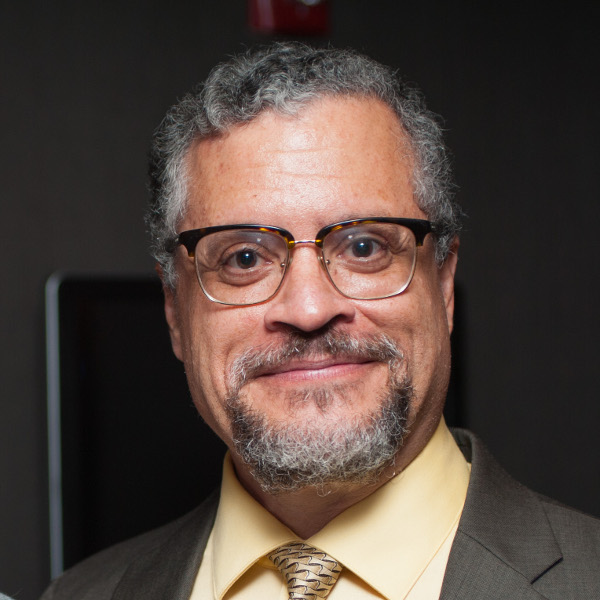
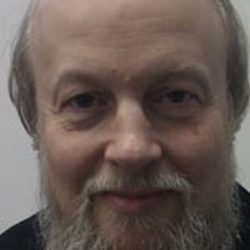
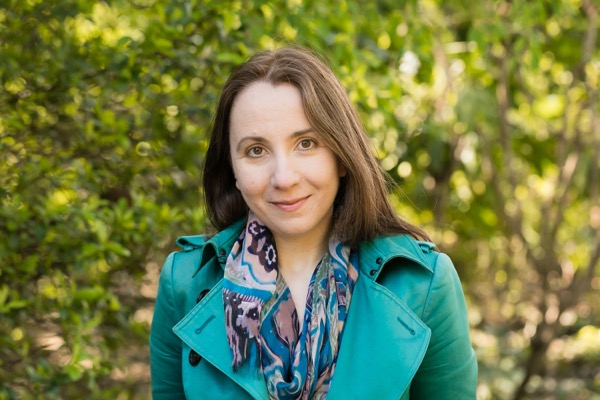
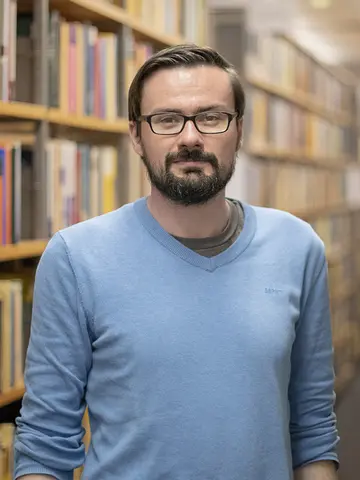
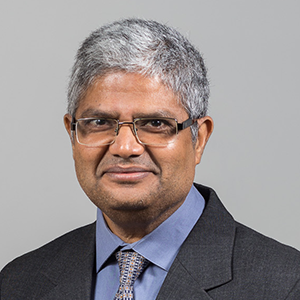
Kevin Corlette is a Professor of Mathematics at the University of Chicago and serves as Director of the Institute for Mathematical and Statistical Innovation. His primary affiliation is within the Department of Mathematics. He holds a Ph.D. in Mathematics from the University of Chicago, though specific details of his education are not provided here. His research focuses on differential and algebraic geometry, including Kahler geometry, locally symmetric spaces, and geometric partial differential equations such as harmonic map and Yang-Mills equations. He explores the interplay between geometric structures and analytical systems, contributing to foundational theories in these areas. Corlette was honored as a Mathematically Gifted & Black Honoree in 2020, recognizing his scholarly contributions and leadership in mathematics. His work bridges pure mathematics with applications in geometric analysis, influencing both theoretical and applied fields. As Director of IMSI, he oversees interdisciplinary initiatives at the intersection of mathematics, statistics, and computational science. His role involves fostering collaborations among researchers across disciplines to address complex scientific challenges.
Gordon Plotkin is a Professor at the School of Informatics, University of Edinburgh, where he is affiliated with the Laboratory for Foundations of Computer Science (LFCS). His research lies at the intersection of theoretical computer science and programming language semantics, with a profound influence on the formal understanding of computation. His research interests include Programming Language Theory, Semantics of Programming Languages, Domain Theory, Operational Semantics, Lambda Calculus, Type Theory, Concurrency Theory, and Algebraic Effects. His seminal work on structural operational semantics and domain theory has laid the foundation for modern semantics of programming languages. His publications span over five decades, showing a sustained and evolving research trajectory from foundational work in lambda calculus and domain theory to recent contributions in algebraic effects, probabilistic computation, and biochemical systems modeling. The articles demonstrate a consistent focus on formal methods, mathematical rigor, and the algebraic structure of computational effects. He has collaborated with leading researchers including Martín Abadi, John Power, Glynn Winskel, and John Reynolds. His work continues to influence both theoretical and practical developments in programming languages and systems. Gordon Plotkin has made foundational contributions to computer science, particularly through his development of structural operational semantics and domain-theoretic models of computation. He has advised numerous researchers and supervised many influential PhD theses, though specific student names are not listed in the provided text. His work has been supported by long-standing affiliations with the Laboratory for Foundations of Computer Science and the University of Edinburgh, and he has contributed to major collaborative projects in programming language design and verification. He is associated with several research groups and labs, most notably the Laboratory for Foundations of Computer Science (LFCS), which serves as a hub for theoretical research in programming languages, semantics, and logic at the University of Edinburgh.
Prof. Dr. Urs Hartl is a faculty member in the Department of Mathematics and Computer Science at the University of Münster, affiliated with the Faculty of Mathematics and Computer Science. He is an Investigator in Mathematics Münster and a member of the Collaborative Research Centre (CRC) 1442 'Geometry: Deformations and Rigidity.' His research focuses on arithmetic geometry, representation theory, algebraic number theory, and arithmetic of function fields. He holds a prominent position in the field, contributing to areas such as Shimura varieties, p-adic Hodge theory, and the Langlands program. Affiliations: Member of CRC 1442 Geometry Investigator in Mathematics Münster Research Interests: Arithmetic algebraic geometry Algebraic number theory Arithmetic of function fields Structure theory of Shimura varieties p-adic Hodge theory p-adic Langlands programme Model theory Recent Publications: Hartl's recent work includes studies on moduli stacks of global G-shtukas, periods of Drinfeld modules, and p-adic Galois representations. His research emphasizes foundational contributions to arithmetic geometry and number theory, often involving collaborations with leading mathematicians such as Rajneesh Kumar Singh and Eva Viehmann. Grants & Advising: Hartl’s involvement in CRC 1442 reflects his leadership in geometric research. While specific advising details are not provided, his extensive publications suggest active mentorship in advanced mathematical research. Labs/Teams: Collaborates within the Mathematics Münster research group and the CRC 1442 team, focusing on geometric and arithmetic structures.
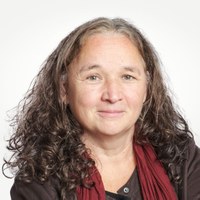
Vera Fischer is an Associate Professor and Privatdozent in the Department of Mathematics at the Faculty of Mathematics, University of Vienna. She has been an active researcher since 2008, with a strong publication record in mathematical logic and set theory. Her research centers on set-theoretic combinatorics , focusing on cardinal characteristics of the continuum, forcing, definability, and structures such as maximal almost disjoint families, cofinitary groups, and independent families. She investigates foundational questions in independence, spectra of combinatorial objects, and the interplay between definability and generic extensions. Her work often involves constructing models to separate cardinal invariants or to realize specific spectra under forcing. The recent publications show a consistent trend in combinatorial set theory , with a focus on tower spectra, tight families, mad families, and their behavior under various forcing notions like Cohen and Sacks forcing. Her research frequently explores the definability and destructibility of combinatorial families, often in collaboration with leading researchers such as Corey B. Switzer, Stefan Geschke, and Saharon Shelah. FWF START Prize, 2017 Förderungspreis der ÖMG, 2018 Förderungspreis, 2018 She leads and participates in research projects such as Comparing the Real Line to Combinatorics of the Uncountable and A Sacks-like model with large continuum , indicating active grant funding and supervision of research activities. She also organizes academic events like Colloquium Logicum and engages in public outreach on topics like infinity. Her research is conducted within the Set Theory Group at the University of Vienna, where she collaborates with other logicians and contributes to the academic community through publications, conferences, and mentorship.
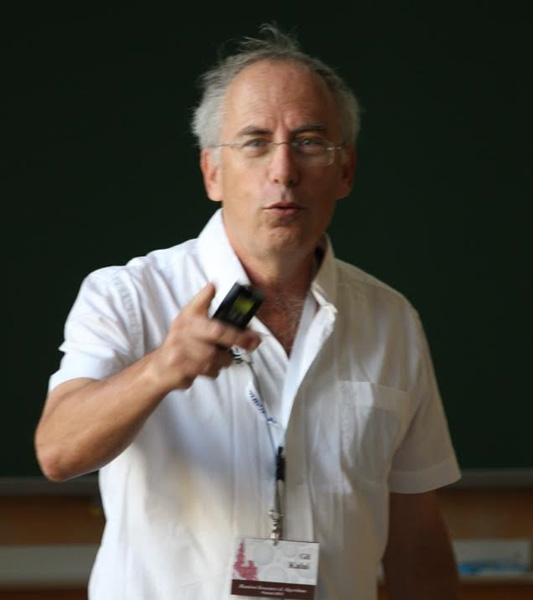
Gil Kalai is a Professor of Mathematics at the Hebrew University of Jerusalem since 1992, where he holds the Henry and Manya Noskwith Chair. He also serves as an Adjunct Professor of Mathematics and Computer Science at Yale University since 2004 in a long-term part-time visiting position. His academic career includes visiting positions at prestigious institutions including MIT, Cornell, IAS Princeton, Berkeley, Bell-labs, IBM, and Microsoft. Professor Kalai's research spans multiple areas within mathematics and theoretical computer science. His work in combinatorics encompasses geometric, probabilistic, and topological approaches. He has made significant contributions to the study of convex sets and polytopes, linear programming, and theoretical computer science. His influential 1988 paper with Kahn and Linial on Boolean functions pioneered applications of Fourier analysis in theoretical computer science. Kalai's research has evolved to include the application of Fourier analysis to thresholds, influences, symmetries, noise, percolation, and social choice. He has developed theories in algebraic shifting and studied face-numbers and other combinatorial invariants of polytopes. His work on the diameter of polytopes and randomized simplex algorithms has been influential in optimization theory. In 1993, his collaboration with Kahn produced a groundbreaking counterexample to Borsuk's Conjecture in 1325 dimensions. Professor Kalai's publications reveal a consistent focus on the intersection of combinatorics, geometry, and theoretical computer science. His work shows a progression from foundational combinatorial geometry to increasingly sophisticated applications of harmonic analysis in discrete mathematics. The recurring themes across his 30+ year career include Boolean functions, polytope theory, and probabilistic methods in combinatorics, demonstrating remarkable coherence in his research trajectory. 2016 European congress of Mathematics, plenary speaker 2013 ERC advanced grant 2012 Rothschild Prize 1994 International Congress of Mathematicians invited section talk, Zurich 1994 Fulkerson Prize 1993 Erdos Prize 1992 Polya Prize Though specific details of his advising are not provided in the source material, Kalai has written over 70 scientific papers and maintains an active research blog entitled "Combinatorics and More." His 2013 ERC advanced grant indicates significant research funding for his work. His extensive collaborations with researchers across multiple institutions suggest a robust research program with numerous PhD students and postdoctoral researchers, though specific names are not mentioned in the provided texts. Professor Kalai maintains active research connections across multiple institutions including Hebrew University, Yale, and various research centers worldwide. His work bridges pure mathematics and theoretical computer science, creating a unique interdisciplinary research environment that influences both fields.
Cong Ling is a Professor of Information Theory and Cryptography at Imperial College London's Department of Electrical and Electronic Engineering, within the Faculty of Engineering. His research focuses on lattice theory and its applications in coding, cryptography, quantum information, and number theory. Key affiliations include the Academic Centre of Excellence in Cyber Security Research and the Engineering Secure Software Systems group. Education details are not explicitly provided in the text, but his professional experience indicates advanced qualifications in electrical engineering and mathematics. Research interests span lattice-based cryptography, post-quantum security, algebraic coding theory, and quantum-resistant algorithms. His work bridges information theory and number theory, with contributions to MIMO systems, secure communication protocols, and cryptographic protocol design. Recent publications emphasize lattice reduction techniques, quantum algorithms for the shortest vector problem, and advancements in polar codes. Notable trends include exploration of non-commutative algebras for cryptography, Gaussian sampling optimizations, and hybrid quantum-classical approaches to hard integer problems. Over 50+ articles published since 2018 reflect his leadership in lattice-based research and quantum-safe technologies. Awards: None explicitly listed in the text. Grants/Advising: No specific grants or student advisees mentioned; focus remains on collaborative research outputs. Labs/Teams: Associated with Imperial's Cyber Security Research groups and quantum engineering initiatives.
Susanne Prediger is a Professor at the Institute for Development and Research in Mathematics Education (IEEM) at Technische Universität Dortmund and Vice Director of the Department of Subject-Related Knowledge Transfer at the Leibniz Institute for Science and Mathematics Education (IPN). She directs the DZLM research network (German Center for Mathematics Teacher Education) and holds leadership roles in mathematics education research. Her research focuses on: Design and Research on Professional Development of Mathematics Teachers and Facilitators Topic-Specific Design Research in Mathematics Education for Secondary Schools Diversity in Classrooms (especially Language Diversity) Empirical Studies on Students' Conceptions in Arithmetic, Algebra, and Stochastics Networking of Theories in Mathematics Education Research Recent work explores AI-driven formative assessment, educational innovation implementation, and inclusive pedagogical strategies for teaching percentages. She leads projects like ALwAI, Startchancen-Kompetenzzentrum Mathematik, and DigiProMIN. Current roles include: Vice Director (half-time), Department of Subject-Related Knowledge Transfer, IPN Director of DZLM Research Network, IPN (since 2021) Full Professor at IEEM, TU Dortmund University (since 2006) Her academic background spans Mathematics and History studies at Technical University of Darmstadt and Université Bordeaux I, a PhD in Mathematical Logic and Universal Algebra (1998), and a Habilitation in Mathematics Education (2004).
Michael Goldsmith is a Senior Research Fellow at the Department of Computer Science and Worcester College, University of Oxford. He holds multiple leadership positions including Director of the Oxford Martin Programme on AI Threat Detection, Associate Director of the Cyber Security Centre, and Co-Director of the Centre for Doctoral Training in Cybersecurity. His research bridges formal methods, concurrency theory, and practical cybersecurity applications. Goldsmith's research focuses on cybersecurity analytics including threat detection, risk management, and trust frameworks. He pioneered automated cryptoprotocol analysis and investigates multidisciplinary projects spanning mathematical models to socio-technical systems. His core interests include formal verification, AI threat landscapes, privacy architectures, and security protocol design. Analysis of his recent publications reveals strong emphasis on practical cybersecurity challenges: 63% focus on threat detection (especially insider threats), 22% on trust/risk frameworks, and 15% on formal methods applications. His work consistently integrates technical security mechanisms with human factors and organizational contexts. He currently advises Ahmed Salman and has supervised 10+ students including Mary Bispham, Rodrigo Carvalho, and Elizabeth Phillips. His research teams collaborate on projects funded by Technology Strategy Board, government agencies, and industry partners. Goldsmith leads the Oxford Martin Programme on AI Threat Detection and co-directs the Centre for Doctoral Training in Cybersecurity. His research group develops tools for security visualization (CyberVis), trust metrics, and identity management frameworks.
Ana Caraiani is a Royal Society University Research Fellow and Professor in the Department of Mathematics at Imperial College London, specializing in Number Theory and Arithmetic Geometry. She is a member of the Number Theory group, focusing on the Langlands program, Shimura varieties, and p-adic Galois representations. Her work bridges arithmetic geometry and representation theory, with contributions to modularity lifting theorems, cohomology of Shimura varieties, and local-global compatibility in the Langlands program. Education: She earned a Ph.D. in Mathematics from Harvard University in 2012. She held positions as a Veblen Research Instructor (2013–2015) and Veblen Fellow (2015–2016) at the Institute for Advanced Study's School of Mathematics. Research Interests: Her research emphasizes the classical and p-adic Langlands programs, Shimura varieties, arithmetic geometry, and moduli stacks of Galois representations. Specific topics include vanishing theorems for cohomology, modularity of elliptic curves over CM fields, and applications of perfectoid spaces. Key Contributions: Caraiani has advanced the proof of modularity of elliptic curves over imaginary quadratic fields, established vanishing theorems for Shimura varieties with torsion coefficients, and contributed to the potential automorphy of Galois representations over CM fields. Her work links geometric approaches to arithmetic conjectures, such as the Sato-Tate and Ramanujan conjectures. Awards and Recognition: Royal Society University Research Fellowship (202?), Veblen Research Instructor/Fellowships (2013–2016), and contributions to major collaborative projects like the Potential Automorphy over CM Fields paper in the Annals of Mathematics.
Prof. Dr. Martin Kronbichler is a faculty member at the Faculty of Mathematics , Ruhr University Bochum , leading the Numerics group. His research focuses on higher-order finite element methods, multigrid techniques, and high-performance computing for complex fluid and solid mechanics problems. Key Research Areas: Higher-order finite element methods, iterative solvers, multigrid algorithms, exascale mathematical software, and computational fluid dynamics. Notable Projects: EU-funded dealii-X (exascale digital twins), BMBF PDExa (optimized PDE solvers for exascale), and DFG grants for cut-discontinuous Galerkin methods and geometric multigrid. Publications Trends: Recent works emphasize matrix-free operators for hyperelasticity, diffuse-interface models for additive manufacturing, and multigrid smoothers for higher-order elements. Scientific Awards: Recipient of the Humboldt Research Award for his contributions to numerical methods and HPC. Team: Collaborates with researchers like Dr. Shubham Kumar Goswami, Dr. Richard Schussnig, and Natalia Nebulishvili.
Arend Bayer is a Professor of Algebraic Geometry at the University of Edinburgh's School of Mathematics, where he has been a faculty member since 2012. He specializes in areas such as stability conditions, moduli spaces, and derived categories, contributing to the understanding of Fano varieties, K3 surfaces, and wall-crossing phenomena. His research emphasizes collaboration, reflecting his belief in mathematics as a social endeavor. Education: Arend holds degrees from prestigious institutions, including a PhD from the University of Bonn, with earlier studies at Heidelberg University and a year at the University of Cambridge. His academic journey reflects a deep commitment to advancing algebraic geometry through rigorous research and interdisciplinary collaboration. Research Interests: Arend’s work focuses on algebraic geometry, particularly in stability conditions, Fano varieties, and moduli spaces. He explores the interplay between algebraic structures and geometric objects, often employing derived categories and wall-crossing techniques. His contributions include foundational insights into Kuznetsov components and the geometry of cubic threefolds. Collaborations are central to his approach, emphasizing problem-solving through shared ideas and sustained intellectual exchange. Scientific Awards: No specific scientific awards were mentioned in the provided text. Advising and Grants: While specific advising records or grant details are not detailed in the text, Arend’s collaborative approach suggests active involvement in mentoring and securing research funding. Labs and Teams: Arend contributes to a thriving research group within the School of Mathematics at Edinburgh, focusing on structural and symmetrical aspects of algebraic geometry. His work aligns with broader initiatives in the department, fostering a collaborative environment for advanced mathematical inquiry.
Florian Frick is an Associate Professor at Carnegie Mellon University in Pittsburgh. He received his PhD from TU Berlin and the Berlin Mathematical School, followed by postdoctoral positions at Cornell University and MSRI (Mathematical Sciences Research Institute). Research Focus : Interdisciplinary work at the intersection of combinatorics, geometry, and topology. Specific areas include chromatic numbers of hypergraphs, embeddability in geometric topology, intersection patterns of convex sets, and fair division problems. Interests : Traveling, sports, and food-related activities. Current Affiliation : Max Planck Institute for Mathematics in the Sciences (Nonlinear Algebra Research Group) as a visitor (2022).
Sanjay Jain is a Provost's Chair Professor in the Department of Computer Science at the School of Computing, National University of Singapore (NUS). His research focuses on theoretical computer science with particular emphasis on inductive inference, recursion theory, complexity theory, and computational learning theory. Education: B.Tech. in Computer Science from Indian Institute of Technology Kharagpur, India (1986) M.S. in Computer Science from University of Rochester, USA (1988) Ph.D. in Computer Science from University of Rochester, USA (1990) Professor Jain's research spans multiple areas of theoretical computer science. His primary contributions are in computational learning theory, where he has made significant advances in understanding the intrinsic complexity of language identification and the limits of inductive inference. His work on recursion theory explores fundamental questions about computability and complexity, while his research in complexity theory addresses structural aspects of computational problems. A notable achievement was his work on "Deciding Parity Games in Quasipolynomial Time," which won the prestigious STOC 2017 best paper award and later the EATCS-IPEC Nerode Prize. Professor Jain's publication record shows a consistent focus on theoretical foundations of computer science, particularly in learning theory and computational complexity. His recent work has expanded into automatic structures, semiautomatic models, and connections between computational learning and algebraic structures. There is a clear progression from foundational work on language identification to more complex models involving automatic functions, transducers, and connections to mathematical logic. Scientific Awards: STOC 2017 Best Paper Award for "Deciding Parity Games in Quasipolynomial Time" EATCS-IPEC Nerode Prize (2021) Professor Jain has served on the editorial board of Information and Computation and has been actively involved in the academic community through program committee memberships for major conferences including COLT, ALT, LATA, TAMC, and PRICAI. He has held leadership roles as program co-chair for ALT 2000 and ALT 2013, and conference chair for ALT 2005. His work has been supported by various research grants, though specific details are not provided in the available materials. Professor Jain leads research in theoretical computer science at NUS, where he has built a strong research group focused on computational learning theory and related areas. His work often involves collaborations with researchers from around the world, particularly with Frank Stephan, with whom he has co-authored numerous papers. His research group has made significant contributions to understanding the fundamental limits and possibilities of computational learning models.
David Rohrlich is a Professor of Mathematics and Statistics at Boston University, serving as Director of Graduate Studies. His primary affiliation is with the Department of Mathematics and Statistics. He specializes in Number Theory, focusing on topics such as Artin representations, arithmetic statistics, and Galois theory. His research explores areas including algebraic number theory, arithmetic geometry, and representation theory. Notable contributions include studies on self-dual Artin representations, quaternionic structures in arithmetic statistics, and the interplay between Galois representations and L-functions. Rohrlich has published extensively on topics such as Mordell-Weil groups, average multiplicities, and dihedral Artin representations. His work often involves intricate connections between algebraic structures and number-theoretic phenomena. He holds a PhD and has advised numerous graduate students (though specific names are not listed here). His office is located in CDS 433, with regular in-person and virtual office hours.
Lawrence C. Washington is a Professor of Mathematics at the University of Maryland, College Park . His office is located in Mathematics Building 1105, and he can be reached at lcw@math.umd.edu . Teaching & Courses: In Spring 2023 he is teaching Cryptography 456 (TuTh 11:00–12:15) and co-organising the Algebra Seminar (MW 2–3). Office hours are held Tuesdays 1:30–2:30 and Thursdays 10:00–10:50. Research Interests: His work centres on number theory , with particular emphasis on cyclotomic fields , elliptic curves , cryptology , and Iwasawa theory . He has made extensive contributions to the study of p-adic L-functions , class groups , heuristics for class numbers , and the arithmetic of elliptic curves, often bridging deep theoretical questions with computational investigations. Textbooks & Scholarly Output: Washington is the author of several widely-used textbooks: Introduction to Cryptography with Coding Theory (3rd ed.) Introduction to Cyclotomic Fields Elliptic Curves: Number Theory and Cryptography An Introduction to Number Theory with Cryptography (2nd ed.) Elementary Number Theory Recent Publication Trends: Over the past five years his papers have focused on heuristics for Iwasawa invariants , anti-cyclotomic extensions , class groups of real cyclotomic fields , and analytic estimates for sums of prime powers . The work is characterised by a synthesis of algebraic, analytic, and computational techniques, frequently yielding explicit examples and numerical data that inform broader conjectures in algebraic number theory. Extracurricular Interests: Outside mathematics, Washington enjoys running and playing the bassoon , and he maintains a light-hearted page devoted to his favourite intersection in Chevy Chase, MD. Advising & Grants: While the provided text does not enumerate individual students or specific grants, his extensive publication record and long-standing professorship indicate ongoing supervision of graduate research and participation in funded projects in number theory and cryptography.