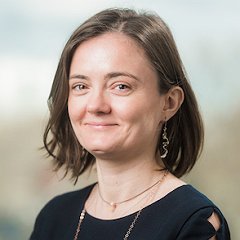
Nate Foster is a Professor of Computer Science at Cornell University and a Visiting Researcher at Jane Street . During 2023-24, he also holds a Visiting Professor position at EPFL in the Data Center Systems Laboratory. His research focuses on Programming Languages and Networking , with significant contributions to formal verification of network data planes and domain-specific language design. Awarded NSF CAREER Award , Sloan Research Fellowship , ACM SIGCOMM Rising Star Award , and ACM SIGPLAN Robin Milner Award Active in program committees for conferences like POPL, PLDI, SPLASH, and ICFP Research Trends : His recent work explores intersections of programming language theory with networking, including symbolic verification tools like KATch , infinite-state network analysis with StacKAT , and active learning frameworks for network automata. He applies formal methods to practical challenges in software-defined networking and hypervisor verification. Scientific Awards : NSF CAREER Award Sloan Research Fellowship ACM SIGCOMM Rising Star Award ACM SIGPLAN Robin Milner Award Academic Leadership : Serves as Session Preview Co-Chair for POPL 2024 and organizes workshops like RPLS 2025. He has chaired tutorials on P4 programming and mentored researchers through PLMW programs.
Alexandra Silva is a Professor of Computer Science in the Department of Computer Science at Cornell University's College of Engineering. She joined Cornell as faculty in 2021 after previously serving as a Royal Society Wolfson Fellow and Professor of Algebra, Semantics, and Computation at University College London. Her research spans programming languages, formal verification, and theoretical computer science, with particular focus on Kleene Algebra with Tests (KAT), probabilistic programming, and automata theory. She has held numerous leadership roles in major programming languages conferences including POPL, PLDI, and ICFP. Dr. Silva completed her PhD at Centrum Wiskunde & Informatica (CWI) in Amsterdam under the supervision of Jan Rutten and Marcello Bonsangue, with her thesis entitled "Kleene coalgebra" defended in December 2010. Prior to her PhD, she was an undergraduate student at University of Minho in Portugal, where she completed a 5-year Mathematics and Computer Science degree in May 2006. Her research focuses on the modular development of specification languages and algorithms for models of computations, often from the unifying perspective offered by coalgebra. She has made significant contributions to Kleene Algebra with Tests, probabilistic programming semantics, network verification, and automata learning. Her work bridges theoretical foundations with practical verification tools, particularly in the domain of Software-Defined Networking where her NetKAT framework has gained significant attention. Analysis of her recent publications reveals a strong trend toward unifying frameworks for program verification, particularly through her development of Outcome Logic which provides foundations for both correctness and incorrectness reasoning. Her work increasingly integrates probabilistic and concurrent aspects of programming languages, with applications to network verification and security. The NetKAT ecosystem remains a central theme, with extensions to infinite state verification, symbolic execution, and learning-based approaches. Distinguished paper award for Guarded Kleene algebra with tests: verification of uninterpreted programs in nearly linear time (POPL 2020) Dr. Silva advises a large research group with numerous PhD students, postdocs, and undergraduate researchers. Her group has produced significant work in programming languages theory, verification, and applications to networking. She has secured substantial research funding through various grants that support her work on formal methods for network verification and probabilistic programming. Her mentoring approach emphasizes both theoretical depth and practical impact, with many of her students moving to prestigious academic and industry positions. Her research group, spanning both Cornell University and University College London, focuses on developing theoretical foundations for programming languages with practical applications in network verification, probabilistic systems, and program analysis. The group maintains active collaborations with researchers at CWI, University of Oxford, and other leading institutions in programming languages and formal methods.
Elvira Patricia Pino Blanco is a Professor in the Department of Computer Science at the Barcelona East School of Engineering, Polytechnic University of Catalonia (UPC). She is a member of the ALBCOM research group (Algorithms, Bioinformatics, Complexity and Formal Methods) and has an extensive publication record spanning over two decades. Her research interests focus on formal methods in computer science, particularly in graph theory, logic programming, and database systems. She has made significant contributions to navigational logics for graphical structures, graph databases, and model synchronization using triple graph grammars. Her work bridges theoretical foundations with practical applications in software engineering and data management. Her publication trends show a consistent focus on graph-based approaches to computational problems, with recent work emphasizing logical approaches to graph databases and navigational query languages. She has published in high-impact venues including Journal of Logical and Algebraic Methods in Programming, Theoretical Computer Science, and various international conferences. Professor Pino Blanco has been involved in numerous competitive R&D projects related to algorithmics, bioinformatics, and formal methods. Her work demonstrates interdisciplinary connections between theoretical computer science and practical applications in data management and software engineering. She is affiliated with the ALBCOM research group which focuses on algorithmics, bioinformatics, complexity theory, and formal methods. This group represents a vibrant research community working at the intersection of theoretical computer science and practical applications.