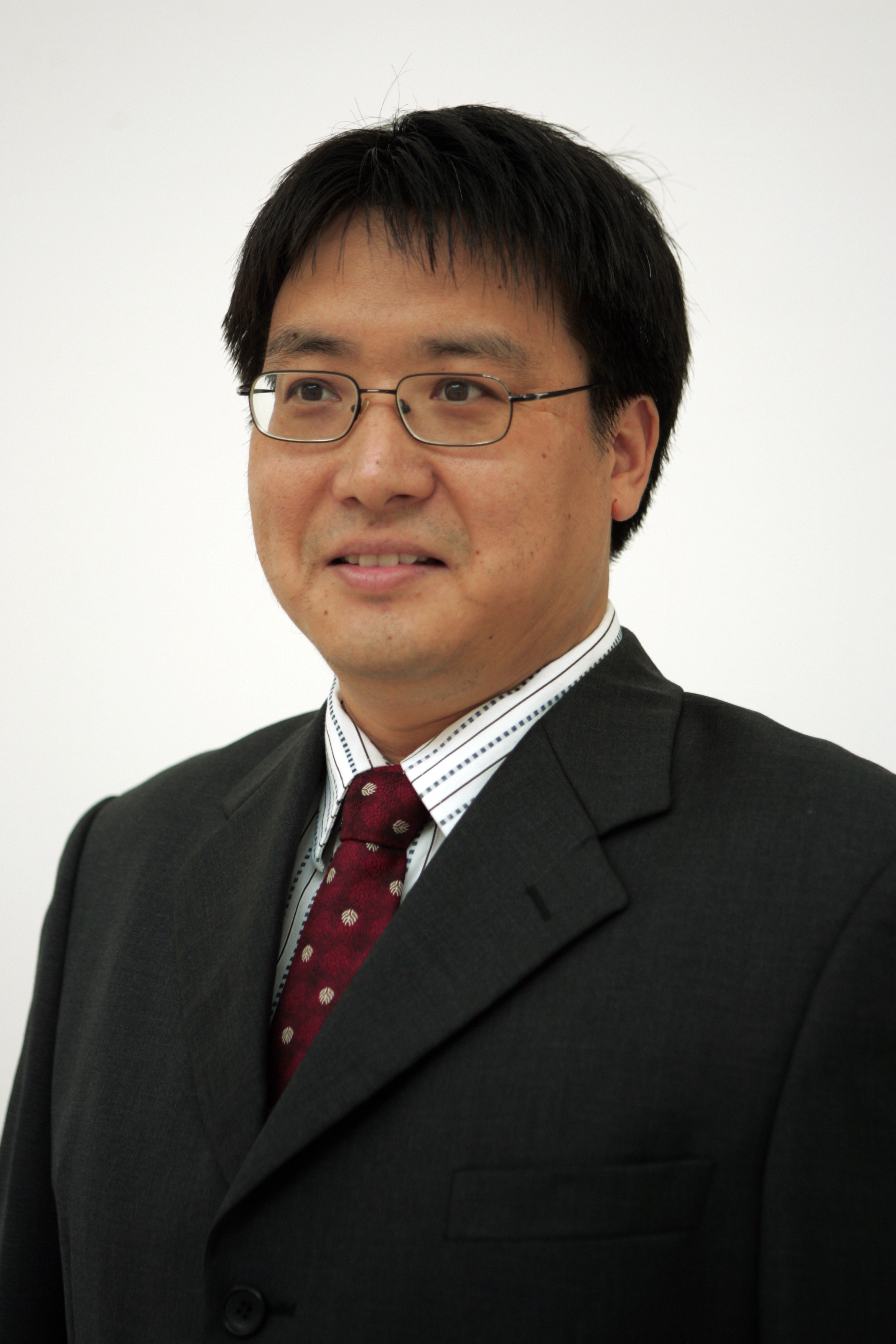
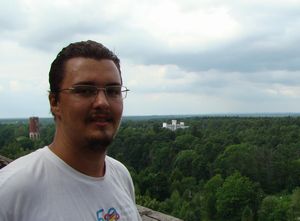
Per Austrin is a Lecturer at the Royal Institute of Technology (KTH) in the Department of Theoretical Computer Science. He has been actively involved in teaching courses such as Algorithms and Complexity (DD2352) , Advanced Algorithms (DD2440) , and Problem Solving and Programming Under Pressure (DD2458) , serving as examiner and course coordinator for several programs. His research focuses on the foundations of computational complexity, approximation algorithms, and cryptographic barriers. Key areas include hardness of approximation for constraint satisfaction problems (CSPs), combinatorial optimization, and theoretical limits in cryptography and coding theory. His work often intersects with probabilistic methods and quantum computing challenges. Recent publications highlight his contributions to understanding lower bounds in optimization problems, inapproximability thresholds, and complexity in structured combinatorial problems. Detailed information about his work can be found on his personal website: Per Austrin's Website .
Wu Guohua is an Associate Professor in the Division of Mathematical Sciences at the School of Physical & Mathematical Sciences, College of Science, Nanyang Technological University (NTU), Singapore. He has been serving in this position since 2011 after working as an Assistant Professor at NTU from 2005-2011 and completing a Post-Doctoral Fellowship at Victoria University of Wellington from 2002-2005. His educational background includes a B.Sc. from Yangzhou Teachers' College (1987-1991), M.Sc. from Yangzhou University (1993-1996), and Ph.D. from Victoria University of Wellington, New Zealand (1999-2002). 1987-1991: B.Sc., Yangzhou Teachers' College (now Yangzhou University), China 1993-1996: M.Sc., Yangzhou University, China 1999-2002: Ph.D., Victoria University of Wellington, New Zealand Wu Guohua's research focuses on foundational aspects of theoretical computer science and mathematical logic. His primary interests include Computability and Complexity Theory, Formal Languages, Mathematical Logic and Set Theory, Universal Algebra, and Effective Aspects of Analysis, Algebra and Combinatorics. His work bridges abstract mathematical concepts with computational applications, examining the boundaries of what can be computed and how efficiently. His publication record demonstrates consistent contributions to mathematical logic and computability theory, with recent work focusing on degree structures, randomness notions, and connections between algebraic structures and computational complexity. His articles frequently appear in top journals like the Journal of Symbolic Logic, Annals of Pure and Applied Logic, and Archive for Mathematical Logic, as well as proceedings of major conferences in theoretical computer science. His notable awards include: Young Researcher Award from School of Physical and Mathematical Sciences, NTU (2008) Hatherton Awards from Royal Society of New Zealand (2003) Post-Doctoral Fellowship from Foundation of Research, Science and Technology, New Zealand (2002-2005) Wu Guohua has been actively involved in teaching and academic service. He has taught courses including Abstract Algebra II, Probability and Statistics, Continuous Methods, and various graduate seminars. He has also co-edited proceedings of the 7th and 8th Asian Logic Conferences (2003) and the 11th Asian Logic Conference (2011), demonstrating his leadership in the logic community.
Jay Schweig is an Associate Professor in the Department of Mathematics at Oklahoma State University. Previously, he held positions as a Visiting Assistant Professor at the University of Kansas and completed his graduate studies at Cornell University. His office is located in Room 433 of the Math Sciences Building with campus extension x5690. His research focuses on algebraic and geometric combinatorics , with particular emphasis on posets, matroids, Borel ideals, and graph theory. He has developed significant connections between combinatorial structures and commutative algebra, exploring topics like vertex decomposable complexes, non-transitive dice, and the combinatorial properties of lattice path matroids. His interdisciplinary work extends to music theory, where he investigates pitch-class sets and their geometric representations. Analysis of his publication record reveals strong trends in combinatorial commutative algebra, with recurring themes of shellability, domination parameters, and lattice structures. His work frequently bridges discrete geometry with algebraic methods, particularly in the study of simplicial complexes and monomial ideals. Recent publications show increasing integration of computational methods and applications to music theory. He coordinates the Stillwater High School Math Seminar where OSU faculty deliver talks to local high school students. His teaching portfolio includes advanced courses like MATH 5903: Seminar in Mathematics Teaching and MATH 2153: Calculus II, along with interdisciplinary honors add-ons covering mathematics and music, and enumerative combinatorics.
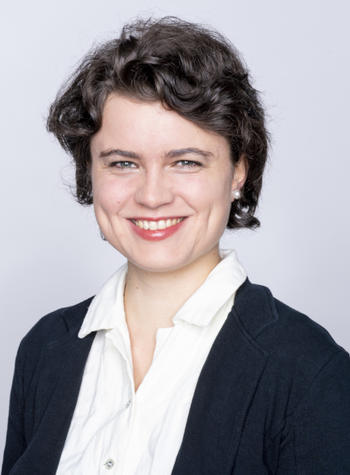
Lara Gayer serves as a Scientific Associate at the Institute of Mathematics within the Department of Mathematics and Computer Science at Free University of Berlin. She is actively affiliated with the Discrete Methods in Algebraic Geometry & Mathematics for Teachers research group, contributing to both theoretical and applied academic initiatives at the institution. Her research program centers on Discrete Algebraic Geometry, where she investigates combinatorial structures within algebraic varieties and polynomial systems, and Mathematics Education, focusing on curriculum development and pedagogical strategies for teacher training programs. This dual expertise enables innovative cross-disciplinary work connecting abstract mathematical frameworks with classroom implementation challenges. Contact details are maintained through her institutional email l.gayer@fu-berlin.de at Arnimallee 3, Room 020, 14195 Berlin.
Igor Potapov is a Professor at the University of Liverpool , leading the Algorithms, Complexity Theory and Optimisation (ACTO) Group within the Department of Computer Science. His career includes progressive academic roles from Lecturer (2002) to Professor (current), with a focus on theoretical computer science and formal verification. Research Themes : Reachability problems in matrix semigroups, robot scheduling, broadcasting automata, and computational complexity. Grants & Awards : EPSRC grant (£459K, 2014-2018) on reachability problems NATO Collaborative Linkage Grant (€15,000, 2008-2010) Royal Society International Joint Projects and Travel Grants Nuffield Foundation Grant (£5,000, 2003-2005) Royal Academy of Engineering Fellowship (£3,940, 2008-2009) Recent Work Trends : Focus on geometric coverage algorithms (2025) Collision-free scheduling for robotic systems (2024-2025) Advances in matrix semigroup decidability (2024) Applications to programmable matter and crystal structure prediction (2022-2023) Contact : potapov@liverpool.ac.uk
Artur Siemaszko is a Professor in the Faculty of Mathematics and Computer Science at the University of Warmia and Mazury in Olsztyn. He serves as a promoter for doctoral candidates and specializes in topological dynamical systems, ergodic theory, and classical/quantum stochastic processes. Department: Department of Analysis and Differential Equations Email: artur@uwm.edu.pl Research Interests: Topological Dynamical Systems Ergodic Theory Classical and Quantum Stochastic Processes Group Theory (Modular Groups) Scientific Contributions: His research spans integrability in geometric structures, spectral quantization of random walks, and the interplay between algebraic and topological properties in dynamical systems. Articles highlight applications in mathematical physics, computer science, and epidemiology. Grants & Resources: He confirms funding availability and infrastructure support for doctoral projects through the Department of Analysis and Differential Equations.
Associate Professor Anita Liebenau is affiliated with the School of Mathematics and Statistics at UNSW Sydney , where she joined in 2018. Her academic journey includes a DECRA Fellowship , postdoctoral positions at Monash University and University of Warwick , and a PhD from the Free University Berlin under Tibor Szabó. Her research focuses on Extremal combinatorics Probabilistic combinatorics Asymptotic enumeration Random graphs Ramsey theory Combinatorial games on graphs Her work analyzes large discrete structures, clique-cycle Ramsey properties, and threshold biases in tournament games, often intersecting with asymptotic methods and hypergraph theory. Recent publications highlight trends in Sidorenko configurations , multicolor Turán problems , universal graph structures , and asymptotic enumeration of graphs and hypergraphs. These contributions blend probabilistic techniques with extremal combinatorics and game-theoretic approaches. Key scientific awards include the DECRA Fellowship , recognizing her early-career research excellence. She supervises projects in Extremal combinatorics Asymptotic enumeration Graphs and hypergraphs Contact details: Email a.liebenau@unsw.edu.au, Location The Red Centre, Room 6105, UNSW Sydney, NSW 2052, Australia.
Bermudo Navarrete is a University Professor in the Department of Economics, Quantitative Methods and Economic History at Pablo de Olavide University's Higher Polytechnic School in Seville, Spain. His academic career spans over two decades, with teaching positions at multiple international institutions including the University of Seville, Popular Autonomous University of Puebla (Mexico), and The College of the Bahamas. Professor Navarrete specializes in Graph Theory and Discrete Mathematics, with particular expertise in domination theory, topological indices, and mathematical analysis. His research focuses on differential of graphs, hyperbolicity in graphs, and vertex-degree-based topological indices. His work bridges theoretical mathematics with applications in chemical graph theory and network analysis. His extensive publication record shows a clear evolution from early work in operator theory to his current focus on graph theory applications. Since 2012, his research has centered on domination parameters, differential sets, and topological indices in various graph structures, with increasing applications to chemical graph theory and computational methods. Throughout his career, Professor Navarrete has maintained an active international research presence with numerous research stays at institutions worldwide including universities in Russia, Venezuela, USA, Poland, Mexico, Germany, Colombia, Argentina, Brazil, and the Dominican Republic. He teaches undergraduate courses in Algebra, Calculus, and Final Degree Projects for Computer Engineering students across multiple specializations including Information Systems, Data Science, and Mind in Information Systems. His teaching reflects the mathematical foundations required for modern computer science applications.
Valeria Orlanovna Kirova is a Research Fellow at the National Research University Higher School of Economics (HSE University), working within the Faculty of Computer Science, Institute of Artificial Intelligence and Digital Sciences, and the Research and Educational Laboratory of Big Data Analysis Methods. She joined HSE in 2020 and holds a Candidate of Physical and Mathematical Sciences degree from Lomonosov Moscow State University (2024), following her Master's (2019) and Bachelor's (2017) degrees from National Research Tomsk State University. Her educational background includes: Candidate of Physical and Mathematical Sciences (PhD equivalent), Lomonosov Moscow State University, 2024 Master's degree in Mathematics, National Research Tomsk State University, 2019 Bachelor's degree in Mathematics and Computer Science, National Research Tomsk State University, 2017 Dr. Kirova specializes in discrete mathematics and combinatorics, with particular expertise in combinatorics of symbolic sequences, combinatorial geometry, and applications of these mathematical frameworks to artificial intelligence and biological sequence analysis. Her research bridges theoretical mathematics with practical applications, especially in neuroscience and hydrobiology. She teaches Mathematics for Data Analysis at both undergraduate and graduate levels at HSE University. Her publication record shows a strong focus on combinatorial complexity functions, symbolic sequences, and geometric properties of discrete structures. Her recent work demonstrates increasing interdisciplinary applications, particularly in AI methods for neuroscience (as part of the 'Next-Generation Cognitive AI' grant project) and hydrobiology (for biodiversity analysis and zooplankton classification using interpretable computer vision). Dr. Kirova has presented her research at numerous national and international conferences, including the IV Conference of Russian Mathematical Centers (2024), Numeration 2023 conference at University of Liège, and the International Lomonosov Conference (2023). She has also lectured at scientific schools on modern combinatorics and AI. She has been actively involved in research collaborations, serving as a Research-engineer at HUAWEI Russian Research Center (December 2021-April 2024), where she analyzed state-of-the-art approaches for photo and video processing. Additionally, she serves as an expert for the working group developing the Federal Law 'On the Regulation of Artificial Intelligence Systems in the Russian Federation'.
Dr. Santiago Barrera Acevedo is a Lecturer in Pure Mathematics at La Trobe University's Department of Mathematical and Physical Sciences, where he conducts teaching and research. He joined La Trobe in 2024 following seven years at Monash University as a postdoctoral research fellow and lecturer. His academic background includes a Ph.D. from Monash University and an M.Sc. from Universidad de Los Andes in Bogotá, Colombia. His research specializes in algebraic design theory , integrating algebra and combinatorics to solve complex problems in cryptography and coding theory. Key focus areas include: Construction and classification of combinatorial designs (Hadamard matrices, relative difference sets) Applications of group theory, cohomology, and representation theory Development of quaternionic structures for cryptographic applications Analysis of perfect sequences and their automorphism groups His publication portfolio shows dual specialization: recent works emphasize combinatorial mathematics and algebraic structures, while earlier contributions advanced computational chemistry methods for ionic liquids and intermolecular interactions. Awards and Honors: Australia Academy of Science Theo Murphy Mobility Award (2023-2024) Monash Faculty of Science Early Career Researcher Grant (2023) Australian Mathematical Society Kovalevskaya Travel Award (2022) Colombian Francisco Jose de Caldas PhD Scholarship (2010) He has co-supervised 18 HDR, Honours, and research project students, and actively seeks graduate candidates for algebraic design and theoretical cryptography research. Current teaching includes coordinating 'Complexity, Cryptography and Compression' and 'Optimisation' courses for Data Science and Quantum IT programs.
Nickolas Hein is a Professor and Chair in the Mathematics and Computer Science Department at Benedictine College. He joined the institution in 2016 after earning his Ph.D. in mathematics from Texas A&M University in 2013. Dr. Hein serves as the Faculty Athletics Representative and also runs the St. Benedict Elementary School chess club. Ph.D., Texas A&M University, 2013 (Dissertation: Reality and Computation in Schubert Calculus) M.A., The University of Kansas, 2006 (Thesis: The Riemann-Roch Theorem for Complex Curves) B.A., The University of Kansas, 2003 (Honors Thesis: Constructible Numbers and the Insolvability of the Quintic) Dr. Hein's research focuses on algebraic geometry, combinatorics, and numerical analysis . His specific interests include Schubert calculus, Catalan objects, certification of numerical solutions, reality in algebraic geometry, and experimental mathematics. He has developed specialized computational methods for solving polynomial systems and has made significant contributions to understanding real solutions in Schubert calculus. Dr. Hein is an active reviewer for the American Mathematical Society Mathematical Reviews and organized the Workshop on Computational and Applied Enumerative Geometry at the Fields Institute in Toronto. His publication record demonstrates a consistent focus on real algebraic geometry and computational methods, with an emphasis on certifiable computations and the reality of solutions to geometric problems. His work often bridges theoretical mathematics with practical computational approaches. Dr. Hein teaches a wide range of mathematics courses including Intermediate College Algebra, Calculus, Linear Algebra, Modern Algebra, Complex Analysis, and graduate-level courses in Algebraic Geometry and Groebner Bases. Outside of his academic work, Dr. Hein lives in Atchison with his wife and four children, finding community within the local Benedictine presence.
Raina Robeva is a Professor of Mathematics at Randolph-Macon College, renowned for pioneering interdisciplinary research that applies algebraic and discrete mathematical frameworks to biological systems. Her work focuses on modeling gene regulatory networks and cellular processes, establishing critical bridges between theoretical mathematics and experimental biology. Her academic credentials include: PhD in Mathematics, University of Virginia, 1997 MSc in Probability and Statistics, Sofia University, 1985 Dr. Robeva's research centers on mathematical biology and systems biology , employing algebraic combinatorics to decode complex biological networks. She champions STEM education reform through curriculum development that integrates calculus, discrete mathematics, and statistics with life sciences applications. Her leadership extends to founding the first education-focused special issue of the Bulletin of Mathematical Biology , redefining quantitative training for biologists. Analysis of her 2019–2024 publications reveals dual emphases: advancing computational biology via algebraic methods (e.g., Boolean networks for gene regulation) and transforming biology education through data science integration. Key themes include machine learning applications in complex systems, curriculum innovation for calculus/discrete math bridging, and community-building in interdisciplinary research. Her distinguished honors include: Outstanding Faculty Award, State Council of Higher Education for Virginia (2015) Libby and Hiter Harris Excellence in Undergraduate Teaching Award, Virginia Foundation for Independent Colleges (2018) Distinguished Senior Fellowship Award, Intercollegiate Biomathematics Alliance (2018) Karl E. Peace Fellowship in Mathematics, Randolph-Macon College (2020) Through chairing the National Institute for Mathematical and Biological Synthesis (NIMBioS) Advisory Board and founding Frontiers in Physiology as Editor-in-Chief for a decade, Dr. Robeva has shaped national research agendas and fostered collaborative networks. Her editorial leadership, including the landmark special issue on mathematical biology education, demonstrates sustained commitment to training interdisciplinary scientists and developing curricular resources that connect abstract mathematics with biological discovery.
Alexander Belov is an Assistant Professor and researcher at the Faculty of Computing, University of Latvia. He has held this position since 2016, while also serving as a researcher at the same institution since 2013. Prior to this, he completed postdoctoral work at Centrum Wiskunde & Informatica (CWI) in the Netherlands (2015-2016) and MIT's CSAIL (2014). His educational background includes: PhD in Computer Science, University of Latvia (2009-2014), supervised by Andris Ambainis Master of Mathematics, University of Waterloo (2008), supervised by Ashwin Nayak Master of Computer Science, University of Latvia (2006-2009), with distinction BSc in Computer Science, University of Latvia (2002-2006), with distinction Dr. Belov's research focuses primarily on quantum algorithms, with emphasis on upper and lower bounds for quantum complexity of various problems, applications of the adversary method, and discrete quantum walks. He also explores theoretical computer science topics including models of computation, query complexity, lower bounds, and related mathematical techniques. His work bridges deep theoretical insights with potential practical applications in quantum computing. His recent publications demonstrate a strong trend toward developing novel quantum algorithms, particularly for problems like monotonicity testing, k-distinctness, and group testing. His work often establishes important lower bounds and separation results in quantum query complexity. The research spans theoretical computer science, quantum information, and mathematical techniques for analyzing computational problems. Dr. Belov has received several prestigious awards: IEEE Conference on Computational Complexity 2014: Best student paper award IEEE Conference on Computational Complexity 2013: Best student paper award International Olympiad in Informatics 2002, Korea: Gold Medal International Mathematical Olympiad 2002, UK: Silver Medal International Mathematical Olympiad 2001, USA: Bronze Medal Dr. Belov serves as the principal researcher for the ERDF project "Quantum walks for large speed-ups, and general limitations of quantum algorithms" (project number 1.1.1.2/VIAA/1/16/113). He has been actively involved in reviewing papers for major conferences including STOC, FOCS, SODA, CCC, ICALP, ESA, QIP, and SOFSEM, as well as journals like Algorithmica, Theory of Computing, and Physical Review A. He has also contributed significantly to mathematical education in Latvia through Aivars Liepa's Extramural Mathematics School, preparing high school students for international olympiads and serving as the leader of Latvia's team at the 54th International Mathematical Olympiad.
J.P. McCarthy is a Lecturer in the Department of Mathematics at Munster Technological University (MTU), Ireland. His research focuses on Quantum Groups, Random Walks on Finite Quantum Groups, and related areas in Operator Algebras and Mathematical Physics. He completed his PhD in Mathematics at University College Cork (UCC) in 2017 under the supervision of Dr. Stephen Wills, with a thesis titled Random Walks on Finite Quantum Groups — Diaconis-Shahshahani Theory for Quantum Groups . He also holds an MSc by Research and BSc in Joint Honours Mathematics & Physics from UCC. McCarthy’s work explores quantum symmetries, ergodic theory on quantum groups, and applications of representation theory. Recent publications include advancements in the Frucht property for quantum groups, state-space approaches to quantum permutations, and ergodic theorems for random walks on quantum structures. He has supervised research students in data science and analytics, including topics like mortality rate smoothing and sports betting clustering. Teaching interests span engineering mathematics, data science, and foundational courses for teachers. He contributes actively to mathematics education through initiatives like the Transposition Project and engages with online communities (e.g., Math.StackExchange, MathOverflow). Affiliations include the MIC-MTU-UCC Quantum Mathematics research group and participation in international workshops/conferences on quantum groups and noncommutative probability. He is a regular speaker on topics like quantum permutation groups and the philosophy of pure mathematics in applied contexts.
Norbert Kaiblinger is an Associate Professor at the Institute of Mathematics, BOKU University, Vienna, Austria. His research focuses on applied mathematics, harmonic analysis, and numerical methods, with applications in fluid mechanics, statistics, and chemical engineering. He holds a habilitation in Mathematics from the University of Vienna, granting him teaching authorization in the field. His work bridges theoretical mathematics with practical computational problems, particularly in adsorption modeling and fluid dynamics. Key research interests include multicomponent batch adsorption models, dynamics of subaqueous systems, analysis of variance (ANOVA) methodologies, and special functions. Recent publications (2023–2025) highlight advancements in equilibrium composition calculations and statistical experimental design. His earlier work (2007–2019) explores Fourier analysis, operator theory, and algebraic structures like cyclotomic rings and circulant matrices. While no formal advising relationships or grants are listed, his collaborative research involves co-authors from diverse fields such as chemical engineering and fluid mechanics. Kaiblinger’s work is disseminated through journals like Adsorption, Journal of Fluid Mechanics, and Transactions of the American Mathematical Society.