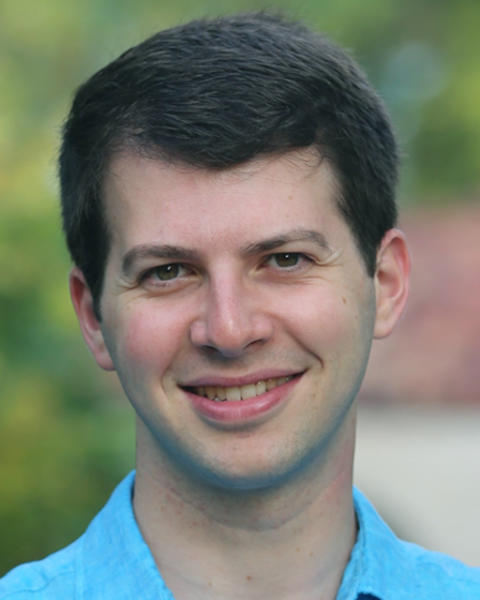
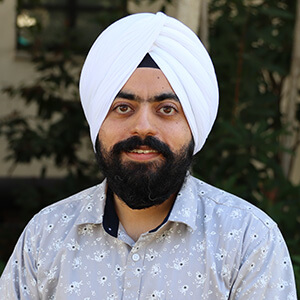
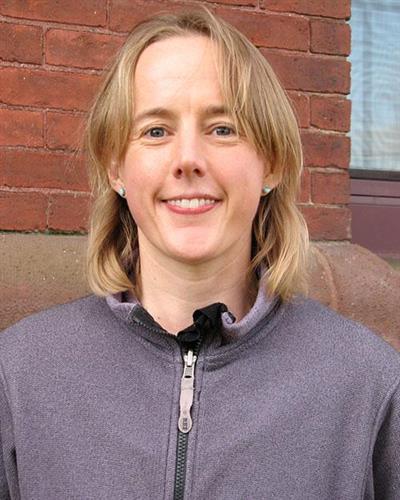
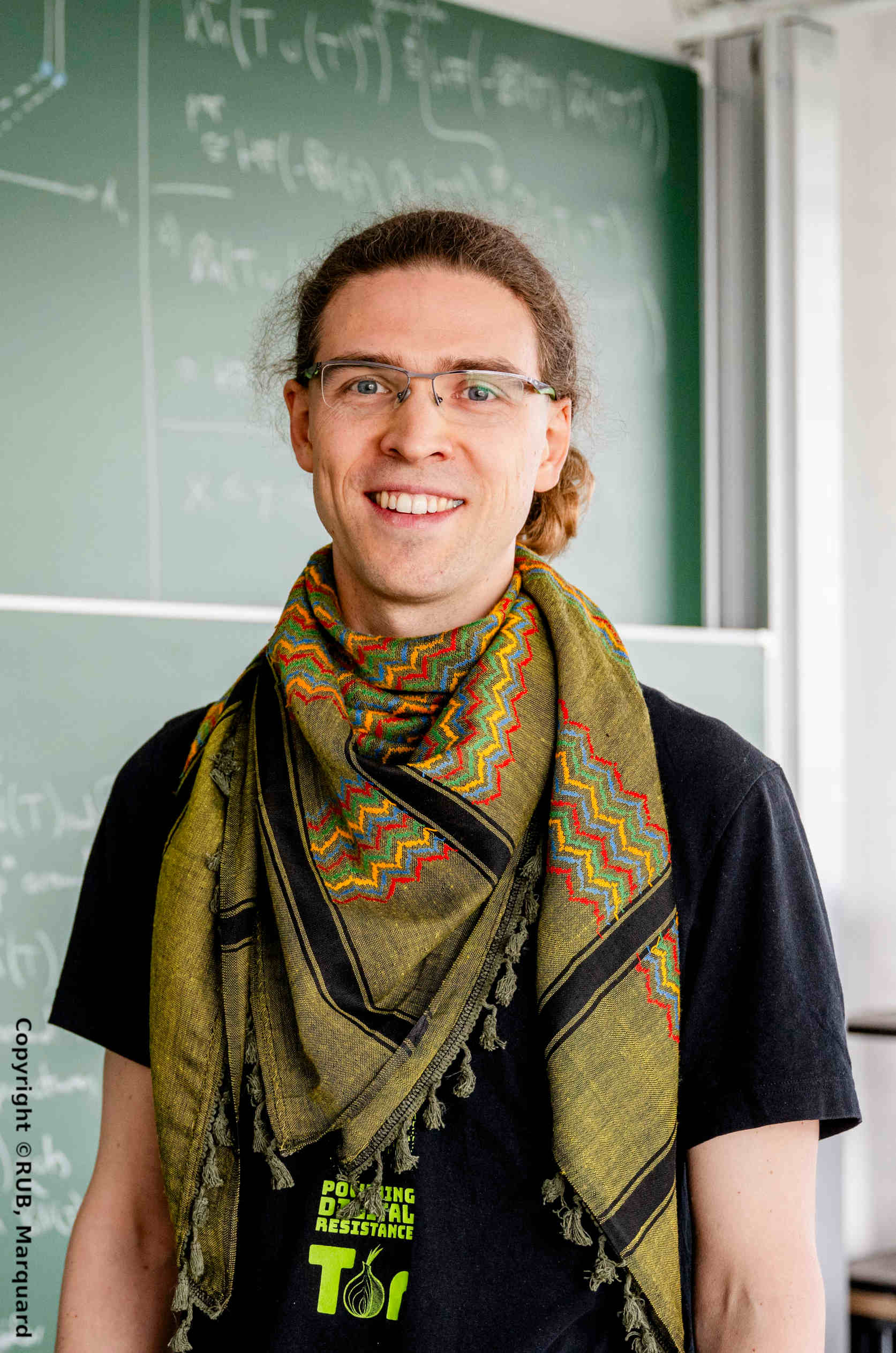
Moritz Kerz is a Professor of Mathematics at the University of Regensburg's Faculty of Mathematics. His research spans arithmetic geometry and algebraic K-theory, with significant contributions to class field theory and cohomological methods. He leads a research group including postdoctoral scholars and doctoral candidates. Research Focus: Kerz's investigations center on: Non-archimedean K-theory and its applications to geometric problems Arithmetic invariants in positive characteristic Higher-dimensional class field theory constructions Monodromy representations and density theorems Publication Trends: Recent work demonstrates a consistent focus on K-theoretic invariants in arithmetic contexts, particularly through: Innovative applications to rigid analytic geometry Interactions between étale cohomology and representation theory Non-commutative generalizations of class field theory Awards: Minkowski Medal (2020) K-theory Prize (2014) Carus Medal (2011) Heinz Maier-Leibnitz Prize (2011) Cultural Prize of Bavaria (2009) Research Group: Current team members include Carolyn Echter, Lukas Krinner, Andrea Panontin, Yanshuai Qin, Yuenian Zhou, and Paul Ziegler, with research spanning arithmetic geometry and K-theory applications.
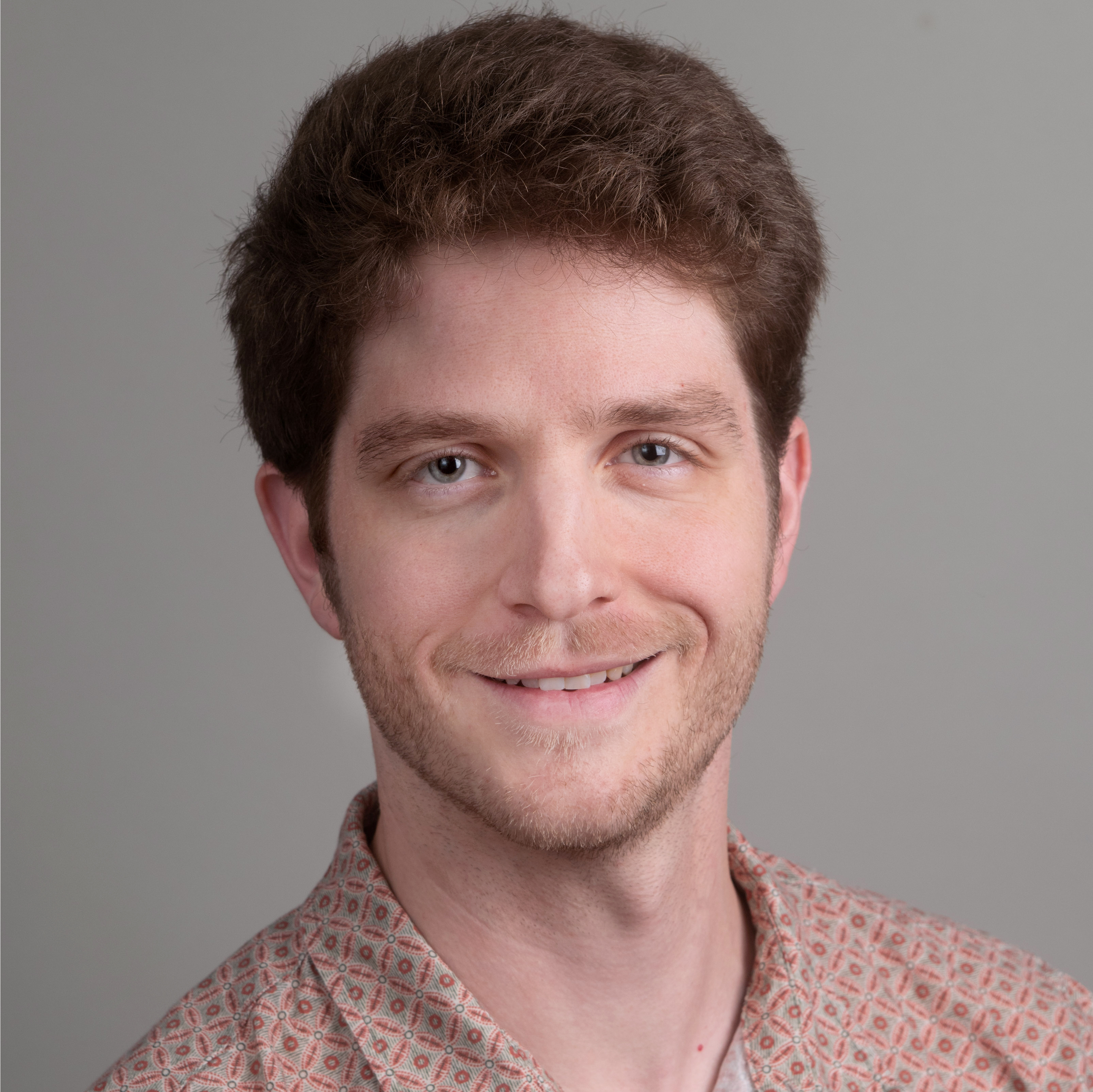
Blake Jackson is an Assistant Research Professor at the University of Connecticut's Department of Mathematics. His research focuses on algebraic and enumerative combinatorics, representation theory, and applications of machine learning to mathematical problems. He earned his Ph.D. from the University of Alabama under Kyungyong Lee and is currently mentored by Ralf Schiffler and Kyu-Hwan Lee at UConn. Education and Background: Bachelor's degree from Jacksonville State University, Alabama. Ph.D. in Mathematics from the University of Alabama (Tuscaloosa). Research Interests: Blake’s work spans cluster algebras, symmetric functions, quiver representations, and machine learning. Recent projects include geometric modeling of modules over path algebras, studying Banff/Louise quivers, c-vector geometry for mutation-infinite quivers, and using machine learning to explore quiver mutation-acyclicity. He is actively developing algorithms to find combinatorial bijections on Dyck paths related to q,t-Catalan numbers. Publications: His recent work combines theoretical mathematics with computational methods, focusing on geometric and algebraic structures in combinatorics. Machine learning techniques are increasingly central to his research, driven by promising results in quiver mutation analysis. Awards: No specific awards mentioned in the provided texts. Grants and Advising: While no grants are listed, Blake collaborates with leading researchers in algebraic combinatorics. He mentors students through his research projects, though no formal advisees are noted. Labs/Teams: His current work involves interdisciplinary collaborations, including machine learning applications in mathematical research.
Davi De Castro Silva is a Researcher at the University of Cambridge, affiliated with the Department of Computer Science and Technology and the Centre for Quantum Information and Foundations. His current work is advised by Tom Gur and Sergii Strelchuk. Previously, he was a postdoc at CWI (Amsterdam) in QuSoft, advised by Jop Briët, and completed his PhD in Applied Mathematics at the University of Cologne under Frank Vallentin and Fernando de Oliveira Filho. He holds a Master's from IMPA (Brazil) under Roberto Imbuzeiro Oliveira and a BSc/MSc from École Polytechnique (France). His research focuses on theoretical computer science, quantum computing, and combinatorics, with recent emphasis on quantum speedups' structural foundations, such as symmetry's role. Key areas include additive combinatorics (e.g., higher-order Fourier analysis), computational complexity (lower bounds), combinatorial optimization (semidefinite programming), and quantum information theory. Notable contributions include studies on quasirandomness in additive groups, quantum algorithms' limitations, and tensor analysis. His work bridges combinatorial methods with quantum computing, exploring algorithmic efficiency and structural properties. He has published in journals like Discrete Analysis , Combinatorica , and Forum of Mathematics, Sigma , with preprints addressing quantum computation symmetry, Goldreich-Levin algorithms, and hypergraph quasirandomness. His research highlights interdisciplinary approaches to foundational questions in computing and mathematics.
Professor Ailsa Keating is a faculty member in the Department of Pure Mathematics and Mathematical Statistics (DPMMS) at the University of Cambridge. Her research focuses on symplectic geometry and homological mirror symmetry, with significant contributions to understanding symplectic structures, mapping class groups, and geometric topology. Current position: Professor, University of Cambridge Research areas: Symplectic Geometry, Homological Mirror Symmetry, Topology Her research explores symplectic stabilisations, Dehn twists, Lagrangian submanifolds, and mirror symmetry for singularities and Calabi-Yau surfaces. She has published extensively on these topics, with recent work addressing four-dimensional manifolds, exotic discs, and Brieskorn-Pham hypersurfaces. Notable scientific awards include the EPSRC Open Fellowship EP/W001780/1 and the ERC Starting Grant SingSymp (2023–24). Her work is supported by institutions like the London Mathematical Society and the University of Vienna. PhD Students: José Luis Narbona Valiente, Yoon Jae (Nick) Nho, Amanda Hirschi Grants: EPSRC Open Fellowship, ERC Starting Grant She serves on editorial boards for Annales Scientifiques de l'École Normale Supérieure and Journal de l'École Polytechnique . Her office is located in E1.02 at DPMMS, Wilberforce Road, Cambridge.
Oleksandr Tsymbaliuk is an Associate Professor of Mathematics at Purdue University, specializing in Representation Theory, Quantum Algebra, and Integrable Systems. His research focuses on quantum affine and toroidal algebras, shuffle algebras, Yangians, and their connections to algebraic geometry and mathematical physics. He has held positions at Yale University and the Simons Center for Geometry and Physics. Tsymbaliuk earned his PhD from MIT in 2014 and has been supported by NSF grants DMS-2302661 and others. His research interests include Cherednik algebras, Coulomb branches, and Toda systems. He has mentored students in programs like PRIMES and Yulia’s Dream, leading to collaborative publications. Notable contributions include works on Lyndon words, R-matrices, and orthogonal bases in quantum groups. Teaching roles span courses such as Infinite-Dimensional Lie Algebras and Linear Algebra at Purdue. He actively participates in academic conferences and seminars, with notable talks at Temple University and Northeastern University. Grants and collaborations include NSF funding and partnerships with researchers like Michael Finkelberg and Andrei Neguț. His work bridges algebra, geometry, and physics, emphasizing integrable systems and categorification.
Jordan Cotler is an Assistant Professor of Physics at Harvard University, affiliated with the Department of Physics within the Faculty of Arts and Sciences. He holds a BS in physics and mathematics from MIT (2015) and a PhD in physics from Stanford University (2020). Before joining Harvard's faculty, he served as a Junior Fellow at the Harvard Society of Fellows from 2020 to 2024. His research focuses on the intersection of quantum information, computation, and spacetime physics. Key interests include quantum algorithms for analyzing many-body and quantum gravitational systems, information-theoretic frameworks for chaotic dynamics, and non-perturbative methods in quantum cosmology and field theory. Cotler's work has advanced quantum algorithm design for experimental platforms and contributed to understanding black hole microstructure and cosmological spacetimes. He has been recognized with prestigious early-career awards, including his Harvard Society of Fellows Junior Fellowship. His publications span foundational topics such as quantum gravity, holography, computational complexity, and quantum chaos, reflecting a multidisciplinary approach to theoretical physics.
Roya Beheshti Zavareh is a Professor of Mathematics at Washington University in St. Louis, specializing in Algebraic Geometry. She earned her Ph.D. from MIT (2003) and holds a B.S. from Sharif University of Technology (1999). Her research focuses on rational curves, Fano manifolds, hypersurfaces, and moduli spaces, with notable contributions to birational geometry and arithmetic geometry. She has held academic positions at Washington University since 2007, including roles as Assistant Professor (2007–2013) and Associate Professor (2013–present). Her editorial roles include Communications in Algebra and Mathematische Zeitschrift. She co-organizes major conferences like the Western Algebraic Geometry Symposium and the I-70 Algebraic Geometry Symposium. Her grants include NSF funding (DMS-2101935, $203,917) and Simons Collaboration Grants. Awards include the Washington University Teaching Award (2018) and medals from the International Mathematical Olympiad (silver, 1994) and Informatics Olympiad (bronze, 1995). Her recent work explores geometric invariants of Fano varieties, positivity conditions in moduli spaces, and rational curves in positive characteristic. She actively collaborates with institutions globally and contributes to academic service, including roles on NSF review panels and leadership in the AWM Human Rights Committee.
Justin Campbell is a Dickson Instructor in the Department of Mathematics at the University of Chicago, specializing in geometric representation theory. His research explores connections between algebraic geometry and representation theory, with particular interest in the geometric Langlands program. Current investigations focus on categorical structures in representation theory and their applications to automorphic forms. His work bridges abstract mathematical theories with computational approaches to fundamental problems in algebra and geometry.
Ben Lowe is a Dickson Instructor and NSF Postdoc at the University of Chicago. Previously, he was a graduate student at Princeton University under the supervision of Fernando Coda Marques. His research focuses on geometric rigidity phenomena across diverse settings, including differential geometry, minimal surfaces, hyperbolic geometry, and dynamical systems. He is actively exploring topics such as scalar curvature, k-surfaces, and locally symmetric spaces. Research Interests: - Differential Geometry - Minimal Surfaces - Hyperbolic Geometry - Dynamical Systems - Scalar Curvature - k-Surfaces - Locally Symmetric Spaces His work emphasizes rigidity in geometric contexts, with recent contributions addressing asymptotic Plateau problems, entropy of minimal surfaces, and spectral gaps in hyperbolic manifolds. He is preparing for the tenure-track job market in 2025. Advising & Grants: - Supervised undergraduate research projects at the UChicago Mathematics REU program (2023–present), focusing on topics like Ricci flow, quasi-Fuchsian manifolds, and geometric rigidity statements. - NSF Postdoctoral Fellowship recipient. Key Collaborators: - Fernando Al Assal - Baris Coskunuzer - Zeno Huang - André Neves - Sebastien Alvarez - David Fisher
Youssef Marzouk is a Professor of Aeronautics and Astronautics at MIT, serving as co-director of the MIT Center for Computational Engineering and director of the Aerospace Computational Design Laboratory. His research focuses on integrating physical modeling with statistical inference, emphasizing Bayesian computation, uncertainty quantification, and optimal experimental design. He holds a SB, SM, and PhD from MIT and has been recognized with prestigious awards including the DOE Early Career Award and the Junior Bose Teaching Prize. Education: PhD in Aeronautics and Astronautics, MIT SM in Aeronautics and Astronautics, MIT SB in Aeronautics and Astronautics, MIT Research Interests: Uncertainty Quantification techniques for complex systems Bayesian computational methods and inverse problem solutions Optimal experimental design strategies Interdisciplinary applications in geophysics, environmental science, and engineering Awards: 2022: Report to the President, Center for Computational Science and Engineering 2021: Bayesian Inference Software Framework (hIPPYlib-MUQ) 2012: MIT School of Engineering Junior Bose Award 2010: DOE Early Career Research Award Labs & Leadership: Aerospace Computational Design Laboratory (Director) MIT Center for Computational Engineering (Co-Director) Editorial Board roles: SIAM Journal on Scientific Computing, Advances in Computational Mathematics
Andrew D. Lewis is a Professor and Associate Head of the Department of Mathematics & Statistics at Queen's University, Kingston, Canada. His research focuses on geometric control theory, global analysis, and geometric mechanics, with applications to mechanical systems and dynamical systems. He holds a Ph.D. from Caltech, along with M.Sc. and B.Sc. degrees from Caltech and the University of New Brunswick, respectively. His research explores the intersection of geometric methods, topology, and algebra in solving structural problems in control theory and mechanics. He actively mentors graduate students and emphasizes mathematical rigor combined with applied perspectives. Lewis teaches advanced courses in control theory, differential equations, and geometric mechanics, and has developed extensive lecture notes and software tools for academic use. He has organized numerous research events, including the CRM Trimester on Control Geometry and Engineering and the Meeting on Nonlinear Control Theory and its Applications. His work spans theoretical contributions to control systems, geometric mechanics, and applied mathematics, with a focus on controllability, stabilization, and system dynamics. Education: Ph.D., California Institute of Technology M.Sc., California Institute of Technology B.Sc., University of New Brunswick Awards/Honors: None explicitly mentioned in the provided texts. Grants/Advising: Supervised numerous graduate students and postdoctoral researchers, fostering interdisciplinary work in control theory and mechanics.
Dr. Amneet Bhalla serves as an Associate Professor in the Department of Mechanical Engineering within the College of Engineering at San Diego State University (SDSU). His primary contact email is asbhalla@sdsu.edu, with office located in Engineering Building Room 323-G, and phone number (619) 594-2043. Education: Ph.D., Mechanical Engineering, Northwestern University (2013) M.S., Mechanical Engineering, Indian Institute of Technology Kharagpur (2009) B.S., Mechanical Engineering, Indian Institute of Technology Kharagpur (2004-2008) Postdoctoral Training: University of North Carolina at Chapel Hill (Mathematics Department) and Lawrence Berkeley National Laboratory (Computational Research Division) Research Interests: Dr. Bhalla develops advanced numerical methods and high-performance computing techniques for computational fluid dynamics (CFD) and fluid-structure interaction (FSI) problems. His work spans aquatic locomotion, renewable energy device modeling, multiphase flows, vehicular aerodynamics, and bioengineering applications. He creates mathematical models to interrogate underlying flow physics for engineering design optimization, with emphasis on open-source software development through the IBAMR library. Publication Trends: Recent publications (2023-2025) focus on robust numerical frameworks for multiphase flows with phase change, acoustic streaming, and fluid-structure interaction. Key themes include mass conservation in level set methods, adaptive mesh refinement, and solvers for non-isothermal gas-liquid-solid systems. Applications range from aquatic locomotion and renewable energy devices to microfluidics and biomedical flows, demonstrating commitment to both theoretical advances and practical engineering solutions. Scientific Awards: No awards mentioned in the provided text Advising and Grants: Dr. Bhalla secured an NSF CAREER award (2023) for "Consistent Continuum Formulation and Robust Numerical Modeling of Non-Isothermal Phase Changing Multiphase Flows". As PI of the CFD Lab, he mentors graduate students in computational mechanics, leveraging prior industrial experience at ExxonMobil Upstream Research Company. His research integrates industrial practicality with academic rigor through collaborations with national laboratories. Laboratory and Team: The Computational Fluid Dynamics and Flow Physics Laboratory (CFD Lab) develops the open-source IBAMR software—a distributed-memory parallel implementation of the immersed boundary method with adaptive mesh refinement. The lab emphasizes transparency, community engagement, and reproducibility, establishing cross-institutional collaborations while advancing computational methods for complex flow phenomena in engineering and biological systems.
Alessandro Arsie is a Professor and Graduate Program Director in the Department of Mathematics and Statistics at the University of Toledo's College of Natural Sciences and Mathematics. His research focuses on mathematical physics, differential geometry, dynamical systems, and control theory, with notable contributions to F-manifolds, integrable systems, and geometric mechanics. He has authored over 50 publications in prestigious journals like Communications in Mathematical Physics and Nonlinearity . His work often bridges pure mathematics and applied fields, such as robotics and ecology. Key research interests include the geometry of Hamiltonian systems, bifurcation analysis in predator-prey models, and the interplay between algebraic structures (e.g., F-manifolds) and integrable hierarchies. He has explored topics like collision dynamics in celestial mechanics and optimization in multi-agent robotic networks. Dr. Arsie’s recent articles emphasize geometric approaches to differential equations and the application of advanced mathematical techniques to real-world systems. He collaborates with researchers in robotics and theoretical physics, reflecting his interdisciplinary expertise.
Genevieve Walsh is a Professor in the Department of Mathematics at Tufts University , where she studies geometric topology and group theory. She is affiliated with the Geometric Group Theory and Topology Seminar and has held visiting positions such as the CRM-Simons Scholar (Spring 2023) and Chaire Jean-Morlet CIRM (Spring 2018). Education: PhD in Mathematics, University of California at Davis (2003) MS in Mathematics, Auburn University (1997) BA in Mathematics, Oberlin College (1994) Research Interests: Genevieve focuses on hyperbolic manifolds and orbifolds, low-dimensional topology, and group actions. Her work explores commensurability of manifolds, right-angled Coxeter groups, and the interplay between geometric group theory and 3-manifold geometry. Research Trends: Her recent articles analyze boundaries of groups (e.g., Schottky sets, Bowditch boundaries), Dehn surgery spaces, and geometric actions of Coxeter and automorphism groups. Key themes include hyperbolic geometry, reflection orbifolds, and algebraic properties of low-dimensional manifolds. Scientific Awards: CRM-Simons Scholar (2023) Chaire Jean-Morlet CIRM (2018) Grants: Partially supported by NSF grant DMS-2005353 (2020-2023).
Claudius Zibrowius is a Professor of Low-Dimensional Topology at Ruhr-University Bochum's Faculty of Mathematics. He leads the Topology Group, focusing on categorified knot invariants like knot Floer homology and Khovanov homology, leveraging Fukaya categories of surfaces. His work bridges Heegaard Floer theories and quantum invariant categorifications. Current group members include postdoc Dr. Chen Zhang and PhD student Luca Marchiori. Research highlights include ERC Starting Grant (ERC-2024) and DFG funding, as well as contributions to topics like Gordian distances, Conway spheres, and mutation invariance. Notable collaborations involve Artem Kotelskiy and Liam Watson. Teaching activities include Algebraic Topology I and outreach lectures. He co-organizes conferences like 'Categorification in Low Dimensional Topology' (2025). Awards include DFG Individual Grant (2022) and ERC Starting Grant (2024). His lab engages in computational projects like kht++, a C++ program for Khovanov invariants. Beyond academia, he sings in choirs and advocates for Palestinian rights, publicly opposing Israeli-Palestinian conflict complicity.