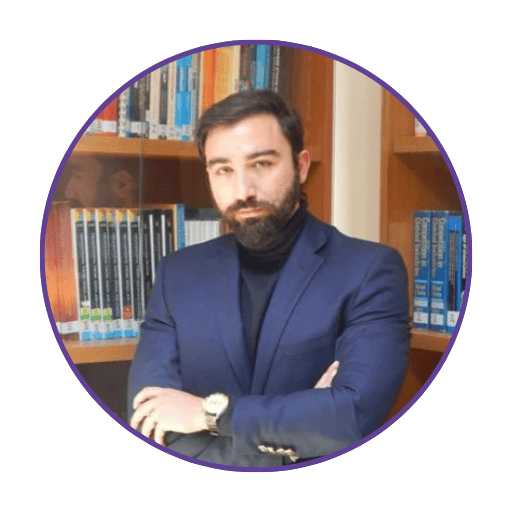
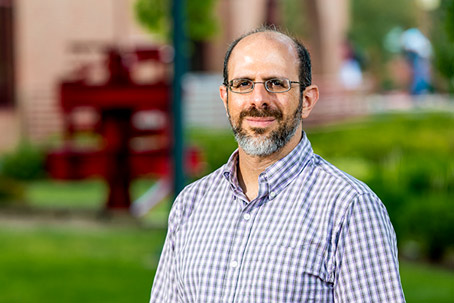
Håvard Raddum serves as Chief Research Scientist in the Department of Cryptography at Simula UiB, a joint research entity of Simula Research Laboratory and the University of Bergen. His primary focus involves advancing cryptographic security through algorithm analysis, Fully Homomorphic Encryption applications, and hardware-level attack mitigation. Raddum's research spans cryptography with specialization in security analysis of cryptographic algorithms, practical deployment of Fully Homomorphic Encryption, and physical attacks on hardware implementations. His work addresses vulnerabilities in symmetric ciphers, multivariate schemes, and lattice-based systems through algebraic cryptanalysis, side-channel techniques, and theoretical security proofs. Analysis of his 2019-2025 publications reveals concentrated expertise in cryptanalysis across diverse primitives. Key trends include algebraic attacks on arithmetization-oriented cryptography, side-channel analysis of lightweight ciphers, error detection in lattice computations, and security evaluations of Fully Homomorphic Encryption. His research consistently bridges theoretical frameworks with practical implementation vulnerabilities.
Prof. Dr. Klaus Dohmen is a Professor of Mathematics at Mittweida University of Applied Sciences, Faculty of Applied Computer and Biosciences. His academic career includes significant leadership roles such as Dean of Faculty (2006-2009) and Dean of Studies (2015-2021). He maintains active participation in university governance through the Departmental Council for Mathematics since 2018. His research specializes in foundational and applied mathematical disciplines with focus areas including: Discrete Mathematics and Theoretical Computer Science Cryptology and Cryptanalysis (both theoretical foundations and practical applications) Algebraic structures and Number Theory Mathematical Logic and computational theory Professor Dohmen contributes to academic quality assurance as a seasoned accreditation reviewer and program coordinator. He teaches advanced courses in cryptography and discrete mathematics through both traditional and distance learning formats. Contact: dohmen@hs-mittweida.de (Room 6-127).
Dr Theodosis Mourouzis serves as an Assistant Professor of Information Management at the University of Nicosia and directs the MSc in Business Intelligence and Data Analytics program within the Department of Information Technologies. Academic Background: PhD in Information Security and Cryptography from University College London (UCL) MSc in Advanced Studies in Mathematics from University of Cambridge BA/MA in Mathematics from University of Cambridge Research Expertise: Dr Mourouzis specializes in information security with deep technical focus on cryptography (including symmetric/asymmetric cryptanalysis) and blockchain ecosystems . His work spans theoretical cryptanalysis of algorithms like GOST and SIMON to practical implementations such as privacy-preserving healthcare blockchain solutions. Current research emphasizes efficient blockchain design and security evaluation frameworks. Publication Trends: His 14 publications (2011-2021) reveal an evolution from foundational cryptanalysis (differential/algebraic attacks on ciphers) toward applied blockchain systems. Key thematic clusters include cryptographic security evaluation (35% of works), blockchain innovation (40%), and authentication systems (25%), demonstrating consistent technical rigor across theoretical and implementation challenges. Academic Leadership: As MSc Director, he oversees program development bridging technical cryptography research with business intelligence applications, indicating strong curriculum design capabilities and industry-academia translation focus.
Joshua Brandon Holden is a Professor of Mathematics at Rose-Hulman Institute of Technology, where he has established himself as an expert in number theory and cryptography. His work bridges theoretical mathematics with practical cryptographic applications, and he has contributed significantly to both academic research and educational initiatives at the institution. Education: PhD in Mathematics from Brown University (1998) AM in Mathematics from Brown University (1994) AB in Mathematics from Harvard University (1992) Dr. Holden's research focuses on computational number theory, discrete logarithms, algebraic number theory, and applications of number theory to cryptography. His work explores the mathematical foundations of cryptographic systems, with particular attention to the discrete exponential function and its properties. He has also pioneered interdisciplinary connections between mathematics, computer science, and art through his investigations of braids, cables, and weaves using mathematical models. His research demonstrates how pure mathematical concepts can have practical applications in information security and artistic patterns. Dr. Holden's publication record reveals a consistent focus on the intersection of mathematics and cryptography, with a special emphasis on educational applications. His work spans theoretical investigations of number-theoretic concepts, practical cryptographic implementations, and innovative approaches to teaching complex mathematical ideas. A notable trend in his research is the connection between abstract mathematical structures and tangible real-world applications, including secure communication systems and artistic patterns. Scientific Awards: Honorary Member of Upsilon Pi Epsilon (2008) Best Paper in Mechanical Engineering Division at ASEE Annual Conference (2005) Dr. Holden has led National Science Foundation-funded research projects exploring discrete logarithms and has served as a cryptography consultant for Vadium Technology, Inc. since 2003. He has advised numerous student projects and theses in mathematics and cryptography. Additionally, he has played a leadership role on campus by chairing the committee on integrating classroom technology, demonstrating his commitment to innovative teaching methods and educational technology. His book 'The Mathematics of Secrets: Cryptography from Caesar Ciphers to Digital Encryption' has made complex cryptographic concepts accessible to a broader audience. While specific laboratory information isn't provided in the text, Dr. Holden's work with wireless tablet PCs and mathematical software suggests he has been involved in developing technology-enhanced learning environments. His research on braids and cellular automata also indicates interdisciplinary collaborations that bridge mathematics with computer science and artistic applications.