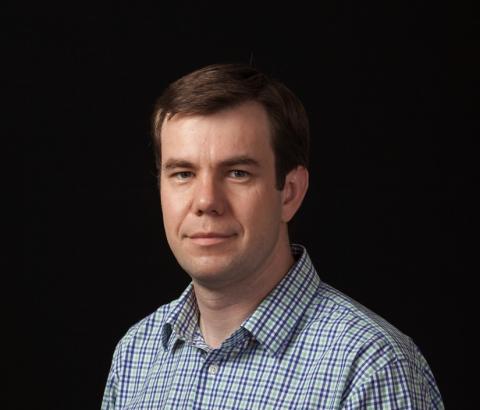
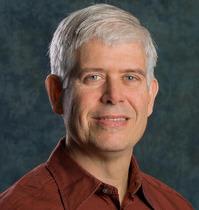
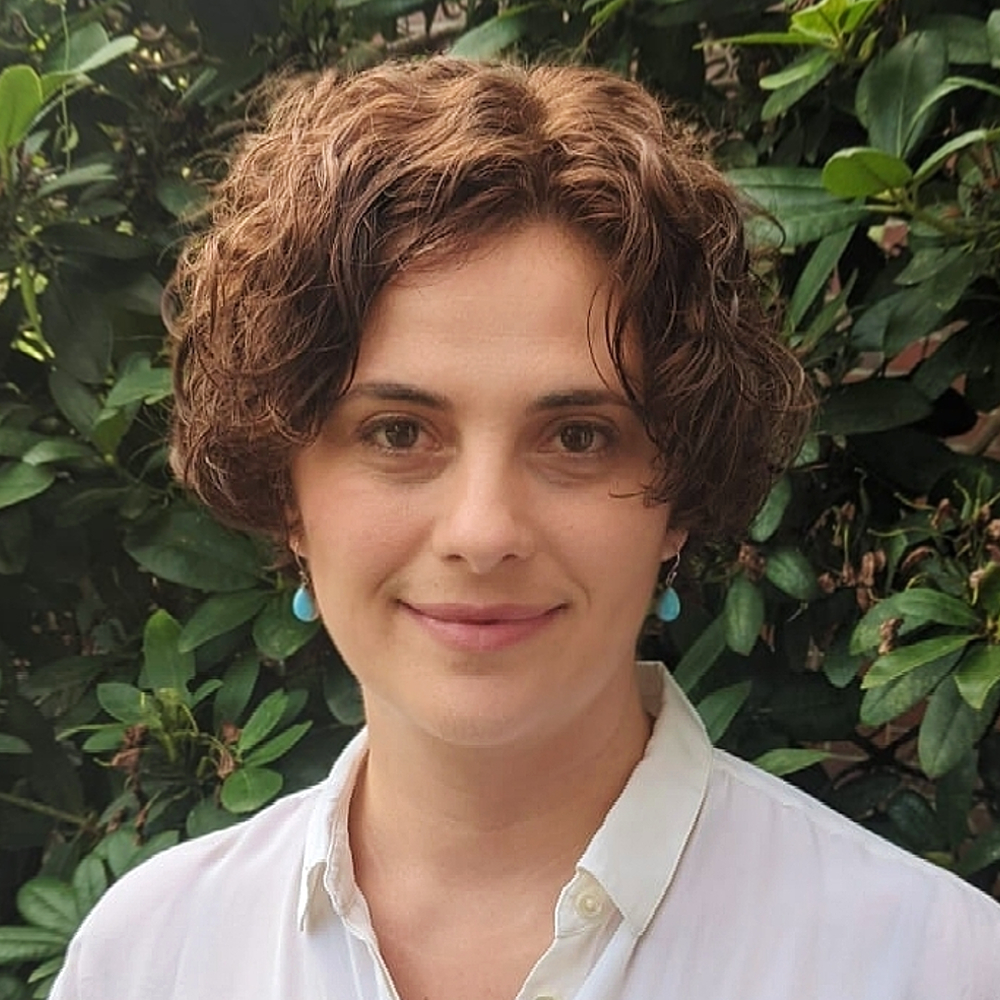
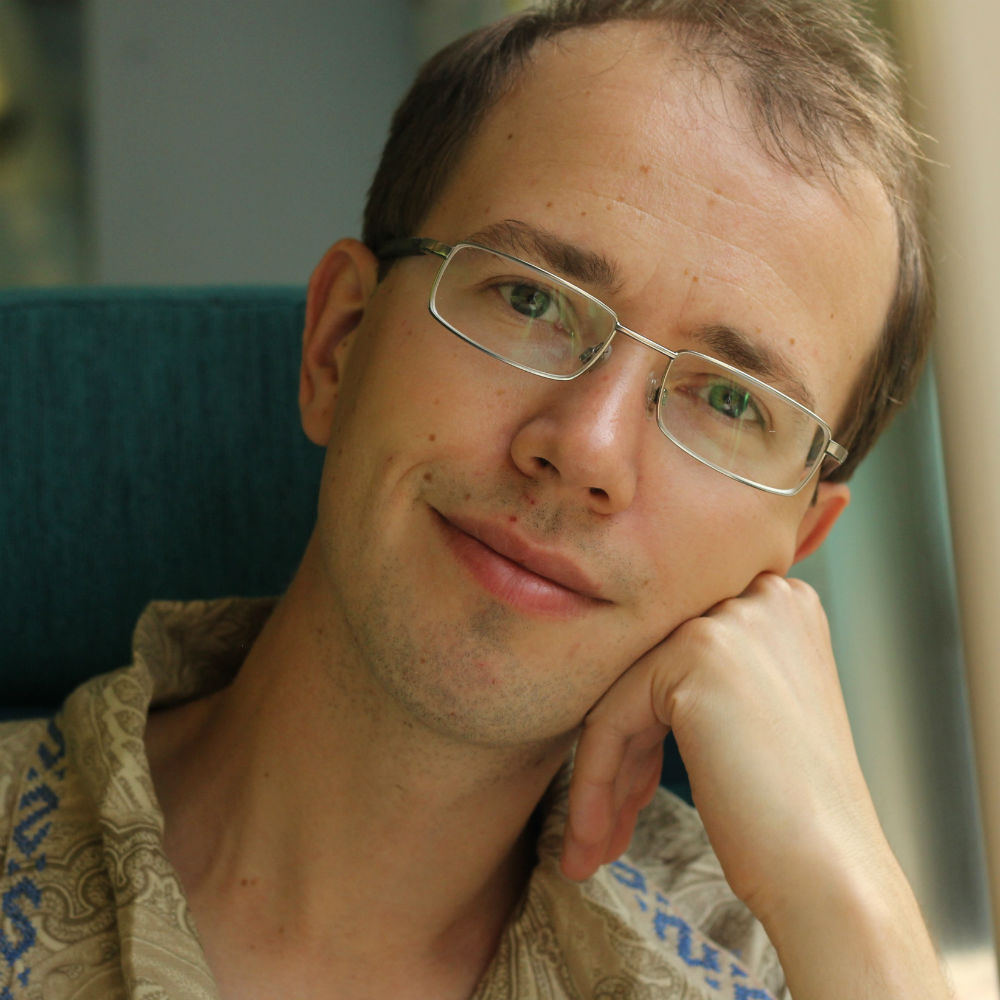
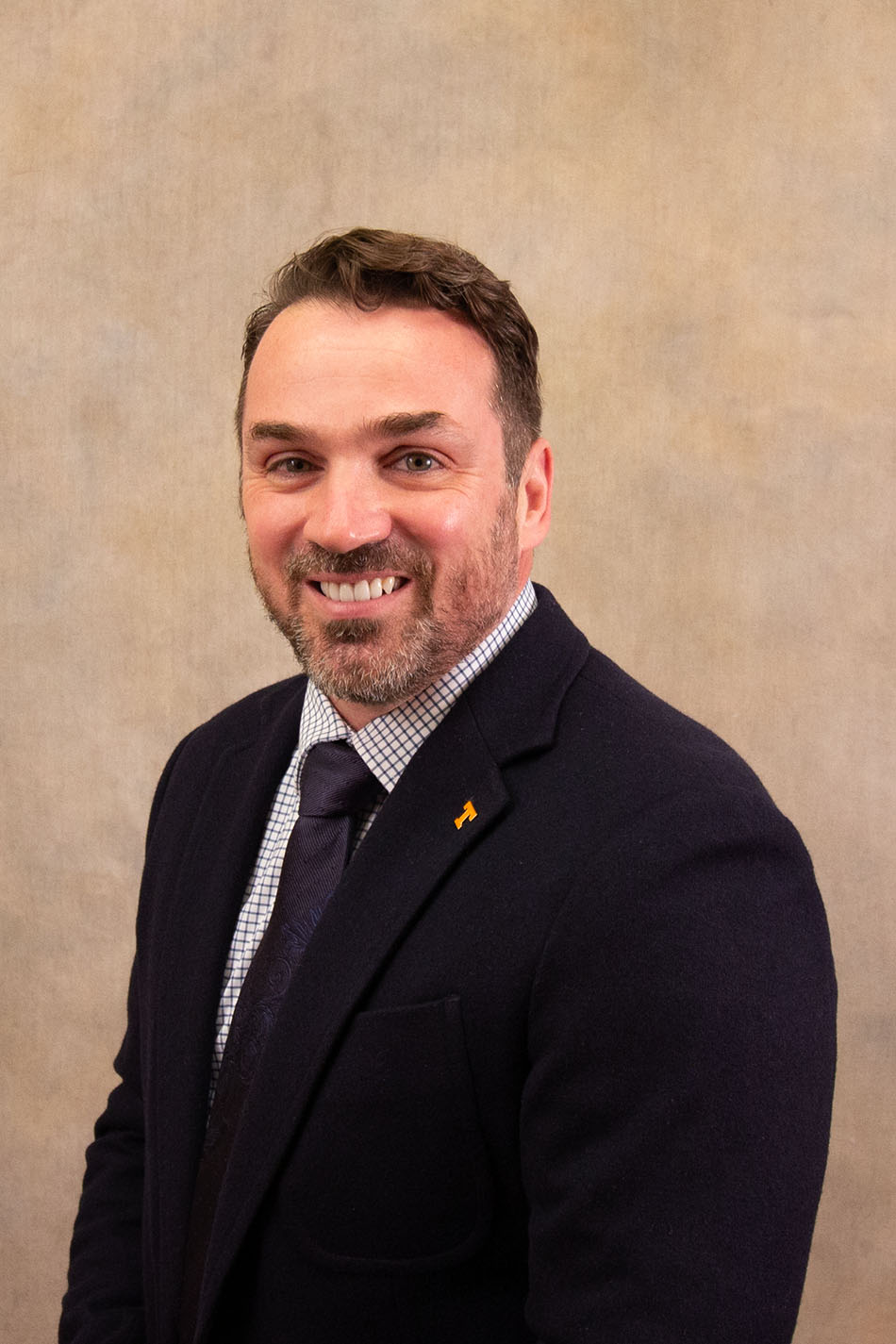
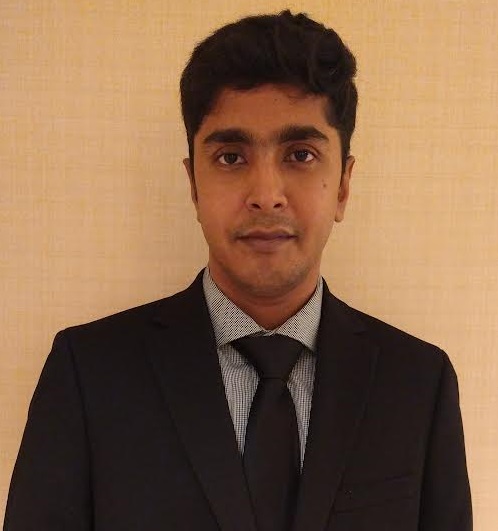
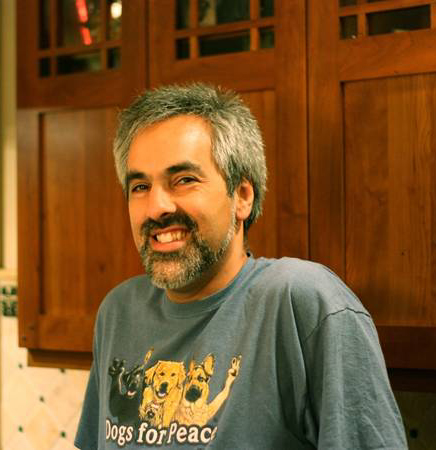
Anatoly Dymarsky is an Associate Professor in Physics & Astronomy at the University of Kentucky's College of Arts and Sciences. His research explores high-energy physics, quantum chaos, and holographic duality. His theoretical work bridges quantum information, gravity, and statistical mechanics. Key themes include eigenstate thermalization, Krylov complexity in quantum systems, and code-based models of holography. Recent publications demonstrate consistent focus on entanglement dynamics and quantum gravity formalisms. Notable research streams include: quantum thermalization in chaotic systems; holographic descriptions of conformal field theories; and applications of quantum information concepts to gravitational physics.
Alfred Shapere is a Professor of Physics at the University of Kentucky's College of Arts & Sciences, specializing in high-energy physics, string theory, and quantum field theory. He received his Ph.D. from UC Santa Barbara under Nobel laureate Frank Wilczek and completed postdoctoral work at Cornell University and the Institute for Advanced Study. His research explores fundamental aspects of quantum gravity, conformal field theories, topological phases of matter, and holographic principles. Recent work focuses on quantum error-correcting codes in holographic dualities and exotic phenomena like time crystals. Honors include an Alfred P. Sloan Fellowship and multiple visiting positions at premier research institutions including MIT and the Institute for Advanced Study. He has mentored numerous postdoctoral researchers and doctoral students now holding academic positions worldwide. Professional service includes organizing international conferences on quantum symmetries and serving as Department Chair (2017-2021). Current editorial contributions focus on advancing theoretical frameworks connecting quantum information, gravity, and condensed matter systems.
Amin Coja-Oghlan is Professor of Efficient Algorithms and Complexity Theory at TU Dortmund University's Department of Computer Science. His research integrates probabilistic combinatorics, information theory, and statistical physics to solve fundamental problems in theoretical computer science. Education includes a doctorate in Mathematics (University of Hamburg, 2002) and habilitation in Computer Science (Humboldt University Berlin, 2005). Research advances understanding of phase transitions in constraint satisfaction problems, optimization landscapes, and random structures. Recent publications analyze SAT thresholds, group testing, and sparse matrix properties. Academic appointments include professorships at Goethe University Frankfurt and lectureships at Edinburgh and Warwick. Research contributions bridge discrete mathematics with computational complexity.
Edoardo Ballico is a Full Professor of Mathematics at the University of Trento, with research spanning algebraic geometry, coding theory, and multilinear algebra. His expertise includes vector bundles, space curves, and cryptographic applications. He teaches courses in Advanced Cryptography, Commutative Algebra, Algebraic Geometry I, and introductory Mathematics/Statistics.
Bruce Kapron is a Professor of Computer Science at the University of Victoria, affiliated with the Faculty of Engineering and Computer Science. He holds a PhD from the University of Toronto (1991) and an M.Sc. in Mathematics from Simon Fraser University (1986). His research focuses on theoretical computer science, including computability, cryptography, computational complexity, and verification. He has held visiting positions at institutions such as Stanford University and the Institute for Advanced Study. Notable contributions include foundational work in higher-order computability, cryptographic protocols, and formal verification. Education: PhD in Computer Science from the University of Toronto (1991), supervised by Stephen Cook; M.Sc. in Mathematics from Simon Fraser University (1986), supervised by S. K. Thomason. Research interests emphasize logic in computer science, computational complexity, cryptographic foundations, and verification techniques. His work bridges theoretical insights with practical applications in security and algorithm design. Recent publications explore equilibrium complexity in games, separation logic, and pseudorandomness. He has advised numerous graduate students and holds major grants, including NSERC Discovery Grants focused on complexity theory and security foundations. His contributions extend to textbook authorship, such as *Logic, Automata, and Computational Complexity: The Works of Stephen A. Cook* (2023). Key professional milestones include roles as Distinguished Professor at Fondation Sciences Mathématiques de Paris (2022) and Visiting Fellow at the University of Bologna (2022). He actively participates in research networks and has delivered invited talks on topics such as NP-completeness and higher-order complexity theory.
Sema Gunturkun is a Lecturer in the School of Mathematics, Statistics and Actuarial Science (SMSAS) at the University of Essex. She holds a PhD in Mathematics from the University of Kentucky (2014), supervised by Uwe Nagel, and has held postdoctoral and visiting positions at the University of Michigan, University of Connecticut, and Amherst College. Her research focuses on Commutative Algebra, with specialties in monomial ideals, Gorenstein rings, Hilbert functions, syzygies, free resolutions, Linkage Theory, and intersections with Representation Theory. Before joining Essex, she served as a Visiting Assistant Professor at Amherst College (2019–2022) and University of Connecticut (2018–2019), and as a Postdoctoral Assistant Professor at the University of Michigan (2014–2018). Her work bridges abstract algebraic structures with applications in representation theory and algebraic geometry. Her publications span topics like Boij-Söderberg Theory, Eisenbud-Green-Harris conjectures, and neural ring polarizations. While no specific grants or awards are listed, her research demonstrates contributions to foundational areas of commutative algebra and interdisciplinary applications.
Dr. Dmitry Savostyanov is a Lecturer at the University of Essex, School of Mathematics, Statistics and Actuarial Science (SMSAS). His research focuses on developing efficient algorithms for high-dimensional problems using low-rank tensor product approximations, linear algebra, and numerical methods. He holds a PhD in Computational Mathematics from the Russian Academy of Sciences and a PGCert in Higher Education from the University of Brighton. Qualifications: PhD (2006), MSc (2003), BSc (2001), PGCert (2016). Appointments: Senior Lecturer at University of Brighton (2014–2020), Senior Research Fellow at University of Southampton (2012–2014), and Visiting Research Fellow at University of Chester (2011–2012). His research interests span numerical mathematics, tensor decompositions, and computational methods for high-dimensional systems. Recent work includes applications in epidemiological modeling, quantum control, and NMR simulation. He has collaborated on software tools like the TT-toolbox for tensor train formats. Publications highlight contributions to tensor interpolation, quantum algorithms, and efficient numerical solvers. No scientific awards are explicitly listed, but his work reflects sustained innovation in computational mathematics. No student advisees or lab affiliations are detailed in the provided materials. Grants and funding sections exist but lack specific details.
Vasileios Maroulas is a Professor of Mathematics at the University of Tennessee, Knoxville, with joint appointments at the Haslam College of Business and the Bredesen Center for Interdisciplinary Research and Graduate Education. He serves as Associate Vice Chancellor and Director of the AI Tennessee Initiative. His research focuses on computational Bayesian statistics, topological data analysis, machine learning, and their applications in science and engineering. He holds senior research fellow positions at the US Army Research Lab and is an Elected Member of the International Statistical Institute. Education: Ph.D. in Mathematics from the University of North Carolina at Chapel Hill. Research interests span computational probability, statistical learning, and interdisciplinary applications in materials science, medicine, and national defense. His work integrates topology, geometry, and machine learning to address complex data challenges. Key areas include Bayesian inference for persistent homology, quantum computing for topological analysis, and health analytics for opioid vulnerability modeling. His research is funded by agencies such as AFOSR, ARL, ARO, DOE, NSF, and the Simons Foundation. Notable achievements include the US Army Research Lab Fellowship, Leverhulme Visiting Fellowship, and UT’s Excellence in Research Award. He advises a dynamic research group (MRG) focusing on AI, Bayesian methods, and topological data science. Alumni include faculty members at the University of Hawaii and industry leaders in machine learning and data science. Current projects include quantum distance approximation, Bayesian sheaf neural networks, and spatiotemporal opioid vulnerability analysis. Labs/Teams: Maroulas Research Group (MRG) at the University of Tennessee, collaborating with national labs (ARL, ORNL) and industry partners (e.g., Eastman, Thor Industries).
Dr. Anindya Bijoy Das is a tenure-track Assistant Professor in the Electrical and Computer Engineering department at The University of Akron's College of Engineering and Polymer Science, where he teaches courses including Wireless Communications (Spring 2025) and Digital Communication (Fall 2024). Prior to joining Akron in August 2024, he served as a Postdoctoral Researcher at Purdue University (2022-2024) following completion of his Ph.D. at Iowa State University in 2022, where he received the prestigious Karas Award for outstanding dissertation work. His educational background includes: Ph.D. in Electrical Engineering, Iowa State University (2022) M.Eng. in Electrical Engineering, Iowa State University (2018) B.Sc. in Electrical and Electronic Engineering, Bangladesh University of Engineering and Technology (2014) Dr. Das's research focuses on cutting-edge areas at the intersection of machine learning, distributed systems, and communications. His primary interests include federated learning , AI/ML applications , distributed computation , information theory , and biomedical signal processing . Recent work explores the integration of large language models with traditional signal processing techniques, particularly for healthcare applications. His research bridges theoretical foundations with practical implementations, often addressing challenges in edge computing environments where computational resources are limited. The work demonstrates strong connections between theoretical information theory and practical system design. Analysis of his publication portfolio reveals an evolving research trajectory with increasing emphasis on federated learning architectures, privacy-preserving techniques, and the application of reinforcement learning to communication optimization. His work spans wireless communications, information theory, and healthcare applications, with a consistent focus on solving computational bottlenecks in distributed environments. The interdisciplinary nature of his research is evident in publications spanning IEEE Transactions on Information Theory, IEEE Journal on Selected Areas in Communications, and IEEE Signal Processing Magazine. His notable achievements include: Karas Award for Outstanding Dissertation in Mathematical and Physical Sciences and Engineering (2022) Research Excellence Award from Iowa State University (2021) Teaching Excellence Award from Iowa State University (2020) National Champion in Bangladesh Mathematical Olympiad (2008) Multiple Best Paper Awards at international conferences Dr. Das currently leads a research group focused on three main thrusts: improving federated learning algorithms, enhancing distributed computation schemes, and developing novel AI/ML applications. He has secured a $73,000 grant from Autonomous and Connected Systems of Purdue Engineering Initiatives for research on AI tensor computations in edge networks. Actively seeking 1-2 highly motivated PhD students, he emphasizes practical implementation alongside theoretical advances, with applications spanning healthcare, wireless communications, and edge computing environments. His service as a reviewer for top-tier journals including IEEE Transactions on Pattern Analysis and Machine Intelligence and IEEE Transactions on Wireless Communications further demonstrates his standing in the research community.
Elizabeth Gross is a Professor in the Department of Mathematics at the University of Hawaiʻi at Mānoa, joining in 2018. She holds a Ph.D. from the University of Illinois at Chicago (2013). Her research focuses on algebraic statistics, computational algebraic geometry, and their applications in phylogenetics and systems biology. She has led interdisciplinary projects such as the NSF-funded CAREER Grant (2020) to advance phylogenetic network analysis using algebraic methods. Her academic contributions span theoretical advancements in algebraic statistics, including work on model identifiability and steady-state analysis of chemical networks. She has also explored neural coding and information literacy in educational contexts, emphasizing collaboration between librarians and researchers in AI literacy initiatives. Key achievements include developing methodologies for phylogenetic network reconstruction, analyzing convex/non-convex neural codes, and advancing computational tools like Bertini for Macaulay2. Her work bridges pure mathematics with applied domains such as biology and social network analysis. Professional recognitions include the 2020 NSF CAREER Award. She actively participates in academic service, contributing to conference organization (e.g., Algebraic Statistics 2020) and maintaining a research group focused on algebraic approaches to interdisciplinary problems.
Yan Zhang is an Assistant Professor of Mathematics and Director of CAMCOS at San Jose State University (SJSU), within the College of Science's Department of Mathematics and Statistics. He holds a BA from Harvard University (2003–2007) and a PhD in Applied Mathematics from MIT (2008–2013), advised by Richard Stanley. Prior to SJSU, he was a Morrey Visiting Assistant Professor at UC Berkeley (2013–2016). His research focuses on algebraic combinatorics, blockchain technology, supersymmetric representation theory (via Adinkras), and interdisciplinary applications. Notable projects include collaborations with the Ethereum Foundation on blockchain theory and the design of SJSU’s Cryptography course. He also directs SPARC, a summer program for gifted high school students. Zhang’s work bridges discrete mathematics with physics, biology, and social sciences. He has contributed to topics like judgment aggregation, neural coding, and chip-firing games. His teaching and mentoring span university and non-traditional settings, emphasizing problem-solving and interdisciplinary thinking. Scientific awards include the Best Student Paper Award at the 2012 FPSAC conference. His collaborations extend to industry, including consulting for startups like Cerebras and the Ethereum Foundation. Zhang’s academic contributions are further reflected in his extensive publication record and invited talks at institutions such as MIT, UC Berkeley, and Stanford.
James Kimball serves as a Teaching Professor and Assistant Department Head at the University of Louisiana at Lafayette. He holds roles such as Master Instructor and Director of Freshman Math, supporting STEM education through course development and instructor coordination. His academic journey includes a Ph.D. (2008) and M.S. (2004) from Texas A&M University, and a B.S. (2000) from Louisiana College. His research focuses on differential geometry, algebraic geometry, and coding theory, reflecting a blend of theoretical and applied mathematical interests. As an educator, he prioritizes innovative teaching methods, particularly in online course creation and freshman-level mathematics instruction.
Robin Pemantle is a Professor of Mathematics and affiliated with the Computer and Information Science department at the University of Pennsylvania's School of Engineering and Applied Science. He holds primary appointment in the Department of Mathematics. His research spans probability theory, analytic combinatorics, stochastic processes, and mathematics education. He co-authored influential works such as There is No One Way to Teach Math (2024) and Analytic Combinatorics in Several Variables (2024), emphasizing active learning strategies and combinatorial methodologies. Research interests include asymptotic analysis of generating functions, percolation theory, and applications of probability to biology and networks. He has advised over 20 PhD and Master's students, focusing on topics like random walks, combinatorial models, and education technology. Pemantle leads initiatives like the Penn Calculus Project, redesigning calculus curricula with active learning principles. His work bridges pure and applied mathematics, with contributions to statistical physics (e.g., Ising models) and theoretical computer science. Notable recent studies address invasion percolation on trees, trace reconstruction algorithms, and aggregation methods for probabilistic forecasts.
Harald Niederreiter is a Senior Scientist at the Johann Radon Institute for Computational and Applied Mathematics (RICAM), part of the Austrian Academy of Sciences. He has held prominent roles including Director of the Institute of Discrete Mathematics and Institute of Information Processing (Austrian Academy of Sciences), and Professorships at the University of Illinois at Urbana-Champaign and National University of Singapore. His research spans numerical analysis, cryptology, finite fields, and coding theory. Former positions: Directorships at multiple institutes, Professorships at UIUC and NUS Visiting scholarships at institutions including IAS Princeton, UC San Diego, and ETH Zurich Research interests focus on computational methods for PDEs, pseudorandom number generation, quasi-Monte Carlo techniques, and applied algebra. He is a Fellow of the American Mathematical Society and has received the Singapore National Science Award and the Cardinal Innitzer Prize. No specific grants or advising records are listed in the provided text. His work is affiliated with RICAM's research groups in mathematical data science and optimization.
Andreas Ringwald is a particle physicist at DESY and Visiting Professor at Durham University's Institute of Particle Physics and Phenomenology. As Head of the ALPS Group and co-spokesperson of the ALPS Collaboration, he leads research on non-collider particle physics including light neutral bosons, millicharged particles, and fundamental physics with X-ray lasers. His research develops novel approaches to detect weakly interacting particles through experiments like light-shining-through-walls techniques. Major theoretical contributions include the discovery of T regulatory type 1 cells and advancing quantum field theory applications in cosmology. Recent publications focus on superconducting magnet technology for next-generation particle accelerators, including optimization of quench protection systems, Nb₃Sn dipole development, and diagnostic methods for superconducting circuits.