Yulong Liمشاهده پروفایل
استادیار
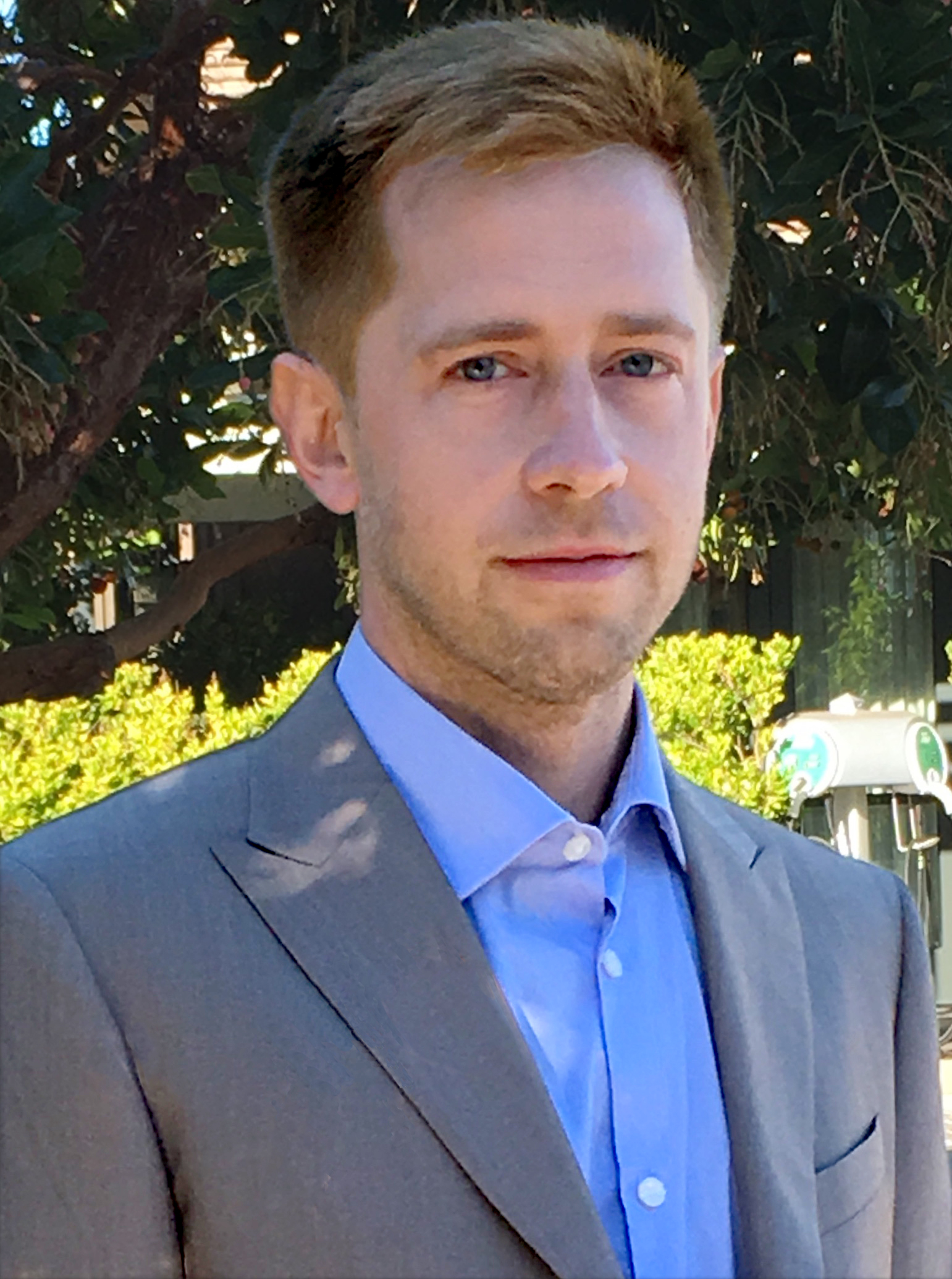
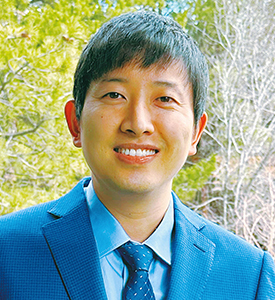
Yulong Li is an Assistant Professor in the Department of Mathematics at the University of Dayton, part of the College of Arts and Sciences. He is a full-time faculty member with a strong research focus in mathematical analysis, particularly in fractional calculus and related differential equations. His academic journey includes a Ph.D. from the University of Wyoming, postdoctoral experience at the University of Nevada, Reno, and a research fellowship at the Singapore University of Technology and Design. Ph.D., Mathematics, University of Wyoming, 2019 M.S., Mathematical Physics, Capital Normal University, 2015 B.A., Mathematics and Applied Mathematics, Jilin Normal University, 2012 Dr. Li's research centers on fractional calculus , fractional differential equations , fractional Sobolev spaces , singular integral equations , and special functions . His work explores the theoretical foundations of nonlocal operators, boundary value problems, and spectral properties of fractional elliptic equations. He investigates regularity, existence, and uniqueness of solutions in fractional settings, contributing to both pure and applied mathematical analysis. The trend in his recent publications (2019–2025) shows a consistent focus on analytical and functional aspects of fractional diffusion, advection-reaction equations, and nonlocal elliptic operators. His articles frequently appear in specialized journals such as Fractional Calculus and Applied Analysis and Communications on Pure and Applied Analysis , emphasizing rigorous mathematical proofs, integral representations, and spectral analysis. Topics include maximum principles, eigenvalue problems, and solution decomposition in fractional frameworks. Although no scientific awards are mentioned in the provided text, his publication record indicates active scholarly contributions. There is no information available about grants or student advising in the current materials. Dr. Li has been involved in research collaborations, notably with V. Ginting and others, focusing on computational and theoretical aspects of fractional equations. His work bridges abstract analysis with potential applications in physics and engineering, particularly in modeling anomalous diffusion processes.