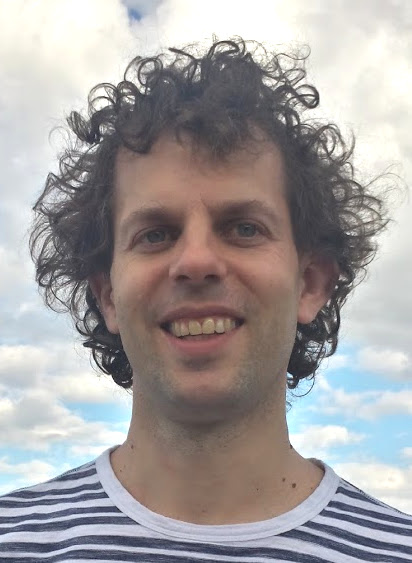
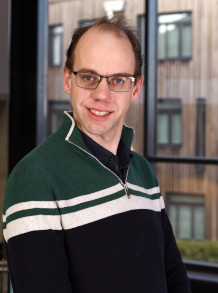
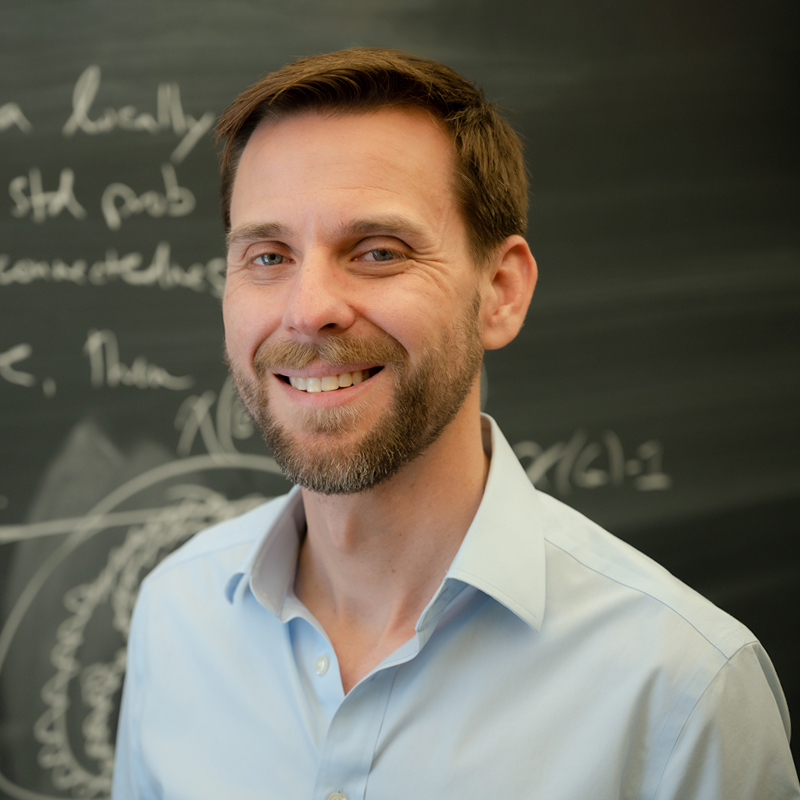
Kayll Lake is a Professor in the Department of Physics, Engineering Physics & Astronomy at Queen's University in Kingston, Ontario, Canada. He is affiliated with the Faculty of Astronomy, Astrophysics & Relativity under the Arts & Science school. His contact information includes an email at lakek@queensu.ca and a phone number: 613-533-2720. His academic genealogy traces back to doctoral advisors Werner Israel and John Lighton Synge, with a genealogy PDF available. Education: PhD (University of Toronto) Research Interests: General Relativity Relativistic Astrophysics Computer Algebra Black Hole Physics Gravitational Collapse Recent studies include the propagation of discontinuities in solutions to Einstein’s equations (cosmological structure formation) and the dynamics of gravitational collapse leading to naked singularities. His work emphasizes integrating computational tools with theoretical frameworks to advance understanding of astrophysical processes and cosmology. Publications reflect a focus on applying computer algebra to Einstein’s equations and exploring foundational questions in relativistic astrophysics. He has advised three students: Dr. S. M. M. Rahman in 2018, 2019, and 2020. No grant or award information is explicitly provided. Office: STI 308G, Stirling Hall, 64 Bader Lane, Kingston, ON KL7 3N6.
Dr. Martin Reisslein is a Professor in the School of Electrical, Computer, and Energy Engineering at Arizona State University (ASU), where he also serves as Program Chair of Computer Engineering. He earned his Ph.D. in Systems Engineering from the University of Pennsylvania (1998) and holds degrees from the University of Pennsylvania and Fachhochschule Dieburg, Germany. His research focuses on communication networks (e.g., 5G, optical networks, software-defined networking) and engineering education, with over 200 journal articles and 60 conference papers. He has led NSF-funded projects on network architecture optimization and K-12 engineering education. Education : Ph.D. (Systems Engineering, UPenn, 1998), M.S.E. (Electrical Engineering, UPenn, 1996), Dipl.-Ing. (FH) (Electrical Engineering, Fachhochschule Dieburg, 1994) Awards : NSF Career Award (2002), IEEE Fellow (2014), Bessel Research Award (2015), DRESDEN Fellowship (2016) Editorial Roles : Co-Editor-in-Chief of Optical Switching and Networking , Associate Editor for multiple IEEE journals His research spans communication networks (e.g., multimedia networking, optical systems) and engineering education (e.g., K-12 outreach, instructional design). Recent articles address cloud computing, 5G architectures, and cybersecurity in satellite systems. He teaches courses such as Communication Networks and oversees graduate research.
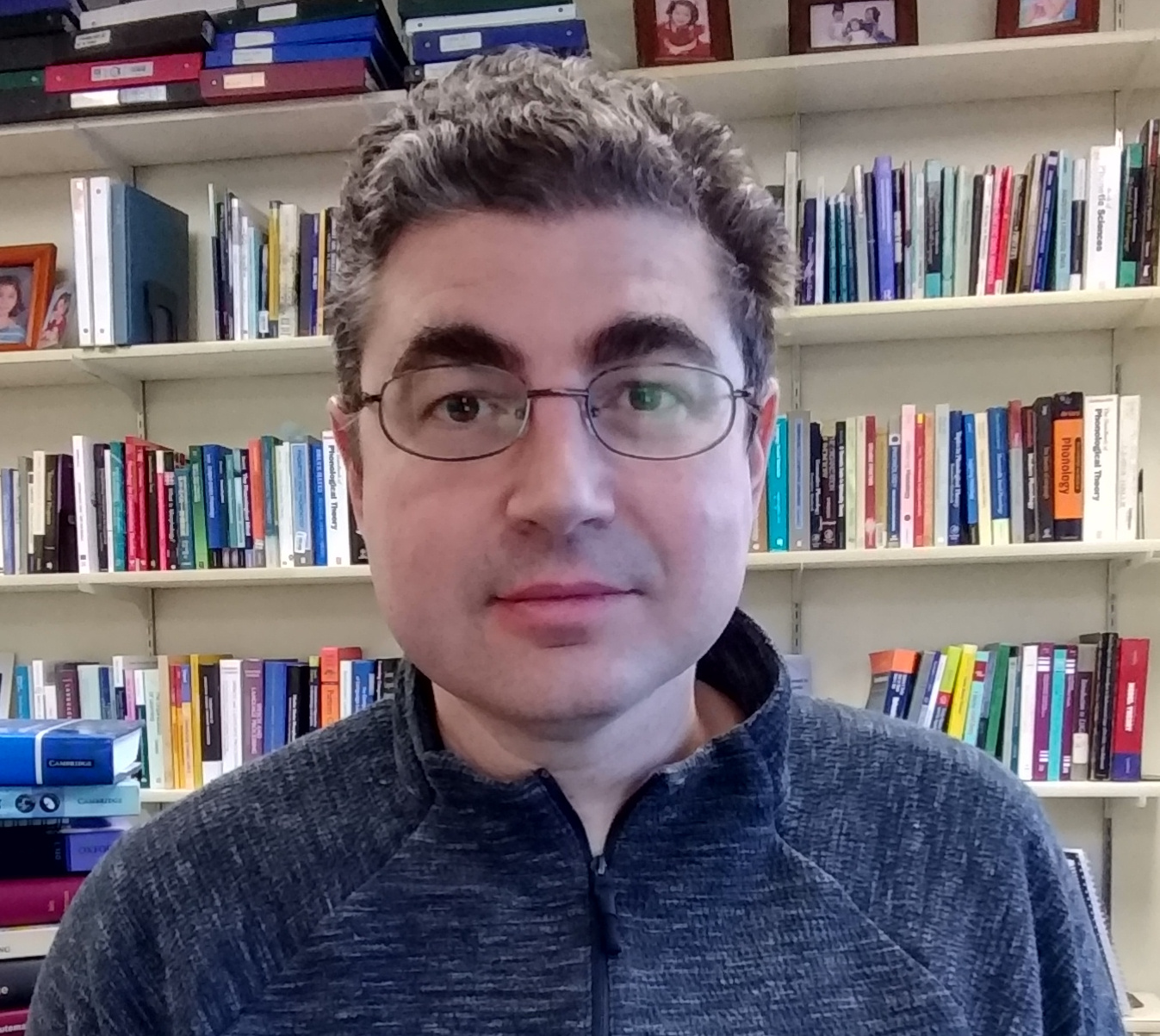
Jeffrey Heinz is a Professor at Stony Brook University , holding a joint appointment in the Department of Linguistics and the Institute for Advanced Computational Science . He has been at Stony Brook since 2017, following a decade at the University of Delaware. His research focuses on computational linguistics, formal language theory, grammatical inference, and phonology, with applications to robotics and artificial intelligence. He earned his Ph.D. in Linguistics from UCLA in 2007. Heinz’s work bridges theoretical linguistics and computational methods, emphasizing the learnability of linguistic patterns through formal models. He has contributed to understanding phonological typology, reduplication, and the mathematical foundations of language learning. His research has been published in Science , Phonology , and Machine Learning , among others. He was honored with the 2017 Early Career Award from the Linguistic Society of America for his contributions to computational learning theory in linguistics. He teaches advanced courses in computational phonology and linguistics, including a course at the LSA Summer Institute. He actively organizes academic sessions and serves on steering committees for conferences like ICGI. His interdisciplinary approach integrates linguistics with computer science, robotics, and mathematical logic. Award highlights include: 2017 Early Career Award (Linguistic Society of America) He advises students in linguistics and computational fields, though specific names are not listed here. His research labs and collaborations involve computational linguistics and robotics projects, such as stress pattern databases and grammatical inference benchmarks.
Anke Wiese is an Associate Professor at the School of Mathematical & Computer Sciences, Heriot-Watt University, within the Actuarial Mathematics & Statistics department. Prior to her academic roles, she worked in risk management in the financial services industry and held positions at the University of Hamburg and the University of Karlsruhe (now KIT). She earned her PhD from the University of Karlsruhe, Germany. Her research focuses on stochastic systems, particularly developing methods for solving stochastic differential equations (SDEs) while preserving qualitative characteristics. Key areas include algebraic structures of SDEs, integration methods for SDEs with jumps, and applications in computational finance. She bridges mathematical disciplines such as stochastic analysis, algebra, and quantum stochastics. Recent publications explore Grassmannian flows in coagulation systems, integrable equations via Pöppe triples, and efficient inversion techniques in the Heston model. Her work emphasizes numerical methods, stochastic processes, and interdisciplinary applications. Dr. Wiese actively supervises PhD students and welcomes inquiries for doctoral applications. Her research has been published in journals like Physica D, SIAM Journal on Financial Mathematics, and the Proceedings of the Royal Society A.
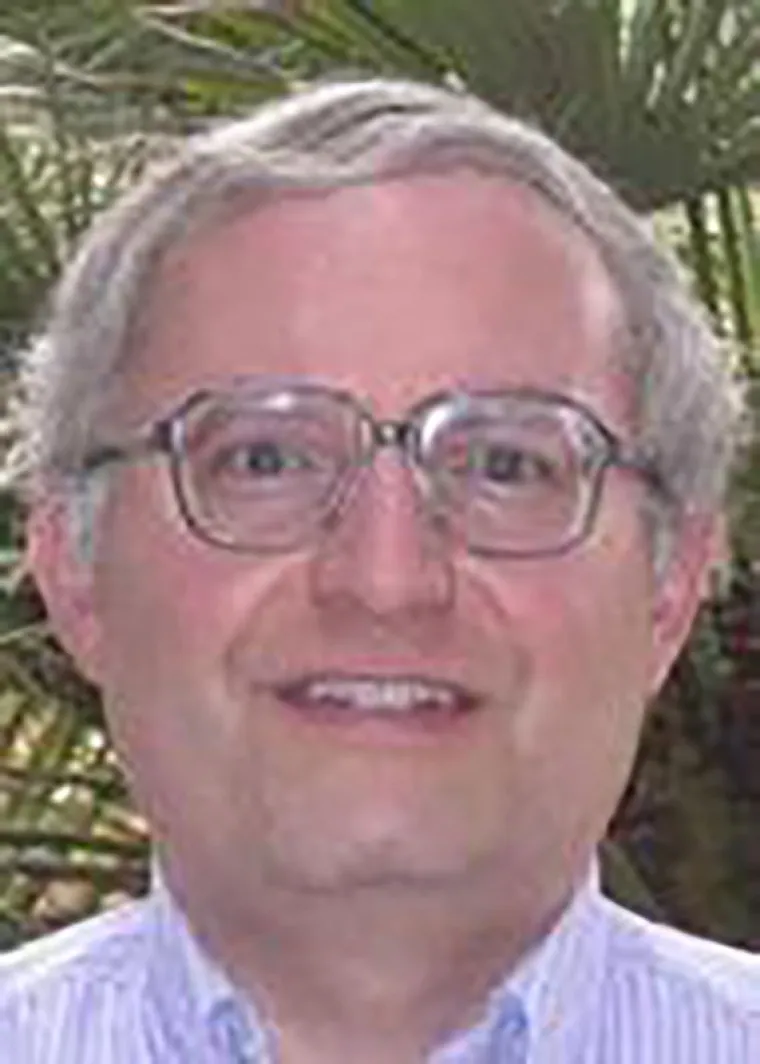
Robert S. Maier is a Professor of Mathematics and Physics at the University of Arizona, holding a joint faculty appointment. He earned his Ph.D. in 1983 from Rutgers University. His research spans stochastic modeling, quantum mechanics, and mathematical physics, with a focus on noise models, semiclassical limits, and applications in statistical physics and dynamical systems. Maier's work bridges theoretical physics and applied mathematics, addressing topics like weak noise activation, WKB theory, and special functions such as hypergeometric functions and spherical harmonics. His recent publications explore machine learning applications in education and astrophysics, alongside foundational studies in operator ordering and recurrence relations. Despite his extensive contributions to stochastic processes and mathematical physics, he has no explicitly listed scientific awards or advisees. His interdisciplinary research often intersects with computational methods and data-driven approaches, reflecting his dual expertise in mathematics and physics.
Bart De Moor is a Full Professor at the Department of Electrical Engineering, KU Leuven, Belgium, and a guest professor at the University of Siena. He leads the STADIUS research group and has supervised 85 PhD students. His roles include chairman of Health House (2016–present), member of the Board of VIB (Biotech Institute), and former Vice-Rector for International Policy (2009–2013). Education: Master Degree in Electrical Engineering (1983), KU Leuven PhD in Engineering (1988), KU Leuven Research Interests: His work spans numerical linear algebra, optimization, algebraic geometry, systems and control theory, data-driven AI, machine learning, and applications in process industry and biomedical big data. He has contributed to subspace identification, tensor decomposition, bioinformatics, and quantum computing. Publications Trends: His publications highlight subspace identification methods, tensor decomposition, bioinformatics, and biomedical data analysis. These reflect interdisciplinary advancements in control theory, quantum physics, and mathematical engineering, with applications in industrial and healthcare domains. Scientific Awards and Honors: Leslie Fox Prize (1989) Laureate of the Belgian Royal Academy of Sciences (1992) Bi-annual Siemens Award (1994) Fellow of IEEE (since 2004) Member of the Royal Academy of Belgium for Science and Arts (since 2000) Fellow of IFAC (since 2022) Commander in the Order of King Leopold I (2020) Fellow of SIAM (since 2017) FWO Excellence Award (2010) Advising and Grants: He has led a research group of 20 PhD students and postdocs, co-founded 8 spinoff companies, and secured the ERC Advanced Grant ‘Back to the roots’ (2020–2025). He also co-holds the KU Leuven Chair on healthcare systems (2018–present). Labs and Organizations: Active in the STADIUS research group (KU Leuven), he has served on boards of the Flemish Interuniversity Institute for Biotechnology (VIB), the Alamire Foundation, and the Health Tech Experience Center Health House. His spinoffs include Trendminer, Cartagenia, and Ugentec.
Prof. Peter Matthew Magyar is an Associate Professor in the Department of Mathematics at Michigan State University (MSU). He holds a B.A. in Mathematics from Princeton University (summa cum laude, 1986) and a Ph.D. in Mathematics from Harvard University (1993, advised by Joseph N. Bernstein). Before joining MSU in 2000, he held postdoctoral and visiting positions at the University of Utrecht (Netherlands), Université de Paris VII, Northeastern University, and Brandeis University. His research focuses on representation theory, algebraic combinatorics, and algebraic geometry, with emphasis on Lie groups, loop groups, Schubert varieties, and combinatorial structures like Young tableaux and Littelmann paths. Education: Princeton University, B.A. Mathematics, 1986 Harvard University, Ph.D. Mathematics, 1993 Research Interests: Representation theory of semi-simple complex Lie groups Algebraic combinatorics (Young tableaux, Littelmann paths) Schubert calculus and affine Schubert polynomials Geometry of flag varieties and affine Grassmannians Honors: NSF Graduate Fellowship (1986-89) NSF Postdoctoral Fellowship (1995-98) NSF Grants DMS-0405948 (2004-07) and DMS-0703524 (2007-10) Teaching: Courses include graduate combinatorics, abstract algebra, discrete mathematics, and honors calculus. Developed a daily-quiz system for upper-level courses. Collaborations: Works with researchers such as V. Lakshmibai, P. Littelmann, A. Zelevinsky, and others on geometric and combinatorial representation theory. Outreach: Participates in the Kinawa-Chippewa Math Circle, offering modular arithmetic and cryptography workshops for students.
Sergiy Vorobyov is a Professor at the Department of Signal Processing and Acoustics , Aalto University , Finland. He has held academic and research positions at multiple institutions, including the University of Alberta (Canada), Kharkiv National University of Radio Electronics (Ukraine), RIKEN (Japan), McMaster University (Canada), Duisburg-Essen University and Darmstadt University of Technology (Germany), and Heriot-Watt University (UK). His expertise spans optimization, signal processing, and multi-antenna systems. Dr. Vorobyov holds a Doctoral degree in Natural Sciences from the National Technical University Kharkiv Polytechnical Institute, awarded on January 15, 2002. His research interests focus on optimization and multi-linear algebra applied to signal processing challenges, including statistical and array signal processing, sparse signal processing, estimation and detection theory, and sampling theory. He explores multi-antenna, large-scale, cooperative, and cognitive systems, contributing to advancements in wireless communications and radar engineering. His work aligns with UN Sustainable Development Goals, emphasizing education and innovation. In recent years (2025), his publications emphasize cutting-edge advancements in wireless communications and signal processing. Topics include millimeter-wave MIMO channel estimation, optimization algorithms with momentum-based techniques, vehicular network communications, and robust covariance matrix estimation in challenging noise environments. These contributions highlight his expertise in developing efficient and adaptive methods for modern communication systems. He has received prestigious awards, including: 2004 IEEE Signal Processing Society Best Paper Award 2007 Alberta Ingenuity New Faculty Award 2011 Carl Zeiss Award for teaching and innovative methods 2012 NSERC Discovery Accelerator Award 1st Price Best Paper Award (2015) 1st Price Best Student Paper Award at CAMSAP 2015 As a researcher, Vorobyov has supervised seven theses and led multiple funded projects, such as: AI Based RAN (2023–2025): Scalable AI solutions for 5G/6G networks. MASSIVE AND SPARSE ANTENNA ARRAY PROCESSING FOR MILLIMETERWAVE COMMUNICATIONS (2019–2021): Advanced antenna design and processing techniques. M-CUBE SPA (2017–2021): EU-funded sparse antenna array research. Transmit beamspace for active compressive sensing and communication with multiple waveforms (2016–2020): Radar and MIMO system optimization. He leads the Sergiy Vorobyov Group , focusing on real-time signal processing algorithms and their applications in next-generation wireless systems. His research addresses practical challenges such as efficient channel estimation, robust detection in massive access scenarios, and improving network performance in urban environments.
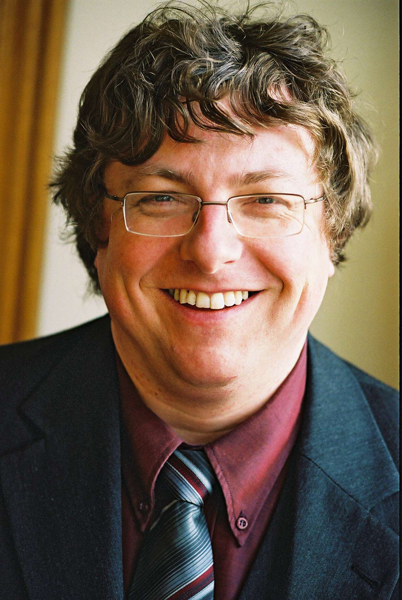
Sam Lindley is a Reader in Programming Language Design and Implementation at the School of Informatics, University of Edinburgh. He holds a UKRI Future Leaders Fellowship in Effect Handler Oriented Programming. His research focuses on foundational aspects of programming languages, including effect systems, session types, type theory, and functional programming. Key research interests span algebraic effects, concurrency models, type systems for resource management, and language implementation techniques. Lindley's work bridges theory and practice, addressing challenges in systems programming, web technologies (e.g., WebAssembly), and compiler design. Recent publications (2023–2025) emphasize effect handlers for low-level languages (e.g., C, WebAssembly), modal type systems for memory management, and formal semantics for concurrent systems. His work often explores how advanced type systems can improve expressivity and efficiency in programming models. Scientific Awards: UKRI Future Leaders Fellowship Labs/Teams: Laboratory for Foundations of Computer Science (LFCS) Grants: Active funding via UKRI Fellowship
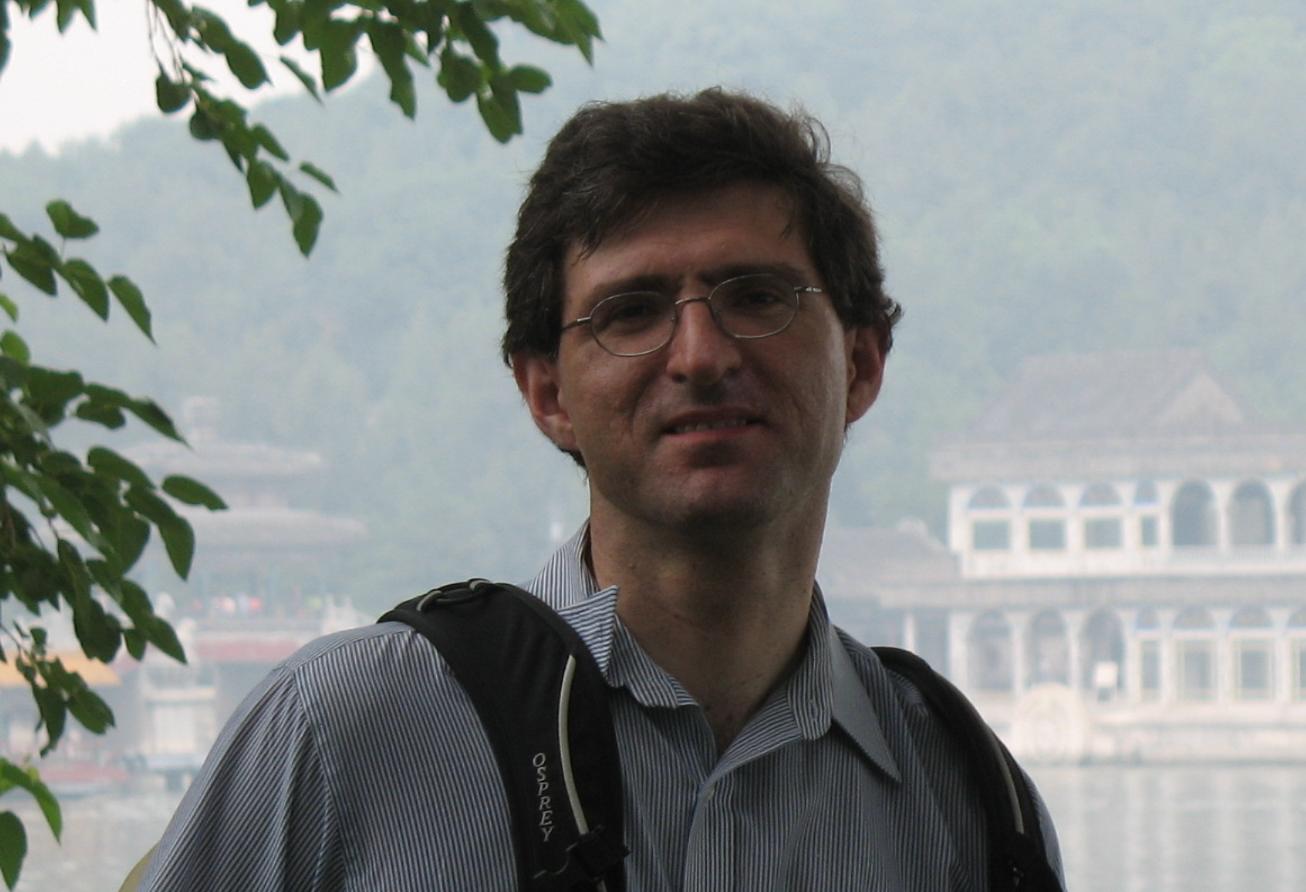
Samuel Fiorini is Associate Professor in the Department of Mathematics at the Université libre de Bruxelles (ULB) , member of the Algebra and Combinatorics group (CP 216). His research centres on polyhedral combinatorics, extended formulations, combinatorial optimisation and approximation algorithms , with frequent overlap into structural graph theory. Research in depth: Fiorini’s work explores how high-dimensional polytopes can sometimes be expressed compactly through extended formulations, proving exponential lower bounds when they cannot. He has contributed new approximation algorithms for classical problems such as vertex cover, clique transversal and odd-cycle packing, and has advanced the understanding of sorting and entropy in partially ordered sets. His papers often combine tools from graph minors, communication complexity and polyhedral theory. Scientific recognition: Best Paper Award, 44th ACM Symposium on Theory of Computing (STOC 2012) Programme committees: FOCS, IPCO, APPROX, STACS, WAOA Organiser, Sixth Cargese Workshop on Combinatorial Optimization Advising & grants: He currently supervises PhD students Carole Muller and Matthew Drescher and has mentored six completed PhDs as well as more than a dozen post-doctoral researchers. His group has been supported by an ERC starting grant and other national and international projects focusing on polyhedral approaches to hard optimisation problems. Lab & team: Fiorini leads a vibrant team within the Algebra and Combinatorics cluster at ULB, maintaining active collaborations with researchers worldwide and hosting frequent visitors working on discrete optimisation and polyhedral combinatorics.
Joseph Landsberg is the Owen Professor and Professor in the Department of Mathematics at Texas A&M University , affiliated with the College of Arts & Sciences . His research focuses on Algebraic Geometry, Differential Geometry, and their applications to computational complexity, particularly matrix multiplication and tensor analysis. He has contributed to geometric complexity theory, secant varieties, and the study of symmetric tensors. Education: Ph.D., Mathematics, Duke University, 1990 Habilitation, Université de Toulouse, 1997 B.Sc. and M.Sc., Brown University, 1986 Research Interests: Landsberg explores the geometry of tensors, matrix multiplication algorithms, and complexity theory. His work bridges algebraic geometry, representation theory, and computational problems, with applications in quantum computing and cryptography. Recent studies include secant varieties, border rank analysis, and symmetry exploitation in tensor networks. Grants & Awards: AF: Small grants (2022, 2018) for complexity theory and matrix multiplication research Labs & Affiliations: Affiliated with the Institute for Applied Mathematics and Computational Science (IAMCS) at Texas A&M. His work intersects with interdisciplinary teams in computational mathematics and theoretical physics.
Simon Foster is a Senior Lecturer in the Department of Computer Science at the University of York. His research focuses on formal methods, theorem proving (using tools like Isabelle/HOL and Agda), and the verification of cyber-physical systems. He holds a PhD and MComp from the University of Sheffield. Research Interests: Foster specializes in formal semantics, unifying theories of programming, and functional programming. His work addresses challenges in verifying complex systems, including robotic control software and safety-critical applications. He has contributed to projects like CyPhyAssure and RoboCalc, emphasizing assurance case generation and probabilistic modeling. Recent Work Trends: His recent publications (2022–2025) emphasize scalable verification techniques for cyber-physical systems, probabilistic modeling, and formal verification of robotic systems using Isabelle/HOL. Key themes include hybrid systems theorem proving, assurance case automation, and the integration of formal methods with robotic state machines. Grants & Projects: He led the CyPhyAssure project (2018–2021) and contributed to the H2020 INTO-CPS initiative. His roles include Research Fellowships in safety-critical systems and model-driven architectures. Labs & Teams: Active in the High Integrity Systems group at York, focusing on formal methods for safety-critical systems and collaborative tool development for systems engineering.
Clinton Conley is an Associate Professor and Director of Graduate Studies in the Department of Mathematical Sciences at Carnegie Mellon University, part of the Mellon College of Science. He holds a Ph.D. in Mathematics from UCLA and has held postdoctoral appointments at the Kurt Gödel Research Center (Vienna, Austria) and Cornell University. His research focuses on descriptive set theory, measurable group actions, and Borel graphs, exploring intersections with ergodic theory, combinatorics, and set theory. Key research areas include measurable chromatic numbers, Borel combinatorics, and hyperfinite equivalence relations. His work often bridges abstract set-theoretic principles with concrete problems in dynamics and graph theory. Notable awards include the Julius Ashkin Award. Education: Ph.D. in Mathematics, University of California, Los Angeles Postdoctoral Appointments: KGRC (Vienna), Cornell University Recent publications span topics like measurable regular subgraphs, quasi-invariant measures, and hyperfiniteness in Borel combinatorics. Teaching includes advanced courses on descriptive set theory, set theory, and mathematical paradoxes. Advising and grants sections remain unspecified in available data. No lab or team affiliations are noted.
Galen Dorpalen-Barry is an Assistant Professor at Texas A&M University. Her research focuses on geometric and algebraic combinatorics, particularly hyperplane arrangements, oriented matroids, polytopes, posets, and related fields. Education: PhD in Mathematics (University of Minnesota, 2021) Masters in Mathematics (University of Minnesota, 2018) Bachelor of Arts in Mathematics (Bard College, 2015) Her recent research explores the topology of hyperplane arrangement complements, cohomology of graphical configuration spaces, and combinatorial interpretations of the ab-index. She collaborates with researchers including Nick Proudfoot, Christian Stump, and Vic Reiner. Galen has organized multiple seminars and conferences, including the Algebra and Combinatorics Seminar at Texas A&M and special sessions at SIAM and AMS meetings. She has presented at numerous international workshops and seminars on topics like positive geometries, Shi arrangements, and the Varchenko-Gel'fand ring. Contact: dorpalen-barry@tamu.edu | Website | GitHub
Gabriel Alejandro Valiente Feruglio is a Professor at the Universitat Politècnica de Catalunya (UPC), affiliated with the Barcelona School of Informatics (FIB) and the Department of Computer Science. He is a member of the ALBCOM research group, focusing on Algorithms, Bioinformatics, Complexity, and Formal Methods. His work integrates theoretical computer science with applications in computational biology, including phylogenetic analysis, graph algorithms, and metagenomics. Valiente’s research emphasizes the development of algorithms for biological networks, phylogenetic tree and network comparison, and efficient graph representation. He has contributed to tools like TANGO for taxonomic assignment in metagenomics and AligNet for protein-protein interaction network alignment. His publications span over 140 works in journals like BMC Bioinformatics, IEEE-ACM Transactions on Computational Biology, and Bioinformatics. He leads and collaborates in competitive research projects funded by institutions like the Catalan government, focusing on bioinformatics, computational biology, and algorithmic methods. His research also extends to LaTeX typesetting for scientific documents and the structural analysis of scientific collaborations in graph transformations.