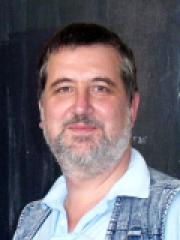
Ákos G. Horváth is a Professor at the Department of Geometry , Budapest University of Technology and Economics. His academic career focuses on geometric theories and their applications, with a particular emphasis on Minkowski geometries and discrete geometry. Room: H222 Phone: +36-1-463-2645 Email: ghorvath@math.bme.hu Personal Website: https://math.bme.hu/~ghorvath/ His research areas include Non-Euclidean Geometry, Convex Geometry, and Minkowski Geometry. He investigates topics such as generalized Minkowski spaces, Dirichlet-Voronoi cells, and bisectors in normed spaces, contributing to advancements in discrete and computational geometry. Key trends in his publications span over two decades, with significant work on: Unimodular lattices (1996) Bisectors in Minkowski spaces (2000) Semi-indefinite inner products (2010)
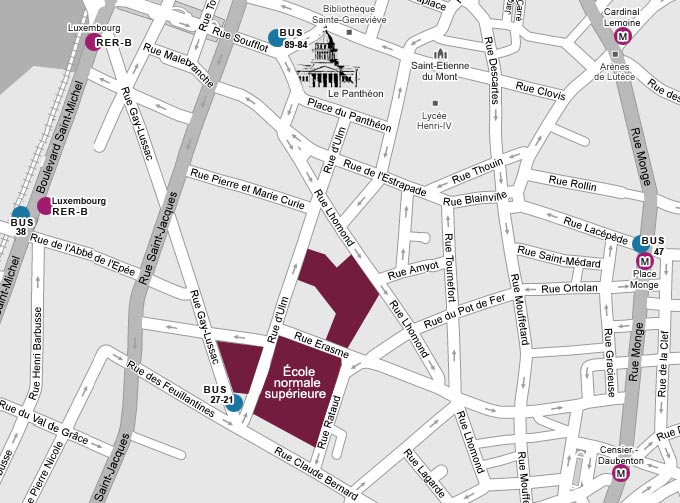
Phong Nguyen is a Research Professor at Inria (Directeur de recherche) and a part-time professor at the Computer Science Department (DI ENS) of École Normale Supérieure (ENS), PSL University in Paris. He leads the ENS Crypto Team (Inria Equipe Projet Cascade) and serves as the principal investigator for the ERC Advanced Grant PARQ (2020) focused on lattices in parallel and quantum computing. He holds a PhD (1999) and Habilitation (2007) from ENS-Lyon, with an agrégation de mathématiques (1997). His research integrates cryptography, algorithmic number theory, and lattice-based computations, emphasizing: Cryptanalysis : Deconstructing cryptographic protocols, especially lattice-based systems Post-quantum cryptography : Developing quantum-resistant solutions Lattice algorithms : Optimization of reduction, enumeration, and sieving techniques Real-world applications : Bridging theoretical constructs with practical security implementations His publications (spanning Eurocrypt, Asiacrypt, and Journal of Cryptology) demonstrate deep expertise in lattice cryptography, with recurring themes in algorithm efficiency, cryptanalysis of NTRU/GGH systems, and theoretical advancements in lattice reduction. Recent work (2024) continues this trajectory with improved BKZ analysis and hypercubic lattice optimizations. Awards include : ERC Advanced Grant (2020) for PARQ project Best Paper Award at EUROCRYPT 2006 Cor Baayen Award (2001) He advises PhD students (e.g., Henry Bambury, Leo Ducas) and interns from institutions like École Polytechnique and ENS. He directs the ENS Crypto Team and previously held leadership roles as: French Director of the Japanese-French Laboratory for Informatics (2015-2019) European Director of LIAMA (Sino-European Computer Science Lab, 2013-2015) Coordinator of ECRYPT II virtual labs (2008-2012)
Eric Christopher Chen is an Assistant Professor in the Department of Mathematics at the University of Illinois Urbana-Champaign, affiliated with the College of Liberal Arts & Sciences. His research focuses on geometric analysis, geometric flows, and partial differential equations. Previously, he was an NSF Postdoctoral Fellow at UC Berkeley and a Ky Fan Visiting Assistant Professor at UC Santa Barbara. Chen’s recent work in geometric flows includes studies on Yamabe flow convergence on asymptotically Euclidean and flat manifolds, Ricci flow smoothing with integral curvature pinching, and sphere theorems for Yamabe metrics. His publications often bridge differential geometry with nonlinear PDE analysis. NSF Postdoctoral Fellowship (2019–2022) Chen is actively involved in the Illinois Geometric Analysis Seminar , organizing talks and presenting his research on Yamabe flow behavior in 2025. His email contact is ecchen@illinois.edu.
Shailesh Chandrasekharan is a Professor of Physics in the Department of Physics at Duke University's Trinity College of Arts & Sciences, a position he has held since 2018. Prior to this, he served as Associate Professor of Physics (2005-2018) and Assistant Professor of Physics (1998-2004) at Duke. He has also held leadership roles including Director of Graduate Studies in the Department of Physics (2011-2014, 2019). Dr. Chandrasekharan received his education at prestigious institutions: a B.S. from the Indian Institute of Technology, Madras (1989), followed by an M.A. (1992), M.Phil. (1994), and Ph.D. (1996) from Columbia University. His research focuses on understanding quantum field theories non-perturbatively from first principles calculations, with particular emphasis on lattice formulations of these theories. He specializes in strongly correlated fermionic systems relevant to condensed matter, particle, and nuclear physics. A significant portion of his work involves developing novel Monte-Carlo algorithms to study quantum systems, with special attention to solutions for the notoriously difficult "sign problem" that affects quantum simulations. His expertise spans quantum computing applications, statistical physics, field theory, and critical phenomena. Analysis of his recent publications reveals a strong focus on qubit regularization techniques for lattice gauge theories, quantum critical phenomena, and applications to quantum computing. His work bridges theoretical physics with computational methods, particularly in the areas of asymptotic freedom, quantum phase transitions, and non-perturbative approaches to quantum field theory. The research demonstrates consistent innovation in addressing fundamental challenges in quantum simulation. Dr. Chandrasekharan has secured significant research funding, including the current "Lattice Gauge Theories on a Quantum Computer" project (2024-2028) as Principal Investigator, and long-term projects like "Lattice and Effective Field Theory Studies of Quantum Chromodynamics" (2005-2027) as Co-Principal Investigator. He currently advises PhD student Rui Xian Siew and has taught courses ranging from undergraduate General Physics to advanced graduate-level Quantum Mechanics and Electrodynamics. His teaching portfolio demonstrates breadth across physics education, with recent courses including PHYSICS 122DL (General Physics II), PHYSICS 762 (Electrodynamics), and PHYSICS 765 (Advanced Quantum Mechanics), showing his commitment to both foundational and advanced physics education. His research continues to push the boundaries of quantum field theory simulation and quantum computing applications.
Florin Rusu is a Professor and Chair of the Department of Computer Science and Engineering at the University of California Merced, School of Engineering. He joined UC Merced in 2010 and has served in multiple administrative positions including as chair of the School of Engineering's Executive Committee and currently as chair of the Department of Computer Science and Engineering. His educational background includes a B.Eng. degree from the Technical University of Cluj-Napoca, Faculty of Automation and Computer Science (2004), and M.Sc. and Ph.D. degrees from the University of Florida in Computer Science (2008 and 2009). Rusu's research focuses on database systems and large-scale data management, with particular emphasis on designing infrastructure for Big Data analytics. His specific research areas include query processing and optimization, approximate and randomized algorithms, scalable machine learning, multi-dimensional array data management, and in-situ data processing. His work bridges theoretical aspects with practical system design issues. His research has been funded by multiple prestigious organizations including the US Department of Energy (DOE), National Science Foundation (NSF), California Department of Education, Hellman Foundation, LogicBlox, and TigerGraph. His recent publications show a continued focus on database query optimization, particularly around cardinality estimation, sketch-based methods, and innovative approaches to query plan generation. His work spans both theoretical contributions and practical implementations, with several projects transitioning into real-world database systems. Scientific Awards: DOE Early Career Award (2014) Hellman Faculty Fellowship (2013) Rusu has advised numerous graduate students through their Ph.D. and Master's programs, with many going on to successful careers at major tech companies (Google, Meta, TigerGraph) and academic positions. His research group has secured substantial funding from NSF (COMPASS project 2020-2025), DOE Early Career Award (2014-2021), TigerGraph, California Department of Education, and Hellman Foundation. His research group maintains active projects in Database Query Optimization, Scalable Gradient Descent Optimization, Array Databases, In-Situ Data Processing, GLADE, Online Aggregation, and Sketches, demonstrating a comprehensive research program spanning multiple aspects of database systems and large-scale data management.
Assen Ivanov Bojilov is an Associate Professor at the Faculty of Mathematics and Informatics of Sofia University , Bulgaria. He holds a PhD and serves as Vice-dean for Economic Affairs at his faculty. His research focuses on algebraic coding theory and graph theory , particularly in generalized residue codes, cyclic codes, and graph partitioning problems. Position: Associate Professor, Department of Algebra University: Sofia University Email: bojilov@fmi.uni-sofia.bg Bojilov has co-authored numerous publications in coding theory and discrete mathematics , including peer-reviewed journal articles and technical reports from institutions like Tilburg University. His work explores algebraic structures in coding, such as idempotent generators, and graph-theoretic problems like chromatic inequalities and small/large set partitions. Recent publications highlight trends in error-correcting codes , algebraic combinatorics , and discrete optimization .
Dr. Luciana Basualdo Bonatto is a researcher at the Mathematical Institute , University of Oxford , specializing in topology and its intersections with algebraic structures. She contributes to the Topology research group and has published extensively on configuration spaces, operad theory, and manifold topology. Her research interests include: Configuration Spaces Diffeomorphism Groups Homological Stability Embedding Calculus Knot Theory Operad Theory Her recent publications span mathematical topology and computational applications, including a 2023 study on moduli spaces and a 2021 work on multi-agent consensus algorithms. She collaborates internationally with researchers like Nathalie Wahl and Safia Chettih. She is affiliated with Oxford's Topology research group and works from the Andrew Wiles Building, Radcliffe Observatory Quarter.
Leonhard Summerer is an Associate Professor at the Faculty of Mathematics, Department of Mathematics . His research primarily focuses on Diophantine Approximation , Geometry of Numbers , and Parametric Approximation . His work explores the Approximation Property in parametric settings, Lattice Theory , and Linear Dependence in number theory. Recent publications include studies on Jarník’s identity, simultaneous approximation to multiple reals, and geometric interpretations of number-theoretic problems. He has authored numerous peer-reviewed articles and contributed chapters to educational books such as 77-mal Mathematik für Zwischendurch , emphasizing mathematical outreach and pedagogical innovation . Active in academic discourse, he has delivered talks on topics like Packings and Tilings in Z and Simultane Approximation m reeller Zahlen since 2006.
Daniel Robertz is a University Professor of Algebra and Number Theory at RWTH Aachen University, Germany, with his office located at Pontdriesch 14/16, Room 102 in Aachen. He actively participates in several academic seminars including the Joint Algebra Seminar at RWTH Aachen University, the Kolchin Seminar in Differential Algebra (online/New York), and the Diff.-Equations and Singularities Seminar (online). Professor Robertz's research spans multiple mathematical disciplines with primary focus on Differential Algebra , Difference Algebra , Computer Algebra , Discrete Geometry , Simplicial Surfaces , Group Theory , Invariant Theory , and Algebraic Systems Theory . He has developed several influential Maple packages including Janet , Involutive , JanetOre , LDA , and OreModules that have advanced computational methods in algebraic analysis of differential systems. His scholarly output demonstrates a consistent focus on algorithmic approaches to differential equations with increasing interdisciplinary applications, particularly in structural engineering through discrete geometry and origami-inspired designs for carbon-reinforced concrete structures. This research trajectory shows how abstract mathematical concepts can solve practical engineering problems, especially in sustainable construction materials development. Editorial Board of Mathematics in Computer Science Special Issue in Honor of Vladimir Gerdt (2022) Applications of Computer Algebra (ACA 2017, Jerusalem) (2019) Professor Robertz has organized numerous international workshops on computational differential and difference algebra and maintains active research collaborations across mathematics, engineering, and materials science disciplines. His work on algebraic methods for structural design involves partnerships with researchers in civil engineering, architectural design, and materials science. He leads research activities in the Chair of Algebra and Number Theory at RWTH Aachen, where his team develops computational methods for algebraic analysis of differential systems. His group maintains strong international connections with research communities in computer algebra, differential algebra, and mathematical engineering applications.
Andrej Bogdanov is a Professor at the University of Ottawa in the School of Electrical Engineering and Computer Science . He earned his B.S. and M.Eng. from MIT and Ph.D. from UC Berkeley . Before joining Ottawa, he held positions at the Chinese University of Hong Kong , ITCS (Tsinghua) , DIMACS (Rutgers) , and the Institute for Advanced Study . He has served as a Visiting Professor at the Tokyo Institute of Technology (2013) and the Simons Institute (2017, 2021). Research Interests : Computational complexity, cryptography foundations, pseudorandomness, one-way functions, property testing, quantum algorithms, and sublinear-time algorithms. Teaching : Courses on Discrete Mathematics, Great Algorithms, Computational Complexity, and Cryptography at University of Ottawa, Chinese University of Hong Kong, and Rutgers University. Publications : 15+ recent works in TCC , CRYPTO , ICALP , RANDOM , and journals like Journal of Cryptology and Theory of Computing . Service : Program co-chair for SAC 2026 , and committee member for major conferences including CRYPTO , TCC , Eurocrypt , and FOCS . Advising : 12 current and former Ph.D./M.Phil. students, with postdoctoral advisees at institutions like IIT Palakkad and Academia Sinica . His work bridges theoretical computer science with applications in cryptography, quantum computing, and network security.
Joy Morris is a Professor at the Department of Mathematics & Computer Science at the University of Lethbridge. She earned her BSc from Trent University in 1992 and her PhD from Simon Fraser University in 2000 under Brian Alspach. Her academic journey includes tenure in 2005, promotion to Associate Professor, and full Professor status in 2015. Research Focus: Interactions between group theory and graph theory, with emphasis on Cayley graphs and automorphisms Key Contributions: Solving the distinguishing number problem for various graph families, advancing DCI/CI group theory Research Overview Her work bridges abstract algebra with graph theory through Cayley graphs. She investigates automorphism groups, Hamilton cycles, and graph symmetry properties. Notable contributions include resolving the DCI property for specific groups, analyzing Praeger-Xu graphs, and studying color-preserving automorphisms. Academic Leadership As a co-author of two influential open-access textbooks ( Proofs and Concepts with Dave Morris and her own Combinatorics text), she has shaped curriculum development and mathematical education outreach programs for parents in Alberta. Her teaching portfolio includes foundational courses like Math 2000 and advanced combinatorial theory instruction. Collaborative Impact With over 30 publications since 1996, her collaborations span international researchers including C. Praeger, P. Spiga, and E. Dobson. Current projects involve hypercube distinguishing costs and automorphism group analysis of vertex-transitive digraphs. She maintains active research into graphical regular representations and graph isomorphism problems.
Oliver G. Ernst is a Professor of Numerical Analysis at Technische Universität Chemnitz . His research focuses on Numerical Analysis , Uncertainty Quantification , and Inverse Problems , with applications in Thermo-Hydro-Mechanical (THM) processes , Electromagnetics , and Stochastic Partial Differential Equations . He is associated with the Numerical Analysis group at TU Chemnitz. Key Research Areas : Efficient numerical methods for PDEs Krylov subspace techniques Stochastic finite element methods Multi-physics modeling Geoscientific applications Recent Publications (2025-2010): THM simulations under uncertainty Neural network PDE solvers Bayesian inversion frameworks Rational Krylov algorithms Deflated restarting strategies Collaborations : TU Bergakademie Freiberg University of Manchester Technical University of Munich University of Maryland University of Geneva Software Development : Contributor to OpenGeoSys platform Developer of FEMALY MATLAB library Academic Recognition : h-index 32, i10-index 66, with over 4423 citations since 2020.
Dr. Angela Capel Cuevas is an Assistant Professor at the University of Cambridge's Department of Applied Mathematics and Theoretical Physics since April 2024. Previously, she held a Junior Professorship (W1) at Eberhard Karls Universität Tübingen's Mathematical Physics area (2021-2024), and was an MCQST Distinguished PostDoc at Technische Universität München (2020-2021). Her research sits at the intersection of Quantum Information Theory and Quantum Many-Body Systems , focusing on quantum dissipative evolutions and their mathematical characterization through quantum functional inequalities and entropic bounds . 2023-26: CRC TRR 352 grant on "Mathematics of Many-Body Quantum Systems" (7M€) 2024-27: QuantERA project "Towards a useful quantum advantage" (TouQan, 1.25M€) Her recent work demonstrates rapid thermalization in 1D quantum systems with logarithmic time scaling and establishes exponential mutual information decay for Gibbs states. She co-organized BIRS-IMAG workshops on quantum information theory and received the Jack Keil Wolf ISIT Student Paper Award (2023). Her PhD thesis (ICMAT/Universidad Autónoma de Madrid, 2019) introduced quasi-factorization techniques for relative entropy, leading to groundbreaking results in quantum functional inequalities. 2023: Simons Emmy Noether Fellowship at Perimeter Institute 2023: Forbes 30 Under 30 Spain 2022: Vicent Caselles RSME-FBBVA Award
Prasad Tetali is a Regents' Professor at the Georgia Institute of Technology , with appointments in both the School of Mathematics and the School of Computer Science . He also holds an adjunct professor position at Emory University's Mathematics and Computer Science departments. Education: PhD in Mathematics (1991) from the Courant Institute of Mathematical Sciences at NYU; MS in Mathematics (1987) from the Indian Institute of Science; Postdoc at AT&T Bell Labs His research spans Discrete Mathematics, Probability Theory, and Theoretical Computer Science , focusing on Markov chains, Isoperimetry, Combinatorics, Computational number theory, and Algorithms. Recent work includes applications to statistical physics models and hypergraph structures. He has served as Director of the ACO Ph.D. Program since 2019 and held leadership roles like Interim Chair of the School of Mathematics. His publications reflect a blend of discrete geometry, stochastic processes, and algorithmic analysis . Key Honors: AMS Fellow (2012) SIAM Fellow (2009)
Roie Levin is an Assistant Professor at Rutgers University's Department of Computer Science. He received his PhD in Algorithms, Combinatorics and Optimization from Carnegie Mellon University in 2022, advised by Anupam Gupta. Prior to that, he worked at the Allen Institute for Artificial Intelligence (2015-2017) and earned dual BSc degrees in Computer Science/Applied Mathematics and Mathematics from Brown University (2015). Before joining Rutgers, he was a Fulbright Postdoctoral Fellow at Tel Aviv University under Niv Buchbinder. Current Role: Assistant Professor in Computer Science Academic Training: PhD (2022) CMU, BSc (2015) Brown University Postdoctoral: Fulbright Fellow at Tel Aviv University Levin's research focuses on approximation algorithms for uncertain environments (online/dynamic/streaming models) and submodular function optimization. His work spans theoretical foundations and practical implementations across distributed systems, geometric constraints, and reinforcement learning paradigms. Teaching includes graduate and undergraduate algorithms courses (CS 344, CS 513) with emphasis on problem-solving techniques, computational complexity, and modern algorithmic trends. His publications showcase expertise in online algorithms, submodular optimization, and approximation theory with applications in clustering, caching, and machine learning. The 2025 articles demonstrate continued exploration of online consistency and contention resolution, while 2023-2024 works focus on submodular optimization under uncertainty and dynamic environments. Earlier publications (2015-2017) cover semantic parsing, geometric approximation, and planar graph optimization. Fulbright Postdoctoral Fellow Levin's research connects theoretical guarantees with practical implementations, bridging classical algorithm design with modern machine learning applications. His recent work explores primal-dual methods in online settings and robust subspace approximation techniques for streaming data environments.