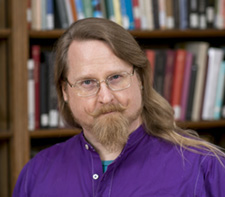
Radcliffe Edmonds is the Paul Shorey Professor of Greek and Chair of the Department of Greek, Latin, and Classical Studies at Bryn Mawr College. His research focuses on Greek social and intellectual history, mythology, religion, magic, and Platonic philosophy, with particular emphasis on death, the afterlife, and cross-cultural religious practices in the ancient Mediterranean. University: Bryn Mawr College Department: Greek, Latin, and Classical Studies Academic Rank: Professor Edmonds explores deviant religious practices, Orphism, and the role of magic in Greco-Roman contexts. His recent work includes editing Magic and Religion in the Ancient Mediterranean World (2024) and authoring Drawing Down the Moon (2019), which examines magical discourse in antiquity. His publications span topics like the rhetoric of authority in magical papyri, Dionysian cults, and the ethics of the afterlife in Greek philosophy. Edmonds also contributes to academic communities through editing volumes, directing Greek plays, and participating in the Bryn Mawr Renaissance Choir. His scholarship integrates material culture, textual analysis, and comparative studies to illuminate the intersections of magic, religion, and intellectual traditions in classical antiquity.
Hartmut Kutzke serves as Associate Professor in the Department of Collection Management at the University of Oslo's Museum of Cultural History, where he has worked since 2007. His role bridges art, archaeology, and natural science through material analysis, conservation science, and historical technique reconstruction. Education: PhD in Chemistry (University of Bonn) on crystal growth of metastable organic crystals of historical interest Background in chemistry (biochemistry, mineralogy/crystallography) and oriental art history/archaeology Research: Dr. Kutzke pioneers bio-inspired conservation materials for textiles/paper, investigates historical art technologies through medieval/19th-century recipe reproduction, studies chemistry's historical evolution from alchemy to modern crystallography, and advances synchrotron/neutron methods via SR2A and NFR's SYNKNØYT program. His work spans pigment analysis, gemstone imitation reproduction, and metal/jewellery studies. Collaborations & Advising: He mentors conservation students in pigment chemistry and analytical methods while partnering with the Munch Museum, University of Bonn, University of Pisa, and German institutions on cross-disciplinary heritage projects.
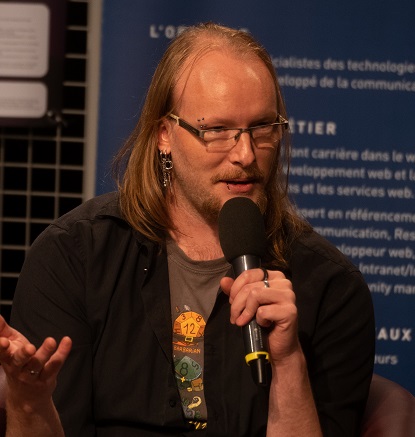
Thomas Brunel de Montméjan is a Lecturer at IUT Bordeaux Montaigne, University of Bordeaux Montaigne, where he teaches English for the Multimedia and Internet Professions program. He has been affiliated with the MICA research laboratory since 2012, specifically contributing to the ATTIA (Analysis of Transitions and Innovations in Information and Art) research group focused on interdisciplinary art-science collaborations. His research examines the evolving relationship between technology and human identity through multiple lenses: Body representation and image in digital contexts Cyborg, robot, and mutant narratives in popular culture Identity construction through fiction and science fiction Aesthetic politics of posthuman embodiment Publication analysis reveals consistent exploration of bodily transformation across virtual/physical domains, with recent work examining Lovecraftian horror in art (2023), freedom in cyborg existence (2018), and evolutionary body concepts (2017). These contributions intersect art criticism, media theory, and aesthetic philosophy. No scientific awards or student advising relationships are documented in available sources. At MICA-ATTIA, he collaborates on projects analyzing artistic innovation and technological transitions. The lab's interdisciplinary approach bridges media studies, communication theory, and digital arts practice.
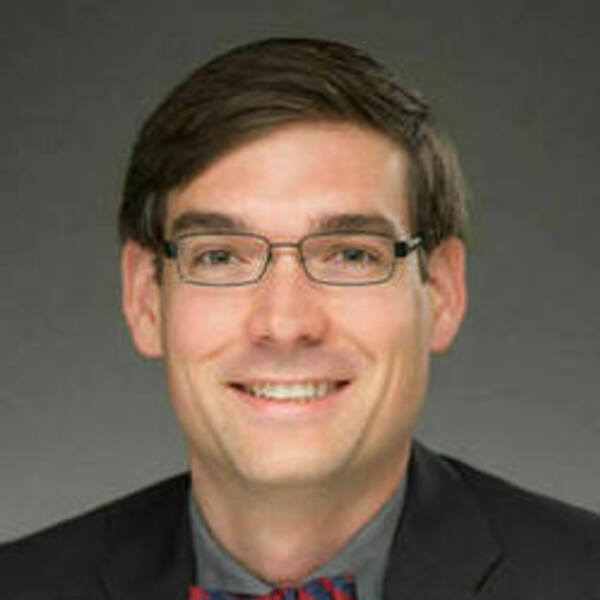
Evan Ragland is an Associate Professor in the Department of History at the University of Notre Dame and Co-Director of the History and Philosophy of Science Office. He specializes in the histories of science and medicine, focusing on early modern Europe, particularly the Low Countries. His work explores experimental practices, medical education, and the intersection of intellectual traditions with scientific development. Education: Ph.D., Indiana University Ragland's research examines the emergence of experimental culture in 17th-century Leiden and its legacy into the 19th century. He has published in journals like Isis , Bulletin of the History of Medicine , and Ambix , and his first book, Making Physicians: Tradition, Teaching, and Trials at Leiden University, 1575-1639 (Brill, 2022), analyzes medical education practices in Renaissance Europe. His current book project, Experimental Medicine , investigates the evolution of experimentalist approaches in anatomy, chymistry, and clinical practice. Grants and Fellowships: National Science Foundation Edelstein Foundation Chemical Heritage Foundation (Science History Institute) Scaliger Instituut of Leiden University American Council of Learned Societies Future Projects: Thinking with Disease : Long history of disease concepts from Mesopotamia to the 19th century Remaking the World : Ethical visions in early modern sciences
Dr Daniel Grausam is an Associate Professor in the Department of English Studies at Durham University, specializing in American literature and culture. His academic work primarily engages with postmodern and contemporary fiction, Cold War studies, and nuclear culture. His research interests span American Postmodern Fiction, Cold War Literature, Contemporary American Literature, Nuclear Culture, Metafiction, and the intersection of history and literature. He has published extensively on the cultural and literary implications of the Cold War and nuclear age, as well as on the concept of the contemporary in literature. Grausam's scholarly publications reveal a consistent focus on the relationship between American fiction and historical periods, particularly the Cold War and post-Cold War eras. His work often explores themes of temporality, nuclear anxiety, and the evolution of postmodernism into contemporary literature. He has supervised at least one research postgraduate student, Katie Tobin, in the Department of English Studies.
Dr. Elizabeth Swann is an Associate Professor in the Department of English Studies at Durham University, where she also serves as Department Rep for English Studies in the Institute of Medieval and Early Modern Studies (IMEMS). She joined Durham as Assistant Professor of Interdisciplinary Literary Studies in September 2018, following significant research positions at the University of Cambridge and the University of Tennessee, Knoxville. Dr. Swann's educational background includes: PhD in English and Related Literature from the University of York Research Associate on the ERC-funded project "Crossroads of Knowledge: The Place of Literature in Early Modern England" at the University of Cambridge (2014-2018) Haslam Postdoctoral Fellow at the University of Tennessee, Knoxville (2013-2014) Dr. Swann's research focuses on the intricate relationships between literature, natural philosophy (early science), and theology in England between 1500-1700. Her work examines how literary texts represent knowledge as embodied, passionate, and historically situated practices. She has made significant contributions to understanding how sensory experiences, particularly taste, function as metaphors for knowledge and judgment in early modern contexts. Her scholarship also extends to Critical University Studies, where she investigates how contemporary knowledge production in universities is shaped by historical, cultural, socio-economic, and personal contexts. Analysis of Dr. Swann's recent publications reveals a consistent focus on the intersections of literary studies, history of science, and sensory studies during the early modern period. Her work demonstrates a particular interest in how concepts of knowledge, embodiment, and sensory experience evolved during the scientific revolution. There's a strong thread connecting her examination of taste as both physical sensation and metaphorical concept across multiple publications. Her research increasingly engages with questions of childhood's role in scientific development and the complex relationship between knowledge and power throughout history. Dr. Swann is actively involved in mentoring the next generation of scholars: Kate Paterson - Research Postgraduate Mackenzie "Kenzie" Scott - Research Postgraduate Wanjie Feng - Research Postgraduate She has received significant research funding, notably as Research Associate on an ERC-funded project at the University of Cambridge. Dr. Swann collaborates extensively on academic projects, co-editing scholarly collections and co-curating the online exhibition "Renaissance Spaces of Knowing: Privacy and Performance" hosted by the Fitzwilliam Museum. Her interdisciplinary approach connects her with multiple research centers, particularly the Institute of Medieval and Early Modern Studies at Durham University.
Leibniz Institute for Educational Media | Georg Eckert InstituteGermany
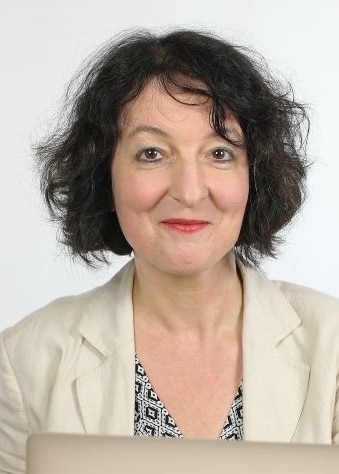
Dr. Ute Frietsch is a historian of science specializing in historical alchemy and the philosophy of science. She currently holds a research position at the Herzog August Library Wolfenbüttel, where she leads a German Research Foundation (DFG) project on Robert Fludd's alchemical concepts. Previously, she has held academic positions at Humboldt University of Berlin (as a private lecturer since 2009), Technical University of Braunschweig, University of Münster, and Medical University of Vienna. Her scholarly career has been primarily supported by competitive DFG grants, including multiple "Own Position" awards that have enabled her to lead independent research projects. Dr. Frietsch's research focuses on the history and philosophy of science, particularly historical alchemy from cultural, media, and epistemological perspectives. Her work examines how alchemical knowledge was produced, transmitted, and materialized in early modern Europe. She investigates the intersections between alchemy, art, and book production, with special attention to figures like Robert Fludd and Paracelsus. Her research also explores the relationship between humanities and natural sciences, gender studies in science, and French philosophy and epistemology. Recent publications reveal a growing interest in the material culture of alchemy, examining how theoretical concepts were transformed into physical objects through collaboration between authors, artisans, and publishers. Dr. Frietsch's scholarly contributions include significant monographs such as "Epistemischer Wandel: Eine Geschichte der Alchemie in der Frühen Neuzeit" (2024) and "Häresie und Wissenschaft" (2013), as well as edited volumes like the special issue "Alchemy and the Early Modern University" for Ambix (2021). Her work spans multiple disciplines, connecting history of science with art history, book history, and gender studies. As an educator, Dr. Frietsch has taught courses on the history of science at multiple German universities. Her teaching reflects her research interests, emphasizing the cultural and material dimensions of scientific knowledge production. She has supervised graduate students and contributed to academic programs in cultural studies and philosophy of science. Dr. Frietsch is an active member of several scholarly organizations including the Society for the History of Alchemy and Chemistry (SHAC), the Gesellschaft für Geschichte der Wissenschaften, der Medizin und Technik (GWMT), and the Deutsche Gesellschaft für Philosophie.
School of Advanced Study, University of LondonUnited Kingdom
Professor Emily Grabham is Professor of Law & Society at Loughborough University, where she joined in January 2025. Previously, she was Professor of Law at the University of Kent. She also holds a position as Senior Advanced Research Fellow at the Institute for Advanced Legal Studies, University of London. Professor Grabham serves on the UKRI Talent Panel College and UKRI Future Leaders Fellowships Panel, and is an advisory board member for The Literary Consultancy. Professor Grabham's educational background is highly interdisciplinary: BA in Law from Cambridge University LLM from Queen's University, Canada MSc in Gender, Society & Culture from Birkbeck MFA in Creative Writing from the University of British Columbia PhD in Law from the University of Kent Before entering academia, she worked as an employment and human rights solicitor, providing practical legal experience that informs her scholarly work. Professor Grabham's research centers on the relationship between law and time, investigating how temporal frameworks shape legal experiences and rights. She is particularly interested in how time affects women's experiences of precarious work and care responsibilities, as evidenced by her monograph 'Women, Precarious Work and Care: The Failure of Family-Friendly Rights.' Her feminist legal scholarship intersects with gender studies, sexuality law, and creative writing approaches to legal scholarship. She co-founded the 'A Day At A Time' project, which explores people's everyday experiences of time during the early Covid-19 pandemic through interdisciplinary collaboration with scholars from cultural studies, environmental humanities, sociology, and organization studies. Professor Grabham has received significant recognition for her work: Philip Leverhulme Prize in Law (2020) SLSA Legal Theory and History Book Prize for 'Brewing Legal Times' (2017) SLSA Articles Prize for 'Time and Technique: The Legal Lives of the 26 Week Qualifying Period' (2018) Canadian Law and Society English Language Article Prize Her research has been consistently funded by major bodies including the Arts and Humanities Research Council, the Economic & Social Research Council, and the Leverhulme Trust. Professor Grabham's interdisciplinary approach, combining legal scholarship with creative writing and arts-led methodologies, has positioned her as a leading voice in socio-legal studies and feminist legal theory. Her current work focuses on developing arts-led collaborations on time, law and social justice, building on her extensive publication record that includes monographs, edited collections, and numerous high-impact journal articles.
Salvatore Palazzolo is a Professor at Ababo in Bologna, Italy, where he has taught Chromatology and Painting Techniques since settling in Bologna in 2003. He delivers Chromatology across multiple programs including Decoration – Art and Environment, Painting, Graphic Design, Art Education and Communication, and Comics and Illustration, while also teaching Painting Techniques specifically within the Painting program. His research spans the interdisciplinary study of color through three integrated domains: Scientific Chromatology : Structure of the eye, trichromatic vision, Newton's light theory, visible spectrum physics, and refraction phenomena Structural Chromatology : Pigment chemistry (organic/inorganic), historical dyeing techniques, lacquer composition, medieval color alchemy, and chromatic spatial interactions Symbolic Chromatology : Psychological color perception, historical/cultural symbolism across civilizations, religious iconography, and marketing applications like the Luscher test His pedagogy emphasizes laboratory experimentation where students synthesize these domains through transversal research projects culminating in exhibition essays. Born in Palermo, Sicily (the capital of Italy's triangular island) in the 1960s, Palazzolo began his contemporary art career in the 1980s with works characterized by irony and desecration. After studying art in Sicily, he migrated to mainland Italy ('the boot'), developing what he describes as 'amusement parks and rides for the intellect' before establishing his academic base in Bologna.
Patricia Sauthoff serves as an Assistant Professor in the Department of History within the Faculty of Arts and Social Sciences (Academy of Chinese, History, Religion and Philosophy) at Hong Kong Baptist University, specializing in the interdisciplinary study of South Asian intellectual and cultural traditions. Her research encompasses: South Asian history Sanskrit literature and culture South Asian systems of medicine rasaśāstra (Indian alchemy) Tantric religious traditions and practices Yoga in South Asia Her work integrates historical, philological, and religious studies approaches to examine esoteric knowledge systems and their societal impact in premodern South Asia. Professor Sauthoff is contactable via email at sauthoff@hkbu.edu.hk .
School of Advanced Study, University of LondonUnited Kingdom
Martina Mazzotta is an Associate Fellow at the Warburg Institute, School of Advanced Study, University of London. As an art historian, author, and curator, she specializes in the intersections of philosophy, visual arts, music, and science. Her current projects include co-curating "Tarot. Origins and Afterlives" at the Warburg Institute (2025) and curating "Max Ernst. Surrealismo, arte y cine" for the Círculo de Bellas Artes in Madrid (2024-2025). Her educational background includes a PhD in Art History from Università Cattolica, Milan, and a degree in Theoretical Philosophy from Università degli Studi di Milano. She also studied at Freie Universität Berlin and Ludwig Maximilian Universität Munich with support from the DAAD scholarship. Mazzotta's research focuses on philosophy (Husserlian phenomenology) and modern art, particularly historical avant-garde movements. She explores the connections between art and music, art and psychiatry (including Art Brut), and art and medicine. A significant part of her work examines early modern encyclopaedic collections (Wunderkammern) and their legacy in contemporary art and museums. Her approach is transdisciplinary, maintaining philosophical planning while engaging with modern and contemporary artists. Her recent publications and exhibitions demonstrate a consistent trend in exploring spiritual abstraction and alchemical symbolism in art, from Kandinsky and Cage to Max Ernst and Surrealism. She has pioneered the study of Wunderkammern as living historical phenomena that continue to shape contemporary artistic practices and museum curation. Mazzotta's notable recognition includes the nomination of her exhibition "Kandinsky->Cage. Musica e spirituale nell’arte" as one of the 10 best exhibitions in Europe in 2017 by Robinson-La Repubblica. Her catalogue for "Wunderkammer. Arte, Natura, Meraviglia ieri e oggi" has become a standard reference work in collection studies. While Mazzotta does not appear to advise graduate students, her curatorial projects and publications indicate active institutional funding and support. Her international collaborations with venues like the Saatchi Gallery, Royal Palace Milan, and Círculo de Bellas Artes Madrid reflect a well-established global network. She continues to contribute through exhibitions, scholarly publications, and public lectures on art-historical themes.