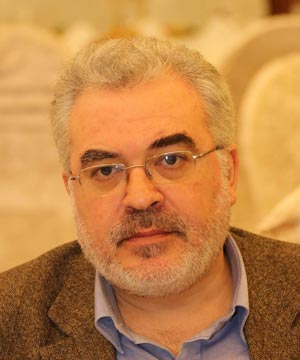
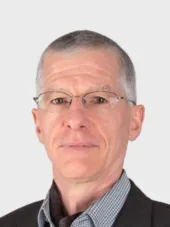
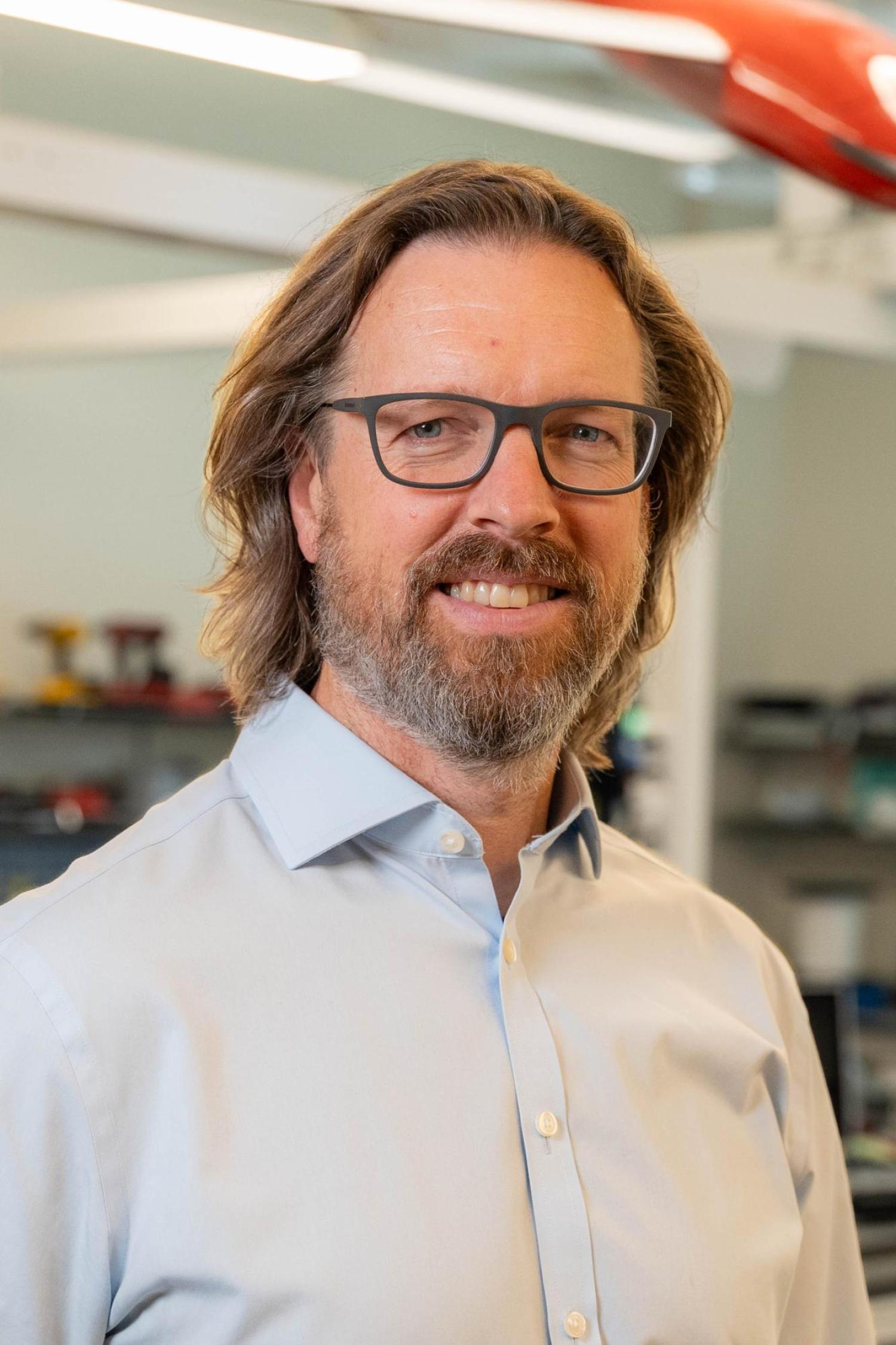
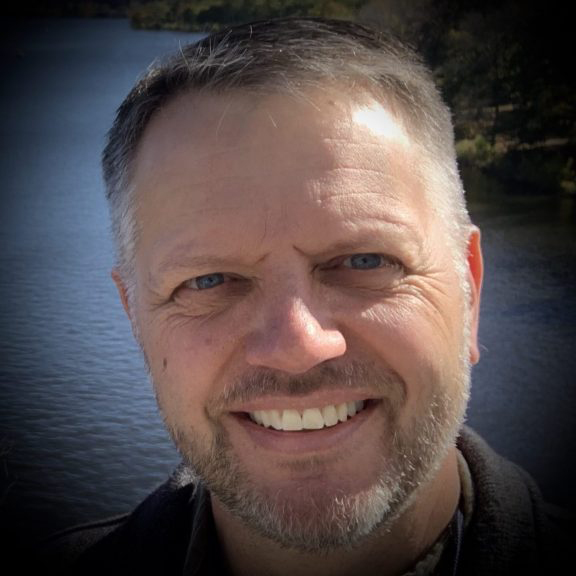
Tayfun Günel is a Professor in the Department of Electronics and Communication Engineering at Istanbul Technical University (ITU) , Faculty of Electrical and Electronics Engineering. He holds a PhD (1993), MSc (1988), and BSc (1986), all from ITU. His research spans microwave circuits, radar systems, antennas, and optimization using genetic algorithms and soft computing. His research interests include Microwave Circuits , Radar and Antennas , Optimization , and Genetic Algorithms . His work focuses on impedance matching, microstrip antennas, noise modeling, and metamaterial-based microwave components. He has taught courses such as Electromagnetic Fields, Radar Systems, and Satellite Communication Systems. The recent publications reflect a strong trend in microwave circuit design , antenna miniaturization , and the application of evolutionary algorithms (genetic algorithms, PSO) and machine learning (neural networks, SVR) in electromagnetic design and optimization. There is a consistent focus on practical microwave components like transmission lines, patches, and amplifiers, often using nanomaterials (e.g., carbon nanotubes) and metamaterials . His work bridges theoretical modeling with computational optimization for real-world RF and radar applications. Email: gunelmur@itu.edu.tr Professor Günel has supervised 2 completed PhD theses, 2 ongoing PhD theses, 23 completed master's theses, and 1 ongoing master's thesis, demonstrating a significant contribution to student mentoring. There are no specific grants or funding sources mentioned in the provided text. He is affiliated with research in microwave systems and antenna design , likely operating within the broader research ecosystem of the Electronics and Communication Engineering Department at ITU, which includes labs such as the Microwave Systems and Antennas Laboratory and the Radar and Microwave Technologies Research Laboratory.
Rainald Loehner is a Distinguished Professor of Fluid Dynamics at George Mason University's Center for Computational Fluid Dynamics. Since 2003, he has led the Center for Computational Fluid Dynamics at George Mason University. He is currently a Hans Fischer Senior Fellow at the Technical University of Munich's Institute for Advanced Study (TUM-IAS) for 2023, hosted by Professors Kai-Uwe Bletzinger and Roland Wüchner in the 'Adjoint-Based System Identification of Large-Scale Structures' Focus Group. Loehner received his Diplom Ingenieur (Maschinenbau) degree from the Technical University of Braunschweig, and his PhD and a DSc in civil engineering from the University College of Swansea, Wales. After teaching at Swansea for a year, he worked at the Naval Research Laboratory in Washington, DC, followed by a research professorship at George Washington University. He joined George Mason University as an associate professor and was promoted to full professor in 1995 and distinguished professor in 2004. With over 35 years of experience, Professor Loehner's research spans the complete pipeline of numerical solvers and simulation tools. His expertise includes pre-processing, grid generation, numerical methods, field solvers, parallel computing, adaptive mesh refinement, fluid-structure interaction, shape optimization, system identification, and computational crowd dynamics. His current work focuses on developing advanced field solvers for compressible and incompressible flows, acoustics, electromagnetic wave propagation, heat and mass transfer, structural mechanics, and fluid-structure interaction. Key application areas include blast mitigation, ship hydrodynamics, blood flow, contaminant transport, and pedestrian safety. Loehner's recent research output (2020-2024) shows a strong trend toward digital twin technology and adjoint-based methods for structural analysis and optimization. His publications focus on high-fidelity digital twins for detecting structural weaknesses, risk assessment in engineering systems, and optimization of sensor placement. His work bridges computational mechanics with machine learning approaches, particularly in system identification and inverse problems, demonstrating how computational methods can solve complex real-world engineering challenges. 2020: Ranked #15119 in the Stanford List of Most Influential Scientists of the World; #8 in Aerospace and Aeronautics 2010: Distinguished International Career Award, Argentine Association of Computational Mechanics 2008: Fellow, International Association for Computational Mechanics 2006: Associate Fellow, AIAA 2005: Honorary Professor, University of Wales Swansea 2005: Advisory Professor, Shanghai Jiao Tong University 2004: Distinguished Professor of Fluid Dynamics, George Mason University 1999: Computational Mechanics Achievements Award, Japan Society of Mechanical Engineering 1993: Doctor of Science in Civil Engineering, University College of Swansea 1979-1983: Studienstiftung des Deutschen Volkes (Top 1% of German Students) Professor Loehner has mentored numerous students through his work at George Mason University and has supervised research in computational fluid dynamics, structural mechanics, and related fields. His research has been supported by various grants from government agencies and industry partners, enabling the development of advanced simulation tools applied in aerodynamics, hydrodynamics, shock-structure interaction, and medical applications. His codes and methods have been widely adopted in industry and academia for applications ranging from aircraft and ship design to medical simulations and urban pathogen transmission modeling. Loehner leads the Center for Computational Fluid Dynamics at George Mason University, which focuses on developing cutting-edge computational methods for fluid dynamics and related multiphysics problems. The center works on strategic application areas including blast mitigation, ship hydrodynamics, blood flow simulation, and pedestrian movement modeling. As a TUM-IAS Fellow, he collaborates with the Chair of Computational Modeling and Simulation at TUM on adjoint-based system identification of large-scale structures, bringing together expertise in computational mechanics and digital twin technology to address complex engineering challenges.
Dr. Scott L. Nykl is a Professor in the Department of Computer Science at the Air Force Institute of Technology (AFIT), part of the Graduate School of Engineering & Management. He is a leading researcher in computer vision, real-time 3D graphics, and autonomous aerial systems, with a focus on automated aerial refueling and navigation in GPS-denied environments. Education: Ph.D. in Computer Science, Ohio University (2008–2013), Summa Cum Laude, GPA: 4.0/4.0 M.S. in Computer Science, Ohio University (2011–2012), Summa Cum Laude, GPA: 4.0/4.0 B.S. in Software Engineering, University of Wisconsin–Platteville (2002–2006), Summa Cum Laude, GPA: 3.94/4.0 Dr. Nykl's research interests include computer vision, sensor fusion, interactive virtual worlds, and real-time 3D graphics, with applications in aerospace and defense. His work bridges simulation and real-world deployment, particularly in autonomous aerial refueling using stereo and monocular vision. He has pioneered techniques in pose estimation, occlusion mitigation, and sim-to-real transfer learning. His recent publications and projects show a strong trend toward robust, vision-based navigation systems for unmanned and manned aircraft, with emphasis on reliability, accuracy, and real-time performance. His work frequently appears in IEEE, AIAA, and ION venues, reflecting its high technical and operational relevance. Scientific Awards and Recognitions: 2024 Harold Brown Award – Highest U.S. Air Force scientific honor 2024 General Bernard A. Schreiver Award 2025 AETC Airmen of the Year Multiple Air Force Outstanding Scientist/Engineer Awards (2017–2023) Best Paper Award, ACM SIGGRAPH i3D 2013 Forbes' The Greatest Young Inventors in America (2012) NSF GK-12 Fellow (2006) Dr. Nykl has advised numerous graduate students and collaborated extensively on projects involving automated aerial refueling, 3D reconstruction, and cyber education. He has secured significant research funding, including a $100,000 Ohio Third Frontier grant. His work has led to multiple patents and technology transfers. He leads research integrating virtual worlds, digital twins, and augmented reality for both research and pedagogy. Laboratories and Research Teams: His work is conducted within AFIT’s research ecosystem, involving collaborations with the Air Force Research Laboratory (AFRL), Boeing, and academic partners. He leads projects under the Aerial Refueling Systems Advisory Group (ARSAG) and presents regularly at ION, AIAA, and IEEE conferences.
Dr. Pascal Reuss is a Researcher at the Intelligent Information Systems (IIS) Division within the Institute of Computer Science , University of Hildesheim . His work focuses on Case-Based Reasoning (CBR) systems, Multi-Agent Systems , and Knowledge Management applications. Active in CBR framework development and game-based AI research Teaching Computer Science III (Databases) for winter 2025/26 Participating in university sustainability initiatives like Stadtradeln 2024/25 Reuss contributes to AI education through practical implementations in gaming environments and has developed visualization tools for CBR agent behavior. His research spans multi-agent collaboration , dynamic case bases , and domain-specific language implementations for knowledge maintenance. Notable contributions include: Co-developing the FEATURE-TAK framework for knowledge extraction Designing case factories for distributed CBR systems Implementing finite state machines for tactical game agents Creating CBR-based fitness planning systems His work appears in various CBR and Game Development publications from 2011-2024. The research demonstrates practical applications of CBR in aircraft maintenance diagnostics , training plan generation , and educational technology contexts.
Eric Frew is a Professor in the Department of Aerospace Engineering Sciences at the University of Colorado Boulder. He holds leadership roles including Director of the Autonomous Systems Interdisciplinary Research Theme (ASIRT) and former Director of the Research and Engineering Center for Unmanned Vehicles (RECUV). His research focuses on autonomous systems, heterogeneous unmanned aircraft systems, and optimal distributed sensing. He earned his PhD from Stanford University in 2003, and has been a faculty member at CU Boulder since 2004. Education: PhD, Aeronautics and Astronautics, Stanford University, 2003 MS, Aeronautics and Astronautics, Stanford University, 1996 BS, Mechanical Engineering, Cornell University, 1995 Research Interests: Networked unmanned systems Optimal distributed sensing Controlled mobility in sensor networks Miniature self-deploying systems Guidance and control of unmanned aircraft in complex atmospheric phenomena Notable Awards: Outstanding Mentor Award (2023) AIAA Associate Fellow (2013) NSF CAREER Award (2009) Grants and Labs: Leads the Center for Autonomous Air Mobility and Sensing (CAAMS), and has conducted field campaigns such as TORUS (Targeted Observation by Radars and UAS of Supercells). His work integrates theoretical research with practical deployment of autonomous systems for environmental monitoring and severe weather studies. Labs/Teams: Active in CAAMS and RECUV, collaborating with industry/government on pre-competitive research in autonomous air mobility and sensing.
David L. Darmofal is the Vice Chancellor for Undergraduate and Graduate Education and the Jerome C. Hunsaker Professor of Aeronautics and Astronautics at MIT. He leads the Aerospace Computational Science & Engineering (ACSEL) Lab and contributes to the MIT Center for Computational Science & Engineering (CCSE). His research focuses on computational methods for PDEs (especially fluid dynamics) and engineering education innovation. He holds a BS from the University of Michigan and SM/PhD from MIT, with postdoctoral work at the University of Michigan. Notable awards include the MacVicar Faculty Fellow (2004), Earll M. Murman Award (2011), and NSF CAREER Award (1998). Education: B.S.E., University of Michigan, 1989 S.M., MIT, 1991 Ph.D., MIT, 1993 Affiliations: MIT Schwarzman College of Computing Aerospace Computational Design Laboratory (ACSEL) His research emphasizes higher-order adaptive finite element methods, space-time mesh adaptation, and turbulence modeling. He teaches courses in computational methods and fluid dynamics. Recent projects include the Metris open-source meshing software and studies on sonic boom propagation. His work bridges computational science and engineering education, with a focus on evidence-based pedagogy. Awards & Recognition: Michael M. Byram Visiting Professorship (2021) Common Ground Excellence in Teaching Award (2024) AIAA Student Chapter Teaching Awards (2005, 2013) Bisplinghoff Fellow & Alumni Merit Award (2012) Advising & Grants: Over 130 peer-reviewed publications, leadership in MIT’s Common Ground initiative, and mentorship of postdocs/UROPs (e.g., Emily Williams, Lucien Rochery). Active in interdisciplinary collaborations, including DOE projects on physics-informed PDEs and NASA’s CFD Vision 2030 study.
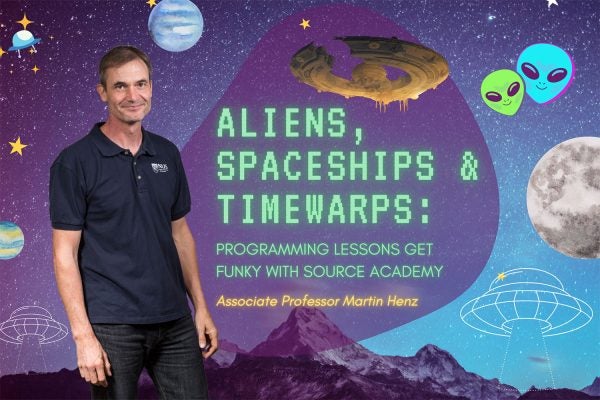
Martin Henz is an Associate Professor at the National University of Singapore , affiliated with the School of Computing and its Department of Computer Science . His academic journey includes an M.Sc. in Computer Science from Stony Brook University (1993) and a Dr.rer.nat. in Computer Science from Saarland University (1997). He has also worked as a Research Scientist at the German Research Centre for Artificial Intelligence. Research Focus : Scalable Experiential Learning, Systems for Teaching/Learning, AI in Education, Programming Languages, Algorithms, and Constraint Programming. Key Projects : Source Academy (immersive programming environment), Deep Teaching (LMS enhancements), and NUS Seafarers (maritime experiential learning). Publications span education technology, programming languages, and sustainable engineering, with recent works focusing on JavaScript-based pedagogy, automated question generation, and electric vehicle conversions. He supervised Rahul Singhal 's PhD, leading to the educational startup Cerebry, and co-founded Workforce Optimizer Pte Ltd with Alan Sevugan. Awards : NUS Annual Digital Education Award (2021) NUS Annual Teaching Excellence Award (2016/17) Fulbright Scholarship (1990) Startup @ Singapore Champion (2001)
Michael Carley is a Senior Lecturer in the Department of Mechanical Engineering at the University of Bath. His research focuses on acoustics, aeroacoustics, boundary element methods (BEM), and numerical methods. He actively contributes to teaching aircraft stability and control, acoustics, and fluid dynamics. He is willing to supervise doctoral students in acoustics, vortex methods, and BEM applications. Dr. Carley has secured significant research funding, including EU Horizon 2020 grants for noise reduction in aviation and a Leverhulme Trust project on motorcycle helmet noise. His work spans collaborations in civil aviation, computational acoustics, and fluid dynamics modeling. Key research areas include rotor noise suppression, numerical methods for acoustic simulations, and metamaterial applications. He has published extensively on BEM advancements and noise shielding techniques. His projects emphasize practical engineering solutions, such as developing noise reduction technologies for eVTOL aircraft and optimizing acoustic metasurface designs. Grants: AERIALIST (EU Horizon 2020, 2017–2020): Focused on aircraft noise alleviation using metamaterials. Motorcycle Helmet Noise (Leverhulme Trust, 2010–2011): Investigated noise reduction strategies. Peer Review: Active reviewer for the Journal of the Acoustical Society of America (JASA Express Letters) and UK Research and Innovation (UKRI EPSRC).
Prof. Alan Kin-tak Lau is an Adjunct Professor in the Department of Mechanical Engineering & Product Design at Swinburne University of Technology. He previously served as Pro Vice-Chancellor (International and Digital Research), overseeing global research collaborations and digital innovation. His expertise spans advanced materials, manufacturing, and product design, with a focus on aerospace applications, energy storage, and sustainable technologies. Lau holds adjunct roles at Chonbuk National University and is a Fellow of multiple prestigious institutions, including the European Academy of Sciences and the Royal Aeronautical Society. Affiliations: Swinburne University of Technology Roles: Adjunct Professor, Former Pro Vice-Chancellor Research interests include nanomaterials for energy storage (e.g., supercapacitors, hydrogen systems), composite materials for aerospace, and eco-friendly manufacturing. He leads interdisciplinary projects like the Aerostructures Innovation Research Hub and the Research Centre for New Energy Transition. Lau has secured over AUD 100M in grants and supervised numerous PhD projects on topics like graphene composites and additive manufacturing. Notable awards include the VEBLEO Best Scientist Award (2020), UGC Teaching Excellence Award (2013), and the Young Engineer of the Year Award (2004). He chairs international conferences and serves on boards of companies like King’s Flair International. His work bridges academia and industry, with patents and commercial applications in sustainable materials and EV technologies.
Dr. Mohammad Naraghi is a Professor and Associate Department Head for Academics in the Department of Aerospace Engineering at Texas A&M University. He leads the Nanostuctured Materials Lab , focusing on advanced nanomaterials for aerospace applications. His work integrates material science principles to develop lightweight, high-performance materials for structural, energy storage, and smart textile systems. Education: Ph.D., Aerospace Engineering (2009), University of Illinois at Urbana-Champaign M.S., Civil Engineering (2004), Sharif University of Technology B.S., Civil Engineering (2004), Sharif University of Technology Research Interests: Graphitic carbon nanomaterials, bio-inspired composites, experimental nanomechanics, and polymer nanofiber processing. His lab explores multifunctional materials for aerospace applications, including self-healing polymers, structural batteries, and sustainable carbon fiber recycling. Publications: Dr. Naraghi has authored over 150 peer-reviewed articles, with recent work focusing on carbon nanomaterial synthesis, self-healing vitrimers, and all-electric aircraft sustainability . His studies bridge nanoscale mechanics and macroscale applications, emphasizing scalability and industrial relevance. Awards: Best Paper Award (2009) for nano viscoelastic composites research Roger A. Strehlow Memorial Award (2009) for outstanding research First Place in Sandia MEMS Design Competition (2007) Advising & Grants: Leads NSF-funded projects on sustainable materials and structural energy storage. Advises graduate students in aerospace and materials engineering. Collaborates with Sandia National Labs and industry partners on advanced composite development. Labs & Facilities: Directs the Nanostuctured Materials Lab, equipped with advanced nanomechanical testing systems, electrospinning setups, and characterization tools for nanoscale materials analysis.
Dr. Mohammad Yazdani-Asrami is a Lecturer in Electrically Powered Aircraft and Operations at the Autonomous Systems & Connectivity (ASC) division of the James Watt School of Engineering, University of Glasgow. He leads research in electrification and cryo-electrification of transportation, particularly in aviation, leveraging applied superconductivity and AI techniques. His research interests span the Electrification and cryo-electrification of power and transportation systems Design of superconducting components (machines, cables, fault current limiters) for aviation Application of AI, machine learning, and big data in engineering and superconductivity Hydrogen electrolysis, production, and integration in aerospace and power networks His recent publications demonstrate a strong trend toward intelligent modeling and AI-driven solutions in superconducting technologies, with a focus on electric aircraft, fault protection, and thermal management using cryogenic fluids. Dr. Yazdani-Asrami has received notable scientific recognition, including: UK Royal Academy of Engineering Global Talent (2021) Young Professional of the Year, Cryogenic Society of America (2023) He actively supervises PhD students and hosts visiting researchers. His advising portfolio includes Alireza Sadeghi, Kerr Smith, Dedao Yan, Giacomo Russo, and Fábio Gregório. He has secured funding from the EPSRC, University of Glasgow, and CSC for PhD students. He also supports postdoctoral fellowships from the Royal Academy of Engineering, Leverhulme Trust, and Marie Skłodowska-Curie actions. He is involved in several research groups and collaborations, particularly within the Aerodynamics, Propulsion and Electrification group. His editorial roles include serving on the boards of Superconductor Science and Technology , World Journal of Engineering , Aerospace Systems , and others. He regularly contributes to major conferences such as the Applied Superconductivity Conference and the International Conference on Magnet Technology.
Seongjin Choi is an Assistant Professor in the Department of Civil, Environmental, and Geo-Engineering at the University of Minnesota, Twin Cities , where he began his role in January 2024. His research bridges Urban Mobility Data Analytics , Spatiotemporal Modeling , and Deep Learning to advance transportation systems. Affiliated with the Center for Transportation Studies , Minnesota Robotics Institute , and Data Science Initiative , he leads the Choi Research Group . Education: Ph.D., Civil and Environmental Engineering, Korea Advanced Institute of Science and Technology (KAIST), 2021 M.S., Civil and Environmental Engineering, KAIST, 2017 B.S., Civil and Environmental Engineering, KAIST, 2015 His research focuses on Urban Mobility Data Analytics and Deep Learning to optimize transportation systems. Key areas include: Spatiotemporal Data Modeling for forecasting and imputation Generative AI applications in transportation data Reinforcement Learning for Connected Automated Vehicles (CAV) Cooperative Intelligent Transport Systems (C-ITS) Recent publications in Transportation Science and Transportation Research Part C highlight his work on probabilistic traffic forecasting , deep generative models , and vision-language-action frameworks for autonomous systems. His methodologies often combine AI-driven analytics with real-time mobility optimization . Dr. Choi serves as: Associate Editor of The Journal of the Korean Society of Transportation (JKST) , 2023–Present Guest Editor for Journal of Advanced Transportation special issue on "Advanced Data Intelligence Theory and Practice in Transport 2023", 2023–2024 He actively seeks PhD students/postdocs for 2025 cohorts focused on machine learning for transportation challenges. Current projects include AI-enhanced traffic forecasting, CAV control, and urban air mobility (UAM) integration studies.
Alexandros Kontogiannis is a research fellow at the University of Cambridge, Department of Engineering, specializing in fluid dynamics and applied mathematics. His work combines Bayesian inference, machine learning, and physics-informed algorithms to solve inverse problems in magnetic resonance velocimetry (MRV) and fluid-structure interaction. EPSRC National Fellow in Fluid Dynamics Member of Energy, Fluids and Turbomachinery Division Research Focus: Development of digital twin frameworks that integrate MRV data with Navier-Stokes equations to reconstruct flowfields, infer rheological parameters in non-Newtonian fluids, and estimate hidden quantities like pressure and wall shear stress. Key innovations include: Physics-informed compressed sensing for sparse MRV data Simultaneous boundary shape and flowfield estimation Bayesian turbulence model parameter learning Scientific Awards: ASME Fluids Engineering Division Graduate Student Scholar (2021) Technical Chamber of Greece (TEE) Award (2018) Limmat Foundation Academic Excellence (2017) Mentzelopoulos Scholarship for international studies (2017) Greek State Scholarships Foundation Award (2012) Key Contributions: Algorithms for 3D flow reconstruction with adaptive discretization, viscous signed distance field regularization, and multi-objective aerodynamic shape optimization. His methodologies enable 27x reductions in MRI scanning time while maintaining diagnostic accuracy.
Robert Heinemann is a Senior Lecturer in the Department of Mechanical and Aerospace Engineering at the University of Manchester, affiliated with the School of MACE. His work focuses on advanced machining, tool condition monitoring, and sustainable manufacturing processes. He holds a PhD from the University of Manchester Institute of Science and Technology (2004) and has extensive research experience in drilling technology, carbon-based coatings, and environmental benign machining. Education: Diplom Ingenieur (Dipl.-Ing. FH) in Mechanical Engineering, University of Paderborn, Germany (1999) MSc in Electronic Engineering and Engineering Management, University of Paderborn/Bolton University (2001) PhD in Mechanical Engineering, University of Manchester Institute of Science and Technology (2004) Research interests include: Drilling and reaming technology for minimally invasive surgery Development of diamond-like carbon coatings for cutting tools Process and tool optimization for aerospace and biomedical applications Environmental sustainability in manufacturing design His research outputs emphasize adaptive drilling strategies, deep learning applications in process monitoring, and sustainable manufacturing practices aligned with UN SDGs. He leads the Laser Processing Research Centre (LPRC), focusing on laser-based machining innovations. Scientific achievements include a Leverhulme Trust Early Career Fellowship (2010) and contributions to over 40 peer-reviewed articles. He advises 9 postgraduate research students and collaborates on multi-disciplinary projects addressing industrial challenges in composites and precision engineering.
Dr. Zhenzhou Wang is a Research Fellow at the University of Southampton, affiliated with the CERN-STFC HL-LHC Project. His research focuses on lightweight materials for liquid hydrogen storage systems in aircraft and ships, composite material modeling, and AI-driven multi-objective optimization. He is a member of the Energy Technology Group and has held roles such as Guest Editor for Polymers (2021-2023). Notable achievements include receiving the Dean's Award (2024) twice. His work integrates analytical and numerical methods to address challenges in aerospace materials, cryogenic testing, and structural optimization. Recent studies include evaluating thermoplastic polymers for cryogenic sealing, thermal fatigue effects on composites, and deployable composite boom design frameworks. Collaborations involve researchers from institutions like CERN and industry partners. Affiliations: University of Southampton (CERN-STFC HL-LHC Project), Energy Technology Group Key Projects: Liquid hydrogen fuel storage systems, spacecraft lightweight materials, AI optimization algorithms Awards: Dean's Award (2024)