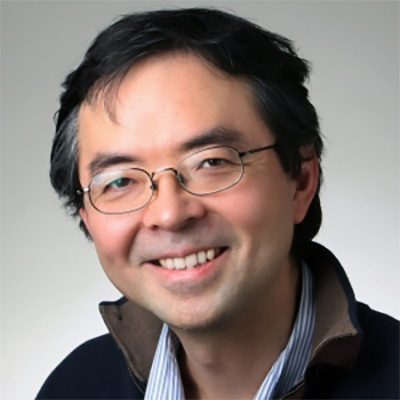
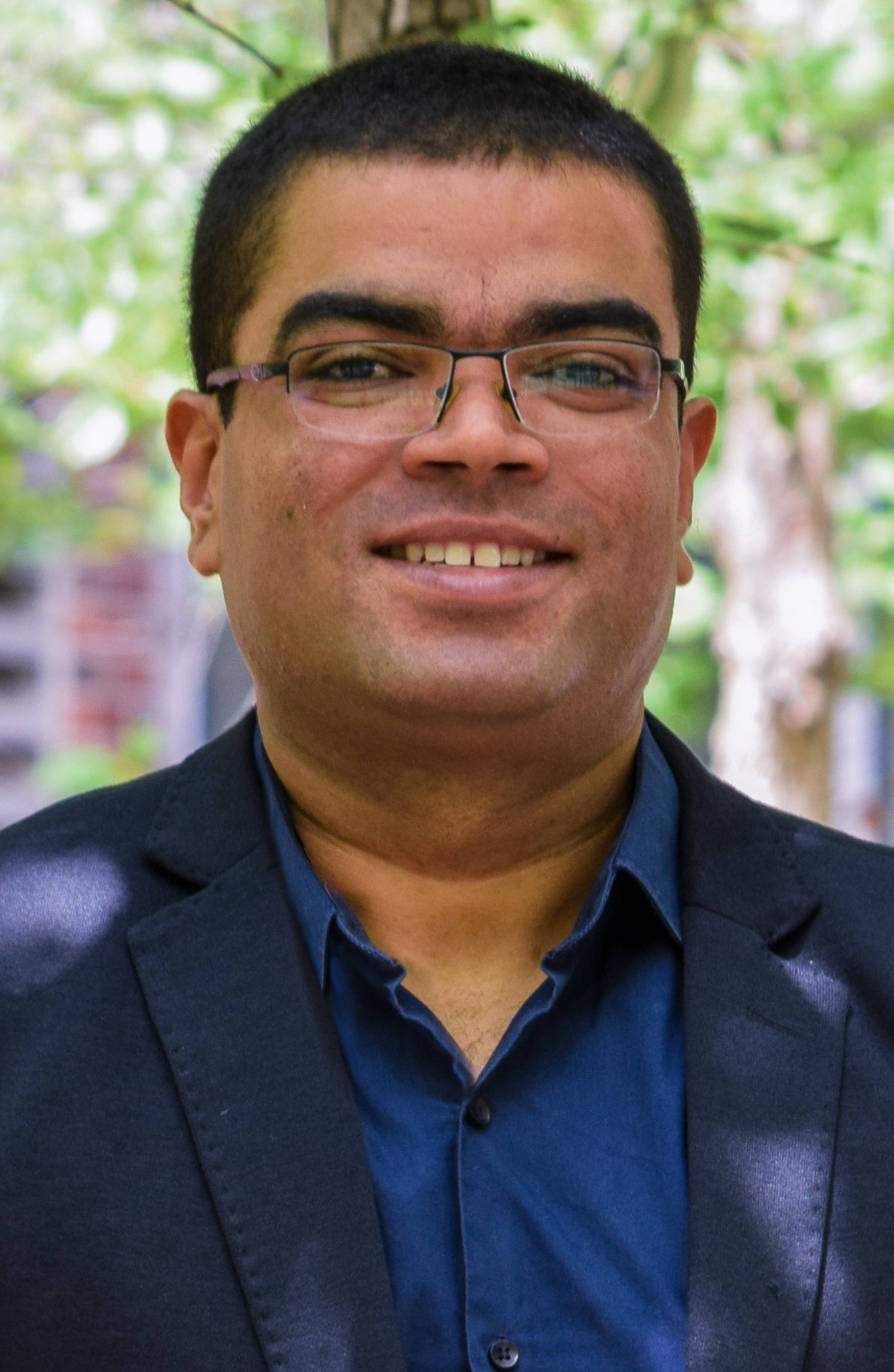
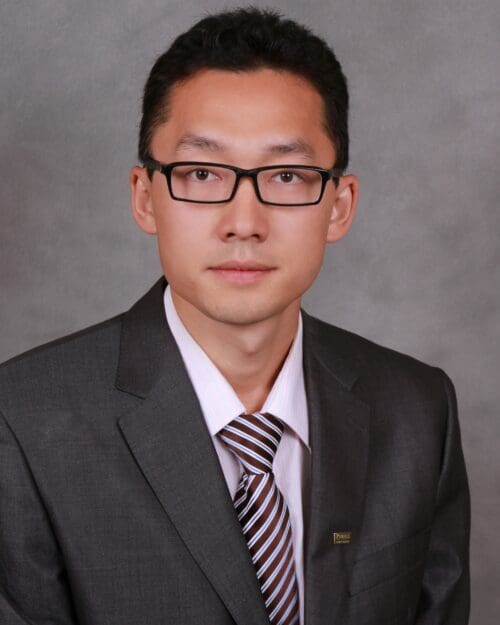
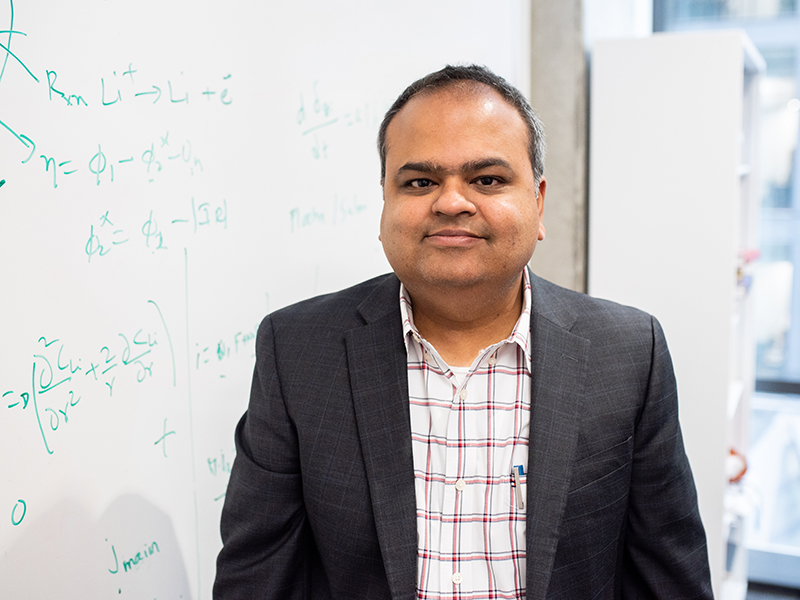
Francesco Facchini is an Assistant Professor at the Politecnico di Bari (Poliba) in the Department of Mechanics, Mathematics & Management. His research focuses on Industry 5.0 , cognitive workload assessment, sustainable manufacturing, and smart supply chain systems. Academic Rank: Assistant Professor Department: Mechanics, Mathematics & Management Contact: francesco.facchini@poliba.it Research Interests include cognitive workload optimization, digital twin applications for environmental performance, circular economy rebound effects, and collaborative robotics in manufacturing. His work bridges human-centric design with technological advancement , emphasizing sustainability and operational efficiency. Recent Publications (2024-2025) highlight trends in Industry 5.0 maintenance , smart logistics , decarbonization pathways , and ergonomic job rotation . Articles often employ systematic reviews and analytical models to address environmental, economic, and operational challenges. Professional Contributions span process optimization, human error probability modeling, and sustainable energy systems. He has developed decision support frameworks for material handling, cogeneration, and Industry 4.0/5.0 implementation readiness.
Edgar A. Matida is an Associate Professor at Carleton University , affiliated with the Faculty of Engineering and Design and the Mechanical and Aerospace Engineering department. His research spans aerosol science, computational fluid dynamics, and energy systems, with applications in pharmaceutical delivery, fuel cell modeling, and aerospace interactions. B.Sc., Sao Paulo University M.Sc., Ph.D., Yokohama National University His primary research interests include: Pharmaceutical aerosols and inhalation devices Large eddy simulation (LES) and turbulent flow analysis Dispersed two-phase flow modeling Aerofoil-vortex interactions in rotorcraft Direct methanol fuel cells (DMFCs) Advanced aerosol characterization techniques (LDV, PIV) Recent publications highlight trends in 2025 in e-cigarette aerosol dynamics, allergen dispersion modeling, and aerospace applications. Earlier works focus on 2024-2023 solidification processes, wind turbine analysis, and exposure chamber systems. All studies employ numerical methods (LES, CFD) and experimental validation. Professional activities include Member, Editorial Board of Journal of Aerosol Medicine and Pulmonary Drug Delivery Member, International Society for Aerosols in Medicine (ISAM)
Danilo de Camargo Branco is an Assistant Professor in the Department of Aerospace, Physics and Space Sciences at the College of Engineering and Science, Florida Institute of Technology. His research focuses on advanced materials processing and characterization, particularly in laser-based additive manufacturing, 2D materials engineering, and aerospace design applications. Current research aligns with expertise in materials science , nanotechnology , and physics . Recent work explores phase transitions in topological superconductors, defect control in laser-fabricated alloys, and magnetic heterojunctions for memory devices. His publications highlight experimental and computational approaches to materials strengthening, 2D material fabrication, and aerospace systems optimization. Contact: ddecamargobranco@fit.edu | Office: F.W. Olin Engineering Complex, Room 244
Philippe Chatelain is a Full Professor at the Louvain Polytechnic School (EPL) , Institute of Mechanics, Materials and Civil Engineering (iMMC) , and leads the Thermodynamics and Fluid Mechanics (TFL) team at the Catholic University of Louvain . His research focuses on fluid dynamics, wind energy, and computational methods. Education: Doctor of Philosophy in Aeronautics (2005), California Institute of Technology Master in Aeronautics (2000), California Institute of Technology Master of Science in Mechanical Engineering (1999), Université catholique de Louvain Research Interests: Chatelain specializes in vortex particle-mesh (VPM) methods, wake dynamics in wind farms and aircraft, aeroelasticity, and bio-inspired flow control. His work bridges large-eddy simulations (LES) with practical applications in renewable energy and aerospace engineering. Recent Publications (2024-2025) Trends: His recent articles emphasize wind energy optimization via dynamic wake modeling, vortex tracking algorithms, and bio-inspired strategies for drones and turbines. Key methods include VPM, LES, and actuator line/disk frameworks. Laboratory Affiliation: He works at the Stevin laboratory (L5.04.03, Place du Levant 2, Louvain-la-Neuve) and leads the Thermodynamics and Fluid Mechanics (TFL) team, focusing on aerodynamic and thermodynamic challenges.
Daniel Dollinger is a researcher at the Institute of Flight System Dynamics at the Technische Universität München (Technical University of Munich). His work focuses on embedded systems and safety critical avionics development , with a particular emphasis on human-machine interface design for unmanned aircraft systems (UAS) and future air mobility solutions . He contributes to research in nonlinear and adaptive flight control , flight safety protocols , and trajectory optimization for advanced aerial vehicles. Embedded Systems & Safety Critical Avionics Human-Machine Interface for UAS Flight Control Systems Nonlinear and Adaptive Flight Control Simulation and Flight Safety Sensors and Data Fusion Daniel Dollinger has authored or co-authored multiple publications in prestigious conferences like AIAA AVIATION FORUM, AIAA SciTech, and IEEE/DASC. His research spans topics from control inceptor design for transition VTOL aircraft to model-based systems engineering integration into agile environments. He actively supervises student theses on subjects like hybrid fly-by-wire systems, UAV control protocols, and flight simulation toolchains. His recent work explores urban air mobility and eVTOL aircraft handling qualities , with a focus on simulator-based testing and operator situational awareness . He also investigates digital twin approaches for airborne software certification and lean development methodologies in avionics systems.
Dr. Brent T. Langhals serves as Associate Professor of Information Resource Management at the Air Force Institute of Technology (AFIT), Department of Systems and Engineering Management, Wright-Patterson AFB, OH. He directs the AFIT Data Analytics Program and chairs the Information Systems specialization curriculum, actively contributing to defense-focused research and graduate education. Education: Ph.D. in Management - Management Information Systems Concentration (minor: Systems and Industrial Engineering), University of Arizona, Eller College of Management (2011). Dissertation: "Using Eye and Head Based Psychophysiological Cues to Enhance Screener Vigilance" M.S. in Information Resource Management, Air Force Institute of Technology (2001). Thesis: "The Effect of Varying Arousal Methods upon Vigilance and Error Detection in an Automated Command and Control Environment" B.S. in History, United States Air Force Academy (1995) Research Focus: Dr. Langhals' work integrates data analytics , database systems , and human-computer interaction with systems engineering principles. His investigations into psychophysiological cues and operator vigilance bridge cognitive science with defense applications, yielding practical solutions for security screening, aviation interfaces, and military decision-making. Current projects emphasize machine learning for predictive analytics in high-stakes environments. Publication Trends: Recent work demonstrates interdisciplinary reach across defense logistics (F-22 sortie cancellations, construction contracts), public health (marijuana use, food insecurity), and emerging technologies (UAS applications, NoSQL databases). His scholarship consistently applies data science to military challenges while advancing fundamental research in human factors and database engineering. Scientific Recognition: Two-time Sigma Iota Epsilon Instructor of the Year (2024, 2018) Department Educator of the Year (2013) Multiple Air Force commendations including Field Grade Officer of the Quarter (2008, 2006) Mentorship & Leadership: Dr. Langhals has graduated 59 Master's/PhD students (38 residential, 21 distance learning) while teaching core courses in Database Systems, Data Analytics, and Strategic Information Management. His research leadership spans contracts in data management, systems engineering, and human performance optimization for Department of Defense applications. Research Infrastructure: As Data Analytics Program Director, he oversees AFIT's research ecosystem for defense data science, coordinating faculty and resources across the Department of Systems and Engineering Management to develop next-generation analytical capabilities for Air Force missions.
Dr. Torrey Wagner serves as an Assistant Professor of Data Analytics at the Air Force Institute of Technology (AFIT), where he supports the Data Analytics graduate certificate program. He develops and teaches core courses including DASC 522 Machine Learning, SATI 532 Data Visualization & Communication, and DASC 511 Object-Oriented Programming using Python. His instructional focus centers on applying data analytics techniques to solve military problems through the CRISP-DM process framework. Dr. Wagner earned his PhD in Electrical Engineering with an Electro-optics focus from AFIT in 2010, an MS in Aerospace Systems Engineering from Loughborough University (UK) in 2004, and a BS in Electrical Engineering from the University of Minnesota in 2000. His educational background bridges electrical engineering, aerospace systems, and advanced data analytics. His research concentrates on applying predictive and generative artificial intelligence techniques to enhance Department of Defense organizational efficiency and performance. Dr. Wagner's scholarly work spans machine learning applications for defense systems, energy optimization for military operations, quantum computing advancements, and natural language processing solutions for defense contexts. He has developed specialized methodologies for military problem-solving through data analytics, with emphasis on practical implementation in operational environments. Dr. Wagner's publication record reveals a strategic evolution toward cutting-edge AI applications. Recent work demonstrates significant focus on large language models, retrieval-augmented generation systems, and quantum computing implementations. His research portfolio includes machine learning applications for aircraft engine cost prediction, satellite imagery analysis, seismic event classification, and energy system optimization for austere military environments. This work consistently bridges theoretical AI advances with tangible defense applications. As an educator and mentor, Dr. Wagner has guided dozens of students through their first publications and presentations. His students frequently co-author peer-reviewed journal articles and conference papers, primarily at the master's level with several doctoral candidates. He has contributed to AI education within military contexts through his chapter "Augmenting a Curriculum Review with Generative AI" in the AFIT Generative AI Teaching Guidebook and other educational resources. Dr. Wagner's research supports multiple AFIT initiatives focused on data analytics for defense applications. His work involves extensive collaboration with Department of Defense organizations to implement AI technologies in practical military settings, particularly in energy systems optimization, aircraft operations analytics, and decision support tools for commanders. Current projects include secure offline large language model implementations, quantum communication network resilience, and advanced data visualization techniques for military decision-making.
Yun (Tom) Liu is an Associate Professor of Mechanical Engineering in the College of Engineering and Sciences at Purdue University Northwest. He joined PNW as an Assistant Professor in 2017 after earning his Ph.D. from Purdue University West Lafayette in 2016. Dr. Liu's teaching philosophy emphasizes experiential learning, using real-world examples to bridge theoretical concepts with practical applications, particularly during the pandemic when he developed innovative homemade lab equipment. Dr. Liu received his educational background from prestigious institutions: Ph.D. in Mechanical Engineering, Purdue University West Lafayette (2016) M.S. in Mechanical Engineering, University of Science and Technology of China (2011) B.S. in Mechanical Engineering, University of Science and Technology of China (2008) His research spans bio-fluid mechanics, renewable energy systems, three-dimensional flow measurement, optical diagnostics, and multiphase flow phenomena. Dr. Liu's work bridges traditional engineering with biological systems, demonstrated through studies on insect flight aerodynamics and bio-inspired designs. His solar energy research explores capturing radiation at higher altitudes where solar intensity is stronger above cloud cover. Dr. Liu's scholarly recognition includes: 2020 Proposal Submission Grant, Purdue University Northwest 2019 NSF-Major Research Instrument Grant 2019 Honorable Mention for Best Design Award, Global Space Balloon Challenge 2018 Catalyst Grant Award ($7,000), Purdue University Northwest Dr. Liu actively mentors students through research projects and the Aerosolar Engineering Club. He supervised six students who developed a weather balloon platform for solar radiation measurement, earning recognition in the Global Space Balloon Challenge among 400 universities. His teaching innovations include homemade wind tunnels using cardboard and computer fans during virtual learning, which were incorporated into PNW's Engineering Summer Camp. His laboratory work encompasses bio-fluid mechanics studies, solar energy capture systems, and advanced flow visualization techniques. Dr. Liu's interdisciplinary approach connects mechanical engineering with biology and environmental science, reflecting his belief that 21st-century engineering challenges require collaboration across diverse fields.
Ahmad Batikh serves as an Adjunct Associate Professor at Catholic Institute of Arts and Crafts (ICAM) in Toulouse, France, where he is actively affiliated with the MS2M research group (Modélisation des Systèmes et Microsystèmes Mécaniques) at Espace Clément Ader. His dual role encompasses both teaching and research responsibilities within mechanical engineering disciplines. His research centers on fluidic micro-actuators for active flow control, heat transfer enhancement, and impinging jets, utilizing computational and experimental methodologies. Key focus areas include fluidic oscillators, synthetic jets, and thermal management systems for aerospace and railway applications, with recent work emphasizing additive manufacturing solutions for heat sink optimization. Analysis of his publication record reveals a consistent trajectory in fluid dynamics innovation, particularly in synchronization strategies for fluidic devices and thermal engineering applications. The increasing integration of additive manufacturing since 2021 marks a significant evolution in his research approach. As a member of the MS2M research group at Espace Clément Ader, Batikh contributes to interdisciplinary mechanical systems modeling within a collaborative research environment focused on microsystems and fluid dynamics. While his teaching portfolio includes Computational Fluid Dynamics, Fluid Mechanics, and Heat Transfer courses, the available documentation provides no details regarding student advising, research grants, or collaborative projects beyond his publication record.
José Serna Serrano is a Professor with extensive research contributions in aerospace engineering, fluid dynamics, aeronautics, and engineering education. His work frequently intersects computational methods, experimental validation, and practical applications in aviation and defense. While his institutional affiliation is not explicitly stated, contextual clues suggest associations with the San Javier University Defense Center (General Air Academy). Research Interests: Serrano's research spans multiple high-impact areas: Aerodynamics & Fluid Dynamics : Aerodynamic probe measurements, shock-boundary layer interactions, and projectile drag reduction. Aeronautics & Aviation : Air navigation systems, aircraft design, and bird-strike risk modeling. Ballistics & Propulsion : Base-bleed technology and solid propellant combustion. Renewable Energy : Offshore floating wind turbine platforms. Engineering Education : Curriculum development and project-based learning methodologies. Publication Trends (2016-2023): His recent articles emphasize computational fluid dynamics (47% of publications), aeronautical systems (27%), and interdisciplinary topics like materials engineering and software design. A notable shift toward aviation safety and renewable energy applications is observed post-2018.
Assoc. Prof. Dr. Eng. Vessela Filipova serves as a Part-time Lecturer at the University of Architecture, Civil Engineering and Geodesy (UACEG) within the Faculty of Transport Engineering, Department of Roads and Transport Facilities. Her academic profile reflects decades of specialized expertise in road construction and transport infrastructure engineering. Her research interests span Road Construction , Transport Systems Engineering , Asphalt Mixtures Technology , Airport Design , Pavement Engineering , Road Maintenance and Rehabilitation , and Transport Infrastructure . Dr. Filipova has developed significant expertise in asphalt mixture technologies, pavement design methodologies, and regulatory framework harmonization with European standards. Her scholarly output demonstrates a strong focus on practical engineering applications, with 15 recent publications analyzing asphalt pavement design, material performance, and standardization. Key thematic areas include polymer-modified bitumens, high-modulus asphalt mixtures, ICAO-compliant airport pavements, and European standard implementation in Bulgarian road construction. Preparation of general technical specifications including Specification 2000-GUP Development of technical specifications for Transit Roads I and II programs Creation of asphalt pavement sizing guides and methodologies Harmonization of Bulgarian regulatory frameworks with European standards Extensive field experience in road rehabilitation projects Dr. Filipova maintains active teaching responsibilities with reception hours scheduled throughout the academic term. Her professional practice combines academic instruction with direct industry application through technical specifications development and construction project oversight.
Dr. David Hewitt is a Research Fellow in Power Electronics at the University of Sheffield’s School of Electrical and Electronic Engineering, affiliated with the Electrical Machines and Drives Research Group. His work focuses on advancing power electronics, electric machines, and predictive maintenance through thermal and fault diagnostic methodologies. His research spans: High-frequency phenomena in electric machines and power converters Insulation health monitoring under extreme conditions (e.g., high dv/dt, thermal aging) Thermal management strategies for power electronics Early fault detection (e.g., turn-to-turn faults, partial discharges) Predictive maintenance using accelerated life testing and finite element analysis Notable contributions include: Developing thermal observers for power module temperature estimation Experimental evaluation of SiC converter effects on machine insulation Electrolytic capacitor aging analysis for prognostics Thermally conductive encapsulant materials for improved thermal performance He has authored over 20 peer-reviewed articles and conference papers, with ongoing work in aerospace power systems and high-power converter integration.
Alberto Boschetto is a Full Professor at the Department of Mechanical and Aerospace Engineering, Sapienza University of Rome. His research focuses on advanced manufacturing technologies, particularly additive manufacturing (AM), materials science, and surface engineering. He leads investigations into 4D printing, laser powder bed fusion, and digital image analysis for quality control in AM processes. Key areas of expertise include: 4D printing of smart materials for dynamic applications Optimization of metal additive manufacturing processes (SLM, FFF) Surface characterization and post-processing techniques Application of AM in aerospace components (satellites, LIDAR systems) Industry 4.0 integration for space manufacturing Recent work emphasizes defect detection via digital image processing, corrosion-resistant coatings for aluminum alloys, and lightweight satellite platform design. His publications span over 20 years with a focus on improving AM process reliability and expanding its aerospace applications. Dr. Boschetto collaborates on EU-funded projects related to smart manufacturing systems and has pioneered AM redesign methodologies for military aircraft components. His research bridges fundamental materials science with practical industrial applications in aerospace and automotive sectors.
Dr. Thomas Stastny is affiliated with ETH Zürich's Autonomous Systems Department as a Researcher. His work focuses on advancing unmanned aerial vehicle (UAV) technologies, particularly in control systems, environmental monitoring, and autonomous navigation. Key research areas include fixed-wing UAV dynamics, solar-powered UAVs, wind-aware path optimization, and multi-agent robotic systems. His contributions span theoretical frameworks and experimental validations, with field applications in glacier monitoring and long-endurance aerial sensing. Research Highlights: Developed real-time wind prediction systems for UAVs (WindSeer project) Pioneered hybrid UAV designs like Soliro and Dipper for multimodal mobility Advanced control methodologies for high-angle-of-attack flight and VTOL transitions Explored solar-powered UAVs achieving multi-day endurance records Technical Expertise: Nonlinear model predictive control (MPC) Sensor fusion (radar/vision integration) Aerodynamic modeling and system identification Autonomous navigation algorithms His research integrates robotics, aerospace engineering, and environmental science to create robust airborne systems for challenging operational environments.
Professor Venkat R. Subramanian holds the Ernest Dashiell Cockrell II Professorship in Engineering at the University of Texas at Austin, affiliated with the Cockrell School of Engineering. He specializes in advanced materials science, complex systems, and electrochemical engineering, with a focus on battery technology and model-based design. His research group develops next-generation energy storage systems, particularly in lithium-ion and lithium-metal batteries, emphasizing safety, longevity, and efficiency. He has pioneered fast-impedance simulation methods and robust solvers for battery models, improving battery life by 2x in 18Ah cells through model-based charging profiles. Education: B.Tech. in Chemical and Electrochemical Engineering from Central Electrochemical Research Institute (CECRI), India (1997); Ph.D. in Chemical Engineering from the University of South Carolina (2001). Research Interests: Advanced battery management systems (BMS), capacity fade mechanisms, phase-field modeling, electrochemical impedance spectroscopy, and model-based design for next-gen energy storage. His work bridges fundamental science and engineering applications, addressing challenges in battery degradation, thermal management, and multi-scale modeling. Key Awards: Elected ECS Fellow; Past Chair of IEEE Division (Electrochemical Society); Past Technical Editor of Electrochemical Society; Past Chair of Area 1e: Electrochemical Engineering (AIChE). Lab Affiliation: M.A.P.L.E. Lab (Modeling and Analysis of Processes in Lithium Electrochemistry), focused on high-energy batteries for clean energy grids and transportation. The lab’s innovations include the fastest battery simulators and IP-protected solvers, contributing to safer and more efficient energy storage systems.