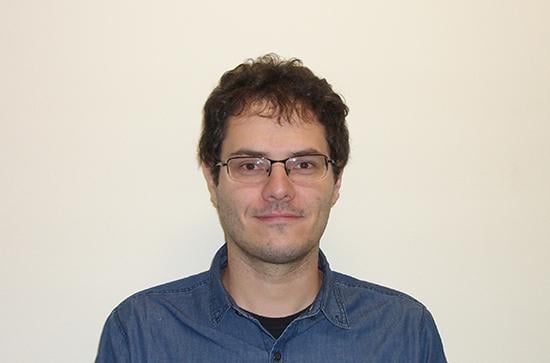
Linghao Zhong is a Professor of Chemistry at Penn State Mont Alto, with research focusing on computational simulations of proteins and renewable energy technologies. His work spans molecular dynamics of cellulose degradation, prion protein folding, and applications in biodiesel processing and wind turbine optimization. Affiliation: Penn State Mont Alto Academic Rank: Professor Research Keywords: Cellulose, Molecular Dynamics Simulation, Agroecosystem, Fertilization, Microbial Assembly His research integrates computational chemistry with environmental microbiology , targeting cellulose degradation mechanisms and microbial community dynamics in agroecosystems. Recent work explores nano iron oxides for closing gaps between climate regulation and food security. The 15 most recent publications (2014–2024) highlight trends in cellulose modeling , soil microbial ecology , and nanomaterial applications . Keywords span molecular dynamics , agroecosystems , and bioremediation , with sub-fields like cellulose polymorphism and coastal salinity impacts . Linghao Zhong’s work also intersects with microbial community assembly and stochastic processes in sustainable rice paddies, demonstrating how balanced fertilization and nanocomposites influence ecosystem functions.
Rafael de Andrade Moral is a Professor of Statistics at Maynooth University's Faculty of Science & Engineering (since 2025), with prior roles as Associate Professor (2023-2025) and Assistant Professor (2018-2023). He holds a PhD in Statistics (University of São Paulo, 2014-2017) and dual bachelor's degrees in Biology and Education. His work bridges Statistical Ecology , Computational Biology , and Data Science , focusing on modeling ecological systems, agricultural pest dynamics, and biodiversity-ecosystem function relationships. Key research themes include Bayesian modeling , multivariate ecological forecasting , and machine learning applications . He founded the Theoretical and Statistical Ecology Research Group and serves on committees like the Young-ISA Chair . His recent articles span topics like insect abundance forecasting , weed-crop competition under climate change , and neuroinformatics-based learning analysis , reflecting interdisciplinary engagement. Scientific accolades include the Young Statistician Showcase Prize (2018), A-mu-sing Competition First Place (2021), and Maths Week Award (2022). He has advised three PhD students and contributed to over 50 peer-reviewed publications. Active in teaching innovation (e.g., Teaching Statistics through Music ), he also provides statistical consultancy to organizations like NIBIO and Jomakol .
Johannes Friedl is an Adjunct Senior Lecturer at Queensland University of Technology and Senior Scientist at the Institute of Soil Research, University of Natural Resources and Life Sciences Vienna (BOKU). With a PhD in Environmental Science from Queensland University of Technology (2017), he specializes in soil nitrogen and carbon cycling within terrestrial ecosystems, focusing on greenhouse gas emissions and microbial pathways in agricultural systems across climate zones. Key Appointments : 2023: Adjunct Senior Lecturer, Queensland University of Technology 2023: Senior Scientist, Institute of Soil Research, BOKU Core Expertise : Stable isotope techniques Biogeochemical modeling Nutrient loss mitigation Climate-agriculture interactions His research integrates high-resolution sensor data , molecular analysis , and 15N tracer methods to optimize nitrogen management in pastures and sugarcane systems. Recent work emphasizes emission hotspots and dual N2O/N2 measurement for accurate biogeochemical modeling. Selected Scientific Awards : 2020: Future Leaders Project Award, QUT 2017: QUT Vice-Chancellor’s Performance Award 2016: Soil Science Australia Thesis Award 2015: QUT Faculty Publication Award As a community reviewer for journals like Agriculture, Ecosystems & Environment and Biogeosciences , he contributes to advancing nitrogen cycle research. His international collaborations span institutions in Australia, Denmark, and Austria.
Ehsan Ghane is an Associate Professor in the Department of Biosystems and Agricultural Engineering at Michigan State University . As a Drainage Extension Specialist , his work bridges research and extension, focusing on water quality and agricultural drainage . He engages with producers, drainage contractors, and conservation professionals to translate applied research into practical solutions. Current: Associate Professor (2023–Present) Previous: Assistant Professor (2017–2023) University of Minnesota Postdoctoral Research (2014–2016) Ohio State University Graduate Research (2009–2014) Research & Extension Interests center on enhancing subsurface drainage systems for profitability and environmental sustainability. He advocates for practices like controlled drainage , saturated buffers , and drainage water recycling , supported by field-scale modeling of water management systems. Article Trends highlight his focus on machine learning for nutrient loss analysis, bioreactor scalability for nitrate removal, and design optimization of drainage infrastructure. His work spans hydrological modeling , phosphorus transport , and climate adaptation in agricultural systems. Grants & Initiatives : Led a USDA grant (2020) to improve agricultural water quality. His Drain Spacing Tool (2023) aids in maximizing profit through optimized drainage design. Labs & Teams : Collaborates with the MSU Extension and contributes to the Drainage Extension Website , providing educational resources for stakeholders.
Susanne Kortsch is an Academy Research Fellow at the University of Helsinki, affiliated with the Faculty of Biological and Environmental Sciences and Biological Stations. As a marine community and food web ecologist, her work bridges ecological community structure with ecosystem functioning, emphasizing how ecological networks evolve across time and space. Current role: Academy Research Fellow Key affiliations: University of Helsinki, Faculty of Biological and Environmental Sciences, Biological Stations Her research spans diverse ecological domains, including marine and Antarctic ecosystems, agronomy, pollination services, and climate change impacts. She integrates theoretical frameworks with empirical data to analyze food web robustness, biodiversity-ecosystem functioning relationships, and the cascading effects of stressors like microplastics and warming. Recent publications highlight her focus on: Trophic interaction responses to multiple stressors Climate-driven changes in flexible foraging behavior Mechanisms linking agricultural specialization to pollination vulnerability Heatwave-induced rewiring of coastal food webs Advancements in quantitative network approaches for ecosystem management Her work has been supported by the Research Council of Finland and private foundations, with projects spanning 2024-2028 and 2023-2028. She supervises doctoral research in Wildlife Biology and contributes to global marine and climate change research networks.
Yuning Shi is an Assistant Research Professor in the Department of Ecosystem Science and Management at The Pennsylvania State University. With 32 research outputs (2013-2025), an h-index of 17, and 960 citations, her work centers on land surface dynamics, hydrologic modeling, and biogeochemical cycling in critical zone observatories and agroecosystems, contributing to UN Sustainable Development Goals for climate action and ecosystem conservation. Her research expertise spans: Critical Zone Processes: Soil-stream interfaces, Shale Hills observatory dynamics, and headwater catchment biogeochemistry Environmental Modeling: Development of BioRT-HBV (watershed-scale reactive transport) and Cycles (agroecosystem) models Climate Resilience: Agricultural adaptation to climate catastrophes and carbon storage impacts from land-cover transitions Recent publications (2023-2025) reveal a strong interdisciplinary focus on modeling biogeochemical processes in watersheds, climate-driven ecosystem transitions, and policy-relevant assessments of land-water management. This work integrates hydrology, ecology, and socio-economic analysis to address sustainability challenges, with significant media coverage (38 news outlets) and policy impacts. Dr. Shi serves as Co-PI on an active NSF grant (2023-2026) investigating soil-stream interface dynamics in headwater catchments, collaborating with researchers from multiple institutions. Her projects emphasize field-data-driven model development and real-world applications for environmental management. Her research operates within Penn State's Critical Zone Observatory network and ecosystem science community, leveraging interdisciplinary collaborations to advance predictive understanding of Earth surface processes.
Jennifer Lau is a Professor in the Department of Biology at Indiana University Bloomington's College of Arts and Sciences, where she leads the Lau Lab focused on community and evolutionary ecology. She holds a Ph.D. in Population Biology from UC Davis (2005) and completed postdoctoral research at the University of Minnesota (2005-2007). Her office is located in Biology Building 159B, with email contact at jenlau@iu.edu. Research Focus: Dr. Lau investigates how human-caused global changes impact plant ecology and evolution, emphasizing four key areas: Rapid evolution and microbial interactions in climate change adaptation Evolutionary repeatability in plant-microbe mutualisms Genetic variation effects on prairie restoration success Global warming impacts on biological invasions Her methodologies combine long-term field experiments (e.g., Kellogg Biological Station studies since 1988) with controlled mesocosm trials. Publication Trends: Analysis of 50+ publications reveals consistent focus on plant-soil feedbacks under climate stress, evolutionary consequences of nitrogen deposition, and microbial mediation of plant adaptation. Recent work (2022-2025) emphasizes drought responses, mutualism dynamics in warming scenarios, and agricultural applications. Awards: American Society of Naturalists Young Investigator's Award (2008) Advising & Funding: Current graduate advisees include Mackenzie Caple, Guillaume Dury, Emma Boehm (NSF GRFP recipient), Lana Bolin, and Elizabeth Yablon. Lab funding sources include: IU Research and Teaching Preserve (cicada-plant evolution project) NSF Graduate Research Fellowship IU Environmental Resilience Institute (community college outreach) Lab Focus: The Lau Lab conducts large-scale field manipulations (e.g., prairie restorations with genetic diversity treatments) and greenhouse experiments simulating future climates. Current projects examine cicada emergence impacts on mutualisms and southern seed source viability under warming.
Dr. Eeusha Nafi is an Assistant Professor in the Department of Agronomy at Montana State University's College of Agriculture, affiliated with the Southern Ag Research Center. She holds a Ph.D. in Agricultural Science from the University of Bonn (2020) and maintains regular student drop-in hours at her research center office. Her research develops sustainable cropping systems through: Genotype × Environment × Management (G×E×M) interaction modeling Precision agriculture technology implementation Climate-resilient soil and water management Biofuel crop optimization (carinata, intermediate wheatgrass) International field trials in West Africa and the U.S. Recent publications (2019-2025) demonstrate consistent focus on: Yield stability under climate stress Water/nutrient use efficiency Reduced tillage systems Multi-crop rotation sustainability GHG mitigation strategies with fieldwork spanning Montana, Florida, and West Africa. She collaborates extensively with institutions including the University of Bonn and various U.S. agricultural research stations. Her extension work translates findings into practical solutions for farmers through the Southern Ag Research Center.
Kate Tully is an Associate Professor at the University of Maryland in the Department of Plant Science and Landscape Architecture, affiliated with the College of Agriculture and Natural Resources. She leads the Agroecology Lab and co-founded the non-profit Farm the District in Washington, DC. PhD in Ecology, University of Virginia (2011) MS in Ecology, University of Virginia (2007) BA in English, Spanish, and Biology, Kenyon College (2004) Kate’s research focuses on the intersection of agriculture and ecology, particularly managing agroecosystems under climate change. Her work addresses sea-level rise and saltwater intrusion , climate-smart agricultural practices , cover crops for ecosystem services , and urban farming for food security . She investigates sustainable strategies in regions with limited land, water, and input access, such as East Africa and coastal zones. Her publications span salinization impacts , soil nutrient dynamics , cover crop modeling , and climate change adaptation . Notable collaborations include studies on coastal agricultural resilience and agroecosystem carbon cycling , funded by USDA, NSF, and other agencies. Research Impact Fellow (2024-2025) US Fulbright Scholar (2023-2024) Dean’s Grantsmanship Award (2021, 2024) Earth Institute Postdoctoral Fellowship (2011-2014) Kate co-developed a multi-university cover crops course and teaches Global Food Systems , Agroecology , and Independent Study in Agroecology . Her lab collaborates with farmers and interdisciplinary teams to test sustainable technologies in field settings.
Joanna Rodziewicz is a Professor in the Department of Environmental Engineering / Institute of Environmental Engineering and Protection at the Faculty of Geoengineering, University of Warmia and Mazury in Olsztyn . Her work focuses on advanced wastewater treatment technologies, nutrient recovery, and bioelectrochemical systems. ORCID: 0000-0002-7890-745X ResearchGate: Profile Email: joanna.rodziewicz@uwm.edu.pl Research Interests: Joanna specializes in optimizing bioreactors, electrochemical systems, and biofilters for wastewater treatment. Key areas include denitrification, phosphorus removal, and sustainable resource recovery from agricultural and industrial effluents. Academic Achievements: With 61 publications in WoS/Scopus, her work has received 314–350 citations (H-index 11–12) and 673 citations via Google Scholar (H-index 13). She has supervised 2 promoted doctors and currently mentors 1 doctoral student . Infrastructure & Funding: Her laboratory at the University of Warmia and Mazury is equipped to support projects involving bioelectrochemical reactors, nutrient recovery, and sustainable water management. She has secured funding for research tasks.
Dr Crile Doscher is a Senior Lecturer at the School of Landscape Architecture, Lincoln University, New Zealand. With a background in Agricultural Engineering and English Literature, Dr Doscher applies Geographic Information Science (GIS) and spatial simulation to address complex problems across human and physical geography. His work spans from coastal geomorphology and water quality to tourism flows and spatial factors influencing rates of smoking among adolescents. Dr Doscher's educational background includes: PhD in Agricultural Engineering from The Pennsylvania State University MS in Agricultural Engineering from The Pennsylvania State University BA in English Literature from The University of Illinois, Champaign-Urbana As a spatial scientist, Dr Doscher advocates for GIS as a powerful tool to enhance our understanding of the world. His research focuses on how location and spatial patterns influence complex system behavior, bringing dimensions of space and time to research outputs. He has particular expertise in applying GIS to problems in water resources, coastal geomorphology, tourism modeling, and public health spatial analysis. Dr Doscher believes that GIS approaches allow research to more fully capture the dynamic nature of our world. Dr Doscher's publication record demonstrates consistent research activity across multiple domains. His recent work shows a strong focus on water resources, climate change impacts, land use management, and spatial modeling techniques. He has increasingly integrated GIS with other analytical approaches to address complex environmental challenges, particularly in New Zealand contexts but also with international applications in places like Cambodia, Fiji, and Tanzania. His research often has practical applications for environmental management and policy. Dr Doscher has supervised numerous postgraduate students across a diverse range of topics related to landscape architecture, environmental science, and spatial analysis. His supervision portfolio includes research on riparian systems, water quality, land use change, natural regeneration, and climate change adaptation. He appears to take a cross-disciplinary approach to supervision, working with students on projects that span environmental science, geography, and planning. Based in the Soil and Water Lab at Lincoln University, Dr Doscher is part of the Centre for Geospatial and Computing Technologies. His work contributes to UN Sustainable Development Goal 6 (Clean Water and Sanitation), reflecting his commitment to addressing critical water-related challenges. He maintains an active research blog focused on GIS applications to real-world problems.