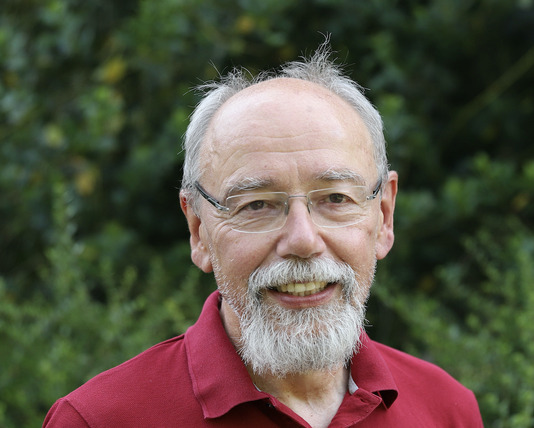
Thomas Berger is a Professor at the University of Hohenheim , affiliated with the Faculty of Agricultural Sciences and leading the Department of Economics of Land Use . He also contributes to the Computational Science Hub and Hohenheim Tropics initiatives. Focus Areas: Climate change adaptation, land-use modeling, biodiversity-productivity trade-offs, agent-based simulation, and machine learning in agricultural systems. Key Projects: Simulation frameworks for smallholder resilience in Ethiopia, bioeconomic modeling in the Amazon, and hybrid intelligence applications in European agricultural policy. Recent Publications: 2025 study on climate change effects on insecticide reduction in Germany, 2024 work on reconciling biodiversity with productivity via hybrid models, and 2023 methodological contributions to surrogate modeling and seasonal forecast integration. Research Trends: Interdisciplinary integration of climate science, agricultural economics, and computational modeling, with increasing emphasis on AI-assisted decision support systems and sustainability policy validation. Teaching & Outreach: Offers Agricultural Economics seminars and Hohenheim Tropics discussions, requiring advance email registration for office hours.
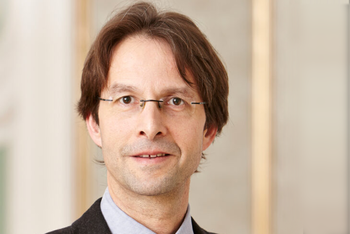
Prof. Ingo Grass is a Full Professor at the University of Hohenheim, heading the Department of Ecology of Tropical Agricultural Systems (490f) and serving as Deputy Head of the Department of Crop Production in the Tropics and Subtropics (490e). He is Director of the Hans Ruthenberg Institute for Tropical Agricultural Sciences and an Equal Opportunities Officer within the Faculty of Agricultural Sciences. His research focuses on agroecology, tropical agricultural systems, and biodiversity conservation in human-modified landscapes. Education: PhD in Biology from Philipps-Universität Marburg (2014). PostDoc at University of Göttingen (2014-2019) before moving to Hohenheim. Research Interests: Agroecosystem biodiversity, pollination ecology, land-use impacts on ecosystems, and sustainable farming practices. His work emphasizes reconciling productivity with biodiversity preservation, with a focus on tropical regions and temperate grasslands. Articles Trends: Recent work explores pesticide impacts on non-target insects, agroecological strategies to enhance pollination and biocontrol, and biodiversity benefits of diversified crops. He frequently collaborates on global studies involving tropical landscapes and urban agriculture dynamics. Awards: Maria Sibylla Merian Award (2013), Teaching Excellence Awards (2016 & 2018). Labs/Teams: Leads interdisciplinary teams in tropical agroecology, collaborating with institutes in Indonesia, Madagascar, and South Africa.
Dr. Ina Säumel is a scientific collaborator at the Institute of Agricultural and Horticultural Sciences at Humboldt University of Berlin. Her work bridges urban ecology, biodiversity conservation, and socio-cultural dimensions of sustainability through participatory approaches. Research Focus : Urban sustainability transitions, nature-based solutions, medicinal plants, and climate change adaptation. Key Projects : Edible City Solutions, biochar conversion from agro-residues, and biodiversity assessments in urban cemeteries. Geographic Scope : Uruguay, Andes, South Tyrol, and Berlin. Emphasis on post-industrial and water-sensitive cities. Her recent publications highlight interdisciplinary methods in co-creation, land-use impacts on metacommunity structures, and health-promoting urban green spaces. Contact: ina.saeumel@hu-berlin.de
Sarah Ruth Sippel is a Professor in Human Geography at the Institute of Geography, University of Münster. Her research spans critical agrarian and agri-food studies, financialization of nature, digital farming technologies, and sustainable livelihoods, with regional focus on the Mediterranean, Australia, and the US. She leads major research projects funded by the German Research Foundation and has received the prestigious Marie Skłodowska-Curie Global Fellowship. PhD in Geography, Leipzig University (2012) Habilitation in Geography, Leipzig University (2020) Magister Artium, Middle Eastern Studies and Philosophy, Leipzig University (2007) Her research explores the financialization of farmland, digital agriculture, and alternative economic futures, with a strong emphasis on political and social geography. She investigates how digital technologies, financial actors, and global capital reshape land use, labor, and food systems, particularly in Australia and Morocco. Recent publications highlight trends in digital farming, land assetization, and food sovereignty. Her work critically engages with the role of venture capital, startups, and data in transforming agriculture, while also exploring grassroots resistance and alternative economic models. Marie Skłodowska-Curie Global Fellowship Sippel has supervised and collaborated with numerous researchers across institutions including the University of Queensland, University of Graz, and the International Institute of Social Studies. She is actively involved in teaching courses on economic geography, globalization, and critical debates in human geography, and leads field schools in Italy. She is currently on parental leave until summer 2025. She is a principal investigator in the Collaborative Research Centre SFB 1199 ‘Processes of Spatialization Under the Global Condition’ and has led multiple interdisciplinary projects on land, finance, and sustainability.
Dr. Marcell K. Peters is a Senior Academic Councillor at the Chair of Animal Ecology and Tropical Biology (Zoology III) at the University of Bremen. His research focuses on biodiversity patterns, ecosystem functioning, and climate-land use interactions in tropical and montane environments, with extensive fieldwork in East Africa and the Amazon. He leads projects under DFG and EU funding, including the UPSCALE initiative. Habilitation in Zoology (University of Würzburg, 2018) PhD in Biology (University of Bonn, 2008) Diploma in Biology (RWTH Aachen & University of Bonn, 2003) Research spans multi-taxa community ecology, army ants and ant-following birds, DNA barcoding applications, and climate change impacts on pollination networks. Google Scholar highlights recent work on climate-agriculture interactions in sub-Saharan Africa, trait-based community assembly, and network resilience in biodiversity hotspots. His publications emphasize elevational gradients, disturbance ecology, and functional diversity across Mount Kilimanjaro studies. Current affiliations include the DFG Research Unit Kilimanjaro and EU-funded UPSCALE project. He employs advanced methods like airborne LiDAR for biodiversity prediction and investigates nutrient use by ant communities across continents.
Dr. Oksana Buzhdygan is a Senior Researcher in Theoretical Ecology at the Department of Biology, Faculty of Biology, Chemistry, Pharmacy at Freie Universität Berlin. She holds a PhD in Ecology from Chernivtsi National University and has held postdoctoral positions at institutions including the University of Georgia (USA) and Freie Universität Berlin. Her research focuses on biodiversity-ecosystem functioning links, multitrophic interactions, and ecological network analysis. Education: BSc, MSc, and PhD in Ecology (2000–2008), Chernivtsi National University, Ukraine Postdoctoral Fellowships: University of Georgia (2010–2012), Freie Universität Berlin (2013–2021) Research Interests: Environmental change impacts on biodiversity and ecosystem functions Ecological network analysis of multitrophic systems Food web dynamics in grasslands and freshwater ecosystems Publications reflect her expertise in biodiversity effects on energy flow, human impact on ecosystems, and plant diversity drivers. Her work bridges theoretical ecology with applied conservation challenges, particularly in grasslands and agroecosystems. Labs/Teams: Member of the Tietjen Group (Theoretical Ecology at Freie Universität Berlin), collaborating widely in international projects on biodiversity and ecosystem services.
Prof. Dr. Thorsten Haase is a faculty member at the University of Applied Sciences Weihenstephan-Triesdorf (HSWT) in the Faculty of Sustainable Agriculture and Energy Systems . His work focuses on optimizing organic plant production systems , sustainable value chains, and resource-efficient agricultural practices. He serves as chair of the examining committee for Agriculture and is an academic advisor for both Bachelor's and Master's programs in Agriculture. Email: thorsten.haase@hswt.de Research areas: Organic farming, agroecology, sustainable land use cycles, and resource management Key initiatives: Academic leadership in curriculum development and teaching-research station coordination
Dr. Sara Tomiolo is an Assistant Professor in the Plant Ecology Group at the Institute of Evolution and Ecology, University of Tübingen, Germany. She holds a PhD in plant evolutionary ecology from Tübingen University (2013). Her research focuses on plant-plant and plant-soil biota interactions under climate change, drought, and microplastic contamination, using interdisciplinary methods including greenhouse and field experiments. She explores how abiotic stressors and biotic factors influence plant performance, community composition, and range shifts. Professional experience includes postdoctoral roles at Aarhus University (Denmark), Kent State University (USA), and Tübingen University. Her work emphasizes science communication and open science, reflecting her commitment to accessible research practices. She is affiliated with the Institute of Evolution and Ecology within the Faculty of Science, contributing to initiatives like the 'Bunte Wiese' project. Her research addresses critical global challenges such as climate-driven species migration and soil pollution impacts on ecosystems. Key research interests include drought effects on plant interactions, microplastic pollution consequences, and evolutionary responses to environmental stressors. Her publications span topics from niche partitioning under drought to modeling plant competition dynamics. While no awards are listed, her contributions to ecological theory and experimental methodologies are notable. She advises within the Plant Ecology Group and engages in collaborative projects across institutions. Dr. Tomiolo’s lab focuses on integrating field observations with controlled experiments to understand ecological processes at multiple scales. Her work bridges basic research with applied challenges, offering insights into biodiversity maintenance and ecosystem resilience under global change scenarios.
Prof. Dr. Johannes Max is a Professor at the Department of Horticulture and Food Technology, Faculty of Horticulture and Food Technology, Hochschule Weihenstepfan-Triesdorf (HSWT), located in Freising, Germany. His primary research focus is on plant nutrition, particularly optimizing nutrient cycling and sustainable agricultural practices. He leads projects on phosphorus recovery from wastewater, precision irrigation systems, and greenhouse climate management. Research Interests: Plant nutrition dynamics, recycled fertilizer efficiency, greenhouse hydroponics, water use optimization, and tropical crop adaptation. His work emphasizes bridging gaps between environmental sustainability and agricultural productivity through innovative technologies like porous pipe irrigation and circular economy concepts. Key Projects: Leading initiatives such as 'Sustainable Tunisian Tomato Production via Soilless Systems' and 'Industrial Waste Heat Utilization Guidelines.' Collaborates on research into phosphorus availability in recycled fertilizers, demonstrating how grain size impacts plant uptake. Grants & Advising: Oversees major grants focused on nutrient recycling and tropical greenhouse systems. Actively involved in international collaborations, including projects in Thailand and Greece. Advises on innovative irrigation and crop management strategies. Labs/Teams: Coordinates interdisciplinary teams in agrotechnology and resource efficiency. Works closely with industry partners to translate research into scalable solutions for sustainable agriculture.
Prof. Dr. Dieter Trautz is a retired professor at the Faculty of Agricultural Sciences and Landscape Architecture at Osnabrück University of Applied Sciences. His career includes academic roles at Christian-Albrechts University Kiel (1982-1988), TU Berlin (1988-1989), and the Kirgizian Agrarian Academy (1998-2000). He focuses on sustainable agriculture, organic farming systems, and precision farming technologies. Education: Studied Agricultural Sciences at Christian-Albrechts University Kiel (1976-1982), PhD in 1987. Research spans crop quality, organic-mineral fertilizers, intercropping, and climate change impacts. He has collaborated internationally in over 20 countries, including projects in Russia, China, and Uganda. Key research areas include: Sustainable intensification of farming systems Organic cultivation of cereals, soybeans, and potatoes Precision farming technologies for organic agriculture Climate-resilient urban agriculture Technology transfer between conventional and organic practices Projects include the MuP project (reducing fertilization in water protection areas) and HerbfreiErbAB (sensor-based mechanical weed control). Active in international research networks and capacity building in developing regions.
Prof. Dr. Christian Lippert is a Professor at the University of Hohenheim's Department of Production Theory and Resource Economics. He specializes in agricultural economics, resource management, and sustainable farming systems. His research focuses on organic agriculture, risk analysis in farming, and climate change impacts on agriculture. He leads projects such as the NOcsPS and ReBioBW initiatives and collaborates with institutions in Bhutan and Colombia. Research interests include crop portfolio optimization, yield stability, organic conversion strategies, and social networks in farming communities. His work combines economic modeling with field trials to address production risks and sustainable practices. Major publications include studies on Bhutan's organic sector, pesticide use alternatives, and climate change adaptation in German agriculture. He teaches courses in farm economics, environmental resource economics, and value chain development at the M.Sc. and B.Sc. levels. His team includes researchers like Dr. Tatjana Krimly and Dr. Isabell Pergner. Advising and grants focus on organic farming transitions and resource optimization. He leads a research group exploring lignocellulosic perennials and Ricardian climate impact analyses. His office is located at Containerbau südlich des Biogebäudes in Stuttgart.
Prof. Dr. Hans-Peter Piepho is a faculty member at the University of Hohenheim , serving as Director of Biostatistics (340c) within the Institute of Crop Science . His research focuses on advanced statistical methods for plant sciences, including genomic prediction, spatial modeling of field trials, and network meta-analysis. Key research areas: Genotype-environment interaction, mixed model applications, and experimental design in agriculture. Collaborations span plant breeding, cultivar testing, and environmental stress analysis. His group emphasizes mixed model procedures as the backbone of methodological innovation. Recent publications highlight climate change adaptation, nitrogen optimization, and agroforestry yield dynamics. Contact: piepho@uni-hohenheim.de | Fruwirthstr. 23, Institute Building, 211, Stuttgart, Germany
Dr. Isabel Díaz Reviriego is a researcher at Leuphana University Lüneburg's Social-Ecological Systems Institute (SESI), where she investigates sustainability transformations through biocultural approaches. Her work bridges sustainability science, gender studies, and indigenous knowledge systems, with particular emphasis on equity and justice dimensions. Research Focus: Her interdisciplinary research examines: Gender and social differences in biocultural sustainability frameworks Epistemological diversity in Spanish-language sustainability literature Traditional ecological knowledge integration in conservation More-than-human economic assemblages Food sovereignty and agroecological transitions Publication Trends: Recent works demonstrate strong focus on decolonial perspectives in sustainability science, with critical analyses of economic paradigms and gender-power dynamics in environmental governance. Articles frequently employ systematic reviews and cross-cultural comparative approaches spanning European, Latin American, and indigenous contexts.
Anna Treydte is an Associate Professor in Nature and Environmental Management with a focus on Sustainable Development at Stockholm University's Department of Physical Geography. She also holds Adjunct Professor positions at the University of Hohenheim (Ecology of Tropical Agricultural Systems) and the Nelson Mandela African Institution of Science and Technology (Department of Life Sciences and Bioengineering). Her work spans multiple continents, addressing biodiversity conservation and human-wildlife coexistence across temperate climates (Germany, Sweden, Italy), desert environments (Mongolia, Saudi Arabia), savanna systems (eastern and southern Africa), mountain regions (Andes), and tropical forests (China, Vietnam, Thailand, Tanzania). Dr. Treydte's research centers on biodiversity and conservation challenges in human-impacted, changing environments. She investigates how climate change and human activities alter structural, species, and functional biodiversity in natural and agro-ecological systems. Her work examines plant-animal interactions, animal population management, human-wildlife coexistence, and livestock impacts on rangelands. She specifically studies shifts in nutrient cycling, carbon stocks, and species diversity in landscapes under varying human land use pressure, including corridors, buffer zones, protected lands, and cultivated areas facing climate-induced weather extremes. She integrates socio-ecological aspects into her research, emphasizing that sustainable human-wildlife coexistence requires local stakeholder involvement in resource use decision-making. Analysis of her recent publications reveals a strong focus on landscape ecology, rangeland management, and human-wildlife conflict across diverse ecosystems. Her work combines field observations, GPS tracking of wildlife and livestock, socio-ecological surveys, and advanced spatial modeling techniques. Key thematic areas include pastoral mobility patterns, invasive species management, pollination networks in rangelands, and the impacts of land use change on wildlife habitat suitability. Her research consistently addresses the intersection of ecological processes and human livelihoods in changing environments. Dr. Treydte actively supervises numerous PhD, MSc, and BSc students across multiple institutions, with current projects investigating human-wildlife coexistence in Sweden and Tanzania, rangeland restoration techniques, and invasive plant species management. She leads several major research projects including 'Human-Wildlife Coexistence: Reaching a sustainable human-wildlife coexistence by understanding patterns, predicting conflict hotspots and improving communication' and 'Rangeland Ecology: Adapting to change – co-management scenarios of local pastoralists and protected area management to maintain cultural and biological diversity in the Dzungarian Gobi, Mongolia.' Her laboratory, 'NG| Landscape Ecology,' focuses on how landscape patterns, climate, and land use influence ecological processes, biodiversity, and ecosystems. The group employs interdisciplinary approaches that bridge natural and social sciences to address contemporary environmental challenges in a changing world.
Brian B. Laird is Professor and Department Chair of Chemistry at the University of Kansas. He earned dual B.S. degrees in Chemistry and Mathematics from the University of Texas at Austin (1982) and a Ph.D. in Theoretical Chemistry from UC Berkeley (1987). His career includes postdoctoral positions at Columbia University, Forschungszentrum Jülich (NATO Fellowship), University of Utah, University of Sydney, and University of Wisconsin, with visiting appointments at the University of Mainz, University of Leicester, and UC Davis. Research focuses on applying statistical mechanics and molecular simulation to materials science, with three primary areas: (1) structure and thermodynamics of condensed-phase interfaces, (2) phase coexistence under nanoscale confinement, and (3) advanced molecular dynamics algorithms. His publications demonstrate strong emphasis on surface thermodynamics, nanomaterial interactions, and ecological applications of computational methods. Honors include the NSF CAREER Award. Professor Laird directs an active research group mentoring 19+ graduate students/postdocs. The Laird Lab frequently collaborates internationally with institutions in China, Germany, and the UK.