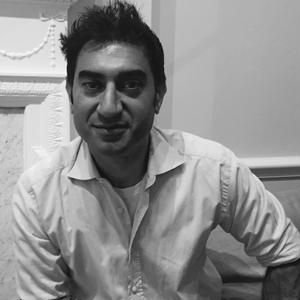
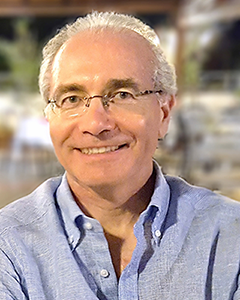
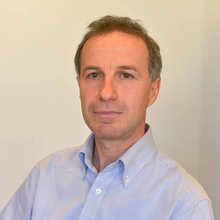
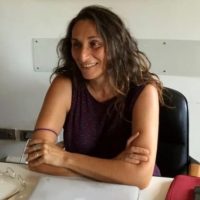
Vittorio Solina is a Researcher at the Department of Mechanical, Energy and Management Engineering (DIMEG) of the University of Calabria, specializing in industrial systems simulation and digital twin technologies. His work spans Industry 4.0/5.0 applications, supply chain optimization, and human-robot collaboration. Affiliation: University of Calabria Academic Role: Researcher (Legge 240/10) Research Focus: Digital twins, simulation modeling, sustainable manufacturing His research emphasizes advanced simulation tools for decision support, including applications in Industry 4.0 , Smart Manufacturing , and Agri-Food Supply Chains . Recent work explores adaptive simulation optimization for Industry 5.0 and 5G-enabled robotics. Key publication trends include: (1) Digital twin integration for supply chain resilience (2024-2025), (2) Simulation automation methodologies (2025), and (3) Human-robot collaboration frameworks (2024).
Mario Artuso is an External Lecturer and Teaching Assistant at the Interuniversity Department of Territorial Sciences, Planning and Policies (DIST) under the College of Architecture and Design at Politecnico di Torino. He has been delivering courses since 2019/20 academic year, focusing on Urbanism, Sustainable Design, and Heritage Conservation modules. Teaching Roles: Course Lecturer for Urbanism (2024/25, 2023/24, 2022/23, 2019/20), Heritage Renovation (2021/22), Atelier Urban Design E (2020/21), and City and Territory Studio (2019/20). Email: mario.artuso@polito.it Research Interests: His work bridges urban planning with local policy analysis, emphasizing sustainable development and heritage conservation. Publications explore urban agriculture in Turin's metropolitan area, global urban prosperity metrics, taxation-driven sustainability in Sub-Saharan African cities, and academic cooperation frameworks. Publication Trends: 50% of his works focus on Sub-Saharan Africa urban challenges, 40% on European sustainable urban practices, and 30% on heritage integration in city planning. Keywords cluster around Urban Development , Policy Analysis , and International Cooperation .
Vera D'Urso is an Associate Professor of Zoology at the Department of Biological, Geological and Environmental Sciences, University of Catania, where she has been employed since 1994. Her academic career began with a CNR scholarship from 1977-1980, followed by work as a Confirmed Researcher at the Faculty of Natural and Mathematical Sciences, University of Catania from 1980-1994. She has received DAAD scholarships for research at the University of Marburg in Germany in 1984 and 1987. Dr. D'Urso earned her Degree in Biological Sciences from the University of Catania with a grade of 110 cum laude. She furthered her expertise with postgraduate courses in "Quantitative Methods in Ecology" at the International Center of Theoric Physics in Miramare, Trieste in 1980. Dr. D'Urso is a leading expert in several entomological fields, with primary research interests in: Insecta Homoptera Auchenorrhyncha (leafhoppers and related insects) Insecta Diptera Phlebotominae (sand flies) Systematics and biodiversity of Mediterranean insects Insect vectors of phytoplasmas affecting economically important plants Alien species and their ecological impact Tardigrades and their taxonomy Her extensive publication record spanning over 95 scientific papers demonstrates her expertise in insect systematics, morphology, and ecology. Recent research has focused on Mediterranean biodiversity, particularly examining alien species like Balclutha brevis and their impact on local ecosystems. She has also made significant contributions to understanding phytoplasma transmission in grapevines, sandfly vectors of leishmaniasis in Sicily, and tardigrade taxonomy in extreme environments including Antarctica. Dr. D'Urso has served on numerous scientific committees including the editorial board of Biodiversity Journal, and has been a referee for multiple prestigious journals. She has participated in research projects including "Morphology, Systematics, Biology and Biogeography of Rhynchota Insects" (1994-99) and studies on sandflies in areas with high canine leishmaniasis endemicity (2004-06). Her academic service includes membership on doctoral committees at the University of Catania, participation in national evaluation committees for associate professor positions in Zoology, and serving on the Department Board of the Department of Biological, Geological and Environmental Sciences (2018-2020). She has also conducted numerous entomological collection missions in Italy and abroad including Greece, Bulgaria, Macedonia, former Yugoslavia, Germany, Tunisia, Libya, and Malta.
Alessandra Maria Paola Broccolini is an Associate Professor at the Department of Social and Economic Sciences (DISSE), Sapienza University of Rome. She specializes in cultural anthropology, with a focus on intangible cultural heritage, ecomuseums, and urban/rural territorial studies. Since 2016, she has led the Italian Society for Museography and Demo-Ethno-Anthropological Assets (SIMBDEA) and coordinates national research projects like PRIN 2022 on local museums and PRIN 2020 on marginal Italian territories. Current affiliations: Sapienza University of Rome, Ecole Française de Rome [2021-2026] Research themes: Identity politics, festivals/rituals, traditional knowledge, migration-heritage intersections Key projects: Ecomuseo Casilino Ad Duas Lauros, UNESCO cultural heritage nominations Fieldwork: 5-year study in Naples' Pallonetto district (1994-1999), Bolsena Lake fisheries, Irpinia carnivals Collaborations: ICCD, Regione Lazio, Universidad de Huancayo (Peru) Her publications address heritage regimes in Italy, UNESCO's 2003 Convention implementation, and ethnographic case studies on Mediterranean festivals, urban ecomuseums, and agricultural biodiversity. She teaches Cultural Anthropology and Anthropology of Territory at Sapienza's Faculty of Political Science, Sociology, and Communication.
Marco Letta is a Tenure-Track Assistant Professor at the Department of Social and Economic Sciences , Sapienza University of Rome. His research focuses on economic development , regional economics , policy evaluation , and applied econometrics , with a strong emphasis on climate change impacts, food security, and machine learning applications in economic policy. University: Sapienza University of Rome Department: Department of Social and Economic Sciences Email: marco.letta@uniroma1.it His recent work explores the climate migration nexus , household resilience , and policy targeting , often leveraging machine learning and empirical econometric methods . Publications span topics such as local inequalities during the COVID-19 crisis , temperature shocks in rural Tanzania , and machine learning applications in state aid regulation . Notable trends in his research include: Integration of machine learning with traditional econometric techniques Focus on climate resilience and migration patterns Analysis of policy impacts in developing economies Investigation of local mortality estimates during global crises Development of cross-country empirical frameworks Current projects include assessing agrifood system vulnerabilities and refining counterfactual policy evaluation methodologies.
Imran Rasul is a Professor of Economics at University College London (UCL) and Director of the ESRC Institute for the Microeconomic Analysis of Public Policy at the Institute for Fiscal Studies (IFS). He co-directs the James M. and Cathleen D. Stone Centre on Wealth Concentration, Inequality, and the Economy at UCL, and is Co-President of the Bureau for Research and Economic Analysis of Development (BREAD). His research focuses on labor economics, development economics, and public policy, with notable contributions to understanding inequality, tax compliance, and field experiments in development. He has held editorial roles at leading journals, including the Review of Economic Studies and the Journal of the European Economic Association. Rasul has received prestigious awards such as the Yrjö Jahnsson Award (2019), IZA Young Labour Economist Prize (2007), and an ERC Starter Grant (2012). He is a Fellow of the British Academy, the Academy of Social Sciences, and the Econometric Society. His work often combines rigorous empirical methods with policy relevance, addressing topics like gender empowerment, youth unemployment, and public service delivery in developing economies. Affiliations: UCL, IFS, BREAD Editorial Roles: Co-editor, Review of Economic Studies (2009-2017); Past Managing Editor, Journal of the European Economic Association (2016-2022) Leadership Roles: President-elect of the Royal Economic Society (2024), Vice-President of the European Economic Association (2024) His research interests span labor market dynamics, development interventions, and the design of effective public policies. He has advised on projects globally, including in Uganda, Nigeria, and Bangladesh, focusing on issues like job creation, tax compliance, and educational equity.
Gaetano Siscaro serves as Associate Professor of General and Applied Entomology (AGRI-05/A) at the Department of Agriculture, Food and Environment (Di3A), University of Catania, where he has held a permanent position since 2002 within the Faculty of Agriculture. His academic career spans over three decades at the same institution, transitioning from researcher to associate professor while maintaining continuous research activity. Education: Master's Degree in Agricultural Sciences, University of Catania (1985) PhD in Agricultural Entomology, University of Naples Federico II (1992) Dr. Siscaro's research focuses on sustainable pest management in Mediterranean agroecosystems, with specialized expertise in citrus and protected crops. His work integrates biological control strategies through the enhancement of natural enemy biocenoses, particularly targeting whiteflies, scale insects, and leaf miners. He emphasizes field-applicable solutions for economically significant pests while maintaining ecological balance. As an active participant in international scientific networks, he contributes to the IOBC/wprs Working Groups on Citrus IPM and Protected Crops, having organized the 2007 Catania meeting on citrus integrated pest management. His teaching responsibilities include courses such as Applied Entomology and Parasitology for undergraduate agriculture programs. Professional Affiliations: Italian Entomological Society (SEI) - Agricultural Entomology Section (since 1991) IOBC/wprs (since 1992) International Society of Citriculture (since 2004) Italian National Academy of Entomology (since 2018) Gioenia Academy of Catania (Resident Correspondent since 2021)
Giuseppe Tipaldo is an Associate Professor at Politecnico di Torino's Department of Control and Computer Science (DAUIN), with affiliations to the SmartData@PoliTO Big Data and Data Science Laboratory and the DBDM Database and Data Mining Group. His interdisciplinary work bridges Sociology, Science and Technology Studies, and Digital Media Research. Research interests focus on epistemic instability, technoscientific conflicts (anti-vax, pseudoscience, infrastructure opposition), and methodological innovations in Computer-Assisted Text Analysis. He explores intersections between postmodern relativism and contemporary epistemic wars, examining truth negotiation in political decision-making and Gen-AI's impact on research methodologies. Recent publications analyze: 2024: Vaccine hesitancy trust dynamics in Europe 2023: Epistemic authority transitions in social media and science-society relations 2022: Xylella fastidiosa epidemics as epistemic wars and pandemic expert discourses He contributes to editorial boards (Italian Review of Sociology, Sinapsi) and serves on advisory panels for Circular Economy symposia. Teaching spans Master's and Doctoral programs in Management Engineering, Cybersecurity, and Communication Sciences.
Luigi Aldieri is a Full Professor in the Department of Economic and Statistical Sciences (DISES) at the University of Salerno , Italy. His research spans applied econometrics, innovation economics, environmental sustainability, and knowledge spillovers. He holds a PhD from the Solvay Brussels School of Economics and Management at Université Libre de Bruxelles. Research Interests: His work focuses on the economic impact of innovation, particularly green and environmental technologies, knowledge diffusion, R&D spillovers, energy efficiency, and their effects on employment, productivity, and well-being. He investigates how innovation interacts with migration, education, and institutional quality across regions and countries. Recent Research Trends: His recent publications (2023–2025) emphasize the digital economy, regulatory quality, circular economy, migration-innovation nexus, food security under SDGs, and energy resilience. He employs advanced econometric models such as panel data, spatial analysis, and stochastic frontier analysis, often using international datasets from OECD, EU, and global firms. Scientific Editorial Roles: Associate Editor, Journal of Environmental Management (Environmental Policy, Economics, Social Science section) Associate Editor, Environment, Development and Sustainability Associate Editor, Energy Engineering Editorial Board Member, Sustainability , Energies , Clean Technologies , International Journal of Knowledge-Based Development , and others Guest Editor for special issues in MDPI Energies and Sustainability on climate change, green growth, and total environment Advising and Grants: While no direct PhD advisees are listed, Aldieri leads a robust research network, frequently collaborating with scholars from Russia, Finland, Belgium, and Italy. He is affiliated with the International Centre for Innovation, Technology and Education Studies (iCite) at ULB. His work is supported by extensive co-authorship networks and institutional research projects focused on innovation, sustainability, and economic development. Laboratories and Research Groups: He is part of the research ecosystem at the University of Salerno’s DISES department and collaborates with international research groups. His work is associated with empirical research in innovation economics and environmental policy, often leveraging large datasets and cross-country comparisons.
Fabio Perocco is an Associate Professor at the Department of Philosophy and Cultural Heritage at Ca' Foscari University of Venice. His work focuses on migration, social inequality, racism, and labor precarity. He has conducted extensive research on racialized welfare discourses, migrant labor conditions, and Islamophobia in Europe. Key research interests include the intersection of migration and social policy, structural violence against migrants, and the precarization of labor in the digital economy. His studies often highlight systemic discrimination within welfare systems and analyze the socioeconomic impact of migration policies. Recent publications examine topics such as the racialized discourse on social welfare, gig economy labor dynamics, and the structural roots of torture against migrants. He is affiliated with the Research Institute for Social Innovation, contributing to projects addressing territorial inequalities and global migration challenges.
Monica Pratesi is a Full Professor of Statistics at the Department of Economics and Management of the University of Pisa. She currently serves on leave as Director of the Department for Statistical Production at ISTAT, coordinating 937 researchers and managers. Her expertise spans small area estimation, poverty measurement, survey methodology, and official statistics. She leads the Tuscan Universities Research Centre “Camilo Dagum” and has held two Jean Monnet Chairs focusing on poverty and living conditions in the EU. She has coordinated major EU projects like INGRID-2 and MAKSWELL, advancing methodologies for inclusive growth and sustainable development. Her research integrates big data and citizen-generated data into statistical frameworks. Awards include presidencies of the Italian Statistical Society and the International Association of Survey Statisticians. Education & Roles: Full Professor of Statistics (SECS-S/01) at University of Pisa since 2012 Director, Department for Statistical Production at ISTAT (until 2024) President, Italian Statistical Society (2016-2020) President-elect, International Association of Survey Statisticians (2022-2023) Research Focus: Advanced statistical methods for poverty monitoring, small area estimation, survey design, and leveraging big data for policy impact. Key areas include multidimensional poverty, educational poverty, and sustainable development indicators. Her work emphasizes real-time data integration and policy relevance. Grants & Projects: Principal Investigator for INGRID-2 (EU H2020, 2017-2021) Principal Investigator for MAKSWELL (EU H2020, 2017-2020) Coordinator of SAMPLE (FP7) and INGRID (FP7) Labs & Teams: Active in the Societal Transitions group and contributes to the European Master in Official Statistics program. Her research center, REMARC, focuses on policy-driven statistical innovation.
Pier Paolo Miglietta is an Associate Professor at the University of Salento , affiliated with the Department of Biological and Environmental Sciences and Technologies . His teaching spans multiple degree programs, including Environmental Sciences, Sustainable Development and Climate Change, and Viticulture and Enology. His research focuses on Environmental economics and sustainable development Bioeconomic theory and circular economy frameworks Wine industry economics and rural appraisal Climate change policy and food systems sustainability He employs learning by doing methodologies with institutional/testimonial integrations, requiring project work and oral exams across courses like Economic-Appraisive Analysis and Wine Policies and Marketing.
Federico Demaria is a Researcher at the Environmental Science and Technology Institute, Universitat Autònoma de Barcelona. He focuses on ecological economics, political ecology, and environmental justice, advocating for socio-ecological transformation beyond economic growth. As a founding member of Research & Degrowth and a board member of the European Society for Ecological Economics, he bridges academic research with activism. His current role includes deputy coordination of the ERC-funded EnvJustice project, studying global environmental justice movements. Research emphasizes waste management conflicts, informal recyclers' roles, and degrowth alternatives. Key publications include Decrecimiento: Vocabulario para una nueva era and Pluriverse: A Post-Development Dictionary , translated into multiple languages. Research interests coalesce around dismantling growth-based paradigms, centering marginalized groups in environmental struggles, and redefining sustainability beyond capitalist modernity. His work critiques extractive systems while proposing pluriversal alternatives grounded in indigenous and communal knowledge. Key Projects: EnvJustice (ERC), Degrowth initiative Key Themes: Waste politics, environmental conflicts, post-development, degrowth economics
Rolandino De’ Passaggeri (c. 1215–1300) was a prominent notary, politician, and academic figure in medieval Bologna. He served as a notary for influential guilds, including bankers and money changers, and authored foundational legal texts such as the Summa totius artis notariae (the Rolandina), which became a cornerstone of European notarial practice. In 1251, he founded a notarial school at the University of Bologna, shaping legal education for generations. Born to Rodolfino, an innkeeper and tax collector, Rolandino’s career began in 1234 with the notary’s guild. He played a pivotal role in Bologna’s resistance to imperial authority, notably responding to Frederick II’s threats with a civic manifesto. His legal reforms included drafting statutes for guilds and co-authoring the Liber Paradisus (1257), which emancipated serfs to expand tax bases. Rolandino’s works span notarial practices, rural legal frameworks, and contractual law, reflecting his dual focus on practical jurisprudence and civic governance. His legacy lies in institutionalizing notarial education and advancing Bologna’s legal autonomy amid political turmoil.
Barbara Bigliardi is an Associate Professor at the Department of Engineering and Architecture, University of Parma, with national scientific qualification for full professor in Economic-Management Engineering (SSD ING-IND/35). She serves as President of the Management Engineering Program at University of Parma and Director of Bachelor's/Master's programs at University of San Marino, co-leading double-degree initiatives between the two institutions. Over 100 publications (57 SCOPUS-indexed) with H-index=20 Editorial roles: Cambridge Scholars Publishing (2019), MDPI Sustainability, Sci, European Journal of Innovation Management Key research areas: Open Innovation, Technology Transfer, Food Industry Innovation, Industry 4.0, Supply Chain Sustainability Recent Publications (2024-2025) demonstrate leadership in: Industry 4.0 integration with circular economy AI applications in public administration and healthcare Digitalization of food supply chains Green startup resource orchestration Simulation-based optimization in remanufacturing Sustainable additive manufacturing Scientific Recognition : 2005 Emerald Highly Commended Award 2013 Most Cited Paper in Trends in Food Science & Technology 2019 Highly Cited Paper in Review of Policy Research Research Leadership includes: National Observatory on Start-ups (President since 2021) National Observatory on Reputation (Vice President since 2019) INAIL-funded mobile risk assessment systems (2018-2020) INAF space technology transfer projects (2018-present) Academic Contributions : Supervised over 300 theses Deputy Coordinator of Industrial Engineering Doctoral Program Director of Management Engineering Programs (Parma & San Marino) Founder of academic spin-offs: Sistemi per il marketing di contenuto S.r.l. (2016-present), Univenture SrL (2006-2010)