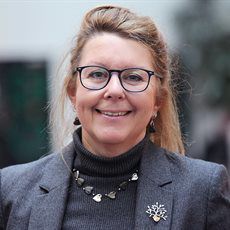
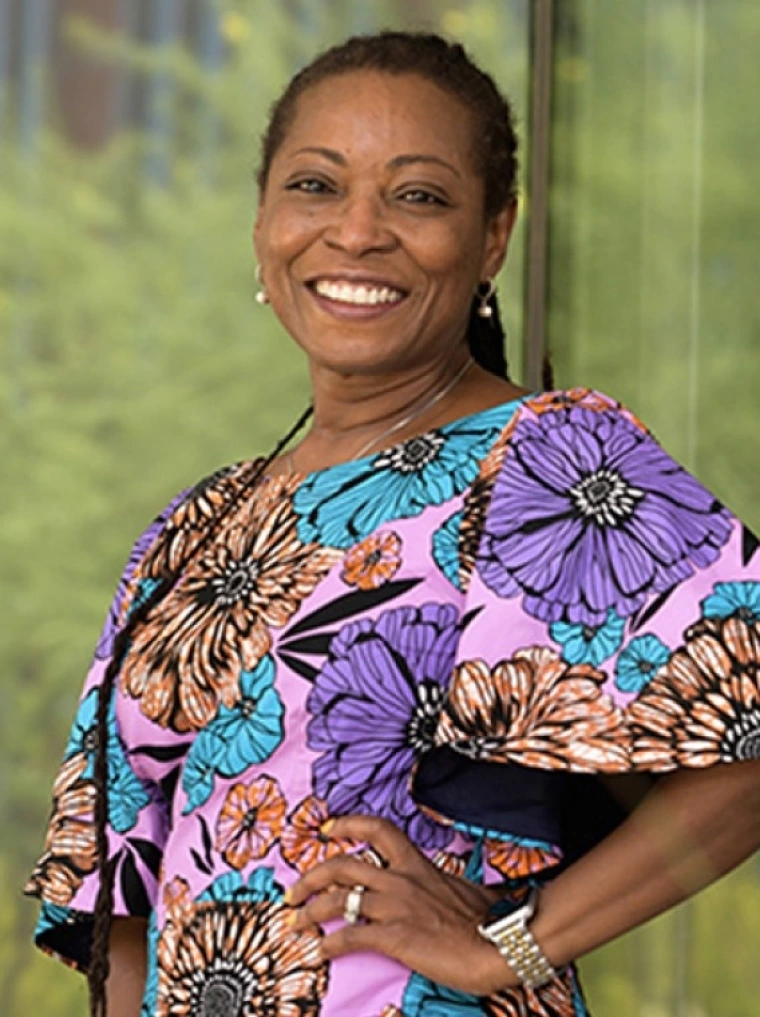
Dr. Melanie Stephens is an Associate Professor in Adult Nursing at the School of Health and Society, University of Salford , and serves as the NIHR Regional Research Delivery Network North West Settings Lead . Her work bridges academic research and clinical practice, focusing on nursing education, tissue viability, and interprofessional collaboration. Research Centres: Centre for Applied Health Research Research Interests include: Social care nursing Interprofessional education and practice (IPE/P) Tissue viability Frugal innovation in healthcare Virtual wound care clinics Pressure ulcer prevention Recent publications highlight her work on care home education models , wound management in vulnerable populations , and innovative clinical supervision frameworks . Though no explicit awards are listed, her role as NIHR RSSL underscores her influence in regional healthcare research. Dr. Stephens supervises PhD candidates examining topics such as: CPR training efficacy for nursing students Electronic patient system use in nursing education Revisiting incision and drainage practices in skin infections Her affiliations include the Centre for Applied Health Research , with a focus on translating evidence into policy and practice. She employs diverse methodologies, including scoping reviews, meta-analyses, and Delphi consensus studies.
Joel Moore is an active academic researcher and innovator in healthcare education, focusing on the integration of artificial intelligence (AI) into clinical and health professions training. As a Researcher , he collaborates with multidisciplinary teams on projects addressing pandemic preparedness, cultural competence, and communication skills in nutrition, pharmacy, and broader healthcare education. Research Interests AI-driven simulation training for health workforce development Cultural competence in medical education Generative AI applications in pharmacy and nutrition education Empathy and communication in digital healthcare Research Trends His recent work emphasizes the use of AI to enhance clinical preparedness, communication, and cultural competence, with a focus on practical implementations in health professions. Key themes include pandemic response training, OSCE preparation, and empathy development through digital tools. Scientific Awards 2025 Simulation Australasia Project Innovation Award 2024 Allan Christie ASCILITE Innovation Award 2025 Patil Teaching Innovation Award Finalist 2024 QS Reimagine Education Awards Silver Finalist Advising and Collaborative Projects Joel Moore leads and contributes to projects such as Evaluating the effectiveness of Peer Assessment of Group-Based Extended Projects (2018-2019) and World in Crisis Materials Development (2015). He has also participated in rural women's empowerment initiatives (2015-2022) and numerous AI-based educational innovations.
Dr. Silvia Bonaccio is a Full Professor and Vice-Dean (Research) at the Telfer School of Management, University of Ottawa, with a cross-appointment to the School of Psychology. She holds a B.A. in Psychology from McGill University, M.Sc.A. from Concordia University, and a Ph.D. in Industrial/Organizational Psychology from Purdue University. An Adjunct Scientist at the Institute for Work and Health (Toronto), she focuses on workplace psychology, particularly anxiety in personnel assessment, disability inclusion, and decision-making processes. Her research interests include the impact of anxiety on recruitment practices, positive work experiences for employees with disabilities, and the role of technology in employment. She has published in top journals like Journal of Management and Organizational Behavior and Human Decision Processes , and her work has been featured in Bloomberg BusinessWeek and The New York Times . Dr. Bonaccio has received prestigious awards including the University of Ottawa’s Excellence in Education Prize and the Telfer School’s Established Researcher Award. She serves on editorial boards for journals such as Journal of Business and Psychology and Personnel Assessment and Decisions . Her funded research includes SSHRC grants focusing on aging workers, AI’s impact on employment equity, and mental health disclosure in workplaces. She leads projects addressing workplace accommodations and the future of work for disabled individuals.
Julie Patrick is a Professor in the Department of Psychology at West Virginia University, within the Eberly College of Arts and Sciences. She specializes in life-span developmental psychology with a focus on adult development, aging, cognitive aging, decision-making, and health disparities, particularly in rural Appalachia. She leads the Healthy Aging Lab and serves as Principal Investigator of the NIH-funded AGE-ADAR Scholars Program, a $1.8 million initiative to diversify aging research. Her work integrates family dynamics, emotional well-being, spirituality, and intervention design. Her research interests span adult development , cognitive aging , decision-making , health promotion , rural health , intergenerational caregiving , and dementia care . She emphasizes integrative approaches, combining physical, emotional, social, and spiritual dimensions of well-being. Her lab actively develops and tests interventions, including awe-induction studies and Appalachia-themed activities for persons with dementia. She also focuses on methodological rigor, utilizing SEM, HLM, GEE, and LGCM in longitudinal and experience sampling studies. The recent publications from her lab reflect a strong trend in health disparities , spirituality and aging , fear of dementia , caregiving dynamics , and innovative data collection methods . These works are published in journals such as the International Journal of Aging and Human Development , Journal of Adult Development , and Psychology of Religion and Spirituality , indicating a multidisciplinary approach to aging research. Fellow of the Gerontological Society of America Editor, International Journal of Aging and Human Development (Sage Publishing) Regular reviewer for National Science Foundation and National Institute on Aging Principal Investigator, R25 AGE-ADAR Scholars Program Co-investigator on multiple WVU Community Engagement and Innovation Summit grants Dr. Patrick advises multiple doctoral students in the Healthy Aging Lab, including Payton Radcliffe, Claire Heilman, S. Alison Bolling, and Carly E. Pullen. Her former students, such as Laura Bernstein, Michaela Clark, Abigail Nehrkorn-Bailey, and Amy Knepple Carney, have secured academic positions, reflecting her strong mentorship record. She has secured over $285,000 in external research funding and more than $30,000 for teaching support. Her lab fosters diversity, equity, and inclusion, aligning with institutional initiatives. The Healthy Aging Lab is an active research group focused on improving lives across the lifespan. It values integration across domains, pursuit of knowable truths through scientific rigor, and strategic use of time. The lab engages in projects on awe, dementia care, opioid treatment, and caregiver well-being, often in collaboration with social work, neuroscience, and community partners. It emphasizes professional development, methodological training, and dissemination to both academic and public audiences.
Chenjuan Ma is an Assistant Professor at NYU Rory Meyers College of Nursing, where she conducts health services research focused on optimizing nursing care, patient safety, and outcomes, particularly in home healthcare and among vulnerable populations such as persons with dementia and racial/ethnic minorities. She holds a PhD from the University of Pennsylvania and degrees in nursing from Xi'an Jiaotong University, China. Education: PhD, University of Pennsylvania (2012) MSN, Xi'an Jiaotong University, China (2008) BSN, Xi'an Jiaotong University, China (2005) Her research integrates theories and methodologies from nursing, sociology, medicine, statistics, and data science, with expertise in large datasets and quantitative analysis. She is currently leading a National Institute on Aging-funded project on racial and ethnic disparities in home health care for individuals with Alzheimer’s Disease and Related Dementias. Her work spans health policy, nursing workforce dynamics, care quality, and health equity. Her recent publications (2020–2025) reflect a strong trend in home health care quality, disparities in access and outcomes, geriatric care, mental health, and innovative models like internet-based nursing services. She frequently employs advanced statistical methods and large national datasets to address critical gaps in healthcare delivery and equity. Scientific Awards: Vivian G. Prins Global Scholar, NYU (2021) New Investigator Award, AcademyHealth (2020) Vivian G. Prins Global Scholar, NYU (2020) Columbia University Scholarship (2019) NYU CTSI Fellowship (2018) President Gutmann Leadership Award (2011) ThinkSwiss Award (2011) Rising Star, STTI (2011) She is actively mentoring PhD students and has contributed to policy-relevant research on nurse work environment, staffing, and patient outcomes. Her collaborations span multiple institutions and disciplines, reflecting her interdisciplinary approach. She is a member of AcademyHealth, American Nurses Association, Eastern Nursing Research Society, and Sigma Theta Tau. Her research has significant implications for improving care delivery models, reducing disparities, and shaping health policy, particularly in long-term and home-based care settings.
Professor Paula Hyde is a Professor of Organisation Studies at the Birmingham Business School, University of Birmingham , with a visiting position at Macquarie University, Australia . She is a Fellow of the Academy of Social Sciences and a leading scholar in health and social care organisation studies. PhD, University of Manchester (2003) MBA, University of Manchester (1997) BSc (Hons), University of Salford (1994) State Registered Occupational Therapist, Dorset House, Oxford (1985) Her research lies at the intersection of organisation studies, sociology of work, human resource management, and critical research methods . She specializes in the organisation and delivery of health and social care, particularly for older people. Her work employs participatory, ethnographic, and interdisciplinary methodologies. She has advanced methodological innovation in organisational ethnography and qualitative research in public services. Her recent publications span top journals such as Organization Studies, Human Relations, Gender, Work and Organization , and Journal of Social Policy . These works explore organisational boundary work, professionalisation, values-based HRM, lean management in the NHS, and the colonisation of the aged body . Her research shows a consistent focus on power, equity, and the lived experience of care workers and recipients. Fellow of the Academy of Social Sciences Shortlisted for AACSB's Innovations that Inspire (2017) Paula has secured over £6.5 million in research funding from bodies like the Department of Health and NIHR. She is a co-investigator on the Policy Research Unit for Older People and Frailty (2019–2023). She has supervised numerous PhD students and developed early-career researchers through funded projects. She has held leadership roles including Director of the Health Services Research Centre at the University of Manchester. She has co-founded research networks such as the Society for the Study of Organizing for Healthcare (SHOC) and serves as series editor for the Palgrave Macmillan monograph series on Organisational Behaviour in Healthcare . Her public engagement has influenced policy discussions, with citations in Financial Times, The Guardian , and Private Eye .
Kamil Waligóra is an Assistant Professor at the University of Białystok's Faculty of Economics and Management, specializing in the Department of Socio-Economic Development. His work focuses on global economic entities, EU fund management, international transport systems, and logistics modeling. He leads the Think Tank of the Białystok Science and Technology Park since 2015, emphasizing smart city initiatives and regional innovation ecosystems. Dr. Waligóra has coordinated projects analyzing BRICS economies, demographic impacts on growth, and EU cohesion policies. He actively contributes to academic governance, serving on committees for logistics programs and strategic planning at the faculty level. His research bridges policy evaluation with spatial management, addressing challenges in regional development, urban infrastructure, and public-private partnerships. Teaching responsibilities include courses on transport economics, process management, and EU project management. His publications span over a decade, exploring topics from China's trade dynamics to demographic challenges in emerging economies. He remains a member of the Polish Economic Society since 2014, reflecting his engagement with broader economic discourse.
Anna Wierzbicka is an Assistant Professor at the Department of Business Studies , Faculty of Economics and Finance , University of Economics and Finance . Her work focuses on sustainable development, regional policy, and urban planning, particularly in the context of functional urban areas and transport infrastructure. She is based at Białystok, Poland. Her research explores topics such as integrated territorial investments, regional cohesion strategies, and the socio-economic impacts of infrastructure projects. Key areas include the Białystok Functional Area’s role in human capital development and cross-border cooperation. She analyzes how transport networks and institutional activities contribute to regional competitiveness and sustainable growth. Publications highlight analyses of functional urban areas' social cohesion, challenges in healthcare service development for aging populations, and the role of railway infrastructure in regional connectivity. Her work often combines case studies with broader policy implications for voivodship-level development. She is active in academic networks, including ResearchGate and Google Scholar, and her research is published in institutional repositories like RepozytoriumUwB. No awards or grants are explicitly mentioned in available texts.
Amanda E. Sokan is an Assistant Professor in the Department of Public Health Practice & Translational Research at the Mel & Enid Zuckerman College of Public Health, University of Arizona. She is actively engaged in teaching, research translation, and public health initiatives focused on aging, with affiliations in health sciences and design. Her educational background includes: PhD in Gerontology from the University of Kentucky Master’s in Healthcare Administration (MHA) from the University of Kentucky LL.B from the University of Buckingham, England Dr. Sokan's research and professional interests center on improving the aging experience through translational public health approaches. Her work spans gerontology, elder justice, dementia caregiving, cultural competence, LGBT aging, long-term care, and healthcare navigation . She emphasizes the integration of research into practice, particularly in supporting caregivers and vulnerable older adults. While no publications are listed in the provided text, her expertise is applied in educational programming, consultancy, and policy-relevant initiatives such as the CDC/ASTHO Healthy Brain Initiative. Notable professional contributions include: Director, Executive Master of Science in Clinical and Translational Science Program (University of Arizona) Regional Associate Director, All of Us Research Program Member, Arizona team for CDC/ASTHO Healthy Brain Initiative (HBI) Lab She has extensive experience in workshop facilitation, program evaluation (including HUD Multi-Family Service Grant), and quality assurance in senior housing services. Dr. Sokan also provides advocacy and counseling for families and caregivers of persons with dementia and is a trained facilitator in dementia caregiving programs. Her work is deeply rooted in interdisciplinary collaboration across public health, law, gerontology, and healthcare administration, aiming to translate knowledge into equitable, accessible, and culturally competent aging services.
Paul Kirwin is an Adjunct Professor in the Department of Psychiatry at Yale School of Medicine, affiliated with the Division of Aging & Geriatric Psychiatry. He holds an MD from the University of Rochester (1992) and a BA from Colorado College (1980). Institution: Yale University School: Yale School of Medicine Department: Department of Psychiatry Division: Division of Aging & Geriatric Psychiatry Academic Rank: Adjunct Professor Dr. Kirwin's research and academic work focuses on geriatric psychiatry, psychiatric education, and integrated mental health care. His primary interests include geriatric mental health training, telemental health for older adults, policy and advocacy in psychiatry, and models of integrated behavioral health in both private and Veterans Affairs (VA) healthcare systems. He has contributed significantly to the understanding of how psychiatric services can be effectively delivered to aging populations, particularly through innovative delivery models and educational frameworks. His publication record from 2016 to 2020 reveals a strong emphasis on integrated care models, particularly the Veterans Administration's PC-MHI program, geriatric psychiatry education, and the use of family therapy and telemental health in later life. His research trends indicate a commitment to improving access, training, and policy in geriatric mental health services. Dr. Kirwin has not received any publicly listed scientific awards based on the provided information. He has collaborated extensively with colleagues such as Michelle Conroy, Kirsten Wilkins, and George Anderson. While no formal advisees are listed, his work in education and training suggests a mentoring role in psychiatric residency and geriatric psychiatry programs. There is no mention of specific grants or funding sources in the provided text. He is associated with the Division of Aging & Geriatric Psychiatry at Yale, which likely involves participation in clinical, educational, and research activities focused on mental health in older adults. The division may engage in interdisciplinary work with geriatrics, neurology, and primary care to advance patient care and training.
Thomas Barnay is Professor of Economics at the University of Paris-Est Créteil (UPEC), currently on leave while serving as Visiting Professor at Northeastern University in Boston. Previously (2021-2022), he held a Visiting Professorship at Harvard University as French laureate of the Harkness Fellowship. At UPEC, he co-directs the Health Economics and Public Health pillar of EUR LIVE, was Head of ÉRUDITE (2018-2021), and founded its Master's in Health Economics program. He serves as Vice-President of the French Health Economics Association and was Scientific Advisor to the French Ministry of Health (2012-2015). His research centers on health-labor market interactions with specific focus on how working conditions affect health status and disabilities, healthcare access disparities, retirement economics, aging dynamics, and pandemic policy impacts. He employs economic modeling to evaluate vulnerabilities across life trajectories, particularly examining causal relationships between occupational exposures and long-term health outcomes using French administrative datasets. Recent publications (2023-2024) demonstrate concentrated analysis of cancer's labor market effects, work injury consequences on psychotropic drug use, elderly health during lockdowns, and physician distribution policies. His work consistently leverages longitudinal European cohort data with emphasis on econometric evaluation of health policies, reflecting deep engagement with French health system challenges. Scientific recognition includes: Harkness Fellowship (2021-2022) Academic leadership features founding UPEC's Master's in Health Economics and directing ÉRUDITE. His policy advisory role at the French Ministry of Health indicates significant government engagement. While specific grants aren't detailed, his Harkness Fellowship and EUR LIVE pillar leadership suggest sustained research funding for health economics projects. He actively leads EUR LIVE's Health Economics series for remote teachings on vulnerability analysis and remains embedded in ÉRUDITE's research ecosystem despite stepping down as head in 2021. His current work bridges Northeastern University's resources with French health policy frameworks through the EUR LIVE consortium.
Pia Svedberg is an Associate Professor and Principal Researcher at Karolinska Institutet's Department of Clinical Neuroscience, Division of Insurance Medicine. Her research focuses on understanding genetic and environmental determinants of work disability, particularly sickness absence and disability pensions, through twin cohort studies and national register data. PhD in Epidemiology (2006), Karolinska Institutet Docent in Epidemiology (2013), Karolinska Institutet BSc in Psychology (1995), Uppsala University Her research group examines musculoskeletal and mental disorders' impact on labor market participation, utilizing Swedish Twin Registry data and national health registers. Key projects include the Swedish Twin project Of Disability pension and Sickness absence (STODS) and Sustainable working life: early determinants and later predictors (SustWork) , analyzing comorbidity, genetic liability, and workplace environment factors. Recent publications highlight her work on twin trajectories of work disability, gender-specific risk factors, and the interplay between mental health and occupational outcomes. Collaborations span Nordic institutions like University of Helsinki, University of Southern Denmark, and Norwegian Institute of Public Health through the NorTwinDiSa network. She leads studies investigating how early life events, health behaviors, and psychosocial factors influence sustainable working life, emphasizing methodological rigor through co-twin control designs and longitudinal analysis.
Professor Robert Nadler holds the Chair of Social Sciences in the Department of Administrative Sciences at Harz University of Applied Sciences (HS-Harz) in Halberstadt since 2024. His work integrates social science foundations of administrative action with practical expertise from over a decade in Saxony-Anhalt's State Statistical Office and research roles at Leibniz Institute for Regional Geography, ILS Dortmund, and IfL Leipzig. His research explores demographic change , digitalization , and climate change through themes like data-driven forecasting , society-space interdependencies , and return migration dynamics . Publications emphasize multilocality , regional resilience , and creative industries , with recent work on census impacts and small-town sustainability. Leading EU-funded projects like KommProg (2024-2027) for demographic data tools Completed Re-Turn and InduCult2.0 on migration and industrial reuse Active in policy consulting through lectures at EU Parliament and BBSR events Teaching includes Empirical Methods , Social Foundations of Administration , and Statistics for Public Policy across bachelor's and master's programs in Public Administration. He organizes transatlantic summer schools with institutions in Detroit, Mülheim, and Essen.
Dr. Nina Pocuca is a Research Fellow at the School of Psychology, The University of Queensland. She works with the Meaningful Outcomes in Substance use Treatments Centre of Research Excellence (MOSAIC) to implement routine outcome measures and feedback systems in alcohol and other drug (AOD) treatment sectors. Her research focuses on co-occurring mental health and substance use disorders, substance use-cognition relationships, and evidence-based practice translation. Research Interests: Co-occurring mental health and substance use disorders Impact of substance use on cognitive function Implementation science in addiction treatment Youth and emerging adult substance use Longitudinal birth cohort analysis Recent Publication Trends: Her 2025 works examine drug checking service design, aggression-suicidality links to early adversity, and methamphetamine treatment outcomes. Earlier studies analyze cannabis use trajectories, cognitive impacts of substance use in HIV patients, and transdiagnostic interventions for comorbid conditions. Supervision: Available for PhD/Master’s supervision in substance use research and implementation science.
Heike Schroeder-Altmann is a Senior Lecturer in Human Resource Management at Queen's Business School, Queen's University Belfast. She holds a PhD in HRM from Middlesex University and has been with Queen's since 2015, promoted to Senior Lecturer in 2021. Her work examines workforce ageing through multi-level analysis of public policy, organizational HRM practices, and individual career transitions. Education: Postgraduate Certificate in Higher Education Teaching (Queen's University Belfast, 2017) PhD in Human Resource Management (Middlesex University, 2011) MSc in Research Methods (Middlesex University, 2007) MBA in International Management (International University, Germany, 2003) BA in Political Sciences (Johannes Gutenberg-University, Germany, 2001) Research Focus: Her work spans international HRM, demographic change, and age diversity across Germany, Austria, UK, Japan, and South Korea. She employs qualitative methods including stakeholder interviews and life-history analysis to study: 1) Public policy frameworks, 2) Organizational age management practices, and 3) Individual work-retirement transitions. Publication Trends: Recent articles focus on social work staffing challenges, workforce sustainability during COVID-19, and policy implementations in Northern Ireland. Her work consistently applies mixed-methods approaches to address workforce wellbeing and systemic pressures in care sectors. Awards: SDG Research Prize (Queen's Business School, 2022) Outstanding Publication Award (European Social Work Research Association, 2021) Innovative Teaching Award (Vienna University, 2013) Best Reviewer Award (Academy of Management, 2013) Academic Leadership: Currently supervises 7 PhD students researching gender equality, work-life balance, and labour market reintegration. Previously taught undergraduate and postgraduate modules on organizational behavior and global HRM. Contributes to policy development through the Health and Human Development Initiative.