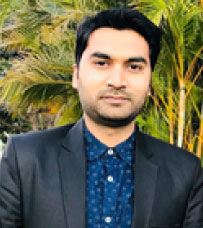
Dr. Amir Ghanbaripour is a Discipline Lead in Planning, Property, and Project Management at Bond University's Faculty of Society & Design, with a PhD in Construction Project Management (2020). He teaches postgraduate courses and leads the Project Management program. His expertise spans project management methodologies, systems thinking, organizational maturity, and gender equality in projects. He is an active member of the Project Management Institute (PMI) as Associate Director for Academic Outreach. Education: PhD in Construction Project Management (Bond University, 2020), MSc in Civil Engineering (Iran University of Science and Technology, 2012), BSc in Civil Engineering (Amirkabir University of Technology, 2009). Research focuses on project success models, agile methodologies, and technology integration in construction education. He leads research projects on megaprojects, sustainable practices, and gender diversity in the industry. Grants include the 2023 FSD Research Project Grant (focusing on construction project strategies) and the 2023 FSD Deans Award (exploring robotics in manufacturing). He supervises PhD candidates and collaborates with national/international organizations on project management innovation.
Dr. Thilina Halloluwa is a Teaching Focused Lecturer in the Department of Human-Centred Computing at The University of Queensland (UQ). He holds a PhD in Human-Computer Interaction from Queensland University of Technology (2019) and a Computer Science undergraduate degree from the Sri Lanka Institute of Information Technology. With over 15 years of academic and industry experience, his research emphasizes real-world impact in education technology, financial inclusion, smart agriculture, and HCI. Educational Background: PhD in Human-Computer Interaction, Queensland University of Technology (2019) Bachelor of Computer Science, Sri Lanka Institute of Information Technology Research Interests: Education for All: Leveraging technology to enhance collaborative learning and social experiences in education. Human Money Interaction: Designing ethical AI solutions for financial services, particularly for underserved communities. Smart Agro: Developing AI-driven tools for crop disease detection, yield optimization, and precision agriculture. Software Project Estimation: Improving effort estimation accuracy through explainable AI (Metrix project). Key Contributions: Developed UrbanAgro (tomato disease detection) and BellCrop (bell pepper disease datasets). Pioneered Dhana Labha , a financial management tool for rural Sri Lankan communities. Advanced online exam proctoring systems for low-resource settings. Previous Roles: Lecturer at University of Sydney (2023) Senior Lecturer at University of Colombo (2013–2023) Lab/Team Affiliations: Smart Agro Project: AI-driven agricultural solutions Metrix Initiative: Software project estimation frameworks
Commonwealth Scientific and Industrial Research OrganisationAustralia
Didar Zowghi is a Senior Principal Research Scientist and Science Team Leader at CSIRO Data61, Australia's national science agency. His work focuses on advancing ethical AI systems, data quality frameworks, and requirements engineering methodologies. He leads research initiatives addressing challenges in AI governance, diversity/inclusion in technology, and human-centered AI development. Research interests include AI ethics, data completeness in healthcare systems, and the application of machine learning in requirements engineering. His contributions span theoretical frameworks for responsible AI patterns, empirical studies on user perceptions of AI tools like M365 Copilot, and analysis of AI's role in global diplomatic practices. Zowghi has published extensively on topics ranging from blockchain in supply chains to pedagogical innovations in software engineering education. His work often bridges technical systems and societal impacts, emphasizing real-world implementation challenges through collaborative industry-academia projects. Notable outputs include the Responsible AI Pattern Catalogue and studies examining barriers to data quality in IoT platforms. He has pioneered frameworks linking innovation initiatives to occupational skill requirements and developed tools like Elica for dynamic requirements knowledge extraction in agile teams.
Dr. Madhushi Bandara is a Lecturer at the School of Computer Science, University of Technology Sydney (UTS), specializing in knowledge representation, complex system modeling, and data analytics. She leads the data management research stream at the UTS DigiSAS lab and is a core member of the Biomedical Data Science Laboratory within the UTS Australian Artificial Intelligence Institute. Her industry collaborations include Telstra, Cancer Australia, and Capsifi, focusing on AI integration in healthcare and finance. She coordinates the Business Information Systems major in UTS's Master of Information Technology program and convenes the Future Generation Enterprise Architecture Community of Practice. Education PhD in AI Systems Engineering, University of New South Wales (2020) BSc (Hons) in Engineering, University of Moratuwa, Sri Lanka (2015) Research Interests Madhushi's work bridges machine learning, knowledge graphs, and enterprise architecture to address challenges in data governance for SMEs, ESG metric management, and healthcare pathway analysis. Her research emphasizes translating cutting-edge AI into industry solutions through contextual domain knowledge integration. Scientific Awards UNSW-UTS Trustworthy Digital Society Scholarship Teaching & Leadership She teaches enterprise information systems, digital strategy, and AI for enterprises in UTS's online postgraduate programs. Her service roles include co-chairing tracks at the Australasian Conference on Information Systems and reviewing for Expert Systems with Applications.
Babak Abedin is a Professor of Business Analytics and Head of the Department of Actuarial Studies and Business Analytics at Macquarie Business School, Macquarie University. He holds a PhD in Information Systems from UNSW Business School and has expertise in AI ethics, cybersecurity governance, and digital transformation. His research focuses on responsible AI, data analytics governance, and the societal impact of technology. He has secured over $4M in external funding and led projects with organizations like the Reserve Bank of Australia and Cancer Council NSW. He is the program leader of Responsible AI at Macquarie’s Centre for Applied AI and serves on editorial boards for journals such as Information Systems Frontiers and Electronic Markets . His teaching emphasizes real-world challenges, earning him the UTS Learning & Teaching Citation (2019) and Macquarie’s Faculty of Business Teaching Award (2010). He has supervised over 10 PhD/Master’s students. His recent work explores agile cybersecurity policy frameworks, digital empowerment in health communities, and AI’s ethical implications. He frequently engages with media on topics like health informatics and AI governance. Key collaborations include studies on blockchain systems, dynamic capabilities in digital transformation, and gender bias in AI. His articles address cybersecurity policymaking, adult learning in online communities, and value co-creation in digital ecosystems.
Dr. Mohsin Malik is an Associate Professor of Project Management at Swinburne University of Technology (since 2023) in Melbourne, Australia. Previously, he held roles as Senior Lecturer (2018–2022) at Swinburne and Lecturer (2016–2018) at the University of Melbourne. He earned his PhD in Technology Management from the University of Western Australia (2012). His research focuses on organizational dynamics for innovative outcomes in digital contexts, sustainability in supply chains, and project management practices aligned with UN Sustainable Development Goals (SDG-9, SDG-12, SDG-3). Key areas include digital transformation, lean management, agile project management, and supply chain resilience. Dr. Malik’s work has been published in top-tier journals like the International Journal of Project Management, Information & Management, and IEEE Transactions on Engineering Management. He currently serves as Senior Associate Editor of the International Journal of Physical Distribution & Logistics Management and has secured grants totaling over AUD 1M, including a 2025–2028 project on digital transformation in Indian/Australian organizations funded by DFAT. His research explores topics such as socio-cognitive dynamics in digital transformation, lean socio-technical systems, and agency theory in international development projects. Recent projects include analyzing digital platform interactions for Australian artists and evaluating virtual healthcare barriers during the pandemic. He actively supervises doctoral and master’s students focusing on digital governance, social sustainability, and project monitoring frameworks. Dr. Malik is a globally recognized scholar, with over 23 years of academic and industry experience. He collaborates with organizations like the Victorian Music Development Office and the Australian Academy of Science, emphasizing real-world impact through research.
Professor Asif Gill is Head of Discipline for Software Engineering at the School of Computer Science, University of Technology Sydney (UTS), where he was promoted to Professor of Computer Science in January 2024. He also serves as Director of the DigiSAS Research and Innovation Lab and is actively involved in the Global Big Data Technologies Centre at UTS. As a founder of both the DigiSAS Lab and the Future Generation Enterprise Architecture Community of Practice (FGEA CoP), he has established integrated teaching-research-engagement frameworks that translate academic research into practical applications while enhancing graduate employment opportunities. Professor Gill's research interests span Adaptive Enterprise Architecture , Agile Software Development , and Design Science Research & Innovation , with a particular focus on architecting large-scale data-intensive enterprise software systems. His work addresses challenges across academia, industry, government, and society, with significant contributions to AI systems architecture, digital identity management, and enterprise knowledge graphs. His applied research has resulted in numerous collaborations with organizations including the Reserve Bank of Australia, Revenue NSW, Capsifi, Data Zoo, and the NSW Department of Planning, Industry and Environment. His publication record includes 3 books and over 190 articles in major academic journals such as IEEE Transactions on Professional Communication, Information and Management, and Information Systems. His recent work demonstrates a consistent focus on cutting-edge topics in enterprise architecture, AI systems, and digital identity, with multiple publications appearing in 2024-2025. His research trajectory shows a clear evolution from foundational work in agile software development toward more sophisticated integration of AI, enterprise architecture, and data governance. Fellow of the Australian Computer Society (ACS) Fellow of DSE (ESCP Center for Design Science in Entrepreneurship) Senior Member IEEE Associate Editor, IEEE Transactions on Technology & Society Associate Editor, Springer Nature Discover Data journals Member, Data Sharing Committee, IFIP Technical Committee 8.1 Member, Standards Australia Software and Systems Engineering Committee IT-015 Professor Gill has successfully secured numerous research grants from 2019-2026, totaling significant funding for projects related to digital identity, enterprise architecture, and AI systems. His approach emphasizes industry-academia collaboration, with many projects involving direct partnerships with government agencies and industry organizations. He has supervised multiple PhD and Master's students through industry-sponsored scholarships and maintains active collaborations with researchers across multiple institutions. Leading the DigiSAS Research and Innovation Lab, Professor Gill has created an environment that bridges theoretical research with practical implementation. The lab focuses on developing frameworks and tools for adaptive enterprise architecture, with particular emphasis on AI-enabled systems, data governance, and digital identity solutions. His work on the Data Satellite Architecture represents a significant contribution to combating data pollution in federated digital ecosystems.
Ali Amrollahi is a Lecturer in Business Information Systems at the Department of Actuarial Studies and Business Analytics, Macquarie Business School, Macquarie University. His research focuses on digital work, strategic impact of emerging technologies, technology governance, openness in strategy, and digital innovation. He has published extensively in top journals like Journal of Strategic Information Systems and Information and Management , with over 269 citations and an h-index of 26. His work has been implemented in international organizations and featured in media such as Macquarie's The Lighthouse . Amrollahi serves as a Section Editor at the Australasian Journal of Information Systems and Track Chair for Australasian Conference on Information Systems (ACIS). He has received teaching grants and focuses on innovative pedagogy involving blockchain, cybersecurity, and employability skills. He has supervised multiple PhD and MRes students and is open to mentoring researchers in multidisciplinary information systems topics. His research has explored topics such as open strategic planning methodologies (e.g., OSPM framework), AI adoption in auditing, cybersecurity policy agility, and trust dynamics in sharing economies. Awards include the ACIS 2023 Best Theory Paper and Jeffrey Blee Memorial Prize. Recent activities include invited talks on digital strategizing and editorial roles in information systems journals.
Malshika Dias is a Lecturer in the Discipline of Business Information Systems at the Business School of The University of Sydney, specializing in digital transformation and artificial intelligence research through organizational history and qualitative interpretive lenses. Her educational background includes: PhD in Information Systems from the University of New South Wales MPhil in Information Systems from the University of Colombo BS in Information and Communication Technology from the University of Colombo Dr. Dias's research centers on Artificial Intelligence and Digital Transformation, examining how historical conditions shape organizational responses to technological change. She employs interpretive qualitative methods including case studies and archival analysis, with particular focus on tensions in family business digitalization and historical imprinting in predigital organizations. Her work bridges technological innovation with strategic business adaptation through organizational history perspectives. Her publication trajectory (2014-2024) reveals consistent exploration of historical context in digital evolution, spanning government e-government sustainability to Disney's innovation narratives. Key thematic threads include robotic process automation implementation challenges, paradoxes in family business transformation, and microhistory approaches to organizational change, predominantly published in Information Systems journals and conferences. No scientific awards were documented in the available profile. Dr. Dias teaches INFS1000: Digital Business Innovation and INF6032: Agile Project Methods. While specific advisees and grant funding details weren't provided, her active research output suggests ongoing supervision of graduate students and project leadership within the Business Information Systems discipline.
Dr. Thomas Lee is a Senior Lecturer in Design Studies within the Faculty of Design and Society at the University of Technology Sydney (UTS). With a background in the humanities, his academic work bridges design, technology, and cultural studies with a focus on sustainable transitions, particularly in agricultural contexts. His interdisciplinary approach spans design futuring, narrative theory, and socio-technological change. Dr. Lee's research interests center on understanding how cultural factors interact with technology, with recent work focusing on the cultural dimensions of industries involving living organisms and technology, such as livestock farming, synthetic biology, and biodiversity conservation. His current emphasis is on socio-technological change for sustainable transitions in the farming sector, drawing on his personal history growing up on a mixed farming business in regional NSW. This includes leading the design research team for Foragecaster (Food Agility CRC), one of Australia's largest AgTech projects, and developing tools for biodiversity conservation on agricultural land. His publication portfolio demonstrates remarkable breadth across design theory, sustainable technologies, and narrative approaches. The 15 most recent articles reveal a consistent pattern of interdisciplinary work connecting design with agricultural technology, sustainability transitions, and speculative futures. His research frequently appears in high-impact journals including Journal of Cleaner Production, Futures Journal, and People and Nature Journal, showing strong citation impact particularly in sustainable design and agricultural technology fields. UTS Teaching and Learning Citation (2015) Postgraduate Futures Associate Award (2015) Dr. Lee actively supervises research students, currently guiding one PhD candidate and having previously supervised another to completion. His funded research projects include significant collaborations with Food Agility CRC on Foragecaster (2023), Innovation Connections Grants for agritech animal husbandry (2022), and biodiversity conservation initiatives with Landcare Australia. Beyond his research, he serves as the School of Design Indigenous Liaison Officer since 2021, faculty assessor of Non-Traditional Research outputs since 2023, and convenor of the Design for Societal Transitions research cluster.
Professor Uri Gal is a Professor of Business Information Systems at the University of Sydney Business School. His research focuses on the ethical and organizational impacts of digital technologies, particularly algorithmic decision-making, surveillance technologies, and social media. He holds a PhD from Case Western Reserve University and has authored numerous publications in top-tier journals like European Journal of Information Systems and Information and Management . His research interests include the ethical implications of technology, the relationship between people and technology, and workplace transformations driven by algorithmic systems. Professor Gal has conducted studies on AI in education, social media marketing for universities, and privacy concerns in IoT and surveillance technologies. His work frequently addresses societal challenges such as misinformation, algorithmic bias, and data governance. Professor Gal is actively engaged in media commentary, discussing topics like data privacy, AI ethics, and digital surveillance with outlets such as Quartz , The Conversation , and Australian Financial Review . He has also contributed to grants focusing on enterprise social platforms and digital transformation, including the Australian Digital Transformation Lab (ADTL). Education: PhD in Information Systems, Case Western Reserve University Grants: Includes 'Evidence-based Management for Enterprise Social Platform Success' (2016) and ADTL initiatives Labs/Teams: Australian Digital Transformation Lab
Christopher Vinod D'Souza is a past researcher focusing on software engineering, web application development, and educational strategies in computing. His work emphasizes end-user development, UI/UX design, and rich internet applications. He has contributed to accessibility control systems, data-intensive web applications, and pedagogical methods for introductory programming courses. His research spans technical domains like automated code generation from mockups, secure access control frameworks, and MVC architecture optimizations. Notably, he has explored modeling languages for UI evolution and strategies to enhance student engagement in multicultural educational settings. Publications include studies on web application scaffolding, visual modeling tools, and architecture patterns for separation of concerns. Despite no listed awards or current institutional affiliation, his work bridges practical software engineering challenges with educational innovation. Christopher has collaborated with institutions on projects involving end-user development tools and strategic approaches to multicultural student needs in higher education.
Fareed Ud-Din is Senior Lecturer in Computer Science at the University of New England's School of Science and Technology. His research develops computational frameworks for Industry 4.0 applications including the Extended Agent-Oriented Smart Factory (xAOSF) for small-medium enterprises. Current projects apply AI and machine learning to healthcare project management, medicinal plant identification, and organizational agility prediction. He leads research on distributed systems and cyber-physical systems integration. Ud-Din has received multiple academic awards including Best Research Paper (2018) and Best Conference Presentation (2020). He teaches programming, software engineering, and project management courses.
Commonwealth Scientific and Industrial Research OrganisationAustralia
Amna Batool is a postdoctoral researcher at CSIRO's Data61 , specializing in AI Governance , Responsible Artificial Intelligence , and Diversity in AI . Formerly, she conducted Ph.D. research at Deakin University's Faculty of Information Technology on Human-Device Interaction in IoT systems. Doctor of Philosophy (2023), Deakin University Master of Science (2017), Staffordshire University, UK Bachelor of Science (2015), Open University, UK Her research focuses on policy-driven frameworks for managing interactions in AI-embedded IoT systems, emphasizing responsible AI and socio-ethical behavior . She explores how transparent governance and inclusive design can address challenges in smart device collectives and global software development . Amna's work has been recognized with the IEEE Best Research Poster Award and Deakin HDR Best Presentation Award . She was a 3MT competition finalist and led an International Education Resilience Fund project during her Ph.D. IEEE Victorian Section Best Research Poster Award Deakin HDR conference Best Presentation Award 3MT Faculty Finalist As a Sessional Lecturer at Deakin University and Robotics (AIoT) Researcher at EXAPTEC, she bridges academic teaching with industry innovation. Currently, she mentors female STEM students through the STEM Sisters Ambassadorship program.
Dr. Basem Suleiman is an Adjunct Senior Lecturer in Advanced Computing at the University of Sydney and Deputy Director of the Software Engineering Program at UNSW Sydney. He holds a Ph.D. in Computer Science from UNSW (2012) and has over a decade of experience in academia and industry, including roles at SAP, CSIRO’s Data61, and leading universities. Education: Ph.D. in Computer Science, UNSW Sydney (2012) Graduate Certificate in Research Commercialization & Management, UNSW Sydney Master of Computing (Software Engineering), Western Sydney University Research Interests: AI-driven Software Services: Federated Learning, Recommender Systems, Human-Machine Interaction Applied AI: GenAI/LLMs, Machine Learning, Deep Learning for FinTech, Healthcare, and Education Cloud Computing: Elasticity, Workload Management, Privacy-Preserving Techniques Key Contributions: Developed AI models for structural health monitoring, personalized learning systems, and anomaly detection Secured research grants and published 80+ papers in venues like ACM Transactions, IEEE Conferences, and IJCAI Supervised 15+ PhD/MPhil students and led industry partnerships with SAP, CSIRO, and global tech firms Awards & Recognition: Runner-up Best Paper Award (2023) Dean’s Commendation for Teaching Excellence Invited Keynote Speaker (2022 ICoSEIT) Engagement: Leads industry collaborations as UNSW’s Industry Capstone Liaison Officer, fostering partnerships for student projects and curriculum innovation.