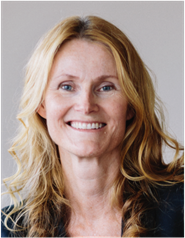
Edith Law is an Associate Professor at the University of Waterloo, specializing in social computing and human-AI interaction. She holds a PhD in Machine Learning from Carnegie Mellon University, an MSc in Computer Science from McGill University, and a BSc in Computer Science from the University of British Columbia. Her research focuses on designing technology to foster human values through collaborative systems, such as teachable robots, conversational agents, and inclusive virtual environments. She explores how machine intelligence can be aligned with ethical principles and how technology can support learning, curiosity, and empathy across diverse populations. Recent work emphasizes platforms like the Curiosity Notebook and tools for medical education simulations. Her articles highlight advancements in interactive optimization, value reflection frameworks, and accessible Metaverse design. No scientific awards or grants are listed, though her contributions span educational technology, healthcare AI, and participatory design. She has developed platforms like Curio and Codetoon to bridge creative coding and computational concepts for learners.
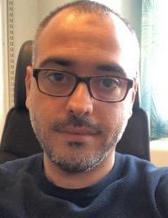
Stijn Verstichel is a Postdoctoral Researcher at Ghent University within the Faculty of Engineering and Architecture and the Department of Information Technology (EA05) . He is affiliated with IMEC , focusing on ontology-driven solutions for context-aware systems in healthcare, IoT, and railway domains. Research Interests: Ontology, semantic web technologies, IoT, eHealth, context-aware systems, and machine learning. Recent Trends: His 15 most recent articles emphasize semantic frameworks for IoT, predictive maintenance dashboards, time-series data on Solid pods, and ontology-enabled healthcare platforms. Scientific Awards: No awards explicitly mentioned in the provided data.
Milli Letizia is an Assistant Professor in the Department of Computer Science at the University of Pisa, Italy. She is a member of the Knowledge Discovery and Data Mining Laboratory (KDDLab), a joint research group connecting the University of Pisa, CNR-ISTI, and Scuola Normale Superiore. Her work bridges theoretical and applied aspects of network science, data mining, and computational social science. Education: PhD in Computer Science, University of Pisa (2018) Master Degree in Computer Science, University of Pisa, magna cum laude (110/110 cum laude, 2013) Bachelor Degree in Mathematics, University of Pisa (2010) Her research focuses on data mining , complex networks , diffusion of innovation , quantification , and the science of success . She investigates how information, behaviors, and diseases spread across networks, using both data-driven and simulation-based approaches. Her work integrates machine learning, network modeling, and social theory to understand spreading phenomena in real-world systems. The trend in her recent publications reveals a strong emphasis on modeling diffusion processes in complex networks, with a focus on algorithmic bias, community-aware diffusion, and opinion dynamics. She has developed influential open-source tools such as NDlib and CDLIB , which are widely used in network science for simulating diffusion and detecting communities. Her work spans disciplines including computer science, public health, and social science, demonstrating interdisciplinary impact. Scientific Service and Recognition: Program Committee Chair, 3rd and 4th International Workshop on Dynamics in Networks (DyNo) at PKDD 2017 and ASONAM 2018 Program Committee Member, NetSciX 2019, DATA ANALYTICS 2017–2019, GOODTECHS 2017, DataMod 2018 Member of Local Organizing Committee, XIII AI*IA Symposium on Artificial Intelligence (2014) She has contributed to major EU projects including SoBigData++ , HumanE-AI-Net , SBD@RT , and CIMPLEX . Although no formal advising or grant leadership is explicitly mentioned, her active research output and tool development suggest significant involvement in funded research and potential mentorship. She has taught courses on data mining, big data analytics, and databases at both undergraduate and master’s levels. Milli Letizia is affiliated with the Knowledge Discovery and Data Mining Laboratory (KDDLab) , a leading interdisciplinary research group focused on big data analytics, social mining, and network science. The lab fosters collaboration between academia and research institutions, promoting innovation in data-driven societal applications.
Helena Lindgren is a Professor of Computer Science at Umeå University, specializing in Human-Centered AI and Human-AI Collaboration at the intersection of Artificial Intelligence , Interaction Design , and Cognitive Science . Her work focuses on developing intelligent and autonomous systems for healthcare through sociotechnical design principles. Department of Computing Science, Umeå University Founder of Interactive Intelligent Systems research group and Collaborative AI Lab (2010-2011) Co-developer of UMeHealth Lab for AI-based eHealth solutions Her research emphasizes: Digital Coaching for health behavior change Participatory Design of adaptive systems Formal Argumentation in human-AI dialogues Clinical Reasoning and knowledge representation Behavior Change Evaluation in aging populations Contextual Adaptation of AI systems Recent publications highlight socially intelligent agents , norm interpretation , and personalized digital coaching for seniors. She serves as Co-Director of Wallenberg Autonomous Systems, AI and Software Program - Humanities and Society (WASP-HS) and holds leadership roles in AI councils at Umeå University.
Prof. Dr. Nicolas R. Gauger is Full Professor and Chairholder for Scientific Computing at the University of Kaiserslautern-Landau (RPTU), holding dual appointments in the Department of Mathematics and Department of Computer Science. He directs the university's Computing Center (RHRZ) and leads the SciComp research team, with prior roles at DLR Braunschweig, Humboldt University Berlin, RWTH Aachen University, and MIT. His academic background includes a Master in Mathematics (Dipl.-Math.) from Leibniz University Hannover (1998) and a Ph.D. in Applied Mathematics (Dr.rer.nat.) from Braunschweig University of Technology (2003). 1998-2010: Research Scientist, Numerical Methods for Aerodynamics at DLR Braunschweig 2005-2010: Assistant Professor (W1), Department of Mathematics, Humboldt University Berlin 2010-2014: Associate Professor (W2), RWTH Aachen University 2014: Visiting Professor, Massachusetts Institute of Technology Prof. Gauger's research centers on optimization under uncertainty for complex physical systems. His work integrates Algorithmic Differentiation with Machine Learning to advance Computational Fluid Dynamics, Aeroacoustics, and Structural Mechanics. Recent projects focus on medical applications like proton computed tomography (pCT) for cancer treatment through SIVERT and AI Care initiatives, alongside aerodynamic design for noise reduction and flow control. His 2025 publications reveal a dominant trend in end-to-end differentiable programming for physics-based optimization, particularly in fundamental particle physics experiments and medical imaging. Key subfields include diffusion models for detector design, reinforcement learning for particle tracking, and robust optimization frameworks applied to turbulence modeling and proton therapy. Scientific recognition includes: Associate Fellow of the American Institute of Aeronautics and Astronautics (AIAA), 2018 Teaching Award from RPTU, June 2025 He has advised doctoral students including award-winning researcher Max Aehle (2025 Freundeskreis RPTU Outstanding Dissertation Award). Major grants include leadership of the Excellence Initiative-funded AICES Graduate School (2010-2019), the Center for Mathematical and Computational Modelling (CM) 2 (2014-2019), and the MathApp (2019-2024) and MSO (2024-present) research initiatives. Current projects like SIVERT and AI Care apply AI to cancer therapy. Prof. Gauger co-leads the Fraunhofer Performance Center's R&D Lab for Data Analysis and AI, serves on the Managing Board of ERCOFTAC (European Research Community on Flow, Turbulence and Combustion), and chairs the Steering Committee of ERCOFTAC's Special Interest Group on Design Optimization. His team develops critical AD tools including CoDiPack and OpDiLib within the NHR South-West high-performance computing consortium.
David Broneske is a Researcher at the Otto von Guericke University of Magdeburg , Germany. His work spans Database Systems , Heterogeneous Computing , and Machine Learning Applications , with a focus on GPU/FPGA Acceleration and Non-volatile Memory (NVM) Optimization . He has contributed to projects like ADAMANT (co-processor integration) and GridTables (H2TAP data stores). Key Research Areas : Database acceleration via specialized hardware, Graph database applications in clinical/biological domains, and AutoML for domain-aware model selection. Collaborations : Frequent co-author with Gunter Saake, Bala Gurumurthy, and Sajad Karim on topics like NVM Storage and GPU-based Query Execution . Publications : Over 105 papers (2012–2025) covering Protein Identification Systems , Entity Resolution , and Software Evolution Datasets . Workshops : Co-organized the Workshop on Novel Data Management Ideas on Heterogeneous (Co-)Processors (NoDMC) and contributed to standards like Backlogs/Interval Timestamps for temporal graph queries.
Dr. Dirk Bade is a Researcher at the University of Hamburg , affiliated with the Department of Informatics under the Faculty of Mathematics, Informatics and Natural Sciences. His work focuses on Mobile and Ubiquitous Computing , Internet of Things , Context-Aware Systems , and Blockchain Applications . He is actively involved in projects such as SANE (Smart Networks for Urban Citizen Participation), CloudAware (Context-adaptive Middleware), and ContAgency (Context Data Brokerage). Research Guest at VSYS, University of Hamburg (since 2013) PhD in Informatics (2013), University of Hamburg Diploma (2007) and Bachelor (2003) in Informatics, University of Hamburg His research explores smart city infrastructures , context-aware computation offloading , and security implications of sensor data . Key contributions include CloudAware (middleware for mobile cloud adaptation) and Incolum (citizen-centric sensor data marketplaces). Publications highlight trends in mobile edge computing (2015-2016), smart cities (2019-2021), and context-aware middleware (2011-2013). His work bridges agent-oriented software engineering with blockchain-based information markets . Dirk has supervised over 50 theses, including studies on blockchain reputation systems , mixed-reality negotiation tools , and sensor-supported indoor localization . He teaches courses on mobile computing , smart cities , and context-aware systems , with a focus on practical software development and ubiquitous applications .
Baishakhi Ray is an Associate Professor at Columbia University leading research at the intersection of AI and Software Engineering. She serves as an Amazon Scholar collaborating with Amazon's Agentic AI team and heads the ARiSE Lab focused on making code smarter, safer, and more collaborative through neurosymbolic AI techniques. Her research centers on neurosymbolic approaches that blend machine learning with formal reasoning to enhance software reliability, security, and developer productivity. Key areas include AI for Code, language model development for code generation/transformations, and benchmarking frameworks for evaluating LLMs in software engineering contexts. She pioneers techniques for building trustworthy code through semantics-aware language models and agent-based systems. Recent publications (2024-2025) reveal a strong emphasis on neurosymbolic AI applications across the software lifecycle - from code generation (EditLord, Cycle) and vulnerability detection (Primevul) to test repair (UTFix) and kernel debugging (Kgym). Her work consistently bridges neural and symbolic paradigms to address fundamental challenges in code reliability and developer tooling. Major recognitions include: IEEE CS TCSE Rising Star Award NSF CAREER Award (2019) and IBM Faculty Award (2019) Multiple ACM SIGSOFT Distinguished Paper Awards (2023) NAACL 2025 Oral Presentation and ICSME 2023 Most Influential Paper VMware Early Career Faculty Award (2020) She mentors a dynamic research group including PhD students Yangruibo Ding (recent UCLA faculty hire), Vikram Nitin, Ira Ceka, Jinjun Peng, and Alex Mathai. Research is funded by: Government: National Science Foundation Corporate: Google, IBM, Amazon, Capital One, RedHat Institutional: Columbia Provost’s Grants for Junior Faculty The ARiSE Lab maintains active industry collaborations through Amazon Scholar role and corporate partnerships, driving neurosymbolic AI innovations from theoretical foundations to real-world software engineering applications with ongoing projects in coding agents and secure code transformation.
Hao Peng is an Assistant Professor at the Siebel School of Computing and Data Science, part of the Grainger College of Engineering at the University of Illinois Urbana-Champaign. He holds a B.S. from Peking University (2016) and a Ph.D. from the University of Washington’s Paul G. Allen School of Computer Science & Engineering (2022). His research focuses on Natural Language Processing (NLP) , Machine Learning , Large Language Models (LLMs) , and AI for Science , with particular emphasis on improving LLM efficiency, factuality, and interdisciplinary applications. Recent courses include 'CS 598 PEN - Efficiency in NLP' and 'CS 598 PEN - LLM Post-pretraining.' Hao’s work spans advancing LLM generalization capabilities, mitigating hallucinations, and addressing hardware constraints. In 2024, he co-authored an award-winning paper on 'LM-Infinite,' enabling zero-shot extreme length generalization in LLMs. He collaborates internationally, including with the Hebrew University of Jerusalem under a joint research grant since 2019. He also contributes to Argonne National Laboratory’s AI initiatives through invited lectures. Education : B.S., School of Electronics Engineering and Computer Science, Peking University, 2016 Ph.D., Paul G. Allen School of Computer Science & Engineering, University of Washington, 2022 Key Collaborations : Interdisciplinary research with Hebrew University of Jerusalem (2025) Joint seed grant program with HUJI since 2019 His advising includes graduate student Chi Han, who contributed to the NAACL award-winning work. Grants and seed funding focus on accelerating economic development through tech innovation. No specific lab affiliations are explicitly mentioned, but his research aligns with Argonne’s AI Distinguished Lecture series and open-source platforms like OpenDevin/OpenHands.
Yehia Abd Alrahman is a Senior Lecturer at the Department of Formal Methods within the University of Gothenburg. His work focuses on formal methods, model checking, and reconfigurable systems, with particular emphasis on multi-agent systems and attribute-based communication. He develops verification tools like R-CHECK and contributes to theoretical foundations for collective adaptive systems. His research integrates formal verification techniques with practical applications in distributed systems and energy grids. Key research interests include formal verification of reconfigurable systems, attribute-based communication models, and correct-by-design teamwork plans for multi-agent systems. He has published extensively on topics such as bisimulation theory, distributed coordination frameworks, and protocol analysis. His work often bridges theoretical computer science with practical implementation in domains like power grid control and system resilience. Academic contributions span programming language design for CAS, verification frameworks, and pedagogical approaches to formal methods education. Collaborations include projects on runtime verification, distributed API design, and adaptive system coordination protocols. Current research trends emphasize enhancing system correctness through automated synthesis and rigorous formal methods.
Randall Wayth is Adjunct Associate Professor at Curtin University's School of Elec Eng, Comp and Math Sci and Principal Engineer of the Murchison Widefield Array (MWA) radio telescope. Researches radio astronomy instrumentation, signal processing, and cosmological applications. Develops novel calibration and imaging techniques for low-frequency arrays. Led science commissioning for MWA and directed the GLEAM sky survey. Current work focuses on SKA-Low prototype development and Epoch of Reionization studies.
Assoc. Professor Moeava Tehei is an academic leader in targeted nanotherapies and medical radiation physics at the University of Wollongong (UOW), School of Physics, within the Faculty of Engineering and Information Sciences. He leads the Targeted Nano-Therapies team at the Centre for Medical Radiation Physics (CMRP) and serves as Head of Postgraduate Studies in Physics (2024–present). He holds a PhD in Physics from Grenoble Alpes University (France, 2002) and has over two decades of expertise in radiation-based cancer therapies, synchrotron applications, and nanoparticle research. Research interests span targeted nanoparticle-enhanced radiotherapy, synchrotron microbeam radiation therapy (MRT), and multimodal cancer treatment strategies. His work integrates biophysics, nanotechnology, and clinical translation, with a focus on glioblastoma and other brain cancers. Key contributions include pioneering the use of high-Z nanoparticles as radiosensitizers and advancing preclinical models for MRT efficacy testing. Tehei has secured over $2 million in competitive grants, including an NHMRC Project Grant as lead CI. He founded the Targeted Nano-Therapies team (2012) and co-organized major conferences like Radiation 2012 and Innovation in Radiation Applications 2017. His editorial roles include membership on the boards of Scientific Reports (Nature) and Journal of Nanotheranostics . Award-winning research includes the French Neutron Society's Thesis Prize and Biophysics Society's Young Researcher Prize. His students have won national awards in biomedical engineering and physics. Current leadership roles include Faculty Education Committee membership and integrity officer duties at UOW. Key facilities used: Australian Synchrotron, preclinical imaging systems (IVIS SpectrumCT), and advanced flow cytometry setups. Research aligns with SDGs 3 (Health) and 9 (Innovation in Industry).
Dr. Bianca Ogbo is a Lecturer in Computer Science at Teesside University, affiliated with the School of Computing, Engineering and Digital Technologies and the Department of Computing & Games. She holds a PhD in Computer Science (2023) from Teesside University, an MSc in eBusiness (2014) from Oxford Brookes University, and a BSc in Information Systems and Software Engineering (2011) from Oxford Brookes University. Previously, she worked in industry as a Business Analyst, Bill of Material Analyst/Engineer, and Business Intelligence Consultant before transitioning to academia in 2021 as part-time staff, later becoming full-time in 2023. Her research focuses on artificial intelligence, evolutionary game theory, and technology adoption dynamics, with interests in behavioral modelling, agent-based simulations, and coordination dynamics. She actively contributes to AI projects targeting industry 4.0 and collaborates on business intelligence applications. Teaching-wise, she instructs modules in Big Data, Business Intelligence (using PowerBI), Research Methods, and the Masters in Applied Data Science and AI programs. She also supervises final-year projects for undergraduate and master’s students. Her research outputs emphasize computational models of coordination in technology adoption, with recent works published in journals like Adaptive Behavior and conference proceedings such as ALIFE. Notable themes include prior commitment mechanisms in multi-agent systems and evolutionary dynamics of group cooperation. She has been cited in multiple academic platforms and contributed to Mendeley readership. Dr. Ogbo is committed to curriculum development in AI education, integrating industry best practices and innovative teaching methods. She leads initiatives in project-based learning and collaborates on AI companion development projects to bridge academia and industry needs.
Dr. Cameron J. Turner serves as Associate Professor in Clemson University's College of Engineering, Computing and Applied Sciences since 2016, teaching engineering design methods, optimization, mechanical systems, and CAD/CAM. His research bridges computational capabilities with engineering design processes across multiple domains. His academic credentials include: Ph.D. in Mechanical Engineering from The University of Texas at Austin (2005) MSE from The University of Texas at Austin (2000) BSME from the University of Wyoming (1997) Turner's research centers on Computational Design Methods with emphasis on design analogy identification , early-stage problem modeling , surrogate modeling for complex systems , and additive manufacturing automation . His work integrates digital twin technology, tradespace exploration, and function-based design to solve engineering challenges in nonlinear and uncertain environments. Current investigations focus on immersive virtual environments for design reviews and intelligent robotic systems. Recent publications reveal accelerating research in digital twin applications for vehicle design, tradespace exploration methodologies, and data-driven decision support systems. These works span mechanical engineering, computer science, and systems engineering with strong emphasis on practical implementation in manufacturing and robotics. His professional recognition includes: CSM Design Program Director’s Award for service to capstone design program (2015) Turner actively shapes engineering education through leadership roles as Program Chair for ASME's CIE Division Executive Committee and member of ASME's International Design Simulation Competition Committee. His service extends to ASEE design communities and the Design Society, demonstrating commitment to advancing design pedagogy and practice. Current projects indicate expanding work in ground vehicle digital agents and Stewart platform calibration techniques. While specific laboratory details weren't provided, his research trajectory suggests active collaboration with computational design groups focusing on digital manufacturing and autonomous systems integration.
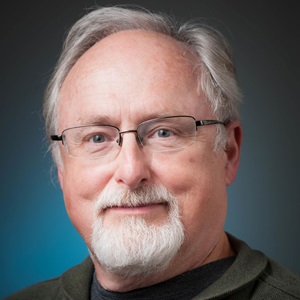
Robert Heckendorn, Ph.D., is an Associate Professor in the Department of Computer Science at the University of Idaho, part of the College of Engineering. His research interests span machine learning, evolutionary computation, robotics, optimization algorithms, computational biology, and transportation systems. He holds a Ph.D. and has contributed extensively to interdisciplinary areas such as autonomous systems, traffic simulation, and bio-inspired algorithms. His work often bridges theoretical foundations with practical applications, including developing high-fidelity traffic modeling tools, optimizing manufacturing processes, and advancing robotic control strategies. Notable contributions include neuroevolution techniques for crowd behavior prediction and fuzzy logic-based crowd management systems. He also explores evolutionary algorithms in biological fitness landscapes and disaster management scenarios. He has authored over 50 publications since 1997, focusing on algorithmic efficiency, population diversity in evolutionary systems, and multi-agent coordination. His research has implications for smart cities, healthcare, and autonomous vehicle technologies. Despite no listed awards here, his prolific output underscores his impactful contributions to computer science and engineering. As an educator, he contributes to curriculum development in computational thinking and web-based learning systems (e.g., vTutor platform). His lab likely focuses on real-world problem-solving through computational methods, though specific lab names aren’t mentioned. Collaborations with industry and interdisciplinary teams are implied through his research topics like connected-vehicle systems and cancer modeling via cellular automata.