Sarah Gillet is a Postdoctoral Researcher at the Division of Robotics, Perception, and Learning at KTH Royal Institute of Technology, where she focuses on developing social robot behaviors to foster collaboration and inclusion in human groups. Her research addresses challenges like in-group favoritism through computational approaches to shape group interactions. She holds a Doctoral Thesis (2024) titled Computational Approaches to Interaction-Shaping Robotics . Her work emphasizes group dynamics , robot-mediated inclusion , and pedagogical robotics , particularly in children and adolescent populations. Key areas include gaze behavior analysis, equitable participation promotion, and social robot roles such as mediators in educational settings. Dr. Gillet teaches the Social Robotics (DD2413) course and supervises master theses. Her recent publications explore robot gaze behaviors for participation balance, socially appropriate listening, and influence prediction models like RoSI. She actively participates in conferences like ACM/IEEE HRI and IEEE RO-MAN. Her research integrates computational methods with social science insights to design robots that actively improve human group interactions, with applications in education, collaboration, and bias mitigation.
Anders Brandt is an Associate Professor (Docent) in Geospatial Information Science and Senior Lecturer in Geomatics at the University of Gävle, Sweden, within the Department of Computer and Geospatial Sciences under the Faculty of Engineering and Sustainable Development. His research focuses on flood risk mapping uncertainties, agent-based modeling of pedestrian movement, and spatial decision-support systems for sustainable urban planning. He holds a PhD in Physical Geography from the University of Copenhagen and has extensive international collaboration experience. Education: PhD in Physical Geography (University of Copenhagen, Denmark), focusing on fluvial geomorphology of Costa Rica’s Reventazón River Master’s Degree in Physical Geography (Uppsala University, Sweden) Research Interests: Brandt’s work addresses uncertainties in flood modeling, spatial decision analysis, and geospatial data applications for urban resilience. His projects include the 'Big Data Methodology for Experiential and Cognitively Sustainable Urban Growth' initiative, emphasizing ecosystem service mapping and spatial MCDA methods. His agent-based modeling research explores emergent urban path systems to optimize pedestrian infrastructure. Publications Trends: Recent work spans flood risk visualization, blue-green infrastructure roles in climate resilience, and urban form complexity metrics. His 2025 papers highlight innovative applications of agent-based modeling and systematic reviews of climate hazard mitigation strategies. Advising & Grants: While no formal advisee list is provided, his collaborative publications suggest involvement in student projects. His grants include international initiatives like Mongolia’s land administration capacity-building programs. Labs/Teams: Co-founded GeoVega , a consulting firm specializing in flood risk mapping and geospatial solutions. Active in educational initiatives like harmonizing GIS curricula in Swedish universities.
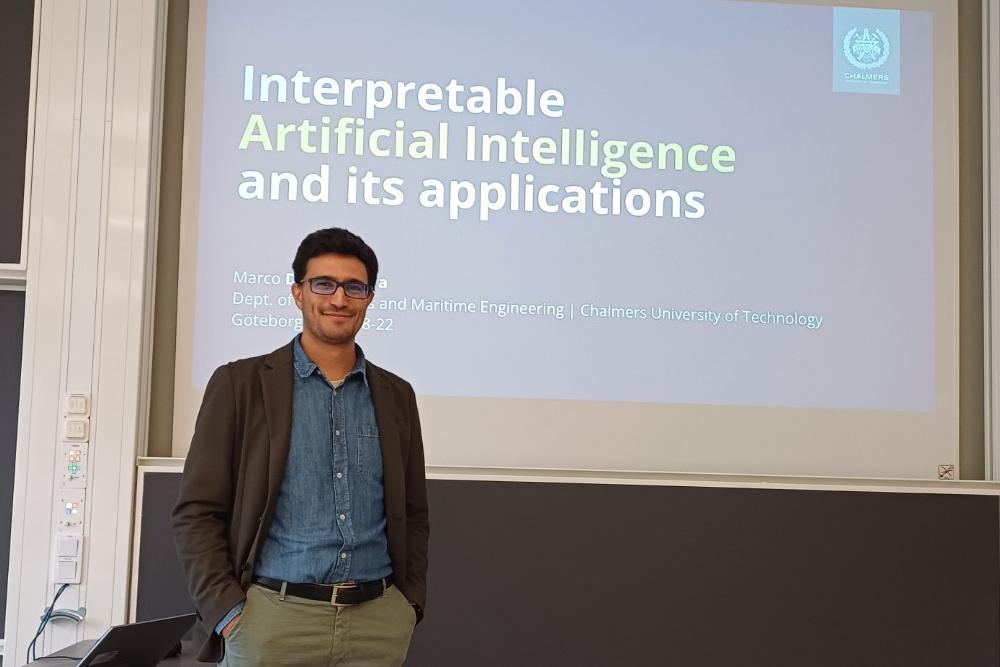
Marco L. Della Vedova is a Senior Lecturer in Applied Artificial Intelligence at Chalmers University of Technology, Sweden. He works in the Vehicle Engineering and Autonomous Systems division within the Department of Mechanics and Maritime Sciences, as part of Prof. Mattias Wahde's research group. Since 2025, he has served as Director of the Data Science and AI master's programme (MPDSC) at Chalmers, where he teaches courses including Introduction to Artificial Intelligence and Digitalization in Sports. Dr. Della Vedova earned his academic foundation at the University of Pavia, Italy, where he completed his BSc (2006), MSc (2009), and PhD (2013) in Computer Engineering. His doctoral research focused on "Real-Time Physical Systems and Electric Load Scheduling" under Prof. Tullio Facchinetti. During his PhD studies, he spent a year at U.C. Berkeley hosted by Prof. Francesco Borrelli at the Model Based Predictive and Distributed Control Lab. His research spans multiple AI domains with a strong emphasis on interpretability. Dr. Della Vedova develops interpretable methods for conversational AI, naturalness evaluation of forests using canopy height models, and geospatial applications. His work bridges theoretical AI with practical societal benefits, particularly in environmental monitoring, transportation systems, and orienteering. He has previously contributed to cloud computing, hate speech detection, and cyber-physical energy systems, demonstrating his interdisciplinary approach to AI research. Dr. Della Vedova's publication record reveals a consistent trajectory of impactful research across multiple domains of artificial intelligence. His recent work shows a strong focus on interpretability in AI systems, with significant contributions to natural language processing, geospatial analysis, and causal inference. The research demonstrates both theoretical depth and practical applications, particularly in environmental monitoring and social media analysis. His methodology often combines traditional machine learning approaches with novel interpretability techniques, creating bridges between complex AI systems and human understanding. Dr. Della Vedova has received several prestigious recognitions for his work: Best PhD thesis award from the Order of the Engineers of Bergamo (2013) Italian champion of Il Cervellone (2012) Top Italian performer in IEEEXtreme 6.0 programming competition (148th overall globally, 2012) Premio Arturo Schena award from Fondazione Credito Valtellinese (2010) With over 50 students supervised through bachelor's and master's theses, Dr. Della Vedova has established himself as a dedicated mentor in the AI community. His current PhD students include Minerva Suvanto working on interpretable NLP and Vivien Lacorre developing AI for railway infrastructure inspection. His supervision spans diverse topics from forest naturalness evaluation to hate speech detection and transportation optimization. Beyond formal supervision, he actively contributes to educational initiatives including serving as Director of Chalmers' Data Science and AI master's program and developing innovative teaching methods that connect theoretical concepts with real-world applications. Dr. Della Vedova is deeply embedded in both academic and professional communities. He leads the Applied Artificial Intelligence research group at Chalmers while maintaining strong connections with European research networks through projects like the ERASMUS+ EUrienteering initiative. His interdisciplinary approach is reflected in collaborations across computer science, environmental science, and social sciences. Notably, he applies his AI expertise to orienteering both as a researcher developing localization methods and as a licensed Event Advisor for the International Orienteering Federation, demonstrating how his professional and personal interests converge in innovative ways.
Alexandra Teleki is a Senior Lecturer at the Department of Pharmacy, Uppsala University, specializing in Pharmaceutical Nanotechnology within the Molecular Galenic Pharmacy division. Her research focuses on developing advanced drug delivery systems using nanotechnology approaches, with particular expertise in flame aerosol synthesis of pharmaceutical nanoparticles and magnetic nanoparticle applications. Her research interests span: Pharmaceutical Nanotechnology and Flame Aerosol Synthesis Magnetic Nanoparticles for Theranostic Applications Lipid-based Formulations for Drug and Nutraceutical Delivery Biomimetic Barrier Models for Drug Transport Studies 3D Printing of Advanced Drug Delivery Systems Teleki's work demonstrates a clear trajectory from fundamental nanomaterial synthesis toward clinically relevant applications, with recent publications showing increasing focus on cancer theranostics, antimicrobial treatments, and precision drug delivery systems that respond to specific physiological conditions. Her research bridges materials science, pharmaceutical technology, and clinical medicine to address critical challenges in drug delivery. Notable contributions include: Development of flame-made doped iron oxide nanoparticles for medical imaging Innovative approaches to magnetic hyperthermia for cancer treatment Advanced biomimetic barrier models for drug transport studies Optimized colonic mucus models for drug diffusion studies 3D printing techniques for lipid-rich solid oral dosage forms Teleki actively collaborates through the Nordic POP (Patient-oriented Products) initiative and maintains strong interdisciplinary connections across pharmaceutical sciences, materials engineering, and clinical medicine. Her research group focuses on translating nanomaterial synthesis techniques into practical pharmaceutical applications that address real-world challenges in drug delivery and therapeutic efficacy.
Katarina Hedlund is a Professor at Lund University's Department of Biology and serves as Director and Manager of the Centre for Environmental and Climate Science (CEC). She is also a Professor within BECC (Biodiversity and Ecosystem services in a Changing Climate), a Soil Ecology Profile area member of the LU Profile Area: Nature-based future solutions, and a Professor in Biodiversity and Evolution. Her extensive academic profile demonstrates leadership in multiple interdisciplinary research initiatives focused on environmental sustainability. Dr. Hedlund's research interests span the complex relationships between soil ecology, ecosystem services, and sustainable land management. Her work encompasses molecular studies of functional genes and microorganism interactions, above- and below-ground ecological relationships, and large-scale assessments of soil biodiversity. She investigates how knowledge and values of nature-based solutions can accelerate the transformation toward more sustainable development, with particular focus on soil resources, agricultural biodiversity, and urban ecosystem services. Her research directly contributes to multiple UN Sustainable Development Goals, particularly those related to environmental protection and sustainable resource management. Analysis of her 116 research outputs reveals consistent themes in soil ecology, biodiversity-ecosystem service relationships, and nature-based solutions for climate challenges. Her recent publications demonstrate increasing integration of economic and environmental assessment methods, with growing emphasis on urban applications and policy implementation. The research shows strong European collaboration patterns, particularly in agricultural and urban soil studies across diverse landscapes. Her scientific recognition includes: Excellent Teaching Practice award (2007) The Swedish King's 50th anniversary foundation award (2001) Dr. Hedlund has secured substantial research funding through 19 projects, including multiple Horizon Europe initiatives running through 2027. She has supervised numerous students (10 supervised works documented) and actively contributes to academic discourse through 33 recorded activities including workshops, seminars, and media engagements. Her current major projects include UGPplus (Enhancing urban green planning), NATURESCAPES (Nature-based Solutions for Climate Resilient Communities), and SOLO (Soils for Europe), reflecting her leadership in translating soil science into practical sustainability solutions. She leads research teams within the Centre for Environmental and Climate Science and collaborates extensively through the LU Land network, which brings together over 60 researchers from diverse disciplines to address complex land use challenges. Her work bridges fundamental soil science with practical applications for policymakers and land managers across Europe.
Dr. Pei Huang is a Senior Lecturer in Energy Engineering at Dalarna University, Sweden, working within the Department of Information and Technology. His academic career focuses on multidisciplinary research at the intersection of energy systems, electromobility, and sustainable urban development, with significant contributions to both teaching and research in renewable energy and energy efficiency. Dr. Huang received his Ph.D. from the City University of Hong Kong in 2017. His educational background has provided a strong foundation for his current research in energy systems and sustainable technologies, bridging engineering principles with practical applications in the energy transition. Dr. Huang's research interests span several critical areas in modern energy systems. He specializes in peer-to-peer energy sharing, urban energy systems, and electromobility, with particular focus on electric vehicles as mobile power sources. His work also encompasses positive energy districts, district heating systems, building energy efficiency, and HVAC systems. A distinctive aspect of his research involves applying machine learning to address uncertainty in energy systems, creating more resilient and adaptive solutions for the energy transition. His multidisciplinary approach connects energy engineering with computer science, urban planning, and sustainability science. Analysis of Dr. Huang's recent publications reveals a strong emphasis on integrating electric vehicles into energy systems as flexible resources. His work demonstrates how vehicle-to-grid technology can enhance grid resilience and enable community energy sharing through innovative solutions like the Electric Vehicle based virtual Electricity Network (EVEN). There's also a notable focus on applying artificial intelligence to optimize energy systems, particularly in data-scarce scenarios where he combines clustering analysis and transfer learning. His research bridges the gap between theoretical models and practical implementation, with several studies based on real-world data from Sweden, demonstrating immediate relevance to current energy challenges. Dr. Huang has been highly successful in securing research funding, with approximately SEK 10 million secured for projects at Dalarna University. His current research portfolio includes: PI for a 2023-2026 Energy Agency project on enhancing grid resilience through electric vehicle-based virtual electricity networks (SEK 2.64 million) PI for a 2023-2026 FORMAS project on photovoltaic and electric vehicle utilization (3.75 million SEK, with a competitive success rate of 13.8%) Co-PI and national coordinator for a 2023-2026 CETPartnership project on thermal energy storage in district heating (2.32 million Euro) Co-PI for a 2024-2026 Swedish Energy Agency project on electric vehicles for frequency regulation (3.25 million SEK) Dr. Huang serves on the editorial board of the journal Buildings and has published extensively, with 49 journal articles, 1 book, 5 book chapters, and 19 conference papers to his name. His research has active participation in IEA tasks, demonstrating international recognition of his expertise. In addition to his primary energy research, Dr. Huang has made significant contributions to neuroscience, particularly in Parkinson's disease diagnostics and treatment, showing the breadth of his interdisciplinary approach.
Betty Tärning is a researcher at the Department of Philosophy, Lund University , specializing in Cognitive Science and Educational Technology . She is affiliated with the eSSENCE: The e-Science Collaboration and contributes to the LU Profile Area: Natural and Artificial Cognition . Her work focuses on digital learning environments, pedagogical agents, and feedback systems. Email: betty.tarning@lucs.lu.se Office: LUX:B467, Helgonavägen 3, Lund Research Interests: Tärning investigates how virtual reality and educational games can enhance learning outcomes, particularly in middle school and early childhood education . Her recent work explores robotic emotional expression and feedback neglect in digital contexts. Article Trends: Recent publications emphasize human-robot interaction , virtual learning environments , and feedback mechanisms in educational games. She integrates cognitive modeling with pedagogical design to address challenges in digital literacy and student engagement . Projects & Collaborations: Active in initiatives like DeSIDE: Designing Sustainable Digital Work and Virtuellt klassrum som forskningsplattform , she collaborates across disciplines, including with Pufendorf IAS and Humanities Lab . Her network includes researchers from Sweden , Europe , and North America .
Giovanni Forchini is a Professor at the Umeå School of Business, Economics and Statistics (USBE), Umeå University, Sweden. His research focuses on econometrics, panel data analysis, and their applications in health economics and epidemiological modeling. He holds the title of Docent, a Swedish academic qualification reflecting advanced expertise. His work bridges theoretical econometrics with practical policy analysis, particularly in pandemic preparedness and healthcare optimization. Research Themes: Econometric methodologies for panel data and structural equation models Quantifying pandemic impacts on healthcare systems and economies Optimization of resource allocation during public health crises Key Contributions: Developed the DAEDALUS model for integrated economic-epidemiological policy simulations Analyzed SARS-CoV-2 transmission dynamics and vaccine impact in multiple countries Pioneered statistical methods for handling multifactor structures in panel data Awards & Grants: USBSE Pedagogical Prize 2020 Funding from Forte (Swedish Research Council for Health, Working Life and Welfare) and Handelsbanken Teaching & Mentorship: Coordinates Master’s theses in Economics at USBSE Teaches advanced courses like Econometrics 1 & 2 and Analysis of Financial Data
Olaf Hartig is a Senior Associate Professor at Linköping University's Department of Computer and Information Science (IDA), affiliated with the Database and Information Techniques (ADIT) division. He is also an Amazon Scholar collaborating with the Neptune graph database team. His research focuses on data management, semantic web technologies, graph databases, and distributed data systems. Hartig holds a PhD from Humboldt-Universität zu Berlin and is a Docent at Linköping University. He has received numerous awards, including the SWSA Distinguished Dissertation Award and eight best paper awards, and was selected as a Wallenberg Academy Fellow in 2024. Education: PhD in Computer Science (Humboldt-Universität zu Berlin), Docent (Linköping University). Research interests span query processing for Linked Data, federated systems, RDF and GraphQL semantics, and knowledge graph construction. He leads research groups in Database and Web Information Systems and Semantic Web Technologies at IDA. Key achievements include pioneering traversal-based query execution, developing Triple Pattern Fragments, and contributions to standards like RDF* and SPARQL*. His work has been recognized through grants, patents (e.g., on graph acceleration techniques), and leadership roles in conferences like ISWC and ESWC. Teaching: Course leader for database technology courses (TDDD12, TDDD37) and advanced topics like big data analytics and bioinformatics databases. Active in curriculum design and interdisciplinary education. Labs/Teams: Database and Web Information Systems Group, Semantic Web Research Group, Sports Analytics Group (IDA) Grants: Wallenberg Academy Fellowship, Swedish Research Council funding
Meta Berghauser Pont is a Professor of Urban Morphology and Urban Planning at Chalmers University of Technology. She leads the Spatial Morphology Group (SMoG), focusing on quantitative analysis of urban form, space syntax, and design theory. Key research themes: urban density, sustainable cities, social-ecological systems, pedestrian movement modeling Authored the 2023 book Spacematrix: Space, Density and Urban Form , redefining density metrics Her work bridges analytical urban morphology with practical urban planning applications, particularly in noise/air quality management, transport infrastructure, and digital twin city modeling. She manages pedagogical development for architecture programs at Chalmers. Active projects include: Digital Twin Cities Centre (EU/VINNOVA) Sustainable Urban Form (Formas) Green Infrastructure Integration (Mistra Urban Futures) Multi-scale Climate Proofing (VINNOVA) Urban Design Calculator (Naturvårdsverket) Her lab develops open-source tools like the Place Syntax Tool (PST) for morphological analysis of cities.
Elena Troubitsyna is a Professor of Computer Science with specialization in Software Engineering at KTH Royal Institute of Technology. Her research focuses on developing dependable, autonomous systems that ensure safety and reliability, particularly in complex environments like self-driving cars and drones. She employs rigorous mathematical modeling and verification techniques to address system complexity and real-time adaptability challenges. Her work emphasizes the co-engineering of safety and security in cyber-physical systems, integrating formal methods such as Event-B modeling with AI-driven solutions. Key research areas include cybersecurity for embedded systems, formal analysis of safety-security interactions, and resilient multi-agent systems. Elena has contributed to advancing methods for autonomous system navigation, fault tolerance, and privacy-preserving microservices architectures. Elena has organized international workshops like SENSEI (Safety-Security Interaction) and published extensively on topics such as model-driven engineering, formal verification of critical systems, and optimizing scheduling for distributed computing. Her research bridges theoretical foundations with practical applications, aiming to enhance societal trust in autonomous technologies.
Andreas Lundqvist is a Professor at the Department of Oncology-Pathology, Karolinska Institutet. His research focuses on understanding mechanisms of immune escape in solid tumors, particularly investigating NK and T cell regulation. He leads the Cell-based Immune Therapy for Cancer group, aiming to develop novel immunotherapies. Education & Roles: PhD in Immunology, Karolinska Institutet (2003) Professor since 2023; Associate Professor (2012–2023); Assistant Professor (2009–2012) Prior roles include Staff Scientist and Research Fellow at the National Institutes of Health (NIH) (2003–2008) Research Interests: Lundqvist's work targets immune evasion in cancer, with emphasis on NK and T cell dynamics. His group explores tumor microenvironment interactions, immune checkpoint modulation, and biomarker discovery. Recent studies focus on renal cell carcinoma, melanoma, and Hodgkin lymphoma. Grants & Funding: Swedish Childhood Cancer Fund (2024–2025) Swedish Research Council (2023–2026) Swedish Cancer Society (2022–2024) Advising & Labs: Lundqvist supervises a research group including PhD students and postdoctoral fellows. Notable alumni include Dhifaf Sarhan (Karolinska Institutet) and Erik Wennerberg (The Institute of Cancer Research).
Yiannis Karayiannidis is a Senior Researcher (equivalent to Associate Professor/Research) with the Division of Systems and Control (SYSCON), Department of Electrical Engineering at Chalmers University of Technology. He maintains a significant affiliation with the Department of Robotics, Perception and Learning at KTH Royal Institute of Technology, demonstrating his cross-institutional impact in the Swedish robotics community. Dr. Karayiannidis earned his Diploma in Engineering in 2004, followed by a Ph.D. in Engineering in 2009, and achieved Docent status in 2017. His academic journey has focused on robotics and control systems, establishing him as a leading researcher in these fields. His primary research interests span robot control, robotic manipulation in human-centered environments, dual arm manipulation, force control, robotic assembly, control of physical human-robot interaction, multi-agent robotic systems, adaptive control and nonlinear control systems. Dr. Karayiannidis has made significant contributions to the understanding of deformable object manipulation, contact-rich robotic tasks, and human-robot collaboration. His work bridges theoretical control systems with practical robotic applications, particularly in scenarios requiring precise physical interaction. Analysis of his recent publications reveals a strong focus on advanced manipulation techniques, particularly for deformable linear objects, and human-robot collaborative tasks. His research increasingly incorporates machine learning approaches, especially reinforcement learning, to address complex manipulation challenges. There is also a clear emphasis on practical applications in industrial settings, with several projects related to robotic assembly and cable routing. Dr. Karayiannidis serves as Associate Editor for the IEEE Robotics and Automation Letters, IEEE/RSJ International Conference on Intelligent Robots and Systems (IROS), and the European Control Conference. He is also the treasurer of the IEEE Robotics Chapter in Sweden and a WASP-affiliated researcher. He has served as Principal Investigator for multiple research projects including DARMA and DARMA_bridge (funded by WASP), CHROMA (funded by VR), and the H2020 SARAFun project. His current projects include "Learning & Understanding Human-Centered Robotic Manipulation Strategies" (2020-2025), "Computer Vision and Machine Learning for Robot Systems" (2019-2021), and "ViMCoR" (2019-2021) in collaboration with Volvo Group. Dr. Karayiannidis is actively involved in the robotics research community through his editorial roles and project leadership. His work connects theoretical control systems with practical robotic applications, particularly in industrial and human-robot collaborative settings.
Jonas Fredriksson is a Professor in the Mechatronics research group at the Department of Systems and Control Engineering, Chalmers University of Technology. His work focuses on electric/hybrid vehicles, vehicle dynamics, active safety systems, and optimization-based coordination of automated vehicles. Academic Rank: Professor Affiliation: Chalmers University of Technology Department: Systems and Control Engineering Email: jonas.fredriksson@chalmers.se Research Themes: Powertrain control and energy management for electric/hybrid vehicles Advanced control strategies for heavy articulated vehicles Autonomous driving in confined environments Battery thermal management and charging optimization Vehicle stability and safety systems using Newtonian mechanics Article Trends: Recent publications emphasize 1) optimization algorithms for electric vehicle coordination, 2) aerodynamic modeling under crosswind conditions, 3) stochastic approaches to longitudinal vehicle dynamics, and 4) robust control systems for articulated heavy vehicles. The work combines classical mechanics with modern machine learning techniques. Teaching & Leadership: Supervises doctoral students and leads research projects in mechatronics. Manages the master's program in Systems, Control and Mechatronics. Teaches courses in mechatronics and vehicle control systems.
Saad Mubeen is a Full Professor of Computer Science at Mälardalen University, Sweden, affiliated with the School of Innovation, Design and Engineering and the Division of Networked and Embedded Systems. He holds a Master's in Electrical Engineering (Embedded Systems) and a PhD in Computer Science and Engineering from Mälardalen University (2014), with a Docent title (2018) focused on vehicular embedded systems. His research emphasizes predictable embedded systems, timing analysis for real-time communication, and component-based software design. Key areas include model-driven development for automotive systems, integration of TSN/5G networks, and fault-tolerant industrial architectures. He has led projects on end-to-end timing analysis in distributed systems, ROS 2 verification, and cognitive edge-cloud scheduling. Publications span 2021–2025, focusing on real-time systems, network protocols (TSN, AVB, 5G), and industrial automation. Notable work includes frameworks for TSN configuration, fault diagnosis tools using NETCONF, and scheduling algorithms for heterogeneous edge-cloud environments. His contributions address critical challenges in timing predictability, security, and resource optimization for cyber-physical systems. Education contributions include problem-based learning modules for vehicular software engineering. He is actively involved in bridging academia and industry through collaborative research on next-generation automotive and industrial systems.