Prof. Dr.-Ing. André van Hoorn was a distinguished academic at the University of Hamburg , leading the Software Development and Construction Methods group in the Department of Computer Science since 2023. His research focused on quantitative analysis of performance and quality attributes in complex distributed systems, contributing significantly to software engineering and architecture communities. He held leadership roles in SPEC Research and organized ICPE and ECSA conferences. Education and Career: He previously worked at Oldenburg, Kiel, and Stuttgart universities. His academic rank was Professor, reflecting his expertise and leadership in software systems research. Research Interests: His work emphasized resilience engineering, microservices, cloud computing, and performance optimization. He developed tools like Kieker for performance monitoring and frameworks like Radon for serverless computing analysis. Teaching and Outreach: He actively mentored students and pioneered the SeaSchool project to introduce students to non-programming aspects of computer science. His pedagogical innovations included tablet-based e-exams in large courses. Legacy: His contributions span academic leadership, impactful research, and community engagement. Condolence books are available at the University of Hamburg’s Department of Computer Science, and a fundraising campaign supports his family.
Dr Gavin Suddrey is a Researcher at the Queensland University of Technology (QUT) Centre for Robotics, specializing in Artificial Intelligence and Electrical Engineering. His research focuses on human-robot interaction, natural language instruction for robots, and the development of autonomous systems. He holds a Bachelor of Information Technology (Honours) from QUT. Key research interests include social robotics, wellbeing applications via robotic interventions, natural language processing for task execution, and vision-based industrial robotics solutions. His work emphasizes practical applications such as automated laboratory tours, healthcare robotics, and industrial automation. Dr Suddrey has contributed to over a dozen publications since 2014, exploring topics ranging from path algebra for mobile robots to robot-delivered wellbeing training. His projects include the Mini Autonomous Vehicles initiative and competitive robotics entries like Team ACRV's OCRTOC participation. He develops software systems for human-robot interaction, including HTML/JavaScript-based interfaces on Pepper robots, and investigates user perceptions of robots through scales like the Robot Self-Efficacy measure. While no specific awards are listed, his work aligns with QUT's commitment to interdisciplinary robotics innovation.
Ilona Laakkonen is a Lecturer at JAMK University of Applied Sciences, affiliated with the College of Professional Teacher Education. Her work focuses on digital education, teacher training, and pedagogical innovation in higher education contexts. Specializes in Blended Learning and Personal Learning Environments Active in 3D Virtual Learning and Gender Studies in Education Research explores future-oriented educational designs and technologies Email: ilona.laakkonen@jamk.fi Research Trends Her publications reflect a sustained interest in technology-enhanced learning, particularly through: Blended learning frameworks 3D immersive educational environments Gender representation in curricula Personalized learning systems Student wellbeing and engagement Evolving educational cultures
Toktam Ramezanifarkhani is an Associate Professor at Kristiania University College's School of Economics, Innovation and Technology. She teaches information security, risk management, and governance across bachelor's and master's programs. Her research spans Cybersecurity with specializations in IoT security, malware analysis, and human factors in security. Research Focus: She investigates theoretical and practical aspects of Information Security including Software Security, Vulnerability Analysis, Applied Cryptography, and Formal Methods. Recent work explores AI applications in cybersecurity and DevSecOps integration. Student Advising: Actively supervises graduate research in: IoT Security Machine Learning for Authentication Malware Analysis Formal Methods in Security Recent Publications: Her scholarly output demonstrates consistent focus on security frameworks, privacy-by-design architectures, and threat mitigation in distributed systems, with recurrent themes in IoT security and compliance mechanisms.
Francesco Scafarto is an Assistant Professor at the Department of Management, University of Rome Tor Vergata. His teaching responsibilities include courses on entrepreneurship (CREAZIONE DI IMPRESA E IMPRENDITORIALITA'), retail management, and startup innovation (START-UP E SPIN-OFF) across bachelor’s and master’s programs. He also leads the STARTUP LAB: APPRENDERE PER GENERARE IDEE INNOVATIVE DI BUSINESS master’s course focused on innovative business idea development. His research interests center on co-evolutionary knowledge exchange networks, technology transfer from academia to industry, sustainable innovation, digital healthcare transformation, leadership in safety-oriented organizations, and structural equation modeling (PLS-SEM). He has published extensively on university spin-off ecosystems, policy frameworks for knowledge valorization, and empirical studies on entrepreneurial intentions. Recent work includes co-authoring the 2024 PNICube Observatory Report on synergies between research and industry for sustainable innovation, and frameworks for remote healthcare monitoring adoption. His research demonstrates a focus on bridging academic research with practical applications in business and policy contexts.
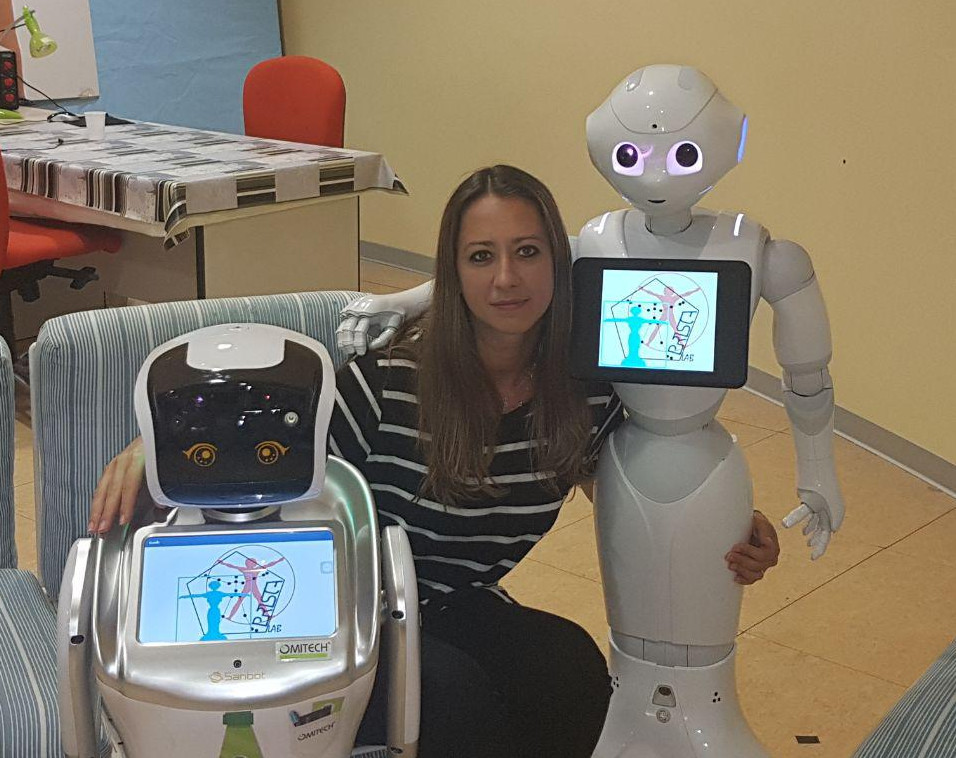
Silvia Rossi is an Associate Professor at the Department of Electrical Engineering and Information Technology (DIETI), University of Naples Federico II, Italy. She co-manages the PRISCA Lab focused on Intelligent Robotics and Advanced Cognitive Systems and coordinates the national project UPA4SAR (User-centered Profiling and Adaptation for Socially Assistive Robotics). Her research emphasizes Multi-agent Systems, Human-Robot Interaction, and Cognitive Architectures. She holds an M.Sc. in Physics from the University of Naples Federico II (2001) and a Ph.D. in Information and Communication Technologies from the University of Trento (2006). Professional experience includes roles at the ITC-irst (Italy), Institute of Cybernetics E. Caianiello (CNR, Italy), and visiting research at Oregon Health and Science University (USA). Research interests span socially assistive robotics, user profiling, and emotion recognition. Key contributions include adaptive robot behaviors for healthcare and education, transparent HRI, and multi-agent systems for smart environments. She teaches courses such as Multi-agent Systems, Distributed Intelligence, and Programming I. Her work integrates AI, robotics, and human-centered design to address challenges in assistive technologies and human-robot collaboration. Publications focus on socially assistive robotics, emotion-aware systems, and transparent AI. Projects include field trials of social robots for elderly care and pediatric emotional support. Awards and recognitions are not explicitly listed but reflect her leadership in socially impactful robotics research.
Franz Wotawa is an Associate Professor at the Institute of Information Systems Engineering, Faculty of Informatics, TU Wien. His primary research areas include model-based and qualitative reasoning, software engineering, configuration, verification and validation, intelligent agents, and theorem proving. He is affiliated with the Databases and Artificial Intelligence research group (E192-02) and can be contacted at franz.wotawa@tuwien.ac.at. Wotawa's research spans model-based reasoning for diagnosis and testing in service-oriented architectures, software verification techniques, and intelligent agent applications. His work bridges theoretical theorem proving with practical SOA validation challenges, emphasizing configuration management and qualitative analysis methods within distributed systems. His 2013 publications reveal a strong focus on risk-aware SOA testing methodologies, integrating criticality metrics with business impact analysis to optimize testing frameworks. These works demonstrate consistent exploration of grey-box testing approaches and reliability assessment in complex service compositions. Wotawa has supervised the following Master's theses: Hybrid approach for model-based random testing (J. P. Wallner, 2010) Model transformation from UML state machines to input/output symbolic transition systems (C. Thurnher, 2008) Entwurf und Implementierung eines wertebasierten Diagnose-Modells für VHDL-Programme (F. Bruckner, 2003) Constraint satisfaction problems: hybrid decomposition and evaluation (M. Hutle, 2002) Framework für generische Suche in einem komplexen Objektmodell am Beispiel von See Your Client (B. Schmidt, 2002) System analysis and monitoring (H.-P. Petek, 2001) He has led significant research projects: D-Flat (2013-2017): Dynamic programming via tree decompositions START (2014-2022): Argumentation semantics analysis Audit 4 SOAs (2011-2014): Criticality-based SOA testing INDENICA (2010-2013): SOA testing frameworks
Dr. Johanne Trippas is a Vice-Chancellor’s Senior Research Fellow at the School of Computing Technologies, STEM College, RMIT University. Her research focuses on improving information accessibility through conversational systems, generative interactive information retrieval, and novel interfaces beyond traditional text-based search. She holds a PhD in Computer Science from RMIT University (2019), recognized with the Deputy Vice-Chancellor’s Higher Degree by Research Prize. Trippas has held postdoctoral roles at the University of Melbourne and Monash University, and currently collaborates with Ambulance Victoria on AI for cardiac arrest detection. She has coordinated and lectured courses in Data Science and Usability Engineering at RMIT since 2022, and previously taught at the University of Melbourne. Trippas actively serves on program committees for ACM SIGIR, ACM CHIIR, and CUI conferences, with leadership roles including General Chair (ACM CUI’24), Workshop Chair (ACM CHIIR’25), and Tutorial Chair (ECIR’24). She is also a member of the NIST TREC program committee and the ACM CHIIR steering committee. Her research employs multi-method analysis, emphasizing user-centric approaches to model human behavior in information-seeking tasks. Key projects include the CIRQL dataset (2024) analyzing conversational search interactions and the BIDD-1k dataset (2024) studying prompts for large language models. She leads the Fourth Strategic Workshop on Information Retrieval (SWIRL’25) to revise the IR research manifesto. Trippas’ work bridges academic and industry domains, collaborating with Google, Microsoft, Amazon, and Booking.com. She advocates for reproducible research as Vice-Chair of the ACM SIGIR Artifact Evaluation Committee. Her research aligns with UN Sustainable Development Goals 4 (Quality Education), 5 (Gender Equality), 9 (Industry, Innovation and Infrastructure), and 10 (Reduced Inequalities).
Dalal Alrajeh is an Associate Professor in the Department of Computing at Imperial College London, serving as Director of Postgraduate Research. Her research focuses on formal methods for designing safe AI systems, particularly in cyber-enabled crime domains. She leads initiatives like the Safe and Trusted AI CDT and contributes to Imperial-X's Emergent Things project. Education background includes a PhD in Software Engineering from Imperial College London (2010). Her work bridges formal verification, AI ethics, and crime analysis, with applications in law enforcement and cybersecurity. Research interests include specification adaptation, goal conflict analysis, and ethical AI deployment. She actively participates in conferences like ICSE, OOPSLA, and FSE, co-chairing workshops and serving on program committees. Teaching spans logic, model-based AI, and formal methods courses at undergraduate and postgraduate levels. She supervises PhD students in formal software engineering, logic-based learning, and digital forensics. Service roles include membership in the Royal Society International Exchange Committee and editorial roles in TOSEM and IEEE Transactions on Software Engineering.
Marcello Balduccini is the Department Chair and Associate Professor of Decision and System Sciences at Saint Joseph's University's Erivan K. Haub School of Business. His research focuses on knowledge representation & reasoning, ontologies, agent architectures, and cybersecurity applications in cyber-physical systems (IoT) and cognitive robotics. He previously held roles as an Assistant Research Professor at Drexel University and Principal Research Scientist at Kodak Research Labs. Research Interests: Knowledge Representation & Reasoning Cyber-Security and Cyber-Analytics Ontology-Based Systems Natural Language Understanding Constraint Satisfaction Problems Trustworthiness in AI/Robotics Recent work emphasizes explainable AI (XAI) systems for Answer Set Programming (ASP), cybersecurity frameworks, and formal methods for cyber-physical systems. His over 100 publications span conferences like LPNMR and ICLP, addressing topics from actual causation to autonomous UAV mission planning. Dr. Balduccini has organized international conferences and received grants supporting AI research, including travel grants for knowledge representation conferences. His work bridges theoretical advancements with practical applications in smart grids, supply chain management, and SDG-aligned AI systems.
Will Briggs is a Professor of Computer Science at the University of Lynchburg since 1998. He holds a PhD from the University of Texas at Arlington, an MS from Georgia Institute of Technology, and a BS from Mercer University in Mathematics and Physics. His research interests span Artificial Intelligence, Game Development, Web Development, Planning Algorithms, and Congressional Districting. Recent teaching focuses include Artificial Intelligence, Computer Graphics, and Programming in Python/C++. Education: PhD in Computer Science, University of Texas at Arlington MS in Computer Science, Georgia Institute of Technology BS in Mathematics and Physics, Mercer University His current work emphasizes reactive planning systems and the SSDL graphics library for C++20. Recent publications explore educational tools for programming beginners and optimization in multi-agent planning systems. Over his career, he has contributed to scalable modularity in distributed planning and communication reduction techniques in multi-agent systems.
Mario Magaña is an Associate Professor and Oregon 4-H State Outreach Specialist at Oregon State University, affiliated with the College of Health and the 4-H Youth Development State Office. He is based in Corvallis, Oregon, and works extensively with Latino and underserved youth and families across the state through OSU Extension Service. Position: Associate Professor and 4-H State Outreach Specialist Institution: Oregon State University College: College of Health Department: 4-H Youth Development Contact: mario.magana@oregonstate.edu | 541-737-0925 Mario Magaña earned his Bachelor of Arts in Liberal Studies from the College of Liberal Arts in 1997 and a Master of Arts in Interdisciplinary Studies (MAIS) with concentrations in Forest Resources, Adult Education, and Spanish from the College of Forestry in 1999. His academic and professional journey began through the College Migrant Assistance Program (CAMP), reflecting his deep commitment to access and equity in higher education. His research and outreach interests center on youth development, educational equity, and community engagement, particularly for underserved and Latino populations. He specializes in creating culturally appropriate programs that support college readiness, leadership development, and academic success. His work emphasizes removing systemic and self-imposed barriers to education, promoting financial literacy, and guiding students through college admissions and financial aid processes. He is fluent in Spanish and deeply rooted in the experiences of migrant and first-generation students. Although no research articles are listed in the provided texts, Mario Magaña’s professional contributions are primarily programmatic and service-oriented, focusing on outreach, mentorship, and capacity-building within extension education. His initiatives include summer camps, leadership institutes, and workshops that connect youth with professionals and resources to support their academic and career goals. He has been recognized for his contributions, including being named a Distinguished Mexican in Oregon . Distinguished Mexican in Oregon Mario Magaña has dedicated his career to advising and supporting underserved youth and adult learners. He assists high school students and families in navigating scholarships, federal financial aid, and college applications. He also mentors adults pursuing GEDs or higher education. While specific grant details are not listed, his work involves fundraising to support 4-H programs, leadership institutes, and outreach activities across Oregon. He collaborates with 4-H agents, program assistants, and community partners to expand access and impact. He leads and organizes key programs such as the Oregon 4-H Outreach Leadership Institute (OLI), three annual week-long summer camps, and various workshops focused on natural resources, technology, health, business, and culture. These programs serve as pipelines for college and career readiness among culturally diverse youth, providing hands-on learning and exposure to professionals from diverse backgrounds.
Dr. Lawrence Cabac is a Professor (acting) at the Department of Computer Science, University of Hamburg, within the Theoretical Foundations of Computer Science group. He holds a Ph.D. in Informatics and specializes in Petri Nets, Agent Systems, and Software Engineering. His research focuses on integrating Petri Nets with agent-oriented software development, workflow modeling, and distributed systems. Teaching includes courses on Petri Nets, Formal Foundations of Computer Science, and Agent Systems. He has led projects like Renew (a Petri Net tool), PAOSE (Petri Net-based Agent-Oriented Software Engineering), and Mulan/Capa frameworks. Active in academic service, he co-edits PNSE workshops and contributes to tool development for Petri Net applications. Research interests span formal methods, model-driven development, and distributed architectures. His work bridges theory and practice, emphasizing Petri Net applications in agent systems and software engineering.
Dr. Matthias Wester-Ebbinghaus is a Researcher at the Theoretical Foundations of Computer Science group within the Faculty of Mathematics, Informatics and Natural Sciences at the University of Hamburg. His work focuses on the intersection of Petri nets, multi-agent systems, and organizational modeling. Dr. Wester-Ebbinghaus completed his doctoral dissertation in December 2010 titled "From Multiagent Systems to Multi-Organization Systems - Modeling Based on Petri Nets" at the University of Hamburg. Prior to this, he completed his diploma thesis in November 2005 titled "Specification of a Teamwork Model for Mulan Agents" at the same institution. His educational background demonstrates a consistent focus on agent-based systems and formal modeling approaches. Dr. Wester-Ebbinghaus's research primarily centers on Petri nets and their application in modeling complex systems, particularly multi-agent systems and organizational structures. His work explores how Petri nets can be used to model organizational units as modular components of systems of systems. He has developed approaches for model-driven middleware support for team-oriented process management and has worked extensively on integrating Web services in Petri net-based agent applications. His research bridges the gap between theoretical computer science and practical applications in business process modeling and software engineering, with particular emphasis on creating executable prototypes from formal specifications. Analysis of his publication record from 2005-2014 reveals a consistent research trajectory focused on applying formal methods to organizational modeling. His work demonstrates how Petri nets can serve as a foundation for modeling complex organizational structures within multi-agent systems, with applications in business process management, distributed systems, and software architecture. The research shows progression from theoretical foundations to practical implementations, including middleware solutions and service-oriented architectures. Dr. Wester-Ebbinghaus has been actively involved in several research projects including "Petri Net and Agent-Based Applications" and "Organizations and business processes." His collaborative work with researchers such as Daniel Moldt, Michael Köhler-Bußmeier, and Lawrence Cabac has resulted in numerous publications in Transactions on Petri Nets and Other Models of Concurrency, International Workshops on Petri Nets and Software Engineering, and conferences on multi-agent systems. His contributions include the development of the Janus-faced net component for prototyping open systems and structural approaches to organization-oriented software architectures.
Leandro Garcia is a Senior Lecturer in Complexity Science in Public Health at Queen's University Belfast's Centre for Public Health. He specializes in applying systems thinking and complex systems science to address public and planetary health challenges, particularly focusing on urban environments, non-communicable diseases, and health inequalities. Currently, he leads work packages in high-profile projects such as GroundsWell (£7.1M) and RiSC+ (£6.25M), exploring green/blue spaces' health impacts and supply chain resilience. He co-leads the Complexity, Public Health & Planetary Health Cluster and serves on WHO collaborating centers and international committees. Research Interests: Urban design, systems-oriented interventions, agent-based modeling, planetary health, and policy evaluation. His work aligns with UN SDGs related to sustainable cities, health equity, and climate action. Awards: Recipient of the American Journal of Preventive Medicine’s 2016 Best Paper Award, Best Session at Prevention Research Conference 2023, and multiple international recognitions for contributions to physical activity and systems science research. Teaching: Coordinates the 'Systems Thinking in Public Health' module for MPH programs and contributes to undergraduate courses. Supervises PhD students focusing on topics like causal loop diagrams and adolescent mental well-being. Grants: Active grants include UKRI’s Modelling UK Supply Chains (£6.25M) and NIHR’s GroundsWell (£7.1M). Past projects include studies on healthy urban design with University of Melbourne and São Paulo Health Survey analyses. Collaborations: Works with WHO, UNDP, and governments globally to develop evidence-based policies. Serves on leadership teams for international societies like the International Society of Behavioral Nutrition and Physical Activity.