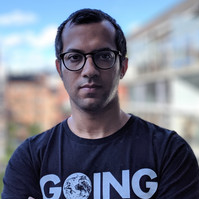
Jayanth Raghothama is an Associate Professor at KTH Royal Institute of Technology, affiliated with the School of Computer Science and Communication (CBH) and the Digital Futures Faculty. He is part of the Division of Health Informatics and Logistics, focusing on healthcare systems, complex systems modeling, and simulation-based decision-making. His academic role includes co-leading the Digitalization Platform and serving as a Vice-Director. Education: PhD in Complex Systems from KTH (2017). Prior experience includes software industry roles and work with a think tank in Bangalore. Research Interests: Healthcare logistics, complex systems analysis, participatory simulations, AI/ML ethics, and the philosophy of games and simulations. His work bridges computational models with real-world applications in healthcare, urban planning, and disaster management. Recent Projects: Co-Principal Investigator of the 'Data-driven Improvement of Work-Flows at the Karolinska University Hospital' project. Active in AI-based colorectal cancer detection in primary care (AIDCCIP project). Teaching: Courses on Applied Machine Learning, Simulation Methods, and Healthcare Logistics at Bachelor, Master, and PhD levels. Modules include AI/ML ethics and Agent-Based Modeling. Publications: Over 20 peer-reviewed articles focusing on healthcare simulation models, real-world data analysis in oncology, and hybrid modeling techniques. Notable works include patient flow optimization algorithms and frameworks for risk stratification in lung cancer studies.
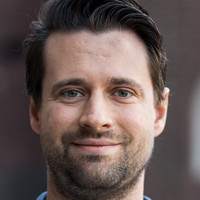
Ricardo Vinuesa is an Associate Professor at KTH Royal Institute of Technology, affiliated with the Department of Mechanics within the School of Engineering Sciences. He serves as the Principal Investigator (PI) for projects such as 'An AI-based framework for harmonizing climate policies and projects with the SDGs' and co-leads the 'Faster-than-real-time and high-resolution simulation of fluid flow in engineering applications' initiative. His work integrates artificial intelligence with fluid mechanics, sustainability, and climate policy. Education and Academic Roles: Vinuesa teaches courses including Data-driven methods in engineering mechanics, Mechanics I, and Turbulence, holding roles as examiner, course manager, and teacher. He is part of the Digital Futures Faculty and actively contributes to academic programs at KTH. Research Interests: His research focuses on AI-driven solutions for fluid mechanics challenges, turbulence modeling, sustainable development goals (SDGs), and climate policy alignment. He develops machine learning frameworks for flow control, sensor optimization, and climate risk assessment, emphasizing interdisciplinary applications. Projects and Applications: Key projects include AI-based frameworks for SDG harmonization, high-resolution fluid simulations for indoor climate, and turbulence control via reinforcement learning. His work bridges computational fluid dynamics with real-world sustainability challenges, leveraging deep learning and data-driven methodologies. Labs and Collaborations: Vinuesa leads the Artificial Intelligence Group, with a lab website at vinuesalab.com . His research is supported by collaborations with industry and academic partners, focusing on advancing fluid mechanics and environmental engineering through AI innovation.
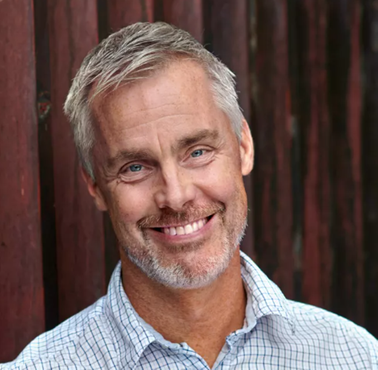
Arend Hintze is a Professor of Microdata Analysis at Dalarna University's Department of Information and Technology. His research bridges artificial intelligence, evolutionary biology, and computational psychiatry, focusing on neuroevolution, cellular automata, and digital health applications for bipolar disorder. Key research themes include: Evolutionary dynamics in computational models AI for mental health prediction Cellular automata and self-replication Large language model behavior analysis Recent publications demonstrate interdisciplinary work across computer science, genetics, and psychiatry, with emphasis on: Neuroevolution and information transfer Fitness landscape navigation Bipolar disorder early warning systems Evolutionary game theory applications His work frequently employs agent-based modeling, digital evolution, and deep learning techniques.
Fran Marquez is a Senior Lecturer at the Division for Industrial Electrical Engineering and Automation within the Faculty of Engineering at Lund University. They serve as a Theme Leader for Electric Drives and Charging at the Swedish Electromobility Centre and contribute to the LTH Profile Area: The Energy Transition. Current projects include Truck2Grid (Swedish Energy Agency, 2025–2027) and E-Charge 2 (Vinnova, 2024–2027). Active in research on transport electrification , charging infrastructure , and electric drive systems . Research focuses on conductive electric roads , renewable energy integration , and vehicle-to-grid (V2G) technologies . Publications analyze traffic characteristics , thermal models , and high-speed charging systems. Organized seminars and conferences as part of The Energy Transition initiatives, including collaborative retreats and lunch seminars in 2024.
Stefan Axelsson is an Associate Professor at NTNU (Norwegian University of Science and Technology) in Gjövik, Norway, and a Senior Lecturer at Blekinge Institute of Technology in Sweden. His research focuses on computer security, digital forensics, and applications of machine learning in intrusion detection and data analysis. He holds a PhD in Computer Science from Chalmers University of Technology (2005), with a thesis on intrusion detection visualization. His work bridges academia and industry, including collaborations with Ericsson. Research interests span forensic file systems analysis (NTFS/ReFS), fraud detection in financial systems, and visualization techniques for security data. Notable contributions include the Bayesvis intrusion detection tool and fraud simulation frameworks like PaySim. He has published extensively in venues like Digital Investigation, DFRWS, and IFIP conferences. Key achievements include a best paper award at EMSS 2013 for forensic agent-based simulation work. His software contributions focus on practical tools for security professionals, emphasizing usability and visualization of complex data patterns.
Michael Försth is a Professor and Chief Educational Officer at Luleå University of Technology's Department of Built Environment and Natural Resources. He has held his professorship since 2014 and became head of education in 2022. His research focuses on fire safety, hydrogen safety, and innovative materials for construction. He has extensive experience in fire technology, including roles at RISE since 2006. Research interests include fundamental studies of fire phenomena (e.g., water droplet breakup, spark dynamics in calorimeters) and applied work like bus interior material standards and cable fire testing. Current work emphasizes hydrogen safety, aiming to develop physics-based models for risk assessment. Teaching responsibilities include courses on fire engineering, risk management, and fire dynamics, as well as MOOCs on hydrogen safety. He has supervised over 100 students and mentored doctoral candidates. Notable collaborations include projects on biochar-concrete composites and tunnel fire suppression systems.
Dmitry Grishenkov is an Associate Professor at KTH Royal Institute of Technology, working at the Division of Biomedical Imaging within the Department of Biomedical Engineering and Health Systems. He serves as Program Director of the M.Sc. Programme in Innovative Technology for Healthy Living (TIHLM) and is Vice Director of the Jonasson Centre for Medical Imaging. His research lab is located at KTH Campus Flemingsberg. Dr. Grishenkov's research focuses on Contrast Enhanced Medical Imaging and Therapy, with particular emphasis on characterization of structural and physical properties of multimodal contrast agents, investigation of sonoporation and cavitation mechanisms, and understanding dynamics of multiphase media in biomedical applications. His recent work has been dedicated to high frequency ultrasound imaging and photoacoustic imaging in vivo using small and medium laboratory animals, developing novel methods for visualization and quantification of multimodal contrast agents. His publication record shows a strong focus on microbubble and droplet-based contrast agents, with recent articles exploring hydrodynamic cavitation-on-a-chip platforms, cellulose nanofiber-coated droplets, and advanced ultrasound imaging techniques. The research spans biomedical engineering, fluid dynamics, and nanotechnology with applications in thrombolysis, drug delivery, and environmental remediation. As an educator, Dr. Grishenkov teaches and examines courses including Artificial Intelligence within Biomedical Engineering, Medical Engineering Advanced Course, Ultrasound, and Medical Technologies in Digital Healthcare Transformation. He has been instrumental in establishing the KTH-SJTU Summer School in Interdisciplinary Biomedical Research. His research group collaborates extensively with the Karolinska Institute on novel contrast agents for tissue-specific diagnostics and localized drug delivery, and with KTH's Department of Applied Physics on microfluidic studies of microbubble behavior. This interdisciplinary approach has positioned his work at the forefront of innovative medical imaging technologies with both diagnostic and therapeutic applications.
Devdatt Dubhashi is a Professor at the Data Science and AI 3 department at Chalmers University of Technology. His research spans multiple domains within computer science and data science, with a focus on theoretical foundations and practical applications of algorithms and machine learning. Professor Dubhashi's primary research interests include the design and analysis of randomized algorithms, machine learning for Big Data, and computational biology. His work demonstrates a strong interdisciplinary approach, connecting theoretical computer science with practical applications in diverse fields such as quantum computing, transportation modeling, genomics, and social sciences. His research often bridges the gap between theoretical foundations and real-world implementations, as evidenced by his numerous collaborations across different domains. Dubhashi's recent publications reveal a consistent research trajectory focusing on algorithmic foundations of machine learning, with increasing emphasis on interdisciplinary applications. His work shows significant contributions to bandit algorithms, kernel methods, graph-based learning, and the theoretical understanding of deep learning models. There's also a growing focus on societal implications of AI, as seen in his publications addressing responsible AI development and policy considerations. Among his notable scientific contributions are publications in prestigious venues including ACM, IEEE, and Nature journals, covering topics from fundamental algorithm design to applications in computational biology and social sciences. His work has been cited extensively across multiple disciplines, reflecting its broad impact. Professor Dubhashi actively supervises PhD students and collaborates with researchers across Chalmers and internationally. His research group appears to focus on the intersection of theoretical computer science and practical machine learning applications, with projects spanning quantum computing, transportation modeling, and biological applications.
Tehseen Aslam is a Senior Lecturer in Automation Engineering at the School of Engineering Science , University of Skövde. As Deputy Vice-Chancellor for Industry Collaboration , they bridge academic research with industrial applications through projects like WISER (2021-2026) and Strategic Production Optimization (2017-2020). Research Interests : Simulation-based optimization, reconfigurable manufacturing systems, AI in industrial vision, digital twins, and sustainable production. Grants & Projects : Involved in Network City Skaraborg (2024), Digital Models for Energy Systems (2022), and Virtual Factory (2018-2020). Publications : 15+ works on multi-objective optimization, system dynamics, and digital manufacturing. Collaborations : Partnerships with Anna Syberfeldt, Amos H.C. Ng, and Gary Linnéusson.
Professor Martin Holmén holds a Ph.D. from the University of Gothenburg (1998) and has been affiliated with Stockholm University and Uppsala University before returning to Gothenburg in 2009. He serves as a Professor of Corporate Finance and previously directed the interdisciplinary Centre for Finance (2011–2020). His primary research focuses on corporate governance, experimental finance, and financial market behaviors. Key roles include advising on institutional investments and regulatory frameworks. Education: Ph.D. in Economics from University of Gothenburg (1998). Professional trajectory includes senior roles at Stockholm University (2000s) and leadership in finance-related academic initiatives. Research spans corporate control mechanisms, financial decision-making under social incentives, and experimental methodologies in asset markets. Publications emphasize empirical and experimental analysis of financial behaviors, including studies on risk-taking under competition, incentive structures in mutual funds, and governance practices in corporate mergers. Notable works address how social comparisons and tournament-based incentives shape investment choices. No formal awards listed, but active in prominent journals like Economic Journal and Management Science . Collaborations with institutions like the Centre for Finance highlight his interdisciplinary approach. No specific grants or labs mentioned in the text.
Eduardo Tapia is an Associate Professor at Linköping University's Institute for Analytical Sociology, specializing in segregation dynamics through statistical and simulation methods. Education: PhD in Sociology - Autonomous University of Barcelona His research examines school and residential segregation using discrete choice models and agent-based simulations. Current projects analyze neighborhood reputations through Swedish media using NLP techniques. Recent publications investigate school closure impacts, admission policies, and social network effects on residential mobility. Tapia directs the 'Agent-Based Modeling for Social Sciences' course in LIU's Computational Social Science master's program.
Stefan Seipel is a Professor at the University of Gävle's Faculty of Engineering and Sustainable Development, Department of Industrial Development, IT and Land Management, Computer Science division. He leads research in geospatial visualization and digital image processing with human-centered focus. Key collaborations with Lantmäteriet , KTH , and Ghent University 's Cartography & GIS group Research initiatives include Smart Build Environment projects and Urban 3D Visualization for smart city planning Research Focus: Interactive 3D visualizations for real estate formation Visual anomaly detection in digital maps Algorithm development for urban environment modeling Solar energy potential assessment using geospatial data Technical Contributions: Developed methods for 3D property visualization, augmented reality applications in facility management, and precision tools for thermographic building diagnostics. His work integrates geospatial analysis with cognitive modeling for decision support systems.
Muhammad Umar B Niazi is a Marie-Curie Postdoctoral Fellow at both KTH Royal Institute of Technology and Massachusetts Institute of Technology , working under the guidance of Karl H. Johansson and Munther Dahleh respectively. Holding a Ph.D. in Automatic Control Engineering from Université Grenoble Alpes, Niazi's research spans secure monitoring of cyber-physical systems and dynamic incentive design for sociotechnical systems . Education : Ph.D. (Grenoble INP, 2021); M.Sc. & B.Sc. (Bilkent University, COMSATS) Research Directions : Secure estimation against cyberattacks in transportation networks and epidemic models Physics-informed learning for observer design in nonlinear systems Eco-driving incentives using Stackelberg game theory Aggregated monitoring of large-scale systems Scientific Contributions : 2025 publications on distributed observers and reachability analysis 2024 work on incentive mechanisms and sensor fault detection 2023 developments in physics-informed epidemic control 2022-2019 foundational work on network observability and opinion dynamics Awards : Marie-Curie Postdoctoral Fellowship (2022-2025) Best Student Paper Finalist, European Control Conference 2019 Niazi's interdisciplinary work combines control theory , game theory , and machine learning to address resilience in transportation, epidemic monitoring, and social network dynamics. His methods integrate theoretical rigor with practical implementations through tools like SUMO simulations and physics-informed neural networks.
Danyo Danev is an Associate Professor at the Department of Electrical Engineering (ISY) , Linköping University , Sweden, specializing in the Division of Communication Systems . He earned an M.Sc. in Mathematics from Sofia University (1996) and a Ph.D. in Electrical Engineering from Linköping University (2001). He holds the Docent title in Data Transmission (2005). Research Pillars : Telecommunications, Coding Theory, Network Science Key Collaborations : Erik G. Larsson, Olle Abrahamsson His research spans secure communication systems , cognitive radio , superimposed codes , and network dynamics , with a focus on mathematical modeling for wireless and satellite networks. Recent work explores opinion dynamics and structural balance in network science, blending statistical signal processing with social network analysis. Scientific Contributions : Co-supervised 5 graduate students (3 PhD, 2 Licentiate degrees) Active in Communication Systems (KS) division Expertise in signal detection and error-correcting codes Advising Legacy : Mentored students on topics including digital fingerprinting , cognitive radio , and bounds for spherical codes , with ongoing work in network science.
Sonia Yeh is a Full Professor of Transport and Energy Systems at the Department of Space, Earth and Environment at Chalmers University of Technology in Gothenburg, Sweden. She serves as Deputy Head of Chalmers' Energy Area of Expertise and holds an adjunct professorship at the Department of Engineering and Public Policy, Carnegie Mellon University. Professor Yeh has established herself as a leading expert in energy economics, energy system modeling, alternative transportation fuels, sustainability standards, technological change, and consumer behavior and mobility, with extensive experience advising U.S. state and international policymakers on climate strategies to reduce environmental impacts and greenhouse gas emissions from transportation. Professor Yeh's research spans multiple interconnected domains of transportation and energy systems: Energy system modeling and policy analysis for transportation decarbonization Electric vehicle infrastructure planning and optimization Alternative fuel pathways and sustainability standards Socio-spatial dimensions of mobility and transportation equity Integration of big data analytics in transportation planning International collaboration on climate policy development Her recent publications reveal a clear trajectory toward increasingly interdisciplinary research that bridges transportation engineering, energy systems analysis, urban planning, and social science. Professor Yeh's work increasingly focuses on integrating transportation electrification with renewable energy systems, examining the socio-spatial implications of mobility patterns, and developing sophisticated modeling tools to support evidence-based policy making for low-carbon transitions in the transport sector. Professor Yeh has received significant recognition for her contributions to the field: Fulbright Distinguished Chair Professor in Alternative Energy Technology (2016-2017) Håkan Frisinger Award by Volvo Research and Educational Foundations (2019) Professor Yeh maintains extensive international collaborations with major organizations including the International Energy Agency (IEA), United Nations Framework Convention on Climate Change (UNFCCC COP), International Transport Forum-OECD, World Bank, and Asian Development Bank. She serves as Senior Editor for Energy Policy journal and contributed as a lead author to the Transport chapter in the Intergovernmental Panel on Climate Change (IPCC) Sixth Assessment Report. As co-leader of the International Transportation Energy Modeling (ITEM) project (https://transportenergy.org), she coordinates research among academic institutions, energy agencies, oil companies, and NGOs on future scenarios, big data, and policy needs for low-carbon transitions in transport. Her current research portfolio includes 13 significant projects including BluePortLab (Multi-use Infrastructure Spatial Concepts for the Blue Economy, 2025-2028), POTENT-X (Ports as energy transition hubs, 2024-2027), and Using urban big data to redefine experienced social segregation (2023-2026), demonstrating her commitment to addressing complex, real-world challenges at the intersection of transportation, energy, and urban systems.